Table of Contents
This reality elevates the concept of “website support” from a generic feature checklist item to a critical business continuity asset. Yet, when most users evaluate website builders, they focus primarily on design templates, drag-and-drop interfaces, or pricing tiers. Support is frequently treated as an afterthought, an insurance policy one hopes never to use. This oversight is often rectified only in the heat of a crisis, usually at 2:00 AM, when the realization hits that “24/7 support” does not necessarily mean “competent resolution.”
To truly determine who offers the best website builder support, we must peel back the marketing layers. We need to analyze the structural differences between closed SaaS platforms, open-source environments, and the emerging “Unified Ecosystems” that bridge the gap. We must understand the technical hierarchies of support agents, the role of proactive AI, and the value of community knowledge.
This comprehensive guide will navigate the complex landscape of web support in 2025, offering a detailed analysis for freelancers, agencies, and business owners who cannot afford downtime.
Key Takeaways:
- Support as Infrastructure: High-quality support is not just about fixing bugs; it is a structural layer of your business that protects revenue and ensures continuity.
- The Fragmentation Liability: In traditional open-source setups, the separation of hosting, software, and third-party tools creates a “Blame Game” that leaves the user responsible for integration.
- The Unified Advantage: Platforms that integrate the hosting environment with the creative software (like Elementor Hosting) eliminate these silos, providing a single point of accountability.
- Proactive Resolution: The definition of support is shifting from reactive troubleshooting to proactive prevention through tools like Elementor AI and automated utilities.
- Community Depth: The scale of a platform’s user base is a direct indicator of support quality; a larger community means faster peer-to-peer resolution for edge-case issues.
Part 1: The Anatomy of a Support Crisis
To understand the value of superior support, we must first dissect the cost of its absence. Support is fundamentally an exercise in risk management. The “Best” support is the one that minimizes the Time to Resolution (TTR) for critical failures.
The Hidden ROI of Expert Assistance
Consider the scenario of a high-volume eCommerce store running a Black Friday sale. At peak traffic, the checkout page begins to load slowly, taking 15 seconds to render. Conversion rates plummet from 3% to 0.5%.
In a low-quality support environment, the user submits a ticket and waits 24 hours for a response that simply asks for “more details.” During that 24-hour window, thousands of dollars in potential revenue evaporate.
In a high-quality support environment, the user connects via live chat with an agent who has immediate visibility into the server logs, the caching configuration, and the application scripts. The agent identifies a conflict with a specific unoptimized image, advises on the fix, and the site returns to optimal speed within 15 minutes.
The difference between these two scenarios is not just “good service”; it is the difference between a profitable campaign and a financial disaster. For agencies, this dynamic is even more acute. An agency charging premium rates for maintenance cannot afford to tell a client, “I’m waiting for the hosting company to email me back.” They need immediate, actionable answers to maintain their professional reputation.
The Three Pillars of Support Maturity
We can categorize support needs into three distinct pillars, each requiring a different type of expertise.
- The Infrastructure Pillar (Uptime & Security): This is the foundation. Is the server running? Is the SSL certificate valid? Is the firewall blocking legitimate traffic? These issues are binary—they work or they don’t—and require systems engineers to resolve.
- The Application Pillar (Functionality & Logic): This is the most complex layer. Why is the contact form not sending? Why is the popup triggering on the wrong page? Why does the mobile menu overlap the logo? These issues require deep knowledge of the specific software, the CMS (Content Management System), and the underlying code (HTML/CSS/JS).
- The Strategic Pillar (Optimization & Growth): This is the proactive layer. How do I improve my Core Web Vitals? How do I structure my sitemap for better SEO? How do I ensure my site is accessible? These questions require educational resources and strategic guidance, not just bug fixes.
Part 2: The Fragmentation Problem in Traditional WordPress
For over 40% of the web, WordPress is the platform of choice. Its dominance is built on the promise of absolute freedom: the freedom to choose any host, any theme, and any plugin. However, this freedom comes with a significant structural flaw regarding support: Fragmentation.
The “Blame Game” Explained
In a standard, unmanaged WordPress setup, the user acts as the System Integrator. You might purchase a domain from one vendor, hosting from another, a theme from a third-party marketplace, and plugins from various independent developers.
When a critical error occurs—such as the dreaded “White Screen of Death”—the support experience fractures.
- The Host’s Stance: You contact your hosting provider. They check the server status. “Green lights across the board,” they say. “The server is up. PHP is running. This is an application-level error caused by a plugin. Please contact your developer.”
- The Plugin Developer’s Stance: You contact the developer of the plugin you suspect is crashing the site. They reply, “Our plugin is tested on standard environments. It looks like your theme is loading a jQuery script that conflicts with ours. Please contact the theme author.”
- The Theme Author’s Stance: You contact the theme support. They respond, “We adhere to strict WordPress coding standards. It sounds like your host has a low PHP memory limit. Please contact your host.”
You are now trapped in a loop. You are the only person who cares about the outcome, yet you are the only person without the technical access to fix it. This “Blame Game” is the primary driver of frustration in the open-source world and the main reason users flee to closed platforms.
Part 3: Analyzing the Market: The “Walled Gardens”
To solve the fragmentation problem, many users turn to closed SaaS (Software as a Service) platforms like Wix, Squarespace, or Shopify. These platforms operate on a “Walled Garden” model, which fundamentally alters the support dynamic.
The SaaS Support Model: Consistency at the Cost of Depth
Wix and Squarespace operate on a model where the company owns everything: the server, the code, the templates, and the support team.
- The Advantage: Because every website on the platform runs on the exact same infrastructure, support agents have a “God View” of the system. They never have to guess what version of PHP you are running or if a third-party plugin is causing a conflict, because third-party code is strictly limited. The “Blame Game” is eliminated because there is only one entity to blame.
- The Limitation: The support is often rigid. Agents work from strict scripts. If you encounter a limitation of the platform—for example, if you want to implement a complex custom database relationship that the builder doesn’t natively support—the agent cannot help you. Their answer will be a polite, “That feature is not currently available.” They cannot offer a workaround because the code is closed.
- The Interaction: These platforms rely heavily on automation. Users are often routed through extensive AI chatbots and knowledge base articles before they can reach a human. Phone support is increasingly rare, often replaced by “callback” systems to manage queue volume.
The Professional Design Tool: Webflow
Webflow targets a more technical demographic—professional designers and developers. Consequently, their support assumes a higher baseline of technical literacy.
- The Educational Approach: Webflow is famous for “Webflow University,” a library of high-production-value video tutorials. Their strategy is to teach users how to fish, rather than handing them the fish.
- The Support Boundary: Webflow draws a strict line between “Platform Issues” (bugs in their software) and “Design Issues” (user error). If your layout is broken because you don’t understand how CSS Flexbox works, their support team will generally direct you to a tutorial rather than logging in to fix your CSS for you. For agencies on tight deadlines, this can be a friction point.
Part 4: The Elementor Approach: The Unified Ecosystem
Elementor occupies a unique strategic position in this landscape. It began as a plugin but has evolved into a comprehensive Website Builder Platform. This evolution allows it to offer a third option: a Unified Ecosystem that bridges the gap between the freedom of WordPress and the reliability of a managed platform.
1. Elementor Hosting: Closing the Accountability Loop
The introduction of Elementor Hosting was a pivotal shift in how the company approaches support. By bundling the Elementor Pro software with a Google Cloud-powered hosting environment, Elementor effectively eliminates the Fragmentation Problem.
When a user builds on Elementor Hosting, the support team owns the entire stack.
- Infrastructure Access: The agent can see the server logs, memory usage, and caching configurations (powered by Cloudflare Enterprise).
- Software Access: The agent understands the Elementor builder, its versions, and its settings.
If a site is slow, the agent doesn’t send you to a third party. They check the server and the page weight. They might say, “Your server is fine, but you have uploaded a 10MB image to the homepage. Let’s optimize that.” This is the “Single Point of Accountability” that professional creators crave.
2. Premium Support for Professionals
For agencies and power users, waiting in a general queue is unacceptable. Time is billable. Elementor Pro and Hosting users gain access to premium support channels.
This is not simply a “fast lane” to the same agents. It connects users with WordPress Experts—agents who have a deeper understanding of the CMS. They are trained to troubleshoot complex issues, such as:
- CSS Conflicts: Identifying when a global style from a theme is overriding a specific Elementor widget setting.
- Dynamic Content Logic: Debugging complex query loops, such as why a “Related Posts” grid isn’t displaying the correct category.
- Integration Errors: resolving API connection failures between Elementor forms and third-party marketing tools.
3. The “Hello” Stability Factor
Support is also about architecture. Many WordPress issues stem from “bloated” themes that include too much functionality, conflicting with page builders.
Elementor created the Hello Theme as a direct response to this. It is a lightweight, “blank canvas” theme designed specifically for Elementor. It contains almost no styling code, drastically reducing the surface area for bugs. When a user calls support with a design issue, and they are using the Hello Theme, the agent can immediately rule out theme conflict as a cause. This significantly speeds up the Time to Resolution.
Part 5: The Era of Proactive AI Support
In 2025, the best support is the one you never have to contact. The industry is shifting from “Human Remediation” (fixing things that broke) to “AI-Assisted Creation” (building things correctly from the start). Elementor is leading this shift with a suite of AI tools integrated directly into the workflow.
Prevention via Planning: The AI Site Planner
Many support tickets originate from poor initial planning—users building “spaghetti sites” with confusing navigation structures that eventually become unmanageable.
The AI Site Planner acts as a proactive support consultant. A user enters a prompt like “I need a portfolio for a landscape architect.” The AI generates a professional sitemap and wireframe structure based on industry best practices. By starting with a solid architectural foundation, the user avoids the structural mistakes that typically lead to support requests months down the line.
The “In-Editor” Copilot
Traditionally, if a user wanted to add a custom CSS effect (like a specific hover animation) but didn’t know the code, they would open a support ticket or hire a developer.
With Elementor AI, the support is instant and autonomous. The user can simply right-click an element and ask the AI to “Write CSS to make this image float and cast a shadow.” The AI generates the clean code and applies it. This capability solves the “Technical Gap” instantly, removing the need for human intervention for creative coding tasks.
Agentic Workflows: The Future of Maintenance
We are entering the era of Agentic AI, exemplified by concepts like Angie. Unlike generative AI which simply writes text, Agentic AI performs multi-step tasks.
- “Angie, check all my pages for broken links.”
- “Angie, regenerate all thumbnails to be smaller.”
This shifts the burden of maintenance from the user (or the support team) to an intelligent agent that operates tirelessly in the background.
Part 6: Specialized Utilities as Support Solutions
Elementor has analyzed the most common categories of support tickets in the WordPress ecosystem—email deliverability, image performance, and accessibility—and developed dedicated, integrated products to solve them fundamentally. This strategy reduces the need for reactive support.
1. Solving the SMTP Nightmare with Site Mailer
The Problem: A user creates a contact form, but inquiries never arrive in their inbox. They contact support, assuming the form is broken. In reality, the hosting server has a poor IP reputation, and Gmail is blocking the emails. Fixing this traditionally involves setting up complex SMTP plugins and API keys.
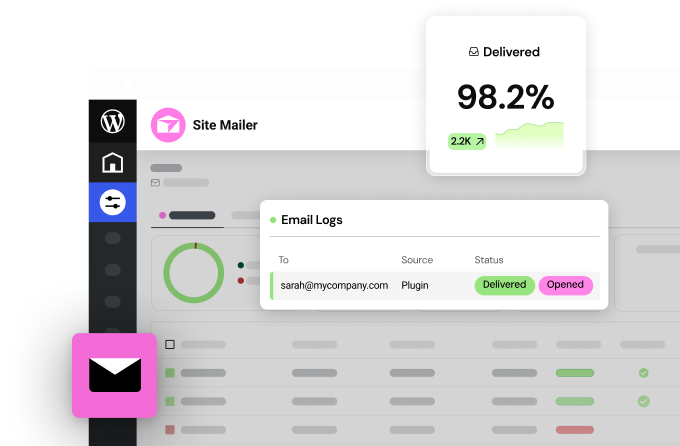
The Solution: Site Mailer by Elementor. This plugin bypasses the host’s default email function entirely. It routes transactional emails through a premium, trusted delivery infrastructure. It requires almost no configuration. By solving the infrastructure problem at the root, Elementor eliminates the “My form isn’t working” support ticket.
2. Solving the “Slow Site” Complaint with Image Optimizer
The Problem: A user complains their site is slow. Support investigates and finds the user has uploaded 5MB raw images directly from their camera. Support tells the user to “optimize images,” but the user doesn’t know how.
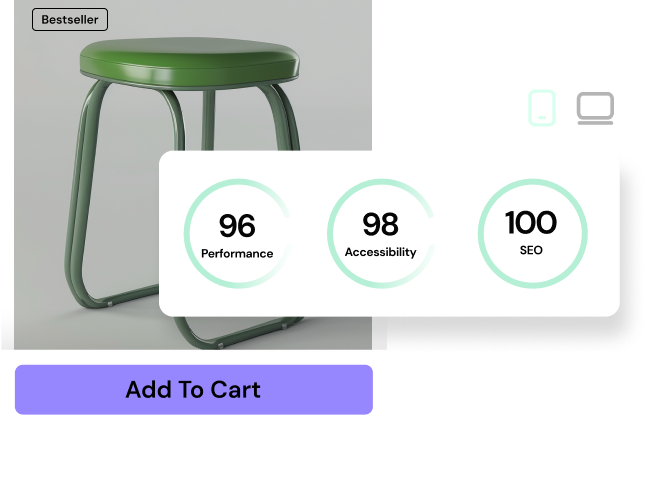
The Solution: Image Optimizer by Elementor. This tool runs in the background, automatically compressing and converting images to next-gen formats like WebP and AVIF. It creates a “performance guardrail” that keeps the site fast regardless of user behavior, reducing performance-related support queries.
3. Solving the Compliance Risk with Ally
The Problem: Web accessibility laws (like the ADA and EAA) are becoming strictly enforced. Users are terrified of lawsuits but don’t know how to make their sites compliant. They ask support, “Is my site accessible?”—a question most agents are not qualified to answer legally.
The Solution: Ally by Elementor. This is an automated accessibility engine. It scans the site, identifies violations (like missing Alt text or poor contrast), and provides a remediation wizard to fix them. It transforms a vague legal fear into a manageable, actionable checklist.
Part 7: The Community Network Effect
No official support team, no matter how large, can scale as fast as a user base. This is where the Network Effect becomes a critical component of the support ecosystem.
The Power of 18 Million Websites
Elementor powers a significant portion of the internet. This scale creates a “Googleability” advantage that niche builders cannot match.
- The Scenario: You encounter a weird bug where a specific widget conflicts with a specific browser extension.
- The Niche Builder Reality: You search Google and find zero results. You are likely the first person to see this. You are entirely dependent on official support.
- The Elementor Reality: You search Google and find three Reddit threads, a YouTube tutorial, and a Facebook group discussion about this exact issue, complete with a snippet of code to fix it.
The Elementor Academy
Elementor has formalized this knowledge transfer through the Elementor Library and Academy. This is not just a knowledge base of articles; it is a Learning Management System (LMS) offering structured courses.
By providing deep education on topics like “Building a Design System” or “Structuring an eCommerce Catalog,” Elementor empowers users to build correctly. This “Proactive Education” reduces the volume of “Reactive Support” needed for basic structural errors.
Part 8: Comparison Matrix: Handling Real-World Scenarios
To visualize the differences, let’s compare how different ecosystems handle three common high-stress scenarios.
| Scenario | Generic WordPress Host | Closed SaaS (Wix/Squarespace) | Elementor Unified Ecosystem |
| Site Goes Down (503 Error) | Host: “Server is up. Check your plugins.”Result: User must disable plugins one by one via FTP. High stress. | Support: “We are investigating.”Result: User waits. Zero control, but zero responsibility. | Support: Agent checks server & app logs. Identifies the plugin. Offers to disable it or roll back a version.Result: Fast resolution with collaboration. |
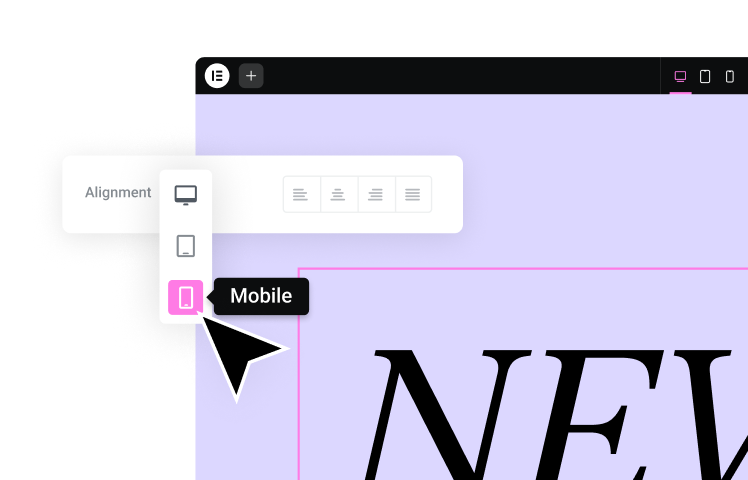
| Design Break (Mobile Layout) | Host: “We don’t support design.”Result: User hires a developer or searches forums. | Support: “Platform limitation.”Result: User accepts the broken layout or simplifies the design. | Support: Agent (Pro) identifies the CSS conflict or setting. Elementor AI: User asks AI to fix the responsive logic.Result: Fixed. |
| Email Delivery Failure | Host: “Check your SMTP settings.”Result: User struggles with API keys. | Support: “Internal mail system is working.”Result: Very reliable, but rigid. | Site Mailer: Problem prevented automatically. Logs available for debugging.Result: Reliability of SaaS, flexibility of WP. |
Conclusion: Defining “Best” in 2025
So, who offers the best website builder support? The answer is not found in a star rating but in the alignment with your business needs.
- For the Hobbyist who wants zero responsibility, the walled garden of a closed SaaS offers a “good enough” safety net, albeit with a low ceiling.
- For the Budget-Conscious DIYer, generic hosting offers the lowest price, but the highest “sweat equity” regarding support.
- For the Professional Creator, Agency, or Business, the Elementor Unified Ecosystem offers the superior value proposition.
Elementor has successfully hybridized the support model. It provides the accountability of a managed platform (through Elementor Hosting), the expertise of specialized agents (through Pro Support), and the autonomy of AI tools (through Elementor AI).
When you choose Elementor, you are not just buying a tool; you are hiring a virtual team. You gain a DevOps engineer (Hosting), a Security specialist (Ally), a Creative Coder (AI), and a network of millions of peers. In the high-stakes environment of the modern web, that is the definition of the best support.
10 Frequently Asked Questions About Website Builder Support
1. What is the difference between “Managed” and “Unmanaged” WordPress hosting support? Unmanaged hosting support strictly covers the hardware—ensuring the server is powered on and connected to the internet. If your WordPress site breaks after an update, unmanaged support will not help you. Managed hosting support (like Elementor Hosting) covers the application layer, meaning they will help troubleshoot WordPress-specific errors, plugin conflicts, and performance issues.
2. Why is “Live Chat” often considered better than “Phone Support” for technical web issues? While phone support feels more personal, it is inefficient for technical debugging. Live chat allows support agents to share screenshots, send direct links to knowledge base articles, paste code snippets, and even view your screen in real-time. It creates a written transcript of the solution that you can refer back to later, which is invaluable for complex fixes.
3. Does Elementor support help with third-party plugins? Elementor support specializes in the Elementor platform and Elementor Hosting environment. While they cannot rewrite the code of a third-party plugin (like a niche booking calendar), their agents are expert troubleshooters. They can often help you identify if a third-party plugin is the cause of a conflict and help you isolate it, enabling you to contact the plugin developer with specific information.
4. How does the “Safe Mode” feature assist in troubleshooting? Elementor’s “Safe Mode” is a powerful diagnostic tool that loads the Elementor editor without loading any active theme or plugin scripts. If the editor loads successfully in Safe Mode, you immediately know the issue is a conflict with another tool on your site. This empowers users to self-diagnose issues instantly without waiting for a support agent.
5. Is the Elementor Academy free to access? Yes, the Elementor Library and Academy are free resources available to everyone. They include hundreds of high-quality video tutorials, webinars, and structured courses. This extensive educational library allows users to upskill themselves and solve “how-to” problems without needing to open a support ticket.
6. Can AI tools really replace human support agents? For “How-To” questions and creative coding tasks, AI is often superior to human support because it is instant and integrated directly into the workflow. You don’t have to wait in a queue to ask how to add a shadow to a box. However, for “mission-critical” infrastructure failures (like a server outage), human agents remain essential for deep investigation and reassurance.
7. What is “Priority Support” and who needs it? Priority Support usually means your ticket bypasses the general queue and is routed directly to senior support agents. For agencies managing client sites and high-volume eCommerce businesses where downtime equals lost revenue, Priority Support is a necessary investment. It ensures that when a crisis hits, you are first in line for a resolution.
8. How does Elementor’s “Hello” theme reduce the need for support? The Hello theme is a lightweight “blank canvas” built strictly to WordPress standards. It contains no complex styling code or bloat that might conflict with the Elementor builder. By using Hello, you eliminate one of the biggest variables (the Theme) from the troubleshooting equation, making your site more stable and easier for support teams to diagnose.
9. Why do support teams ask for “temporary admin access”? To diagnose complex issues, support agents often need to see the “back end” of your website to check error logs, plugin settings, and system reports that are not visible from the front end. Reputable platforms use secure, temporary access tokens that allow agents to log in without you needing to share your actual password, ensuring security is maintained.
10. Can support teams help me with SEO strategy? Generally, technical support teams focus on the functionality of the software (“Is the site working?”), not business strategy (“How do I rank #1 on Google?”). However, platforms with extensive ecosystems like Elementor provide strategic support through their educational content, blogs, and webinars, which cover topics like SEO, marketing, and conversion optimization.
Looking for fresh content?
By entering your email, you agree to receive Elementor emails, including marketing emails,
and agree to our Terms & Conditions and Privacy Policy.