Table of Contents
Choosing the right platform is the single most significant variable in your SEO strategy. A poor foundation can throttle your growth, creating invisible ceilings that no amount of content marketing can break through. Conversely, a robust, technically sound platform acts as a force multiplier, ensuring every piece of content you publish is indexed, understood, and ranked with maximum efficiency. This guide cuts through the marketing noise to provide a definitive, expert-level analysis of the leading website builders, evaluating them strictly on their ability to deliver technical SEO excellence.
Key Takeaways
- Platform Choice is Critical: Your website builder dictates your site’s technical foundation, influencing speed, structure, and indexability before you write a single word.
- Core Web Vitals are Non-Negotiable: Platforms must natively support high performance (LCP, CLS, INP) without requiring complex workarounds or third-party patches.
- The “Hybrid” Advantage: The most powerful SEO solution combines the flexibility of open-source software with the performance and security of managed hosting.
- AI is an SEO Accelerator: Modern builders should integrate AI not just for writing, but for structural optimization, metadata generation, and accessibility compliance.
- Data Ownership Matters: SEO is a long-term asset; owning your code and data protects your rankings from platform policy changes or lock-in.
The Core Pillars of Technical SEO in 2026
Before we analyze specific tools, we must establish the criteria for evaluation. In 2026, technical SEO is not a simple checklist of keywords; it is a holistic measure of a website’s health, speed, and logical structure. Any website builder worth your time must excel in the following areas.
Core Web Vitals (CWV) and Performance Metrics
Google’s Core Web Vitals have cemented themselves as primary ranking factors. These metrics measure the user experience, and passing them is no longer optional.
- Largest Contentful Paint (LCP): This measures loading performance. To provide a good user experience, LCP should occur within 2.5 seconds of when the page first starts loading. Builders that rely on heavy JavaScript or unoptimized assets often fail this test.
- Cumulative Layout Shift (CLS): This measures visual stability. Does the page jump around while loading? High CLS scores frustrate users and signal a poor experience to Google.
- Interaction to Next Paint (INP): Replacing FID (First Input Delay), INP measures responsiveness. How quickly does the page respond to a click or keyboard interaction? Complex builders that execute heavy scripts on the main thread often struggle here.
A builder that generates bloated code, relies on heavy third-party scripts, or lacks server-side optimization will struggle to pass these tests, directly penalizing your rankings.
Semantic HTML and Logical Hierarchy
Search engines are robots. They “read” your site by parsing its HTML code. A builder must generate clean, semantic HTML—using <header>, <nav>, <main>, <article>, and <footer> tags correctly—rather than nesting content in endless, meaningless <div> soup.
Proper heading hierarchy (H1 through H6) is essential for helping AI-driven search algorithms understand the context and importance of your content. If a builder forces styling through headings (e.g., using an H2 simply because it looks big, rather than for structure), it confuses the crawling bots.
Mobile-First Indexing and Granular Control
Google predominantly uses the mobile version of the content for indexing and ranking. Responsive” is the baseline, but true mobile SEO requires granular control. You need the ability to adjust padding, font sizes, and even element visibility specifically for mobile devices to ensure the user experience is flawless on smaller screens. A button that is clickable on a desktop but too small on a phone is a ranking liability.
Schema Markup and Structured Data
To win rich snippets—those star ratings, recipe cards, and event details you see in search results—your site needs structured data (Schema.org). The best builders allow you to implement this easily, either through native settings or seamless integration with specialized tools, without needing to write raw JSON-LD code manually.
Accessibility as an SEO Signal
The intersection of accessibility and SEO is undeniable. Features that help users with disabilities—like descriptive alt text, keyboard navigation, and proper contrast—also help search engines understand your content. With regulations like the European Accessibility Act (EAA) tightening, accessibility compliance is now a requisite for global visibility. Search engines prioritize sites that are usable by everyone.
Evaluating the Contenders: A Technical Deep Dive
In this section, we examine the market’s leading platforms through a strict technical lens. We strip away the marketing language to understand how each platform constructs a webpage, manages data, and communicates with search engines.
WordPress (Core CMS)
WordPress is an open-source Content Management System (CMS) based on PHP and MySQL. It functions as a database-driven platform where content is stored separately from the design. When a user requests a page, the server queries the database and dynamically generates the HTML.
From an SEO perspective, WordPress provides the underlying architecture but relies entirely on third-party themes and plugins to handle on-page optimization. The core software does not include built-in XML sitemap generation or schema markup tools by default; these must be added via external software. The platform offers unrestricted access to the server environment (depending on the host), allowing for complete modification of the .htaccess file, robots.txt, and permanent link structure. However, performance is highly variable and contingent upon the quality of the hosting environment and the efficiency of the code within the installed themes and plugins.
Wix
Wix is a closed-source, Software-as-a-Service (SaaS) platform. It utilizes a proprietary drag-and-drop editor that renders websites using a combination of server-side rendering (SSR) and client-side JavaScript.
The platform manages the hosting infrastructure, meaning users cannot access the backend server, modify caching configurations, or alter the root code of the site. Wix generates dynamic URLs for certain elements and enforces a specific URL structure for blog posts (e.g., /post/) and product pages (e.g., /product-page/). While it provides built-in fields for meta titles and descriptions, the underlying HTML structure is determined by the platform’s rendering engine. Structured data is supported for specific content types, and redirects can be managed via a dashboard interface.
Squarespace
Squarespace operates as a hosted SaaS solution that provides a curated set of templates. It uses a proprietary rendering engine where users input content into pre-defined fields within the CMS.
The platform is designed as a “walled garden,” meaning all technical maintenance, security, and updates are handled by the provider. SEO settings are integrated into the page configuration panels, allowing users to modify URL slugs, page titles, and meta descriptions. However, the HTML output is strictly tied to the template family being used. Users do not have access to the server-side code or the ability to install external performance optimization modules. Schema markup implementation is automated for standard content types like products and events, but custom schema injection often requires a higher-tier subscription to access code injection areas.
Webflow
Webflow is a visual development tool that generates HTML, CSS, and JavaScript based on the user’s visual design choices. It functions as a hybrid between a design tool and a CMS.
The platform outputs clean code that mirrors what a developer might write by hand. It relies on a class-based styling system, requiring users to understand the box model and CSS hierarchy. Content is managed through “Collections,” which are databases of content items. The hosting is provided via Amazon Web Services (AWS) and Fastly CDN. While Webflow allows for granular control over on-page elements like heading tags and alt attributes, it imposes limits on the number of CMS items and static pages per project. It does not support a plugin architecture, so additional functionality must be integrated via third-party code embeds or API connections.
Shopify
Shopify is a dedicated e-commerce platform hosted on a proprietary infrastructure. It is designed specifically for online retail, managing inventory, payments, and product data.
The platform uses a templating language called Liquid to render pages. The URL structure is fixed and hierarchical, enforcing prefixes such as /collections/, /products/, and /pages/ that cannot be removed or modified. The CMS includes native fields for basic SEO metadata on product and collection pages. A robots.txt file is generated automatically, though recent updates allow for some customization. The platform manages the sitemap.xml file automatically. Any advanced technical SEO customization, such as complex schema implementation or blog structure modification, requires editing the theme’s Liquid files directly or installing third-party applications from the Shopify App Store.
Why “Platform + Builder” is the New Standard for SEO
The traditional binary choice—simple SaaS builders vs. complex open-source CMS—is evolving. The market is shifting toward a “Platform” model that combines the best of both worlds: the creative freedom of a page builder with the performance and reliability of managed hosting.
This hybrid approach addresses the biggest SEO killer: fragmentation. In a typical WordPress setup, you might have a host from Company A, a theme from Company B, a builder from Company C, and an image optimizer from Company D. When your site slows down or breaks, these components often conflict, and support teams pass the blame.
A unified platform eliminates this friction. By integrating the hosting infrastructure directly with the building tools, the platform can ensure that the server is perfectly tuned to run the software. This results in faster Time to First Byte (TTFB), better caching, and seamless asset optimization—all of which feed directly into superior SEO rankings.
The Elementor Advantage: A Comprehensive SEO Framework
Elementor has strategically evolved from a “page builder” plugin into a comprehensive Website Builder Platform. This distinction is crucial for SEO. By offering a unified ecosystem that includes managed hosting, AI, and performance tools, Elementor solves the fragmentation issue while retaining the SEO superpowers of WordPress.
1. The Foundation: Performance-First Hosting
SEO begins at the server level. If your server is slow, your rankings will suffer regardless of how good your content is. Elementor Hosting is built on the Google Cloud Platform C2 (Compute-Optimized) servers. These are the same high-performance servers that power Google’s own infrastructure.
- Enterprise CDN: Integrated Cloudflare Enterprise CDN ensures your content is delivered from a server closest to your user, drastically reducing latency and improving LCP scores globally. This is often an expensive add-on with other hosts but comes standard here.
- Server-Side Caching: Because the hosting is engineered for Elementor, the caching rules are pre-configured to serve static assets instantly without breaking the visual editor. This eliminates the common “cache wars” that plague standard WordPress setups.
- Scalability: The architecture auto-scales to handle traffic spikes, ensuring your site doesn’t crash (and lose rankings) during viral moments.
- Custom Domains: Establishing brand authority starts with your domain. Elementor simplifies this by offering a free custom domain for the first year, removing a barrier to entry for new sites.
2. The Creative Engine: Clean Code and Semantic Structure
The Elementor Website Builder provides a visual interface for generating semantic HTML. Unlike early page builders that relied on shortcodes, Elementor allows you to define HTML tags (<header>, <footer>, <main>, <article>, <aside>) for every container. This semantic precision allows search engines to understand the outline of your page instantly.
- Hello Theme: The Hello Elementor theme is a lightweight “blank canvas” framework. It loads in milliseconds and contains zero bloat, providing the perfect foundation for high Core Web Vitals scores. By stripping away unnecessary scripts and styles found in multipurpose themes, it ensures the browser only loads what is strictly necessary.
- Container Layouts (Flexbox & Grid): Elementor has transitioned to Flexbox Containers and CSS Grid. This modern architectural standard reduces the “DOM Depth” (the number of nested HTML tags), making the code lighter and easier for Google to crawl. Lighter code means faster rendering and better SEO.
- Custom Breakpoints: You are not limited to “Desktop” and “Mobile.” Elementor allows up to 7 custom breakpoints, giving you pixel-perfect control over how your site renders on tablets, ultra-wide monitors, and specific mobile devices, ensuring a flawless Mobile-First experience.
3. Image Optimization: The Hidden SEO Unlock
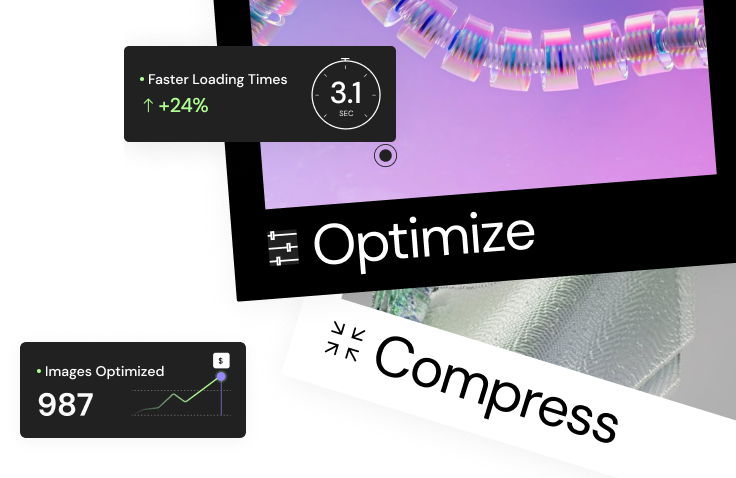
Large images are the primary culprit for slow websites. A 5MB banner image can single-handedly ruin your LCP score. Image Optimizer by Elementor is a plugin that automates this critical task, ensuring visual assets never drag down performance.
- Next-Gen Formats: It automatically converts images to WebP and AVIF, formats that are significantly smaller than JPEGs or PNGs but retain high quality. Google explicitly favors these formats.
- Smart Compression: It balances file size and visual fidelity, ensuring your LCP metric stays green without making your site look pixelated.
- Lazy Loading: By default, Elementor supports lazy loading, meaning images below the fold don’t load until the user scrolls to them, prioritizing the initial page load speed.
4. AI-Driven SEO: Efficiency at Scale
Elementor AI is integrated directly into the editor, acting as an SEO co-pilot. In 2026, speed of execution is a competitive advantage, and AI tools bridge the gap between technical requirements and content creation.
- Metadata Generation: Stuck on a meta description? Elementor AI can generate optimized titles and descriptions based on the content of your page, ensuring you capture the right keywords without keyword stuffing.
- Alt Text Automation: It analyzes your images and generates descriptive, keyword-rich alt text, saving hours of manual tagging and boosting accessibility.
- Content Optimization: You can use it to refine your copy, ensuring it is readable, engaging, and structured correctly for search intent.
- Custom Code: Need a specific schema markup or a tracking pixel? Elementor AI can write the HTML/CSS/JS snippets for you to insert safely, allowing non-developers to implement advanced SEO tactics.
5. Accessibility and Inclusivity
Ally by Elementor addresses the growing need for accessible web design. Accessibility is not just a legal requirement; it is a user experience metric that search engines increasingly value. A site that is accessible to screen readers is, by definition, easier for Google bots to parse.
- Automated Scans: It scans your site for accessibility violations that could hurt your SEO, such as missing headers or poor color contrast.
- Remediation: It provides actionable fixes for issues like low contrast or missing labels.
- Usability Widget: It adds a frontend widget allowing users to adjust font sizes and contrast modes, signaling to Google that your site caters to all users.
6. Reliability: Site Mailer
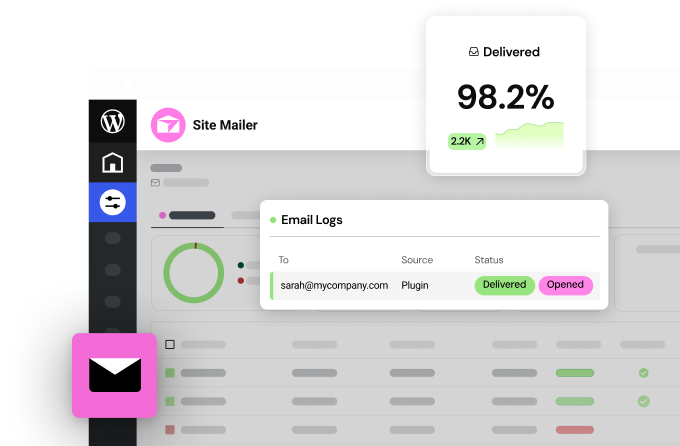
While not a direct ranking factor, reliable communication is vital for user trust and retention (which are indirect signals). Site Mailer ensures your transactional emails (contact forms, order confirmations) actually reach the inbox, bypassing unreliable server mail functions. A user who doesn’t receive their order confirmation is a user who bounces and leaves a bad review.
7. Strategic Planning: AI Site Planner
Before you build, you need a plan. The AI Site Planner helps you generate a sitemap and wireframe structure based on your industry. A logical site architecture is the backbone of technical SEO, ensuring link equity flows correctly throughout your domain.
E-Commerce SEO: Winning the Digital Shelf
For online stores, SEO is the difference between profit and loss. While Shopify is a strong contender, the Elementor + WooCommerce combination offers distinct SEO advantages, particularly in customization and URL structure.
Breaking Free from Rigid URLs
One of the biggest SEO complaints with hosted platforms is the forced URL structure (e.g., /products/blue-shirt). Elementor, running on WordPress, allows for complete control over your permalinks. You can create a clean, flat structure (e.g., site.com/blue-shirt) or a hierarchical one (e.g., site.com/mens/shirts/blue-shirt) depending on your SEO strategy. This flexibility is critical for large catalogs.
Custom Product Archives
Standard e-commerce themes often limit the amount of content you can place on category pages. Elementor’s Loop Grid and Archive Builder allow you to inject SEO-rich content, FAQ sections, and internal links directly into your product grids. This helps category pages rank for broad, high-volume keywords.
Advanced Search and Filtering
User experience in e-commerce relies heavily on product discovery. Elementor’s Taxonomy Filter widget allows users to filter products instantly without page reloads (using AJAX). This keeps users engaged, reduces bounce rates, and increases the time on site—all positive signals to search algorithms.
Content Marketing and Growth Tools
Technical SEO lays the foundation, but content drives the traffic. Elementor’s ecosystem includes tools designed to amplify your content strategy and engage your audience.
Building Dynamic Content Hubs
Modern SEO requires topical authority, often achieved through “content hubs” or clusters. Elementor’s Theme Builder allows you to design custom templates for your blog posts and archives. You can dynamically insert “Related Posts” based on categories or tags, strengthening your internal linking structure automatically.
Engaging Users with Mega Menus
Navigation is a key part of site architecture. A well-structured Mega Menu allows you to link to deep pages within your site, passing authority from the homepage to sub-pages. Elementor’s Menu widget makes building these complex, SEO-friendly navigation structures intuitive and code-free.
Step-by-Step: How to Build an SEO-Ready Site with Elementor
Building a high-ranking website is a process, not a one-time event. Follow this workflow to ensure your Elementor site is optimized from day one.
Step 1: Secure the Right Infrastructure
Start with Elementor Hosting. The combination of Google Cloud C2 servers and Cloudflare Enterprise CDN gives you an immediate technical advantage. Avoid cheap shared hosting, which often suffers from “noisy neighbor” issues that slow down your TTFB.
Step 2: Establish the Foundation with Hello Theme
Install the Hello Elementor theme. It is free, open-source, and lighter than almost any other theme on the market. It provides the bare minimum code required to run WordPress, allowing Elementor to handle the design without fighting against pre-existing theme styles or bloat.
Step 3: Plan Your Architecture
Use the AI Site Planner to generate a sitemap. Ensure your hierarchy is logical:
- Home
- Services
- Service A
- Service B
- Blog
- Category A
- Category B This structure helps Google bots crawl your site efficiently.
- Services
Step 4: Configure Global SEO Settings
Install a dedicated SEO plugin like Yoast SEO or RankMath. Elementor integrates seamlessly with both. Set up your global schema (e.g., Organization, Person) and configure your sitemap settings.
Step 5: Build with Semantic HTML
As you design in the Elementor Editor, be mindful of your tags.
- Select the Section/Container housing your navigation and change the HTML Tag to <nav>.
- Set your main content area to <main>.
- Ensure your footer Section is set to <footer>.
- Use only one H1 per page (usually the page title). Use H2 for main sections and H3 for subsections.
Step 6: Optimize Assets Immediately
Activate Image Optimizer by Elementor. Configure it to “Optimize on Upload” and set it to convert images to WebP. This ensures you never accidentally upload a 5MB image that kills your page speed.
Step 7: Leverage Elementor AI for Content
As you populate your pages, use Elementor AI to check your writing. Ask it to “Make this paragraph more concise” or “Generate a meta description for this page.” Ensure every image has descriptive alt text generated by the AI.
Step 8: Ensure Accessibility
Run a scan with Ally by Elementor. Fix any contrast errors or missing attributes. Add the accessibility widget to your footer to empower users with specific needs.
Step 9: Connect to Google Search Console
Once your site is live, submit your sitemap to Google Search Console. Monitor the “Page Experience” and “Core Web Vitals” reports. Because you’ve built on a performance-optimized stack, you should see strong scores out of the gate.
Comparison Matrix: SEO Capabilities
How does the Elementor ecosystem compare to the closed SaaS competitors when purely evaluating technical SEO potential?
| Feature | Elementor Ecosystem (WordPress) | Wix | Squarespace | Webflow |
| Hosting Performance | High (Google Cloud C2 + Cloudflare Ent) | High (AWS + Custom CDN) | Medium (Standard Cloud) | High (AWS / Fastly) |
| Code Control | Full (Open Source, Custom HTML/CSS/JS) | Limited (Closed Platform) | Low (Locked Templates) | High (Visual Code Editor) |
| Semantic HTML | Full Control (Custom Tags for any element) | Improved (Auto-generated) | Basic (Template dependent) | High (Manual control) |
| URL Structure | Flexible (Custom Permalinks) | Rigid (Forced structure) | Rigid (Forced structure) | Flexible (Custom slugs) |
| Schema Markup | Advanced (Plugins + Custom JSON-LD) | Basic (Built-in presets) | Limited (Requires coding) | Manual (Custom code) |
| Image Optimization | Advanced (WebP/AVIF, Lossless/Lossy) | Automated (WebP) | Automated (Standard) | Automated (WebP variants) |
| AI Integration | Deep (Content, Code, Meta, Images) | Moderate (Content, Meta) | Basic (Content writing) | Basic (Localization) |
| Data Ownership | 100% (You own the code & data) | 0% (Platform lock-in) | 0% (Platform lock-in) | 0% (Platform lock-in) |
Future-Proofing Your SEO: Beyond 2026
SEO is not a static target. As we look toward the latter half of the decade, two major trends will define the winners: Voice Search and AI Overviews (SGE).
Optimizing for AI Overviews
Google’s Search Generative Experience (SGE) summarizes answers directly in the search results. To be cited in these AI snapshots, your content must be authoritative, clearly structured, and answer specific questions directly. Elementor’s FAQ Widget (using schema markup) and logical heading structures help AI parsers extract your information accurately. The Elementor AI writing tools can help you format your content into the “question and answer” style that these engines prefer.
The Importance of Data Ownership
In a volatile digital landscape, renting your SEO success is risky. When you build on a closed platform (Wix, Squarespace), you are subject to their pricing changes, terms of service, and technical limitations. If they depreciate a feature you rely on for rankings, you have no recourse. With Elementor and WordPress, you own your asset. You can move your site to any server, modify any file, and retain your hard-earned link equity. This sovereignty is the ultimate future-proofing strategy.
Frequently Asked Questions (FAQs)
Q: Can I rank #1 on Google using a page builder like Elementor? A: Absolutely. Many of the world’s highest-traffic sites use Elementor. Ranking depends on the quality of your content, your technical foundation, and your authority. Elementor provides the technical tools (speed, structure, schema) to ensure your content has the best possible chance to rank.
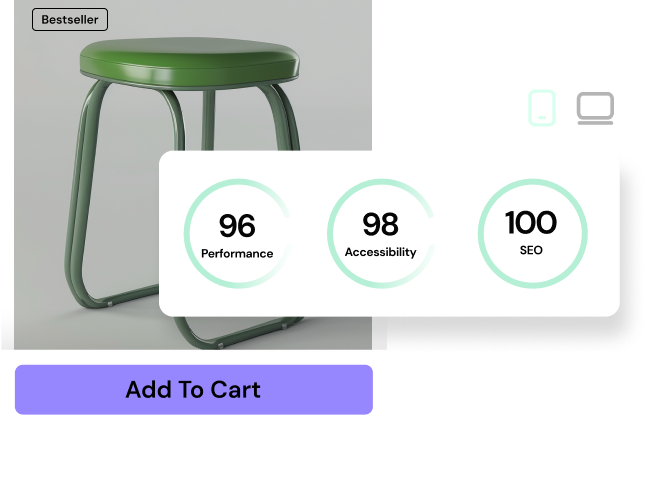
Q: Does Elementor slow down websites? A: Not inherently. While older versions of page builders generated extra code, modern Elementor is optimized for performance. When paired with Elementor Hosting and the Hello Theme, and utilizing the Image Optimizer, Elementor sites can achieve perfect 100/100 Core Web Vitals scores. Speed issues are usually caused by cheap hosting or oversized images, not the builder itself.
Q: Is Wix better than WordPress for SEO in 2026? A: Wix has improved, but WordPress (with Elementor) still holds the crown for flexibility and depth. If you need advanced technical SEO capabilities, complex schema, or total control over your site architecture, WordPress is the superior choice. Wix is sufficient for basic needs but has a lower “ceiling.”
Q: Do I need a separate SEO plugin with Elementor? A: Yes, and that is a strength. Elementor integrates seamlessly with top-tier plugins like Yoast SEO and RankMath. These dedicated tools offer far more power and granularity than the generic “built-in” SEO settings found in all-in-one builders like Squarespace.
Q: How does Elementor AI help with SEO? A: Elementor AI accelerates SEO tasks by generating optimized meta titles and descriptions, writing descriptive alt text for images, and even creating custom HTML/CSS snippets for specific design needs. It ensures you don’t skip these critical steps due to lack of time.
Q: What is the best theme for Elementor SEO? A: The Hello Elementor theme is widely considered the best for SEO. It is extremely lightweight, loads instantly, and has no redundant code. It acts as a fast, clean container for your Elementor designs.
Q: Does Elementor support Schema Markup? A: Yes. You can add schema via integrations with SEO plugins, or you can use the Elementor “HTML” widget to insert custom JSON-LD schema scripts generated by Elementor AI or other tools directly onto specific pages.
Q: Is Elementor Hosting worth it for SEO? A: Yes. Hosting is a major ranking factor because it dictates site speed and uptime. Elementor Hosting uses Google Cloud C2 servers and Cloudflare Enterprise CDN, which provides enterprise-level performance that typically costs hundreds of dollars a month, pre-integrated and optimized for the platform.
Q: How do I fix “Cumulative Layout Shift” (CLS) in Elementor? A: CLS often happens when images load without defined dimensions. Elementor allows you to set explicit width and height attributes for images. Additionally, using the Image Optimizer and ensuring fonts are preloaded (a feature in Elementor settings) helps stabilize the layout during loading.
Q: Can I migrate my SEO rankings from Wix/Squarespace to Elementor? A: Yes, but you must be careful. You will need to recreate your pages in Elementor. The most critical step is setting up 301 redirects from your old URL structure (e.g., mysite.com/blog/post-name) to your new WordPress structure. If done correctly, you will retain your domain authority and rankings.
Conclusion
The question “Which website builder is best for SEO?” ultimately comes down to a choice between convenience and control. Closed platforms like Wix and Squarespace offer convenience but place a ceiling on your technical potential. For serious web creators, businesses, and agencies who view their website as a primary growth engine, that ceiling is unacceptable.
The winning formula for 2026 is the Hybrid Model: The open-source freedom of WordPress, powered by the visual capabilities of Elementor, and backed by the managed performance of Elementor Hosting.
This ecosystem does not just help you build a website; it helps you build a high-performance digital asset. With tools like Image Optimizer ensuring speed, Elementor AI streamlining metadata, and Ally guaranteeing accessibility, you are equipping your site with every possible technical advantage. In the competitive race for the top of the search results, Elementor is the engine that drives you to #1.
Looking for fresh content?
By entering your email, you agree to receive Elementor emails, including marketing emails,
and agree to our Terms & Conditions and Privacy Policy.