Table of Contents
For web creators, developers, and agency owners, the question is no longer just “Which builder is the easiest to use?” It is now a critical strategic decision: “Which platform integrates AI deeply enough to handle the heavy lifting of modern SEO while giving me the control I need to rank?” The right website builder doesn’t just offer surface-level “AI features” like a text generator. It acts as a comprehensive platform that aligns code, content, and strategy with the complex algorithms that determine online success.
Key Takeaways
- Platform Integration Wins: Disparate tools lead to fragmented data and bloated code. A unified platform that combines managed hosting, visual building, and AI logic offers superior SEO performance by streamlining the technical stack.
- Performance Is SEO: Core Web Vitals are non-negotiable ranking factors. Your builder must output clean, semantic code and sit on enterprise-grade infrastructure to ensure rapid Time to First Byte (TTFB).
- AI Goes Beyond Text: True AI SEO involves code generation for complex schema markup, automated accessibility remediation, and strategic site planning—not just writing blog posts.
- Agentic AI Is the Future: We are moving from generative AI (creating content) to agentic AI (executing tasks). Tools like Angie allow for site-wide SEO audits, bulk updates, and technical fixes in minutes rather than days.
- Strategic Control: While SaaS platforms offer ease, open-source foundations like WordPress—powered by advanced builders like Elementor—provide the granular control necessary for competitive ranking in 2026.
The New Standard: Why AI SEO Matters in 2026
Search engines have evolved from simple matching engines to complex neural networks that understand context, nuance, and user satisfaction. In the past, a search engine would look for the exact phrase “best italian restaurant.” Today, it understands that a user searching for this at 7 PM on a Friday on a mobile device is looking for dinner options nearby, likely prioritising places with good reviews and easy table booking functionality.
In response, the tools we use to build the web must evolve. “AI SEO” is not merely about asking a chatbot to write a meta description. It is about a holistic integration of machine learning into the very fabric of website creation. It is about automating the technical minutiae so that human experts can focus on high-level strategy and creative differentiation.
For a website builder to be truly “best” for AI SEO, it must address three distinct layers of optimization:
- Strategic Layer: This involves planning the site structure, establishing semantic relevance, and mapping out internal linking before a single pixel is placed. AI tools can now analyze niche competition and suggest the optimal sitemap to build topical authority.
- Technical Layer: This ensures the underlying code is semantic, accessible, and fast. It involves meeting the strict requirements of Core Web Vitals, managing crawl budgets, and ensuring mobile responsiveness.
- Content Layer: This involves generating authoritative, helpful content that aligns with user intent, while automatically handling the metadata, schema markup, and alt text that search engines crave to understand the context of the page.
The era of manual schema markup and guessing at site structure is fading. The modern web creator needs a platform that acts as a partner, automating the tedious aspects of technical SEO so they can focus on high-level strategy. As digital marketing expert Itamar Haim notes, the future of web creation isn’t about choosing between AI and human creativity, but integrating them. The expert’s role shifts from writing code to orchestrating these powerful agents to deliver value faster.
Key Criteria for Evaluating AI Website Builders
Before analyzing specific platforms, we must establish the metrics of success. When evaluating a builder for its AI SEO capabilities, you must look beyond the marketing hype and assess the tool based on four critical pillars that directly impact search performance.
1. Code Quality and Performance Infrastructure
An AI tool can write the best content in the world, but if the underlying HTML is bloated, or the server response time (TTFB) is slow, the site will struggle to rank. Search engines have limited “crawl budgets” for every site. If your code is heavy and your server is slow, bots will crawl fewer pages, indexing your content more slowly.
The best builders generate clean, semantic markup—using proper HTML5 tags like <header>, <nav>, <main>, and <article> rather than an endless soup of <div> tags. Furthermore, the software must be supported by a hosting environment optimized specifically for that code. We are looking for platforms that integrate Content Delivery Networks (CDNs), server-level image optimization, and advanced caching mechanisms.
2. Context-Aware Content Generation
Generic AI allows you to generate text. Superior AI understands the context of that text within the website’s structure. It knows that a heading in a “Services” section requires a different semantic weight and tone than a caption in a gallery or a product description in a store.
Context-aware AI can read the content of a page and generate metadata—titles, descriptions, and alt text—that is not only keyword-rich but also accurately reflects the page’s purpose. This ability to generate context-aware metadata directly within the workflow is a significant efficiency multiplier, preventing the common SEO issue of missing or duplicate meta tags.
3. Technical Flexibility (Schema and Custom Code)
SEO often requires custom solutions. You might need specific JSON-LD schema for a local business, a custom event, a recipe, or a job posting. Standard SaaS platforms often restrict your ability to inject custom code or modify the site’s <head> section, forcing you to rely on generic settings.
The ideal builder uses AI to bridge the gap between a visual interface and advanced developer requirements. It should allow you to prompt an AI assistant to “Write JSON-LD schema for a law firm with these opening hours” and then insert that code directly into the page, validating it for syntax errors automatically.
4. Accessibility and Inclusivity
Search engines increasingly prioritize accessible websites. Google’s algorithms favor sites that provide a good user experience for all users, including those with disabilities. Features that automatically scan for contrast issues, missing ARIA labels, and navigation errors are now essential SEO tools. A builder that integrates these checks into the design process ensures you are not penalized for excluding users and signals high quality to search engines.
The Contenders: A Neutral Market Analysis
To make an informed decision, we must examine the major players in the market. Each platform takes a different approach to integrating AI and SEO.
Wix
Wix is a cloud-based web development platform that has integrated various AI tools into its ecosystem. It utilizes Artificial Design Intelligence (ADI) to generate initial site layouts based on user inputs.
- AI Capabilities: Wix provides tools for generating text and creating site layouts. It recently introduced an AI meta tag generator that suggests titles and descriptions based on page content.
- SEO Infrastructure: The platform manages technical aspects such as sitemaps, robots.txt, and canonical tags automatically. It includes a built-in SEO checklist that guides users through basic setup steps.
- Platform Nature: Wix is a closed ecosystem. While this ensures stability, it limits the user’s ability to modify the server environment or implement complex, custom schema markup that falls outside the platform’s native options. The hosting is proprietary, meaning users cannot migrate their site to a different infrastructure if performance needs change.
Squarespace
Squarespace is a SaaS website builder known for its designer templates and visual focus. Its AI features are primarily centered around content creation.
- AI Capabilities: The platform offers “Blueprint AI” for setting up the initial website structure and “Squarespace AI” for drafting website copy. The AI assists in maintaining a consistent tone across text elements.
- SEO Infrastructure: Squarespace provides automatic generation of sitemaps and clean HTML markup. It includes a simplified SEO panel for managing page titles and descriptions.
- Platform Nature: Like Wix, Squarespace is a “walled garden.” Users have limited access to the site’s backend code. Advanced technical SEO implementations, such as programmatic SEO or complex structured data injection, can be challenging due to these restrictions.
Webflow
Webflow is a visual web design tool that translates visual design into code, targeting designers and front-end developers.
- AI Capabilities: Webflow’s AI integration focuses on localization and translation workflows. It also offers some logic for assisting in building layouts, but its generative content capabilities are less central than its design features.
- SEO Infrastructure: Webflow allows for granular control over on-page SEO elements, including Open Graph settings and manual schema edition. It produces clean, semantic code which can contribute to good page speed scores.
- Platform Nature: Webflow has a steeper learning curve compared to other builders. While it offers high control, it does not automate SEO tasks to the same degree. Users are responsible for manually configuring most technical SEO settings, and the AI does not actively assist with ongoing optimization or content strategy.
Elementor: The Comprehensive AI SEO Platform
When we apply our rigorous evaluation criteria—performance infrastructure, context-awareness, technical flexibility, and automated accessibility—Elementor emerges not merely as a page builder, but as a complete ecosystem designed for the modern, AI-driven SEO landscape. By combining the open-source flexibility of WordPress with a proprietary suite of advanced AI tools, Elementor bridges the gap between the ease of use found in SaaS platforms and the professional-grade optimization required by experts.
The Foundation: Performance as a Ranking Factor
SEO begins at the server level. If the server is slow to respond, Google’s bots waste their crawl budget waiting, and users bounce before the content loads. Elementor has evolved beyond a plugin to offer a complete managed hosting solution.
Elementor Hosting is built on the premium tier of the Google Cloud Platform (C2 machines) and is integrated with Cloudflare Enterprise. This infrastructure is critical for SEO for several reasons:
- Time to First Byte (TTFB): The C2 instances and Cloudflare’s global edge network ensure that the server response time is minimized globally. A low TTFB is the first hurdle in passing Core Web Vitals.
- Advanced Caching: The hosting environment includes object caching and CDN integration by default, reducing the load on the database and speeding up content delivery.
- Security: With enterprise-grade firewalls and DDoS protection, the site remains accessible and secure, preventing downtime that can negatively impact search rankings.
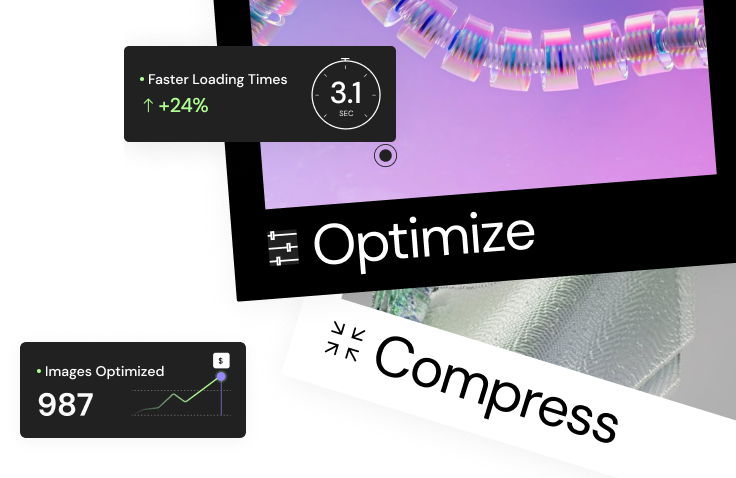
Furthermore, managing media assets is crucial for performance. The Image Optimizer by Elementor plugin handles this automatically. It compresses images and converts them to next-generation formats like WebP and AVIF. This “set and forget” tool ensures that visual richness does not compromise load speed, directly improving the Largest Contentful Paint (LCP) metric.
Strategic Planning with AI Site Planner
One of the most common SEO mistakes is poor site architecture. If a site is not structured logically, search engines struggle to understand the relationship between pages, and “link juice” is not distributed effectively. The Elementor AI Site Planner acts as a digital strategist to solve this.
Instead of starting with a blank canvas and guessing which pages are needed, users can converse with the AI about their business goals and niche. The Site Planner analyzes the industry and generates a comprehensive sitemap. For example, for a dental clinic, it might suggest distinct pages for “Cosmetic Dentistry,” “Orthodontics,” and “Patient Resources,” ensuring the site has the necessary depth to build topical authority.
Beyond the list of pages, it produces wireframes that prioritize user flow. A well-structured wireframe ensures that internal linking opportunities—such as linking “Services” from the homepage—are baked into the design from day one. Good UX is good SEO; if users can navigate the site easily, dwell time increases and bounce rates decrease, sending positive signals to search algorithms.
Elementor AI: The On-Page Optimization Engine
Once inside the Elementor AI editor, the AI acts as an embedded SEO specialist, integrated directly into the workflow.
Context-Aware Metadata Generation: Creating unique meta titles and descriptions for every page is tedious but essential. With Elementor AI, you can highlight any text widget or container and ask the AI to generate title tags and meta descriptions. Because the AI is integrated into the builder, it reads the content of the page to ensure accuracy. You can specify keywords to include and even ask it to ensure the output fits within the pixel width limits displayed in search results.
Code Generation for Schema: This is a distinct advantage of Elementor’s open-source foundation. While closed platforms might offer a toggle for “Local Business” schema, Elementor allows for infinite customization. You can use the AI Code Assistant to “Write JSON-LD schema for a recipe with these ingredients and cooking time” or “Generate FAQ schema for these three questions.” The AI writes the code, and you can insert it directly into the HTML widget. This eliminates the need for complex, heavy schema plugins and ensures the code is valid.
Content Relevance and Intent: Ranking for high-value keywords requires content that matches search intent. Elementor AI can rewrite existing content to improve keyword density naturally. It can change the tone of a paragraph to be more “transactional” for a landing page or more “informational” for a blog post. It can also translate content to target international search queries, opening up new markets for the website.
Angie: The Agentic AI Revolution
The most significant leap forward in AI SEO is the introduction of Angie, Elementor’s agentic AI. It is crucial to understand the difference between generative and agentic AI. Generative AI creates text or images based on a prompt. Agentic AI executes tasks and performs actions within the system.
For SEO professionals, Angie is a force multiplier.
- Site-Wide Audits: You can task Angie with “Check my site for images missing alt text.” It will not only identify the images but can also generate and apply the descriptive text based on the image content automatically.
- Bulk Actions: For large eCommerce sites or content hubs, updating metadata can take days. Angie can update product descriptions or SEO titles across hundreds of pages in minutes. For instance, you could command: “Update the meta description for all products in the ‘Running Shoes’ category to include ‘Free Shipping’.” Angie executes this bulk action, transforming SEO maintenance from a manual chore into an automated workflow.
Ally: Accessibility as a Ranking Signal
Accessibility is often overlooked in SEO discussions, but it is a critical factor. Search engines favor inclusive sites, and the code required for accessibility (semantic HTML, alt text, ARIA labels) helps bots understand the content better. Ally by Elementor integrates accessibility scanning directly into the building workflow.
- Automated Remediation: Ally scans the site for common violations, such as low contrast ratios between text and background, missing navigation labels, or images without descriptions.
- SEO Impact: By fixing these issues, you are not only avoiding legal risks and opening your content to the 16% of the global population with disabilities, but you are also cleaning up your code. A screen reader needs headers (H1-H6) to be in a logical order to navigate a page; search spiders use this same logic to determine the hierarchy and importance of your content. By using Ally to fix the site for humans, you are inadvertently polishing your technical SEO to a mirror shine.
Detailed Feature Breakdown: Elementor vs. The Market
To visualize the strategic differences, we can compare how these platforms handle specific, critical SEO tasks. The table below highlights the depth of integration offered by the Elementor ecosystem compared to standard market competitors.
| Feature | Elementor Ecosystem | Wix Studio | Squarespace | Webflow |
| Hosting Infrastructure | Google Cloud C2 + Cloudflare Ent. | Proprietary Cloud | Proprietary Cloud | AWS |
| AI Content Gen | Context-aware (Text, Code, Image) | Text & Layout | Text only | Localization only |
| Schema Markup | AI-generated Custom Code | Basic Settings | Basic Settings | Manual Code |
| Image Optimization | Native WebP/AVIF Conversion | Automatic | Automatic | Manual/Plugin |
| Accessibility | Native AI Scanning (Ally) | Accessibility Wizard | Limited | Manual |
| Strategic Planning | AI Site Planner (Sitemap/Wireframe) | AI Layout Gen | Blueprint AI | None |
| Agentic Actions | Angie (Multi-step tasks) | None | None | None |
| Lock-in | None (Open Source Foundation) | High | High | High |
The “Lock-in” row is a crucial consideration for long-term SEO strategy. If you build on a closed platform and outgrow its SEO capabilities, you face a painful and expensive migration that can temporarily tank your rankings. With Elementor, because it is based on open-source WordPress, you own your data. You can export your content. You can tap into the vast ecosystem of WordPress plugins if you need a specific niche feature. This long-term security is a major factor for serious businesses.
Mastering the Workflow: A Step-by-Step AI SEO Strategy
To truly leverage the power of the Elementor ecosystem, it helps to view it not as a collection of tools, but as a linear workflow for building high-ranking websites. Here is a professional strategy for deploying these tools effectively.
Phase 1: The Strategic Blueprint
Do not begin with a blank canvas. Start with the AI Site Planner.
- Prompt the Planner: Provide a detailed description of your niche. For example, “I am building a site for a boutique law firm specializing in intellectual property for tech startups.”
- Analyze the Sitemap: The AI will suggest a sitemap. Look for pages that establish E-E-A-T (Experience, Expertise, Authoritativeness, Trustworthiness). It might suggest “Case Results,” “Attorney Profiles,” and “Tech Law Blog.”
- Refine the Wireframe: The AI generates a wireframe. Verify the user flow. Ensure that high-value pages like “Services” are linked prominently from the homepage to pass authority.
Phase 2: The Build and Technical Foundation
Deploy the site on Elementor Hosting to ensure the infrastructure is solid.
- Select the Foundation: Use the Hello Theme. This is a lightweight, “blank canvas” theme. It contains no bloated scripts or unwanted styles, providing the cleanest possible HTML output for the builder.
- Activate Image Optimization: Install the Image Optimizer. As you build and upload high-resolution assets, the plugin will automatically compress them and serve them in next-gen formats.
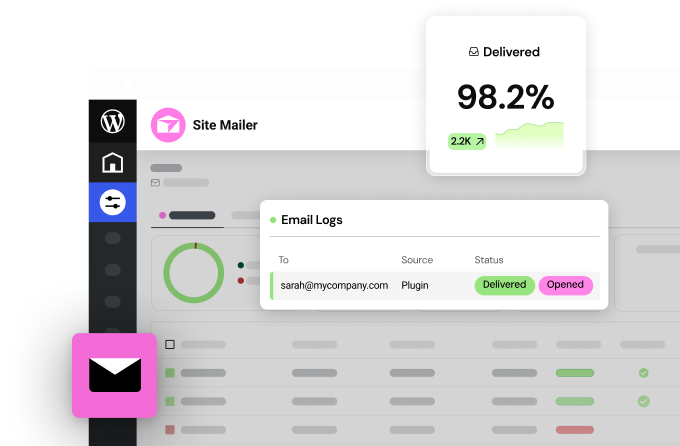
- Technical Reliability: Configure Site Mailer. While primarily for email deliverability, ensuring your contact forms work reliably is a trust signal for Google. A site with broken forms has a high bounce rate, which hurts rankings.
Phase 3: Content and On-Page Optimization
As you build the pages, use Elementor AI inside the editor.
- Drafting Content: Use the AI to expand on your wireframe’s bullet points. “Write a persuasive paragraph about trademark law for SaaS companies, emphasizing speed and protection.”
- Metadata Injection: For every page, open the page settings. Prompt the AI: “Write a meta title under 60 characters and a description under 160 characters for this page, focusing on the keyword ‘IP Lawyer for Startups’.”
- Custom Schema: Use the HTML widget for advanced schema. Prompt the AI: “Generate FAQ schema markup for the following three questions and answers.” Paste the code into the widget. The AI ensures the JSON-LD syntax is correct, preventing structured data errors in Google Search Console.
Phase 4: The eCommerce Advantage
For online stores, the stakes are even higher. Use the WooCommerce Builder paired with Elementor eCommerce Hosting.
- Product Descriptions: Duplicate content is a killer for eCommerce SEO. Use AI to rewrite manufacturer-provided descriptions to be unique and brand-aligned.
- Dynamic Tags: Set up Single Product templates where the H1 tag automatically pulls the Product Title. This ensures consistency across thousands of products without manual tagging.
- Visual AI: Use Elementor AI to generate lifestyle images for category headers where you might lack photography, keeping users engaged.
Phase 5: Audit, Maintenance, and Growth
Once the site is live, the work isn’t done. Bring in Angie and other growth tools.
- Run an Audit: Ask Angie to scan the site for broken links, missing H1 tags, or images missing alt text.
- Accessibility Check: Use Ally to ensure your color palette has sufficient contrast and that your navigation is keyboard accessible.
- Pro Features: Leverage Elementor Pro for advanced capabilities like the Popup Builder (for exit-intent lead capture) and Custom Code areas (for inserting tracking pixels without a plugin).
Why “D2C” Thinking Applies to SEO
In the past, we thought of “Direct to Consumer” (D2C) as a retail model. Today, in SEO, we must think “Direct to Intent.”
As mentioned in industry analyses regarding the future of eCommerce, brands must view data as a value exchange. When we optimize a site, we are exchanging valuable content for the user’s attention. An AI-powered platform allows us to create this content at scale.
For example, using data from Elementor’s WooCommerce Builder, we can create custom product loops that display items based on user behavior. This personalized experience reduces bounce rates, a strong signal to Google that the page satisfies user intent. If a user lands on a blog post about “Hiking Boots,” and the sidebar dynamically shows the exact boots mentioned in the article, the user is more likely to click and stay on the site.
Advanced Technical SEO with Elementor
For developers and technical SEO specialists, Elementor offers specific capabilities that allow for deep optimization beyond what is possible on closed platforms.
Dynamic Content and SEO
Elementor Pro allows for the extensive use of dynamic content. You can build a single “Single Post” template and use dynamic tags to populate the SEO fields.
- Strategy: Create a custom field (using ACF or JetEngine) for “SEO Focus Keyword” or “Image Alt Attribute.”
- Implementation: In your Elementor template, set the image widget’s alt text to dynamically pull from this custom field. This ensures that even if a client forgets to set alt text in the media library, the system has a relevant, data-driven fallback.
Custom Breakpoints and Layout Shift
Mobile-first indexing is the standard. However, different devices render content differently, leading to Cumulative Layout Shift (CLS), a Core Web Vital metric. Elementor allows you to set custom breakpoints, ensuring your design is stable across mobile, tablet, and desktop. You can choose to hide heavy elements (like background videos or complex sliders) specifically on mobile devices to improve load times and reduce CLS, directly impacting your mobile ranking.
Integration with Marketing Tools
SEO works best when integrated with other channels.
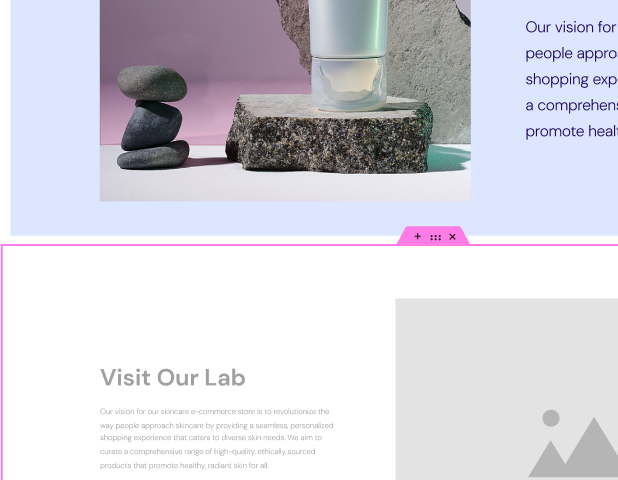
- Elementor Library: Use Elementor Library to insert pre-designed blocks for “FAQ” sections or “Review” grids. These blocks are coded with semantic HTML structure, saving you from fixing poor nesting or invalid tags later.
The Future: From “Page Builder” to “Website Platform”
The terminology in the industry is shifting. We are no longer talking about “page builders” which simply layout visual elements. We are talking about a “Website Builder Platform.”
This distinction is critical for SEO. A page builder handles the design of a single URL. A platform handles the ecosystem.
- It manages the hosting environment (Speed, Caching, CDN).
- It manages the security (SSL, Firewalls, DDoS protection).
- It manages the workflow (AI planning, Agentic execution, Accessibility).
Competitors like Wix and Squarespace are platforms, but they are closed. WordPress is an open platform, but it is often fragmented and difficult to manage. Elementor, combined with Elementor Hosting, represents the synthesis: the power and freedom of open-source WordPress with the unified intelligence and performance of a managed platform.
10 Frequently Asked Questions About AI SEO Builders
1. Will using an AI website builder hurt my SEO rankings?
No, using an AI builder itself does not hurt rankings. In fact, clean code generation and automated image optimization provided by platforms like Elementor can significantly improve them. However, relying entirely on AI-generated content without human editing can lead to “thin content” penalties. Use AI as a drafting and technical tool, not a “publish and forget” solution.
2. Can Elementor AI write SEO-optimized blog posts?
Yes. You can use the AI text generator within the editor to draft blog posts. You can prompt it to “write a 1000-word article about [Topic], including keywords [X, Y, Z].” Crucially, it creates structured headings (H2, H3) which are essential for SEO hierarchy, rather than just blocks of plain text.
3. How does Elementor Hosting improve SEO compared to cheap shared hosting?
Elementor Hosting uses Google Cloud’s C2 machines and Cloudflare Enterprise. This infrastructure is significantly faster than typical shared hosting. Speed is a direct ranking factor (Core Web Vitals), so better hardware equals better SEO potential. Cheap hosting often suffers from “bad neighbors” on shared servers that slow down your site.
4. What is the difference between Generative AI and Agentic AI for SEO?
Generative AI (like ChatGPT or Elementor AI’s writing tool) creates text or images based on prompts. Agentic AI (like Angie) performs tasks and actions. For SEO, Generative AI writes the meta description; Agentic AI scans the site to find pages missing descriptions and applies them automatically.
5. Does Elementor support Schema Markup?
Yes. You can add schema using the HTML widget. The standout feature is using Elementor AI to write the JSON-LD code for you based on the page content. This ensures the code is syntax-error-free without needing a dedicated, often bloated, schema plugin.
6. Is the Hello Theme really better for SEO?
Yes. The Hello Theme is a “blank canvas” theme with minimal code. It loads extremely fast because it doesn’t have bloated scripts or styles that you aren’t using. This lightweight foundation is ideal for technical SEO, giving you a head start on performance metrics.
7. Can I migrate my Wix or Squarespace site to Elementor for better SEO?
Yes. While migration requires effort, moving to WordPress with Elementor gives you full ownership of your data and access to advanced SEO plugins (like Yoast or RankMath) and technical controls that are often locked in closed platforms. It is a strategic move for long-term growth.
8. How does the Image Optimizer help with Core Web Vitals?
The Image Optimizer automatically compresses images and converts them to WebP/AVIF. This reduces the “payload” of the page, improving the Largest Contentful Paint (LCP) metric, which is a primary Core Web Vital. It does this without you needing to manually process images in Photoshop.
9. Do I need to know how to code to use Elementor for SEO?
No. That is the power of the platform. You can control visual design, mobile responsiveness, and metadata without code. However, for advanced tasks like custom CSS or specific schema, the AI Code Assistant can write the snippets for you, making advanced features accessible to non-coders.
10. Is Elementor free?
There is a free download available which is excellent for basic sites. However, for serious AI SEO capabilities (Custom Code, AI integration, Theme Builder, WooCommerce Builder), Elementor Pro is recommended. The ROI on the time saved by AI features and the improved ranking potential usually justifies the cost for professionals.
Conclusion
The question “Which website builder is best for AI SEO?” has a clear answer in 2026. While many platforms offer AI gimmicks, the “best” platform is the one that integrates AI into the deep technical and strategic layers of website creation.
Tools like Wix and Squarespace offer convenient, surface-level AI tools that are great for beginners who want a “good enough” site fast. Webflow offers control but lacks the automated assistance that scales productivity.
However, for professionals who demand control over their code, their hosting, and their strategy, the Elementor Website Builder Platform stands apart. By unifying Elementor Hosting, Elementor AI, Angie, and Ally, the platform allows creators to build websites that are not only visually stunning but technically superior. It empowers you to execute sophisticated SEO strategies—from complex schema to site speed optimization—without needing a degree in computer science.
In a digital world dominated by algorithms, your website builder must be more than a design tool. It must be an intelligent partner. Elementor has positioned itself as exactly that.
Looking for fresh content?
By entering your email, you agree to receive Elementor emails, including marketing emails,
and agree to our Terms & Conditions and Privacy Policy.