Table of Contents
The concept of “support” has evolved. It is no longer just about having a phone number to call when disaster strikes. It is about the entire infrastructure surrounding your website: the stability of the hosting, the proactive tools that prevent errors, the community that provides peer-to-peer solutions, and the educational resources that empower you to build correctly. Yet, the reality of support varies wildly across the industry, ranging from automated chatbots to dedicated engineering teams.
This comprehensive guide dissects the support ecosystems of today’s leading platforms to determine who truly has your back in 2025. We will analyze the “Walled Garden” models of closed SaaS platforms, the fragmented nature of traditional WordPress, and the unified approach that is redefining industry standards.
Key Takeaways
- Unified Support is Critical: Fragmented tech stacks (separate host, theme, and builder) often lead to a “blame game” where vendors deflect responsibility. Unified platforms like Elementor Hosting solve this by owning the entire infrastructure from server to pixel.
- Community is a Support Channel: A massive, active user base often provides faster resolutions than official help desks. The “hive mind” of millions of users is an undervalued support asset that scales infinitely.
- Proactive vs. Reactive: The best support is the one you never need. Platforms that invest in self-healing infrastructure, automated backups, and AI diagnostics reduce the need for manual tickets significantly.
- Tiered Access is Standard: Many SaaS platforms restrict phone support or fast response times to their most expensive enterprise plans, leaving standard users in the slow lane during critical moments.
- AI is Changing the Game: New tools like Elementor AI and Angie are shifting support from “waiting for a human” to “instant autonomous resolution” for code generation and accessibility fixes.
- Education Equals Empowerment: Comprehensive academies and structured learning paths are superior to troubleshooting guides because they prevent issues before they arise, moving users from dependency to mastery.
Expert Contributor: Itamar Haim
Digital Strategy & Web Development Expert
The “Support Spectrum”: Defining Quality in a Modern Web Landscape
To determine which builder offers the “best” support, we must first retire the outdated idea that support is simply a call center. In 2025, support is a multi-dimensional ecosystem. It is the sum of direct assistance, platform stability, community knowledge, and educational empowerment. A platform might have excellent phone agents, but if their software is unstable, you will spend your life on hold. Conversely, a stable platform with poor documentation leaves you stranded when you want to grow.
We evaluate support based on four distinct pillars:
1. Direct Response: The Human Element
This is the reactive layer. When a user encounters a critical failure—a “white screen of death,” a payment gateway error, or a DNS propagation failure—they need immediate human intervention. The metrics here are objective:
- Time to First Response (TTFR): How long does it take to acknowledge the issue?
- Time to Resolution (TTR): How long until the site is fixed?
- Channel Diversity: Can you chat, email, or call?
- Agent Expertise: Is the agent reading a script, or are they a web professional capable of debugging code?
2. Platform Stability: The “Silent Support”
The best support ticket is the one you never have to open. A platform that invests in robust infrastructure—auto-scaling servers, self-healing architecture, and automated updates—is providing “proactive support.”
- Uptime Guarantees: Does the platform contractually guarantee 99.9% uptime?
- Automated Maintenance: Are backups, security patches, and plugin updates handled automatically?
- Security Infrastructure: Is there an integrated WAF (Web Application Firewall) and DDoS protection?
3. Community Strength: The “Empowerment Layer”
For non-critical issues—”How do I create a sticky header?” or “What’s the best way to structure a mega menu?”—official support is often the slowest route. A massive, knowledgeable community is a form of decentralized support that scales infinitely.
- Documentation Depth: Are the help articles shallow overviews or deep technical guides?
- Peer-to-Peer Networks: Is there an active Facebook group, subreddit, or forum?
- Educational Ecosystem: Are there structured courses, academies, and video tutorials?
4. Educational Resources: From Fixes to Mastery
Support helps you fix a problem; education helps you avoid it. Platforms that offer structured learning paths (Academies, Courses, Certifications) provide a higher tier of support by upskilling the user.
The High Cost of the “Blame Game”
For years, the open-source community struggled with the “Fragmentation Tax.” A user would purchase hosting from one company, a theme from another, and a page builder from a third. When a critical error occurred, the user entered a cycle of deflection.
Imagine a scenario where your online store suddenly stops processing payments. You contact your hosting provider.
- The Host: “The server is running fine. We see no errors on our end. It’s likely a conflict with your theme.” You then contact the theme developer.
- The Theme Developer: “Our theme code is clean. It looks like a conflict with your page builder or a plugin.” You contact the page builder support.
- The Page Builder: “It’s a PHP memory limit issue. You need to contact your host to increase it.”
This cycle is the primary source of frustration for web creators. It forces the user to become the general contractor, mediating technical arguments between vendors who refuse to take ownership. The “best” support, therefore, is one that eliminates this friction entirely through a Unified Support Model. This is where the industry is shifting: towards platforms that own the stack from the server to the pixel.
Analyzing the “Walled Garden” Support Models
Closed SaaS (Software as a Service) platforms operate as “Walled Gardens.” Because they control the hosting, the code, and the design tools, they can offer a streamlined support experience. However, this control often comes at the cost of flexibility and deep technical assistance.
Wix: The Callback and Chatbot Model
Wix serves millions of users, ranging from hobbyists to small business owners. To manage this volume, they have transitioned away from traditional inbound phone lines to a callback-centric system.
The Support Structure: When a user encounters an issue, they first engage with a digital assistant (chatbot). This bot attempts to solve the problem using a comprehensive knowledge base. If the issue persists, the user can request a callback or open a live chat. This model eliminates the frustration of waiting on hold, but it introduces a layer of separation between the user and the agent.
The Experience: For standard issues—billing, domain connection, or basic editor questions—Wix support is efficient. The callback system ensures that when you do speak to an agent, they have (ideally) reviewed your ticket. However, the expertise of the agents is generally calibrated for the visual builder.
The Limitation: The limitation becomes apparent when users step outside the standard boundaries. If a user employs Velo (Wix’s coding platform) to build custom functionality and encounters a bug, standard support often cannot debug the code. They will direct the user to the Velo forum or suggest hiring a specialized partner. The “walled garden” means that if the platform doesn’t natively support a feature, the support agent cannot offer a workaround or a server-level fix.
Squarespace: The Digital-First Approach
Squarespace maintains a strict digital-first support philosophy. They do not offer phone support, relying entirely on live chat and email.
The Support Structure: Live chat is available on weekdays during extended business hours, while email support operates 24/7. Their documentation is widely regarded as some of the most visually polished and readable in the industry, reflecting their design-first ethos.
The Experience: For design-centric users who stick to the templates, Squarespace support is highly effective. Agents are polite, concise, and well-trained in the platform’s style guide. The lack of phone support is a deliberate filter to ensure that inquiries are documented and visual (screenshots are encouraged).
The Limitation: The absence of a voice channel is a significant friction point for users who prefer verbal communication or have complex, multi-faceted questions. Furthermore, Squarespace maintains a strict policy regarding custom CSS. While the platform allows you to add custom code to style your site, support will not troubleshoot it. If your custom header breaks, their only solution is often to advise removing the code entirely. This leaves businesses that need customization in a support vacuum.
Shopify: The Commerce-Centric “Guru”
Shopify’s support ecosystem is specialized for retail. Their agents are trained not just in website building, but in the mechanics of commerce, covering topics like shipping zones, tax rates, and inventory management.
The Support Structure: Shopify offers 24/7 support via live chat, email, and phone (though phone availability fluctuates based on plan and region).
The Experience: Shopify agents shine when the question is about business logic. They understand the urgency of a broken checkout process or a failed payment gateway integration. Their ability to assist with the administrative side of running a store is a strong value proposition.
The Limitation: Shopify’s reliance on a vast app ecosystem introduces the “fragmentation” problem usually associated with WordPress. A typical Shopify store might run 15 different apps for reviews, loyalty, upselling, and email marketing. If one of these third-party apps causes a conflict or breaks the layout, Shopify Support will often deflect the ticket to the app developer. This reintroduces the “blame game” within a SaaS environment, as the merchant is forced to coordinate between Shopify and the third-party developer to resolve the conflict.
Webflow: The Tiered Technical Model
Webflow targets professional designers and developers, and its support model reflects this demographic.
The Support Structure: Webflow relies heavily on its “University”—an extensive library of video courses—and its community forum. Direct email support is available, but response times vary. Priority support is often gated behind higher-tier Enterprise plans.
The Experience: Webflow’s support agents are technical. They understand CSS classes, flexbox, and grid layouts. They speak the language of web design. For a developer, this is refreshing.
The Limitation: The learning curve for Webflow is steep, and the support team expects a baseline level of knowledge. They are not there to teach you web design principles but to fix platform bugs. For beginners or clients handing off sites, this can feel intimidating. The lack of phone support on standard plans makes it difficult to resolve complex layout issues quickly, often leading users to rely on the community forum for urgent help.
The Elementor Solution: The Power of Unified Support
Elementor occupies a unique position in the market. It bridges the gap between the open-source freedom of WordPress and the reliability of a managed SaaS platform. By evolving from a plugin into a complete Website Builder Platform, Elementor has constructed a support ecosystem that addresses the “Fragmentation Tax” head-on.
1. The “One Number to Call” Advantage
The introduction of Elementor Hosting fundamentally changed the support dynamic for WordPress users. When you build and host with Elementor, the distinction between “server issue” and “software issue” vanishes.
In a traditional setup, a slow-loading site triggers a dispute. The host blames uncompressed images; the builder blames server response time. With Elementor’s unified model, the support team owns the entire stack.
- Holistic Diagnostics: An Elementor support agent can inspect the server’s PHP memory limit, check the Cloudflare CDN configuration, and open the Elementor editor to see if a specific widget is causing the slowdown.
- Resolution Focus: Because there is no other vendor to blame, the incentive is purely on resolution. The agent has the access and the authority to fix the problem at any layer of the stack, from the database to the CSS.
2. Specialized Expertise vs. Generalist Hosts
Generic hosting support agents are generalists. They support thousands of different applications, from Joomla to Drupal to standard WordPress. They know a little bit about everything but rarely master one specific tool.
Elementor support agents are specialists. They live inside the Elementor Website Builder ecosystem every day. They understand the nuances of the Flexbox Container, the logic of the Loop Grid, and the specific settings of the WooCommerce Builder. This deep specialization results in a “Time to Resolution” that generic hosts cannot match because the agent doesn’t need to look up documentation to understand the basic functionality of the builder.
3. Proactive Infrastructure as Support
The most effective form of support is a platform that doesn’t break. Elementor has engineered its hosting environment to prevent the most common WordPress support tickets before they are filed. This is “Infrastructure as Support.”
- Automated Backups: Elementor Hosting performs daily automatic backups. If a user makes a catastrophic mistake, they can restore the site with a single click from the dashboard. This “undo button” solves thousands of panic-induced support requests instantly without agent intervention.
- One-Click Staging: A major cause of site failure is updating plugins on a live site. Elementor provides a staging environment where users can clone their site, test updates safely, and then push to live. This “preventative support” empowers users to manage their sites professionally and reduces downtime significantly.
- Integrated Security: Instead of asking support how to configure a security plugin, Elementor users benefit from enterprise-grade security baked into the infrastructure, including WAF (Web Application Firewall) and DDoS protection.
Deep Dive: The “Hidden” Support Features
Beyond the help desk, Elementor includes a suite of technical features designed to act as automated support agents. These tools allow users to troubleshoot and resolve issues independently, often in seconds.
Safe Mode
One of the most terrifying experiences in WordPress is the “White Screen of Death” or an editor that refuses to load. Elementor’s Safe Mode is a built-in diagnostic environment. When enabled, it isolates the Elementor editor from themes and plugins.
- How it supports: If the editor loads in Safe Mode, the user instantly knows the issue is a conflict with another plugin or the theme. This isolates the variable immediately, saving hours of guessing and checking.
Version Control
Updates are necessary but can sometimes introduce unexpected behavior.
- How it supports: Elementor includes a native Rollback feature. With two clicks, a user can revert to a previous version of the plugin. This provides an immediate safety net, allowing the user to restore functionality instantly while waiting for a permanent fix or patch.
Maintenance Mode
When working on major changes, users often need to hide the site from the public.
- How it supports: Instead of installing a separate plugin (which could cause conflicts), Elementor provides built-in Maintenance and Coming Soon modes. This ensures the site returns the correct HTTP status codes (503 or 200) to search engines, protecting the site’s SEO health during updates.
Community and Education: The Unsung Heroes of Support
In the open-source world, the community often resolves issues faster than any help desk. The sheer scale of Elementor’s user base—powering over 18 million websites—creates a “hive mind” of knowledge that is arguably the platform’s greatest support asset.
The Power of the Hive Mind
If you encounter an obscure edge case or a specific design challenge, the mathematical probability is that one of the millions of other Elementor users has already faced it, solved it, and posted the solution.
- Global Community: The official Elementor community groups on platforms like Facebook are among the most active on the web. A user can post a screenshot of a layout issue and receive multiple solutions from peers within minutes. This peer-to-peer support is invaluable for creative and strategic questions that fall outside the scope of technical break/fix support.
- Third-Party Ecosystem: Because of its market dominance, an entire economy of educators has sprung up around Elementor. A search on YouTube for any Elementor widget yields dozens of step-by-step tutorials. This decentralized library provides “how-to” support that is often more visual and practical than official documentation.
Relevant Video Resources:
The Elementor Academy
Support is reactive (“Fix my problem”), but education is proactive (“Teach me how to avoid the problem”). The Elementor Academy serves as a structured educational hub.
Instead of submitting a ticket asking, “How do I build a popup?”, a user can engage with a comprehensive video course on the Popup Builder. This shifts the user’s relationship with the platform from dependency to mastery. The Academy covers everything from basic design principles to advanced dynamic content, effectively reducing the volume of “how-to” tickets by empowering users to build correctly from the start.
Deep Dive: Specialized Support Scenarios
Different creators have different support needs. A freelancer managing fifty client sites has a different definition of “good support” than a small business owner launching their first store.
For the Agency and Freelancer
Agencies live and die by efficiency. They do not need someone to explain what a button is; they need tools that streamline workflow and client management.
The Agency Support Solution: For these users, “support” looks like features that facilitate scale. Elementor Pro includes collaboration tools like Notes, which allow agencies and clients to pin comments directly onto the website canvas. This eliminates the endless “email support chain” of feedback, replacing it with contextual communication.
Furthermore, the AI Site Planner acts as a strategic support tool. It supports the business of the agency by generating site structures, wireframes, and briefs in minutes. This drastically reduces the unbillable hours spent on project discovery, effectively “supporting” the agency’s profitability.
For the eCommerce Merchant
An online store is a complex machine. It involves inventory, tax calculations, shipping logic, and transactional emails.
The eCommerce Support Solution: Elementor’s support for merchants extends beyond the help desk into specialized tools. The WooCommerce Builder allows merchants to visually customize their store without touching code, reducing the reliance on developer support.
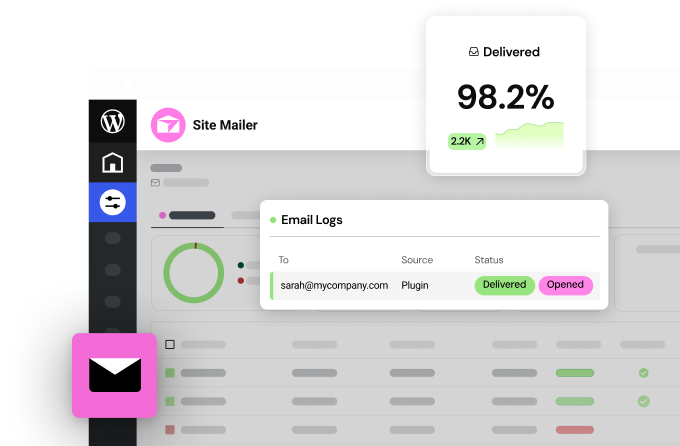
Critically, Elementor addresses the “hidden” support nightmares of eCommerce, such as email deliverability. A common issue for stores is transactional emails (receipts, password resets) going to spam. Site Mailer is a tool integrated into the ecosystem that ensures these emails are delivered reliably, without the user needing to configure complex SMTP servers. This is “product as support”—solving a technical pain point automatically.
For the DIY Business Owner
The small business owner is often overwhelmed by technical jargon. They need a path of least resistance.
The DIY Support Solution: For this user, the Hello Biz Theme acts as a guided support system. It offers an onboarding wizard and business-ready templates that ensure the user starts with a solid foundation. The theme is lightweight and optimized, preventing performance issues that would otherwise require support intervention.
The Future of Support: AI and Agentic Workflows
The paradigm of support is shifting. We are moving from “Ask and Wait” to “Command and Execute.” The future of website building support is not human—it is Agentic AI.
Angie and the Agentic Revolution
Elementor is at the forefront of this shift with the introduction of Angie. Unlike a standard chatbot that summarizes help articles, Angie is an Agentic AI. It has the ability to perform actions within the WordPress environment.
The Scenario: A user wants to ensure their site is accessible to visually impaired visitors—a complex technical requirement.
The Traditional Support Path: The user researches accessibility standards, installs a plugin, runs a scan, interprets the cryptic error messages, and manually fixes fifty distinct issues.
The Agentic Support Path: The user commands Angie (via Ally by Elementor): “Scan and fix accessibility violations.” The agent runs the scan, identifies the issues, and offers to resolve them automatically.
This is the ultimate evolution of support. It transforms the support agent from a person you call into a feature you use. It reduces the “Time to Resolution” to near zero.
Relevant Video Resources:
Predictive Maintenance
The next phase of support is predictive. Managed platforms like Elementor Hosting leverage data to identify potential issues before they impact the user.
Imagine a system that detects a plugin vulnerability, creates a staging site, updates the plugin, tests the site for visual regressions, and then notifies the user: “We secured your site. No action needed.” This “Self-Healing Website” concept is the trajectory of the Elementor platform, moving support entirely into the background.
Feature Spotlight: Products as Support Tools
Often, the best way to support a user is to give them a tool that solves the problem automatically. Elementor has released several products that function as specific support solutions.
Image Performance: Image Optimizer
One of the most frequent support tickets in web design is “My site is too slow.” The culprit is almost always uncompressed images uploaded directly from a camera or phone.
- The Problem: Users don’t know how to resize or compress images before uploading.
- The Support Tool: The Image Optimizer plugin works in the background, automatically compressing images and converting them to WebP format upon upload. This solves the speed issue at the source, preventing the support ticket from ever being created.
Accessibility Compliance: Ally by Elementor
Web accessibility is a legal minefield and a technical challenge. Users often ask support, “How do I make my site ADA compliant?”
- The Problem: Accessibility remediation is technical and tedious.
- The Support Tool: Ally scans the site and offers automated fixes. It acts as a compliance officer and support engineer rolled into one, solving a complex legal and technical problem with automated tools.
Making the Decision: A Strategic Framework
When choosing a website builder, you are essentially choosing a support partner. To make the right decision, you must evaluate your own “Technical Tolerance.”
The “Safety Net” Seeker
If your technical tolerance is low—if the sight of a line of code induces anxiety—you need a platform that wraps you in a safety net. While Wix and Squarespace offer this, they limit your growth. Elementor Hosting offers the same safety net (managed infrastructure, unified support) but retains the unlimited growth potential of WordPress.
The “Mission Critical” Business
If your website puts food on your table, downtime is not an option. You cannot afford the “blame game.” You need a single point of accountability. The Unified Support model of Elementor provides the assurance that when you call for help, the person on the other end owns the solution.
The “Learner”
If your goal is to build a skill set, you need a platform that teaches you. The depth of the Elementor Library and the Academy makes Elementor the superior choice for those who want to understand the “why” behind the “how.”
Comparative Analysis: Support Ecosystems
| Feature | Elementor | Wix | Squarespace | Shopify |
| Support Model | Unified (Software + Hosting) | Walled Garden | Digital-First | Retail-Centric |
| Channel Availability | 24/7 Chat & Ticket | Callback & Chat | Chat & Email | Phone, Chat, Email |
| Custom Code Support | AI Assistants (Angie) | Limited / Partner Ref. | None | Limited / Partner Ref. |
| Infrastructure Ownership | Full (Elementor Hosting) | Full | Full | Full |
| Ecosystem Fragmentation | Low (Unified Platform) | Low | Low | High (App reliance) |
| Community Size | Massive (18M+ Sites) | Large | Medium | Large |
| Proactive Tools | Safe Mode, Rollback | History | Basic Restore | Basic Restore |
Conclusion
So, which website builder has the best support?
If “best” means the ability to call a phone number and have someone explain how to drag a box to the left, Shopify and Wix offer strong, traditional service models for their specific walled gardens. They provide a comfortable, if limited, environment for beginners.
However, if “best” means a comprehensive ecosystem that empowers you to build professional, scalable, and custom websites with a safety net that covers everything from the server infrastructure to the pixel-perfect design, Elementor stands apart.
Elementor has redefined support by moving from a “Plugin” mentality to a “Platform” mentality. With Elementor Hosting, they have eliminated the fragmentation that plagues WordPress. With Elementor AI and Angie, they are pioneering agentic support. And with a community of millions, they ensure that no creator ever builds alone.
For the serious web creator who wants the freedom of open-source with the reliability of a managed service, the Elementor ecosystem offers the most robust support structure in 2025.
Frequently Asked Questions
1. Why is “Unified Support” considered better than having separate hosting and builder support? Unified support eliminates the “blame game.” In a fragmented setup, the host often blames the builder for site issues, and vice versa, leaving you stuck in the middle. When you use Elementor Hosting, a single team is responsible for the entire stack—server, WordPress installation, and the builder—ensuring faster and more accurate resolutions because the agent has full access to every layer of your site.
2. Does Elementor offer phone support for its users? Elementor primarily offers 24/7 Premium Support via live chat and ticketing for its paid users (Elementor Pro and Elementor Hosting). This allows for the sharing of screenshots, code snippets, and error logs, which is often more effective for technical debugging than voice support. For simpler questions, the extensive knowledge base and community forums provide instant answers.
3. How does the Elementor community contribute to support quality? The sheer size of the Elementor community (millions of users) means that almost every conceivable issue has been encountered and solved. Between the official Facebook community, thousands of YouTube tutorials, and third-party forums, users can often find answers to “how-to” questions instantly via peer support, often faster than waiting for an official agent.
4. Can Elementor Support help me with custom coding issues? Generally, official support for any page builder covers the native functionality of the tool, not custom code added by the user. However, Elementor provides features like Elementor AI that can write, debug, and optimize custom CSS and HTML for you. This bridges the gap for non-coders, effectively giving you a “developer on demand” to handle custom requirements.
5. What happens if an update breaks my Elementor site? Elementor includes a “Version Control” rollback feature built directly into the plugin settings. If an update causes a conflict, you can revert to the previous stable version with two clicks. Additionally, Elementor Hosting provides “One-Click Staging,” allowing you to test updates in a safe sandbox environment before applying them to your live site, preventing breakage in the first place.
6. Is Elementor Hosting good for eCommerce support? Yes. Elementor Hosting is optimized for WooCommerce. The support team is trained to assist with common eCommerce challenges, such as caching configuration for checkout pages. Additionally, the WooCommerce Builder allows you to customize your store visually, reducing the need for complex template editing that often requires support.
7. How does AI change the support experience in 2025? AI is shifting support from reactive to proactive. Tools like Elementor AI can suggest design improvements, write content, and generate code snippets. Future “Agentic AI” (like Angie) will be able to perform tasks like “Scan for broken links,” “Fix accessibility errors,” or “Optimize my images,” effectively acting as a personal site manager that works instantly.
8. What is the difference between “Technical Support” and “Strategic Support”? Technical support fixes things that are broken (e.g., “My site is down” or “This button isn’t working”). Strategic support helps you grow (e.g., “How do I structure my landing page for conversions?”). While most platforms only offer technical support, the Elementor Academy and expansive library provide strategic education to help you succeed in business, not just in building.
9. Do I need a separate backup plugin with Elementor Hosting? No. Elementor Hosting includes automated daily backups stored securely off-site. If you experience a critical error, you can restore your site to a previous version directly from the My Elementor dashboard. This integrated feature is often more reliable than third-party backup plugins, which can conflict with server settings.
10. Can I move my site from another host to Elementor Hosting to get better support? Yes. Elementor offers free migration services for new hosting customers. Their team handles the complex process of transferring your database and files, ensuring a smooth transition to their optimized environment where you can benefit from their unified support structure immediately.
Looking for fresh content?
By entering your email, you agree to receive Elementor emails, including marketing emails,
and agree to our Terms & Conditions and Privacy Policy.