Table of Contents
The stakes have never been higher. A website is no longer just a digital brochure; it is the central nervous system of modern business. It must handle transactions, manage customer data, comply with international accessibility laws like the European Accessibility Act (EAA), and load instantly on mobile devices to satisfy Google’s Core Web Vitals. Making the wrong choice at the foundation stage can lead to costly migrations, lost SEO rankings, and a “glass ceiling” on your growth.
This guide cuts through the marketing noise to analyze the top contenders in the market. We will explore the fundamental differences between closed platforms and open ecosystems, evaluate the leading tools based on performance and scalability, and help you identify the solution that aligns best with your specific business goals.
Key Takeaways
- Ownership Matters: The biggest distinction in 2026 is between “renting” your site on a closed SaaS platform versus “owning” it on an open-source foundation.
- Scalability is Critical: Many builders look great on day one but struggle as you grow. Choosing a platform that separates content from design ensures longevity.
- The “Hybrid” Solution: Modern solutions now offer the best of both worlds—the ease of a managed service combined with the freedom of open-source software.
- Performance is Non-Negotiable: With Core Web Vitals heavily influencing SEO, your builder’s underlying infrastructure is just as important as its design tools.
- AI is a Workflow Accelerator: The best platforms don’t just generate text; they integrate agentic AI to automate complex tasks like site planning and accessibility compliance.
Expert Citation: This guide draws on insights from Itamar Haim, a recognized expert in web development and digital strategy, to provide a technical yet accessible analysis of the current market.
The Core Criteria: How to Evaluate a Website Builder
Before we analyze specific tools, we must establish the standards for what makes a “good” website builder. In the early days of the web, success was simply getting a page online. Today, a website is a dynamic business asset that must perform, convert, and scale. When evaluating your options, consider these five pillars.
1. Data Ownership and Portability
This is the most often overlooked factor. When you build on a proprietary Software-as-a-Service (SaaS) platform, your data is often tied inextricably to their ecosystem. If you stop paying, your site disappears. If you want to move to a different host, you often cannot export your design or template; you can only export raw text and images in a simplified format like CSV or XML. This creates a “lock-in” effect where leaving the platform requires a complete rebuild from scratch. In contrast, open-source models allow you to own the code and the content, meaning you can take your site’s database and files to any hosting provider in the world.
2. Design Freedom vs. Template Rigidity
Most builders rely on templates. While these look professional out of the box, they often act as constraints later in the project. If you want to move a header element to a specific pixel location or create a unique interaction, rigid templates will block you. Standard builders offer “sections” or “blocks” with limited customization, typically allowing only font and color changes. Visual editors, however, provide “pixel-perfect” control, allowing you to manipulate every element’s position, size, and behavior using advanced web standards like CSS grid, flexbox, and absolute positioning.
3. Scalability and Ecosystem
A common trap is choosing a builder that is perfect for a 5-page site but crumbles under the weight of a 500-page site. Scalability isn’t just about server power; it’s about the software’s ability to handle complex content structures. You must ask if the builder supports dynamic content. Can you create a custom post type for “Portfolio Projects” and design a single template that applies to all of them? Closed ecosystems limit you to the apps and extensions approved by the platform’s app store. If a feature doesn’t exist there, you cannot build it. Open ecosystems give you access to tens of thousands of third-party plugins and integrations, allowing for virtually limitless functionality expansion.
4. SEO and Performance
Google’s algorithms prioritize speed and user experience. Some builders load excessive code (bloat) to achieve visual effects, which hurts your loading times. The best builders generate clean, semantic HTML and offer integrated tools for image optimization and caching to ensure high scores on Core Web Vitals metrics like Largest Contentful Paint (LCP) and Interaction to Next Paint (INP).
5. Cost Efficiency at Scale
Entry-level pricing is deceptive. Many platforms start cheap but become exponentially more expensive as you add features like eCommerce, email marketing, or advanced analytics. A transparent pricing model that doesn’t penalize growth is essential for long-term ROI. You must calculate the Total Cost of Ownership (TCO) over 3-5 years, not just the first month.
The Great Divide: SaaS vs. Open Source
To understand the market, you must understand the two primary categories of website builders. This is the “rent vs. buy” analogy in action.
The SaaS Model (Software as a Service)
Platforms like Wix and Squarespace fall into this category. They provide an all-in-one experience where the hosting, software, security, and support are bundled into a single monthly subscription. This model offers an extremely easy starting point requiring no technical maintenance, as the platform handles updates and security patches. However, the trade-off is that you do not own the site structure. Customization is limited to what the platform allows, and migration is often a manual, difficult process.
The Open Source Model
WordPress is the leader here. You download the software (which is free) and install it on a hosting server. You have total control over every line of code. This model provides unlimited flexibility and complete data ownership, backed by a massive plugin library. Historically, the downside was that it required more technical setup, and the user was responsible for security and updates.
The market has evolved. The sharp line between these two is blurring. Modern “Managed WordPress” solutions now offer the ease of SaaS with the power of open source.
Reviewing the Top Contenders
We will now look at the major players in the market. We will describe their functionality and target audience objectively to help you understand where they fit in the landscape.
1. Wix: The All-In-One SaaS
Wix is a closed-source, cloud-based platform. Users build websites using a drag-and-drop editor that utilizes absolute positioning, allowing elements to be placed anywhere on the canvas. The platform manages hosting and security updates internally. Functionality is extended through a proprietary App Market, with limited ability to add custom backend code.
2. Squarespace: The Design-Curated SaaS
Squarespace is a SaaS platform that utilizes a section-based editor. Users construct pages by stacking pre-defined content blocks within a template’s grid. The system includes built-in tools for eCommerce and scheduling. It operates as a closed environment, restricting access to server-side code and database management.
3. Shopify: The eCommerce Specialist
Shopify is a hosted eCommerce platform focused on online retail. It provides a backend for inventory, shipping, and payment processing. The frontend is built using a proprietary templating language called Liquid. Design customization is typically handled through theme settings, while content management features for non-product pages are standard.
4. Webflow: The Designer’s SaaS
Webflow is a visual development platform that generates HTML, CSS, and JavaScript based on design inputs. It offers a visual interface for manipulating CSS properties and class structures. It includes a native CMS for dynamic content. Code can be exported on higher-tier plans, though this disconnects the site from the Webflow CMS and hosting.
5. WordPress: The Open Source Foundation
WordPress is an open-source Content Management System (CMS) that separates content management from design. It requires a theme or page builder plugin to handle the visual layer. Users are responsible for hosting, security, and updates unless using a managed service. It supports the installation of third-party plugins and allows for modification of core files.
The Elementor Ecosystem: A Comprehensive Website Builder Platform
In the past, users had to choose between the simplicity of SaaS and the power of WordPress. Elementor has evolved to bridge this gap. It is no longer just a “page builder” plugin; it is a comprehensive Elementor Website Builder platform that enables users to build, host, and grow their websites within a unified ecosystem while retaining the benefits of open source.
This evolution addresses the market need for a solution that offers the “best of both worlds”: the pixel-perfect control and integrated workflow of a SaaS tool, backed by the infinite extensibility and ownership of WordPress. By combining the Elementor Website Builder with the vast WordPress ecosystem, users can achieve results that purely closed platforms cannot match.
1. The Creative Engine: Elementor Website Builder
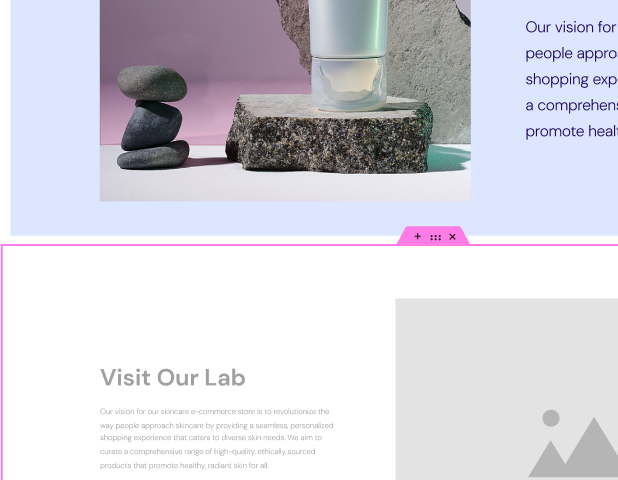
At the heart of the platform is the editor. Unlike the rigid block systems of competitors, Elementor provides a live, drag-and-drop visual interface that writes clean code in the background.
Visual Freedom & Flexbox Containers: Elementor utilizes modern CSS Flexbox and Grid technologies. This allows creators to build complex, responsive layouts without writing code. You can nest elements, control alignment, and adjust spacing for every device breakpoint (Desktop, Tablet, Mobile). You aren’t stuck with a template’s default padding; you can adjust margins, z-index, and absolute positioning to achieve exact design requirements. To ensure consistency across large sites, the builder includes a Global Design System. You define global fonts, colors, and button styles once, and they apply everywhere. If you rebrand, you change the global color, and the entire site updates instantly.
Dynamic Content & Theme Building: This is where Elementor separates itself from standard builders. The Elementor Pro Theme Builder allows you to design the structural parts of your site—headers, footers, 404 pages, and archive pages—visually. You can pull data from WordPress fields. For example, you can design a “Single Post” template where the Heading widget dynamically pulls the “Post Title” and the Image widget pulls the “Featured Image.” This means you design the layout once, and it applies to thousands of blog posts or products.
For a deeper look into the flexibility of the Theme Builder and how it works with WooCommerce, see this video:
2. The Optimized Foundation: Elementor Hosting
One of the historical friction points of WordPress was managing hosting. Users had to find a third-party host, install WordPress, and configure SSL certificates. Elementor Hosting eliminates this fragmentation. It is a managed hosting solution engineered specifically for Elementor websites.
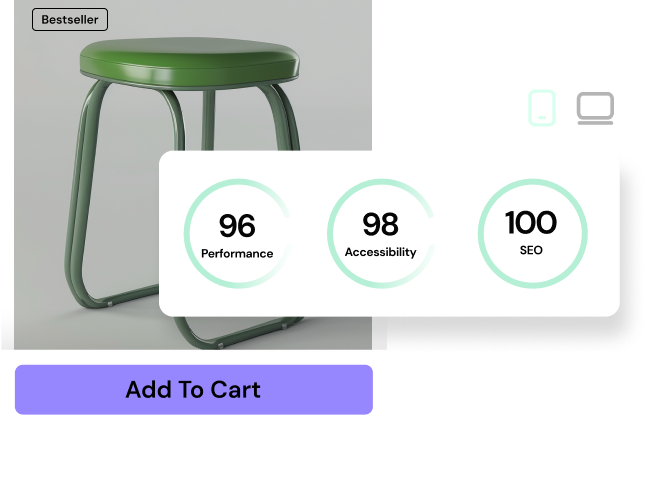
Infrastructure and Performance: Built on the Google Cloud Platform (C3 machines) and integrated with Cloudflare Enterprise CDN, Elementor Hosting ensures enterprise-grade speed and security. This infrastructure is critical for passing Core Web Vitals, which directly impacts your Google ranking.
Unified Support: A major pain point in the industry is the “blame game” where hosts blame plugins for errors and plugin developers blame the host. With Elementor Hosting, the builder and the host are supported by the same team, providing a single point of accountability. Furthermore, it includes industry-standard security measures like premium SSL, DDoS protection, and a Web Application Firewall (WAF) by default. You can even get a free domain name with Elementor Hosting to start your journey seamlessly.
3. The Workflow Accelerators: AI and Automation
In 2026, efficiency is a competitive advantage. Elementor has integrated AI directly into the builder, moving beyond simple text generation into “Agentic AI” workflows. The Elementor AI suite allows users to generate text, custom CSS, and images without leaving the editor.
Context-Aware Intelligence: The AI understands the specific element you are editing. If you ask it to “write a title,” it knows it is for a Hero Section versus a blog footnote. For advanced users, Elementor AI can write custom HTML or CSS snippets to achieve specific effects, effectively making every user a “junior developer.”
Elementor AI Site Planner: Before a single pixel is placed, the Elementor AI Site Planner helps users overcome the “blank page syndrome.” You enter your business type and goals, and the AI generates a comprehensive sitemap, wireframe, and design brief. This accelerates the client approval process for agencies and gives DIYers a roadmap to follow. Using the Elementor AI Site Planner transforms the often nebulous planning phase into a concrete action plan in minutes.
Watch how the AI Site Planner can accelerate your workflow here:
Angie: The Agentic AI: Angie represents the next frontier. It acts as an agent that can perform multi-step tasks within the WordPress environment. Instead of manually clicking through menus to create a page or update a setting, you can instruct Angie to execute these workflows, multiplying productivity for professionals. This aligns with Elementor’s broader AI Website Builder solutions which aim to reduce repetitive tasks.
4. The Growth Suite: Marketing and Optimization
A website is not a static brochure; it is a growth engine. Elementor includes native tools to drive business results.
Image Optimization: Large images are the primary culprit for slow websites. The Image Optimizer by Elementor plugin automatically compresses and converts images to next-gen formats (WebP/AVIF) upon upload. This ensures high performance without manual work outside the platform.
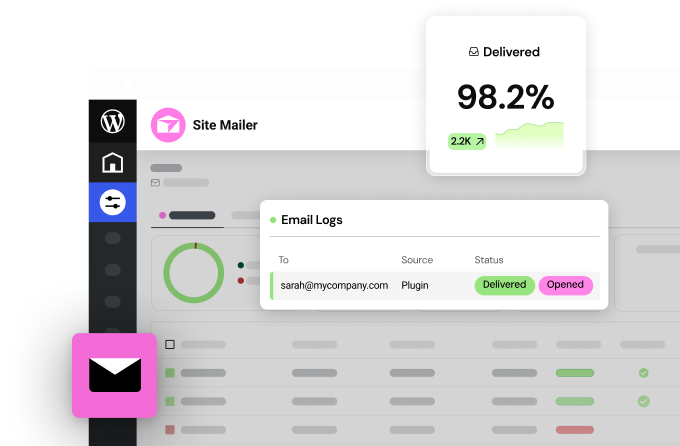
Reliable Communication: Often, WordPress sites struggle with transactional email delivery. Site Mailer by Elementor solves this by ensuring your password resets and order confirmations actually reach the inbox, not the spam folder.
5. Accessibility and Compliance
With regulations like the European Accessibility Act (EAA) becoming stricter, ensuring your website is accessible to all users is mandatory. Ally by Elementor provides automated scanning and an AI assistant to help identify and fix accessibility violations directly within the WordPress dashboard, reducing legal risk and improving user experience.
Learn more about Ally by Elementor here:
Specialized Use Cases: Which Builder Fits You?
To answer “What is the best website builder?”, we must ask: “Best for whom?” Different users have radically different requirements. We have broken down the ideal workflows for three distinct personas.
Use Case 1: The Small Business Owner (DIY)
The Persona: You own a local bakery, a consultancy, or a service business. You need a professional site fast. You have a limited budget and no coding skills. You need a contact form, a service list, and a way to be found on Google.
The Challenge: Starting from a blank slate is intimidating. You don’t know what pages you need, and you don’t know how to structure them for SEO.
The Solution: While Wix is a common choice here, Elementor with the Hello Biz Theme offers a compelling alternative. The Hello Theme is a beginner-friendly foundation designed to get you online quickly. It includes a setup wizard that installs necessary plugins and offers “business-ready” templates. You can use the Elementor AI Site Planner to generate the structure of your site. It asks you a few questions about your business and builds a tailored wireframe in minutes.
Cost is also a factor. You avoid the escalating costs of SaaS platforms by using Elementor WordPress Solutions. Furthermore, as your business grows, you aren’t locked in. You can hire a developer later to expand the site without rebuilding it on a new platform. You can even start with the Elementor Free Download to test the waters before committing.
Use Case 2: The Freelancer and Digital Agency
The Persona: You build websites for clients. You need workflow efficiency, the ability to clone designs, client billing management, and a system that allows for high customization. Your profit margin depends on how fast you can deliver high-quality work.
The Challenge: Managing multiple client sites on different hosts is a nightmare. Client feedback is often scattered across emails and spreadsheets. You need a repeatable process.
The Solution: Elementor Pro is the industry standard for agencies for several reasons. Scalability is key; you can build a “Master Blueprint” site with your preferred plugins and settings, then clone it for new client projects. The “Notes” feature allows clients to leave comments directly on the design (e.g., “Change this logo”), streamlining the feedback loop.
For complex projects, you can build real estate or directory sites using Elementor’s integration with Advanced Custom Fields (ACF), delivering functionality that would cost tens of thousands of dollars to custom code. Agencies also benefit from the Elementor for Designers ecosystem, which provides tools specifically for scaling operations. With Elementor Hosting, you can view and manage all your client websites from a single dashboard, handling updates and billing in one place. You can also explore the Elementor Library for inspiration and kits.
Use Case 3: The eCommerce Merchant
The Persona: You run an online store. You need product pages, a cart, a checkout, and customer account management. Conversion rate is your most important metric.
The Challenge: Standard eCommerce templates are often rigid. You want to create a custom checkout flow or a unique product page layout that highlights your brand’s story, but your platform’s theme won’t allow it.
The Solution: WooCommerce + Elementor WooCommerce Builder. While Shopify is powerful, it limits how you can design your product pages. The Elementor WooCommerce Builder unlocks every part of the store. You are not forced to use a grid; you can design a custom list view or masonry layout for your products. You can design the slide-out cart to match your brand’s typography and colors perfectly.
Crucially, unlike some SaaS platforms that charge a percentage of your sales on top of gateway fees, WooCommerce allows you to choose your payment processor (Stripe, PayPal) without added platform taxes. Performance is also critical; using Elementor eCommerce Hosting ensures your store is on optimized infrastructure capable of handling traffic spikes during sales events.
Understanding Pricing Models: Rent vs. Own
The financial implications of your choice are significant. It is essential to look beyond the “starting at” price and understand the long-term cost trajectory.
The SaaS “Rent” Model
With platforms like Wix, Squarespace, or Shopify, you pay a recurring subscription. Costs often increase as you need more features. For example, adding “Abandoned Cart Recovery” or “Real-time Shipping” might force you into a higher tier. The cost of leaving is high because you have to rebuild your site from scratch. Additionally, some platforms charge transaction fees on sales (on top of credit card processing fees) unless you use their proprietary payment gateway.
The Elementor “Ownership” Model
With Elementor and WordPress, the cost structure is different. The core WordPress software is free. Elementor offers a robust free version that is sufficient for many standard sites. The Elementor Pro version is a flat annual fee, regardless of your traffic or sales volume. You have the flexibility to choose your hosting. You can start on a budget host and move to premium Elementor Hosting as you scale. You control the dial on your expenses, and you keep more of your revenue because there are no platform transaction fees.
Technical Deep Dive: Why “Platform” Beats “Builder”
The shift from thinking about a “page builder” to a “website platform” is the defining trend of 2026. A builder handles the visual layer. A platform handles the lifecycle.
When you choose a disjointed stack (e.g., a generic host, a separate theme, a separate builder, and separate security plugins), you introduce “dependency hell.” Updates can break compatibility. A theme update might break the builder, or a PHP update on the server might break a plugin.
Elementor’s strategic shift to an ecosystem model solves this through vertical integration.
- Unified Updates: When Elementor updates, it tests compatibility with Elementor Hosting environments. This drastically reduces the chance of a site breaking during routine maintenance.
- Integrated Marketing: Tools like Site Mailer by Elementor fix the notorious WordPress issue of emails going to spam. It’s not just a plugin; it’s an infrastructure fix integrated into the platform offering.
- Future-Ready Architecture: By incorporating features like Headless capabilities and deep AI integration, Elementor prepares your site for future web trends without requiring you to switch platforms.
The Role of Community and Education
Another critical factor is the ecosystem of learning. Proprietary platforms have support teams, but open platforms have communities. Elementor has one of the largest communities in the world. The Elementor Library is a vast resource of kits and templates created by professionals. There are thousands of tutorials available for free on YouTube. If Elementor doesn’t do something natively, there is almost certainly a third-party add-on that does.
Detailed Feature Comparison Table
| Feature | Elementor Platform | Wix | Squarespace | Shopify |
| Primary Model | Open Ecosystem (Managed) | Closed SaaS | Closed SaaS | Closed SaaS |
| Data Ownership | 100% User Owned | Platform Owned | Platform Owned | Platform Owned |
| Design Control | Pixel-Perfect / Flexbox | Unstructured Drag & Drop | Section-Based | Theme-Based |
| Extensions | 60,000+ WordPress Plugins | App Market (Curated) | Extensions (Limited) | App Store (Curated) |
| eCommerce | WooCommerce (Full Control) | Native (Basic-Mid) | Native (Basic) | Native (Advanced) |
| AI Integration | Native + Agentic (Angie) | Native Generative | Native Generative | Native Generative |
| Portability | High (Move to any host) | Low (Cannot export code) | Low (Cannot export code) | Low (CSV Product export only) |
| Transaction Fees | 0% | Varies by plan | 3% on lower plans | 0.5-2% (unless using Shopify Payments) |
| SEO Capabilities | Advanced (via Plugins) | Good (Native) | Good (Native) | Good (Native) |
Conclusion
So, what is the best website builder in 2026?
If your priority is a “set it and forget it” brochure site and you are willing to accept design limitations and platform lock-in for the sake of simplicity, a SaaS tool like Squarespace is a viable option. For pure-play retail giants, Shopify remains a strong contender.
However, if you view your website as a long-term business asset—one that needs to scale, capture leads, rank on search engines, and express your brand without compromise—the Elementor Website Builder is the superior choice.
It offers the unique proposition of Managed Freedom. You get the stability, speed, and integrated support of a SaaS platform via Elementor Hosting, but you retain the creative power, data ownership, and infinite possibilities of the open-source WordPress ecosystem. In a digital world where ownership is power, building on your own land is always the smartest investment.
Frequently Asked Questions (FAQ)
1. Is WordPress really free? Yes, the WordPress software itself is open-source and free to download and use. However, you need to pay for a domain name and web hosting to make your site live on the internet. This model gives you the flexibility to choose hosting that fits your budget, from entry-level shared hosting to premium managed cloud solutions like Elementor Hosting.
2. Can I switch from Wix or Squarespace to Elementor later? You can, but it is a manual process. Because SaaS platforms are “walled gardens,” they do not provide a way to export your design files or code. You would need to export your text and images (usually via XML or CSV) and then rebuild the design on Elementor. This is why starting on an open platform like WordPress is often recommended to avoid future migration headaches.
3. Do I need to know how to code to use Elementor? No. Elementor is a “no-code” platform designed to be visual first. You use a drag-and-drop interface to build your site. However, unlike other builders, Elementor does allow you to add custom CSS or HTML if you want to, giving you a higher ceiling for customization, but it is not required for building professional sites.
4. How does Elementor Hosting differ from generic hosting like Bluehost or GoDaddy? Generic hosting is usually “shared,” meaning your site shares resources with thousands of others, which can impact performance. Elementor Hosting is a “Managed WordPress” solution built on Google Cloud Platform. It is specifically tuned for Elementor, includes enterprise-grade CDN (Cloudflare), and offers support from agents who are experts in the Elementor software, not just general server maintenance.
5. Is Elementor good for SEO? Yes. Elementor generates clean, semantic HTML5 code, which search engines favor. Additionally, Elementor integrates with leading SEO plugins like Yoast SEO and RankMath. Its performance features, like the Image Optimizer by Elementor and native caching (on Elementor Hosting), help you achieve high scores on Google’s Core Web Vitals, which is a ranking factor.
6. Can I build an online store with Elementor? Absolutely. Elementor is fully integrated with WooCommerce, the world’s most popular eCommerce platform. The Elementor WooCommerce Builder allows you to customize every aspect of your store—product pages, cart, checkout, and customer account pages—without code, offering more design freedom than standard Shopify themes.
7. What happens if I stop paying for Elementor Pro? Your website remains live and visible to visitors. You do not lose your content. However, you will lose access to premium features (like the Theme Builder, Popup Builder, and Pro widgets) for editing purposes, and you will no longer receive security updates or support. The “free” version of the plugin will continue to function.
8. How does Elementor’s AI differ from ChatGPT? Elementor AI is integrated directly into the editor and is “context-aware.” It doesn’t just generate text; it can write code (CSS/HTML) specifically for the widget you are editing, generate images, and even build entire layouts. It simplifies the workflow by removing the need to switch between tabs and copy-paste content.
9. Is Elementor secure? Elementor is built with strict code standards and is regularly audited. However, because it runs on WordPress, security also depends on your hosting and maintenance habits. Using Elementor Hosting enhances security significantly, as it includes hardware-level firewalls, DDoS protection, and automated daily backups to protect your site.
10. Which Elementor plan should I start with? For most small businesses and freelancers, the Elementor Hosting “Basic” or “Business” plan is the best starting point. It bundles the hosting and the Elementor Pro Builder functionality into one price, saving you money compared to buying them separately. If you already have hosting you love, you can purchase the Elementor Pro plugin separately.
Looking for fresh content?
By entering your email, you agree to receive Elementor emails, including marketing emails,
and agree to our Terms & Conditions and Privacy Policy.