Table of Contents
For too long, businesses have been forced to choose between the ease of use offered by closed systems and the power provided by open-source platforms. This guide dissects the market, analyzes the critical criteria for success, and helps you navigate the complex ecosystem of web creation tools to find the platform that empowers your specific vision. We will explore why the industry is moving toward a “hybrid” model that combines the best of both worlds, and how you can leverage this to build a scalable, future-proof digital asset.
Key Takeaways
- Ownership is the ultimate metric: The most critical distinction in 2026 is between renting your digital presence (SaaS) and owning it (Open Source). You must control your data, your design, and your destiny.
- Scalability prevents migration headaches: Choosing a platform that can handle traffic spikes, complex functionality, and database growth from day one saves significant resources and downtime later.
- Performance is a ranking factor: Hosting infrastructure, image optimization, and clean code are not optional add-ons; they are central to Core Web Vitals and SEO visibility.
- The ecosystem matters more than the editor: A great visual builder is useless if it lacks a robust library of integrations, marketing tools, and community support to extend its functionality.
- AI has moved beyond generation: The new standard involves “Agentic AI” that performs complex, multi-step workflows—like building entire pages or optimizing accessibility—rather than just writing text.
- Support systems define long-term success: Unified support that covers the hosting, the builder, and the theme eliminates the “blame game” during critical downtime.
The Core Criteria: How to Evaluate a Web Platform
When you evaluate the vast array of website builders available today, you must look beyond the surface-level marketing. A flashy template library might look appealing during a 14-day trial, but it often hides structural limitations that plague businesses as they scale. To determine what website builder is the best for your needs, you must rigorously assess each option against five foundational pillars.
Data Ownership and Portability
The concept of data ownership is often overlooked until it becomes a crisis. Many closed platforms operate on a proprietary model where you do not truly own your website’s code or structure. You rent it. If the platform raises its prices, changes its terms of service, or discontinues a feature you rely on, you have little recourse. Worse, if you decide to leave, you often cannot take your design, your customer data, or your underlying database with you. You must rebuild from scratch.
True ownership means you possess the files, the database, and the freedom to move your site to any hosting provider you choose. This is the primary strength of open-source systems like WordPress. You control the asset. You decide when to update, how to secure it, and where it lives. For businesses building a long-term asset, this distinction is paramount. You are building equity in your own property, not improving someone else’s rental unit.
Design Flexibility and “Pixel-Perfect” Control
“Ease of use” often comes at the expense of “design freedom.” Many builders restrict you to rigid grids or pre-set themes to ensure responsiveness. While this helps beginners avoid design errors, it suffocates professional creativity. You eventually hit a wall where you cannot move an element exactly where you want it, or you cannot create a unique mobile experience that differs from the desktop view.
The ideal platform offers what is known as pixel-perfect design control. This means you can manipulate every aspect of the visual layout—margins, padding, Z-index, absolute positioning, and motion effects—without writing custom code. It should allow you to design global systems for typography and color, ensuring brand consistency across hundreds of pages. The ability to create custom headers, footers, single post templates, and archive templates is what separates a simple page builder from a comprehensive website creation platform.
Performance and Core Web Vitals
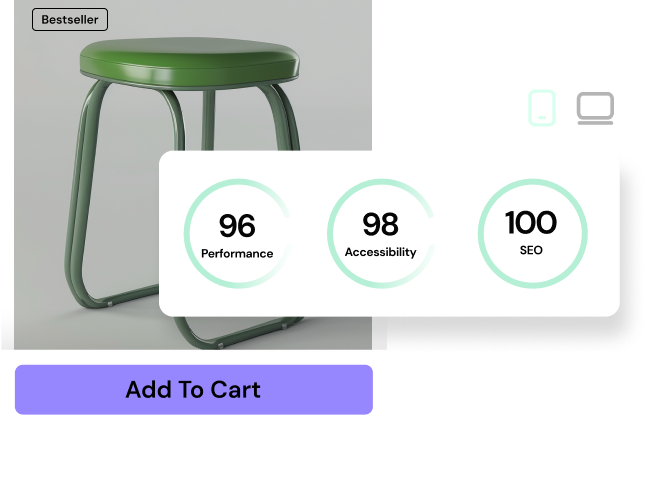
Google’s Core Web Vitals have made site speed a direct component of your search ranking. A website builder influences this through its underlying code structure, the quality of its hosting, and its asset management.
A platform that generates bloated code—wrapping content in unnecessary <div> tags—will slow down your site, regardless of your hosting provider. The best solutions prioritize clean, semantic code output. They also integrate performance tools directly into the workflow, such as image optimization, caching, and script loading strategies. You should not have to install five different third-party plugins just to get your site to load under two seconds. The infrastructure should handle this natively.
The Extensibility of the Ecosystem
No single software company can build every feature you will ever need. You might need a specific booking system for a salon, a complex real estate listing directory, or a unique payment gateway for a local currency.
This is where the ecosystem becomes critical. Closed platforms rely on a curated app market, which is often limited in scope. Open platforms, particularly those built on WordPress, offer access to tens of thousands of third-party plugins. The best builder acts as a hub, integrating seamlessly with these external tools rather than walling you off from them. It allows you to connect your marketing automation, your CRM, and your analytics into a cohesive stack that grows with your business.
Unified Support and Reliability
Technical issues are inevitable. When your site goes down or a layout breaks, the quality of support determines how quickly you recover. In a fragmented setup—where you buy hosting from Company A, a theme from Company B, and a builder from Company C—you often face the “blame game.” The host blames the plugin, and the plugin developer blames the theme. You are stuck in the middle, losing revenue.
The superior model is a unified platform where the builder and the hosting are engineered and supported by the same team. This ensures a single point of contact for any issue, drastically reducing resolution time. When the support agent has access to both your server logs and your editor settings, they can diagnose the root cause immediately.
The Great Divide: SaaS vs. Open Source
To understand the market, you must understand the two dominant architectural philosophies: Software as a Service (SaaS) and Open Source Content Management Systems (CMS).
The Closed Garden (SaaS)
SaaS builders provide an all-in-one experience. You pay a monthly fee, and the provider handles the hosting, security, and software updates.
- The Appeal: It is convenient. You do not need to configure servers, manage databases, or worry about PHP versions. The learning curve is generally shallow, allowing users to get online quickly.
- The Limitation: You trade freedom for convenience. You are locked into their ecosystem. Customization is limited to what their developers allow. You cannot modify the core code, and your ability to optimize for technical SEO is often restricted by the platform’s infrastructure.
The Open Source Foundation (WordPress)
Open-source platforms, primarily WordPress, power over 40% of the web. The software is free to use, modify, and distribute.
- The Appeal: Limitless potential. You can build anything from a personal blog to a complex enterprise application. You own your data completely. You can access thousands of free and premium extensions to add any functionality imaginable.
- The Limitation: Traditionally, it required more technical overhead. You had to source your own hosting, manage security patches, configure SSL certificates, and piecemeal your toolset from various vendors.
The Hybrid Solution: The Platform Approach
The market is evolving toward a hybrid model that bridges this gap. This approach takes the power and ownership of open source (WordPress) and wraps it in the streamlined, managed environment of a SaaS platform.
This is where Elementor strategically positions itself. It is not just a plugin; it is a comprehensive website builder platform. It offers the “best of both worlds”: the creative power of WordPress fortified by the reliability of a managed ecosystem. You get the pixel-perfect design capabilities and the vast plugin library of WordPress, but you also get managed hosting, integrated AI, and unified support.
Analyzing the Market: A Neutral Overview of Competitors
Before detailing the comprehensive platform approach, it is valuable to understand the other major players in the space. Each serves a specific segment of the market with distinct advantages and disadvantages.
Wix
Wix is a closed-source SaaS platform. It utilizes an unstructured editor that permits the drag-and-drop placement of elements. Hosting, security, and maintenance are managed entirely by the provider. The platform relies on a proprietary template system. Users cannot export the underlying code or migrate the site structure to other hosting providers. The application market is curated and restricted to approved integrations.
Squarespace
Squarespace is a SaaS content management system. It provides a structured, grid-based editor and a library of pre-designed templates. It operates as a closed ecosystem where hosting, support, and billing are bundled into a single subscription. Customization is limited to the options provided within the interface and restricted CSS injection. It does not allow for full database access or server-side modifications.
Shopify
Shopify is a proprietary platform built specifically for online retail management. It uses a specific coding language called Liquid. The infrastructure is fully managed, and visual modifications are typically handled through themes and a rigid editor. It is a hosted solution that is designed for commerce and does not function as a general-purpose content management system. Additional functionality often requires recurring subscriptions through its app store.
Webflow
Webflow is a SaaS visual development tool. It generates HTML, CSS, and JavaScript based on visual inputs. It requires an understanding of front-end development concepts such as the box model, classes, and flexbox. The CMS functionality is proprietary and hosted on their infrastructure. Exporting code is possible on higher-tier plans, but dynamic CMS content cannot be exported for use on external servers.
The Elementor Solution: A Holistic Website Builder Platform
For those who refuse to compromise between the ownership of WordPress and the ease of SaaS, Elementor offers a unified ecosystem. It has evolved from a page builder into a complete platform that addresses every stage of the web creation lifecycle: Plan, Build, Host, Grow, and Manage.
The Creative Engine: Visual Builder
At the core is the Elementor Website Builder. It democratizes professional web design by providing a visual interface for complex code structures. Unlike legacy page builders that relied on shortcodes, Elementor outputs clean, standard-compliant markup that search engines can easily parse.
Flexbox Containers and CSS Grid
Unlike unstructured editors that use absolute positioning (which can negatively impact mobile responsiveness), Elementor utilizes modern CSS standards like Flexbox and Grid. This allows you to build sophisticated, lightweight layouts that adapt perfectly to any screen size. You can define exact behaviors for how elements stack, wrap, or align on mobile devices compared to desktops, ensuring a consistent user experience.
Theme Builder and Dynamic Content
The Elementor Pro capabilities extend far beyond the content area of a page. The Theme Builder allows you to design the structural parts of your site—headers, footers, single post templates, and 404 pages—visually. You are not limited by your theme’s layout restrictions. Furthermore, Dynamic Content allows you to pull data from custom fields (like ACF) directly into your design, making it possible to build complex directory sites or listing portals visually.
WooCommerce Builder
For eCommerce, the WooCommerce Builder revolutionizes how stores are designed in WordPress. You can customize your product pages, cart, and checkout flow without editing PHP files. This brings the power of Shopify-level customization to the WordPress environment, allowing you to design unique shopper journeys that maximize conversion rates.
The Optimized Foundation: Elementor Hosting
Elementor Hosting solves the fragmentation issue of open source. It provides a managed cloud environment specifically tuned for Elementor websites. This is not generic shared hosting; it is an infrastructure engineered for performance and reliability.
Google Cloud C2 Servers
The hosting is built on Google’s premium tier C2 servers. These compute-optimized VMs offer significantly higher performance than standard servers, ensuring your site processes dynamic content instantly. This is crucial for resource-intensive sites like WooCommerce stores or membership platforms.
Cloudflare Enterprise CDN
Every site onElementor Hosting includes Cloudflare Enterprise integration. This caches your content at edge locations worldwide, reducing latency for global visitors. It also includes image optimization at the edge, further speeding up load times. By handling SSL handling and traffic filtering at the network edge, it provides a robust defense against DDoS attacks.
Unified Support
Perhaps the most significant advantage is the unified support model. You have one team to contact for hosting, builder, and theme issues. This eliminates the technical overhead usually associated with WordPress. If a plugin conflict arises, the support team can help you identify and resolve it because they understand the entire stack.
The AI Workflow: From Brief to Build
Elementor has integrated AI directly into the editor, moving beyond simple text generation to a full AI Web Creation Workflow. This suite of tools acts as a force multiplier for creators, allowing them to produce higher-quality work in less time.
AI Site Planner
The strategy phase is often a bottleneck. TheAI Site Planner accelerates this by generating sitemaps, wireframes, and website briefs in minutes. For agencies, this means you can get client approval on the structure before building a single pixel, preventing costly revisions later. It essentially acts as a digital strategist that helps you scope the project accurately.
Generative AI for Content and Code
Within the editor, you can generate text, custom code (CSS/HTML), and unique images. The “context-aware” nature of the AI means it understands you are working on a heading or a button and provides relevant suggestions. If you need a specific CSS effect that isn’t in the UI, you can simply describe it to the AI, and it will generate the code snippet for you.
Angie (Agentic AI)
This is a significant leap forward in web creation technology.Angie is an AI agent that performs multi-step tasks. You can ask it to “create a landing page for the winter sale,” and it will execute the task, leveraging its understanding of your existing design system. It moves beyond “suggestion” to “action,” automating repetitive build tasks.
Growth and Marketing Tools
A website must drive business. The platform includes native marketing integrations that replace expensive third-party SaaS tools, consolidating your stack and reducing costs.
Site Mailer
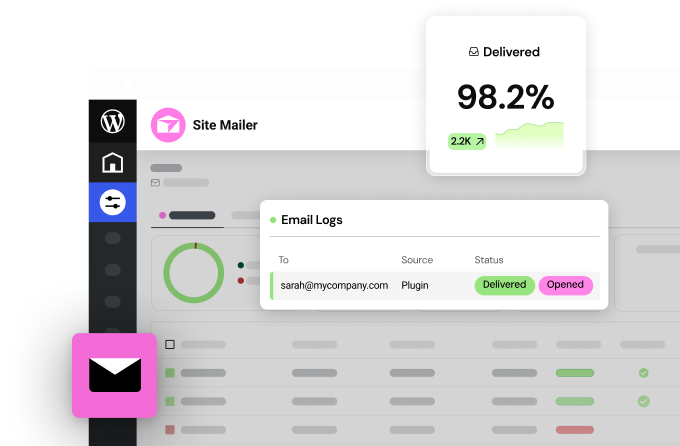
One of the most common issues with WordPress is unreliable email delivery for transactional messages (password resets, order receipts). Site Mailer fixes this without complex SMTP configurations. It ensures that your critical business notifications actually land in the inbox, not the spam folder, safeguarding your customer communication.
Performance and Accessibility
Image Optimizer
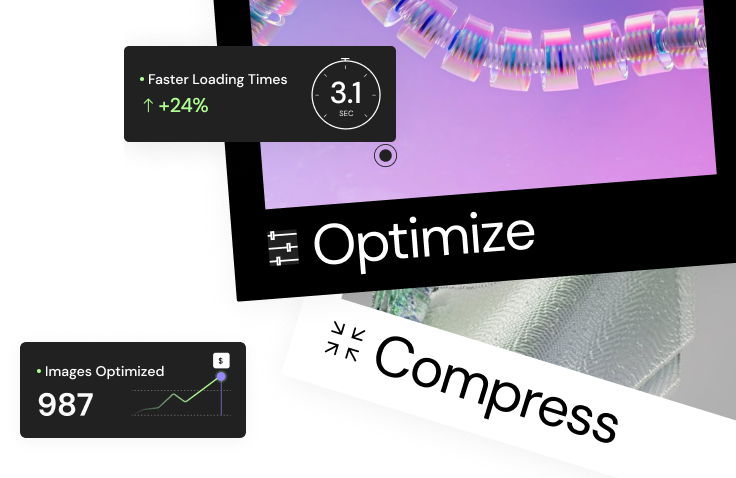
Images often account for the bulk of a webpage’s weight. The Image Optimizer handles this server-side. It resizes and compresses images upon upload and converts them to next-gen formats (WebP/AVIF). This is “set it and forget it” performance optimization. You do not need to open Photoshop to save a web-ready version; you simply upload your high-quality asset, and the plugin serves the optimal version to the user based on their device.
Ally by Elementor
Accessibility is critical for legal compliance (ADA/EAA) and user inclusion. Ally by Elementor provides automated scanning and remediation tools to help your site meet WCAG standards. It scans your site, identifies issues like missing alt text or poor contrast, and guides you to fix them. This proactive approach to accessibility protects your business from lawsuits and ensures your site is usable by everyone.
Matching the Builder to the Persona
The “best” builder depends on who you are. The Elementor platform adapts to different user needs, providing tailored solutions for specific goals.
For the Small Business Owner (The DIYer)
You need a professional site, and you need it yesterday. You likely do not have a development team, and your budget is focused on growth, not IT infrastructure.
- The Challenge: Starting from a blank screen is intimidating. WordPress can feel too technical, and hiring an agency is too expensive. You need a site that looks credible immediately.
- The Solution: You would utilize the Hello Biz theme, a beginner-friendly theme that includes a setup wizard. It walks you through the installation, template selection, and branding process. Combined with Elementor Hosting, it removes the technical barriers of server management. You can launch a polished, secure site in hours, not weeks. The integrated Site Mailer ensures your contact forms actually deliver messages to you.
For the Freelancer and Solopreneur
You build sites for clients. Time is money. You need efficiency and a way to offer recurring value to stabilize your income.
- The Challenge: Client back-and-forth on design delays projects. Managing multiple hosting accounts across different providers is a logistical nightmare.
- The Solution: You use the AI Site Planner to generate wireframes instantly for client sign-off, reducing the “I’ll know it when I see it” feedback loop. You build the site using Elementor Pro for advanced design capabilities like custom post types and dynamic content. You resell Elementor Hosting to your clients, creating a recurring revenue stream while keeping all your projects in one unified dashboard.
For the Digital Agency
You manage hundreds of sites. You need scalability, team collaboration, and robust access controls.
- The Challenge: Inconsistent tech stacks across clients lead to maintenance nightmares. Security vulnerabilities in cheap hosting put your reputation at risk. You need to standardize your workflow.
- The Solution: You standardize on the Elementor platform, utilizing the extensive Template Library to speed up production. You use Angie to automate repetitive maintenance tasks. You rely on the enterprise-grade security of the hosting infrastructure (WAF, DDoS protection) to protect your client portfolio. You use the Notes feature to collaborate with your team and clients directly on the live site, streamlining the feedback process.
For the eCommerce Merchant
You need a high-converting store that reflects your brand, not a generic template used by thousands of others.
- The Challenge: SaaS store builders limit how your product pages look. You want a unique unboxing experience on the digital shelf, but you are stuck with the standard two-column layout.
- The Solution: You use the WooCommerce Builder to design custom cart pages, dynamic product displays, and personalized popups based on shopping behavior (e.g., offering a discount if a user tries to exit). You leverage Send by Elementor to run abandoned cart recovery campaigns natively, keeping your data within one ecosystem. Using Ecommerce Hosting ensures your store can handle Black Friday traffic spikes.
The Technical Deep Dive: Why Performance Matters
Speed is a feature. A one-second delay in page load time can reduce conversions by 7%. When choosing a builder, you must understand how it handles performance at a granular level.
Code Hygiene: The Container Revolution
Many visual builders suffer from “divitis”—wrapping elements in excessive layers of code. Elementor has focused heavily on performance updates, introducing Flexbox Containers. This reduces the amount of code (DOM elements) needed to create complex layouts. Instead of nesting four sections to create a specific layout, you can achieve it with one container. This results in faster rendering times, cleaner markup, and a better experience for Google’s crawlers.
The Hosting Infrastructure: Beyond Shared Hosting
Your software is only as fast as the server it lives on. Elementor Hosting utilizes Google Cloud’s premium tier network. This is distinct from standard shared hosting found on budget providers. It means your data travels over Google’s private fiber-optic network, minimizing the number of “hops” between the server and the user. The integration of Cloudflare Enterprise adds another layer of speed, caching your content at edge locations worldwide. Furthermore, the hosting environment includes Object Cache by default, which speeds up database queries—essential for dynamic sites and eCommerce stores.
Image Optimization: Automated Efficiency
Images often account for the bulk of a webpage’s weight. The Image Optimizer by Elementor handles this server-side. It resizes and compresses images upon upload. This is “set it and forget it” performance optimization. You do not need to open Photoshop to save a web-ready version; you simply upload your high-quality asset, and the plugin serves the optimal version to the user based on their device.
The Future of Web Creation: AI and Agents
We are entering the era of Agentic AI. The best website builder for the future is one that integrates these agents into the workflow, changing the role of the web creator from “builder” to “architect.”
Standard AI generates content—it writes a paragraph or creates an image. Agentic AI performs tasks. Imagine telling your website builder: “Change the hero image on the homepage to the winter campaign asset, update the headline to ‘Winter Sale’, and schedule a popup to appear for mobile users.”
This is the promise of the AI Website Builder agents like Angie. It understands the context of your site—your plugins, your pages, your products. It transforms the builder from a tool you manipulate with a mouse into a partner you command with natural language. This doesn’t replace the creator; it removes the repetitive execution tasks, allowing the creator to focus on strategy, brand, and user experience.
Step-by-Step Guide: How to Choose Your Platform
Making the final decision requires a logical process. Follow these steps to ensure you select the platform that serves your long-term goals.
Define Your “Must-Haves” vs. “Nice-to-Haves” Do you absolutely need a specific payment gateway? Do you need a booking system for classes? If you have complex functional requirements, an open-source ecosystem like WordPress is usually the safer bet because a plugin likely exists for your need. Closed platforms may not support niche requirements.
Calculate the Total Cost of Ownership (TCO) Do not just look at the monthly fee.
- SaaS: Monthly subscription + Transaction fees + App market subscriptions (which can add up quickly).
- Open Source: Hosting fee + Plugin licenses + Developer time.
- Hybrid: Elementor Hosting simplifies this by bundling the hosting and the Pro builder license, offering a predictable TCO that often undercuts comparable SaaS stacks when you factor in the cost of third-party apps.
Test the Support Channels Send a pre-sales question. See how fast they respond. Check if they have 24/7 live chat. Read forums to see if users complain about the “blame game.” Unified support is a significant value add that pays for itself the first time you have a critical issue.
Audit the Future Roadmap Look at what the company released in the last year. Are they innovating with AI? Are they updating their performance standards? You want a platform that evolves. A stagnant platform is a security risk.
Start with a Prototype Use the Free Download version of Elementor or the trial period of a SaaS builder. Try to build your header and footer. These are often the hardest parts. If the builder makes this easy, it is a good sign that the rest of the site will be manageable.
FAQs: Common Questions About Website Builders
Is it better to use a free website builder or a paid one? Free builders are excellent for hobbyists or testing concepts, but they invariably come with limitations—ads on your site, restricted bandwidth, or a lack of custom domain support. For any professional entity, a paid plan is essential to establish credibility, remove platform branding, and access critical features like SEO tools and premium support.
Can I switch website builders later if I don’t like my choice? Migration is difficult. Moving from a closed SaaS platform (like Wix) to WordPress often requires manually copying and pasting content and rebuilding the design from scratch because you cannot export the code. Moving between WordPress hosts is easier. This is why starting with an open-source foundation like Elementor is recommended; it preserves your data portability and prevents vendor lock-in.
Do I need to know how to code to use Elementor? No. Elementor is designed as a no-code visual builder. You can build award-winning websites using its drag-and-drop interface, leveraging Flexbox and Grid visually. However, it also offers “Custom CSS” areas for developers who want to add specific code snippets, making it flexible for both skill levels.
How does hosting affect my website builder’s performance? Hosting is the engine of your car. A great builder (the chassis) cannot go fast if the engine is underpowered. High-quality cloud hosting ensures fast server response times (TTFB), which is critical for user experience and Google rankings. Elementor Hosting is optimized specifically for the builder’s requirements, offering better performance than generic shared hosting.
Is WordPress secure enough for my business? WordPress itself is secure, but it requires maintenance. Security vulnerabilities often come from outdated plugins or poor hosting environments. Using a managed hosting solution that includes a Web Application Firewall (WAF), automated updates, and DDoS protection mitigates these risks significantly, making it as secure as any closed SaaS platform.
What is the difference between a page builder and a website builder? A page builder works within the content area of a single page (e.g., writing a blog post layout). A website builder, like Elementor Pro, allows you to edit the entire structure of the site, including headers, footers, archives, and search results pages. It gives you control over the global design system, not just individual articles.
Can I use AI to build my entire website? Tools like the AI Site Planner can generate the structure, wireframes, and initial content for your site in minutes. However, “building” also involves refining the design, setting up integrations, and testing. AI is a powerful accelerator that handles the heavy lifting—like writing copy or generating layouts—but human oversight is still key for the final polish and brand alignment.
How important is mobile responsiveness in 2026? It is mandatory. Google uses “mobile-first indexing,” meaning it ranks your site based on its mobile version. The best builders offer specific mobile editing views, allowing you to hide elements, reverse column ordering, and adjust font sizes specifically for phone and tablet screens to ensure an optimal experience.
What if I need help with my design? The Elementor ecosystem is vast. You can access the “Experts” network to hire professional designers. Additionally, the platform offers full site kits—professionally designed templates for specific industries—that give you a 90% complete site that you just need to customize with your content and branding.
How do I get a custom domain name? Most platforms allow you to purchase a domain or connect one you already own. Elementor Hosting allows you to connect a custom domain easily, and often provides a free domain name for the first year with annual plans, simplifying the setup process for new brands.
Conclusion
The search for the “best” website builder ultimately leads to a choice between philosophy and practicality. While closed SaaS platforms offer a quick start, they often place a ceiling on your long-term growth and ownership. They are easy to enter but hard to leave.
Elementor represents the maturity of the web creation market. It acknowledges that users want the drag-and-drop simplicity of a SaaS tool but demand the power, ecosystem, and data ownership of WordPress. By wrapping a world-class visual editor, enterprise-grade hosting, and agentic AI into a single, cohesive platform, it provides a solution that does not force you to compromise.
Whether you are a freelancer scaling your agency, a merchant building a brand, or a marketer optimizing for conversion, the right platform is the one that grows with you. It empowers you to create without limits.
Explore the tools mentioned in this guide and see how the ecosystem comes together to support your vision.
Looking for fresh content?
By entering your email, you agree to receive Elementor emails, including marketing emails,
and agree to our Terms & Conditions and Privacy Policy.