Table of Contents
The answer is multifaceted. GoDaddy offers two distinct paths for website creation: a proprietary, closed-source builder focused on speed, and a hosting environment for the open-source WordPress platform. Understanding the technical and strategic differences between these two paths is critical for any business owner, freelancer, or agency. Choosing the wrong foundation can lead to scalability issues, vendor lock-in, and eventually, a costly migration.
According to web creation expert Itamar Haim, “The most common pitfall for new site owners is confusing a ‘domain registrar’ with a ‘website platform.’ Just because you bought your name there doesn’t mean you must build your house with their pre-fab kit. True ownership comes from open platforms.”
This comprehensive guide will dissect GoDaddy’s proprietary tools, analyze their limitations, and explore why professional web creators are increasingly choosing open ecosystems like Elementor to ensure long-term growth and design freedom.
Key Takeaways
- GoDaddy’s Native Tool: GoDaddy uses a proprietary website builder currently known as Websites + Marketing (formerly GoCentral). It is a closed-source, template-based system designed for speed rather than flexibility.
- The “Walled Garden” Limitation: Websites built on GoDaddy’s proprietary builder cannot be exported. If you leave the platform, you lose your website design and must rebuild from scratch elsewhere.
- Managed WordPress Option: GoDaddy also offers “Managed WordPress Hosting,” which does not use their proprietary builder by default. Instead, it allows you to use WordPress-compatible builders like Elementor.
- Elementor as a Professional Alternative: For creators seeking ownership, pixel-perfect design control, and scalability, the Elementor Website Builder paired with WordPress provides a superior, open-source alternative to GoDaddy’s closed system.
- AI Integration: While GoDaddy uses “Airo” for basic site generation, Elementor AI offers deep, context-aware integration for generating code, images, and text directly within the creative workflow.
The Short Answer: GoDaddy’s Proprietary Solution
When most people ask “What builder does GoDaddy use?”, they are referring to the company’s native, all-in-one product. Currently, this tool is branded as Websites + Marketing.
The Evolution of the Tool
GoDaddy’s builder has undergone numerous rebrands and iterations over the last decade, often leaving users confused about which version they are using.
- Website Builder v7: An older, drag-and-drop tool that offered some freedom but produced bloated code.
- GoCentral: A pivot to a mobile-first, section-based editor that removed most design freedom in exchange for speed.
- Websites + Marketing: The current iteration, which combines the simplified builder with a suite of basic marketing tools (email, social scheduling, and light SEO).
- GoDaddy Airo: The latest feature set introduced in 2024/2025, utilizing generative AI to fast-track the initial site setup.
Core Philosophy: Speed Over Control
The foundational philosophy of GoDaddy’s Websites + Marketing is friction reduction. The platform is designed to get a site live as quickly as possible. To achieve this, GoDaddy utilizes a system often referred to as ADI (Artificial Design Intelligence).
When a user starts a project, they do not enter a design editor. Instead, they answer a series of questions about their industry and business name. The ADI then generates a nearly complete website with stock images and generic text.
While this allows for a “launch in under an hour” experience, it comes at a significant cost: rigidity. The user is not building a website; they are assembling pre-determined blocks within a strict grid. You cannot drag an image 10 pixels to the left. You cannot overlap elements to create depth. You function strictly within the parameters GoDaddy’s developers have set.
Analyzing GoDaddy’s “Websites + Marketing”
To understand where this tool fits in the market, we must analyze its technical capabilities objectively. GoDaddy’s builder is a SaaS (Software as a Service) product. This means the software and the hosting are inseparable.
The Editor Experience: A Linear Approach
The editing environment in Websites + Marketing is linear and section-based. A user adds a “section” (e.g., an About Us block, a Photo Gallery, or a Contact Form) from a pre-defined library. Once the section is added, customization is limited to:
- Toggling elements: Turning a headline or button on/off.
- Content entry: Typing text into fields.
- Layout variations: Choosing between 2-3 pre-set layout options for that specific section (e.g., image on left vs. image on right).
- Global Styles: Changing the primary color or font pairing for the entire site.
There is no concept of “widgets” or individual elements that can be placed freely. If a section does not have a button where you want one, you cannot add it.
GoDaddy Airo and AI Integration
In response to the AI boom, GoDaddy launched Airo. This feature set focuses on the initial “zero-to-one” phase of business creation. Airo can generate:
- A basic logo.
- A starter website layout.
- Suggested social media handles and posts.
- Email marketing drafts.
While useful for absolute beginners, the AI generation is largely template-based. It fills in the blanks of existing structures rather than generating unique code or novel design layouts.
Marketing and SEO Tools
The “Marketing” half of “Websites + Marketing” refers to a built-in dashboard that includes:
- Email Marketing: A basic tool for sending newsletters.
- Social Scheduler: Allows posting to Facebook and Instagram from the dashboard.
- SEO Wizard: A checklist-style tool that prompts users to enter page titles and descriptions.
Technical Note: The SEO capabilities are foundational. Users can edit meta titles and descriptions, but advanced technical SEO—such as schema markup customization, precise URL structure control, or robots.txt modification—is often inaccessible or limited compared to open-source CMS platforms.
Ecommerce Capabilities
GoDaddy offers an ecommerce plan that allows for product listings, inventory management, and payments. It is a functional solution for simple stores selling standard physical or digital goods. However, it lacks the deep extensibility required for complex commerce, such as custom checkout flows, intricate variable products, or deep integration with third-party logistics (3PL) providers.
The “Walled Garden” Reality
The most critical technical characteristic of GoDaddy’s builder is its closed nature. Data Portability is non-existent. There is no “Export” button. The code generated by the builder is proprietary to GoDaddy. If a business outgrows the platform or wishes to move to a different host for better performance, they cannot take their website with them. The site must be rebuilt from scratch on the new platform, resulting in a total loss of the design investment.
The Other Side of GoDaddy: Managed WordPress Hosting
It is crucial to clarify a common point of confusion. GoDaddy is also a web host. You can buy a plan called “Managed WordPress Hosting” from GoDaddy.
In this scenario, GoDaddy is not the builder; WordPress is the CMS (Content Management System).
When you use GoDaddy Managed WordPress, you are effectively renting a server that has WordPress pre-installed. GoDaddy provides the infrastructure, but they do not dictate the design tool. By default, WordPress comes with the Gutenberg block editor, but most professionals immediately install a third-party page builder to gain better design control.
This is where the ecosystem opens up. Once you are in a WordPress environment—even one hosted by GoDaddy—you are free to install professional-grade tools like Elementor.
The Limitations of Proprietary Builders
Why do so many creators eventually migrate away from proprietary builders like GoDaddy’s Websites + Marketing? The reasons usually stem from the natural lifecycle of a business.
1. Vendor Lock-In
As mentioned, the inability to export your site creates a dependency on the platform. If the platform raises prices, removes features, or fails to innovate, the user is trapped. They must accept the changes or face the expensive prospect of rebuilding.
2. Homogenized Design
Because proprietary builders rely on a finite library of sections, websites built on the platform tend to look similar. This “cookie-cutter” aesthetic can make it difficult for a brand to differentiate itself in a crowded market.
3. Scalability Ceilings
Proprietary builders have a hard ceiling. If you need a specific feature—for example, a real estate listing integration with MLS, or a learning management system (LMS) for selling courses—and the platform does not offer it natively, you cannot add it. You are limited to the features the vendor chooses to develop.
The Superior Alternative: The Elementor Ecosystem
For those who prioritize ownership, design excellence, and scalability, the industry standard has shifted toward the Elementor Ecosystem. Elementor is not just a plugin; it is a comprehensive website creation platform built on top of WordPress.
Elementor Website Builder: The Creative Engine
Unlike the rigid, section-based editor of GoDaddy, Elementor offers a live, drag-and-drop visual editor that provides pixel-perfect control.
- True Visual Editing: Users can drag widgets (images, text, videos, forms) anywhere on the canvas.
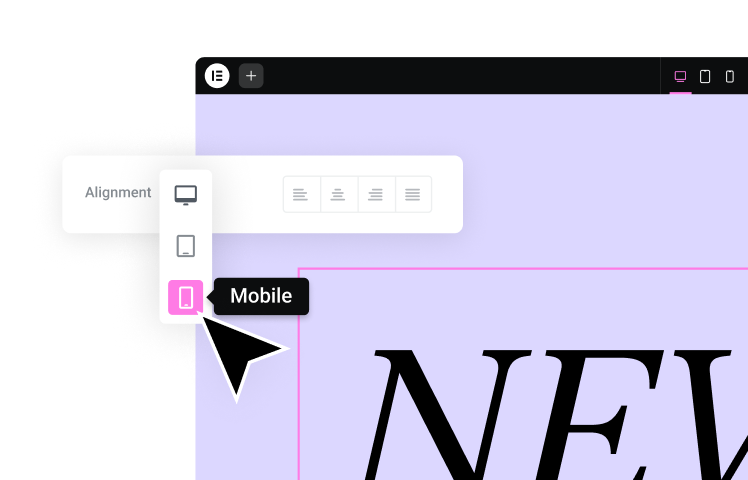
- Granular Control: Designers can adjust margins, padding, Z-index, motion effects, and responsive behavior for mobile, tablet, and desktop independently.
- Theme Builder: Elementor Pro allows users to design the core framework of the site—headers, footers, archives, and single post templates—visually, without writing PHP code.
This level of control empowers creators to build unique brand identities rather than choosing from a list of pre-set templates.
Elementor Hosting: The Optimized Foundation
While you can use Elementor on GoDaddy’s Managed WordPress hosting, Elementor offers its own Elementor Hosting. This is an end-to-end solution that combines the builder with a cloud infrastructure optimized specifically for the plugin.
- Google Cloud Platform: Built on the C2 premium tier for maximum speed.
- Cloudflare Enterprise: Integrated CDN and security layers (DDoS protection) are included standard.
- Unified Support: Unlike mixing GoDaddy hosting with the Elementor plugin (where support might bounce you back and forth), Elementor Hosting provides a single point of contact for both the software and the server.
Elementor AI: The Productivity Multiplier
Elementor has integrated AI directly into the creative workflow, contrasting with GoDaddy’s template-generation approach.
- Context-Aware Generation: Elementor AI works inside the editor. You can select a container and ask the AI to generate CSS code to animate it.
- Image Generation: Create royalty-free, unique images directly on the canvas using text prompts.
- Content Assistance: Rewrite, translate, or expand text without leaving the page.
Ecommerce with Elementor
For online stores, Elementor’s WooCommerce Builder offers a distinct advantage over GoDaddy’s proprietary store.
- Customization: You can design every aspect of the product page, cart, and checkout flow.
- Extensibility: Because it is built on WooCommerce (open source), you can integrate with virtually any payment gateway, shipping provider, or inventory management system in the world.
Deep Dive: Building with Elementor vs. GoDaddy
To fully understand the divergence in quality and capability, let us compare the building experience directly.
Design Flexibility
GoDaddy: You want to overlap a product image with a “New Arrival” badge and have it float slightly off-grid.
- Result: Impossible. You must stick to the grid provided by the section.
Elementor: You want the same layout.
- Result: You place the image widget. You place the badge widget. You use “Absolute Positioning” to move the badge over the image. You add a “Motion Effect” so the badge slides in when the user scrolls. You have total creative freedom.
Content Ownership
GoDaddy: You want to move your site to a faster server.
- Result: You cannot. Your content is locked in GoDaddy’s database.
Elementor: You want to move your site to a new host.
- Result: You use a migration plugin (or Elementor Hosting’s migration tool) to package your entire site—database, files, design—and move it anywhere. You own the asset.
Marketing Tools
GoDaddy: Provides basic email marketing and social posting. Elementor: Offers Send by Elementor, a native marketing and automation engine integrated into the platform. It allows for lead capture, AI-powered email creation, and automated workflows that trigger based on user behavior on the site.
Video Resources for Comparison
To see these differences in action, viewing the workflow can be clarifying.
- Elementor AI Site Planner: https://www.youtube.com/watch?v=gvuy5vSKJMg
- Building with Elementor: https://www.youtube.com/watch?v=QKd7d6LueH4
The Migration Dilemma: Moving from Closed to Open
Many businesses start on GoDaddy because of the low introductory price and the promise of ease, only to hit a “growth ceiling” 12 to 24 months later. At this point, migration becomes necessary.
The Hard Truth of Migration
Because GoDaddy does not allow exports, “migration” is technically a misnomer. It is actually a rebuild.
- Content Extraction: You must manually copy-paste text and download images from your live GoDaddy site.
- Platform Setup: Install WordPress and Elementor on a new hosting environment.
- Recreation: Use Elementor’s visual builder to recreate the design of your old site—or, more likely, improve upon it using Elementor’s superior design capabilities.
While this process requires effort, the long-term ROI is significant. Once the site is on WordPress/Elementor, it is future-proof. It can grow from a 5-page brochure site to a 5,000-page enterprise portal without ever needing to switch platforms again.
Tools to Assist
- Elementor AI Site Planner: Can help generate the new structure and wireframes for the rebuild, speeding up the planning phase. https://elementor.com/ai-site-planner
- Hello Theme: A lightweight starter theme perfect for rebuilding sites with high performance. https://elementor.com/themes
Strategic Recommendations for Different Users
The Hobbyist
If you are building a site for a temporary event (like a wedding) or a hobby that does not require monetization or SEO growth, GoDaddy’s proprietary builder is a functional choice. The speed of setup outweighs the lack of ownership for disposable projects.
The Small Business Owner
For a business intending to operate for years, the “rented land” model of GoDaddy is risky. Elementor Hello Biz theme offers a middle ground—a beginner-friendly, guided setup on WordPress that provides the ease of a builder with the ownership of open source. https://elementor.com/for/designer
The Agency / Freelancer
For professionals building sites for clients, GoDaddy is rarely a viable option. You cannot hand over a site that you cannot fully control or backup. Elementor allows agencies to build a scalable asset, optimize it for performance using tools like the Image Optimizer, and deliver a professional product that justifies a higher price point. https://elementor.com/products/image-optimizer
Conclusion
To answer the initial question: GoDaddy uses a proprietary, closed-source builder called “Websites + Marketing.” It is a tool designed for convenience, functioning like a walled garden where you can build quickly but own little.
However, the digital ecosystem offers a compelling alternative. By choosing Managed WordPress and leveraging the Elementor Website Builder Platform, creators can secure the best of both worlds: the visual ease of use found in proprietary builders, combined with the infinite scalability, data ownership, and design freedom of open-source WordPress.
In 2025, a website is not just a digital brochure; it is a business asset. Investing in a platform that you own, like Elementor, ensures that this asset appreciates in value and capability over time, rather than remaining static within the confines of a closed system.
For those ready to take ownership of their web presence, the path is clear: move beyond the rental model and start building on a foundation that belongs to you.
Frequently Asked Questions (FAQ)
1. Is GoDaddy Website Builder the same as WordPress? No. GoDaddy Website Builder (Websites + Marketing) is a proprietary tool created by GoDaddy. It is a closed platform. GoDaddy also acts as a hosting provider where you can install WordPress, but they are two completely separate products with different capabilities.
2. Can I move my GoDaddy website to WordPress later? You cannot simply click a button to transfer the site. GoDaddy does not allow you to export your website’s code or design files. You will have to manually copy your text and images and rebuild the website from scratch on the WordPress platform.
3. Does GoDaddy use Elementor? GoDaddy’s proprietary builder does not use Elementor. However, if you purchase “Managed WordPress Hosting” from GoDaddy, you are free to install the Elementor plugin to build your site. This is often the recommended route for those who want to stay with GoDaddy hosting but want better design tools.
4. Is Elementor harder to use than GoDaddy? Elementor has a slight learning curve compared to GoDaddy’s highly restrictive ADI system, but it is still a no-code, drag-and-drop visual builder. Most users find that after a few hours of use, the freedom Elementor offers makes it intuitive. Tools like Elementor AI and the Hello Biz theme further lower the barrier to entry for beginners.
5. Which is better for SEO: GoDaddy or Elementor? Elementor (on WordPress) is widely considered superior for SEO. While GoDaddy allows for basic meta tag editing, WordPress allows for complete technical SEO control, including schema markup, sitemap customization, and integration with powerful plugins like Yoast or RankMath.
6. Do I own my website if I build it on GoDaddy? Technically, you own your content (text and photos), but you do not own the website’s code or design. You are licensing the software. If you stop paying GoDaddy, your website disappears. With Elementor and WordPress, you own the code and can move it to any hosting provider you choose.
7. How much does Elementor cost compared to GoDaddy? GoDaddy’s builder has a recurring monthly fee that often increases after the first term. Elementor offers a free version that is very capable. Elementor Pro and Elementor Hosting offer premium tiers that are competitively priced, often providing more value because they include hosting, the builder, and marketing tools in one package without hidden transaction fees.
8. Can I add an online store to Elementor? Yes. Elementor integrates seamlessly with WooCommerce, the world’s most popular ecommerce platform. This allows you to build a fully custom online store with no limits on products or variations, unlike GoDaddy’s tiered ecommerce plans.
9. What happens if I want to switch from GoDaddy to Elementor? You will need to purchase a hosting plan (like Elementor Hosting) and a domain name. Then, you will install WordPress and Elementor. Finally, you will need to manually recreate your pages and products. While time-consuming, this “rebuild” is a one-time process that grants you full ownership moving forward.
10. Does Elementor offer hosting like GoDaddy? Yes. Elementor Hosting is a managed WordPress hosting service designed specifically for the Elementor builder. It utilizes Google Cloud infrastructure and Cloudflare Enterprise CDN to ensure high performance and security, comparable to or exceeding standard managed hosting options.
Looking for fresh content?
By entering your email, you agree to receive Elementor emails, including marketing emails,
and agree to our Terms & Conditions and Privacy Policy.