Table of Contents
This guide explores the mechanics of AI website builders, analyzes the current market landscape, and details how platforms like Elementor are redefining the standard by merging open-source flexibility with cutting-edge AI agents.
Key Takeaways
- AI is a Co-Pilot, Not a Replacement: The most effective use of AI in web design is as a productivity multiplier that handles repetitive tasks—like drafting copy, generating code snippets, or creating wireframes—allowing creators to focus on strategy and high-level design.
- Agentic AI is the Next Frontier: We are transitioning from “generative” AI, which creates content, to “agentic” AI (like Elementor’s Angie) that can autonomously perform multi-step workflows, such as auditing a site for accessibility or setting up complex marketing automations.
- The “Platform” Advantage: While many tools offer isolated AI features, true efficiency comes from a unified ecosystem where hosting, design, marketing, and AI tools share a single context and data structure.
- Strategy Before Pixels: Tools like AI Site Planners differ from standard “instant site generators” by focusing on the architectural and strategic foundation of a website—briefs, sitemaps, and wireframes—before a single pixel is placed.
- The Open-Source Hybrid Model: The ideal solution for professional growth combines the convenience of SaaS-like AI tools with the data ownership and limitless extensibility of open-source platforms like WordPress.
What Is an AI Website Builder?
At its core, an AI website builder is a platform that leverages artificial intelligence—specifically Natural Language Processing (NLP) and Machine Learning (ML)—to automate various stages of the web design and development process. Unlike traditional website builders that rely strictly on drag-and-drop manual input, AI builders can interpret human intent through conversational prompts and output functional code, layout structures, and design elements.
These systems operate on vast datasets of existing websites, design principles, and user behavior patterns. When a user inputs a prompt such as “Create a portfolio for a landscape architect in Portland,” the AI analyzes the semantic meaning, retrieves relevant design patterns (e.g., earth tones, gallery-heavy layouts), and assembles a preliminary site structure.
However, the definition involves distinct categories of AI integration, evolving from simple automation to complex decision-making:
1. Generative Builders (The “Zero-to-One” Phase)
These tools focus on the initial creation phase. They generate a complete website draft—including placeholder images, industry-specific copy, and basic layout structures—from a few text prompts. This category is best for overcoming the “blank page” syndrome but often requires significant manual refinement to achieve a professional standard.
2. Assistive AI (The “Co-Pilot” Phase)
These are embedded within manual editors to refine specific elements. Rather than building the whole site, Assistive AI works alongside the creator. Examples include rewriting headlines for better conversion, generating custom CSS code to style a specific button, or creating unique images on the fly to replace stock photography.
3. Agentic AI (The “Autonomous” Phase)
The most advanced category, where the AI acts as an autonomous agent capable of executing complex, multi-step tasks across the website’s infrastructure. Unlike generative AI that simply “suggests,” Agentic AI “does.” It can optimize database performance, configure shipping zones in an eCommerce store, or audit a site for accessibility compliance and apply fixes automatically.
The goal of these technologies is not merely speed; it is the democratization of professional-grade web standards, making high-performance, accessible, and aesthetically pleasing design achievable without a steep technical learning curve.
The Evolution of Web Creation: From Hand-Coding to Autonomous Agents
To understand the value of modern AI platforms, we must contextualize them within the broader history of web development.
The Code Era (1990s – 2000s)
In the early days, building a website was exclusively the domain of developers. Every element, from the navigation bar to the footer, required manual HTML and CSS coding. Updates were slow, costly, and prone to breaking the site. This era was characterized by a high barrier to entry and a disconnect between business owners and their digital presence.
The CMS and Visual Builder Era (2010s)
The rise of Content Management Systems (CMS) like WordPress, followed by visual page builders, democratized the web. Users could visually drag elements onto a canvas. This era introduced the concept of “What You See Is What You Get” (WYSIWYG), allowing designers to bypass the code editor. While this made building easier, it still required a significant understanding of design principles and manual effort to ensure responsiveness and performance.
The Generative AI Era (2020s)
Recent years introduced generative models capable of producing text and images. Website builders began integrating these models to help users fill empty templates. However, these tools were often disjointed, requiring users to switch between a chatbot (like ChatGPT) and their editor, copying and pasting content manually.
The Agentic Era (Present – Future)
We are now entering the Agentic Era. Platforms are evolving into comprehensive ecosystems where AI is not just a content generator but an active participant in site management. This shift represents a move from “tools that help you build” to “platforms that build with you.” In this era, the AI understands the context of the specific site—its plugins, its theme, its goal—and can act to improve it proactively.
A Functional Analysis of Market Alternatives
The market for AI-driven web creation tools is diverse, with various platforms catering to different user needs. To make an informed decision, it is crucial to understand the functional mechanisms and limitations of the key players in the space.
Wix ADI (Artificial Design Intelligence)
Wix ADI utilizes a structured questionnaire to gather user requirements. Based on the responses—such as business type, feature requirements, and design preferences—the system selects from a library of component blocks to assemble a unique layout.
- Mechanism: Template-based component assembly. The system does not “create” new designs but rather intelligently assembles pre-existing blocks.
- Primary Function: Rapid creation of standard business websites for users who prefer a hands-off approach.
- Ecosystem: Closed SaaS environment. While convenient, users are locked into the Wix hosting and tooling ecosystem, limiting data portability and deep customization.
Squarespace Blueprint AI
Squarespace integrates AI primarily as a design curation tool. Users select from curated style pairs (fonts and color palettes) and layout structures. The AI assists in writing copy and organizing sections based on aesthetic principles associated with specific industries.
- Mechanism: Curated design systems with generative text support.
- Primary Function: Aesthetically focused portfolios and small business sites where visual impact is paramount.
- Ecosystem: Closed SaaS platform known for high-quality visual templates but rigid structure that can be difficult to scale for complex functionality.
Hostinger AI Website Builder
Hostinger focuses on speed and accessibility for entry-level users. Its AI tool generates a fully functional website based on a brief text description. It includes built-in AI tools for creating logos and analyzing heatmaps to predict user behavior.
- Mechanism: Prompt-to-site generation focused on speed-to-market.
- Primary Function: Budget-conscious projects, rapid prototyping, and simple hobby sites.
- Ecosystem: Shared hosting environment with simplified builder tools. It lacks the depth of features required for enterprise or complex agency work.
Divi AI
Operating within the WordPress ecosystem, Divi AI functions as an assistant within the Divi visual builder. It creates text and images directly inside the modules and can generate entire page layouts based on context.
- Mechanism: In-editor generative assistance.
- Primary Function: Design assistance for existing WordPress users familiar with the Divi framework.
- Ecosystem: A WordPress theme and plugin framework. While powerful, it relies on the user managing their own hosting and security stack separately.
Framer
Framer leverages AI to bridge the gap between design and development. It allows users to prompt the interface to generate specific layout sections or interactive components, translating design concepts directly into React-based code.
- Mechanism: Prompt-to-design with code export capabilities.
- Primary Function: High-fidelity prototyping and design-centric sites for designers familiar with tools like Figma.
- Ecosystem: Proprietary hosting and design platform. Excellent for visuals, but less suited for content-heavy or complex database-driven sites compared to CMS-based solutions.
Elementor: The Comprehensive AI Web Creation Platform
While the market offers various tools for specific tasks, Elementor differentiates itself by positioning AI not as a feature, but as the connective tissue of a comprehensive web creation platform. It merges the strategic advantages of a SaaS environment with the flexibility of open-source WordPress.
Elementor’s approach addresses the entire lifecycle of a website: Plan, Build, Manage, and Grow.
1. Strategy First: The AI Site Planner
Most AI builders jump straight to design, often resulting in generic outcomes that lack strategic depth. Elementor’s AI Site Planner acts as a strategic consultant before the visual work begins.
- Functionality: Through a conversational interface, it helps creators articulate their business goals. It then generates a comprehensive website brief, a structured sitemap, and interactive wireframes.
- Strategic Value: This ensures that the website structure aligns with user experience (UX) best practices and business objectives. For agencies, it drastically reduces the time spent on client discovery and scope definition, creating a professional blueprint that can be approved before hours are spent on design.
- Learn more: https://elementor.com/ai-site-planner
2. The Creative Engine: Elementor AI
Once the strategy is defined, the Elementor Website Builder serves as the production engine. Integrated directly into the editor, Elementor AI provides context-aware assistance.
- Content Generation: It can generate, rewrite, or translate text directly within the canvas. Crucially, it allows for tone adjustments—making a paragraph more “professional” or “witty”—maintaining brand consistency.
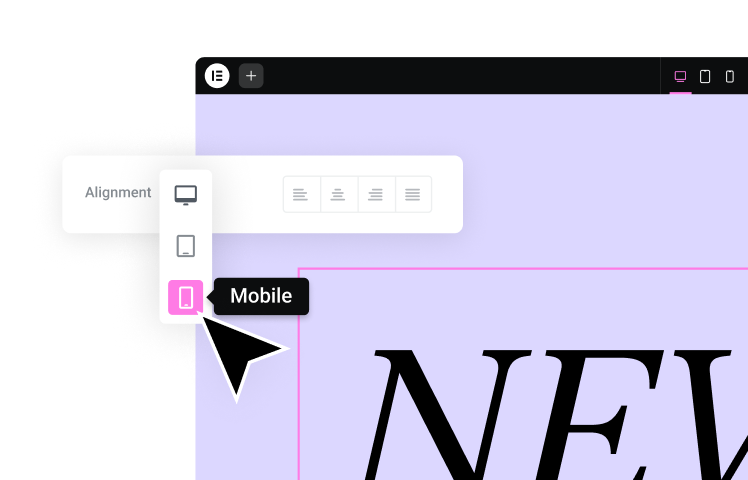
- Image Creation & Editing: Users can generate unique, royalty-free images from prompts. More importantly, they can edit existing assets directly in the builder—expanding backgrounds, resizing for different devices, or removing backgrounds—without needing external tools like Photoshop.
- Code Assistant: Perhaps most significantly for professionals, the AI can write custom CSS, HTML snippets, and custom code. A user can simply ask, “Make this button pulse on hover with a purple glow,” and the AI generates and applies the correct CSS. This democratizes advanced customization.
- Learn more: https://elementor.com/products/ai
3. Agentic Capabilities: Angie
Angie represents the leap into Agentic AI. Unlike generative tools that wait for a prompt to produce text, Angie is designed to perform actions.
- Workflow Automation: Angie can understand high-level goals—such as “optimize my site for accessibility”—and execute the necessary multi-step processes to achieve them.
- Contextual Awareness (MCP): Built on Model Context Protocol (MCP) technology, Angie understands the specific context of the website, including installed plugins and theme settings. It doesn’t just guess; it knows which tools are available and how to use them, allowing for intelligent, site-specific interactions.
4. The Foundation: Elementor Hosting
To support these advanced AI capabilities, the underlying infrastructure must be robust. Elementor Hosting provides a managed WordPress environment optimized specifically for the Elementor builder.
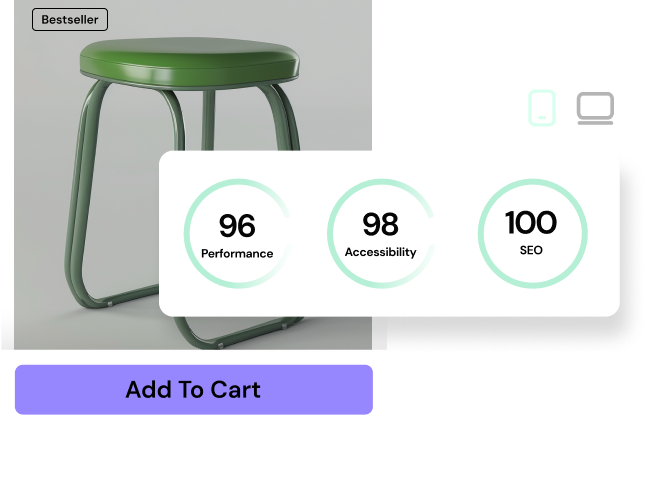
- Performance: Built on Google Cloud Platform with Cloudflare Enterprise CDN, ensuring that AI-generated assets and complex layouts load instantly. This setup boosts Core Web Vitals and SEO rankings automatically.
- Unified Support: By bundling hosting with the builder, Elementor eliminates the fragmentation often found in WordPress, where hosting providers and plugin developers shift blame for technical issues. Users get a single point of contact for the entire stack.
- Learn more: https://elementor.com/hosting
5. Growth Tools: Integrated Marketing & Utility
The ecosystem extends beyond the build phase into growth, management, and optimization, leveraging specific plugins that integrate seamlessly.
- Send by Elementor: An integrated email marketing solution that allows creators to design and send campaigns directly from their WordPress dashboard. It uses the same visual interface as the builder, lowering the learning curve and ensuring brand consistency across web and email.
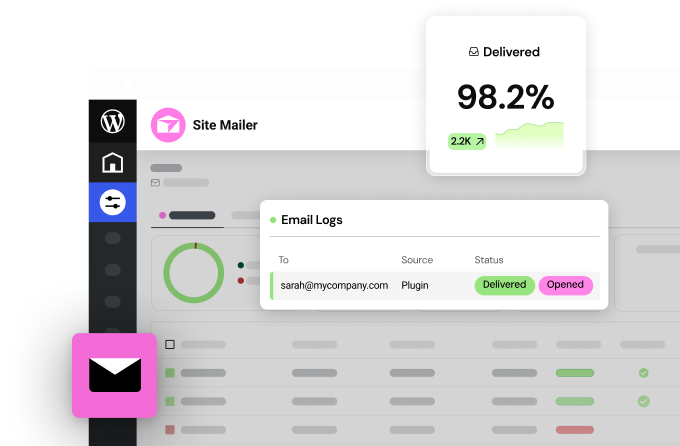
- Site Mailer: A transactional email plugin that ensures critical site notifications (like order confirmations and password resets) are delivered reliably. It replaces complex SMTP setups with a simple, reliable delivery engine.
- Learn more: https://elementor.com/products/site-mailer
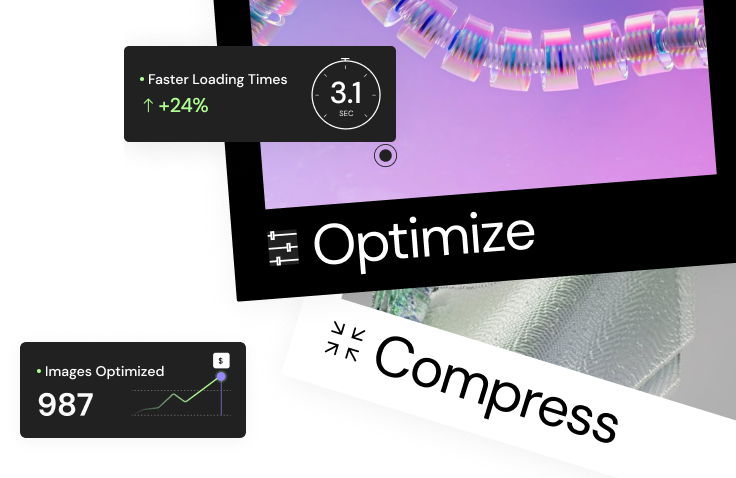
- Image Optimizer: A performance plugin that automatically compresses and converts images to next-gen formats (WebP/AVIF) upon upload. This ensures that the visually rich sites created with AI don’t suffer from slow load times.
- Learn more: https://elementor.com/products/image-optimizer
- Ally by Elementor: An accessibility plugin that scans the site for WCAG compliance issues and offers AI-guided remediation. This ensures that the site is inclusive and compliant with legal standards like the ADA and EAA.
- Learn more: https://elementor.com/products/ally-web-accessibility
Step-by-Step: Building a Professional Site with Elementor’s AI
To illustrate the practical application of these tools, we will outline a workflow for creating a custom business website using the Elementor ecosystem.
Phase 1: Planning and Discovery
- Access the AI Site Planner: Begin by inputting your business name and industry into the planner.
- Refine the Brief: The AI will ask clarifying questions about your target audience and unique selling points. Use these prompts to sharpen your value proposition.
- Generate the Wireframe: The planner produces a structural blueprint of your site. This wireframe focuses on layout and information architecture without the distraction of colors and styling.
- Export to Builder: With one click, move the approved wireframe structure directly into the Elementor editor.
Phase 2: Visual Design and Content
- Select a Foundation: Choose the right theme based on your expertise:
- Hello Theme: Use this if you are a professional needing a blank canvas for total control.
- Hello Biz: Use this if you are a beginner or DIYer needing a guided setup wizard and structured templates to launch quickly.
- Learn more: https://elementor.com/themes
- Style the Site: Use the Elementor Design System features to set global fonts and colors that reflect the brand identity defined in the planning phase.
- Generate Assets: Use Elementor AI to populate the wireframe sections.
- Prompt: “Write a compelling headline for a boutique coffee roastery focusing on fair trade sourcing.”
- Prompt: “Generate a hero image of a barista pouring latte art in a warm, rustic cafe setting.”
- Customize with Code: If a specific hover effect is needed that isn’t in the widget settings, use the AI Code Assistant.
- Prompt: “Write custom CSS to make this button pulse gently on hover.”
Phase 3: Optimization and Launch
- Optimize Images: Activate the Image Optimizer plugin to automatically compress and convert all generated media to WebP or AVIF formats for superior loading speeds.
- Ensure Accessibility: Run Ally by Elementor. This tool scans the site for accessibility violations (like missing alt tags or poor contrast) and offers AI-guided remediation to ensure compliance with standards.
- Configure Transactional Emails: Set up Site Mailer to ensure that contact form submissions and system emails land in the inbox, not the spam folder.
- Go Live: Publish the site on Elementor Hosting to ensure it benefits from enterprise-grade security and caching.
The Strategic Importance of Open Source in an AI World
As AI tools become more prevalent, the platform on which they reside becomes critical. Closed SaaS platforms (like Wix or Squarespace) offer convenience but retain control over the user’s data and infrastructure. If the platform raises prices or deprecates a feature, the user has limited recourse.
Elementor champions the Open Source Advantage. Because it is built on WordPress, it offers a distinct value proposition:
- Data Ownership: You own your content and your customer data completely. You are not renting your digital home; you own it.
- Portability: You can move your site to any hosting provider if you choose. You are never locked into a single vendor’s infrastructure.
- Extensibility: You are not limited to Elementor’s native features. You can integrate with the massive ecosystem of over 59,000 WordPress plugins for specific functionality, from advanced booking systems to complex learning management systems (LMS).
This “Best of Both Worlds” approach allows Elementor to offer the streamlined experience of a SaaS builder—through Elementor Hosting and integrated AI—while preserving the freedom and power of open-source software.
The Future of Web Design: Agentic AI
The conversation around AI in web design is shifting from “creation” to “management.” This is the domain of Agentic AI.
From Chatbots to Agents
Standard AI chatbots are passive; they wait for a query and provide an answer. Agentic AI is proactive and capable of executing actions. An agent doesn’t just write code for a contact form; it installs the form plugin, configures the SMTP settings, tests the submission process, and sets up the auto-responder.
Real-World Applications
Imagine an AI agent managing an eCommerce store:
- Inventory Management: The agent monitors stock levels and automatically pauses ad campaigns for out-of-stock items to prevent wasted spend.
- Dynamic Pricing: It analyzes competitor pricing and adjusts store prices within defined margins to maximize conversion.
- Self-Healing Sites: If a plugin update causes a conflict, the agent detects the error, rolls back the update, and notifies the administrator.
Elementor’s development of Angie places it at the forefront of this shift. By integrating agentic capabilities directly into the WordPress dashboard, Elementor is moving towards a future where the website builder acts as an intelligent partner in business operations, not just a design tool. Angie uses deep contextual awareness to understand the specific tools available on the site, allowing it to perform tasks that would otherwise require a human developer.
Frequently Asked Questions (FAQ)
1. Will using an AI website builder hurt my SEO? Not inherently. The quality of SEO depends on the output of the code and the relevance of the content. Platforms like Elementor generate clean, semantic HTML that search engines can easily crawl. Furthermore, AI tools can actually improve SEO by suggesting optimized meta tags, structuring headings correctly, and ensuring images have alt text. However, rely on AI for drafts and strategy, but verify the content to ensure it provides unique value to your readers.
2. Can I export my website if I build it with an AI builder? It depends on the platform. Closed SaaS platforms (like Wix or Squarespace) generally do not allow you to export your site’s code to host elsewhere. Elementor, being WordPress-based, offers full portability. You can export your entire site using standard WordPress migration tools and host it on any server that supports WordPress.
3. Is Elementor AI included in the free version? Elementor offers a robust free version of its builder, but the integrated AI features typically require a subscription or the purchase of AI credits. This allows the company to maintain the high computational costs associated with generative AI models while keeping the core builder free for everyone.
4. How does Agentic AI differ from generative AI? Generative AI creates content (text, images, code) based on a prompt. Agentic AI performs actions. For example, generative AI can write a blog post for you.
Looking for fresh content?
By entering your email, you agree to receive Elementor emails, including marketing emails,
and agree to our Terms & Conditions and Privacy Policy.