
Running a WordPress site is rewarding, but keeping up with privacy law can feel like a moving target. If you’re working to make your website GDPR compliant in 2026, you’re not alone, and it’s more manageable than it looks. Compliance doesn’t mean breaking your design or wrestling with confusing settings. With the right tools, you can protect your visitors, meet regulatory expectations, and keep your site looking great. Here are the ten best practices and tools to get you there.
Key Takeaways
- GDPR compliance in 2026 calls for automatic cookie scanning, clear consent, and support for Google Consent Mode v2.
- A WordPress-native tool keeps your site fast and skips the external dashboards.
- Consent banners need to be customizable, clear, and easy to decline (it’s simpler than it sounds).
- Accurate, cloud-backed consent logs are vital for protecting your site during audits.
- Minimal data collection is your best defense against security risks and regulatory issues.
Understanding Website GDPR Compliance in 2026
The privacy landscape has matured a lot. A generic alert bar in your footer used to be enough, but not anymore. Visitors expect real transparency, and regulators are actively checking. To make your website GDPR compliant in 2026, you need a system that respects user choice, honors browser privacy signals, and logs consent accurately without slowing your pages down.
European privacy law requires explicit, informed consent before any non-essential cookie loads on a visitor’s browser. Analytics trackers, social pixels, and ad scripts can’t fire until someone clicks “Accept,” and if they click “Decline,” your site has to block those scripts. That trips people up, but modern tools handle it automatically.
Getting this right pays off in trust, too. A clean, professional consent message tells visitors you respect their privacy, a reputation worth building.
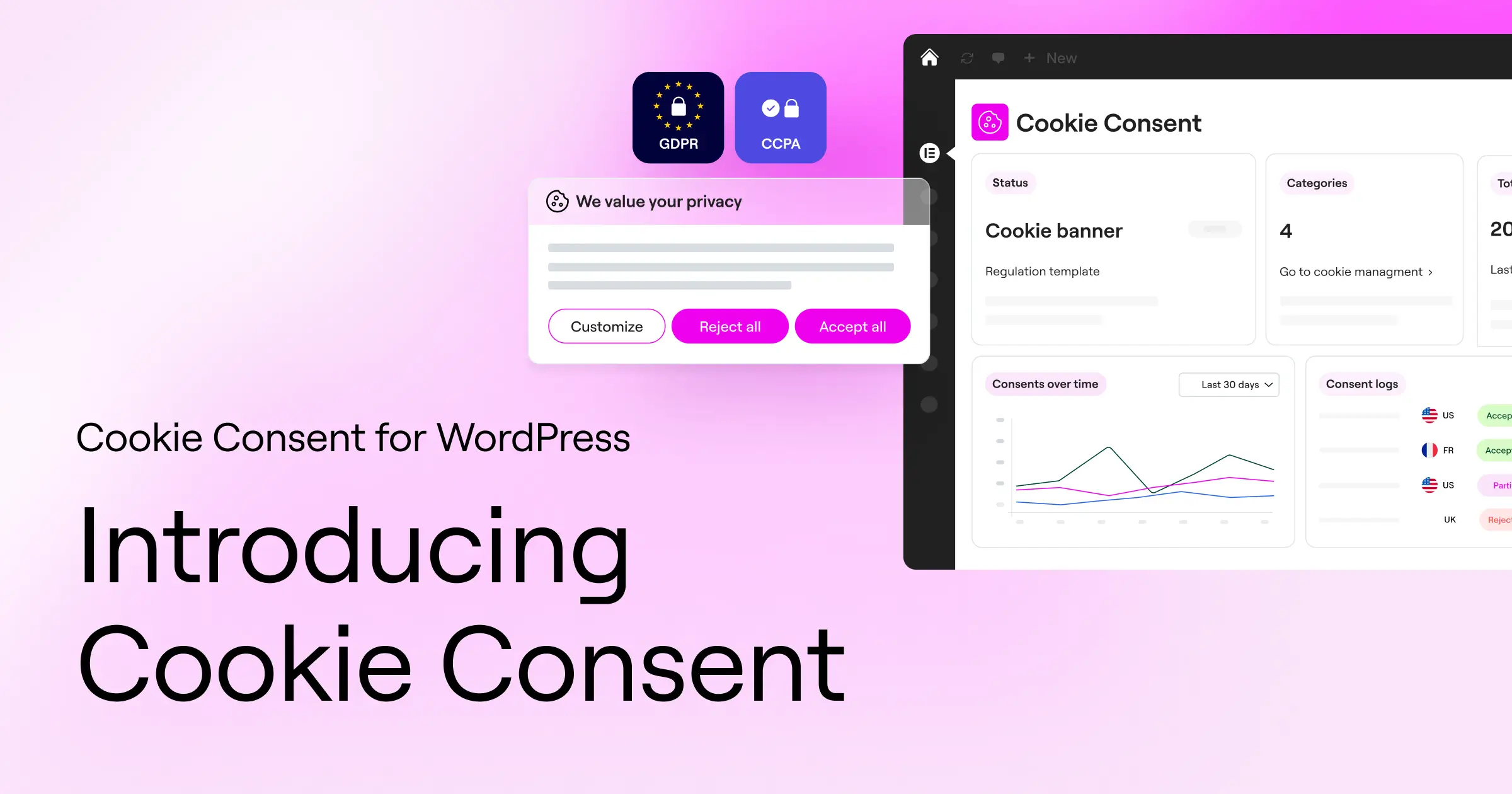
The 10 Best Tools and Practices for GDPR Compliance
Below is a mix of tools and habits that give your site a solid compliance foundation, starting with the strongest native option for WordPress, then other capable platforms and the essential practices to pair with them.
1. Cookie Consent
If you build or manage sites on WordPress, Cookie Consent by Elementor is the most effective way to handle privacy compliance. This capability is built right into your WordPress dashboard, so there’s no separate SaaS platform, no extra logins, no extra subscription. You set it all up from the environment you already know.
Setting up your banner takes under five minutes. The built-in editor lets you match its design to your brand colors, fonts, and layout, and as part of Elementor‘s broader compliance toolkit, it stays clean without bloating your code or hurting your rankings.
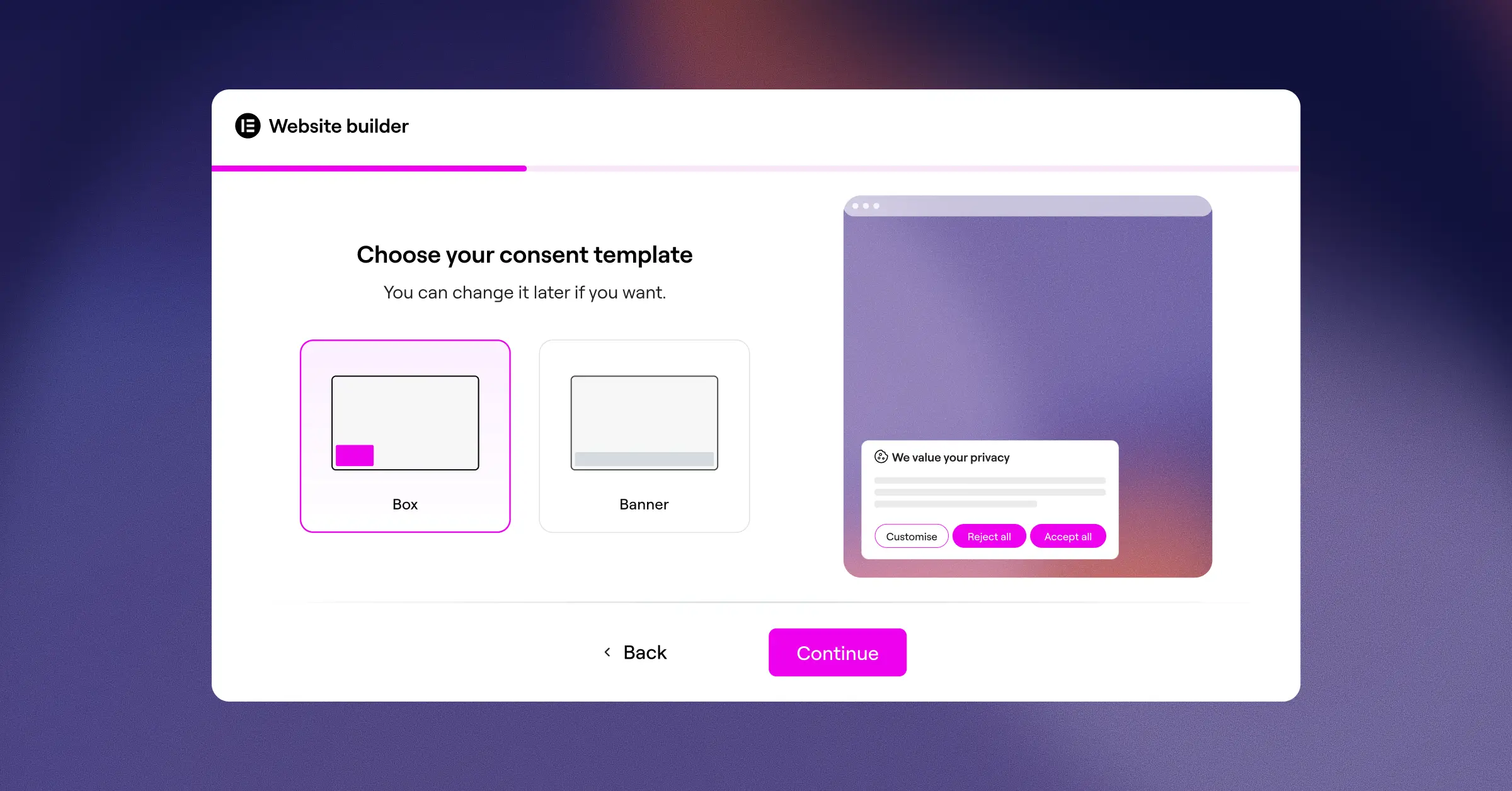
Features of this native capability include:
- Keeps accurate, secure consent logs for audit readiness without cluttering your local database.
- Builds customizable consent banners that match your active theme styling.
- Scans your site to detect, categorize, and block cookies automatically before consent is given.
- Displays geo-targeted banners so only visitors from the EU, UK, or California see specific legal notices.
- Connects directly with Google Consent Mode v2 to keep your analytics and ad tracking compliant.
- Supports Global Privacy Control (GPC) signals sent from modern browsers.
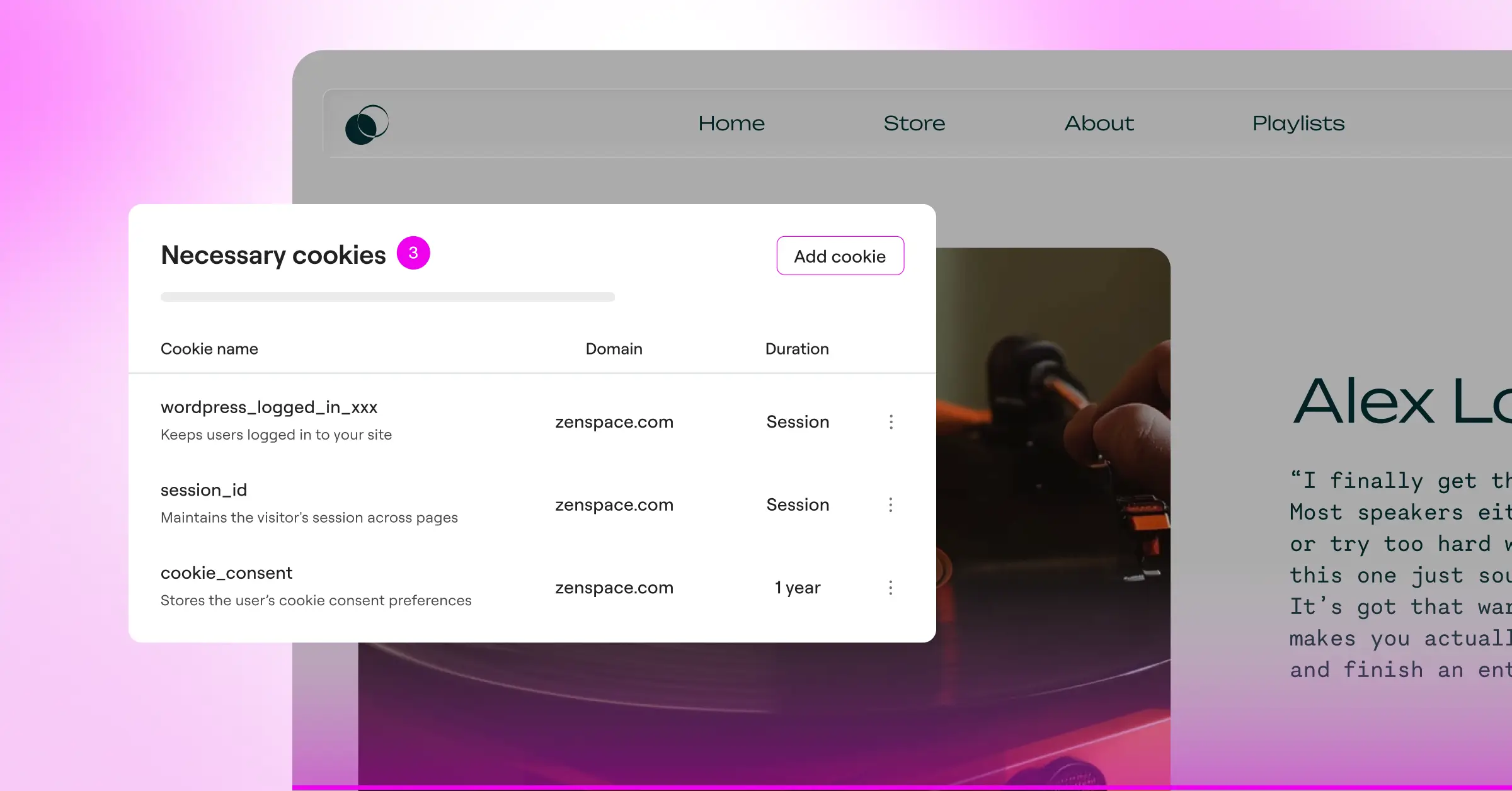
The tool is available on an entry-level plan and comes bundled in Elementor One too, one of the most cost-effective options around. It’s a great fit if you want visitor privacy protected without third-party setups outside your dashboard.
2. Cookiebot
Cookiebot is a widely used cloud-based platform for managing visitor consent. You configure banner styles, view cookie reports, and manage scripts through an external dashboard. It’s known for its automated scanner, which runs monthly to find and organize new trackers on your site.
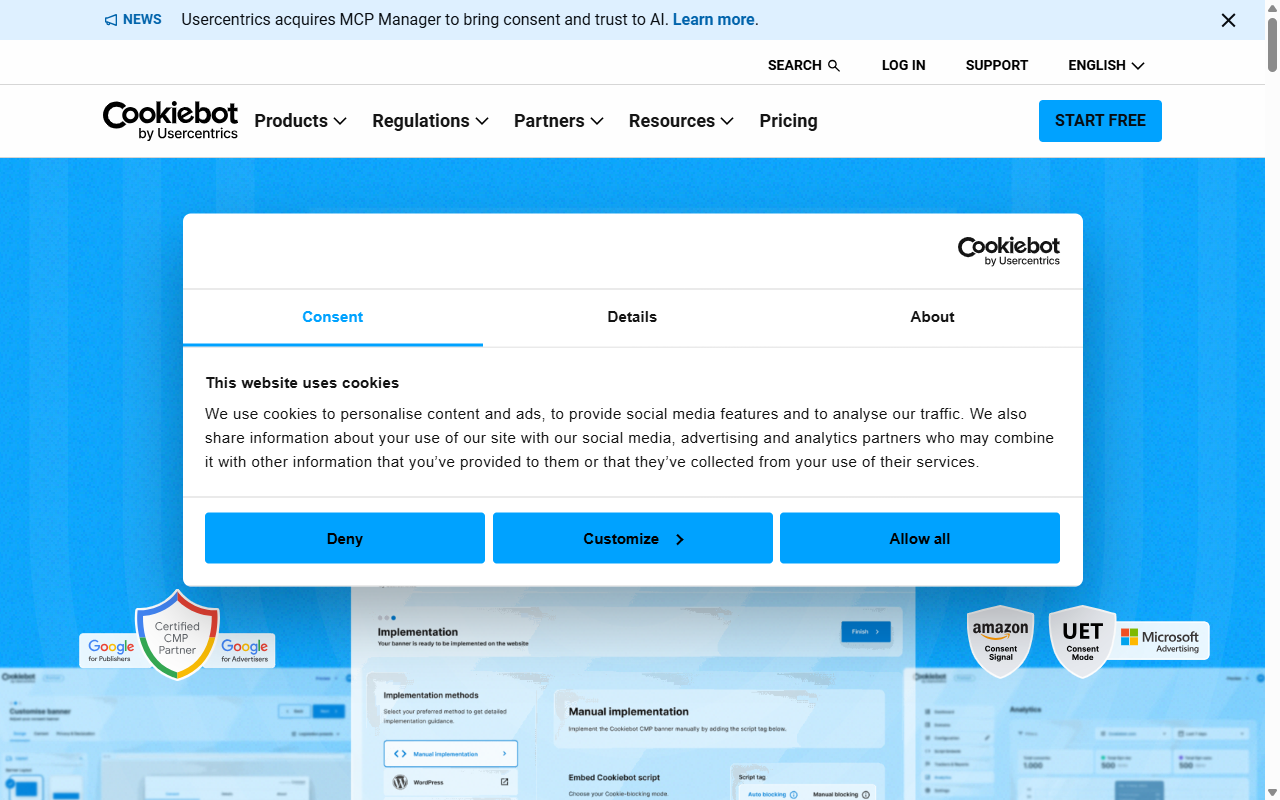
On WordPress, you install an integration helper and add an API key from your account. It handles multi-language sites well and updates your cookie policy page automatically with the latest scan results.
Key details about this tool:
- Requires an external dashboard for customization and subscription management.
- Includes a monthly automated scanner that categorizes script behaviors.
- Supports Google Consent Mode v2 and various international privacy laws.
3. CookieYes
CookieYes is a popular cloud platform for managing cookie banners and consent logging. Its dashboard is clean and approachable, making it easy to view consent ratios and configure layouts. Like other cloud tools, processing happens on external servers to reduce load on your host.
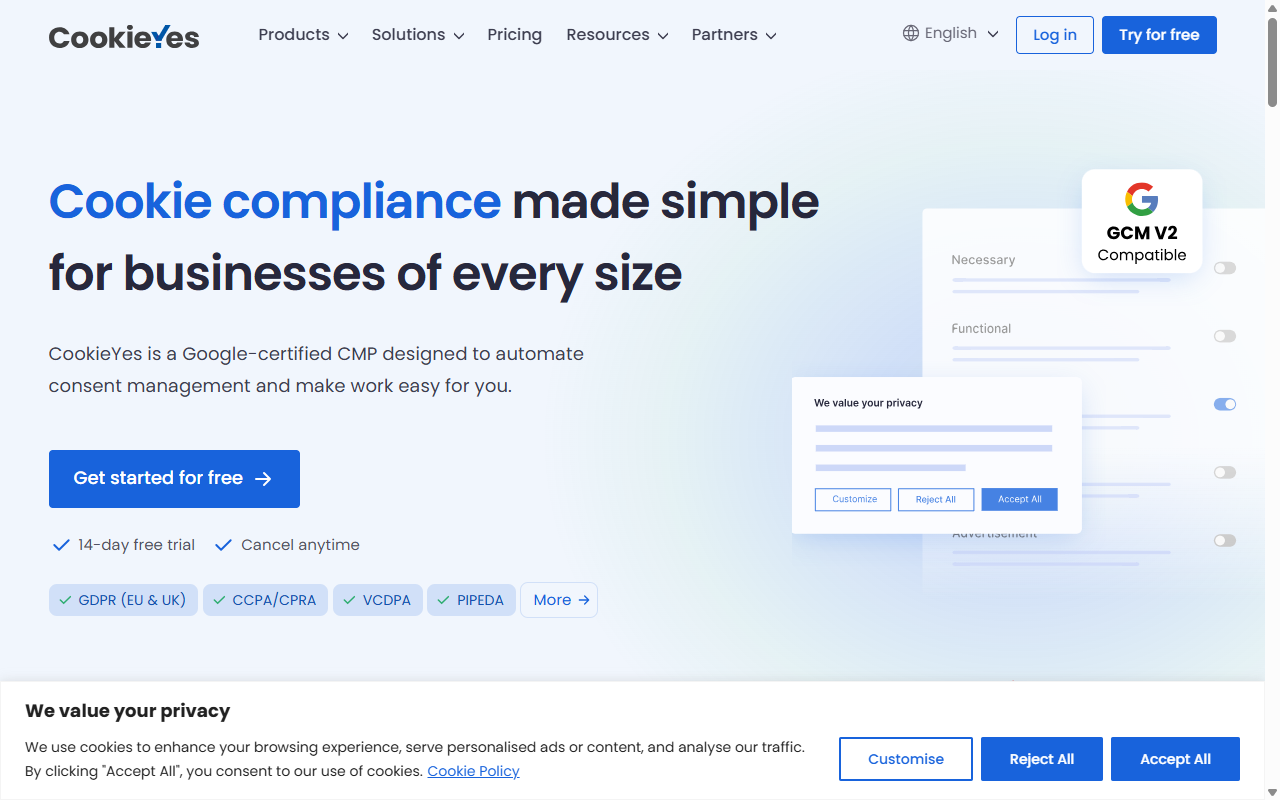
Setup means connecting your site through a helper file or script tag. Once connected, the scanner checks your pages for active trackers. Styling is straightforward, though advanced tweaks may need custom CSS in their dashboard.
Key features include:
- Shows a visual overview of visitor consent choices.
- Supports major legal standards including GDPR, CCPA, and Brazil’s LGPD.
- Includes an entry-level plan with limits on monthly page views.
- Integrates with common tag management systems for script blocking.
4. Complianz
Complianz is a privacy tool built specifically for WordPress. A step-by-step wizard walks you through a questionnaire about your business, data habits, and audience, then generates a custom cookie policy and configures your banner behavior (this part is genuinely clever).
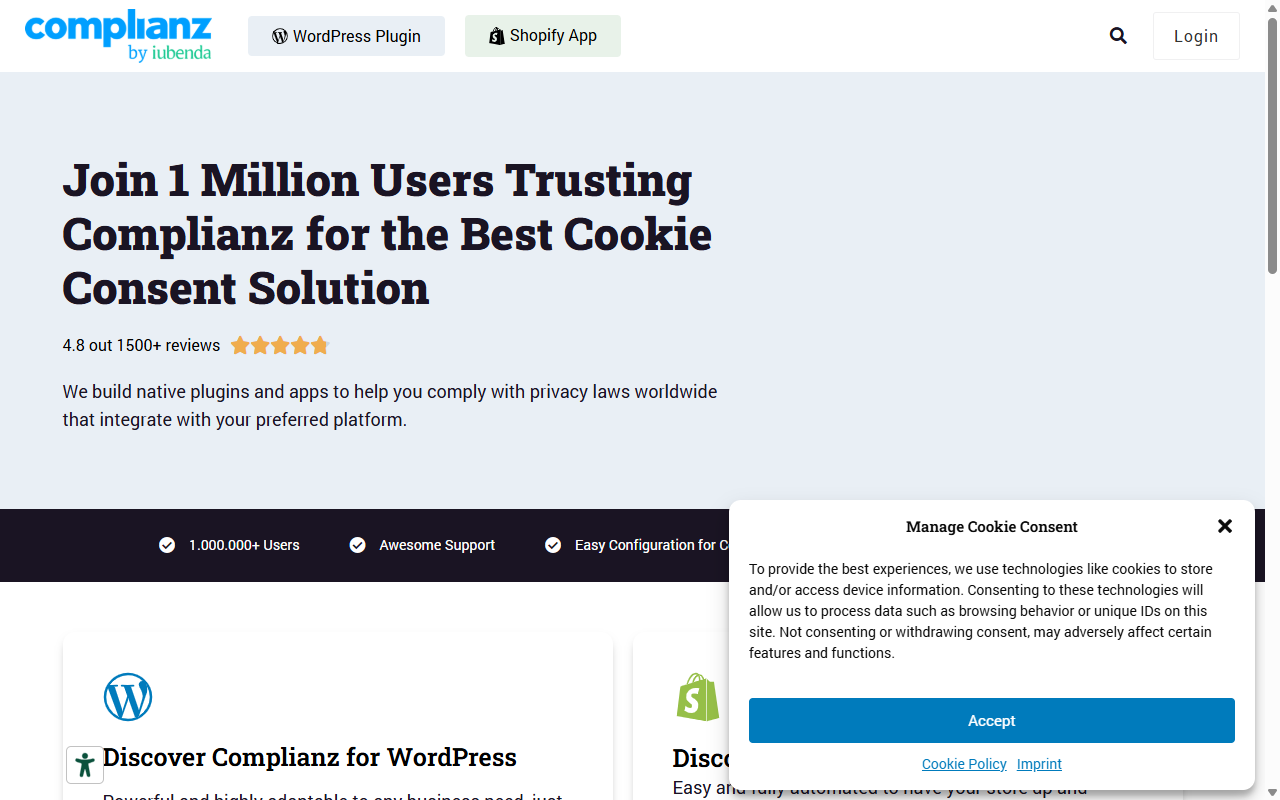
The tool runs on your own server, so your data stays under your control. It integrates with popular analytics tools and blocks social embeds automatically until a visitor accepts those cookies.
Key features include:
- Guides you through a detailed legal configuration wizard.
- Generates localized legal documents that update dynamically.
- Blocks third-party embeds, such as YouTube videos or Google Maps, automatically.
- Integrates well with major translation tools for multi-language sites.
5. iubenda
iubenda is a legal compliance suite that helps websites generate privacy policies, terms, and cookie consent banners. Rather than focusing only on cookies, it covers your whole compliance posture: you build legal text by selecting the services you actually use, such as Stripe, Mailchimp, or Google Analytics.
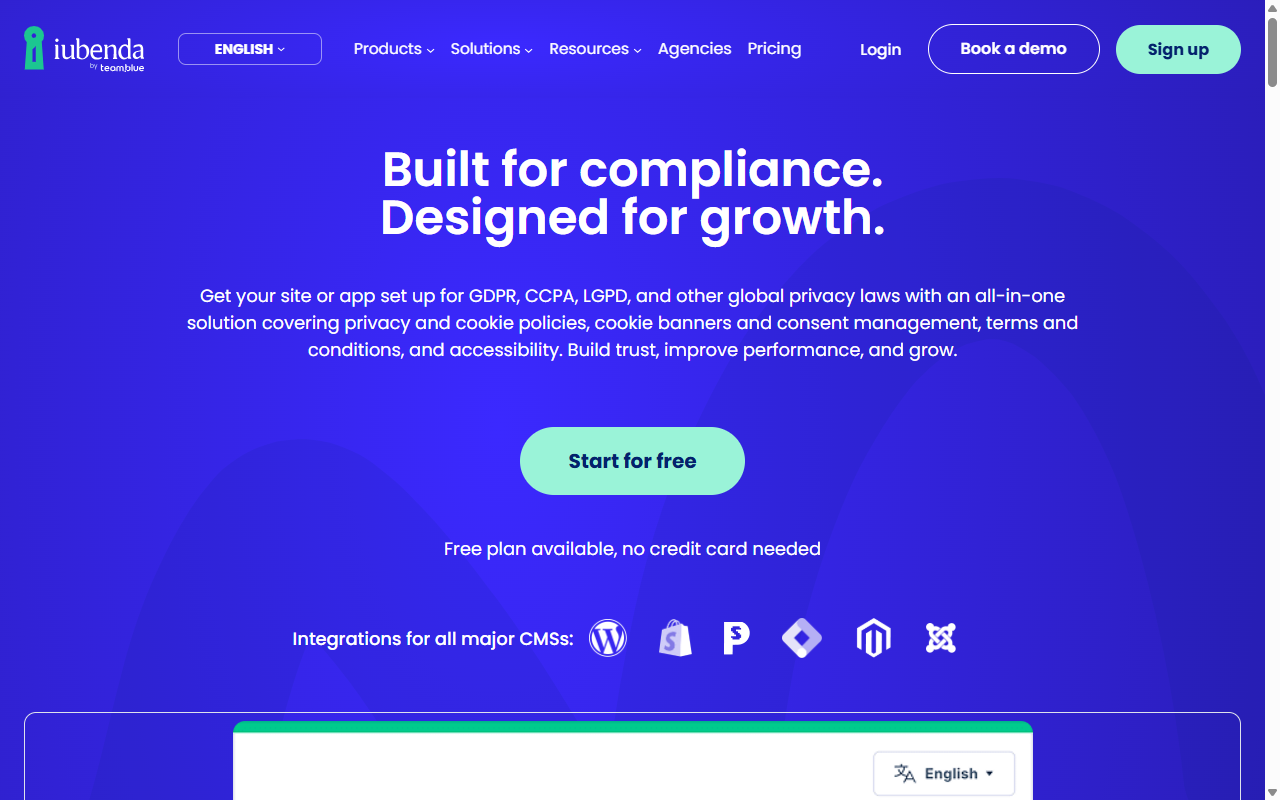
The banner is customizable, but managed through their web app. You’ll need to embed their scripts into your WordPress header to display it and handle consent.
Key features include:
- Generates complete privacy and cookie policies with legal language.
- Keeps legal documents updated automatically when regulations change.
- Includes consent-logging tools to help you meet legal audit standards.
- Suits businesses that need multiple legal agreements in one place.
6. OneTrust
OneTrust is an enterprise-level privacy management platform for larger organizations and compliance teams. It goes well beyond typical WordPress needs, with data mapping, vendor risk assessments, and consent management databases. It’s worth a look if you manage corporate sites with strict legal oversight and dedicated compliance staff.
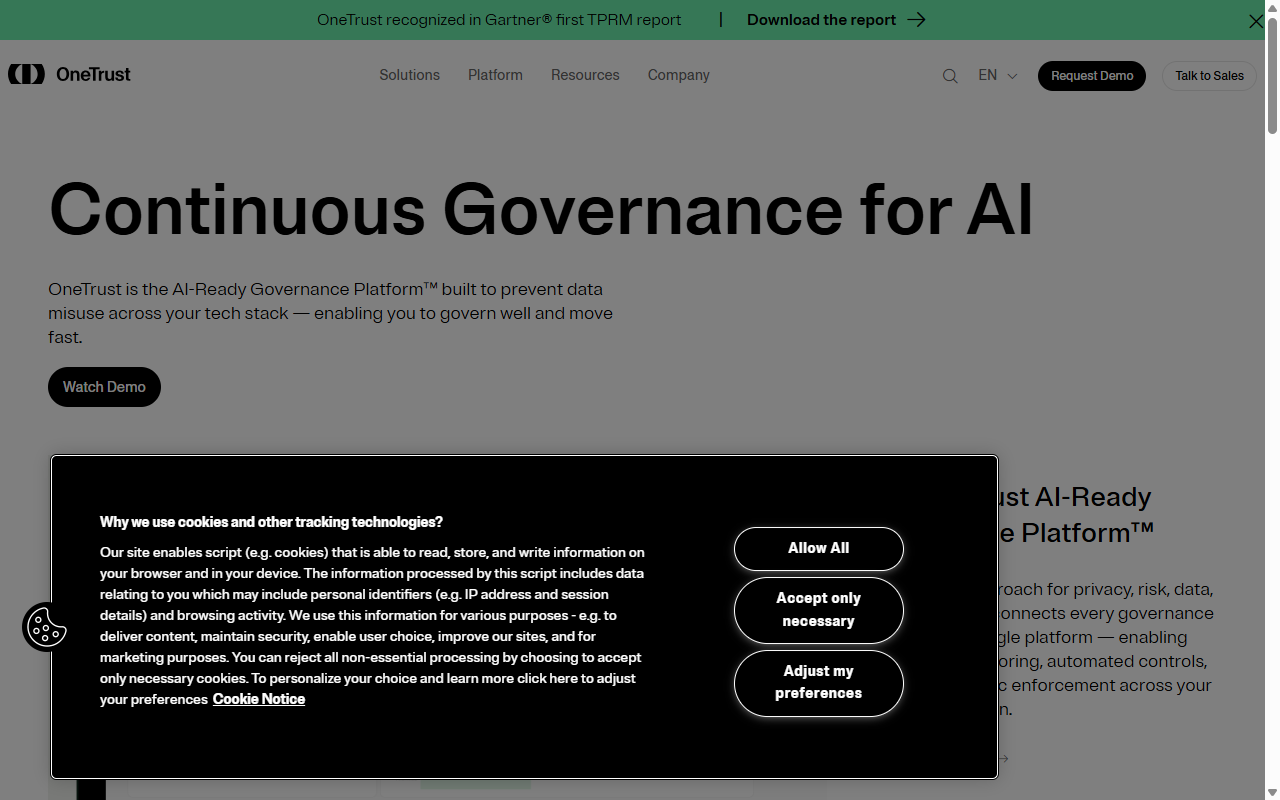
Because of its scale, setup takes real time and technical expertise. It’s built to handle the deep compliance documentation and advanced privacy controls large organizations need.
Key features include:
- Handles deep enterprise data privacy and data mapping tools.
- Supports customizable compliance banners for large multi-national brands.
- Includes complete audit trails and enterprise-level reporting.
- Suits compliance officers managing organization-wide privacy programs.
7. Minimize Your Data Collection Forms
One of GDPR’s core principles is data minimization: you only ask for and store the personal information you actually need. If you run contact forms, email sign-ups, or checkout pages, take a close look at the fields you’re asking visitors to fill in.
Do you really need a phone number, job title, and address just to send a newsletter? Probably not. Removing unnecessary fields lowers your security exposure and simplifies compliance right away. Less data is genuinely the better approach under GDPR, and visitors appreciate it.
To put this into practice on your site:
- Review every active form and remove optional fields that don’t serve a clear purpose.
- Add a clear, unchecked consent checkbox to forms where personal data goes to marketing lists.
- Write plain-language help text next to fields explaining exactly why you need that specific information.
8. Encrypt All Data with SSL and HTTPS
Security is a foundational part of privacy compliance. You can’t protect user data if it travels across the web as plain text. An active SSL certificate keeps data secure as it moves between a visitor’s browser and your server, a baseline expectation for any trustworthy site in 2026.
Most modern hosts provide free SSL certificates through Let’s Encrypt. Once yours is active, make sure your site redirects all traffic to HTTPS. It’s a simple step that protects login details, form data, and transaction details from being intercepted.
Steps to secure your WordPress connections:
- Check your hosting dashboard to confirm your SSL certificate is active and up to date.
- Update your WordPress Address and Site Address in settings to use “https” instead of “http”.
- Use a search-and-replace tool to fix any mixed-content warnings caused by older images or script references.
9. Maintain Detailed Consent Logs
If a regulator ever comes knocking, you need to prove your visitors actually gave permission to track them. That’s where consent logs matter. A consent log is a secure, anonymous record of when a visitor accepted or declined your cookie settings, your paper trail if questions come up.
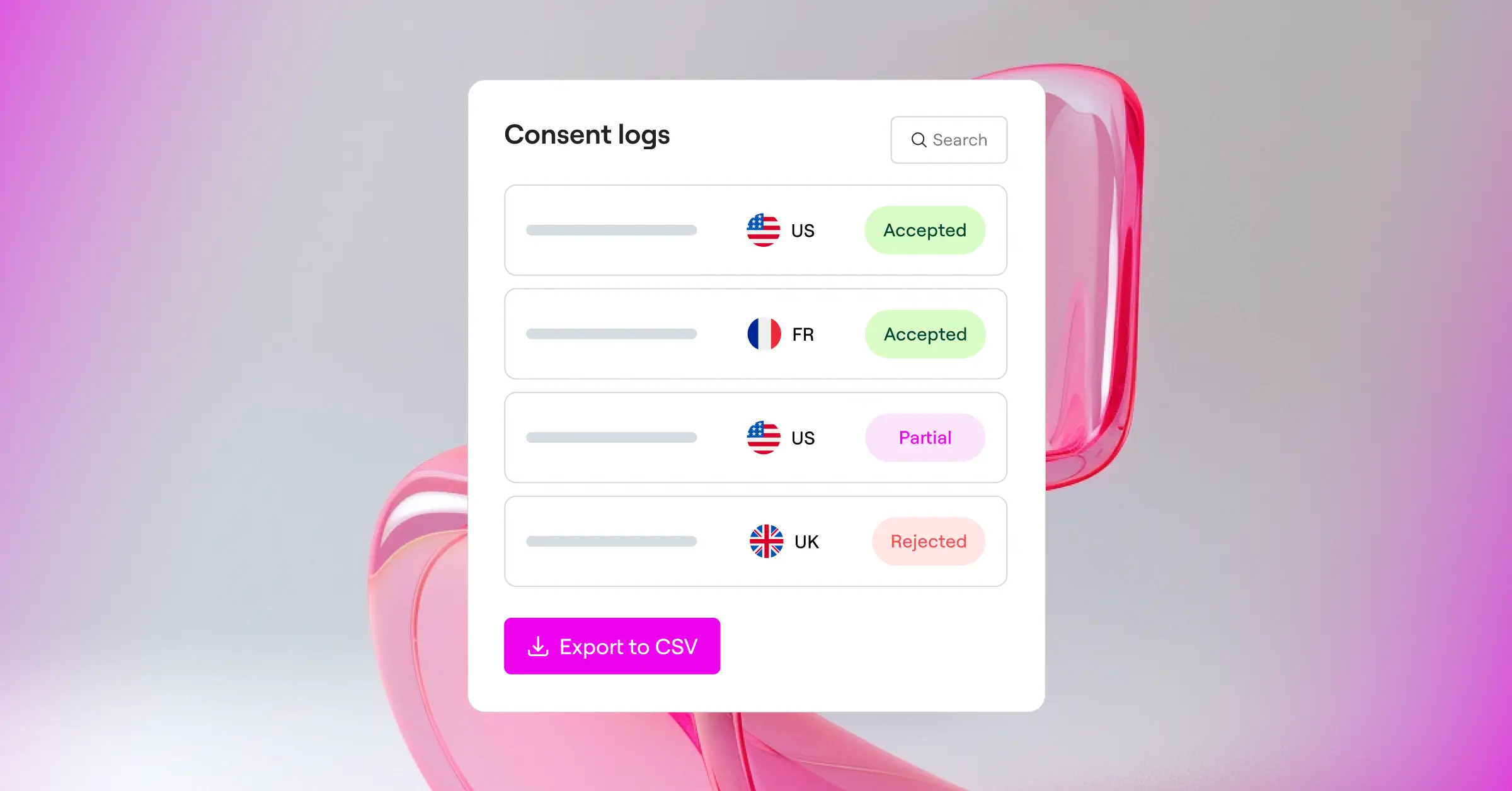
These logs should never store identifiable details like full IP addresses, but they do need anonymous identifiers, timestamps, and the exact consent choices made. Keeping this secure in the cloud protects your business from disputes and makes audits far less stressful.
“Compliance isn’t a one-time setup; it’s a continuous relationship with your visitors. In 2026, privacy is a fundamental standard of user experience. Tools that integrate directly with your editor make it simple to respect user choice without sacrificing your brand design.”– Itamar Haim, Web Compliance Specialist
10. Implement Google Consent Mode v2
If you use Google Analytics or run Google Ads to reach customers in Europe, Google Consent Mode v2 is required. It communicates your visitor’s consent choices directly to Google’s tag engines, so if someone declines analytics cookies, Google still collects anonymous signals and you don’t lose all your conversion data.
For this to work, you need a cookie consent capability that speaks natively to Google’s systems. That connection keeps your ad accounts running properly while keeping you on the right side of the law, a practical win for compliance and marketing alike.
Cookie Consent Solutions Compared
Here’s a side-by-side look at the main options above, to help you choose the right fit for your site.
| Solution Name | WordPress-Native | Google Consent Mode v2 | Geo-Targeting Support | Core Benefit |
|---|---|---|---|---|
| Cookie Consent | Yes (Dashboard Integrated) | Yes (Built-in) | Yes (Included) | Best value, fast setup, zero external platform overhead. Included in Elementor One. |
| Cookiebot | No (SaaS Platform) | Yes (Configuration Required) | Yes (Premium Tier) | Strong monthly cookie scanner and automated policy updates. |
| CookieYes | No (Cloud Console) | Yes (Configuration Required) | Yes (Paid Tier Only) | Simple tracking dashboard with basic free options. |
| Complianz | Yes (Plugin Wizard) | Yes (Paid Tier Only) | Yes (Premium Only) | Detailed local legal questionnaire and step-by-step setup. |
| iubenda | No (Script Integration) | Yes (Configuration Required) | Yes (Premium Only) | Generates complete terms and privacy documents alongside consent banners. |
| OneTrust | No (Enterprise System) | Yes (Enterprise Custom) | Yes (Enterprise Tier) | Complete compliance suite built for large corporate teams. |
A Quick Compliance Checklist for WordPress Site Owners
If you want to confirm your site is fully compliant, run through this checklist at your own pace. (It’s simpler than it sounds.)
- Audit your cookies – Use a privacy tool to scan your pages and identify which tracking scripts are running.
- Install a native consent tool – Choose a dashboard-integrated capability to avoid heavy third-party scripts.
- Enable geo-targeting – Make sure visitors from areas with strict privacy laws see the correct banner automatically.
- Set up Google Consent Mode v2 – Link your tracking codes to your banner so Google tags respect user choices.
- Add privacy policies – Create clear, readable Privacy Policy and Cookie Policy pages visitors can find easily.
- Check form consent – Make sure any form collecting emails or user data includes an optional, unchecked consent checkbox.
- Enable SSL – Confirm all pages load securely via HTTPS with an active certificate.
Work through these steps and your site will be in a much stronger position, with the documentation to back it up. Compliance doesn’t have to be a burden. The right tools make it easier to keep your site secure and ready for whatever comes next.
Frequently Asked Questions
What is Cookie Consent and why does it matter in 2026?
Cookie Consent is Elementor’s native privacy compliance capability for WordPress, managing GDPR and CCPA requirements right from your dashboard with no external platform needed. It matters because modern privacy law requires clear consent before any tracking script runs, and a native tool keeps your site fast, professional, and compliant.
Do I really need Google Consent Mode v2 on my site?
Yes. If you serve EU or UK visitors and use Google Analytics or Ads, Google Consent Mode v2 is required. It tells Google’s systems whether a visitor consented, keeping your ad measurement accurate while staying within privacy law.
What happens if a visitor declines my cookie banner?
Your cookie consent tool has to block all non-essential scripts, including analytics and ad pixels. Your site still needs to work fine for them. Essential cookies, like the ones that keep shopping carts and logins going, stay permitted because your site needs them.
Can I customize the look of my consent banner?
Yes. With dashboard-native capabilities like Cookie Consent, you edit fonts, colors, buttons, and layout using familiar editor tools, so your privacy notice looks like a natural part of your site, not a bolted-on alert box.
What’s the difference between a native tool and a SaaS platform?
A native capability runs inside your WordPress install, using your editor’s styling and keeping consent logs in one place. SaaS tools live on external sites, so you copy and paste code, manage separate accounts, and often pay monthly fees tied to traffic.
Is there an entry-level plan for Cookie Consent?
Yes. Cookie Consent has an entry-level plan covering essential compliance for most sites. Advanced features, like cloud-based templates and deeper integration with Elementor’s ecosystem, come with premium tiers, or bundled into Elementor One.
Do I need to show a consent banner to every visitor globally?
Not necessarily. Modern geo-targeting tools detect a visitor’s location and only show the banner in regions with strict privacy laws, like the EU, UK, and California. Visitors elsewhere get a cleaner experience without it.
How does a cookie scan help my WordPress site?
An automatic cookie scan inspects your site for active tracking scripts and groups them into categories, like analytics, marketing, or preferences, so your banner accurately lists what’s running and your policy stays honest for any legal review.
Can I use compliance tools on client websites?
Yes. Modern cookie tools typically include white-label options and multi-site licensing for web creators and agencies, so you can build compliant client sites and manage every installation from one place, no separate subscription per project.

