Sticklight vs v0 by Vercel is one of the most searched AI builder comparisons among professional web creators in 2026. Both tools start from a text prompt. After that, they serve entirely different goals. Sticklight is the vibe-coding platform for professional web creators, built by the Elementor team and powered by Claude. It takes a prompt all the way to a production-ready website, app, dashboard, CMS, or internal tool, with full creative control throughout. v0 by Vercel is a generative UI component tool built for frontend engineers inside React and Next.js projects. This comparison covers what each AI builder does, who each serves, and where the difference matters for professionals who ship real products.
Key takeaways
- Sticklight is an AI website builder and full creation platform that turns a prompt into a complete, production-ready product (websites, apps, dashboards, CMS, booking systems, and internal tools) with SEO, security, hosting, and full design control included.
- v0 by Vercel generates React and Tailwind UI components for developers already working inside Next.js projects and the Vercel deployment ecosystem.
- Sticklight’s Skills system adds packaged expert knowledge, including SEO, Accessibility, Performance, and Design System, to every build with one click.
- v0 is a component generator that fits inside an existing engineering workflow. Sticklight is a full-stack web creation platform that goes from prompt to published URL without an engineering bottleneck.
- Professional web creators who build for clients and need to ship production work on a deadline find Sticklight covers the complete creation cycle, not just the component layer.
- Sticklight is built by the Elementor team and powered by Claude, bringing a decade of professional web creation pedigree to an AI-native platform.
What each AI builder does, and how they differ at the core.
Sticklight is the vibe-coding platform for professional web creators. It takes a natural language prompt and produces production-ready websites, landing pages, web apps, dashboards, CMS, booking systems, internal tools, forms, and databases. The creation flow moves through three phases: Prompt, Build, and Publish.
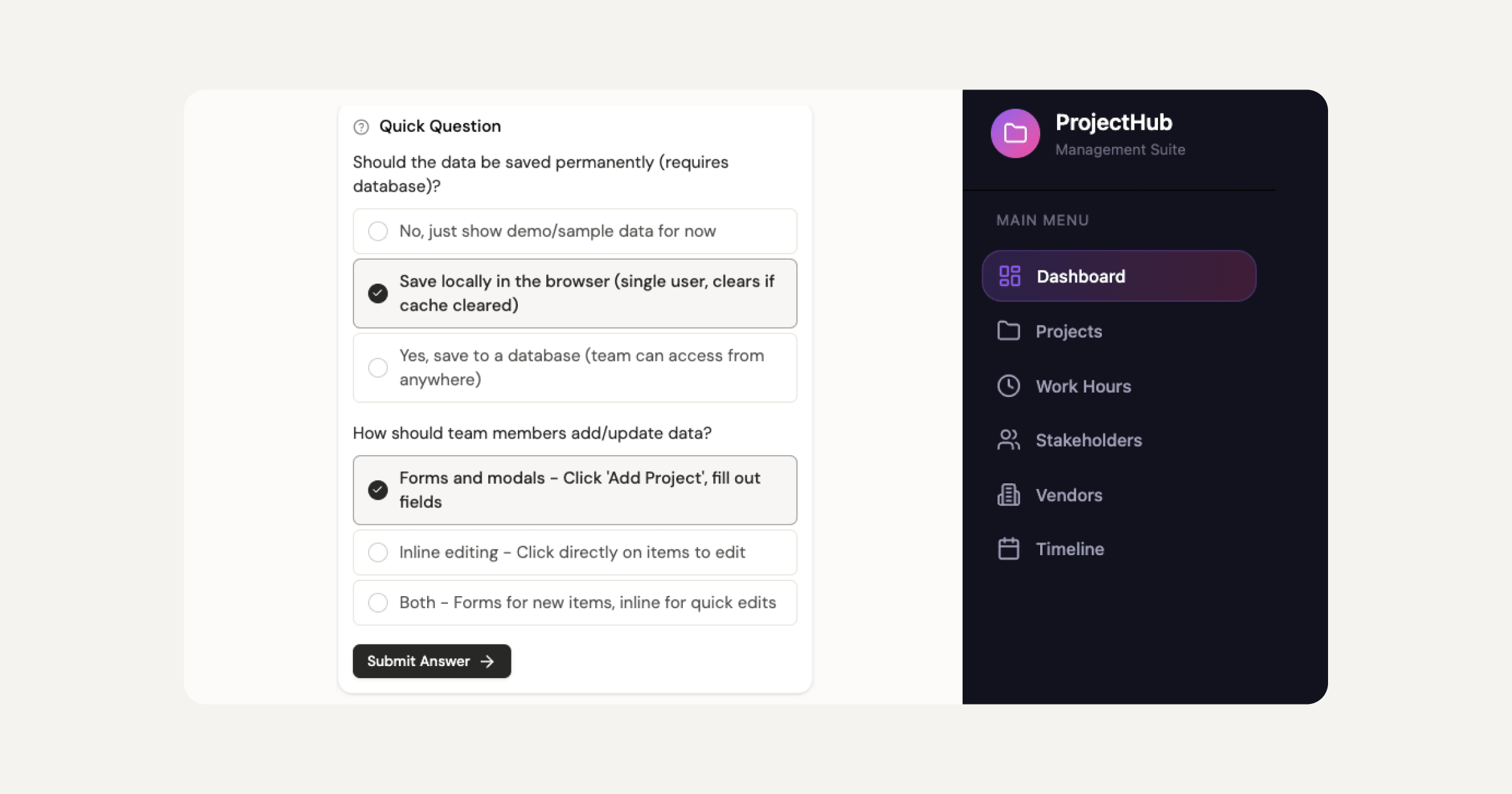
In the Prompt phase, creators can use the main prompt box, Plan Mode for complex tasks, Templates to remix, Connectors based on use case, or Sticklight MCP to connect Sticklight to their existing tools. The Build phase is where Skills add packaged units of expert knowledge to the project with one click. In the Publish phase, SEO, a security scan, custom domain connection, and hosting are all built in. The creator keeps full manual control of the canvas and the code throughout.
v0 by Vercel is a generative UI tool from Vercel, the infrastructure and deployment company behind Next.js. It accepts text or image prompts and produces React components styled with Tailwind CSS. Those components are designed to drop into an existing Next.js codebase. v0 is tightly coupled to the Vercel deployment ecosystem, which makes it a natural fit for engineering teams who already work inside that stack. It is not a standalone product builder. It is a component-generation tool inside a developer workflow.
Who each platform serves: professional web creators vs. frontend engineers.
Sticklight serves professional web creators: agencies, freelancers, and studios delivering client work, and independent creators launching their own products, tools, and digital businesses. These are people who build the web for a living. They need outputs that meet the standard a client or end user expects, not a prototype that requires rebuilding before it ships.
v0 by Vercel is built for frontend engineers and full-stack developers who work in React and Next.js. Its output assumes a developer will take the generated components, review them, and integrate them into an existing codebase. Non-technical creators, designers, and web professionals who do not work inside a React project daily will find the workflow assumes a level of engineering context that not every professional web creator has.
Output comparison: complete products vs. UI components.
The clearest functional difference between the two AI builders is what they produce. v0 generates components: a button, a card, a form section, a navigation bar. A v0 component is a solid starting point for a developer integrating it into a codebase. It is not a published product.
Getting from a v0 component to a live URL requires a development environment, a deployment pipeline, a hosting setup, and likely additional configuration. For a web creator whose job is to ship finished products, not manage infrastructure, that is a meaningful gap.
Sticklight produces complete products. A single prompt produces a full website, app, or dashboard. The creator can then edit every pixel on the canvas, add Skills, and publish, with SEO, a security scan, hosting, and a custom domain, all in the same platform. The gap between the first prompt and a live URL is measured in minutes, not sprints.
The Skills system: Sticklight’s built-in expert layer.
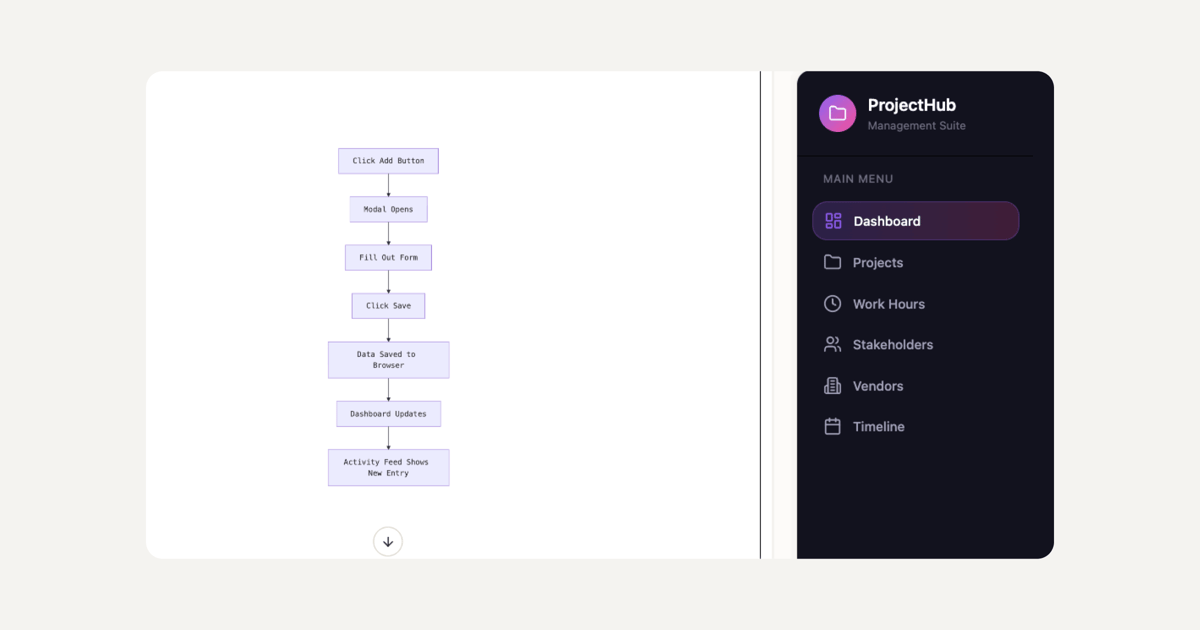
Sticklight’s Build phase includes nine live Skills. Each one is a packaged unit of expert knowledge applied to any project with one click. A Skill is not a generic suggestion. It is a rule-based layer of expertise applied at build time. The nine live Skills are Accessibility, SEO, Design System, Performance, Copywriting, Localization, Micro-interactions, Onboarding, and 3D Web Experience (built on Three.js).
The SEO Skill ships meta tags, schema markup, sitemap configuration, and on-page best practices. The Accessibility Skill ships WCAG-compliant markup, focus states, and ARIA attributes. Skills compound across projects. The more a creator ships with Sticklight, the faster and sharper each successive project becomes.
v0 does not offer a comparable Skills system. Component generation handles the UI layer. SEO, accessibility, security, and performance considerations sit with the engineer integrating the component, or with additional tooling in the engineering stack.
Publishing workflow: from prompt to live URL without an engineering bottleneck.
Publishing a Sticklight project means SEO built in, a security scan run on every build, custom domain connection, and app hosting included. The creator does not configure a deployment pipeline or manage a hosting provider separately. The finished product goes live as-is, not as a prototype that needs additional engineering work.
Publishing a v0 component means deploying to Vercel, a capable and widely used deployment platform. For teams already inside the Vercel ecosystem, this is a familiar step. For web creators who are not managing a Next.js deployment pipeline, it introduces a dependency that sits between their idea and a live product.
Full control after AI: visual canvas vs. direct codebase editing.
A consistent concern among professional web creators evaluating AI builders is whether the AI output can be adjusted after the first generation. Sticklight is built around this. The canvas gives creators full manual control of every element after the AI builds. Direct code editing is available for creators who want to work at that level. The AI does the heavy lifting from the first prompt. The creator owns every decision after that point.
v0 produces React and Tailwind code that a developer can edit directly in the codebase. For engineers, this is a natural mode of control. The output is transparent code. For professionals who are not React developers, the point of control is inside a codebase rather than on a visual canvas, which changes how accessible that control is in practice.
Going beyond websites: apps, dashboards, and full digital products.
Sticklight is built for professional web creators who want to go beyond websites. That means building everything from web apps and dashboards to CMS and internal tools, all from one platform. v0 produces UI components. It does not build websites, apps, dashboards, or CMS systems as standalone products. The output is always a component, destined to live inside a larger engineering project.
Sticklight builds the full range from a single prompt-first flow: websites, landing pages, web apps, dashboards, CMS, booking systems, internal tools, forms, databases, AI-powered experiences, and management platforms. This is the core of the Sticklight story: go beyond websites and become a full-stack creator. A professional who starts by building client websites can expand their service offering to apps, dashboards, and full digital products without switching platforms or learning a new framework.
Platform pricing and plans.
Sticklight offers a free plan to try the platform and ship real products, with paid plans scaling up through Pro for independent creators and freelancers, Team for multi-seat collaboration, and Enterprise with SSO, security review, and dedicated support. A bring-your-own-keys option is available on select plans for LLM cost control. Sticklight’s pricing scales with seats and feature access, not page count or usage volume.
v0 by Vercel is available at the Vercel platform level. Vercel offers a free tier with usage limits, and paid plans that scale with team size and usage. Costs for v0 generation are tied to Vercel’s credit system. Teams heavily using both v0 for component generation and Vercel for deployment will see costs accrue across both layers.
Comparison at a glance.
| Dimension | Sticklight | v0 by Vercel |
|---|---|---|
| Primary output | Complete products: websites, apps, dashboards, CMS, tools | React/Tailwind UI components |
| Primary audience | Professional web creators, agencies, freelancers, studios | Frontend engineers and full-stack developers |
| AI model | Claude (Anthropic) | Vercel’s generative UI system |
| Prompt interface | Main prompt box, Plan Mode, Templates, Connectors, Sticklight MCP | Text or image prompt for component generation |
| Skills / expert layers | 9 live Skills: SEO, Accessibility, Performance, Design System, Copywriting, Localization, Micro-interactions, Onboarding, 3D Web Experience | Not included; handled in engineering stack |
| Manual control | Full canvas editing and direct code editing | Direct code editing in the codebase |
| Publishing | SEO, security scan, custom domain, hosting built in | Vercel deployment pipeline |
| Engineering dependency | No; prompt to published URL without developer bottleneck | Yes; component integration into Next.js codebase required |
| Surface range | Websites, apps, dashboards, CMS, booking, internal tools, forms, databases | UI components within React projects |
| Pedigree | Built by the Elementor team. Powered by Claude. | Built by Vercel, the team behind Next.js |
| Free tier | Yes | Yes |
Why professional web creators choose Sticklight over a component generator.
v0 is a well-built tool for what it does. If you are a frontend engineer inside a Next.js project who wants to generate a React component faster, v0 serves that need well. The output quality is high, the Vercel integration is natural, and it fits into an existing developer workflow.
Professional web creators are not looking for a better component generator. They are looking for an AI website builder that takes a project from the first prompt to a live, production-ready URL. Design quality, SEO, security, and hosting included. Full creative control at every point. That is a different category of tool. Sticklight is that platform.
Sticklight covers the whole creation cycle. The Prompt phase starts the project. Plan Mode handles the complexity of larger builds. The Build phase adds Skills: packaged expertise that would otherwise require a separate SEO audit, an accessibility review, a performance pass, and a design-system conversation. The Publish phase ships it, with a security scan on every build and hosting that does not require a deployment pipeline.
For agencies delivering client work, the difference matters at the end of every project. A client expects a finished product, not a set of components. Sticklight delivers the finished product. For freelancers building their own digital products and tools, the difference matters at the start. Sticklight lets a single creator build an app, a dashboard, or a CMS, not just a website.
That is the beyond-websites story. The same platform that builds a client site can build the internal tool, the booking system, the management dashboard, the digital product. The creator’s capability grows with the platform.
Sticklight is built by the Elementor team. Powered by Claude. That combination means a platform built by people who have spent a decade working on professional web creation tools, now running on one of the most capable frontier models available. The Sticklight standard, the craft of a senior designer and developer, is the benchmark every output is held to, from the first prompt.
“The gap between an AI component tool and an AI creation platform is the gap between a piece and a product. v0 gives developers a fast path to a React component. Sticklight gives professional web creators a fast path to a shipped product, and then lets them own every part of it. For web professionals who measure success by what they ship to clients, not by what they check into a repo, that distinction is the whole ballgame.”
Itamar Haim, AI for WordPress Specialist
Sticklight and Elementor: built for the same mission.
Sticklight shares Elementor’s core mission: empowering web creators to build their future. Elementor has served professional web creators building on WordPress for over a decade, and that experience is woven into how Sticklight was designed. Sticklight is platform-agnostic and AI-native. It does not replace the WordPress workflow. It expands what creators can build alongside it.
WordPress remains a trusted foundation to build on and connect to, not a limitation to escape. Sticklight is where creators go when they need to build something that goes beyond what a traditional CMS workflow produces: a web app, a dashboard, an internal tool, a full digital experience. Both tools sit on the same side of the creator. Professionals who use both find each one does its job better for having the other.
For web creators already working in the Elementor ecosystem, Sticklight is a natural expansion. The same design instincts, the same commitment to professional standards, the same belief that the creator, not the tool, should own the outcome. Read more about building for professionals at the Elementor blog.
Frequently asked questions.
What is the difference between Sticklight and v0 by Vercel?
Sticklight is a full AI creation platform. It takes a prompt and produces a complete, production-ready product, including websites, apps, dashboards, CMS, booking systems, and internal tools, with SEO, security, hosting, and full design control included. v0 by Vercel generates React and Tailwind UI components for developers working inside Next.js projects. Sticklight produces finished products ready to publish. v0 produces pieces that an engineer integrates into a codebase.
Do I need to know React or code to use Sticklight?
No. Sticklight is built for professional web creators, not for engineers managing a React codebase. You work in natural language through the prompt interface and on the visual canvas. Direct code editing is available for creators who want it, but it is not a requirement. v0, by contrast, assumes the user will take generated React components and integrate them into an existing Next.js project, which requires comfort with that engineering environment.
What is Plan Mode in Sticklight?
Plan Mode is a Prompt-phase entry point in Sticklight that simplifies complex tasks before the build begins. For projects with multiple moving parts (a dashboard with several data views, a CMS with a defined content model, a booking system with specific logic), Plan Mode helps structure the prompt so the build phase starts with a clear foundation. It is one of several entry points in Sticklight alongside the main prompt box, Templates, Connectors, and Sticklight MCP.
What are Sticklight Skills and why do they matter for professional builds?
Skills are packaged units of expert knowledge that a creator adds to any Sticklight project with one click during the Build phase. Nine Skills are live: Accessibility, SEO, Design System, Performance, Copywriting, Localization, Micro-interactions, Onboarding, and 3D Web Experience (Three.js). Each Skill applies a rule-based layer of expertise at build time. The SEO Skill ships meta tags, schema markup, sitemap configuration, and on-page best practices. The Accessibility Skill ships WCAG-compliant markup, focus states, and ARIA attributes. Skills replace what would otherwise be a separate specialist review after the build.
Can I use Sticklight to build web apps and dashboards, not just websites?
Yes. Sticklight is built for creators who want to go beyond websites and become full-stack creators. The same prompt-first flow produces websites, landing pages, web apps, dashboards, CMS, booking systems, internal tools, forms, databases, management platforms, and full digital experiences. The platform’s core story is about becoming a full-stack creator, not just a faster website builder.
Who built Sticklight, and what AI model does it use?
Sticklight is built by the Elementor team and powered by Claude, Anthropic’s frontier model. The combination brings a decade of professional web creation experience together with one of the most capable AI models available. That pedigree backs the Sticklight standard: production-ready output with the craft of a senior designer and developer from the first prompt.
Is Sticklight a good AI website builder for agencies delivering client work?
Sticklight is built for exactly this audience. Agencies delivering client work need speed, design quality, and production-ready outputs that protect their reputation. Sticklight’s Publish phase includes a security scan on every build, SEO built in, custom domain connection, and hosting. The Skills system adds Accessibility, Performance, and Design System expertise to every project. For agencies running multiple client projects, Skills compound across builds: each successive project ships faster and to a sharper standard.
Does Sticklight replace Elementor or WordPress?
No. Sticklight’s story is always additive to Elementor and to WordPress. Sticklight is platform-agnostic and AI-native. WordPress is a trusted source of truth to build on and connect to, not a limitation Sticklight rescues you from. Professional web creators use Elementor for WordPress-based client sites and Sticklight when they need to build apps, dashboards, internal tools, and full digital products that go beyond the traditional website workflow. Different tools for different jobs.
What is Sticklight MCP?
Sticklight MCP is a Prompt-phase connector that links Sticklight to your favorite external tools. It is part of the platform’s broader prompt entry-point system, alongside the main prompt box, Plan Mode, Templates, and Connectors. MCP stands for Model Context Protocol. It allows creators to connect Sticklight to the services and data sources they already use, making the build more informed from the first prompt.
Built by the Elementor team. Powered by Claude. Let it glow.

