Privacy rules on the web keep shifting, and a little compliance fatigue is understandable if you run a WordPress site. The good news: getting ready doesn’t have to be overwhelming. With a clear plan, you can work through each piece and feel confident about where you stand. Staying ahead also builds real trust with your audience and earns loyalty that’s hard to buy any other way.
A quick note on where things stand: the ePrivacy Regulation is a proposed EU rule that would replace the older 2002 ePrivacy Directive. As of 2026, it’s still moving through the EU legislative process and hasn’t been formally adopted. The current legal framework for cookies and tracking is GDPR plus the national “cookie law” implementations of that Directive. That’s why preparing now makes sense: once the Regulation takes effect, sites with solid consent infrastructure already in place will need only minor adjustments. Think of it as future-proofing, not box-ticking.
Key Takeaways
- Start early to avoid rushed compliance decisions if and when new rules are formally adopted.
- Run a full audit of your site to discover exactly which cookies are running in the background.
- Adopt a native tool like Cookie Consent to simplify your workflow inside WordPress.
- Implement Consent Mode v2 if you rely on Google services for advertising or analytics.
- Respect user signals like Global Privacy Control to show your audience that you genuinely value their choices.
1. Audit Your Existing Website Cookies
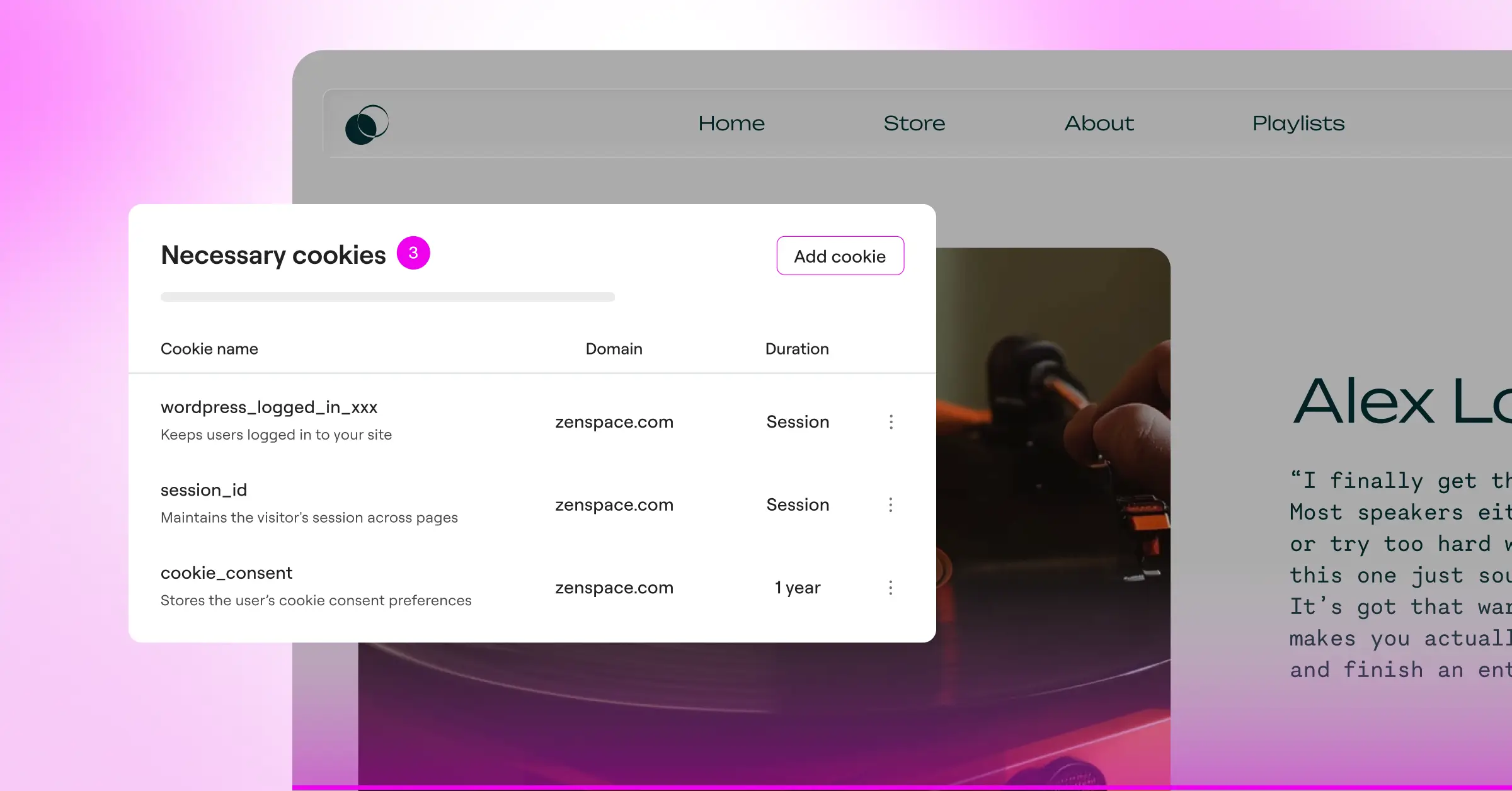
Before you can make your site compliant, you need to know what’s happening under the hood. WordPress sites commonly pick up a trail of tracking scripts over the years without anyone noticing. Every theme you test, every social widget you add, and every analytics tool you install can drop cookies on your visitors’ devices.
Running a full scan is step one, and you can’t skip it. You’re looking for tracking scripts, marketing pixels, and functional cookies that gather user data. Once you have a complete list, sort it into clear categories: necessary, analytical, functional, and marketing. That clarity makes everything else in your compliance setup easier.
To perform this audit, use these methods:
- Scans your site using automated online privacy scanners to identify active scripts.
- Inspects browser developer tools to view active storage items manually.
- Lists every tool and third-party integration you actively use on any page.
- Removes outdated tracking scripts that no longer serve your business goals.
- Categorizes each remaining tracker based on its actual purpose, not just its name.
2. Deploy a WordPress-Native Consent Tool
Many cookie banners force you to manage everything through a separate external platform, which splits your workflow and adds friction to your site’s loading process. Look for a consent tool that lives inside your WordPress dashboard instead, so your compliance work stays unified and quick to update.
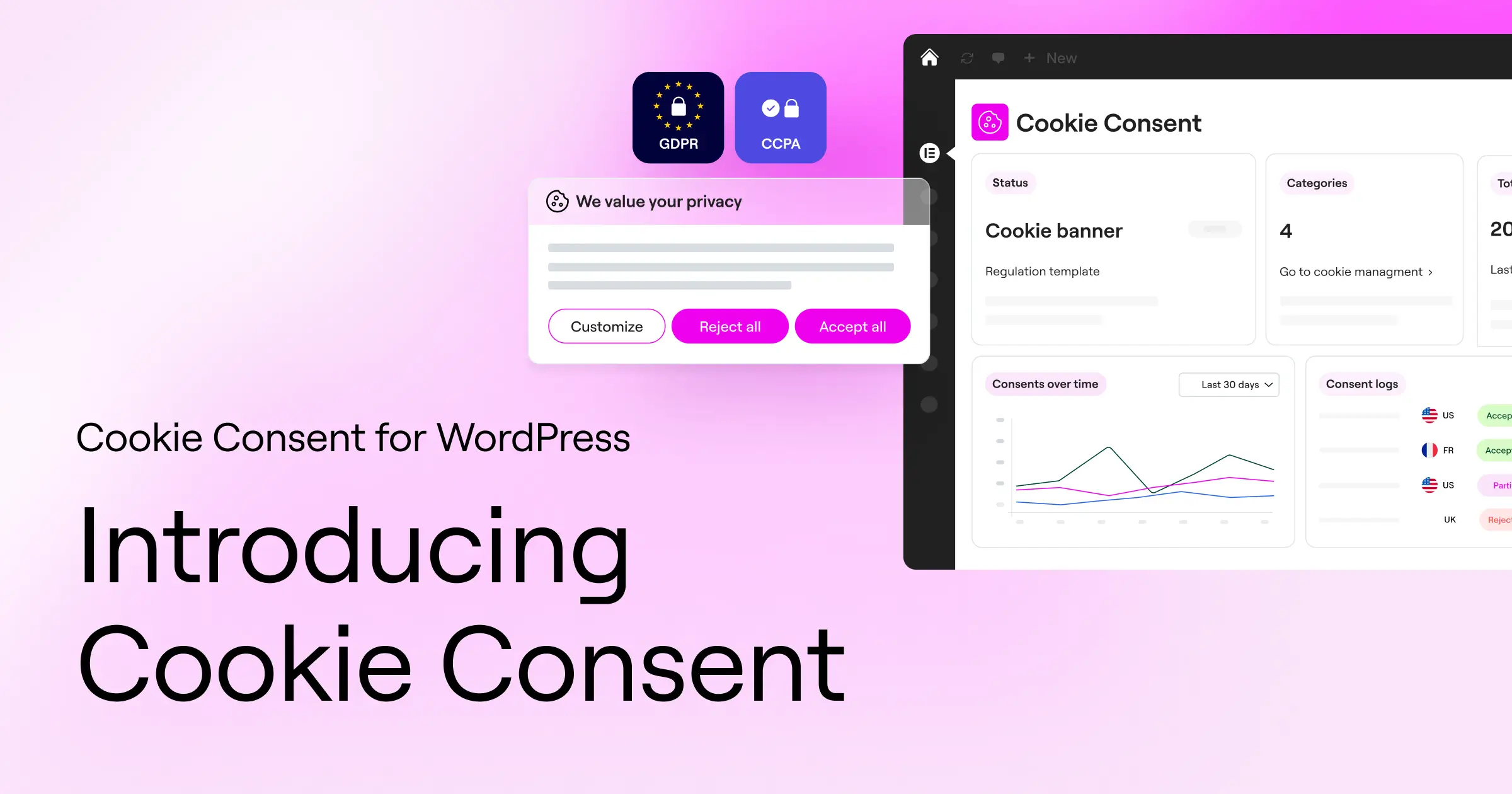
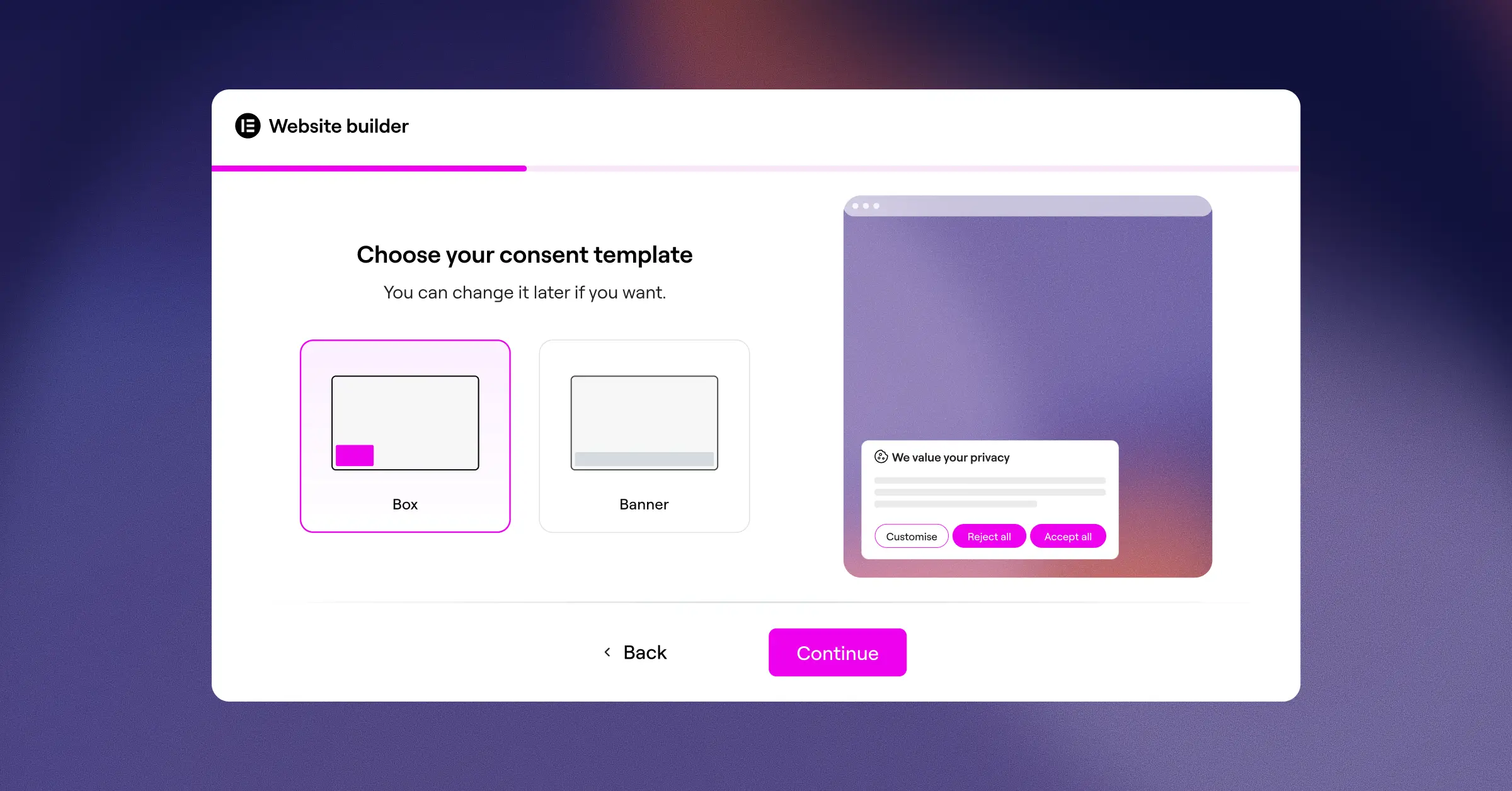
For WordPress creators, Elementor makes this straightforward. The platform includes Cookie Consent, a built-in compliance capability that lets you set up banners, scan cookies, and manage scripts without leaving your dashboard. You won’t need a separate platform, data syncing between systems, or another subscription. Cookie Consent is part of Elementor’s broader privacy toolkit, built to make compliance smooth for WordPress site owners.
When choosing a native tool, keep these features in mind:
- Builds banners directly inside the visual editor you already use every day.
- Connects consent actions directly to your onsite script manager.
- Pulls cookie data automatically to keep your compliance notices accurate and current.
- Maintains fast loading times because it doesn’t rely on heavy external resources.
3. Implement Google Consent Mode v2
If you use Google Analytics or Google Ads, Google Consent Mode v2 is no longer optional for sites serving EU traffic. It acts as a translator between your visitor’s privacy choices and the Google tags on your site, which is more elegant than it sounds.
When a visitor declines marketing cookies, Consent Mode v2 tells Google’s servers to adjust how they collect data, switching to anonymous, aggregate modeling instead of tracking personal information. You still get useful, high-level performance insights without compromising individual privacy, and getting it in place now means you’re ready if tighter rules arrive.
To set up Google Consent Mode v2 properly, follow this simple path:
- Select a consent tool that offers built-in support for Google’s consent framework.
- Configure your tag manager to recognize consent status variables before any tags fire.
- Test your setup to make sure tags only activate when the correct permissions have been granted.
“Adopting modern consent standards like Google Consent Mode v2 isn’t just about avoiding regulatory penalties. It’s about honoring the digital boundaries of your audience while maintaining the data integrity you need to grow.”
– Itamar Haim, Web Compliance Specialist
4. Adopt a Privacy-by-Design Model
Privacy by design means thinking about user privacy from the first moment you plan a new page or feature, instead of retrofitting it later. It takes a real shift in habit, but once it clicks, compliance becomes part of how you build rather than a task you dread. (This is the one that trips people up most, but it pays off the most over time.)
Instead of collecting every piece of data just because you can, gather only what you need to deliver your service. If you don’t need a visitor’s phone number or location to send an ebook, don’t ask for it. Fewer data points mean less liability, a simpler privacy policy, and visitors who feel respected rather than watched.
A solid privacy-by-design checklist includes:
- Minimizes data collection fields on all your contact and registration forms.
- Defaults all non-essential cookies to “off” until the user actively consents.
- Anonymizes IP addresses in your analytics platforms before any data is stored.
- Deletes old user submissions and form entries once they’re no longer needed for any legitimate purpose.
5. Update and Simplify Your Privacy Policy
Nobody enjoys reading long legal documents packed with jargon. Both GDPR and the direction of the proposed ePrivacy Regulation emphasize clear, readable communication. Your privacy policy should be something an average customer can read and understand in a couple of minutes, not something they click past.
A built-in policy generator can give you a solid first draft, but customize it to reflect your actual practices: what you collect, why you collect it, and how users can ask you to remove their data. Plain headings, bullet points, and everyday language make it approachable instead of confusing.
Here’s how to structure your updated policy for maximum clarity:
- Open with a brief, plain-language summary of your key privacy practices right at the top.
- Use clear sections with bold headers to group related topics and make the page easy to scan.
- Include a dedicated contact method (email address or simple form) specifically for privacy requests.
6. Respect Global Privacy Control (GPC) Signals
Global Privacy Control is a browser-level setting that lets users declare their privacy preferences once, with those preferences automatically sent to every site they visit. When someone enables GPC, their browser sends a signal, in effect: “I don’t want my data sold or used for cross-site tracking.”
Under current frameworks, and almost certainly under any future ePrivacy Regulation, your site needs to recognize and honor these automated signals. If a visitor arrives with GPC enabled, your consent tool should automatically opt them out of non-essential tracking without making them touch your banner. It’s a thoughtful way to show tech-savvy visitors you take their preferences seriously.
7. Use Geo-Targeted Consent Banners
Not every visitor needs the same privacy experience. Someone from the EU requires a full opt-in banner with granular choices, while someone from a region with different rules might need only a brief notice, or nothing at all. Showing a heavy consent overlay to everyone, regardless of location, creates friction and can hurt your conversion rates.
Geo-targeting lets you show the right banner to the right person based on location, keeping you compliant while delivering a cleaner, faster experience to visitors who don’t need a detailed prompt. It helps your compliance and your user experience at the same time.
A smart geo-targeting strategy lets you:
- Displays detailed opt-in consent choices to users visiting from the European Union.
- Shows appropriate opt-out notices to visitors from California and other regulated regions.
- Keeps the screen uncluttered for visitors in regions with minimal tracking restrictions.
- Improves engagement rates by reducing unnecessary interruptions for most of your audience.
8. Maintain Verifiable Consent Logs
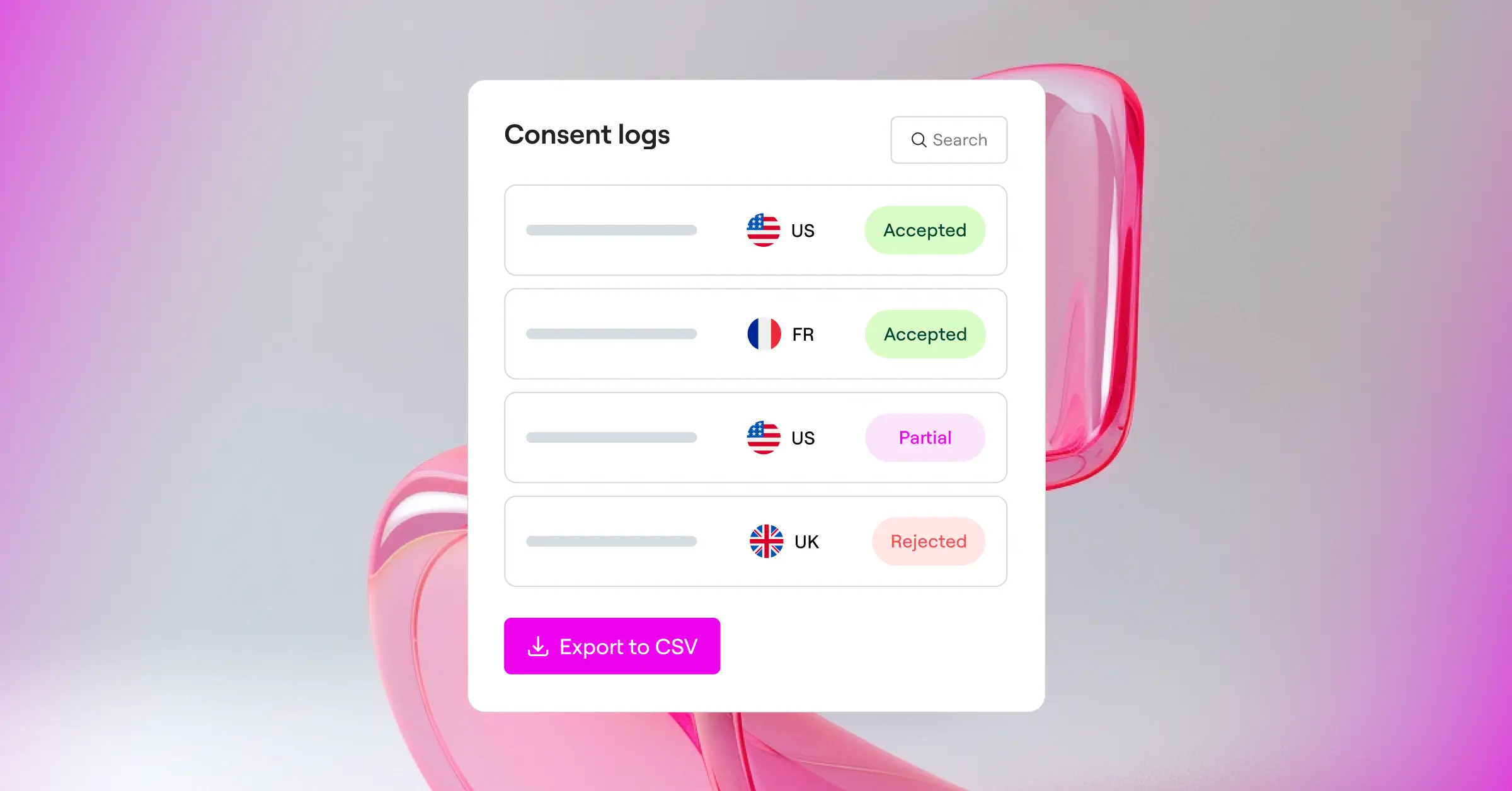
If a regulator ever asks you to prove that a specific user agreed to your tracking cookies, you need an audit trail. A consent banner alone isn’t enough. You need secure, organized records of when consent was given, what policy version was in effect, and what choices the user made.
A good consent tool handles this automatically in the background. The logs shouldn’t contain sensitive personal data, but they do need the consent status, timestamp, and an anonymous identifier so you can match a record to a session. That kind of audit readiness is exactly what regulators look for when they investigate complaints, so having it in place before you need it is a genuinely smart move.
9. Clean Up Third-Party Integration Scripts
Every time you embed a YouTube video, a social feed, or a third-party live chat widget, you’re inviting another company to place trackers on your site. And here’s the part that catches a lot of site owners off guard: you’re responsible for what those third-party scripts do once they load on your pages, even if you didn’t write the code.
Before new regulations come into effect, review every external embed on your site. Use privacy-friendly alternatives where you can, or configure your setup to block third-party scripts from loading until the visitor has actively consented. It sounds like a lot of work, but once you have the right tools in place, it becomes routine site upkeep. (It’s simpler than it sounds once everything is configured.)
To tidy up your third-party scripts, try these steps:
- Replace standard YouTube embeds with privacy-friendly placeholders that only load the video after a user click.
- Switch to local or self-hosted fonts instead of pulling them from external servers on every page load.
- Deactivate social sharing widgets that track users across the web without explicit permission.
10. Focus on First-Party Data
The direction of travel for web tracking is clear: the era of third-party cookies is winding down. Rather than looking for workarounds, the most successful sites right now are investing in first-party data, building direct, honest relationships with visitors based on genuine value exchange, not invisible tracking networks.
Encourage your audience to subscribe to your newsletter, create accounts, or join a community directly on your site. When users share their information willingly because they trust your brand and expect something worthwhile in return, you no longer depend on complex third-party tracking to understand your audience or grow your business. That kind of relationship is more durable than anything built on borrowed data.
You can find more guidance on building privacy-first digital experiences on the Elementor blog, where the team regularly covers compliance, web performance, and WordPress best practices.
How the Top Consent Tools Compare
Choosing the right tool to manage your consent workflow can feel like a lot, given how many options exist. Here’s a factual comparison of how some widely used tools handle the core requirements for WordPress site owners.
| Consent Tool | Dashboard Integration | Consent Mode v2 Support | Geo-Targeting Features | Primary Focus |
|---|---|---|---|---|
| Cookie Consent (by Elementor) | Fully WordPress-Native | Yes (Built-in) | Yes | Simple, native consent management for WordPress sites |
| Cookiebot | External Dashboard | Yes | Yes | Cloud-based enterprise consent management |
| CookieYes | Hybrid Dashboard | Yes | Yes | Multi-platform cookie consent across various CMS platforms |
| Complianz | WordPress Dashboard | Yes | Yes | Privacy-focused consent with built-in legal guidance wizards |
| iubenda | External Dashboard | Yes | Yes | Complete compliance suite covering privacy policies and consent |
| OneTrust | External Dashboard | Yes | Yes | Enterprise-grade privacy governance and compliance platform |
Getting Started with Your Privacy Prep
Preparing your site for where privacy law is heading doesn’t have to be a stressful chore. Taking systematic steps now protects your business, builds audience trust, and creates a better browsing experience for the people who visit your site. Start by auditing your current scripts, cleaning up unnecessary trackers, and using a native solution like Cookie Consent to handle the day-to-day compliance work without adding extra complexity to your stack.
Your visitors will appreciate the transparency, and you’ll feel a lot better knowing your digital home is safe, organized, and ready for whatever the regulatory landscape brings next. You’ve genuinely got this.
Frequently Asked Questions
What is the ePrivacy Regulation?
The ePrivacy Regulation is a proposed EU rule meant to replace the 2002 ePrivacy Directive, the source of national “cookie laws” across Europe. It would set clearer, unified standards for cookie consent, tracking pixels, and how user communications metadata gets handled. As of 2026, it’s still moving through the EU legislative process and hasn’t been formally adopted, so it isn’t in force yet.
Do these laws apply to my site if I live outside the EU?
Yes. If your site attracts visitors from the European Union, you must comply with EU privacy rules when handling their data, regardless of where your business is based. Geo-targeting helps here, since it lets you apply the right rules only to the visitors protected by them.
What is the difference between GDPR and ePrivacy?
Think of GDPR as the broad framework for personal data protection, while the ePrivacy rules focus specifically on electronic communications: tracking scripts, email marketing, and browser cookies. GDPR covers your general data handling and processing agreements; ePrivacy zeroes in on how your site interacts with users’ devices.
Does Google Consent Mode v2 track personal user data?
No, Google Consent Mode v2 is designed to protect personal data rather than collect it. When a visitor declines marketing cookies, the system sends non-identifying, aggregated signals to Google’s servers. You still get useful high-level performance data without tracking individual users, exactly how it’s meant to work.
Can I just write my own cookie consent banner?
You technically can, but it’s usually safer and more practical to use an established tool. Modern compliance calls for some genuinely complex technical features: consent logging, script blocking before consent is given, and geo-targeting. A dedicated tool like Cookie Consent handles all of that automatically, so you’re not reinventing the wheel.
Will a cookie banner make my WordPress site slow?
It depends on how the tool is built. External tools that rely on large third-party scripts can add noticeable loading time. Native tools that run directly inside your WordPress environment are optimized to work efficiently alongside your existing setup, keeping your site fast while staying compliant.
How often should I scan my website for new cookies?
Running a cookie audit at least once a quarter is good practice, and you should also run one whenever you install a new theme, integration, or plugin. Third-party services often update their tracking methods without announcing it, so regular scans keep your consent records accurate.

