
Key Takeaways
- Continuous scanning matters because a new theme or integration can change your cookie profile overnight.
- Native WordPress tools keep your workflow simple, so you’re not juggling a separate dashboard.
- Google Consent Mode v2 is now necessary for any site running analytics or targeted ads in the EU.
- Immutable consent logging is your shield, proving your compliance history if regulators ever ask.
If you run a WordPress site, keeping up with cookies can feel like chasing a moving target. Privacy laws shift and scripts update, so a compliant site can fall out of step without warning. Don’t worry, though. Staying compliant in 2026 is more manageable than it looks, and you just need the right setup and a few simple habits. Here’s a walk-through of the best ways to monitor your compliance on an ongoing basis, without losing your sanity.
Why Ongoing Cookie Compliance Matters More Than Ever in 2026
Setting up a cookie banner once and forgetting about it is a real risk. In the early days of privacy law, a simple “we use cookies” banner with an OK button was enough. Today, regulators across Europe, the United Kingdom, California, and dozens of other jurisdictions require explicit consent before any non-essential tracker loads on a visitor’s device. If you run analytics tools, marketing pixels, or embedded social feeds, you’re dropping cookies, and if those load before someone clicks “accept,” you’re technically out of compliance.
The privacy landscape keeps shifting, and ad networks now need deep integration with specific consent systems to target ads well. Google Consent Mode v2, for instance, is a strict requirement for sites serving European Union traffic that want to keep using Google’s tools, and if that signal fails, your marketing data can break overnight. Your site is also a living thing: every new feature or updated integration can quietly introduce new tracking scripts. That’s why an ongoing monitoring routine matters so much, protecting your business while it builds real trust with your audience.
10 Best Ways to Monitor Ongoing Cookie Compliance
Here are the top strategies and tools for tracking your site’s compliance status in 2026, from automated technical checks to native dashboard features built for WordPress creators.
1. Deploy a Native WordPress Tool Like Cookie Consent
If you run your site on WordPress, you probably don’t want compliance scattered across a handful of dashboards. Cookie Consent, a native capability built into the Elementor ecosystem, handles GDPR and CCPA compliance right from your dashboard, so there’s no separate platform to log into.
It sets up customized consent banners, scans and categorizes cookies automatically, manages tracking scripts, and keeps secure consent logs, all in one place. It’s included in Elementor One, with an entry-level plan for creators starting out, and it supports Google Consent Mode v2 and Global Privacy Control (GPC).
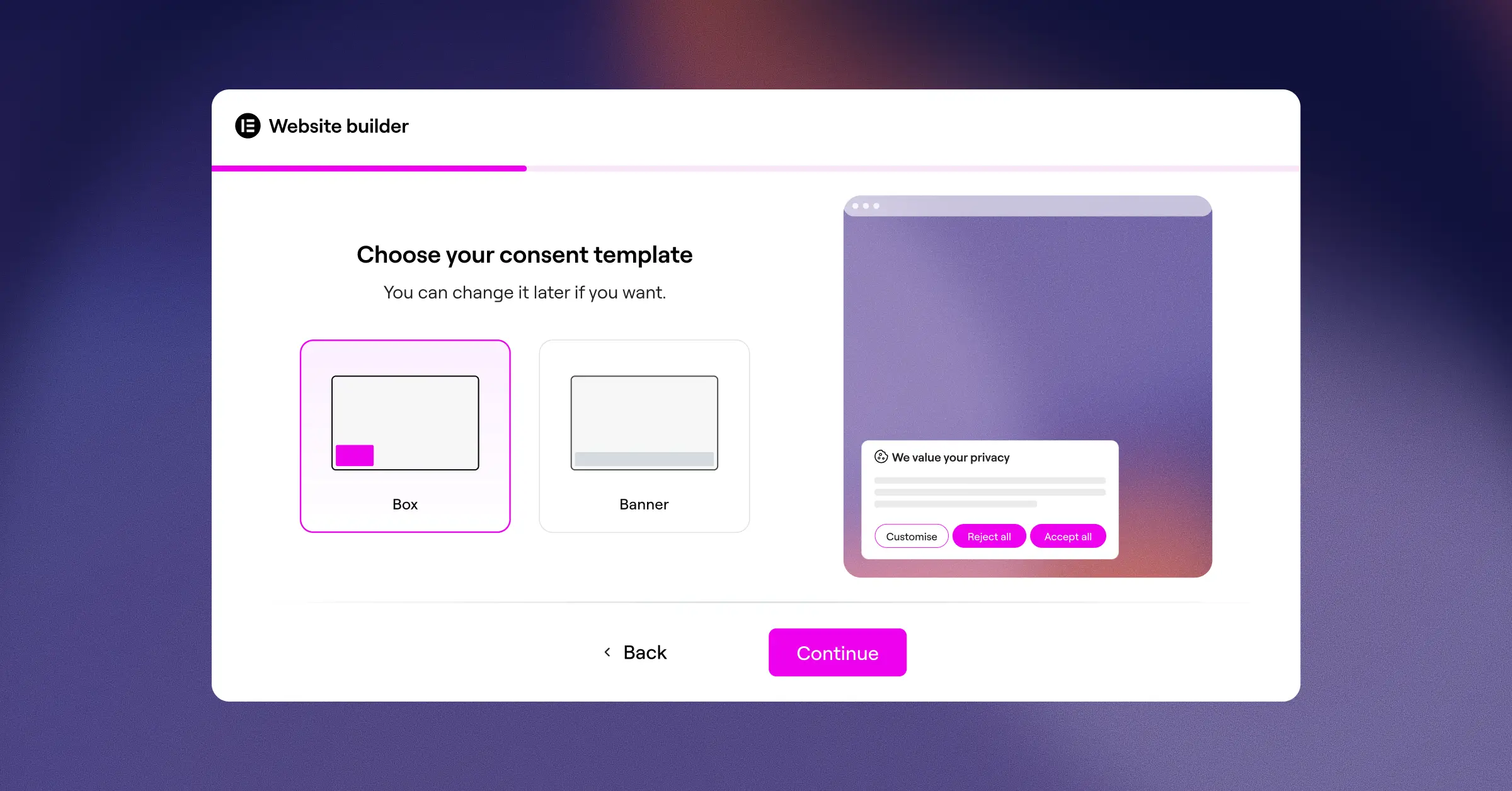
- Builds consent notices inside your native web editor.
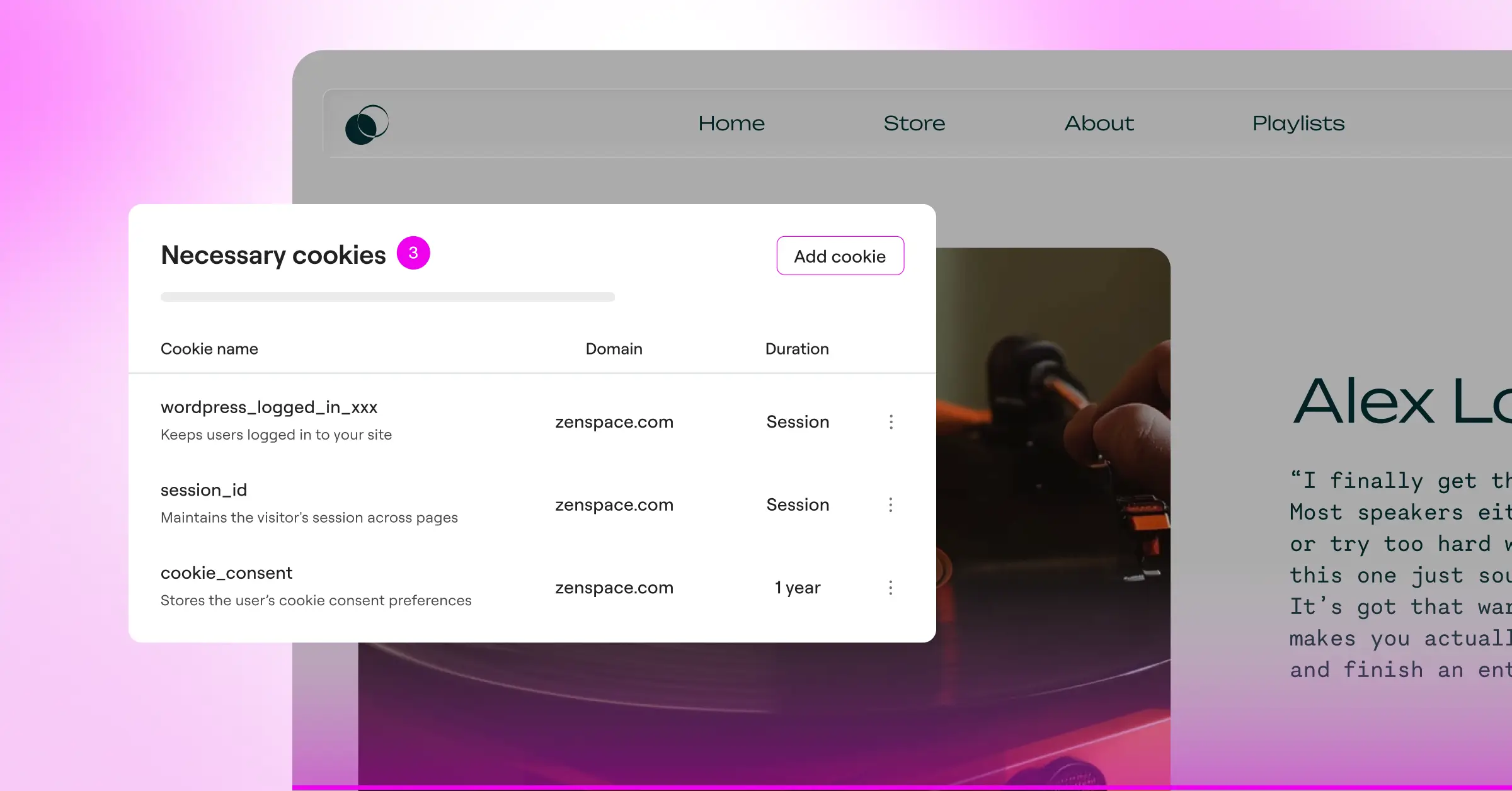
- Scans your site regularly to find and categorize tracking scripts.
- Stores local, secure consent logs for legal audits.
- Supports geo-targeting, so visitors see only the banners their local laws require.
Pros: No external dashboard, fast setup, built-in scanning plus compliance logs.
Cons: Optimized mainly for WordPress creators using the Elementor Cookie Consent capability.
Verdict: The best pick for WordPress owners who want an easy, native experience without a separate SaaS bill.
2. Conduct Automated Weekly Cookie Scanning with Cookiebot
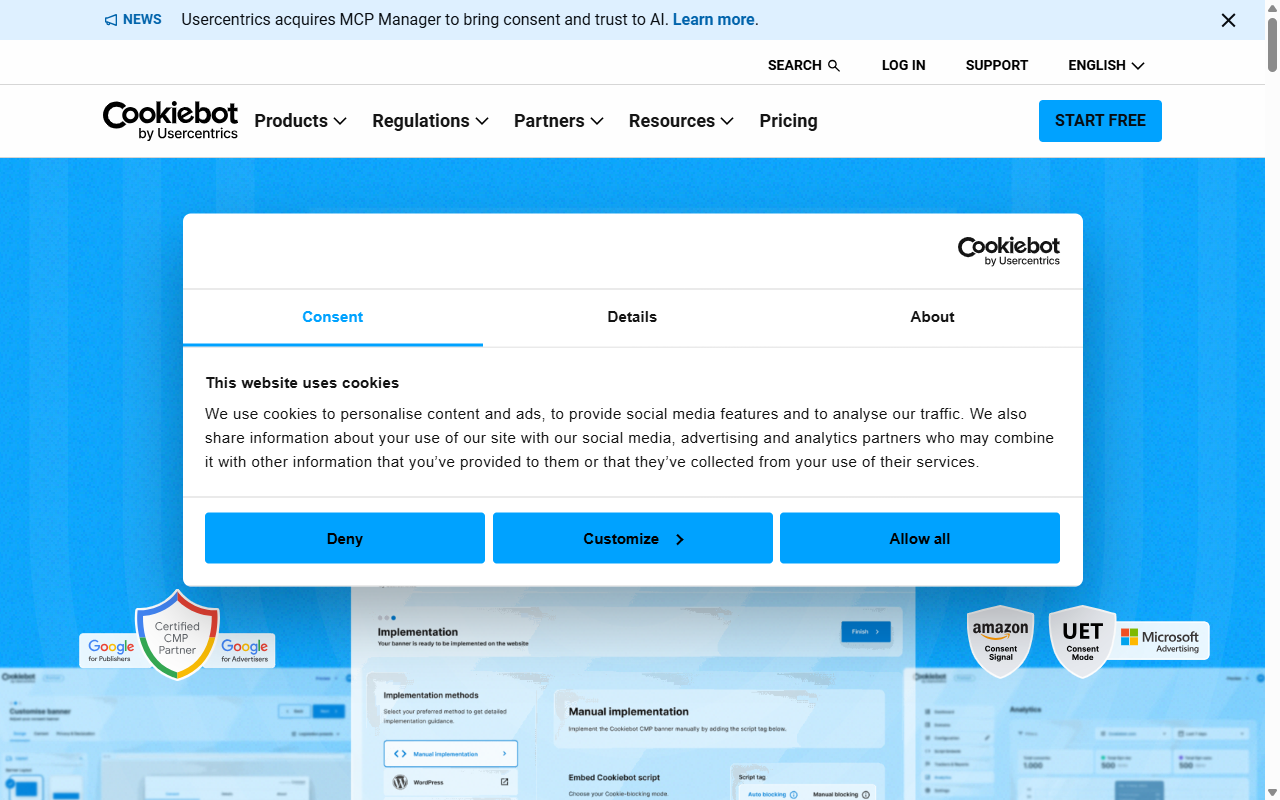
Cookiebot is an established external SaaS tool built around automated cloud scanning. It crawls your site at regular intervals, finds every tracking script, and builds a report, a solid choice for large sites with contributors who might add third-party scripts without telling you.
- Crawls your site on a schedule to detect hidden trackers.
- Updates your public cookie declaration after every scan.
- Categorizes cookies into necessary, preference, statistics, and marketing groups.
- Alerts your team by email when unclassified trackers turn up.
Pros: Thorough scanner, reliable reports, and solid multi-language support.
Cons: Relies on an external dashboard, and costs climb past a few hundred pages.
Verdict: A solid option for large-scale sites that need automated reports from an external system.
3. Manage Consent Records with CookieYes
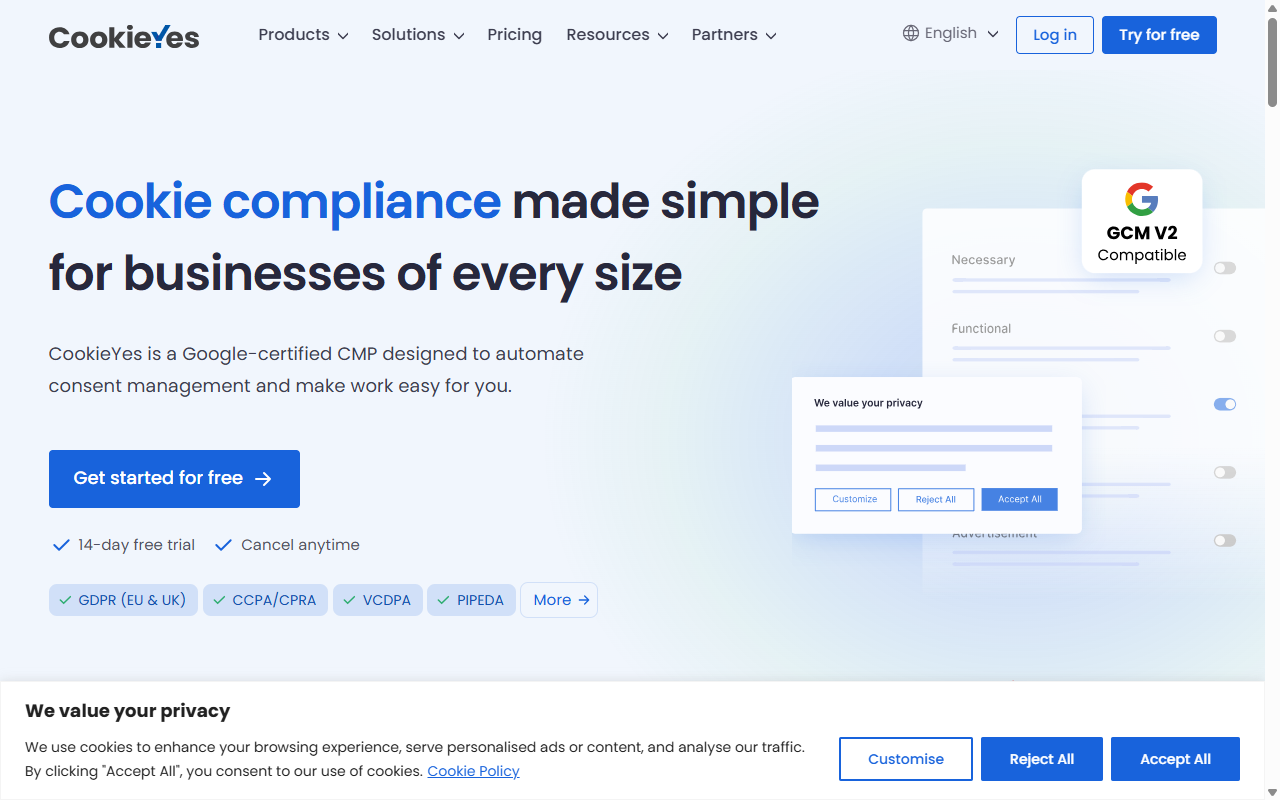
CookieYes is another popular external tool for cookie consent management, with a clean dashboard and a strong lean toward simplicity. WordPress users get quick deployment and a clear view of how many visitors accept or decline your terms.
- Displays clean, minimal cookie banners that adjust well to mobile screens.
- Records consent choices in real time to keep your dashboard current.
- Checks script activity to confirm tracking code waits for approval.
- Generates customized privacy and cookie policies with a simple helper tool.
Pros: Simple interface, easy-to-read analytics, and support for major global regulations.
Cons: Advanced behavioral triggers require logging into their external platform.
Verdict: A friendly SaaS pick for simple analytics tracking consent rates across multiple properties.
4. Configure and Verify Google Consent Mode v2
Keeping Google Consent Mode v2 configured is no longer optional in 2026 if you rely on Google Ads or Analytics in Europe. It’s a protocol your consent system needs to support, signaling visitors’ consent status to Google’s tag engines. If someone rejects cookies, Google’s tags switch to cookieless pings instead of personal tracking.
- Communicates granular consent settings, like ad storage, directly to Google.
- Preserves aggregate measurement even when visitors deny tracking cookies.
- Aligns your tags with Google’s requirements for advertising networks.
- Verifies compliance through Google Tag Assistant’s debugging tools.
Pros: Protects your advertising metrics and keeps your ad accounts in good standing.
Cons: Setup can get complex if your consent tool doesn’t support it natively.
Verdict: A must-have for any business running paid ads or analytics targeting the UK or EU.
5. Track Your Legal Integrity with Complianz
Complianz is a privacy suite built for the WordPress community, taking a thorough, legally grounded approach with a wizard that pins down which privacy rules apply based on your location and audience.
- Determines your legal requirements through a step-by-step questionnaire.
- Blocks specific script categories automatically before a choice is made.
- Connects smoothly with popular WordPress form builders and e-commerce setups.
- Creates localized legal documents adapted to GDPR, CCPA, and COPPA.
Pros: Strong legal accuracy, handles complex localized requirements well, stays inside WordPress.
Cons: The wizard runs long and can overwhelm beginners who just want a quick banner.
Verdict: Great for owners who want a guided, legal-first approach to their policies and banners.
6. Use Built-In Consent Logging and Audit Trails
If a regulator ever questions your compliance, a banner on your site isn’t enough on its own. You need to prove visitors actually gave active consent before they were tracked, which is where continuous logging matters. Modern native tools (Cookie Consent included) store secure, anonymized records you can export as proof of your compliance history during an audit.
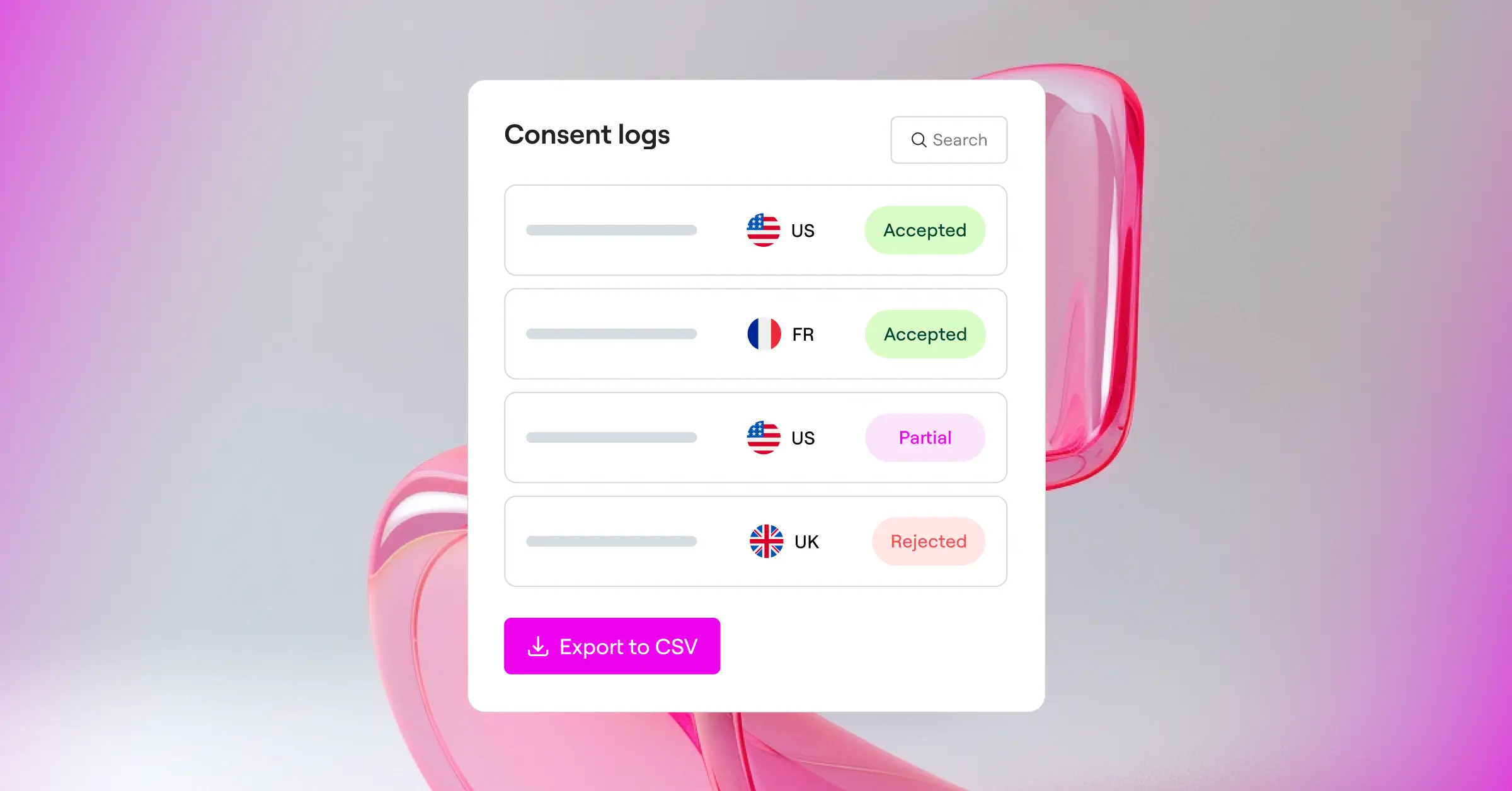
- Records anonymous identifiers, consent dates, and cookie categories.
- Keeps data private on your local database rather than third-party servers.
- Exports CSV logs quickly for internal audits or inspections.
- Minimizes system load with a lightweight database.
Pros: Legal peace of mind, simpler audits, and confirmation your tracking triggers work correctly.
Cons: Needs careful management so the logs don’t store personal data.
Verdict: An essential backend safeguard against compliance disputes.
7. Implement Regional Geo-Targeting
Not every visitor needs the same privacy banner. A visitor from Germany needs a strict opt-in banner under GDPR, while someone from Virginia might only need a “Do Not Sell My Info” link. Showing strict banners to everyone can hurt your analytics, so geo-targeting shows the right banner to the right person.
- Detects visitor locations through fast IP lookups.
- Displays compliant banner designs tailored to the visitor’s country.
- Reduces banner fatigue in regions with more relaxed cookie rules.
- Saves bandwidth by loading complex scripts only when needed.
Pros: Preserves marketing data for non-regulated regions and improves user experience.
Cons: Needs accurate geolocation services, which can add a small rendering delay.
Verdict: Recommended for international businesses that want strong user experience without giving up compliance.
8. Monitor Consent with iubenda
iubenda is a compliance platform for privacy policies, terms of service, and cookie consent banners, built for businesses that want one dashboard covering websites, mobile apps, and online stores.
- Generates attorney-drafted privacy policies that update as laws change.
- Synchronizes your cookie banner choices with your privacy policy.
- Allows full design customization through an online editor.
- Supports a wide range of global regulations and languages.
Pros: A full suite for legal documents, auto-updating clauses, and multi-platform compatibility.
Cons: The full feature set costs more than smaller sites may need.
Verdict: Ideal for generating legal documents and consent notices from one centralized platform.
9. Respect and Audit Global Privacy Control (GPC) Signals
Global Privacy Control is an emerging browser standard letting users set a universal opt-out preference. When a visitor with GPC enabled lands on your site, their browser signals they don’t want to be tracked, and under laws like the CCPA, you must honor that automatically, even without a “decline” click.
- Listens for universal browser privacy signals on every page load.
- Blocks tracking and marketing pixels instantly once detected.
- Operates quietly in the background, no popup needed.
- Protects your business against automated compliance checkers.
Pros: Great user experience, zero effort from visitors, alignment with modern legal rules.
Cons: Hard to verify manually without developer browser extensions.
Verdict: A must-have for sites with US traffic, particularly California and Colorado.
10. Use OneTrust for Enterprise Compliance Monitoring
OneTrust is a large enterprise platform for corporate compliance teams, handling privacy policies, vendor risk, and cookie consent across thousands of pages and global domains.
- Conducts deep audits to trace exactly where user data travels.
- Organizes consent records across websites, apps, and internal tools.
- Runs testing environments to verify compliance flows before launch.
- Delivers analytics reports directly to corporate legal departments.
- Maintains a library of historical privacy regulations for global teams.
Pros: Highly detailed, scales to unlimited domains, real legal depth for corporate teams.
Cons: Too complex and pricey for individual creators or mid-sized sites.
Verdict: The premier option for large enterprises with dedicated legal departments.
“Continuous monitoring isn’t just about avoiding fines; it’s about respecting the digital space of your visitors. When you treat privacy as a fundamental service rather than a legal chore, you build real brand equity that lasts.”
– Itamar Haim, Web Compliance Specialist
Comparing the Best Cookie Compliance Monitoring Tools
Here’s how the leading compliance capabilities stack up against each other.
| Compliance Tool | Primary Platform | Setup Complexity | Google Consent Mode v2 | Key Strength |
|---|---|---|---|---|
| Cookie Consent (by Elementor) | WordPress Native | Very Low (5 mins) | Yes (Native) | Fully integrated, no separate dashboard, great design control. |
| Cookiebot | Universal SaaS | Medium | Yes | Excellent automated deep-scanning features. |
| CookieYes | Universal SaaS | Medium | Yes | Clean consent analytics dashboard. |
| Complianz | WordPress | High | Yes | Guided legal diagnostic wizard. |
| iubenda | Universal SaaS | Medium | Yes | Complete dynamic policy document generator. |
| OneTrust | Enterprise SaaS | Very High | Yes | Unmatched legal depth for corporate teams. |
Implementing Your Monitoring Protocol: A Step-by-Step Guide
Monitoring gets a lot easier once it’s part of a simple routine. Here are three phases for a continuous, reliable monitoring workflow on your WordPress site.
Phase 1: Setting Your Compliance Foundation
- Run a complete initial scan with your built-in tool to identify every active script and cookie.
- Group your cookies into clear categories: essential, analytics, preferences, and marketing.
- Design a clear consent banner that matches your brand and only loads non-essential scripts after consent.
- Turn on Google Consent Mode v2 and GPC signals to keep analytics clean and compliant.
Phase 2: Your Monthly Maintenance Routine
- Scan your site for new cookies that might have arrived with new themes, embeds, or tools.
- Review your consent logs to confirm preferences are recorded accurately and without errors.
- Verify geo-targeted banners with a free VPN tool to confirm visitors see the right regional layout.
- Update your written Cookie Policy if new third-party trackers have been permanently added.
Phase 3: The Annual Legal Alignment Check
- Inspect your layout and text to confirm accept and reject buttons carry equal visual weight.
- Test all tracking scripts manually with developer tools to confirm zero cookies drop before consent.
- Check for updates in privacy laws to see if new regional requirements apply to your audience.
Conclusion
Staying cookie compliant in 2026 doesn’t have to be a stressful burden. A native tool like Cookie Consent lets you manage scanning, design, script blocking, and consent logs without leaving your WordPress dashboard, keeping your site fast and your legal bases covered. Pick a tool that matches your comfort level, stick to a simple monthly check, and focus on building great web experiences for your audience.
Frequently Asked Questions
Do I really need a cookie banner if my site does not target the EU?
Yes, almost certainly. The GDPR is the best-known privacy law, but many countries and US states, like California, Virginia, and Colorado, have their own rules requiring clear opt-out options for tracking and targeted marketing. Cookie banners are standard practice for global traffic now.
What is Google Consent Mode v2, and is it mandatory?
It passes consent choices from your banner to Google systems like Analytics and Ads. It isn’t legally mandatory on its own, but Google requires it if you want to target or measure audiences in Europe, and without it your data quality drops.
Can I just write my own cookie notice text?
You can write the welcome text, but your notice should link to a dynamically generated Cookie Policy listing the exact scripts on your site. Since scripts can change when you update your theme, a built-in scanner keeps your policy accurate.
How does geo-targeting help my website conversion rates?
Strict cookie banners can lower your aggregate analytics data, since some visitors decline tracking. Geo-targeting shows strict, opt-in banners only where they’re legally required, like the EU, while visitors elsewhere see less invasive banners, keeping user experience strong and analytics data intact.
What is Global Privacy Control (GPC)?
It’s a setting inside modern browsers that lets users signal their privacy preferences automatically. If a visitor has GPC enabled, your consent tool needs to opt them out of non-essential tracking right away, without a banner click. Several US state laws require this.
Are consent logs safe to store on my WordPress database?
Yes, as long as they’re stored correctly. Secure compliance tools anonymize IP addresses and user identifiers, so you can prove someone consented on a specific date without storing sensitive personal data.
Do free compliance tools provide enough legal protection?
For most personal sites, blogs, and small businesses, a good entry-level plan is more than enough for basic scanning, banner generation, and script blocking. If traffic grows or you run targeted ads in heavily regulated areas, a premium plan with geo-targeting and advanced logs is worth it.

