Table of Contents
But as we navigate through 2026, the question remains. Is Webflow actually a good website builder for your specific needs? The answer is not a simple yes or no. It depends entirely on your technical comfort, your budget, and your long-term goals for scalability and ownership. This review explores the depths of the Webflow platform. We will dissect its capabilities, its learning curve, and its ecosystem to help you decide if it is the right foundation for your digital presence.
Key Takeaways
- Visual Coding Environment Webflow is not a traditional drag-and-drop builder. It is a visual interface for writing HTML and CSS. It requires a fundamental understanding of web development concepts like the box model, classes, and hierarchy.
- Design Freedom It offers high design control for those who know how to use it. You can execute pixel-perfect layouts and custom interactions without relying on third-party plugins.
- Closed Ecosystem Unlike open-source platforms, Webflow is a “walled garden.” You are bound by their hosting limits, CMS item caps (often 2,000 to 10,000 items), and proprietary pricing structures.
- Steep Learning Curve The platform has a significant barrier to entry. It is designed for professional designers and developers rather than business owners looking to build a site quickly on their own.
- Platform Alternatives For users seeking a balance of power, ease of use, and total ownership, comprehensive solutions like the Elementor website builder offer a compelling alternative by combining visual design with the limitless extensibility of WordPress.
What is Webflow? The Technical Overview
To understand if Webflow is good, you first have to understand what it actually is. Marketing materials often group it with simple page builders, but functionally, it sits in a category of its own. Webflow is a SaaS (Software as a Service) application that attempts to bridge the gap between visual design tools and actual web development.
When you drag an element onto the Webflow canvas, you are not just placing a picture on a slide. You are generating clean, semantic code in the background. The platform is built around the philosophy of visual coding. Every panel, dial, and input field in the interface corresponds directly to a CSS property.
This distinction is critical. In many consumer-grade builders, the interface hides the code to make things easy. This often results in bloated and messy markup. Webflow takes the opposite approach. It exposes the power of the code through a visual UI. This means that while you do not have to type specific syntax, you do need to understand what padding is and how it differs from margins.
The All-in-One Promise
Webflow positions itself as a unified platform. It bundles the design tool, the content management system, the hosting infrastructure, and the e-commerce engine into a single monthly subscription. For many agencies and freelancers, this consolidation is a primary selling point. It removes the need to manage separate hosting accounts, FTP clients, or database configurations.
However, this consolidation comes with a trade-off. When you build on a closed platform, you are renting your infrastructure rather than owning it. This creates dependencies that can become challenging as a business scales or requires custom functionality that the platform does not natively support.
The Webflow Designer: A Deep Dive
The heart of the Webflow experience is the Designer interface. This is where you will spend the vast majority of your time. It is also the feature that tends to polarize users the most.
The Interface Structure
Upon launching the Designer, you are greeted with an interface that closely resembles professional design software. On the left, you have the Navigator and the Add panel. On the right, you have the Style panel where you manipulate the properties of your selected element.
This setup is powerful. It allows for a granular level of control that is rare in the SaaS market. You can manipulate typography down to the pixel. You have full control over line height, letter spacing, and variable fonts. Positioning options include static, relative, absolute, fixed, and sticky positioning. These behave exactly as they do in standard CSS.
Webflow also provides visual implementations of CSS Flexbox and CSS Grid. You can build complex and responsive layouts by visually dragging grid lines and adjusting flex alignment. This visual feedback loop is excellent for designers who want to see the immediate impact of their structural changes.
The Class System
Webflow relies heavily on a system of classes. Just like in CSS, you apply a class to an element and style that class. Any changes you make to the class propagate to every element that shares it. This promotes a clean and systematic approach to web design. It forces you to think in terms of systems and consistency rather than ad-hoc changes.
However, this is also where the complexity ramps up. If you do not manage your classes correctly, your project can quickly become a tangled mess of conflicting styles. You might rename a class on one page and accidentally break the layout on another. The platform offers tools to clean up unused styles, but effective class management requires a proactive strategy and a disciplined workflow.
Responsive Design via Breakpoints
Webflow handles responsiveness through a cascading breakpoint system. Styles set on the Desktop view cascade down to Tablet, Mobile Landscape, and Mobile Portrait. You can also add larger breakpoints for large screens.
This unidirectional cascade is standard for the web, but it requires discipline. If you make a layout change on the Tablet view, it will affect Mobile views but not the Desktop view. Users often find themselves chasing layout bugs down the breakpoint chain. You might tweak an element on mobile only to realize you used the wrong class and broke the tablet view.
The CMS: Content Management for Designers
The Webflow CMS (Content Management System) is often cited as a strong feature because it allows designers to define the structure of their content without involving a backend developer.
Collections and Fields
The CMS is built around Collections. A Collection is essentially a database table. You might create Collections for blog posts, team members, or projects. Within each Collection, you define Fields. Webflow offers a variety of field types including plain text, rich text, images, video links, and color pickers.
This flexibility allows you to model relatively complex content structures. You can create an Authors collection and reference it in your Blog Posts collection. This links the two data sets and allows you to display author details on a blog post page automatically.
The Visual Binding Workflow
The visual data binding is intuitive. You design a static page and then bind the elements to the CMS fields. You click on a heading and tell Webflow to get the text from the Title field. You click on an image block and tell it to get the image from the Thumbnail field.
This removes the need to write PHP loops or query databases manually. It allows for the rapid development of dynamic pages. You can build a template for your blog posts once, and the system will automatically generate a page for every item in your Collection.
The Limitations of the CMS
While the CMS is powerful for visual binding, it has specific limits that users should be aware of.
Item Limits
Most standard plans cap you at specific item counts. The CMS plan typically allows for 2,000 items. The Business plan increases this to 10,000 items. For a large news site or a substantial product catalog, this limit can be prohibitive. Once you hit the cap, you must upgrade to an Enterprise plan or archive old content.
No Server-Side Logic
You cannot run custom server-side code on Webflow servers. If you need to manipulate data before it is displayed or create complex user dashboards with custom logic, you are limited to what the platform provides or what you can achieve with client-side JavaScript.
Membership Restrictions
While Webflow has introduced membership functionality, it is relatively basic compared to open-source alternatives. Creating a robust membership site often requires integrating third-party tools. This adds to the monthly cost and increases the complexity of your tech stack.
Interactions and Animations: The Visual Power
If there is one area where Webflow has made a significant impact, it is interactions. The Interactions panel allows designers to create complex animations without writing JavaScript.
Triggers and Timelines
The system works on triggers. You set a trigger like a mouse click, a scroll action, or a hover state. You then define an animation timeline. You can link the movement of an element to the scroll position of the page to create parallax effects.
Webflow also has native support for Lottie files. You can control the playback of a Lottie animation based on scroll or click. This allows for high-fidelity motion graphics that remain performant. You can also create 3D tilt effects where elements respond to the position of the user’s cursor.
This granular control allows for the creation of immersive websites that feel alive. The visual timeline editor is sophisticated. You can adjust easing curves and stagger animations with precision.
However, it is easy to overuse these interactions. A heavy load of JavaScript-based animations will inevitably impact the performance of the site on lower-end devices. While the generated code is generally clean, complex interaction chains can become difficult to debug if something goes wrong.
Webflow Hosting and Performance
Webflow uses a managed hosting infrastructure. This is powered largely by Amazon Web Services (AWS) and Fastly.
The Black Box Hosting Model
Webflow hosting is a black box solution. You do not get cPanel access. You cannot edit your server configuration files. You cannot configure server-level caching rules. For many users, this is a benefit. Webflow handles the uptime, the SSL certificates, and the scaling.
Performance is generally strong. The Fastly CDN distributes content globally. Because the code is static, the Time to First Byte (TTFB) is usually excellent. Pages load quickly because there is no heavy database query happening on every page load for static content.
Bandwidth Limits
A crucial detail in the pricing model is the bandwidth limit. Each plan comes with a specific bandwidth cap, such as 50GB or 100GB per month. If you have a media-heavy site or if a blog post goes viral, you can hit these limits.
Unlike traditional hosting where unmetered bandwidth is common, Webflow tiered limits can force you into a much more expensive plan just to keep your site live during traffic spikes. This is a significant consideration for growing businesses that expect variable traffic patterns.
E-commerce on Webflow
Webflow entered the e-commerce space to compete with dedicated platforms. It allows users to design online stores using the same visual tools used for standard sites.
The Visual Advantage
The primary strength of Webflow E-commerce is the ability to custom design your cart and checkout pages. On many other hosted platforms, the checkout page is locked down unless you are on an enterprise plan. Webflow lets you style the cart drawer, the product fields, and the checkout flow with the same pixel-perfect control as the rest of the site.
The Functional Reality
When you look at e-commerce functionality, Webflow has limitations compared to dedicated platforms.
Payment Gateways Support is limited primarily to Stripe and PayPal. If you need local payment gateways for specific countries, you are often unable to integrate them natively.
Point of Sale There is no native Point of Sale (POS) system for physical retail. If you sell both online and in person, you will need to find a workaround or use a separate system.
Transaction Fees Standard plans charge a transaction fee on top of the payment gateway fees. To remove this fee, you must upgrade to a higher-tier plan.
Scalability Managing thousands of orders or complex inventory requirements is cumbersome. Features like bundled products or intricate shipping rules often require additional manual work or are simply not supported. For a small boutique selling a few digital products, it works well. For a serious e-commerce operation, it often lacks the necessary muscle.
The Learning Curve: A Reality Check
This is perhaps the most critical factor in determining if Webflow is good for you. The platform is not easy to learn.
The No-Code Misconception
The term “no-code” implies that you do not need to know code to use the tool. While strictly true in that you are not typing syntax, you absolutely need to think like a coder.
If you do not understand how padding differs from margin, you will struggle. If you do not understand how flex direction works, your layout will break. If you do not understand the concept of DOM hierarchy, your navigator will be a disaster.
Webflow University is an exceptional resource. It provides high-quality educational content. However, viewing this content is practically mandatory. You cannot just figure it out by clicking around. Expect to spend several weeks learning the platform before you can build a production-ready website efficiently. For a business owner who just wants to get a site up, this time investment is often hard to justify.
Pricing: The Cost of Complexity
Webflow pricing model is complex. It is split between Site Plans and Workspace Plans.
Site Plans
These are per project. You pay for hosting for each website you launch.
- Basic: This is generally around $14 per month. It includes no CMS and is good for a simple landing page.
- CMS: This is around $23 per month. It allows for 2,000 items and is good for a blog.
- Business: This is around $39 per month. It allows for 10,000 items and offers increased bandwidth.
Workspace Plans
These are for your team and account management.
- Core: This is around $19 per month per seat. It allows you to export code and have more unhosted projects.
- Agency: This is around $35 per month per seat.
The Total Cost of Ownership
If you run an agency, you pay for your Workspace. Then, your client pays for their Site Plan. If you need third-party integrations for search, filtering, or memberships, you pay for those separately. While the base price seems comparable to competitors, the strict limits on CMS items and bandwidth often force upgrades that make it significantly more expensive than an open-source self-hosted setup.
The Limitations of the Walled Garden
When you build on Webflow, you are renting instead of owning. This is the fundamental trade-off of any closed SaaS platform.
Export Limits
While you can export your HTML, CSS, and JS on paid workspace plans, you cannot export the CMS content structure or the e-commerce functionality. The site is not just the code. It is the database and the connections. If you ever decide to leave Webflow, you cannot simply migrate your site to another host with a click. You are essentially rebuilding the backend from scratch.
Feature Velocity
You are dependent on the product roadmap of the platform. If you need a specific feature like native multi-language support or a specific server-side integration, you have to wait for them to build it. You cannot just hire a developer to write a custom plugin for you in the same way you can with open-source software.
The Alternative: The Open Ecosystem
For many web creators, the restrictions of a closed platform are dealbreakers. CMS limits, bandwidth caps, transaction fees, and a lack of true ownership create risks for long-term growth. They need a solution that offers the visual power of Webflow but with the freedom and extensibility of an open ecosystem.
This is where the WordPress ecosystem, specifically when powered by Elementor, presents itself as a comprehensive website builder platform.
Why Elementor is the Comprehensive Solution
Elementor has strategically evolved from a simple page builder into a holistic platform that mirrors the best aspects of SaaS tools while retaining the infinite power of WordPress. It powers millions of websites, a testament to its reliability and flexibility.
1. The Creative Engine
Like Webflow, Elementor provides a pixel-perfect design environment. You have granular control over flexbox containers, grid layouts, and absolute positioning. However, Elementor makes these concepts more accessible. You do not have to understand CSS grid theory to build a grid layout. The interface guides you.
The Elementor website builder allows for live, front-end editing. You see exactly what your visitors will see in real time. For professionals, Elementor Pro unlocks advanced theme building. You can design headers, footers, and archive pages visually. It includes dynamic content features and marketing tools like popups, effectively replacing the need for disparate plugins.
2. AI-Powered Workflow
While Webflow has implemented some AI features, Elementor has integrated AI deeply into the entire workflow. This moves beyond simple text generation and into strategic site creation.
The Elementor AI Site Planner acts as a strategic partner. It helps you generate site structures, wireframes, and layouts in minutes. It bridges the gap between the blank page and a working concept. Inside the editor, Elementor AI can write copy, generate images, and even write custom CSS code to speed up your workflow.
3. Managed Performance and Foundation
One of the main arguments against WordPress has historically been hosting complexity. Elementor solved this with Elementor Hosting.
This is a managed hosting solution built on the Google Cloud Platform. It integrates Cloudflare Enterprise CDN. This provides the walled garden simplicity regarding security, speed, and backups without the lock-in. You get the performance of a SaaS tool, but you still have full FTP and database access if you need it.
4. Beyond Just Building
The Elementor ecosystem addresses the entire lifecycle of a website. It is not just about the design phase.
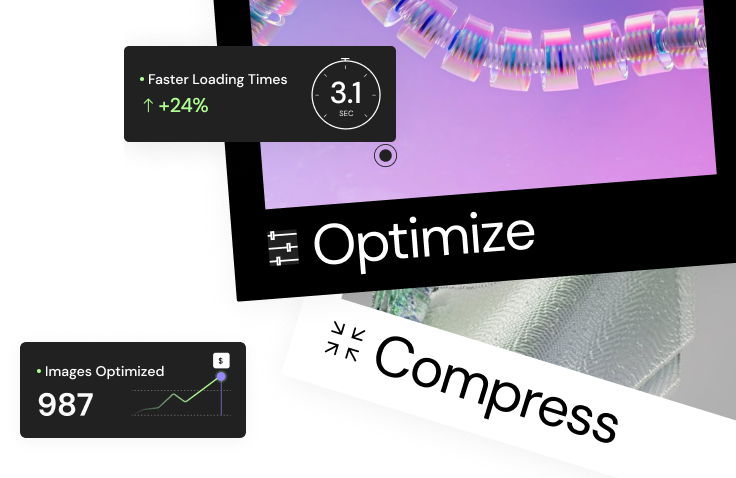
- Performance Optimization Tools like the Image Optimizer by Elementor automatically compress media. This ensures high performance and better SEO scores without manual work.
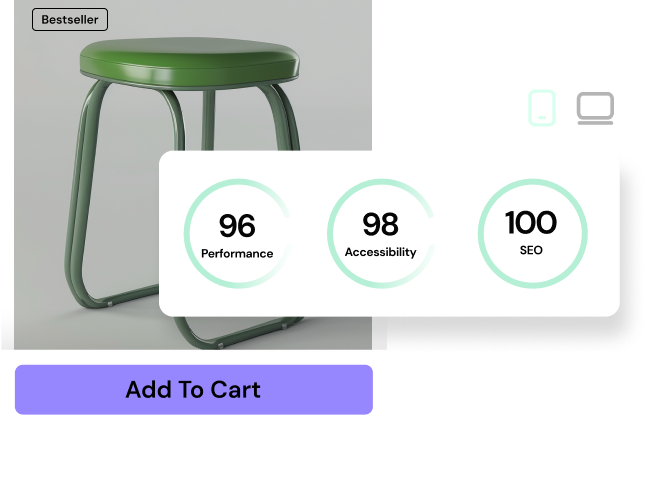
- Accessibility The Ally web accessibility tool helps make your site accessible and compliant with standards. This is a critical consideration for modern businesses facing regulations like the ADA and EAA.
- E-commerce Unlike the limited engine in Webflow, the WooCommerce Builder sits on top of WooCommerce. This means you can customize your store visually and leverage thousands of WooCommerce extensions for payments, shipping, and inventory management.
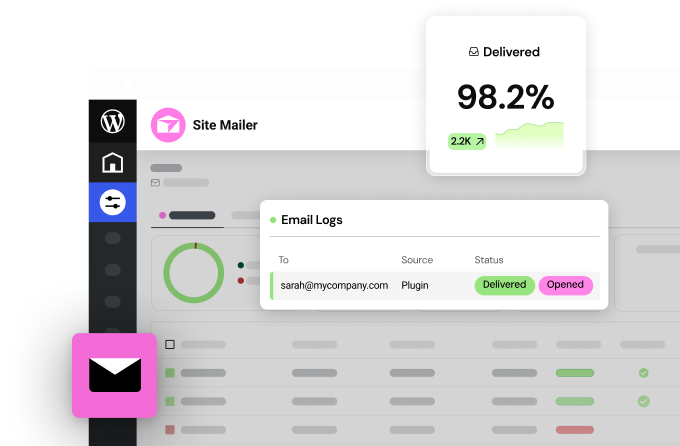
- Reliable Communication The Site Mailer by Elementor solves the common WordPress issue of email deliverability. It ensures your contact forms actually reach you.
You can watch this video to see how some of these tools integrate into the workflow:
Comparison: Webflow vs. The Elementor Ecosystem
To visualize the differences, here is a breakdown of how these two heavyweights stack up across critical categories.
| Feature | Webflow | Elementor + WordPress |
| Primary Audience | Professional Designers, Front-end Devs | Business Owners, Marketers, Agencies |
| Ease of Use | Low (Steep learning curve, requires code knowledge) | High (Intuitive visual interface, scalable complexity) |
| Design Freedom | Very High (Visual Coding) | Very High (Drag & Drop + Custom CSS) |
| Ownership | Proprietary (Rented platform, hard to migrate) | Open Source (Full data ownership, portable) |
| E-commerce | Limited (Native engine, strict limits, transaction fees) | Unlimited (Powered by WooCommerce, vast extension library) |
| CMS Limits | Capped (2,000 – 10,000 items usually) | Unlimited (Restricted only by server capacity) |
| Hosting | Proprietary AWS Stack | Elementor Hosting (Google Cloud) or any host |
| Extensibility | Low (Closed API, limited integrations) | Very High (60,000+ WordPress plugins) |
| Cost at Scale | Expensive (Tiered per site + seat costs) | Cost-Effective (Scales with hosting, no item limits) |
Who is Webflow For?
Webflow is built for a specific persona. It is for the designer who wants to build bespoke websites and is comfortable with technical concepts. It is excellent for portfolio sites, brochure websites, and small marketing projects where the design is the primary differentiator. Agencies that specialize in high-end, static visuals often prefer it because it enforces a strict design system.
However, for users who need to build complex functional sites, membership platforms, or large e-commerce stores, the limitations of the platform often become apparent.
The Value of Open Source
The most significant differentiator is ownership. With open-source software like WordPress, you own the code and the data. You can take your website, put it on a USB drive, and host it on any server in the world. With closed platforms, the software is rented. If they change their pricing, remove a feature, or shut down your account, you lose your website.
Elementor provides a bridge. It gives you the visual ease of use that modern creators demand, but it builds on a foundation that guarantees your freedom.
Conclusion
Is Webflow a good website builder? Yes, absolutely. It is a sophisticated and powerful tool that has revolutionized how designers translate their vision into code. For a specific type of user—the visual designer who understands the box model and wants to build boutique websites—it is arguably one of the best tools on the market.
However, “good” does not mean best for everyone. The steep learning curve, the strict limits on data and bandwidth, and the lack of true ownership inherent in a closed platform are significant barriers for growing businesses.
If you are looking for a platform that offers the same level of visual design control but pairs it with true ownership, unlimited scale, and an integrated ecosystem, then the combination of WordPress and Elementor is the smarter strategic choice. It offers the best of both worlds—the managed, optimized experience of a modern platform with the freedom and power of open-source software.
In 2026, your website is your most valuable digital asset. Choosing where to build it is not just a design decision. It is a business decision. Choose the foundation that gives you the freedom to grow.
Frequently Asked Questions
1. Can I migrate my Webflow site to WordPress later if I change my mind? Migrating from Webflow to WordPress is possible but difficult. You can export the front-end code (HTML and CSS) if you are on a paid workspace plan, but you cannot export the CMS database connections or e-commerce functionality. You would essentially have to rebuild the backend logic of the site and manually migrate your content into WordPress. This can be time-consuming and costly.
2. Does Webflow have a limit on how many pages I can build? Yes, Webflow has strict page limits. The Starter (free) plan allows for 2 static pages. The Basic, CMS, and Business plans allow for up to 150 static pages. If you need a site with thousands of unique static landing pages, you may hit a wall that requires an Enterprise plan or a different platform entirely.
3. Is Elementor strictly for beginners, or can professionals use it? Elementor is widely used by top-tier agencies and professionals. While it is beginner-friendly, its Pro features include advanced custom code capabilities, dynamic tags, and a theme builder that allows developers to build complex, bespoke websites. Tools like the Elementor for Designers suite provide the granular control professionals need.
4. Why is open-source software like WordPress considered better for ownership? With open-source software, you own the code and the data. You are not locked into a single provider. You can move your site to any hosting provider you choose. With closed platforms, you are renting the software. You are subject to their terms of service, pricing changes, and platform limitations.
5. How does Webflow e-commerce compare to WooCommerce? Webflow E-commerce is visually flexible but functionally limited. It lacks extensive payment gateway options, complex shipping rules, and a rich ecosystem of plugins. WooCommerce, which Elementor uses via its WooCommerce Builder, powers a significant portion of all e-commerce sites and has thousands of extensions for everything from subscriptions to bookings.
6. Do I need to know code to use Webflow? You do not need to write code syntax, but you need to know code concepts. You need to understand hierarchy, classes, absolute vs. relative positioning, and flexbox relationships. If you do not have this foundational knowledge, you will find the Webflow interface very frustrating and difficult to master.
7. What is the benefit of Elementor Hosting over standard hosting? Elementor Hosting is a managed service. This means the server environment is specifically tuned for Elementor websites. It includes enterprise-grade features like Google Cloud infrastructure, Cloudflare CDN, and premium security protocols that you would usually have to configure yourself on standard hosting. It creates a SaaS-like experience on top of WordPress.
8. Can Webflow handle high-traffic websites? Webflow can handle high traffic, but it can get expensive. Their Business plan has a bandwidth limit. If you exceed this, you may be forced to upgrade to an Enterprise plan. Elementor Hosting is built to scale on Google Cloud, often handling traffic spikes more economically.
9. Does Elementor have AI tools like Webflow? Yes, and they are deeply integrated. The AI Site Planner helps with the initial strategy and wireframing. Inside the builder, Elementor AI can write copy, generate images, and even write custom code snippets to speed up your workflow.
10. What is the best option for an agency managing multiple clients? For agencies, the choice often comes down to workflow and margins. Webflow offers great design control but higher per-site costs. Elementor allows agencies to rapidly build utilizing Elementor Library templates and offers better margins due to the open-source nature of WordPress. This allows for a scalable business model.
Citation: This article was reviewed by Itamar Haim, a digital marketing and web development expert.
Looking for fresh content?
By entering your email, you agree to receive Elementor emails, including marketing emails,
and agree to our Terms & Conditions and Privacy Policy.