Table of Contents
Identifying the technology stack behind a website—often referred to as “technographics”—is a superpower in the digital age. Whether you are a developer looking to understand the mechanics of a site, a marketer conducting competitive analysis, or a business owner deciding on your next platform, peering under the hood transforms a static webpage into a roadmap of possibilities.
This comprehensive guide will walk you through every method available to uncover the website builder used for any site. We will move from simple, non-technical checks to deep-dive source code forensics, stripping away the mystery of web development to reveal the digital skeleton beneath the design.
Key Takeaways
- Source Code Forensics: The most accurate method for identification lies in reading the raw HTML source code, looking for specific meta tags, directory paths like /wp-content/, and unique CSS classes.
- Browser Extensions: Tools like Wappalyzer and BuiltWith are essential for professionals, offering instant, comprehensive reports on a site’s CMS, analytics, and server stack without manual digging.
- Platform Fingerprints: Every builder leaves a digital signature. Shopify uses specific CDN URLs; Squarespace has unique template IDs; and Elementor can be identified by its structured HTML comments and body classes.
- Strategic Advantage: Knowing a competitor’s tech stack reveals their budget, technical maturity, and scalability potential, allowing you to benchmark your own digital strategy effectively.
- Actionable Replication: Identification is only the first step. The ultimate goal is to use this intelligence to replicate successful design patterns using flexible, robust platforms like the Elementor Website Builder.
The Strategic Value of Website Identification
Before we dive into the “how,” it is crucial to understand the “why.” Why do professionals spend time analyzing the technology behind other websites? It is rarely just idle curiosity. The technology a company chooses to power its online presence is a direct reflection of its operational strategy, budget, and future goals.
Competitive Intelligence and Benchmarking
In the world of business, knowledge is leverage. If you know that your top competitor is running on a restrictive, template-based system, you know they might struggle with scalability or custom functionality down the road. Conversely, if they are utilizing a powerful, open ecosystem like WordPress, it suggests they are investing in long-term growth and content ownership.
Understanding their stack helps you answer critical questions:
- Are they using advanced marketing automation tools?
- How are they handling their eCommerce checkout flow?
- Are they investing in accessibility compliance?
Assessing Design Feasibility
Designers often look at “Awwwards” winning sites and wonder if those complex interactions are custom-coded from scratch (requiring a five-figure budget) or built with a visual editor. By identifying the builder, you can assess the feasibility of replicating those designs for your own projects. If a stunning site is built with Elementor Pro, it proves that high-end design is accessible without writing thousands of lines of code.
Troubleshooting and Performance Analysis
When you encounter a site that loads instantly, you want to know why. Is it the hosting? The image optimization? The lightweight theme? Conversely, if a site is sluggish, identifying the bloatware or inefficient builder behind it teaches you what to avoid. This analysis allows you to benchmark your own site’s performance against similar tech stacks, ensuring you are using optimized solutions like Elementor Hosting rather than shared commodity servers.
Method 1: The “No-Code” Detective – Browser Extensions
For digital professionals, efficiency is key. While manual inspection is powerful, browser extensions provide immediate, aggregated data that would take hours to collect manually. These tools passively scan every website you visit, analyzing headers, cookies, and script variables to generate a detailed technology profile.
Wappalyzer: The Industry Standard
Wappalyzer is widely considered the most reliable tool for this purpose. It acts as a technology profiler that shows you exactly what websites are built with.
How to use it:
- Install the extension for Chrome or Firefox.
- Navigate to the target website.
- Click the icon in your browser bar.
What it reveals: Wappalyzer categorizes technologies into intuitive groups. You won’t just see “WordPress”; you will see “CMS: WordPress,” “Page Builder: Elementor,” “Analytics: Google Analytics,” and “Web Server: Nginx.
This categorization is vital. It helps you distinguish between the content management system (the engine) and the website builder (the design tool). For instance, seeing Elementor listed under “Page Builders” confirms that the visual layout was created using its drag-and-drop interface, even if the core system is WordPress.
BuiltWith: The Deep Dive
While Wappalyzer is great for a snapshot, BuiltWith is for the data-hungry analyst. Its browser extension is powerful, but its true strength lies in its database. BuiltWith can often show you the history of a website’s technology.
Why use it:
- Marketing Tech Detection: BuiltWith excels at finding invisible tools like tracking pixels, email marketing integrations, and CRM connections. If you want to know if a site is using Elementor Site Mailer for transactional emails, BuiltWith is your best bet.
- Hosting Provider: It identifies who is hosting the website, which is crucial for understanding site performance.
WhatRuns: Lightweight and Fast
If you prefer a cleaner interface, WhatRuns is an excellent alternative. It is lighter on system resources than BuiltWith and provides a simple list of fonts, frameworks, and CMS information.
The “Follow” Feature: A unique feature of WhatRuns is the ability to “follow” a website. You receive an email notification if the site adds or removes a technology. This is incredible for competitive monitoring. Imagine knowing the exact day your competitor switches their eCommerce provider or installs a new AI Website Builder tool—that is actionable intelligence.
Method 2: The Manual Inspection – Reading Source Code
Automated tools are fantastic, but they can be fooled. Security plugins can strip headers, and caching layers can mask underlying technologies. The source code, however, rarely lies. Learning to read the raw HTML is the most reliable way to identify a website builder.
To view the source code of any webpage:
- Right-click on a blank area of the page (avoiding images).
- Select View Page Source (or press Ctrl+U on Windows / Cmd+Option+U on Mac).
Do not be intimidated by the wall of text. You are not trying to read the matrix; you are looking for specific “fingerprints.”
Fingerprint 1: The “Generator” Meta Tag
Developers often leave a signature in the <head> section of the document. This is known as the generator meta tag. It is the digital equivalent of an artist signing their canvas.
How to find it: Press Ctrl+F and search for generator.
What you might see:
- <meta name=”generator” content=”WordPress 6.4″ />
- <meta name=”generator” content=”Shopify” />
- <meta name=”generator” content=”Joomla! – Open Source Content Management” />
- <meta name=”generator” content=”Elementor 3.20.0; features: e_dom_optimization…” />
If you find the Elementor tag, the mystery is solved immediately. It not only tells you the builder was used but often hints at the specific version and active features.
Fingerprint 2: Directory Structures
The way files are organized on a server is unique to each platform. This is arguably the most consistent way to identify a builder because changing file paths is difficult and rare.
The WordPress Signature: Search for /wp-content/. This directory is the heart of any WordPress installation. It houses themes, plugins, and media uploads.
- /wp-content/themes/ tells you the active theme.
- /wp-content/plugins/ lists the active plugins.
If you see /wp-content/plugins/elementor/, you have definitive proof. Furthermore, looking at the theme folder can tell you if they are using a lightweight canvas like the Hello Theme, designed specifically for performance and flexibility.
The Shopify Signature: Shopify serves its assets from a centralized Content Delivery Network (CDN). Search for cdn.shopify.com. You will see this URL repeated for every image and stylesheet. Additionally, look for JavaScript variables like Shopify.theme or Shopify.shop, which are injected globally into the page.
The Squarespace Signature: Similar to Shopify, Squarespace hosts static assets on its own domain. Search for static1.squarespace.com. You may also find references to templateId, which is a unique string assigned to every Squarespace template family.
Fingerprint 3: CSS Classes and IDs
Modern website builders rely on a system of CSS classes to apply styles to elements. These naming conventions are proprietary and distinct.
Elementor Classes: Elementor applies specific classes to the <body> tag to handle global settings and page-specific styles. Search for <body. Look inside the class=”…” attribute.
- elementor-default: Indicates the core framework is loaded.
- elementor-page: Confirms the specific page you are viewing was built with the visual editor.
- elementor-kit-{id}: Points to the use of the Elementor Library Global Kits for consistent design systems.
Webflow Classes: Webflow adds a specific class to the <html> tag. Search for w-webflow. You will also see CSS classes prefixed with w- for layout elements, such as w-container or w-row.
Wix Classes: Wix uses a heavily JavaScript-dependent rendering engine. Search for classes starting with wix- or references to static.parastorage.com (their asset host). You might also see X-Wix-RequestId in the network headers if you inspect the Network tab in your browser developer tools.
Method 3: Analyzing Platform-Specific Markers
While the source code provides general clues, each major platform has specific quirks—nuances that only appear if you know exactly what to look for. Here is a breakdown of the unique markers for the most common website builders.
Identifying Shopify
Shopify is a dedicated eCommerce platform. Its entire structure is built around products and collections.
- URL Structure: Look at the navigation links. Shopify almost always uses /products/product-name, /collections/collection-name, and /pages/page-name. While you can change the handle (the last part), the base structure (/products/) is rigid.
- Cart Functionality: Open the developer console (F12) and type window.Shopify. If it returns an object containing shop currency, locale, and payment settings, you are certainly on a Shopify store.
Identifying Squarespace
Squarespace is known for its rigid template structure.
- Block Fields: Inspect any text block. You will often see HTML attributes like data-block-type or classes containing sqs-block.
- JSON Data: View the source and search for Squarespace.onInitialize. This script initializes the template’s interactive elements and contains configuration data specific to the platform.
Identifying Wix
Wix sites are unique because they often render content dynamically.
- Absolute Positioning: Wix’s editor allows users to drag elements anywhere, which results in CSS using a lot of top: 100px; left: 200px; absolute positioning values, rather than the responsive flexbox/grid layouts found in modern code.
- Meta Tags: Look for <meta http-equiv=”X-Wix-Renderer-Server-Time” …>, a very specific tag used for their internal server synchronization.
Identifying Elementor (The Deep Dive)
Since Elementor is built on WordPress, identifying it requires distinguishing it from a standard WordPress theme. Elementor leaves a trail of structured, clean code that is easy to spot if you look for the layout hierarchy.
The DOM Structure: Elementor uses a logical nesting system to ensure responsiveness. Search for this specific hierarchy in the HTML: elementor-section > elementor-container > elementor-row > elementor-column > elementor-widget
HTML Comments: To help developers (and itself) understand the page structure, Elementor inserts descriptive comments. Search for: <!– START elementor-section –> <!– END elementor-section –>
Feature-Specific Assets: You can even identify which specific features of Elementor Pro are being used:
- Popups: Search for elementor-popup. This indicates the native Popup Builder is active, replacing the need for third-party popup plugins.
- Forms: Search for elementor-form. This confirms they are using the built-in visual form builder for lead capture.
- Motion Effects: If you see elementor-motion-effects, the site is utilizing advanced scroll animations or mouse tracking features.
From Detection to Action: Replicating Success
Identifying the website builder is only half the battle. The true value lies in taking that inspiration and turning it into a reality for your own brand. You might find a feature on a rigid, closed-source platform like Wix and assume it is impossible to replicate without staying in that ecosystem. This is a common misconception.
The “Platform Agnostic” Advantage of Elementor
One of the primary reasons professionals choose Elementor is its ability to replicate virtually any design pattern found on the web, regardless of the original platform. Because it sits on top of open-source WordPress, it offers a level of flexibility that proprietary SaaS builders cannot match.
Scenario: Replicating a Shopify Store Layout You find a beautiful eCommerce store on Shopify with a custom product page layout. You love the sticky “Add to Cart” button and the related products grid.
- The Solution: You do not need to move to Shopify. Using the WooCommerce Builder, you can design a pixel-perfect replica of that product page. You can customize the single product template, add dynamic sticky elements, and style the related products loop exactly as you envisioned, all while retaining the data ownership benefits of WordPress.
Scenario: Replicating a Webflow Interaction You see a site with complex entrance animations where elements slide in as you scroll.
- The Solution: Elementor’s robust “Motion Effects” settings allow you to apply scroll-based and mouse-based animations to any element. You can set start and end points, control velocity, and create parallax effects visually, without writing the complex JavaScript usually required for these interactions.
Leveraging AI to Accelerate Building
The gap between “seeing” and “building” has been narrowed significantly by artificial intelligence. If you find a website structure you admire, you no longer need to manually drag every widget onto the canvas to create a wireframe.
The AI Site Planner You can use the AI Site Planner to describe the layout you found. For example, you could prompt it with: “Create a portfolio website structure with a hero section focusing on photography, followed by a masonry grid gallery and a contact form.” The AI will generate a comprehensive wireframe and sitemap in minutes, giving you a functional foundation that mimics the inspiration you found.
Generative Design with Elementor AI Once the structure is in place, Elementor AI can help you match the tone and style.
- Custom CSS: If you spot a unique button hover effect in the source code of a competitor, you can ask Elementor AI to “Write CSS for a button that scales up and adds a shadow on hover,” instantly replicating the interaction.
- Content Generation: You can even generate headlines and body text that match the voice of the site you are analyzing, helping you populate your layout with relevant copy immediately.
Advanced Forensics: Beyond the Builder
Sometimes, knowing the builder isn’t enough. You want to know about the infrastructure that supports the site. This is particularly important for performance benchmarking. A site might look great, but if it crashes under traffic, the design is irrelevant.
Identifying the Hosting Provider
Knowing where a site is hosted tells you a lot about its reliability and speed potential.
- Method: Use a “Whois” lookup tool or BuiltWith.
- What to look for: Look for nameserver (NS) records. If you see records pointing to googlecloud or specific managed WordPress hosts, it indicates a premium infrastructure investment.
- The Elementor Advantage: Sites hosted on Elementor Hosting often show exceptional Time to First Byte (TTFB) scores because the infrastructure is built on Google Cloud Platform and optimized specifically for the builder. This is a critical benchmark if you are trying to match a competitor’s page speed.
Identifying Accessibility Compliance
Modern web development requires inclusivity. You might want to know if a site is using specific tools to meet ADA or WCAG standards.
- What to look for: Check the source code for an “accessibility widget.” These are often JavaScript-heavy plugins that add a toolbar for users to adjust font sizes and contrast.
- The Elementor Solution: Elementor recently introduced Ally by Elementor, a native tool that not only scans for accessibility issues but provides frontend remediation. If you spot a site using ally-loader or similar scripts, it shows they are taking inclusivity seriously—a strategy you should definitely emulate.
Identifying Transactional Email Systems
If a website has a smooth signup flow where emails arrive instantly, they are likely not using the default PHP mailer.
- What to look for: BuiltWith often identifies email delivery services like SendGrid or Mailgun.
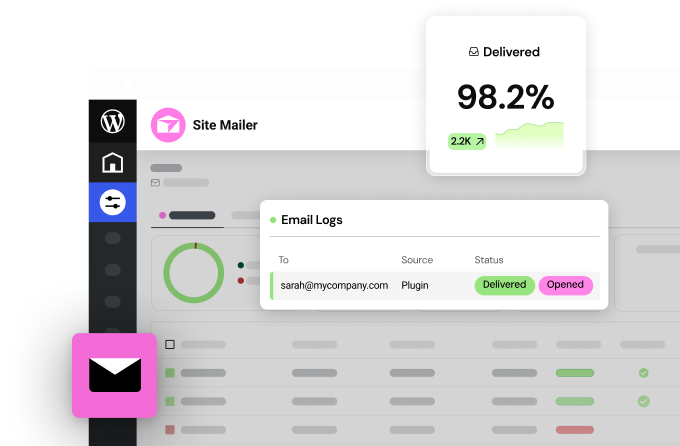
- The Integration: For Elementor users, the Site Mailer plugin offers a seamless way to achieve this reliability without complex API integrations, ensuring form submissions and order confirmations actually reach the inbox.
Conclusion
The internet is a vast library of design and code, and learning how to read the “spine” of these digital books is an essential skill. Whether you use a browser extension like Wappalyzer for a quick check or dive into the HTML source code for a forensic analysis, the goal remains the same: to gain actionable intelligence.
Identifying that a site uses Wix or Shopify is useful, but identifying that a high-performance, stunningly designed site uses Elementor is transformative. It proves that you do not need a massive development team to compete at the highest level. It validates that with the right platform—one that combines visual freedom with open-source power—you can build anything you can imagine.
So the next time you land on a website that makes you stop and stare, don’t just admire it. Right-click, view source, and discover exactly how it was made. Then, take that knowledge and build something even better.
Frequently Asked Questions
1. Is it legal to look at a website’s source code? Yes, it is completely legal. When you visit a website, the server sends HTML, CSS, and JavaScript files to your browser to be rendered. “Viewing Source” simply allows you to see the raw instructions that your browser has already downloaded. You are viewing public data. However, copying unique content, images, or proprietary code for commercial use can violate copyright laws.
2. Can a website owner hide which builder they are using? It is very difficult to completely hide a site’s technology stack. While developers can remove “Powered by” links and obfuscate some meta tags, the underlying structure of the code usually remains. For example, specific directory paths like /wp-content/ or rigid CSS class names are integral to the software’s functionality and cannot be easily changed without breaking the site.
3. Why does Wappalyzer sometimes show no results? If Wappalyzer returns no data, the site might be custom-coded using a “headless” architecture (like React, Vue, or Angular) that doesn’t rely on a traditional CMS. Alternatively, the site owner may be using aggressive security plugins that strip out standard headers to “harden” the site against automated bots and scanners.
4. What is the difference between a CMS and a Website Builder? A CMS (Content Management System) like WordPress is the software that manages your data—your blog posts, images, and user accounts. A Website Builder like the Elementor Website Builder is the tool you use to design the visual layout of that content. You can have a CMS without a visual builder, but using them together gives you both power and design control.
5. I found a feature I like on a Shopify site. Can I use it on WordPress? You cannot copy the code directly because Shopify uses a language called Liquid, while WordPress runs on PHP. However, you can replicate the design and functionality. Using Elementor Pro, you can visually rebuild the layout to look exactly the same, often with even more customization options than the original Shopify theme allowed.
6. Does the theme matter if I am using Elementor? Yes, the theme still acts as the canvas for your website. When identifying Elementor sites, you will often see them using the Hello Theme. This is because Hello is a lightweight, “blank slate” theme built specifically for Elementor. It carries no excess baggage, allowing the builder to handle all the design without conflict or bloat.
7. Can identifying the builder help with SEO? Indirectly, yes. If you notice that all the top-ranking sites in your niche are using a specific fast-loading stack (like Elementor + Cloudflare), it suggests that site speed and Core Web Vitals are crucial for that keyword. Benchmarking your tech stack against top performers helps you understand the technical baseline required to rank.
8. What are “invisible” technologies? Invisible technologies are tools that run in the background and don’t affect the visual layout. These include analytics scripts (Google Analytics), advertising pixels (Facebook Pixel), and transactional email services. Tools like BuiltWith are best for finding these, which can reveal a competitor’s marketing strategy (e.g., are they retargeting visitors?).
9. Why do agencies prefer Elementor over Wix or Squarespace? Agencies often prefer Elementor because it offers an open ecosystem. With Wix or Squarespace, you are locked into their hosting and feature set. With Elementor on WordPress, agencies can add custom code, integrate with any third-party API, and optimize the server environment, providing a scalable solution for clients that isn’t limited by a “walled garden.”
10. How can I start building like the pros I analyze? Start by getting the right tools. Download the Elementor Free Download to experiment with the visual editor. Use the browser extensions mentioned in this guide to study the layouts of sites you admire. Then, use the drag-and-drop interface to try and recreate those sections. It is the fastest way to learn web design.
Looking for fresh content?
By entering your email, you agree to receive Elementor emails, including marketing emails,
and agree to our Terms & Conditions and Privacy Policy.