Table of Contents
Key Takeaways:
- Tools vs. Manual Checks: Automated tools like BuiltWith give quick answers, but inspecting the source code provides the definitive truth.
- Signature Code: Every builder leaves a digital fingerprint, from /wp-content/ for WordPress to static.wix.com for Wix.
- Strategic Analysis: Knowing what builder was used helps you understand the budget, scalability, and technical limitations of a competitor.
- Elementor’s Footprint: Identifying Elementor often signals a site built with a focus on pixel-perfect design and performance within the WordPress ecosystem.
- The Next Step: Identifying the tool is just the beginning; choosing a platform that offers both creative freedom and managed performance is the ultimate goal.
Expert Insight by Itamar Haim
Why You Need to Know What Website Builder Was Used
Before we dive into the “how,” let’s talk about the “why.” You aren’t just looking for a brand name like “Wix” or “Squarespace”; you are looking for business intelligence. Understanding the technology stack of a website tells you a story about that business’s priorities, budget, and technical capabilities.
Competitive Intelligence
If you are analyzing a competitor, their choice of website builder reveals their digital maturity. Are they using a simple, template-based builder? They might be in the early stages, prioritizing ease over scalability. Are they using a custom WordPress install with high-performance hosting? They are likely investing heavily in SEO and long-term growth. Knowing their stack allows you to benchmark your own site against theirs. If they are ranking higher than you, is their technology giving them a speed advantage?
Design Inspiration and Feasibility
We have all seen features on other sites that we want to replicate—a specific type of mega menu, a complex animation, or a unique checkout flow. Identifying the builder tells you if that feature is a native capability of a specific platform or a custom-coded addition. If you see a stunning animation and discover the site is built with Elementor, you know that effect is likely achievable without writing code. If the site is a custom headless React build, you know that replicating it will require a significant development budget.
Validating Your Own Choices
Sometimes, you just need reassurance. If you are considering moving to a new platform, seeing successful, high-traffic sites running on that infrastructure validates your decision. It proves that the platform can handle the scale and design requirements you are aiming for.
Method 1: The Quick Scan (Browser Extensions and Online Tools)
For most users, the fastest way to identify a website builder is through automated tools. These services scan the website’s HTTP headers, source code, and script tags to generate a “technology profile.”
Wappalyzer
Wappalyzer is a browser extension that acts as your heads-up display for web technologies. Once installed, it sits in your browser bar and lights up with icons representing the software running on the current page.
- How it works: It detects Content Management Systems (CMS), eCommerce platforms, web servers, JavaScript frameworks, and analytics tools.
- What to look for: Look for the “CMS” or “Website Builder” category. You might see “WordPress” listed alongside “Elementor,” giving you a complete picture of the core software and the design engine.
BuiltWith
BuiltWith is the heavy hitter of technology profiling. While it has a browser extension, its website offers a significantly more detailed report.
- Depth of Data: BuiltWith doesn’t just tell you the builder; it often identifies the hosting provider, email services, SSL certificates, and even specific plugins.
- Historical Usage: One unique feature is the ability to see a “technology history.” You can see if a site recently migrated from Shopify to WooCommerce, for instance, which can be a valuable insight into their business strategy.
WhatCMS
If you want a simple, binary answer without the extra noise, WhatCMS.org is a great resource. You simply paste the URL, and it tells you the underlying Content Management System. It’s less detailed than BuiltWith but faster for a quick check.
A Note on Accuracy: While these tools are powerful, they aren’t infallible. Heavily customized sites or those using “headless” architectures (where the front end is separated from the back end) can sometimes trick automated scanners. That is why every digital professional needs to know how to look under the hood manually.
Method 2: The Manual Detective Work (Source Code Analysis)
Automated tools are convenient, but looking at the source code is definitive. This is where you see the raw DNA of the website. Do not be intimidated by the code; you are just looking for specific text patterns or “fingerprints.”
To get started, right-click anywhere on the webpage (avoiding images) and select “View Page Source” (or press Ctrl+U on Windows / Cmd+Option+U on Mac). This opens a new tab filled with HTML code. You will use the “Find” function (Ctrl+F / Cmd+F) to hunt for clues.
The “Generator” Meta Tag
Many website builders proudly announce themselves in the page’s metadata. This is often the first place to look. Search for the word generator. You might see a line that looks like this: <meta name=”generator” content=”WordPress 6.4.2″ /> Or: <meta name=”generator” content=”Shopify” />
This is the digital equivalent of a “Made in…” label. However, many security-conscious developers remove this tag to hide the specific version of the software they are running, so if it’s missing, don’t worry. We have plenty of other clues.
File Paths and Directory Structures
Every website builder organizes its files differently. By looking at where the images, scripts, and stylesheets are stored, you can almost always identify the platform.
- WordPress: Look for the folder /wp-content/. This is the universal signature of WordPress. If you see file paths like example.com/wp-content/uploads/ or example.com/wp-content/themes/, there is zero doubt—it is a WordPress site.
- Shopify: Shopify serves its assets from a dedicated Content Delivery Network (CDN). Look for URLs containing cdn.shopify.com. You might also see JavaScript references to Shopify.theme.
- Squarespace: Look for file paths referencing static1.squarespace.com or script tags mentioning Squarespace.onInitialize.
- Wix: Wix sites often load images from static.wixstatic.com or parastorage.com. You will also see heavy use of JavaScript to render the page content.
CSS Classes and HTML IDs
Website builders generate HTML code in specific ways. They attach “classes” (labels used for styling) to elements, and these classes often carry the name of the builder.
- Elementor: Search for the word elementor. You will likely see classes like elementor-section, elementor-column, or elementor-widget. This is a definitive sign that the site is built on WordPress using the Elementor builder.
- Webflow: Webflow leaves a very specific footprint. Look for the data-wf-site attribute on the <html> tag, or CSS classes that look like w-section or w-container.
- Bootstrap: While not a “builder” in the drag-and-drop sense, seeing classes like col-md-6 or d-flex indicates the site is built using the Bootstrap framework, suggesting a custom coded theme.
Method 3: Identifying the Big Players (Specific Signatures)
Now that you know the general techniques, let’s look at the specific signatures of the most common platforms.
Identifying WordPress & Elementor
WordPress powers over 40% of the web, so this is the platform you will encounter most often. However, “WordPress” is a broad category. It’s crucial to know how that WordPress site was built. Was it a rigid theme? Or a flexible visual builder?
The WordPress Signature:
- Source Code: /wp-content/, /wp-includes/.
- Admin Login: Try appending /wp-admin to the URL (e.g., site.com/wp-admin). If it takes you to a login screen, it’s WordPress.
The Elementor Signature: Finding out a site is WordPress is step one. Finding out it’s Elementor is where you get actionable insight.
- Why it matters: If you identify Elementor, you are looking at a site that balances the power of open-source WordPress with a visual, design-first approach. It tells you the creator values creative freedom and didn’t want to be locked into a rigid theme.
- What to look for:
- Class Names: elementor-section, elementor-heading, elementor-button.
- Stylesheets: Links to wp-content/plugins/elementor/assets/css/….
- Comment Tags: Sometimes you will see HTML comments like <!– Elementor –> marking the start of content blocks.
Relevant Video: https://www.youtube.com/watch?v=gvuy5vSKJMg
Identifying Shopify
Shopify is the dominant force in hosted eCommerce. Its signature is distinct because it is a closed, proprietary ecosystem.
- The Signature:
- URLs: cdn.shopify.com for images and assets.
- JavaScript: Shopify.shop variable in the script tags.
- Checkout: If you proceed to checkout, the URL often changes to checkout.shopify.com or remains on the domain but with a very specific, standardized checkout layout that is hard to customize.
Identifying Wix
Wix is known for its absolute positioning engine, which often results in a very complex, JavaScript-heavy source code.
- The Signature:
- Meta Tags: <meta http-equiv=”X-Wix-Renderer-Server-Time” …>
- Comments: <!– Wix code –>
- Assets: static.wixstatic.com.
Identifying Squarespace
Squarespace sites often have a distinct “look”—large imagery, clean typography, and a grid-based layout. But to be sure, check the code.
- The Signature:
- Classes: sqs-block, sqs-layout.
- Scripts: Squarespace.onInitialize.
- Assets: images.squarespace-cdn.com.
From Detection to Strategy: Choosing the Right Platform
Once you have identified what website builder a site is using, the next logical question is: Why did they choose it, and should you use it too?
This is where the analysis shifts from detective work to strategic decision-making. You will notice a pattern. Simple hobby sites often use Wix. Purely transactional stores often use Shopify. But professional, design-forward, and scalable business websites? You will consistently find them running on WordPress with Elementor.
Why is this combination so prevalent among professionals? It comes down to the “Builder vs. Platform” distinction.
The Limitations of Closed Ecosystems
When you identify a site built on Wix or Squarespace, you are looking at a “Walled Garden.” These are SaaS (Software as a Service) platforms. They are easy to start with, but they impose hard limits.
- No Ownership: You don’t own the code. You rent it. If you stop paying, your site disappears.
- Limited Customization: You can only use the features and integrations they allow. If you need a specific CRM integration or a unique database function that they don’t support, you are stuck.
- Shared Performance: Your site lives on the same massive server as millions of others. You have little control over optimization.
The Fragmented WordPress Experience
On the other hand, seeing a “naked” WordPress site (using just a basic theme and twenty different plugins from different authors) often signals a maintenance nightmare.
- The “Frankenstein” Site: Traditional WordPress relies on piecing together a hosting provider, a theme provider, a builder plugin, and various utility plugins.
- The Support Blame Game: When the site breaks, the host blames the theme, and the theme developer blames the plugin.
The Solution: The Comprehensive Website Builder Platform
This is where Elementor has fundamentally shifted the market. It is no longer just a page builder; it has evolved into a comprehensive Website Builder Platform.
When you spot a site built with Elementor today, you aren’t just seeing a design plugin. You are likely seeing a holistic ecosystem that solves the “Walled Garden” vs. “Frankenstein” dilemma.
1. The Best of Both Worlds Elementor offers the seamless, integrated experience of a SaaS platform (like Wix) while retaining the absolute power and ownership of open-source WordPress.
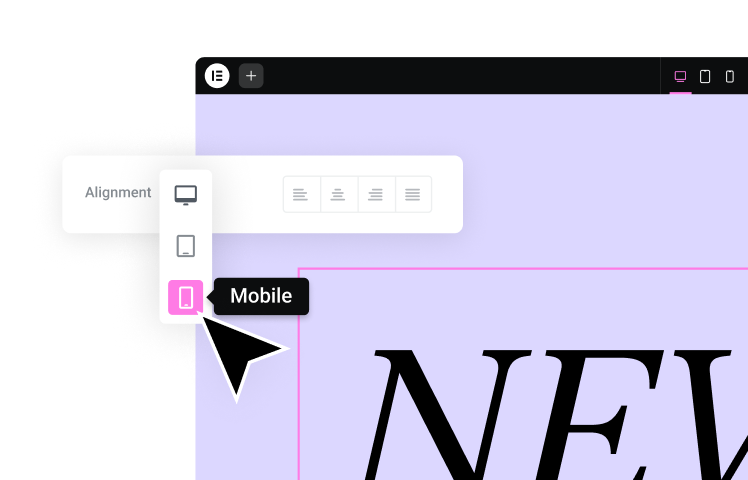
- Creative Freedom: You have pixel-perfect control over every aspect of the design (headers, footers, archives, products) without writing code.
- Open Ecosystem: Because it is built on WordPress, you have access to over 59,000 plugins. You are never locked in.
- Data Ownership: You own your content and your design.
2. Managed Performance (Elementor Hosting) A critical part of this platform evolution is Elementor Hosting. https://elementor.com/hosting When analyzing high-performing Elementor sites, you will often find they aren’t hosted on cheap, shared servers. They are on Elementor’s own managed hosting. This provides:
- Google Cloud Platform: Enterprise-grade infrastructure.
- Cloudflare Enterprise CDN: Integrated by default for lightning-fast speeds.
- Unified Support: One team supports both the builder and the hosting. No more blame games.
3. The AI Advantage Modern Elementor sites are increasingly leveraging Elementor AI. https://elementor.com/products/ai This isn’t just a chatbot. It’s natively integrated into the builder.
- Code Generation: It can write custom CSS and HTML snippets directly in the editor.
- Image Generation: It creates and edits royalty-free images on the fly.
- Container Layouts: It helps structure complex layouts instantly.
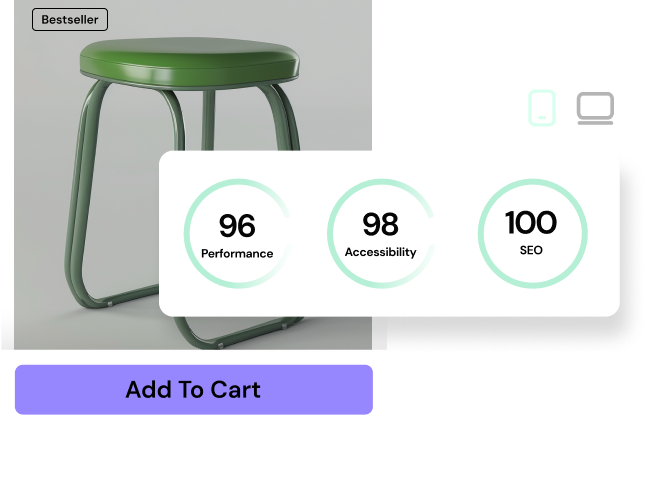
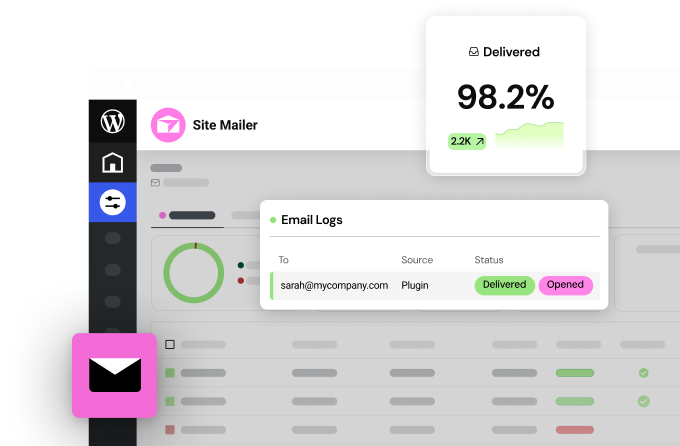
4. Marketing and Growth The ecosystem extends beyond just “building.” Tools like Image Optimizer (https://elementor.com/products/image-optimizer) ensure the site remains fast, while Site Mailer (https://elementor.com/products/site-mailer) guarantees transactional email reliability—fixing a notorious WordPress pain point.
Relevant Video: https://www.youtube.com/watch?v=sK7KajMZcmA
Competitor Landscape: A Neutral Overview
As a web professional, it is important to understand the alternatives objectively. Here is a functional breakdown of the other major players you might identify during your research.
Wix
Wix is a cloud-based web development platform that allows users to create HTML5 websites and mobile sites through the use of online drag-and-drop tools.
- Core Function: Visual, drag-and-drop builder for beginners and small businesses.
- Structure: It operates as a closed SaaS system. Users select templates and customize them within the proprietary editor.
- Ecosystem: It offers an App Market for adding features, though integration is limited to approved apps within the Wix ecosystem.
Squarespace
Squarespace is a SaaS-based content management system, integrated website builder, blogging platform, hosting service, commerce platform, and domain name registrar.
- Core Function: Template-driven design with a focus on aesthetics and simplicity.
- Structure: It uses strict, pre-designed templates that ensure consistency but limit granular layout control compared to free-form builders.
- Ecosystem: It provides built-in tools for scheduling, email campaigns, and eCommerce, offering an “all-in-one” approach with fewer third-party integrations.
Webflow
Webflow is a SaaS application that allows designers to build responsive websites with browser-based visual editing software.
- Core Function: A visual interface for writing HTML, CSS, and JavaScript. It is targeted primarily at designers who understand coding concepts.
- Structure: It generates clean code that can be exported, but the CMS and hosting are tightly integrated into their platform.
- Ecosystem: It relies heavily on its own CMS structure and logic, with a steeper learning curve than standard drag-and-drop editors.
Deep Dive: Analyzing Specific Elements
Sometimes you don’t just want to know the builder; you want to know the specific tools used for a feature.
Identifying the Theme
In WordPress, the “Theme” controls the basic structure. Even with a builder like Elementor, a lightweight theme is usually present.
- How to find it: Look in the source code for /wp-content/themes/. The folder name immediately following this is the theme name.
- Common Find: You will frequently see /wp-content/themes/hello-elementor/. This is the Hello Theme (https://elementor.com/themes), a minimalist framework specifically built for Elementor. It acts as a blank canvas, allowing the builder to handle all design aspects without “theme bloat” slowing down the site.
Identifying Plugins
Plugins add functionality. If you see a specific contact form or slider, you can usually identify the plugin powering it.
- How to find it: Look for /wp-content/plugins/. The directory names reveal the plugins.
- Common Finds:
- woocommerce: The standard for eCommerce on WordPress.
- elementor-pro: Indicates the site is using the advanced professional features of Elementor.
- site-mailer: Indicates the site is using Elementor’s solution for reliable email delivery.
The Strategic Pivot: Building Your Own Stack
Now that you have analyzed the market and identified that the top-tier sites are often using a combination of WordPress + Elementor, how do you replicate that success? You don’t just “install a plugin.” You build a platform.
Step 1: The Foundation (Hosting)
Don’t use cheap shared hosting. It is the number one cause of slow WordPress sites. Choose a managed solution that understands the application layer.
- Recommendation: Elementor Hosting. It pre-installs the builder, optimizes the server for Elementor’s specific code requirements, and includes enterprise-grade security.
Step 2: The Framework (Theme)
Don’t buy a $60 “multipurpose” theme from a marketplace. They are often bloated with unnecessary code.
- Recommendation: Hello Theme. It is free, lightweight, and built for speed.
Step 3: The Engine (Builder)
This is where the magic happens.
- Recommendation: Elementor Pro. https://elementor.com/pro Use the Theme Builder to design your Header, Footer, and Single Post templates. Use the WooCommerce Builder to customize your product pages and checkout flow. This allows you to break free from the constraints of standard templates.
Step 4: The Optimization (Performance & Workflow)
Ensure your images are optimized automatically and your workflow is efficient.
- Recommendation: Image Optimizer for speed and Elementor AI to accelerate your content creation and code writing.
Relevant Video: https://www.youtube.com/watch?v=QKd7d6LueH4
Frequently Asked Questions (FAQ)
1. Can I hide which website builder I am using? Yes and no. You can remove the <meta name=”generator”> tag and use security plugins to hide common file paths (like renaming /wp-content/). However, completely hiding the nature of a site is very difficult. Experienced developers and sophisticated tools can usually identify the underlying structure by analyzing HTML patterns, CSS classes, and server headers.
2. Is it illegal to check a website’s source code? No. The source code (HTML, CSS, and JavaScript) is sent to your browser every time you visit a website. Viewing it is a standard function of every web browser and is completely legal. It is the digital equivalent of looking at a building from the sidewalk to see what materials were used.
3. Why do some sites show “Shopify” but look like WordPress? It is possible to use Shopify solely for the checkout/cart functionality (via a “Buy Button” or headless integration) while using WordPress for the front-end content. In these cases, you might see WordPress file paths for the blog and pages, but Shopify URLs when you attempt to purchase a product.
4. What is the difference between a CMS and a Website Builder? A CMS (Content Management System) like WordPress is a backend database for managing content. A Website Builder (like Elementor) is a visual tool for designing the frontend layout. Elementor bridges this gap by acting as a visual builder on top of the WordPress CMS.
5. I see “cdn.shopify.com” but the site isn’t a store. Why? Shopify is sometimes used just for its reliable hosting of assets, though this is rare. More likely, the site was a store or is planning to be one, and the theme assets are still being loaded from Shopify’s network. Alternatively, they might be using Shopify for a “merch” section that is embedded into a different main site.
6. Can BuiltWith detect every plugin on a WordPress site? Not always. BuiltWith detects plugins that load scripts or CSS on the frontend. If a plugin operates purely on the backend (like an admin utility or a backup plugin), it leaves no footprint on the public-facing site, so it remains invisible to scanners.
7. Why do professional agencies prefer Elementor over Wix? Agencies prefer Elementor because of the open-source nature of WordPress. It allows for complete ownership of the data, unlimited extensibility with custom code, and the ability to move the site to any hosting provider. Closed platforms like Wix limit the agency’s ability to implement complex, custom functionality for clients.
8. What does “Headless” mean in website detection? “Headless” means the frontend (what you see) is separated from the backend (where content is stored). For example, a site might use WordPress to manage blog posts but use React (code) to display them. These sites are harder to identify because they don’t use standard themes. You might identify the backend via API calls in the “Network” tab of your browser developer tools.
9. How can I tell if a site is using a custom theme? In the source code, look at the /wp-content/themes/[foldername]/ path. If the folder name is something generic like “client-name-theme” or “v1,” it is likely a custom theme. If it is “hello-elementor” or “astra,” it is a pre-made theme.
10. Is Elementor Hosting different from regular hosting? Yes. Generic hosting is designed to run any type of software. Elementor Hosting is a “Managed WordPress” solution specifically engineered for Elementor. The server stack, caching layers, and PHP workers are tuned to maximize the performance of the Elementor builder, providing a smoother editing and browsing experience.
Conclusion
Figuring out what website builder was used is a valuable skill that bridges the gap between curiosity and strategy. Whether you are inspecting the code manually or using tools like Wappalyzer, the goal is to understand the technical foundation of successful websites.
You will often find that the most robust, scalable, and beautifully designed sites rely on the WordPress + Elementor stack. This combination offers the sweet spot of “Managed Performance” and “Creative Freedom,” allowing creators to build without boundaries.
Ready to build your own masterpiece? https://elementor.com/free-download
Looking for fresh content?
By entering your email, you agree to receive Elementor emails, including marketing emails,
and agree to our Terms & Conditions and Privacy Policy.