Table of Contents
This choice is not merely technical; it is strategic. It dictates your daily workflow, your long-term growth potential, your budget structure, the security of your customer information, and the very ownership of your business data. A wrong choice here is expensive to reverse. Re-platforming a live website is akin to changing the engine of an airplane while it is in mid-flight: risky, costly, and disruptive.
The debate usually narrows down to two distinct paths. You can choose a Website Builder, typically a “software-as-a-service” (SaaS) platform that bundles hosting, security, and design tools into one closed subscription. Or, you can choose a Content Management System (CMS), software that you install on your own hosting environment to manage and publish content.
This decision is rarely black and white. It requires a nuanced understanding of your technical resources, your design ambitions, and your business goals for the next five years. This comprehensive guide will dissect the architecture, economics, and operational realities of both paths, helping you make a decision that protects your future.
Key Takeaways
- Ownership is the decisive factor: A CMS grants you full ownership of your data, database, and site structure. In contrast, website builders often lock you into a proprietary ecosystem where exporting your design is technically impossible, creating “vendor lock-in.”
- The lines are blurring: Modern solutions like Elementor have bridged the historical gap, offering the visual ease of a builder combined with the robust, scalable power of an open-source CMS.
- Scalability requires infrastructure: While builders offer speed to market for simple sites, a CMS provides the database architecture needed for complex, high-traffic sites with thousands of pages and custom post types.
- Cost analysis is complex: Website builders offer predictable monthly fees, but a CMS often provides a lower total cost of ownership (TCO) over time as you scale and avoid tiered feature gates or transaction fees.
- Performance is managed differently: On a closed builder, you rely entirely on the platform for speed. On a CMS, you—or your managed host—control the optimization stack, from CDNs and caching layers to image compression.
Chapter 1: The Fundamental Dilemma: Control vs. Convenience
The core tension in this decision lies between Control and Convenience.
In the early days of the web (Web 1.0), businesses had to hand-code HTML and CSS. It offered total control—every pixel was accounted for, and the code was yours—but zero convenience. Updating a headline required a developer to open a file, edit code, and upload it via FTP. It was slow, expensive, and inaccessible to non-technical users.
Today, the spectrum has filled with tools that attempt to balance these two opposing forces, yet the trade-off persists.
The Convenience of the “Walled Garden”
When you select a closed-source website builder, you prioritize convenience. You rent the infrastructure. The platform handles security certificates (SSL), software updates, server maintenance, and compatibility checks. You focus purely on the visual arrangement of your content.
This model works exceptionally well for users who want to “set it and forget it,” or for projects with a finite lifespan, like a wedding website or a temporary event landing page. However, this convenience comes at a significant cost: control.
- You are a tenant, not an owner. If the platform raises prices, you must pay.
- You are bound by their roadmap. If you need a feature they don’t offer, you cannot build it.
- You cannot move. You cannot simply “pick up” a Wix or Squarespace site and move it to a different hosting provider if performance degrades.
The Control of the Open Ocean
On the other side of the spectrum lies the open-source CMS. Here, you prioritize control. You own the code. You own the database (usually MySQL). You select the hosting environment that matches your specific performance needs.
If you need a specific functionality—say, a complex real estate booking engine that syncs with an external MLS database, or a learning management system with gamified quizzes—you can build it or hire someone to build it. The CMS provides the framework, but you define the logic.
The historical trade-off was responsibility. With great power came the great responsibility of maintaining the server, patching security holes, and updating plugins. However, as we will explore, the rise of “Managed Hosting” and “Website Builder Platforms” has significantly reduced this burden, shifting the equation in favor of the CMS.
Chapter 2: Deep Dive into Website Builders (The Walled Gardens)
A website builder is an all-in-one platform. You pay a single company for the software, the hosting, the security, and the support. These platforms are built on proprietary codebases. This means the code that powers your website belongs to the company, not you. You are essentially leasing a pre-furnished apartment: it looks good immediately, but you can’t knock down a wall to combine rooms.
The Mechanics of a Closed Ecosystem
Website builders operate as a “walled garden.” Everything happens inside their controlled environment. You log in to their dashboard, you use their proprietary design tools, and you publish to their servers. This integration creates a smooth, cohesive experience. You rarely encounter plugin conflicts because third-party code is strictly vetted or disallowed entirely.
The primary advantage here is speed to launch. You can select a template, replace the text and images, and publish a site in an afternoon. The learning curve is generally shallow. These platforms constrain your choices to ensure you cannot “break” the site. For a hobbyist, this is often sufficient.
The Market Landscape: A Closer Look
Several competitors have carved out significant market share in this space, each appealing to a specific demographic, yet all sharing the same fundamental limitations of the SaaS model.
Wix: The Unstructured Canvas Wix focuses on an unstructured drag-and-drop experience. It allows users to place elements anywhere on a canvas, much like moving shapes on a PowerPoint slide (absolute positioning).
- The Pro: It feels very intuitive initially. You drag a box to the right, and it stays there.
- The Con: This lack of structure can create nightmares for responsiveness. A layout that looks good on a desktop often breaks on a tablet because the elements aren’t “aware” of each other relative to the screen size. While they have introduced responsiveness tools, the underlying code structure can be heavy (DOM bloat), which often impacts “Time to Interactive” scores in Google’s Core Web Vitals.
Squarespace: The Curated Gallery Squarespace restricts design freedom more heavily to enforce aesthetic consistency. It relies on rigid, designer-approved templates that ensure a site looks professional, even if the user lacks design skills.
- The Pro: It is very hard to make an ugly Squarespace site. It is favored by photographers and creatives for portfolios.
- The Con: It is very hard to make a unique Squarespace site. Customizing the underlying logic or creating complex, dynamic layouts beyond the template’s structure is restricted. If you want a checkout flow that differs from their standard, you are out of luck.
Webflow: The Visual Code Editor Webflow targets a different demographic, focusing on designers who understand code concepts like flexbox, grid, and padding but prefer a visual interface. It serves as a visual abstraction of HTML and CSS rather than a simple drag-and-drop tool.
- The Pro: It generates clean code, which appeals to design purists.
- The Con: It has a notoriously steep learning curve. If you don’t understand how the “Box Model” works in CSS, you will struggle. Furthermore, it locks you into their hosting infrastructure for CMS functionality. If you want to use their CMS features, you must host with them, limiting your ability to shop for better server performance or pricing elsewhere.
The Hidden Costs of Convenience
The downside of the website builder model often reveals itself years down the line, usually during a growth phase (The “Success Penalty”).
1. The Integration Ceiling As your business scales, you may need a specific integration with a niche CRM, a custom inventory management system, or a specialized shipping provider. Website builders rely on their own App Markets. If an integration doesn’t exist there, you hit a hard wall. You cannot hire a developer to build a custom bridge because you don’t have access to the server-side code or the API endpoints in the same way you do with a CMS.
2. Data Portability & Vendor Lock-in This is the most critical strategic risk. If you decide to leave a website builder, you typically cannot export your website.
- You can export your products (CSV).
- You can export your blog posts (sometimes XML, sometimes just copy-paste).
- You lose your design. The templates, the interactions, the animations, and the layout structure are proprietary.
- You lose your SEO equity. Because the URL structures on builders are often rigid (e.g., specific folder structures for blogs or products), moving to a new platform often requires complex 301 redirect mapping to try and save your search rankings. This creates “vendor lock-in,” making it difficult and expensive to switch providers. You effectively pay a “convenience tax” in the form of reduced agility.
Chapter 3: Deep Dive into Content Management Systems (The Open Ocean)
A Content Management System (CMS) is software designed to create, manage, and modify digital content. Unlike a website builder, a CMS is typically self-hosted. You download the software (or use a one-click installer) and place it on a server of your choice.
The Power of the Open Source Stack
The dominant force in the CMS world is WordPress. As open-source software, its code is available for anyone to study, change, and distribute. This openness has fostered a global community of developers who contribute to the core software and build thousands of themes and plugins.
This ecosystem is the CMS’s greatest strength. It functions on the “LAMP” stack (Linux, Apache, MySQL, PHP) or similar open standards.
- Universal Compatibility: Because it uses standard code, any web developer in the world can work on it. You are never dependent on a single agency or platform support team.
- The Plugin Economy: If you need to add a feature, there is a 99% chance a plugin already exists for it. Need to turn your site into a social network? Use BuddyPress. Need a Learning Management System? Use LearnDash. Need complex SEO schemas? Use Yoast.
- Infinite Extensibility: If the plugin doesn’t exist, the open nature of the platform means a developer can build it for you. You have “root access” to your digital destiny.
The Responsibility Factor (And How It Has Changed)
Historically, the CMS argument had a weakness: complexity. You acted as the captain of the ship, responsible for hosting, security, and updates. Non-technical users feared the “White Screen of Death” caused by a faulty plugin update or a server misconfiguration.
However, the hosting industry has evolved to mitigate this. Managed WordPress Hosting now handles much of the technical heavy lifting, bringing the CMS experience closer to the ease of a website builder.
- Automated Updates: Managed hosts update the core software and plugins for you, often testing them in a sandbox environment first.
- Daily Backups: Your site is backed up automatically. If you break something, you can restore a version from yesterday with one click.
- Security at the Edge: Enterprise-grade firewalls (WAF) and DDoS protection are implemented at the server level, protecting you before malicious traffic even hits your site.
The CMS Landscape
WordPress
WordPress powers over 40% of the web. Its flexibility is unmatched, scaling from small personal blogs to enterprise newsrooms like The New York Times and TechCrunch. It is the gold standard for content ownership and extensibility. Because of its market dominance, it has the largest library of third-party integrations in the world.
Joomla
Joomla offers a middle ground with more built-in multilingual capabilities than WordPress but a steeper learning curve. It uses a different nomenclature (“Modules” and “Components”) that can be confusing for beginners. Its market share has been declining as WordPress becomes more user-friendly.
Drupal
Drupal is an enterprise-grade CMS known for robust security and complex taxonomy (how content is categorized). It is used by governments and large universities. However, it requires significant developer resources to build and maintain. It is “developer-first” software, whereas WordPress has successfully pivoted to be “user-first.”
Chapter 4: The Convergence: The Rise of the Website Builder Platform
For years, the industry forced you to choose: Easy (Builder) or Powerful (CMS). That strict binary is fading. We are witnessing the rise of the Website Builder Platform. This category merges the visual, code-free design experience of a builder with the robust, open architecture of a CMS.
Elementor is the prime example of this evolution. It started as a plugin—a “page builder“—but has matured into a comprehensive platform. It replaces the standard WordPress editor with a live, visual interface where you design every aspect of your site, from headers and footers to archive pages and single posts.
The Hybrid Model: Best of Both Worlds
This hybrid model addresses the “control vs. convenience” dilemma directly by layering a visual interface over an open-source foundation.
1. You get Convenience (The “SaaS” Experience)
- Visual Design: You design visually. You drag and drop widgets. You see exactly what your visitors will see (WYSIWYG). You can adjust padding by dragging a handle, rather than typing pixel values in a stylesheet.
- Speed: You have access to professional kits and templates via the Library that speed up your workflow.
- AI Integration: You have access to Elementor AI directly within the editor. You can generate text, create custom CSS code, and even generate royalty-free images without leaving the tab.
2. You keep Control (The “Open Source” Foundation)
- Data Sovereignty: Underlying this visual layer is WordPress. You own your data. You own the database.
- Portability: You can move your site to any host you choose. If you are unhappy with your server speed, you can migrate to a new provider without losing your design.
- No Lock-in: You can install any WordPress plugin to extend functionality. You are not locked into a “walled garden” app market.
Elementor has further solidified this position with Elementor Hosting. This offering bundles the Elementor Pro builder features with managed cloud hosting powered by Google Cloud. It effectively replicates the “all-in-one” simplicity of a SaaS builder—one login, one bill, one support team—while preserving the open-source freedom of WordPress.
This convergence means you no longer have to choose. You can have a system that is intuitive enough for a marketing manager to update (changing text, images, and prices) but powerful enough for a developer to extend (adding custom PHP logic or API integrations).
Chapter 5: Critical Comparison Factors (The Decision Matrix)
To make an informed choice, we must evaluate these options against six specific business criteria.
1. Ease of Use and Learning Curve
Website Builders: Builders win on initial simplicity. Their interfaces are often stripped down. You cannot make many mistakes because you cannot make many choices. The onboarding process is typically sleek, guiding you from signup to template selection in minutes.
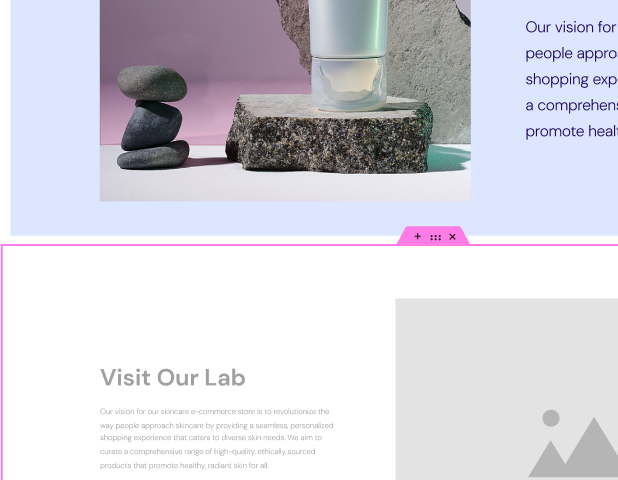
CMS: A CMS like WordPress has a steeper initial learning curve. You must understand concepts like “Themes” (the look), “Plugins” (the functionality), and “Widgets.” However, tools like the Elementor Website Builder flatten this curve significantly. By providing a visual design interface, it removes the need to understand the underlying code structure. You interact with the page directly. With features like the AI Site Planner, you can even generate the entire structure of your site, including sitemaps and wireframes, simply by chatting with an AI, further reducing the technical barrier.
2. Design Flexibility and Customization
Website Builders: SaaS builders often rely on templates. While you can customize colors and fonts, you are often bound by the structural limitations of the template you chose. The CSS is hidden, preventing deep customization. If you want to overlap elements or create a complex parallax effect that the builder doesn’t support natively, you are stuck.
CMS + Elementor: In a CMS environment equipped with a professional builder, customization is limitless. You have pixel-perfect control. You can adjust margins, padding, Z-index (layering), and motion effects for every element.
- Custom CSS: If you need a design feature that doesn’t exist in the UI, you can add custom CSS directly to the element.
- Dynamic Content: You can design “Templates” (e.g., a Single Blog Post template) that dynamically pull in data from your database. This means you design the layout once, and it applies to thousands of posts.
- The Blank Canvas: For professional designers, the Hello Theme provides a lightweight blank canvas that allows you to build a completely custom design system from the ground up without fighting existing theme styles.
3. Cost of Ownership (TCO)
Pricing models differ significantly, and the sticker price is rarely the final price.
Website Builders (The Subscription Trap): You pay a flat monthly fee. It seems predictable. However, higher tiers are often required to unlock basic features.
- Want to remove their ads? Pay more.
- Want to add eCommerce? Pay more.
- Need advanced analytics? Pay more.
- Need more storage? Pay more. As you grow, these costs compound. If you need 10 accounts for your team, you might pay 10x the price. You have no leverage to negotiate.
CMS (The Scalable Investment): The software (WordPress) is free (Free Download). You pay for hosting (approx. $10-$50/month) and any premium plugins.
- Efficiency: You pay only for the resources you need. You can choose a high-performance host for your production site and a cheaper host for a staging site.
- Competition: The ecosystem competition keeps plugin prices reasonable.
- Bundle Value: Elementor Hosting simplifies this calculation by bundling the hosting, the pro builder features, and support into a single annual price. This matches the predictable pricing model of SaaS builders while delivering more value (enterprise-grade infrastructure without the enterprise price tag), and you often receive a Free Domain Name for the first year.
4. Search Engine Optimization (SEO)
Website Builders: For a long time, website builders generated bloated code (excessive JavaScript) and offered limited access to metadata. While they have improved, they still restrict your access to the server-level configurations that can boost performance.
- You generally cannot control caching rules.
- You cannot modify the .htaccess file for complex redirects.
- You cannot choose your own CDN (Content Delivery Network).
CMS: A CMS offers superior SEO potential because you control the entire stack.
- Technical SEO: You have full control over your URL structure, your schema markup, and your robots.txt file. Plugins like Yoast or RankMath provide granular control over every page.
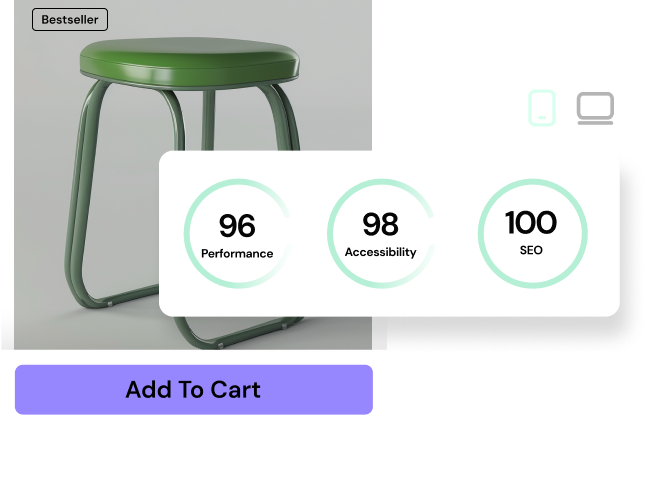
- Performance Optimization: Google’s “Core Web Vitals” are a ranking factor. On a CMS, you can implement advanced caching, minify CSS/JS, and use next-gen image formats with tools like the Image Optimizer. This tool compresses and resizes images automatically, ensuring your site loads instantly on mobile devices—a critical factor for ranking.
5. Scalability and Future-Proofing
Website Builders: A website builder might handle 100 pages well. But what if you need 10,000 pages? What if you need to create a custom post type for “Real Estate Listings” with fields for “Square Footage,” “Bedrooms,” and “Bathrooms,” and then allow users to filter by those fields? Most builders cannot handle this complex data architecture.
CMS: A CMS handles complex data structures natively. You can create relationships between different types of content (e.g., connecting “Authors” to “Books” to “Reviews”).
- eCommerce Scale: For online stores, WooCommerce (running on WordPress) powers millions of stores. Unlike proprietary builders that limit your variants (e.g., only 3 options for Size/Color/Material), WooCommerce is unlimited. You can customize the checkout flow to match your exact business logic.
6. Maintenance and Security
Website Builders: This is the one area where SaaS builders have a distinct advantage for the hands-off user. They handle all updates and security patches. You never have to worry about a plugin conflict bringing down your site.
CMS + The New Tools: With a CMS, you are responsible for maintenance. However, the modern “Website Builder Platform” mitigates this through specialized tools.
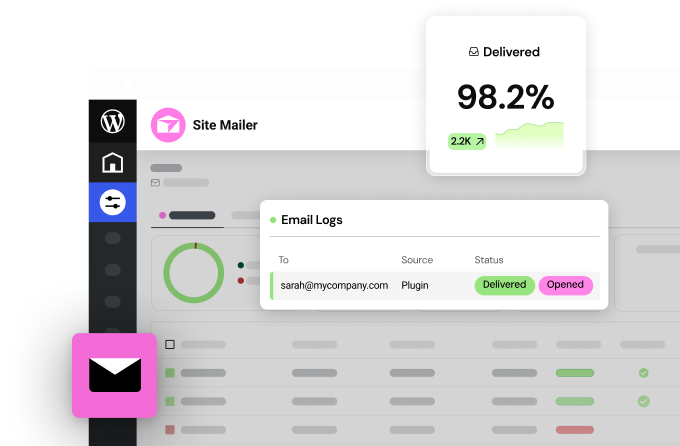
- Reliability: Tools like Site Mailer ensure that critical transactional emails—like order confirmations, password resets, and form submissions—actually reach your customer’s inbox. It solves the notorious WordPress issue of emails going to spam without requiring complex SMTP setups.
- Accessibility: Innovations like Ally by Elementor integrate accessibility scanning and remediation directly into the platform. It helps you identify and fix accessibility violations (making your site usable for people with disabilities) and mitigates the risk of lawsuits—something often left as an afterthought in basic builders.
Chapter 6: Strategic Recommendations by Persona
Your “best” choice depends entirely on who you are and what you need to achieve. Let’s look at three common scenarios.
The Small Business Owner / DIYer
The Scenario: You own a local bakery. You need a site that displays your menu, your hours, and a contact form. You have zero desire to learn code.
The Builder Trap: You might choose a basic builder for simplicity. But two years later, you want to sell merchandise online and offer “click and collect.” The builder’s commerce features are too basic, and they take a 3% transaction fee on top of the credit card fees. You are stuck.
The Better Choice: Start with a platform that grows with you. Using Elementor Hosting combined with a guided theme like Hello Biz gives you the simple experience of a builder (with setup wizards and pre-made kits) but leaves the door open for unlimited expansion. You get your professional site online quickly without painting yourself into a corner. You can start small, and when you are ready to add a store or a booking system, the capability is already there.
The Freelancer or Agency
The Scenario: You build websites for clients ranging from dentists to law firms. You need efficiency. You cannot afford to learn a new proprietary tool for every client, and you need to hand off a site that clients can easily update.
The Builder Trap: Using a closed builder limits your design capability. You end up using the same three templates for every client. The client is then locked into a monthly fee they cannot control, and if they stop paying, they lose their site. This reflects poorly on you.
The Better Choice: A CMS-based builder is the only logical choice. You need the Elementor Pro toolkit. It allows you to build dynamic templates for your clients, ensuring they can update content without breaking the design.
- Efficiency: Features like the AI Site Planner allow you to generate wireframes and sitemaps in minutes, streamlining the client approval process.
- Revenue: You can resell Elementor Hosting to your clients, providing them with a premium experience while generating recurring revenue for your agency.
- Collaboration: The “Notes” feature facilitates seamless collaboration directly on the site, eliminating endless email threads.
The High-Growth eCommerce Brand
The Scenario: You are launching a direct-to-consumer fashion brand. You expect high traffic during drops and need robust inventory management, complex shipping rules, and complete control over your checkout conversion rate.
The Builder Trap: Basic builders will penalize your success with transaction fees. They also lack the ability to customize the checkout page, which is the most critical page for your revenue. If you want to add a “Buy One Get One” offer with specific logic (e.g., “Buy pants, get 50% off belt”), you likely can’t.
The Better Choice: You need WooCommerce paired with a visual builder. This combination allows you to design custom product pages and cart flows that match your brand identity perfectly. You can integrate with any payment gateway and logistics provider.
- Operational Reliability: For operations, tools like Site Mailer ensure that critical transactional emails—like order confirmations and password resets—actually reach your customer’s inbox, solving a notorious WordPress pain point without complex SMTP setups.
Chapter 7: Future-Proofing and the Role of AI
The web is changing faster than ever. The decision you make today needs to account for technologies that are just emerging.
The AI Revolution in Web Creation
We are moving from a “do-it-yourself” era to a “do-it-with-AI” era. Website builders that do not integrate AI natively will fall behind. Elementor AI is not just a text generator; it is deeply integrated into the editor. It is “context-aware.”
- Code Generation: It can write custom CSS code to achieve effects that were previously impossible for non-coders.
- Image Generation: It can generate royalty-free images that match your brand’s style, or expand existing images to fit new aspect ratios.
Furthermore, we are seeing the rise of “Agentic AI,” tools that can perform multi-step tasks. Imagine asking your website to “Create a landing page for the Black Friday sale based on my best-selling products” and having it execute that task. This level of automation requires the open data structure of a CMS to function effectively. Closed builders are black boxes; AI agents cannot easily navigate them to perform complex operations.
Data Sovereignty in a Regulated World
In an era of privacy regulations (GDPR, CCPA) and platform volatility, owning your data is paramount. When you use a CMS, you hold the keys. You can back up your site to a hard drive. You can audit your database. You are not subject to the whims of a CEO changing the terms of service of a SaaS platform.
Conclusion: Why Elementor Represents the Strategic Sweet Spot
As we analyze the landscape of 2026, Elementor emerges not just as a tool, but as a strategic solution that resolves the historical trade-offs between builders and CMSs.
It acknowledges that modern web creators—whether they are marketers, designers, or business owners—demand efficiency. They do not want to wrestle with code for basic tasks. They want to use AI to generate images and refine copy directly in the editor. They want a library of pre-made blocks to speed up production. They want Elementor for Designers features that prioritize aesthetics and workflow.
Yet, it also respects the professional need for ownership. By building on top of WordPress, it ensures that your digital asset belongs to you. You are building equity in your own platform, not renting space in someone else’s.
The ecosystem Elementor has built—covering hosting, image optimization, accessibility, and transactional email reliability with Site Mailer—transforms it from a plugin into a comprehensive operating system for the web. It is the “Best of Both Worlds” philosophy in practice. You get the streamlined, supported, and secure environment of a SaaS, with the limitless horizon of Open Source.
Frequently Asked Questions (FAQ)
1. Can I switch from a website builder to a CMS later? Yes, but it is often a manual and difficult process. Most website builders do not provide an export feature that preserves your design. You will likely have to copy-paste your text and images and rebuild the layout from scratch on the new CMS. This “re-platforming” cost is why starting with a flexible CMS foundation like Elementor is often recommended.
2. Is a CMS like WordPress secure? A CMS is as secure as you make it. The core software is rigorous, but security vulnerabilities often come from outdated plugins or weak passwords. Using a managed host like Elementor Hosting significantly improves security, as they provide enterprise-grade firewalls, DDoS protection, and automated updates to keep your site safe.
3. Do I need to know how to code to use a CMS? Not anymore. While CMSs were traditionally code-heavy, platforms like Elementor provide a completely visual, drag-and-drop interface. You can build complex, professional websites without writing a single line of HTML or CSS, though the option remains if you want to add custom code.
4. Which is better for SEO: Wix or WordPress? WordPress is generally considered superior for SEO due to its flexibility. It allows for deep technical customization, schema markup, and site structure control that proprietary builders often lock away. Tools like the Elementor Website Builder produce clean code and allow for performance optimizations that are critical for search rankings.
5. How much does a CMS website really cost? The software (WordPress) is free. You pay for hosting (approx. $10-$50/month) and any premium plugins or themes. While the initial setup might be slightly higher than a basic builder plan, the total cost of ownership over 3-5 years is often lower because you avoid the escalating tier costs of proprietary platforms as your traffic grows.
6. Can I build an online store with a website builder? Yes, but you will face limitations. Builders offer basic eCommerce features suitable for small stores. For scaling businesses, a CMS solution like WooCommerce is preferred because it offers unlimited product variants, complex tax/shipping rules, and custom checkout flows that proprietary builders cannot match.
7. What is “Managed WordPress Hosting”? Managed hosting is a service where the hosting provider handles the technical maintenance of your WordPress site. They take care of server optimization, security patching, backups, and updates. It effectively gives you the “hands-off” convenience of a website builder while keeping the power of a CMS.
8. Is Elementor a CMS or a Website Builder? Elementor is a Website Builder Platform that runs on a CMS (WordPress). It replaces the standard CMS interface with a visual builder. When combined with Elementor Hosting, it functions as a complete all-in-one platform, providing the infrastructure of a CMS with the user experience of a top-tier website builder.
9. What happens to my data if I cancel my website builder subscription? Typically, your data is deleted after a grace period. Since you do not own the code or the database on a proprietary builder, you cannot simply “take your site with you.” You must export what content you can before canceling. With a CMS, you possess the files and database, so you can archive them or move them to a different host at any time.
10. Why do agencies prefer Elementor over Squarespace? Agencies prefer Elementor because of its scalability and workflow tools. They can create a unique design system for a client that isn’t based on a rigid template. They can also use features like “Notes” for client collaboration and “Role Manager” to restrict what clients can edit, ensuring the site design remains intact.
Looking for fresh content?
By entering your email, you agree to receive Elementor emails, including marketing emails,
and agree to our Terms & Conditions and Privacy Policy.