Table of Contents
Understanding this distinction is not just a matter of semantics. It is vital for developers, agencies, and business owners who are making strategic platform decisions for 2025 and beyond. This comprehensive guide explores how the market perceives Shopify’s AI capabilities, analyzes the technical depth of its “Magic” tools, and examines where the true frontier of AI web creation lies—specifically within open, flexible ecosystems that empower creators rather than just assisting merchants.
Key Takeaways:
- Shopify is perceived as an AI-assisted platform, not a ground-up AI builder. The market views tools like Shopify Magic and Sidekick as powerful operational assistants for tasks like copywriting and data analysis, rather than tools that structurally build websites from scratch.
- The “Walled Garden” limitation persists. Shopify’s AI features are locked within its proprietary ecosystem, limiting true design freedom and ownership compared to open-source alternatives like WordPress.
- True AI building involves structural creation. Leading platforms now use AI to generate wireframes, layouts, and entire design systems, a capability that remains distinct from Shopify’s text-generation focus.
- Agentic AI is the new standard. The shift from generative AI (creating text/images) to agentic AI (performing multi-step actions like “build a landing page“) is redefining professional workflows.
- Flexibility remains king. While Shopify offers speed, professional creators increasingly prefer platforms that combine AI efficiency with pixel-perfect control, such as the Elementor ecosystem.
The Evolution of the “AI Website Builder” Concept
To truly understand Shopify’s position in the market, we must first define what the term “AI Website Builder” actually means in 2025. In the early days of this technology, an AI builder was often a gimmick—a tool that asked you three questions about your industry and color preference, then spat out a generic, rigid template that looked like thousands of others.
Today, the bar is significantly higher. Professional web creators and savvy business owners expect an AI website builder to be a comprehensive partner in the creation process. It should handle strategy (generating sitemaps, wireframes, and briefs), execution (generating structural containers, clean code, and styling), and optimization (writing compelling content and creating unique imagery). It isn’t just about filling in the blanks of a pre-made theme; it’s about architecting a unique solution from the ground up.
The Shift from Templates to Intelligence
For years, the website building industry relied heavily on rigid templates. You picked a theme, and you were largely stuck with its structure. If the header was on the left, it stayed on the left. If the gallery was a grid, it stayed a grid. AI has promised to break this rigidity by generating unique layouts based on natural language prompts. This is where the distinction between Shopify and other creator-focused platforms becomes sharp.
Shopify’s approach has historically been template-driven. You select a theme—often a paid one if you want high quality—and you populate it with your data. Their introduction of AI has been strategic and effective, but it is aimed at reducing friction within that template structure rather than reimagining the building process itself.
Dissecting Shopify’s AI Capabilities: “Magic” and “Sidekick”
Shopify’s entry into the AI space is branded largely under “Shopify Magic” and its assistant “Sidekick.” To understand the market perception, we must strip away the marketing language and look at what these tools actually do for the user. The consensus among design professionals is that these are productivity tools, not construction tools.
Shopify Magic: The Content Engine
Shopify Magic is a suite of generative AI tools integrated across the Shopify admin. Its primary function is text generation. It helps merchants write product descriptions, email subject lines, and blog posts.
- Functionality: It uses Large Language Models (LLMs) to predict text based on keywords and tone. You might type “luxury leather watch strap” and select a “sophisticated” tone, and the tool will generate a paragraph describing the product.
- Market Perception: It is viewed as a significant time-saver for repetitive administrative tasks. For a merchant with 1,000 SKUs, auto-generating descriptions is a game-changer. It removes the “writer’s block” that often delays store launches. However, the perception stops there. It does not design the page. It fills the text boxes on the page. It does not decide where the image goes or how the typography interacts with the whitespace.
Sidekick: The Commerce Assistant
Sidekick is positioned as an AI advisor. It can answer questions about inventory, suggest marketing strategies, or perform simple admin tasks like “create a discount code.”
- Functionality: It acts as a conversational interface for the Shopify backend.
- Market Perception: Sidekick is perceived as a powerful support agent. It democratizes data analysis, allowing non-technical merchants to ask, “Why are my sales down this week?” and get a coherent answer based on their store’s data.
The Verdict on Building: Neither of these tools builds the website’s visual structure. You cannot ask Sidekick to “move the hero section to the left, add a motion effect to the headline, and change the typography to Inter.” You cannot ask it to “design a custom landing page for Black Friday that mimics the layout of this competitor.” This limitation is key to how Shopify is perceived: it is an AI-enhanced operating system for retail, but arguably not an AI website builder in the creative sense.
The “Assistant” vs. “Builder” Dichotomy
This brings us to the core of the perception issue. The market categorizes AI tools into two distinct buckets: Assistants and Builders.
The Assistant Model (Shopify)
In this model, the AI sits alongside the user. The user is still responsible for the heavy lifting of design and structure. The AI steps in to help with micro-tasks—writing a headline, analyzing a metric, or suggesting a price point.
- Pros: This model is great for operational efficiency. It helps you manage a store once it is live. It is excellent for merchants who are not designers and just want to get products online.
- Cons: It does not lower the barrier to entry for design. If you don’t know how to structure a high-converting landing page, the Assistant cannot do it for you. It can only help you fill in the content slots of a pre-existing theme.
The Builder Model (The Creator Ecosystem)
In this model, the AI acts as the architect. The user provides a vision—”I need a portfolio site for a photographer with a dark aesthetic and a masonry gallery”—and the AI generates the structural foundation. It creates the wireframes, the containers, the layouts, and the code.
- Pros: This massively accelerates the “Zero to One” phase. It solves the “Blank Page Syndrome” where a user stares at an empty white screen. It empowers creators to build things they physically couldn’t code themselves.
- Cons: This requires a platform flexible enough to handle dynamic generation. It requires an open canvas, not a rigid theme structure.
Shopify is firmly perceived in the Assistant bucket. While valuable, this leaves a gap for creators who need design autonomy and structural assistance.
The “Walled Garden” Paradox
A significant factor in Shopify’s perception is its closed ecosystem. Shopify is a proprietary SaaS (Software as a Service) platform. Its AI tools are trained on its data and designed to work exclusively within its walls.
While this ensures a degree of stability and security, it limits creativity. A Shopify merchant is restricted to the themes and sections allowed by the platform’s architecture. The AI cannot invent new design patterns or generate custom CSS code to break the mold because the platform doesn’t inherently support that level of open modification by the end-user (without deep code access or hiring a developer).
This contrasts sharply with open-source environments like WordPress. In an open ecosystem, AI tools can interact with the code directly, generating custom HTML, CSS, and dynamic layouts that simply aren’t possible in a rigid SaaS environment. This is where the perception of Shopify shifts from “powerful” to “restrictive” for design-conscious professionals.
The Alternative Approach: The Comprehensive Website Builder Platform
If Shopify represents the “Commerce Assistant,” what represents the “AI Builder”? The market increasingly looks toward platforms that combine the flexibility of WordPress with advanced, integrated AI capabilities. This is where Elementor has carved out a unique and powerful position.
Elementor is perceived not just as a page builder, but as a comprehensive Website Builder Platform. By leveraging the open nature of WordPress and integrating a suite of purpose-built AI tools, it addresses the “Builder” needs that Shopify leaves untouched.
1. Strategic Planning with AI
Building a website starts long before the design phase. It begins with strategy. Most “builders” skip this step, assuming the user already knows what pages they need.
- AI Site Planner: This tool changes the paradigm. Instead of starting with a template, creators start with a conversation. The AI generates a sitemap, a wireframe, and a structural brief based on the user’s specific goals. It is a strategic accelerator that ensures the site is built on a solid foundation. It helps agencies standardize their discovery process and helps DIYers understand what they actually need to build. Check out the Elementor AI Site Planner
2. Context-Aware Visual Building
While Shopify’s AI writes text, Elementor’s AI interacts with the design itself.
- Elementor AI: Integrated directly into the editor, this tool is context-aware. It understands that you are working on a “Heading” widget or an “Image” container. It can generate text, create unique images (ending the reliance on stock photos), and—crucially—write custom CSS code to style elements in ways no UI control could allow. This “Code Copilot” capability is a massive differentiator for professionals who want to push boundaries without writing every line of code manually. Learn more about Elementor AI
3. Agentic AI: The Next Frontier
The buzzword for 2025 is “Agentic AI”—AI that doesn’t just talk, but acts. Generative AI creates content; Agentic AI performs workflows.
- Angie: Elementor’s vision for the future includes agentic capabilities where the AI can perform multi-step workflows. Imagine telling your website, “Create a new landing page for the summer sale, add a contact form, and sync it with my email marketing.” This is the difference between an assistant that gives advice and an agent that does the work.
4. The Ecosystem Advantage
A true builder platform supports the entire lifecycle, not just the design phase.
- Elementor Hosting: Provides the optimized foundation (Google Cloud Platform) necessary for resource-intensive AI tools to run smoothly. It eliminates the fragmentation often associated with WordPress by bundling high-performance hosting with the builder. Explore Elementor Hosting
- Image Optimizer: Ensures that the beautiful images generated by AI don’t slow down the site. Performance is a key part of the build, not an afterthought. View Image Optimizer features
- Send by Elementor: Closes the loop by integrating marketing automation directly into the builder, allowing for a seamless transition from “building” to “growing.” Grow with Send by Elementor
Comparative Analysis: Capability vs. Perception
To provide a clear picture for decision-makers, we must look at the specific capabilities of Shopify versus a dedicated builder platform like Elementor in the context of AI.
| Feature | Shopify AI (Magic/Sidekick) | Elementor AI |
| Primary Function | Text generation & Data analysis | Visual design, Layout creation, Code generation |
| Design Control | Theme-dependent | Pixel-perfect, Free-form |
| Code Access | Restricted (Liquid) | Open (HTML/CSS/JS) |
| Image Creation | Basic editing | Generative creation & extension |
| Strategic Planning | None | AI Site Planner (Sitemaps & Wireframes) |
| Target Audience | Retail Merchants | Web Creators, Agencies, Designers |
Visual Design & Customization
- Shopify:
- Mechanism: Theme-based. You select a theme and toggle sections on or off.
- AI Role: Generates text for headers and descriptions. Can perform basic image editing (background removal).
- Perception: “Rigid but reliable.” Excellent for standard retail layouts but difficult to customize uniquely without code. It is efficient but not expressive.
- Elementor:
- Mechanism: Free-form drag-and-drop. Pixel-perfect control over every container, margin, and motion effect.
- AI Role: Generates entire container layouts, creates custom imagery, writes custom code (CSS/HTML) for unique effects.
- Perception: “Limitless creative freedom.” The AI empowers the creator to build exactly what they envision, acting as a force multiplier for creativity. Discover the Elementor Website Builder
Content Strategy & Creation
- Shopify:
- Focus: Product-centric. Great at generating SKUs and SEO descriptions.
- Limitation: Less effective for storytelling, landing pages, or complex brand narratives.
- Elementor:
- Focus: Narrative-centric. The AI Site Planner helps structure the brand story before a single pixel is placed.
- Strength: Seamlessly blends copy and design. The AI suggests text that fits the visual space, ensuring design integrity.
Operational Efficiency
- Shopify:
- Tool: Sidekick.
- Benefit: Excellent for analyzing sales data and managing backend inventory. It excels at the “business” side of eCommerce.
- Elementor:
- Tool: Angie (Agentic AI) & Integration.
- Benefit: Focuses on the creation workflow. Automating the design and build process itself, freeing up the creator to focus on strategy.
Strategic Recommendations for Web Creators
For the expert American web creator—the freelancer, the agency owner, the digital marketer—the choice of platform defines your service offering.
When to Lean on Shopify
Shopify is the correct choice when the client is a pure-play retailer with thousands of SKUs and standard design needs. If the primary goal is inventory management, logistics, and multi-channel selling (Amazon, Instagram, etc.), and the design is secondary, Shopify’s “Assistant” AI tools (Magic/Sidekick) will suffice. They will help the merchant manage their catalog efficiently and keep operations running smoothly.
When to Choose a Dedicated AI Builder Platform
For clients who need a unique brand identity, a content-rich experience, or a high-converting landing page structure, the “Assistant” model falls short. This is where the Elementor ecosystem shines.
- For Design Differentiation: If the site needs to look unique and stand out in a crowded market, you need the “Build” capabilities of Elementor Pro, which can generate custom code and layouts that themes cannot support.
- For Agency Workflows: Agencies can use the AI Site Planner to generate client briefs and wireframes in minutes, drastically reducing billable hours spent on “discovery” and increasing profitability. Streamline your workflow with AI Site Planner
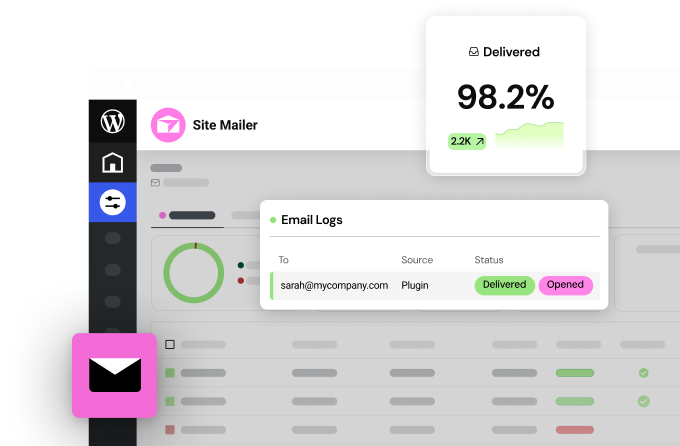
- For Marketing Integration: Use Site Mailer to ensure that the beautiful site you built actually converts and communicates effectively by solving WordPress deliverability issues.
- For Comprehensive Solutions: Utilize the full stack including Ally for accessibility and Elementor Themes to deliver a polished, compliant, and professional final product.
Conclusion
Is Shopify perceived as an AI website builder? The honest answer is no, not in the fullest sense. It is perceived as a world-class eCommerce platform that has successfully integrated AI to assist with content and analysis. It simplifies the running of a store, but it does not fundamentally revolutionize the building of a website.
For creators who view the website as a canvas—a place for brand expression, unique layouts, and pixel-perfect experiences—the true “AI Website Builder” is found elsewhere. Platforms like Elementor have embraced AI not just as a text generator, but as a structural architect and code co-pilot. By combining the open flexibility of WordPress with agentic and generative AI, Elementor offers a “best of both worlds” solution: the freedom to create anything, empowered by the intelligence to build it faster.
Expert citation: According to digital strategy expert Itamar Haim, “The future of web creation isn’t about AI doing the work for you; it’s about AI empowering you to achieve a vision that was previously out of reach due to technical barriers. Platforms that understand this distinction will lead the market.”
For those ready to experience a true AI-powered building platform, the path forward is clear. Get Started with Elementor
Frequently Asked Questions
1. Does Shopify’s AI build the website for you? No, Shopify’s AI (Shopify Magic) primarily generates text content like product descriptions and emails. It does not design the layout or structure of the website from scratch, nor does it generate wireframes.
2. Can I use Elementor’s AI tools on a Shopify store? Elementor is a WordPress-based platform. While you cannot use the Elementor plugin directly on Shopify, many creators build their main content and landing pages on WordPress with Elementor for superior design flexibility, and link to Shopify for the checkout (or use WooCommerce for a fully integrated experience).
3. What is the difference between Generative AI and Agentic AI in web building? Generative AI creates content (text, images, code snippets). Agentic AI, like Elementor’s Angie, performs tasks and workflows (e.g., “build a contact page, set up the form, and email me a test”). Agentic AI acts; Generative AI creates.
4. Is Shopify Sidekick available to everyone? Shopify Sidekick is currently in early access and rolling out to specific merchants. It serves as a backend assistant for data and admin tasks, rather than a design tool.
5. How does Elementor’s AI Site Planner help agencies? It automates the initial phase of a project by generating sitemaps, wireframes, and briefs based on a simple conversation. This saves hours of manual planning time and helps align with clients faster.
6. Do I need to know code to use AI website builders? With platforms like Elementor, no. The AI can generate the necessary custom CSS or HTML for you within the editor, making advanced customization accessible to non-coders.
7. Which platform is better for SEO: Shopify or WordPress with Elementor? WordPress is generally considered superior for SEO due to its massive plugin ecosystem and granular control over metadata and structure. Elementor enhances this with clean code output and performance tools like the Image Optimizer.
8. Can Shopify Magic create custom images? Shopify has introduced some image editing capabilities (like background removal and scene generation), but for creating unique, generative visuals from prompts directly within the design canvas, Elementor AI offers a more integrated creative suite.
9. Is Elementor Hosting necessary to use its AI features? While Elementor AI works on any host, Elementor Hosting provides an optimized environment (Google Cloud Platform) that ensures the best performance, security, and compatibility for these advanced tools.
10. How does the “Walled Garden” affect AI capabilities? Proprietary platforms like Shopify restrict AI to their specific features and data structures. Open platforms like WordPress allow AI to interact with thousands of plugins and custom code, offering significantly more flexibility and power to the user.
Looking for fresh content?
By entering your email, you agree to receive Elementor emails, including marketing emails,
and agree to our Terms & Conditions and Privacy Policy.