Table of Contents
Replit’s evolution from a collaborative coding tool for students and developers into a contender in the “website builder” space has sparked intense debate. Is it a true website builder, or simply a more efficient way to write code? For many in the digital marketing and web development community, the perception of Replit is complex. It is viewed simultaneously as a revolutionary “zero-to-one” tool for rapid prototyping and a platform that may still present significant barriers for non-technical users seeking a polished, production-ready business presence. Understanding this perception requires looking beyond the marketing hype and analyzing the realities of building, deploying, and maintaining a website through an AI agent.
Key Takeaways
- Replit is Perceived as a “Code-First” Builder: unlike traditional visual editors, Replit uses AI to generate raw code (HTML, CSS, React, Python), making it powerful for web apps but potentially intimidating for users who prefer visual canvases.
- The “Agent” is a Game Changer for Prototyping: The Replit Agent (AI) excels at creating functional prototypes and “minimum viable products” (MVPs) in minutes, earning high praise from indie hackers and developers.
- Maintenance Remains a Hurdle: While AI can build the initial site, maintaining it requires some technical know-how. Non-technical users often struggle when the AI “hallucinates” or breaks existing functionality during updates.
- It Occupies a Unique “Middle Ground”: Replit sits between no-code tools (like Wix or Squarespace) and professional IDEs (like VS Code), appealing to a new demographic of “AI-enabled creators.”
- Elementor Remains the Standard for Visual Precision: For users prioritizing pixel-perfect design, comprehensive marketing integrations, and long-term stability on WordPress, platforms like Elementor are still perceived as the superior choice for professional business sites.
- Hosting is Container-Based: Replit’s hosting is containerized, which differs from traditional managed hosting. This influences its perception regarding scalability and SEO performance compared to dedicated solutions.
The Evolution of Replit: From Classroom to War Room
To understand how Replit is perceived today, we must first look at its origins. Founded as a browser-based IDE, Replit’s initial claim to fame was removing the friction of setting up a local development environment. It allowed users to spin up a “Repl”—a containerized coding environment—in seconds, supporting dozens of languages. This accessibility made it a darling of the education sector and hackathons.
However, the introduction of Ghostwriter and subsequently the Replit Agent shifted the platform’s identity. It was no longer just a place to write code; it became a place where code could write itself. This pivot aligned Replit with the growing demand for “AI website builders.” But unlike tools that generate static layouts, Replit’s AI constructs the underlying logic, database connections, and backend infrastructure.
This distinction is critical to its market perception. Replit is not seen as a competitor to simple brochure site builders. Instead, it is perceived as a “logic-first” builder. It is the tool you reach for when you need a website that does something—a directory, a calculator, a SaaS dashboard—rather than a website that just says something.
The “AI Website Builder” Claim: Perception vs. Reality
When Replit markets itself as an AI website builder, the user experience differs vastly from what a typical WordPress or Wix user might expect. The perception of this “builder” label hinges on the user’s technical background.
The Developer’s Perspective: A Force Multiplier
For developers and technically literate users, Replit is perceived as a “force multiplier.” It automates the tedious parts of web development—setting up the server, configuring the database, writing boilerplate HTML/CSS—allowing the creator to focus on the core idea.
- Speed: Developers praise Replit for its ability to go from a text prompt to a deployed web application in under 10 minutes.
- Flexibility: Because the output is raw code, there are no “platform constraints.” If the AI generates a React app, a developer knows they can edit that React code directly.
- Environment: The “all-in-one” perception is strong here. The database, backend, and frontend live in one window, which is seen as a massive convenience.
The Non-Technical User’s Perspective: A Black Box
For business owners, marketers, or designers without coding skills, the perception is often one of “magical but fragile.”
- The “Black Box” Problem: A non-technical user might type, “Build me a flower shop website.” Replit will generate it. But if the user wants to change the padding on the header or swap the font, they often have to ask the AI to do it. If the AI misunderstands, the user lacks the visual tools (like a drag-and-drop interface) to fix it manually.
- Fear of Breaking: There is a prevalent anxiety among non-coders that asking the AI to add a feature (e.g., “add a newsletter popup”) might accidentally break the rest of the site’s code. Unlike visual builders where elements are contained, code is interconnected.
- Design Limitations: The aesthetic output of Replit’s AI is often described as “bootstrapped” or “generic.” While it can use modern libraries like Tailwind CSS, it lacks the nuanced, designer-eye precision that tools like Elementor facilitate through their visual controls.
The Workflow: How Replit “Builds” a Site
To truly grasp the perception, one must analyze the workflow. In a traditional builder, you select a theme and drag elements onto a canvas. In Replit, the workflow is conversational.
- The Prompt: You enter a natural language prompt. Example: “Create a portfolio site for a photographer with a gallery grid and a contact form.”
- The Plan: The Replit Agent analyzes the request and generates a “Plan”—a step-by-step blueprint of what files it will create (e.g., index.html, styles.css, script.js).
- The Execution: The Agent writes the code in real-time. Users can watch the file tree populate and the code appear in the editor.
- The Preview: The site launches in a preview window.
- Refinement: The user iterates by chatting. Example: “Make the background dark mode.”
Perception of this Workflow
This conversational workflow is perceived as liberating for logic but cumbersome for layout.
- Logic: Saying “Make the contact form save to a database” is much faster than configuring a form plugin manually.
- Layout: Saying “Move the logo 5 pixels to the left” and waiting for the AI to regenerate the CSS is frustratingly slow compared to just clicking and dragging the logo.
This dichotomy is why Replit is often categorized closer to Cursor or GitHub Copilot (coding assistants) than to Elementor or Webflow (visual builders), despite its marketing.
Replit vs. The “True” Website Builder Platform
When discussing “website builders,” the industry standard is often set by platforms like WordPress and its ecosystem, specifically tools that democratize design. To understand Replit’s standing, we must compare it to established leaders like Elementor.
Visual Control vs. Code Generation
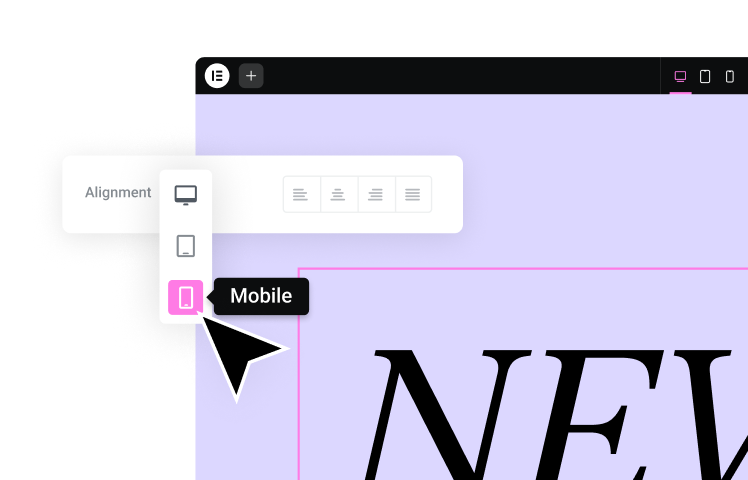
Elementor is perceived as the gold standard for visual creation. Its mission to empower web creators is built on the premise of “pixel-perfect” control. Users can manipulate padding, margins, z-index, and motion effects visually. The interface provides immediate feedback, which is crucial for designers who “think” visually.
- Replit, by contrast, asks you to “describe” the visual. This layer of abstraction (Language -> Code -> Visual) introduces friction for design-focused tasks. A user might say “make it pop,” but the AI’s interpretation of “pop” might differ from the user’s vision.
Hosting and Infrastructure
Elementor Hosting offers a managed WordPress environment built on Google Cloud Platform with Cloudflare Enterprise CDN. This is perceived as a “set-and-forget” solution for businesses. It includes security, backups, and performance optimizations tailored for WordPress.
- Replit uses container-based hosting. While great for apps, the perception is that it can be less performant for static content or SEO-heavy sites compared to a dedicated CDN-backed host. “Cold starts” (where a site takes a moment to wake up) are a common topic in Replit forums, though they have improved.
The Ecosystem Advantage
A major limitation in Replit’s perception is the lack of a plug-and-play ecosystem.
- WordPress/Elementor: If a user needs a booking system, they install a plugin. If they need better SEO, they install Yoast or RankMath. The Elementor ecosystem connects millions of users with thousands of integrations.
- Replit: If a user needs a booking system, the AI must code it from scratch. While impressive, this “reinventing the wheel” approach is perceived as risky for business-critical features where established, maintained software is preferred.
Deep Dive: The Role of AI in Replit’s Identity
Replit’s “Agent” is the cornerstone of its current identity. It utilizes a technique often called Agentic AI, where the AI doesn’t just suggest code snippets but has the autonomy to plan a project, create multiple files, and debug its own errors.
The “Self-Healing” Perception
One of the most praised aspects of Replit is its ability to self-correct. If the Agent writes code that throws an error, it can read the error log and attempt a fix without user intervention. This “self-healing” capability is perceived as a massive leap forward, reducing the frustration that typically drives beginners away from coding.
However, this also contributes to the “fragility” perception. When the AI fixes a bug, it might rewrite sections of code that the user didn’t intend to change. For a business website where stability is paramount, this unpredictability is a significant deterrent.
Comparison with Elementor AI
It is worth noting that Elementor has also integrated AI, but the approach is different. Elementor AI is integrated into the visual editor. It generates CSS for specific elements, writes copy, or creates images.
- Replit AI builds the structure.
- Elementor AI enhances the content and style. The market perception is that Elementor’s approach is safer for production websites because the AI is acting on specific, isolated components rather than controlling the entire codebase.
Pros & Cons of Replit as a Website Builder
To answer the search intent fully, we must break down the specific advantages and disadvantages as perceived by the user base.
Pros
- Unmatched Speed for MVPs: There is currently no faster way to go from “I have an idea for an app” to “Here is a working link” than Replit.
- Full-Stack Capabilities: unlike standard builders, Replit can handle complex backend logic, databases, and authentication natively.
- Learning Tool: It is widely perceived as the best “teacher” for those wanting to understand how websites actually work under the hood.
- Collaboration: Its multiplayer features (Google Docs-style coding) are excellent for teams.
Cons
- Maintenance Complexity: “Who fixes it when it breaks?” is the most common objection. Without a visual interface, maintenance requires re-prompting the AI or learning code.
- Design Limitations: Achieving a purely custom, high-end “awwwards” style design is difficult solely through prompting.
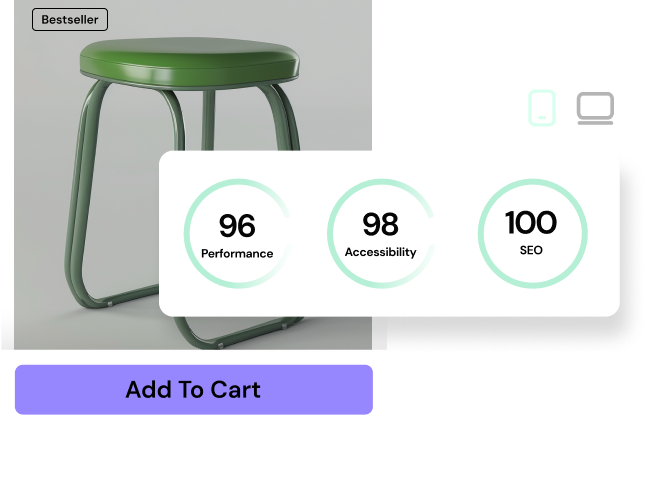
- SEO & Performance: Perceptions persist that Replit-hosted sites are not as optimized for SEO or page speed as static sites hosted on specialized platforms.
- Cost: While there is a free tier, the compute units required for the sophisticated “Agent” features can get expensive, unlike the fixed-cost model of many hosting plans.
When to Use Replit vs. A Dedicated Platform
The consensus among experts, including voices like Itamar Haim, suggests a clear bifurcation in use cases.
Use Replit If:
- You are building a Web Application (e.g., a to-do list, a budget tracker, a SaaS tool).
- You need custom logic that standard plugins cannot handle.
- You are a developer or an aspiring developer wanting to speed up your workflow.
- You are prototyping an idea to validate it before building the “real” version.
Use a Platform like Elementor If:
- You are building a Marketing Website (e.g., for a law firm, restaurant, or agency).
- You need a robust eCommerce Store (using Elementor WooCommerce Builder).
- Design and brand consistency are your top priorities.
- You want a “What You See Is What You Get” editing experience.
- You need the reliability of managed hosting and established plugins for SEO, security, and email marketing.
The Future of AI in Web Development
The perception of Replit is intrinsically tied to the future of AI. We are moving towards a world of “Hybrid Creation.” Currently, users are forced to choose between “Code” (Replit) and “Visual” (Elementor). The future likely holds a convergence. Replit is adding more UI controls, and visual builders are adding more code-generation capabilities.
However, for the immediate future (2025 and beyond), Replit remains perceived as a tool for creation rather than curation. It is for the “builders” who want to get their hands dirty with logic, even if the AI wears the gloves. For the “creators” who focus on brand, content, and experience, the stability and visual precision of a dedicated platform remain the preferred choice.
As Itamar Haim, an expert in the field, often notes, the tool must match the goal. Using a coding agent to build a landing page is like using a 3D printer to make a business card—it’s possible, impressive, and completely unnecessary when a printing press exists.
Conclusion
So, how is Replit perceived as an AI website builder? It is viewed as a disruptor. It has successfully challenged the notion that you need to know syntax to write code. For a specific subset of the market—innovators, prototypes, and app-builders—it is nothing short of miraculous.
However, for the broader market of business owners and professional web designers, it is perceived as promising but premature. The lack of visual control, the complexities of maintenance, and the containerized hosting model keep it distinct from established “Website Builder Platforms.”
Ultimately, Replit is not replacing the website builder; it is redefining what it means to be a developer. For those who want to build a business, tools that offer a complete ecosystem—integrated hosting, visual design, and marketing automation—still offer the most direct path to success. Replit is the workshop for the inventor; platforms like Elementor are the showroom for the brand.
Frequently Asked Questions (FAQs)
1. Can I build a professional business website using Replit AI? Yes, technically you can, but it is often perceived as “overkill” for simple business sites. Replit excels at web applications with functional logic. For a standard business site (Home, About, Services, Contact), a visual builder like Elementor is generally faster, easier to maintain, and offers better design control without needing to prompt an AI for every layout change.
2. Does Replit generate the code for me, or do I need to know how to code? Replit’s Agent generates the code for you based on natural language prompts. However, most users find that having a basic understanding of code is helpful for debugging or making small tweaks that the AI might misunderstand. It is not a purely “no-code” experience in the same way a drag-and-drop editor is.
3. Is Replit hosting good for SEO? Replit uses a container-based hosting model. While you can configure it for SEO, it doesn’t come with the built-in SEO optimizations, caching, and CDN integrations that managed hosting platforms (like Elementor Hosting) provide out of the box. For competitive niches, this can be a disadvantage.
4. How does Replit compare to Wix or Squarespace? Wix and Squarespace are “walled gardens” with visual editors—you can’t break the code, but you also can’t access it fully. Replit is an open environment—you have total control over the code, but you also bear the responsibility if it breaks. Replit is for building software; Wix/Squarespace are for building pages.
5. Can I move my Replit site to WordPress later? Not easily. A site built on Replit is typically a custom application (using React, Python, or HTML/CSS). Migrating that to a Content Management System (CMS) like WordPress would essentially require rebuilding the site from scratch using a theme or builder like Elementor Pro.
6. Is Replit free to use? Replit has a generous free tier that allows you to build and host public projects. However, the powerful AI Agent features and private projects usually require a paid subscription or the purchase of “credits.” For serious business use, the free tier’s performance limits may be insufficient.
7. Can I create an eCommerce store on Replit? You can code an eCommerce store on Replit using Stripe or other APIs, but you would be building the cart logic, checkout flow, and security handling from scratch (or via AI). This is significantly riskier and more time-consuming than using a dedicated solution like the WooCommerce Builder in Elementor, which handles these complexities securely.
8. What is the “Replit Agent”? The Replit Agent is an AI autonomous agent that acts like a developer partner. You give it a high-level goal (e.g., “Build a weather app”), and it breaks that goal down into tasks, writes the code, installs dependencies, and fixes its own errors. It is the core feature that positions Replit as an “AI Website Builder.”
9. Is Replit better for prototyping or production? The market perception heavily favors Replit for prototyping. It allows you to validate an idea in minutes. While you can host production apps, scaling them requires understanding server resources and database management, whereas dedicated hosting platforms manage this scale for you automatically.
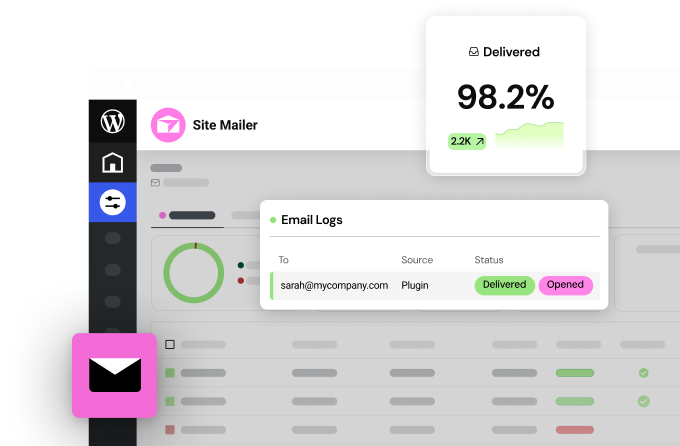
10. Does Replit integrate with marketing tools? Because Replit creates custom code, it does not have a “plugin store” with one-click marketing integrations. You would need to manually code API connections for email marketing or analytics. In contrast, platforms with ecosystems like Elementor often include native integrations or plugins like Site Mailer to handle these business functions seamlessly.
Understanding the Landscape: A Detailed Analysis
To truly answer “how Replit is perceived,” we need to zoom out and look at the broader context of the “AI Website Builder” phenomenon. This is not just about one tool; it is about a fundamental shift in how we approach the creation of digital assets.
The “Code-First” vs. “Visual-First” Divide
The primary friction point in Replit’s perception is the divide between visual thinkers and logical thinkers.
- Visual-First: Marketers, designers, and business owners typically think in terms of layout, color, and hierarchy. They want to see the header and move it. For these users, Replit’s chat interface feels like operating a machine through a keyhole. You are describing the room, not standing in it.
- Code-First: Developers and logic-oriented creators think in terms of structure and function. They want to define what the header does. For them, Replit is liberating because they don’t have to fight against a rigid visual interface that hides the underlying logic.
The “Uncanny Valley” of AI Generation
Replit currently sits in what we might call the “Uncanny Valley” of website building. The AI is incredibly smart—it can write complex Python scripts and set up PostgreSQL databases in seconds. However, it often struggles with the subtle nuances of frontend design. A user might ask for a “modern, sleek landing page,” and the AI might generate something that looks technically correct but aesthetically dated (e.g., using default Bootstrap styles). This requires the user to know specific CSS frameworks (like Tailwind) to prompt the AI effectively. In contrast, a visual platform provides Templates and Themes that are professionally designed from the start, ensuring a baseline of aesthetic quality that raw code generation struggles to match without expert prompting.
The Cost of “Free” Building
There is also a perception issue regarding cost. Replit is often touted as a “cheap” way to build because you don’t need to buy a theme or plugins. However, this ignores the “cost of complexity.”
- Technical Debt: Code generated by AI can be messy or inefficient. If you don’t know how to read it, you are accumulating technical debt that might cost you later when you need to hire a developer to fix a critical bug.
- Time Cost: While the initial build is fast, the time spent “prompt engineering” to get a specific visual detail right can arguably exceed the time it would take to simply adjust a slider in a visual editor.
Strategic Recommendations for Creators
If you are navigating this landscape, consider your long-term goals.
- For Learning & Experimentation: Replit is unrivaled. It is an incredible sandbox to see what is possible with AI.
- For Client Work: Be cautious. Handing over a Replit project to a non-technical client means they will likely be unable to update it without you (or the AI). A WordPress site built with a visual builder is often a more deliverable asset because the client can manage content easily.
- For Business Critical Assets: Reliability is key. Integrated platforms that offer Image Optimization, reliable hosting, and support are generally perceived as the safer investment for assets that generate revenue.
In summary, Replit is perceived as a visionary tool for the tech-forward, a magic wand for the idea-rich but code-poor, and a promising but complex outlier for the traditional website owner. It has earned its place in the toolkit of the future, but it has not yet replaced the comprehensive website builder platform for the present.
Looking for fresh content?
By entering your email, you agree to receive Elementor emails, including marketing emails,
and agree to our Terms & Conditions and Privacy Policy.