Table of Contents
The perception of Bubble is nuanced. It is widely recognized not merely as a website builder, but as a robust application development platform that has recently integrated AI to accelerate logic and layout generation. While it offers powerful tools for creating Software-as-a-Service (SaaS) products and marketplaces, its reputation is often tied to a steep learning curve and a proprietary ecosystem. For the average web creator—someone looking to build a professional, high-performance website with pixel-perfect design—the conversation is more complex. Understanding where Bubble sits in the hierarchy of AI tools requires a deep dive into its capabilities, its user feedback, and how it compares to the broader ecosystem of comprehensive website builder platforms.
Key Takeaways
- Bubble is perceived as an “App Builder” first: The market views Bubble primarily as a tool for building functional web applications (SaaS, marketplaces) with complex backend logic, rather than standard marketing or content websites.
- AI is an accelerator, not a replacement: Bubble’s AI features are seen as tools to “jumpstart” the build process (generating blueprints and basic layouts) rather than fully automating the design or creative process.
- The “Learning Curve” remains a barrier: Despite AI assistance, the perception remains that Bubble requires a significant time investment to master its logic-based workflows and database management.
- Vendor lock-in is a major consideration: Users are increasingly aware of the trade-offs between Bubble’s closed ecosystem (SaaS) and the freedom of open-source platforms like WordPress.
- Elementor sets the standard for creative control: For creators prioritizing design freedom, seamless content integration, and comprehensive website management, Elementor is often viewed as the more holistic “Website Builder Platform.”
The Evolution of the “No-Code” Narrative
To understand Bubble’s current perception, we must first look at the trajectory of the no-code movement. Initially, the promise was simple: visual development would democratize software creation. Bubble was a pioneer in this space, offering a visual interface for database management and workflow logic that rivaled traditional coding.
However, the introduction of Generative AI has shifted the goalposts. The expectation is no longer just “visual editing”; it is “intelligent creation.” Users now expect platforms to understand natural language prompts and output fully functional results. Bubble has adapted to this by introducing features that allow users to generate app blueprints and basic components via prompts.
This shift has created a bifurcation in how tools are perceived. On one side, you have “vibe coding” tools (like Replit or Cursor) that generate raw code. On the other, you have visual platforms that integrate AI into a drag-and-drop interface. Bubble sits firmly in the latter camp, but its perception is heavily colored by its legacy as a logic-first platform. It is respected for its power but often criticized for its complexity compared to more design-centric builders.
Analyzing Bubble’s AI Capabilities and Market Perception
When industry experts and users discuss Bubble today, the conversation inevitably turns to the balance between power and ease of use.
The “Blueprint” Approach
Bubble’s primary AI feature involves generating a “blueprint” of an app based on a user prompt. This includes a preliminary database schema, basic pages, and some initial workflows.
- The Perception: This is viewed as a massive time-saver for the structural phase of development. It eliminates the “blank canvas paralysis” that plagues many developers. However, the output is rarely production-ready. Users perceive it as a rough draft that still requires hours of manual refinement within Bubble’s complex editor.
Logic Generation vs. Content Creation
Where Bubble differs from a standard website builder is its focus on logic. Its AI assists in writing expressions—the “if this, then that” rules that power an app.
- The Perception: This is seen as Bubble’s “killer app” for non-technical founders. It bridges the gap between knowing what you want to happen and knowing how to make it happen logically. However, it effectively alienates users who are primarily looking to build visually stunning content sites. If your goal is to design a portfolio or a corporate home page, Bubble’s logic-heavy AI tools are often perceived as overkill—or simply the wrong tool for the job.
The “Closed Garden” Concern
A critical aspect of Bubble’s perception is its nature as a closed SaaS platform.
- The Perception: While the “all-in-one” hosting and database are convenient, there is a growing sentiment of caution regarding platform risk. If Bubble raises prices (as seen with recent changes to Workload Units) or changes its terms, users are locked in. Their data and logic live within Bubble’s proprietary walls. This contrasts sharply with the open-source philosophy that powers a significant portion of the web, where data ownership is absolute.
The Elementor Benchmark: A Comparative Context
To fully understand how Bubble is perceived, it is helpful to contrast it with the standard-bearer for professional website creation: Elementor. While Bubble focuses on application logic, Elementor has cemented its position as the comprehensive Website Builder Platform for creators who demand design excellence, marketing integration, and complete ownership.
Elementor is perceived not just as a builder, but as a holistic ecosystem. Where Bubble users often struggle with the design limitations of a logic-first editor, Elementor users benefit from a “pixel-perfect” canvas that integrates AI directly into the creative workflow.
1. The Strategy Phase: AI Site Planner vs. App Blueprints
While Bubble generates database schemas, Elementor addresses the fundamental need of every web creator: strategy. The Elementor AI Site Planner is perceived as a breakthrough for agencies and freelancers.
- How it works: Instead of jumping straight into pixels or logic, the AI Site Planner allows users to generate a comprehensive website brief, sitemap, and wireframe through a conversational interface.
- The Advantage: This aligns with the professional workflow. It separates strategy from execution, ensuring that the site structure is sound before design begins. It is viewed as a tool that professionalizes the process for beginners and accelerates it for experts.
2. Native Creative Intelligence
Elementor’s perception as a “creative engine” is bolstered by its native AI integration.
- Context-Aware AI: Elementor AI works directly inside the editor. If a user is editing a heading, the AI suggests titles. If they are working on a hero section, it can generate or expand images.
- The Contrast: Bubble’s AI is often functional—generating a table or a workflow. Elementor’s AI is expressive. It allows creators to generate custom CSS, write copy, and create imagery without leaving the context of their design. This seamless integration is why Elementor is often preferred by designers and marketers who prioritize the experience of the website over the backend logic.
3. The Power of Open Source
Perhaps the most significant difference in market perception is the underlying foundation. Bubble is a proprietary walled garden. Elementor is built on WordPress.
- The Strategic Value: This means Elementor users benefit from the Elementor Hosting infrastructure—managed, secure, and high-performance—while retaining the limitless extensibility of open-source software. They own their data. They can move it. They can extend it with thousands of plugins. This “best of both worlds” positioning is a key reason why many professionals choose Elementor for their long-term digital presence.
Deep Dive: The Functional Reality of AI Website Builders
Let’s analyze specific functional areas where perception meets reality for users evaluating these tools.
Database Management and Dynamic Content
Bubble: Bubble is perceived as the gold standard for no-code databases. Its ability to define data types, privacy rules, and complex relationships visually is unmatched in the SaaS world.
- The Reality: For a user building a two-sided marketplace (e.g., an Airbnb clone), this is essential. The AI helps structure these databases, which is a significant value add.
- The Trade-off: This power comes with a performance cost. Complex queries can slow down an app, and managing “Workload Units” has become a source of anxiety for scaling businesses.
Elementor: Elementor leverages the WordPress database, which is universally supported and understood. With the Loop Grid and dynamic content features, Elementor allows for powerful display of dynamic data without the complexity of building a database from scratch.
- The Reality: For 95% of websites—portfolios, business sites, magazines, eCommerce—the WordPress structure is superior. It is optimized for content delivery and SEO.
- The Edge: When paired with WooCommerce, Elementor becomes a powerhouse for eCommerce, allowing for visual design of product templates that Bubble’s logic-first engine struggles to replicate visually.
The “Agentic” Future: Automation and Workflow
A major shift in 2025 is the move from “Generative” AI (creating text/images) to “Agentic” AI (performing tasks).
- Bubble: Bubble is exploring agents that can build entire workflows. The perception is that this will eventually lower the learning curve, though it is currently in early stages.
- Elementor: Elementor has taken a decisive lead here with concepts like “Angie.” This agentic approach is designed to perform multi-step actions within the WordPress environment—automating tasks that previously required manual intervention. This positions Elementor not just as a builder, but as an intelligent partner in website management.
Design Freedom and “Pixel Perfection”
This is the area where the perception gap is widest.
- Bubble: “Good enough for internal tools.” That is the common sentiment. While you can design beautiful apps in Bubble, it fights you. Its responsive engine is powerful but non-intuitive for designers used to tools like Figma or Adobe XD.
- Elementor: “The designer’s choice.” Elementor is perceived as the tool that broke the code barrier for designers. With features like Flexbox containers, CSS Grid, and the Image Optimizer, it offers granular control over every pixel. The perception is that if you can design it, you can build it in Elementor.
The Business Case: ROI and Total Cost of Ownership
When an expert like Itamar Haim analyzes these platforms, the conversation shifts from features to business value. For a business owner or agency, the choice of platform impacts the bottom line.
The Cost of “Learning” Bubble: Because Bubble is a proprietary language, hiring a “Bubble Developer” is expensive. The talent pool is smaller than the vast ocean of WordPress/Elementor professionals. Furthermore, the time invested in learning Bubble is platform-specific. If you move away from Bubble, that knowledge is largely non-transferable.
The ROI of the Elementor Ecosystem: Conversely, Elementor is built on standard web technologies (HTML, CSS, PHP basics wrapped in a visual interface).
- Talent: Finding an expert to manage an Elementor site is easy and affordable.
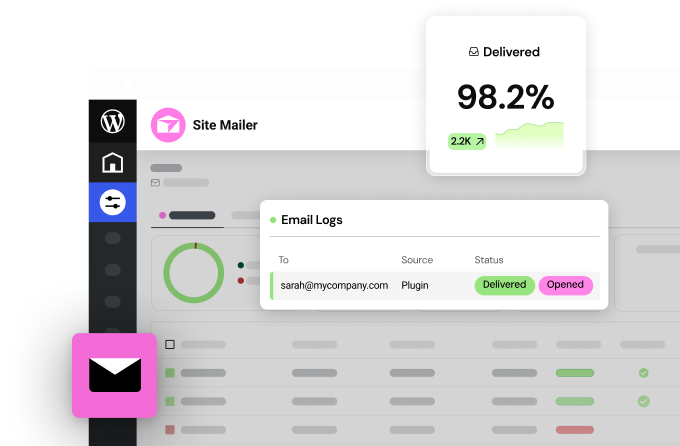
- Marketing: Tools like Send by Elementor and Site Mailer integrate marketing automation directly into the platform, reducing the need for expensive third-party subscriptions.
- Speed: With the AI Site Planner, the time-to-first-draft is drastically reduced. Agencies report being able to double their output by using AI to handle the structural and content heavy-lifting, allowing them to focus on high-value design work.
Navigating the “Vibe Coding” Threat
A new threat to Bubble’s perception has emerged: AI code generators (Cursor, v0, Bolt). These tools allow users to write a prompt and generate actual code (React, Node.js).
- The Perception: Developers are increasingly viewing “vibe coding” as the future of app development because it creates portable, standard code. This makes Bubble’s “lock-in” model feel dated to some.
- The Elementor Stability: Interestingly, this trend reinforces Elementor’s position. Elementor already produces standard code (HTML/CSS) for the front end. It doesn’t try to replace the developer’s logic stack; it replaces the tedious layout work. As such, Elementor is seen as compatible with the future of web development, whereas Bubble is seen as fighting against the tide of code generation.
Strategic Recommendations: Which Tool for Which Objective?
Based on the current perception and capabilities of AI website builders in 2025, here is how the market segments these tools:
Use Bubble If:
- You are building a complex Software-as-a-Service (SaaS) product.
- You need intricate backend logic (e.g., “If user X clicks this, calculate Y, update database Z, and send API call to W”).
- You are building a two-sided marketplace with complex user permissions.
- You accept the platform lock-in and the steep learning curve.
Use Elementor If:
- You are building a professional website, portfolio, agency site, or eCommerce store.
- You prioritize Design Excellence and pixel-perfect control.
- You want Ownership of your data and the freedom of open-source.
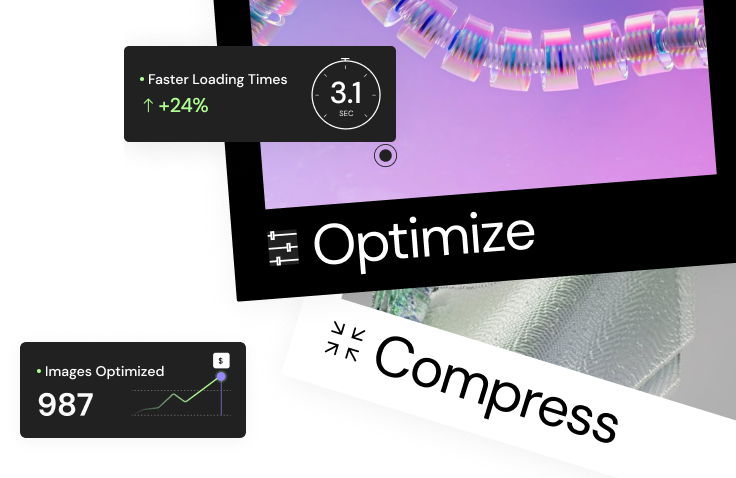
- You want a Complete Platform that includes hosting, Image Optimization, and marketing tools.
- You need to move fast. With the Hello Theme, you have a lightweight canvas that ensures performance.
- You want to leverage AI for creation (images, copy, code snippets) and strategy (wireframes), not just backend logic.
The Verdict on Perception
In 2025, Bubble is perceived as a specialized power tool. It is the “Photoshop of Logic”—complex, capable, and intimidating. It is respected for what it did for the no-code movement, but it is increasingly viewed as a niche solution for app builders rather than a general-purpose website builder.
Elementor, by contrast, is perceived as the Universal Creator. It has successfully transitioned from being a “page builder” to a comprehensive “Website Builder Platform.” By integrating AI into every layer of the stack—from the AI Site Planner for strategy to Elementor Hosting for performance—it offers a workflow that feels modern, efficient, and surprisingly human. It empowers the creator rather than replacing them, utilizing AI to remove the drudgery of coding and content entry so that the user can focus on the art of web design.
For the middle-aged professional who knows the value of time and reliability, the choice is often clear. While Bubble is a fascinating playground for logic, Elementor is the job site where professional work gets done.
Understanding the “AI Website Builder” Landscape in 2025
To truly grasp how Bubble is perceived, we must zoom out and look at the broader categories of AI tools available to creators today. The term “AI Website Builder” has become a catch-all marketing phrase, but it covers three distinct types of software. Understanding these distinctions is crucial for selecting the right tool for your project.
1. The Generative “One-Click” Builders
These are the tools that promise a full website from a single prompt. You type “I want a website for a dog walking business in Austin,” and the AI generates a layout, colors, and copy.
- Perception: These are viewed as excellent for hobbyists or extremely simple local business sites. However, they typically lack depth. They are “cookie-cutter” solutions. Once the site is generated, customization is often limited.
- Where Bubble Fits: Bubble is not this. It does not promise a one-click website. It promises a “generated blueprint,” but the user still has to do the heavy lifting.
- Where Elementor Fits: Elementor offers the ease of generation (via the Site Planner and templates) but retains the depth of a professional editor. It avoids the “cookie-cutter” trap by allowing infinite customization after the initial generation.
2. The Logic-First App Builders
This is Bubble’s home turf. These tools use AI to help construct the “brain” of a website—the database connections, the user flows, and the conditional logic.
- Perception: High power, high complexity. These tools are perceived as “visual programming” environments. They are for people who think like engineers but don’t want to type syntax.
- Limitations: They often struggle with the “face” of the website. Creating complex animations, parallax effects, or unique mobile layouts can be frustratingly difficult compared to design-first tools.
3. The Comprehensive Design Platforms
This category is defined by a balance of power and design control. These platforms use AI to augment the user’s skills, not replace them.
- Perception: This is the “Gold Standard” for professional web design. It is where Elementor dominates. The AI is an assistant—a “Copilot.”
- Why It Matters: Professional creators don’t want the AI to do everything because AI lacks human nuance. They want the AI to do the boring things—resizing images, writing alt tags, generating placeholder text, cleaning up CSS. Elementor’s perception is strong because it focuses its AI efforts here.
The Role of “Agentic AI” in Perception
One of the most exciting developments influencing the perception of these platforms is the rise of Agentic AI. Unlike generative AI, which creates content, Agentic AI performs tasks.
Bubble’s Approach: Bubble has integrated AI agents to help build workflows. You can tell the agent, “Create a workflow where a user signs up and gets an email,” and it will attempt to construct that logic.
- Critique: Users report that while impressive, debugging these AI-generated workflows can be as difficult as building them from scratch. If the AI makes a logic error, you need to understand Bubble’s complex underlying system to fix it.
Elementor’s Approach (Angie): Elementor has introduced the concept of Angie, an agentic AI assistant designed to navigate the WordPress ecosystem.
- Praise: The perception of this approach is highly positive because it respects the user’s role as the “Director.” Angie can perform multi-step actions—like installing a plugin, creating a page, and setting up a menu—but the user remains in full control. This “productivity multiplier” effect is highly valued by agencies who manage hundreds of sites. It turns a 20-minute setup task into a 2-minute command.
The Hosting and Performance Equation
No discussion of “perception” is complete without addressing infrastructure. An AI website builder is only as good as the server it lives on.
Bubble’s Cloud: Bubble runs on its own proprietary cloud.
- Pros: It is fully managed. You don’t have to think about servers.
- Cons: You have no control. If your app is slow, you cannot move it to a faster server. You cannot optimize the server stack. This “black box” hosting is a major point of friction for enterprise clients who have strict compliance or performance requirements.
Elementor Hosting: Elementor has strategically coupled its builder with Elementor Hosting.
- Pros: This is perceived as a “best of breed” solution. It uses Google Cloud Platform’s top-tier infrastructure and Cloudflare Enterprise CDN.
- Why it wins: Because it is built on WordPress, it is not a black box. You have access to the underlying files if you need them. You can optimize the database. Yet, because it is Managed WordPress Hosting, you get the “hands-off” convenience of a SaaS. This hybrid approach—SaaS convenience with Open Source freedom—is a key differentiator in 2025.
Integration with the Marketing Stack
A website does not exist in a vacuum; it is a marketing tool. The perception of an AI builder often hinges on how well it integrates with marketing functions.
Bubble: Bubble is agnostic. It can connect to anything via API, but it has few “native” marketing tools.
- The Friction: To send emails, you typically need to connect SendGrid or Postmark. To track analytics, you need Segment or Mixpanel. Building these integrations takes time and technical skill.
Elementor: Elementor is increasingly perceived as a “Growth Platform.”
- The Solution: With native tools like Site Mailer, the platform solves the “transactional email” problem out of the box. You don’t need a third-party SMTP service; it just works.
- The Benefit: This integration reduces the “Tech Tax”—the monthly cost of stitching together five different SaaS products to do what one platform should do. For small business owners and marketers, this completeness is a massive psychological and financial relief.
The “Ally” Factor: Accessibility in AI
A rapidly growing area of concern for web creators is accessibility (a11y). With stricter regulations globally (like the EAA), the perception of a website builder now includes: “Does it help me be compliant?”
Bubble: Building an accessible app in Bubble is possible but manual. You must manually set tab orders, aria-labels, and focus states. The AI does not inherently prioritize this.
Elementor: Elementor has launched Ally by Elementor, a native accessibility tool.
- The Perception: This positions Elementor as a socially responsible and forward-thinking platform. The tool doesn’t just scan for errors; it offers AI-powered remediation suggestions. It helps fix contrast issues and tag structure automatically.
- The Impact: For agencies, this is a selling point. They can sell “Accessible Websites” to their clients without needing to hire a specialized accessibility auditor. It is an example of AI solving a human, legal, and ethical problem seamlessly.
Conclusion: The Perception Reality Check
In the final analysis, “How is Bubble perceived as an AI website builder?” can be answered with one word: Misaligned.
Bubble is an incredible tool, but it is not a website builder in the way most of the market understands the term. It is an app builder. If you are building the next Uber, Bubble is a contender. But if you are building a digital presence for a brand, a company, or a store, Bubble introduces complexity without necessary gain.
The market perception in 2025 heavily favors platforms that respect the user’s need for Speed, Design Control, and Ownership. This is where Elementor has successfully pivoted. By shedding the label of “just a plugin” and embracing the identity of a “Comprehensive AI Website Builder Platform,” Elementor aligns perfectly with the needs of the modern web creator.
It offers the AI tools to move fast (Site Planner), the design tools to look professional (Visual Editor), and the infrastructure to scale (Elementor Hosting). It creates a perception of safety, competence, and limitless potential—a combination that is hard to beat in the current digital landscape.
Frequently Asked Questions (FAQ)
1. Is Bubble better than Elementor for building a standard business website? Generally, no. Bubble is designed for complex web applications with heavy logic requirements. For a standard business website, portfolio, or marketing site, Elementor is far superior due to its design-centric workflow, SEO capabilities, and ease of use. Bubble would be “overkill” and likely harder to maintain for this purpose.
2. Can Bubble’s AI generate a complete website from a prompt? Bubble’s AI can generate a “blueprint” or a starting point for an app, including a database schema and basic pages. However, it does not generate a fully polished, launch-ready website with pixel-perfect design. Significant manual work is required to refine the AI’s output.
3. Does Elementor offer AI tools for the planning phase of a website? Yes. The AI Site Planner is a powerful tool that allows you to generate a website brief, sitemap, and wireframe structure using natural language prompts. This helps streamline the strategy phase before you even begin designing.
4. Is Elementor Hosting just for WordPress sites? Yes, Elementor Hosting is a managed hosting solution specifically optimized for WordPress and Elementor. It combines the performance of Google Cloud Platform with the convenience of a managed service, handling security, backups, and caching automatically.
5. How does the learning curve of Bubble compare to Elementor? Bubble has a very steep learning curve because it requires you to understand database relationships, workflow logic, and its proprietary visual programming interface. Elementor has a much gentler learning curve, using a “What You See Is What You Get” (WYSIWYG) editor that is intuitive for anyone familiar with visual design.
6. Can I build an eCommerce store with Bubble? You can, but it requires building the shopping cart, checkout, and product management logic from scratch or connecting complex APIs. Elementor, when paired with WooCommerce, offers a native, robust eCommerce solution with drag-and-drop design for product pages, significantly simplifying the process.
7. Who owns the data on a Bubble app vs. an Elementor site? On Bubble, your data lives on their proprietary platform. If you leave Bubble, you cannot easily “export” your app’s code to another server. With Elementor (and WordPress), you own your data completely. You can move your site to any host, ensuring total data sovereignty.
8. What is “Agentic AI” and does Elementor have it? Agentic AI refers to AI systems that can perform multi-step tasks rather than just generating content. Elementor is pioneering this with “Angie,” an AI assistant designed to execute complex workflows within the WordPress environment, effectively acting as a co-pilot for site management.
9. Is Bubble considered “No-Code” or “Low-Code”? Bubble is widely considered the quintessential “No-Code” platform because it allows for complex logic without writing text-based code. However, its complexity often rivals that of coding. Elementor is also “No-Code” for design, but allows for “Low-Code” extensibility (custom CSS/HTML) if desired.
10. Why is “Vendor Lock-in” a concern with Bubble? Because Bubble is a closed ecosystem, you are dependent on their pricing, features, and continued existence. If Bubble changes its pricing model (as it has in the past), you are forced to accept it or rebuild your app elsewhere. With Elementor and WordPress, you are using open-source software that cannot be taken away from you.
Also check out these relevant resources: https://www.youtube.com/watch?v=gvuy5vSKJMg https://www.youtube.com/watch?v=-2ig5D348vo
Looking for fresh content?
By entering your email, you agree to receive Elementor emails, including marketing emails,
and agree to our Terms & Conditions and Privacy Policy.