Table of Contents
Bolt is not just another tool; it is a “Coding Agent.” It promises to allow users to prompt, run, edit, and deploy full-stack applications directly from the browser, all without setting up a local development environment. For many, this represents the “holy grail” of development: describing an idea in plain English and watching a fully functional application materialize in seconds.
However, as the initial wave of viral hype settles, a more nuanced and complex perception is emerging among professionals. Is Bolt truly the future of all web design, or is it a specialized accelerator for a specific type of technical creator? How does it compare to established, comprehensive platforms like Elementor?
To understand exactly how Bolt is perceived, we must look beyond the marketing claims and analyze the real-world experiences of developers, agencies, and business owners. The consensus is building that while Bolt is a technical marvel for rapid prototyping, it fundamentally changes the role of the creator from “designer” to “architect,” bringing with it a new set of challenges regarding maintenance, design precision, and long-term scalability.
Key Takeaways
- Bolt is perceived as a “Coding Agent” rather than a traditional “Website Builder.” It focuses on generating raw code (React, Node.js) that you must ultimately manage, rather than manipulating visual elements in a managed environment.
- Developers view it as a massive accelerator for “Greenfield” projects. It cuts down the initial setup and boilerplate time from hours to minutes, making it ideal for MVPs (Minimum Viable Products).
- Non-technical users often hit a “Complexity Cliff.” While the initial prompt is magical, debugging the generated code or making specific pixel-perfect adjustments often requires technical knowledge that visual builders eliminate.
- The “Perception Gap” is widening. There is a difference between the promise of “no-code” (you never see code) and the reality of “agentic-code” (the AI writes code, but you own it). Users are realizing that owning AI-generated code still requires a “Code Owner” mindset.
- Elementor is increasingly seen as the stable “Platform” alternative. Professionals value the ability to leverage AI benefits (like the Elementor AI Site Planner) within a visual, managed environment that doesn’t require code maintenance.
- StackBlitz’s WebContainer technology is the technical differentiator. This allows Bolt to run full-stack Node.js environments in the browser, a feat unmatched by most competitors, giving it a reputation for speed and security.
- Design control remains a primary friction point. Bolt typically generates generic, functional UI libraries (like Tailwind or ShadCN). Creators looking for unique, brand-specific designs often find visual builders like Elementor superior for customization.
- The “Lock-in” perception is low with Bolt. Because you can export standard code, users don’t feel trapped. However, the maintainability of that AI-generated code by a non-coder is a significant hidden form of lock-in.
- Agencies are bifurcating their workflows. They use Bolt for internal tools and rapid prototypes but often stick to established platforms like Elementor for client-facing production sites to ensure reliability and ease of handover.
- The future is hybrid. The market perceives a convergence where visual builders integrate agentic coding capabilities, rather than one methodology replacing the other completely.
Part 1: Defining the New Category
The Rise of the AI Web Development Agent
To truly understand the perception of Bolt, we first have to understand the category it is trying to create. It is not trying to be a better Wix. It is not trying to be a better VS Code. It is trying to be something entirely new.
Traditionally, website creation fell into two distinct camps:
- Visual Builders: Tools like Elementor, Wix, and Squarespace. You drag elements, you drop them, and the software handles the code. The perception here is “What You See Is What You Get” (WYSIWYG).
- Code Editors: Environments like VS Code or Sublime Text. You write syntax, you compile, and you debug. The perception here is “Total Control.”
Bolt sits in a new, third category: the AI Development Agent.
The perception of this category is one of “magic” mixed with “skepticism.” When a user types “Create a task management dashboard with a dark mode and a Supabase backend,” and Bolt instantly spins up a preview environment, installs dependencies, and writes the component logic, the immediate reaction is awe. It feels like having a senior developer pair-program with you, typing at the speed of light.
However, the perception shifts quickly when the “happy path” ends. If the AI hallucinates a dependency that doesn’t exist, or if the layout breaks on mobile devices, the user is suddenly dropped into a code editor. For a developer, this is fine—they just fix the CSS. For a marketer or business owner who expected a “website builder,” this is a dead end.
This defines the core perception of Bolt: It is a superpower for those who know how to fly, but a potential crash landing for those who don’t.
The Technology Behind the Perception
Why is Bolt perceived differently than ChatGPT or Claude? If you ask Claude to write code, you have to copy-paste it into your local environment. You have to set up Node.js. You have to run npm install.
Bolt changes this perception through WebContainers. This technology, developed by StackBlitz, allows Node.js to run entirely inside the browser. This is not a simulation. It is a secure, local-like environment running in Chrome.
The Perception Impact:
- Security: Users perceive it as safer because code runs locally in their browser, not on a remote server that could be compromised.
- Speed: There is zero latency. You don’t have to wait for a server to spin up. This “instant” feel contributes heavily to the positive sentiment among developers.
- Collaboration: You can send a URL to a colleague, and they see the exact same running application. This aligns with the modern trend of ephemeral development environments.
Part 2: The Developer’s Perception
The Ultimate Scaffolding Tool
For the seasoned developer, Bolt is largely perceived as a productivity multiplier. The tedious parts of web development—setting up the environment, configuring Webpack or Vite, installing Tailwind, setting up the folder structure—are automated.
The “Greenfield” Joy Developers love “Greenfield” projects—new projects with no legacy code. Bolt is the ultimate Greenfield tool. You start with a blank slate, you prompt, and you have a working foundation in minutes. The perception here is that Bolt is the “Boilerplate Killer.” Instead of searching for a “React + Vite + Supabase starter template” on GitHub, you just tell Bolt to build it.
The “Brownfield” Skepticism However, the perception changes when dealing with “Brownfield” projects—existing, complex applications. Developers are skeptical about importing a massive, 50,000-line codebase into an AI agent. They worry about the AI “losing context.”
- Context Windows: AI models have a limit on how much information they can hold in “memory.” Developers perceive that once an app grows beyond a certain size, Bolt starts to make regression errors—fixing one thing but breaking another because it “forgot” the logic it wrote ten minutes ago.
The “Stack” Bias Bolt is heavily perceived as a “React/Node” tool. If you are a PHP developer or a Python/Django developer, Bolt feels alien. It defaults to modern JavaScript stacks (Remix, SvelteKit, Next.js). This creates a perception of “exclusivity.” It is for the “cool kids” using the latest tech, not necessarily for the enterprise running legacy systems.
Part 3: The Non-Technical Creator’s Perception
A Dangerous Allure
The perception among non-coders is far more polarized. Marketing materials often position AI builders as tools that allow anyone to build anything. While Bolt gets closer to this reality than many others, the “perception gap” is real and often painful.
The Illusion of Simplicity A non-technical user perceives Bolt as a “chatbot that makes websites.” They treat the prompt box like a magic wand. Initially, this works. They ask for a “landing page for a coffee shop,” and they get one. It looks professional. It works.
The “Cliff of Complexity” But web development is rarely linear. The user inevitably wants to change something specific.
- User: “Make the logo bigger.”
- Bolt: Rewrites the header component code.
- User: “Now move it to the center.”
- Bolt: Rewrites the layout, but accidentally breaks the mobile menu.
In a visual builder like Elementor, the user would simply click the logo and drag a slider. They have visual confirmation. In Bolt, the user relies on the AI to interpret their intent and translate it into code. When the AI fails (which it does), the user is left staring at a file named Header.tsx full of div className=”flex justify-center…”.
The “Error: 500” Anxiety For a business owner, there is a profound perception of risk associated with “Black Box” code. If Bolt generates a complex React hook to handle form validation, and it stops working six months later because of an API change, who fixes it?
- The business owner cannot fix it.
- They cannot call Bolt support to fix their custom code.
- They have to hire a React developer.
This realization—that using Bolt makes you a “software owner” responsible for code maintenance—is the primary reason non-technical users eventually churn back to managed platforms.
Part 4: The Agency Perception
Speed vs. Deliverability
Agencies are perhaps the most critical audience for any web building tool. Their perception of Bolt is nuanced, viewing it as a powerful internal tool but a risky client tool.
The “Prototyping” Superpower Agencies love Bolt for the pitch phase. When a client asks, “Can we build a dashboard for our sales team?”, an agency can use Bolt to spin up a working prototype in an afternoon. This “High-Fidelity Prototyping” is a game-changer. It allows agencies to sell the vision with a working app rather than just static Figma mockups.
The “Handover” Problem However, the perception shifts when it comes to the final deliverable. Agencies rarely want to hand over a raw React application to a client.
- Clients want to edit text themselves.
- Clients want to upload blogs easily.
- Clients want to change images without calling a developer.
If an agency builds a site in Bolt, they are handing over a GitHub repository. The client cannot “log in” to Bolt and easily edit the content without risking the code.
- Contrast: When an agency builds on Elementor, they hand over a WordPress login. The client can use the visual editor to change text and images safely. The agency retains control over the design system, but the client feels empowered.
This “Handover Friction” leads agencies to perceive Bolt as a tool for building but not necessarily for delivering client websites, unless the client has their own internal engineering team.
Part 5: Workflow Comparison
A Day in the Life: Bolt vs. Elementor
To truly understand how these tools are perceived, we must look at the actual workflow. How does it feel to build?
Phase 1: Ideation and Planning
With Bolt: You stare at a chat box. You must articulate your vision in text. “Create a travel blog with a hero section.” The perception is that you need to be a “Prompt Engineer.” You need to know the technical terms (e.g., “Use a masonry grid,” “Implement lazy loading”). With Elementor: You use the AI Site Planner. You have a conversation with the AI about your business goals. It generates a sitemap and wireframes before you commit to a design. The perception is “Strategic.” It feels like a consultation, not just a command line.
Phase 2: Building the Foundation
With Bolt: You hit enter, and code streams onto the screen. It is fast. It is exciting. You have a working app in 60 seconds. The perception is “Velocity.” With Elementor: You choose a structure or use the AI Copilot to generate container layouts. You drag widgets. You connect them to Elementor Hosting. The perception is “Construction.” You are building a solid house, brick by brick, with AI handing you the bricks.
Phase 3: Refining the Design
With Bolt: You ask the AI to “make it pop.” It might change the color palette. If you want to change the border-radius of a specific card, you have to describe it or edit the Tailwind class. The perception is “Indirect.” You are asking a painter to paint for you. With Elementor: You click the card. You go to the Style tab. You change the Border Radius slider. You see it change instantly. The perception is “Direct.” You hold the brush.
Phase 4: Integrations and Functionality
With Bolt: You want to add a newsletter signup. You ask Bolt to “Integrate MailChimp.” It writes an API call. You have to get your API key, put it in an .env file, and ensure the server-side function is secure. The perception is “Technical.” With Elementor: You drag the Form widget. You select “Actions After Submit.” You choose “MailChimp.” You log in. The perception is “Plug-and-Play.”
Phase 5: Launch and Maintenance
With Bolt: You deploy to Netlify or Vercel. You connect your domain. If you want to update the site next month, you go back to the code. With Elementor: You are already hosted on Elementor Hosting. You hit “Publish.” If you want to update, you log into WordPress. The perception is “Managed.”
Part 6: Strategic Analysis
The “Uncanny Valley” of AI Code
There is a concept in robotics called the “Uncanny Valley”—when something looks human but isn’t quite right, it causes unease. Bolt occupies the “Uncanny Valley of No-Code.”
It looks like a no-code tool because you use natural language. But it outputs code that requires technical expertise. This creates a dissonance for the user. They feel empowered by the prompt, but disempowered by the result (if they can’t read the code).
This is why the market perception is settling on Bolt as a “Low-Code” tool, not a “No-Code” tool. It lowers the barrier to entry, but it does not remove the barrier of understanding.
The “Lock-in” Myth vs. Reality
A major point of discussion in the developer community is “Vendor Lock-in.”
Bolt’s Perception: Bolt is praised for low lock-in. Because it generates standard React/Node code, you can technically export that code and host it anywhere. You are not married to Bolt.new forever. Reality Check: While you own the code, you also own the debt. If you built an app with Bolt using a complex set of libraries you don’t understand, you are “locked in” to your own ignorance. You cannot easily hire a generic webmaster to fix it; you need a specialized React developer.
Elementor’s Perception: Critics sometimes claim Elementor has lock-in because it relies on the plugin. Reality Check: Elementor generates standard HTML/CSS on the frontend. More importantly, it relies on WordPress, which is open-source. The data belongs to the user. The perception among agencies is that Elementor offers a “Safe Lock-in”—you are tied to a platform, but that platform is the industry standard (WordPress), supported by millions of developers and hosts.
Part 7: Elementor as the “Platform” Alternative
Stability, Ecosystem, and Growth
While Bolt wins on raw coding speed, Elementor is increasingly perceived as the superior “Platform” for serious business websites. The distinction lies in the completeness of the ecosystem.
1. The “All-in-One” Perception Bolt gives you code. You still need to find a database (Supabase), a host (Netlify), an email service (Resend), and an analytics tool. Elementor provides the full stack.
- Hosting: Elementor Hosting provides managed Google Cloud performance.
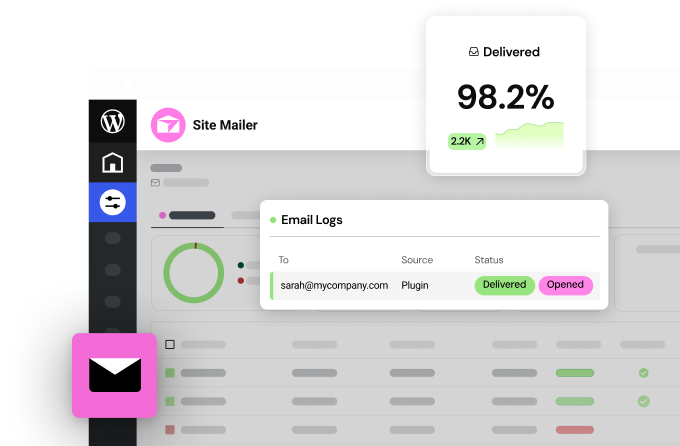
- Email: Site Mailer ensures transactional emails (like password resets) actually land in the inbox, solving a notorious WordPress headache.
- Optimization: Image Optimizer automatically compresses assets for speed.
- Accessibility: Ally helps sites meet legal standards.
The perception is that Elementor is a “Business in a Box,” whereas Bolt is a “Developer’s Sandbox.”
2. The AI Integration Strategy Elementor has integrated AI differently. Instead of trying to replace the builder with a chat box, Elementor uses AI to augment the visual workflow.
- AI Site Planner: Helps with strategy and structure.
- AI Copilot: Suggests layouts and designs inside the editor.
- AI Writing/Image Generation: Helps with content creation.
This “Hybrid” approach is perceived as safer. It keeps the human in the loop. You use AI to generate the first draft, but you use the robust visual tools to finalize the product. This eliminates the “Hallucination Risk” because you can visually verify everything before publishing.
Part 8: The Competitor Landscape
A “Dry” Analysis of Alternatives
To understand Bolt’s position, we must look at where it sits relative to other AI and visual tools in the market.
v0 (Vercel)
- Functional Description: v0 is a generative UI system that produces React code based on ShadCN/UI and Tailwind. It focuses heavily on the component level (e.g., “give me a pricing table”) rather than the full-stack app level.
- Perception: Developers perceive v0 as a tool for generating snippets to copy-paste into an existing codebase. Bolt is seen as more holistic, handling the entire environment and backend logic.
Lovable
- Functional Description: Lovable is another “idea-to-app” generator, similar to Bolt, often focusing on the Supabase/React stack.
- Perception: The market often groups Lovable and Bolt together. The differentiation usually comes down to the quality of the specific AI model used and the speed of the browser environment. Bolt’s StackBlitz lineage gives it a reputation for superior browser-based performance due to WebContainers.
Wix Studio / Squarespace AI
- Functional Description: These are closed-source SaaS platforms that have added AI text and layout generation to their existing visual builders.
- Perception: These tools are perceived as “Walled Gardens.” While the AI integration is smooth, users feel locked in. If the AI generates a layout you don’t like, you can only edit it within the constraints of their proprietary editor. You cannot export the React code like you can with Bolt, nor can you extend it with open-source plugins like you can with Elementor.
Cursor / GitHub Copilot
- Functional Description: These are AI assistants that live inside the code editor (IDE). They predict the next few lines of code or refactor functions.
- Perception: These are purely for developers who are already coding. Bolt is perceived as a “higher level” abstraction that can generate the entire project structure, not just complete a function.
Part 9: Limitations and Challenges
Where the “Magic” Breaks Down
No tool is perfect, and the perception of Bolt includes several significant negative sentiments that potential users must weigh.
1. Token Limits and Cost Bolt operates on a “token” system. Every time you prompt the AI, it costs tokens. Complex prompts cost more.
- Perception: Users report “Token Anxiety.” They are afraid to experiment because they watch their usage meter drain.
- Contrast: Visual builders like Elementor Pro usually operate on a flat annual fee. You can drag and drop widgets a million times without paying extra. This predictability is crucial for agencies and freelancers.
2. The “Context Window” Wall As an application grows, the amount of code increases. AI models have a limit on how much context they can process.
- Perception: Users report that Bolt works amazingly for the first 50 prompts. Then, as the app becomes complex, the AI starts to “forget” things. It might delete a feature you added three hours ago while trying to add a new one. This makes it perceived as a tool for small apps, not enterprise systems.
3. Visual Genericness Because Bolt relies on libraries like Tailwind and ShadCN, the outputs tend to have a distinct “AI Look.” They look clean, but generic.
- Perception: Designers feel limited. Achieving a truly unique, award-winning “Awwwards” style layout is difficult with pure prompting. Visual builders allow for “breaking the grid” and creating overlapping, complex layouts that AI struggles to code from a text description.
Part 10: Conclusion and Verdict
The Right Tool for the Right Job
In conclusion, Bolt is perceived as a revolutionary tool that is redefining the speed of software development. It is an “Idea Accelerator.” It allows technical and semi-technical users to bypass the initial friction of coding. Its browser-based Node environment is a genuine technological breakthrough that impresses the developer community.
However, it is not currently perceived as a comprehensive platform for the general web creator. It lacks the guardrails, the visual intuition, and the managed infrastructure that businesses and agencies rely on for mission-critical websites.
Who should use Bolt?
- Developers who want to skip boilerplate setup.
- Product Managers who need high-fidelity prototypes to show stakeholders.
- Indie Hackers building SaaS MVPs who are comfortable debugging code.
Who should use Elementor?
- Marketing Agencies who need a reliable, reproducible workflow for clients.
- Designers who demand pixel-perfect control over every breakpoint.
- Business Owners who need a robust, managed website that “just works” without code maintenance.
- Freelancers who want to hand over a site that their clients can actually edit.
The wisest creators are those who understand this distinction. They might use Bolt to prototype a calculator widget or a specialized internal dashboard, and then they embed that into their robust, SEO-optimized, visually designed Elementor website. They don’t choose one or the other; they choose the right tool for the job.
The future of web creation is likely a convergence. We will see more “Agentic” capabilities coming to platforms like Elementor (as seen with Angie), and we will see more “Visual” controls coming to coding tools. But for now, the perception is clear: Bolt is for building apps, and Elementor is for building successful web presences.
Frequently Asked Questions
1. Question: Is Bolt.new suitable for complete beginners with no coding experience? Answer: While Bolt allows you to build using plain English, complete beginners may struggle if errors occur. Debugging often requires a basic understanding of web concepts, whereas visual builders like Elementor are designed to be completely code-free.
2. Question: Can I host a Bolt.new website on WordPress? Answer: Not directly. Bolt generates React/Node.js applications. You would typically host these on platforms like Netlify or Vercel. However, you can embed a Bolt application into a WordPress site using an iframe or sub-domain, but they are different tech stacks.
3. Question: How does Bolt’s pricing compare to Elementor? Answer: Bolt operates on a “token” or usage-based model for its AI, which can become expensive for heavy usage. Elementor typically offers a flat annual subscription, which is often perceived as more predictable for budgeting.
4. Question: Does Bolt generate SEO-optimized code? Answer: Bolt generates clean code, but “SEO-optimized” depends on what you tell it to build. You have to manually ensure you are prompting for semantic HTML, meta tags, and SSR (Server Side Rendering). Platforms like Elementor have SEO controls built-in and integrate natively with SEO plugins.
5. Question: Can I export my code from Bolt? Answer: Yes, this is a key feature. You can export your project as a standard codebase. This offers great flexibility but shifts the responsibility of hosting and maintenance to you.
6. Question: Is Bolt better than Elementor for E-commerce? Answer: For standard e-commerce (selling products), Elementor with WooCommerce is generally better because it handles the complexities of cart, checkout, and inventory management out of the box. Bolt is better if you are building a completely custom, bespoke e-commerce experience from scratch.
7. Question: Does Bolt support dynamic content? Answer: Yes, Bolt can build apps that connect to databases (like Supabase) to display dynamic content. However, setting this up requires defining the database schema and API logic. Elementor handles dynamic content visually through its Dynamic Tags feature.
8. Question: Can agencies use Bolt for client work? Answer: Agencies use Bolt for rapid prototyping or building specific tools. However, many prefer Elementor for the final deliverable because it allows the client to easily edit text and images later without breaking the code.
9. Question: What happens if the AI in Bolt makes a mistake? Answer: You have to prompt it to fix the error, or fix the code manually. This “debugging loop” can consume time and tokens. Visual builders eliminate syntax errors by design.
10. Question: Is Bolt the future of web design? Answer: Bolt represents the future of coding, where AI assists the developer. However, the future of web design is likely a hybrid model—visual platforms infused with AI capabilities, similar to how Elementor AI operates.
Looking for fresh content?
By entering your email, you agree to receive Elementor emails, including marketing emails,
and agree to our Terms & Conditions and Privacy Policy.