
Let’s be honest: setting up privacy compliance probably isn’t why you started your website. You wanted to build something you’re proud of, not read regulations. But if your site gets visitors from Europe, California, or almost anywhere these days, GDPR compliance isn’t optional anymore, and skipping it can lead to real financial consequences.
The good news? You don’t need a law degree to get this right. Here’s a walkthrough of the best cookie consent and privacy solutions for WordPress in 2026, from native dashboard tools to enterprise platforms and official regulatory guidance, something to fit your site and your budget.
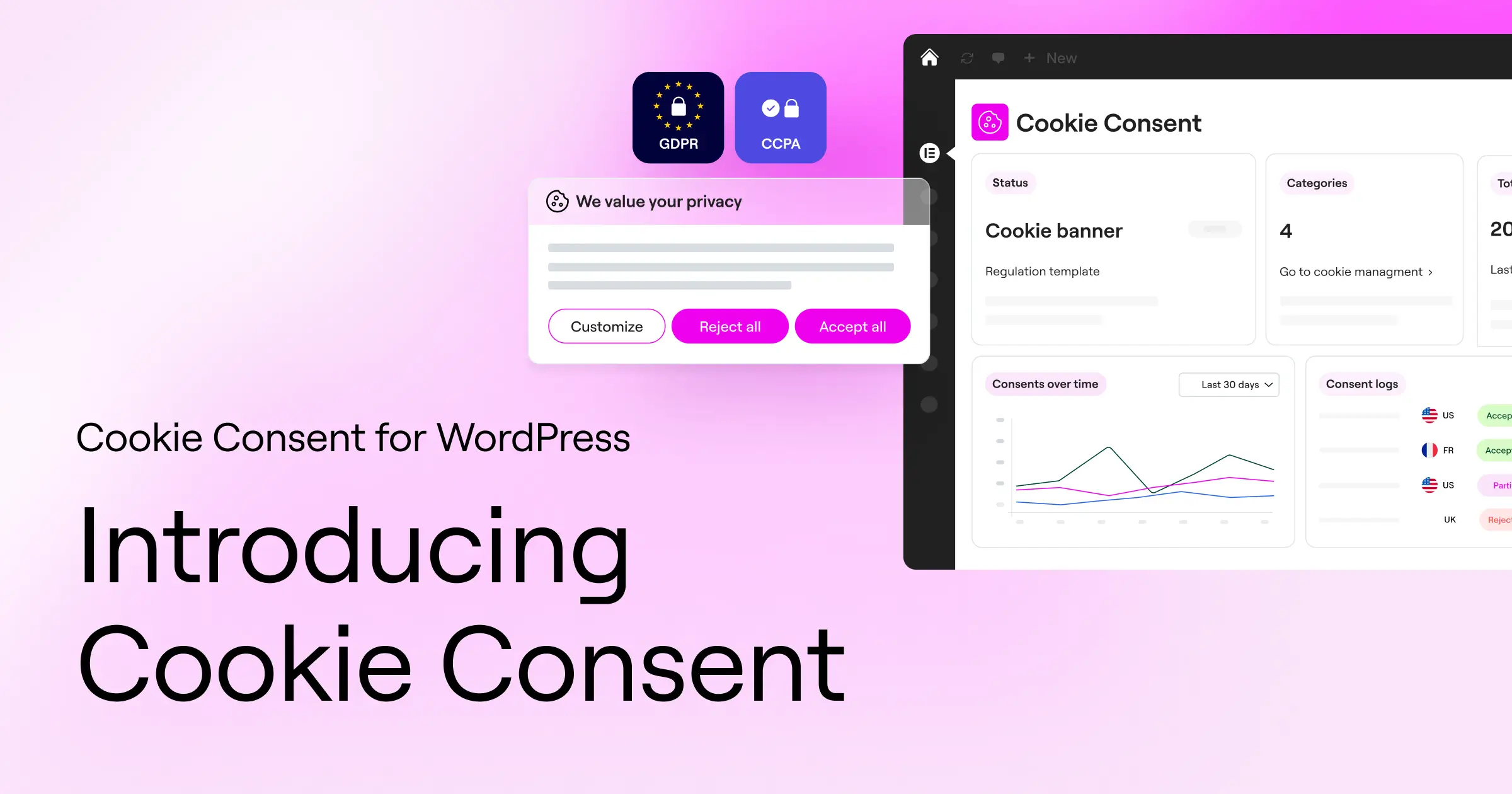
Key Takeaways
- Native integration means no juggling external platforms or separate logins.
- Google Consent Mode v2 matters for legally running ads or analytics for European visitors.
- Auto-categorization of cookies removes the risk of manual tracking mistakes.
- Local consent logging gives you the audit trail you need if a regulator comes knocking.
- User experience matters, a well-designed banner looks intentional, not bolted on.
Why GDPR Compliance Looks Different on WordPress in 2026
The regulatory landscape has shifted a lot. When GDPR first rolled out, a simple “we use cookies” pop-up was often enough. Not anymore. Regulators now require explicit, active consent, so visitors must choose which tracking categories they accept before any scripts fire on their devices.
Browsers keep phasing out third-party cookies too, pushing ad and analytics networks to rethink how they collect data. Google, for example, now requires Consent Mode v2 for any site serving European audiences through its services. Without a tool that supports it, your marketing analytics will degrade and your campaigns may stop working as expected (this one trips a lot of people up).
Smart WordPress owners are moving to centralized consent management rather than a patchwork of scripts. Pairing a well-structured Elementor site with a reliable cookie consent capability meets your legal obligations without slowing things down.
Comparison of Top GDPR Consent Solutions
Here’s a quick comparison of the leading cookie consent tools for WordPress, whether you want dashboard-native or cloud-based.
| Solution | Platform Native | Consent Mode v2 Support | Key Strength | Best For |
|---|---|---|---|---|
| Cookie Consent (Elementor) | Yes (WordPress Dashboard) | Yes | Zero external dashboards, visual design control | WordPress and Elementor users seeking simplicity |
| Cookiebot | No (External Cloud) | Yes | Deep automated cookie scanning | High-traffic publishers with complex script stacks |
| CookieYes | No (External Cloud) | Yes | Lightweight cloud setup | Small businesses needing quick cloud deployment |
| Complianz | Yes (WordPress Dashboard) | Yes | In-depth privacy wizard and legal options | Europe-focused sites wanting local setup |
| iubenda | No (External Cloud) | Yes | Complete legal document auto-generation | Websites needing auto-updating legal policies |
10 Best GDPR Compliance Solutions and Guides for WordPress
1. Cookie Consent (Elementor’s Native Solution)
If you like a clutter-free workspace, Cookie Consent feels like a breath of fresh air. Built natively for WordPress, it handles your whole compliance setup right inside your admin area, no external dashboard, no slow third-party scripts.
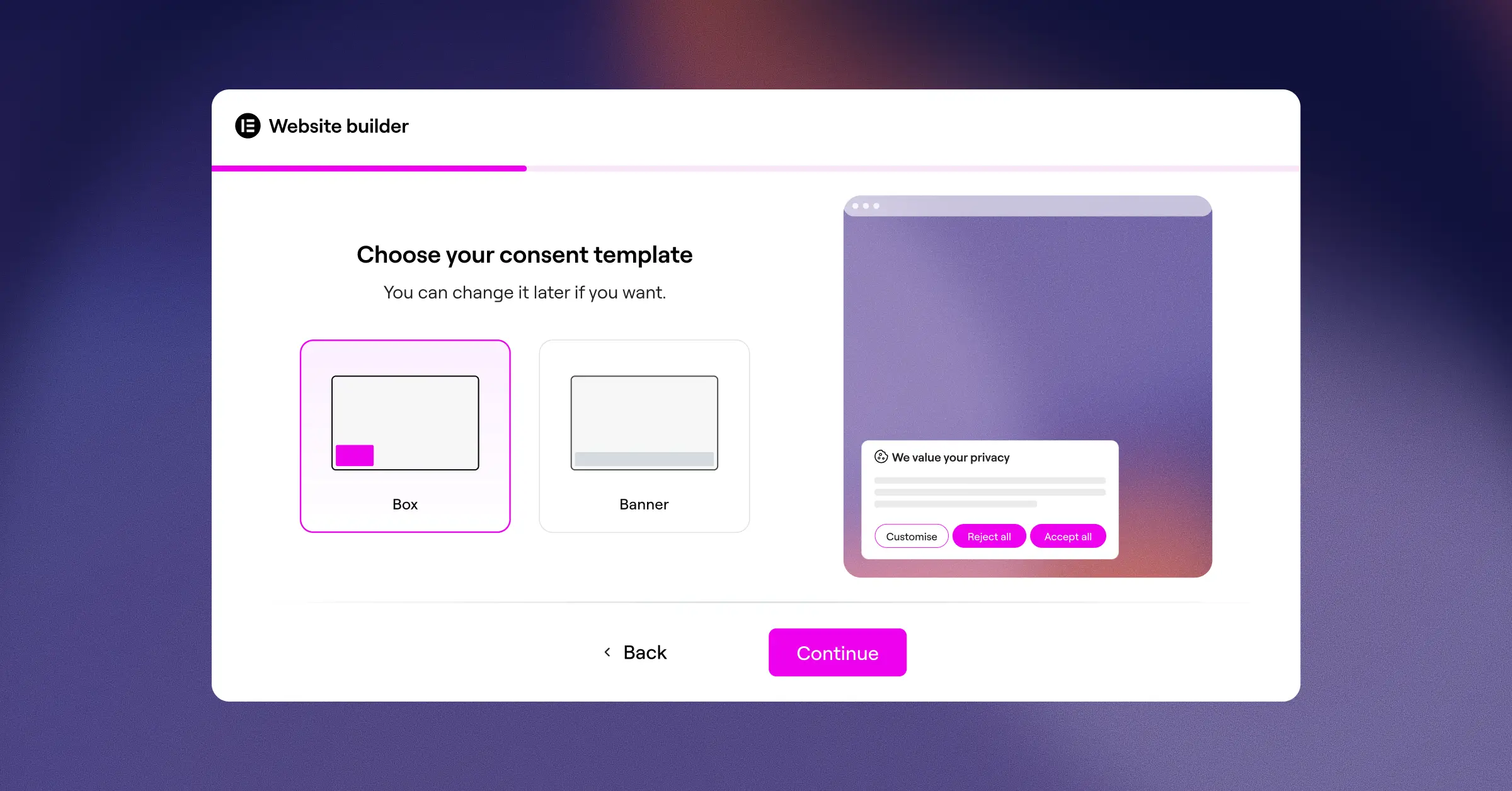
Setup takes about five minutes: run a cookie scan, sort scripts into categories, and customize the banner to match your brand. Since it runs locally, you’re not depending on an outside service’s uptime.
- Builds fully responsive cookie banners that match your site’s visual identity.
- Categorizes scripts automatically to block tracking until the visitor gives consent.
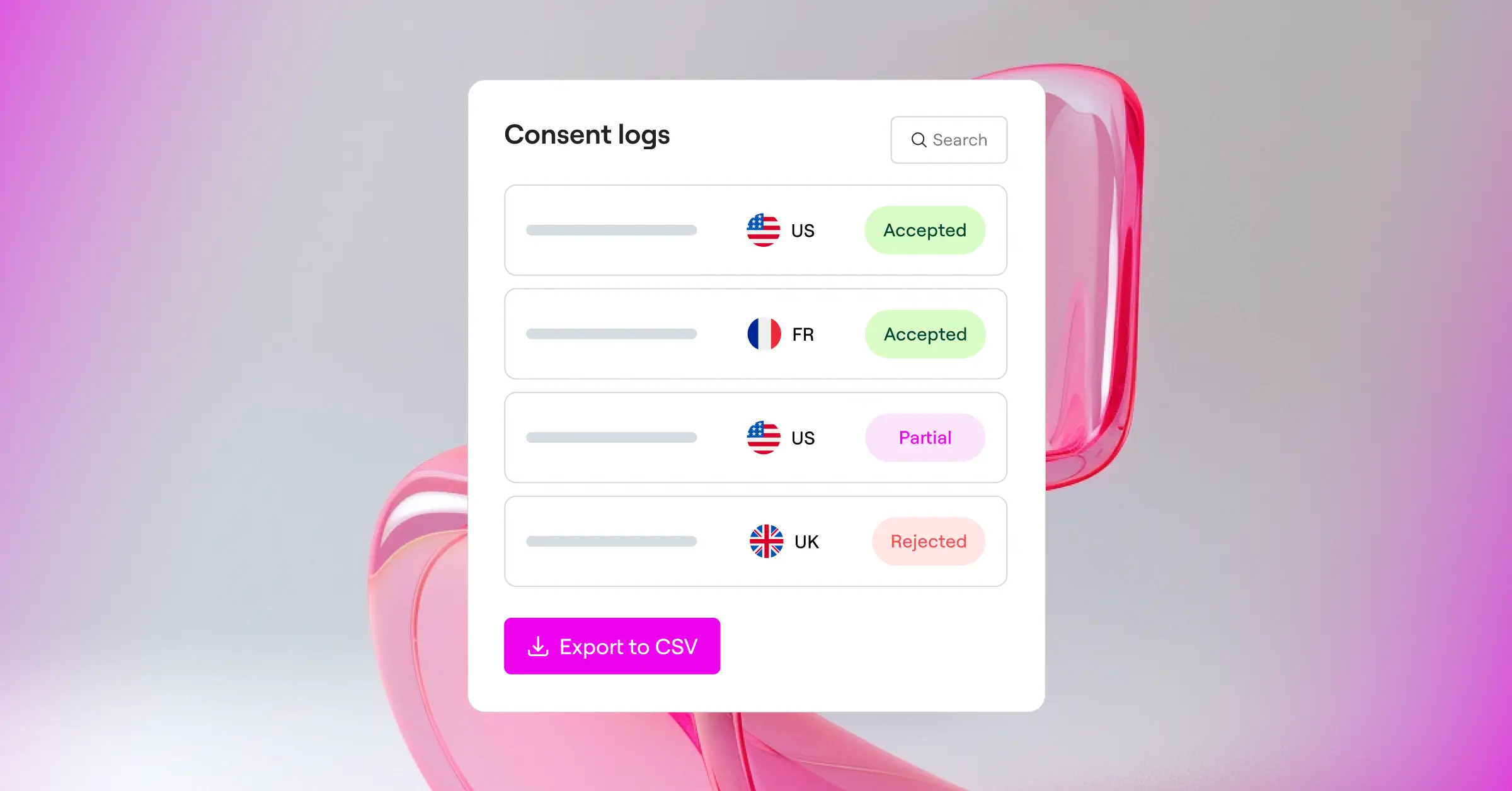
- Maintains secure consent logs locally so audit trails are ready when you need them.
- Integrates with Google Consent Mode v2 to keep your marketing measurement accurate.
- Targets specific geolocations so banners appear only where required.
- Generates privacy policy documentation directly from your dashboard.
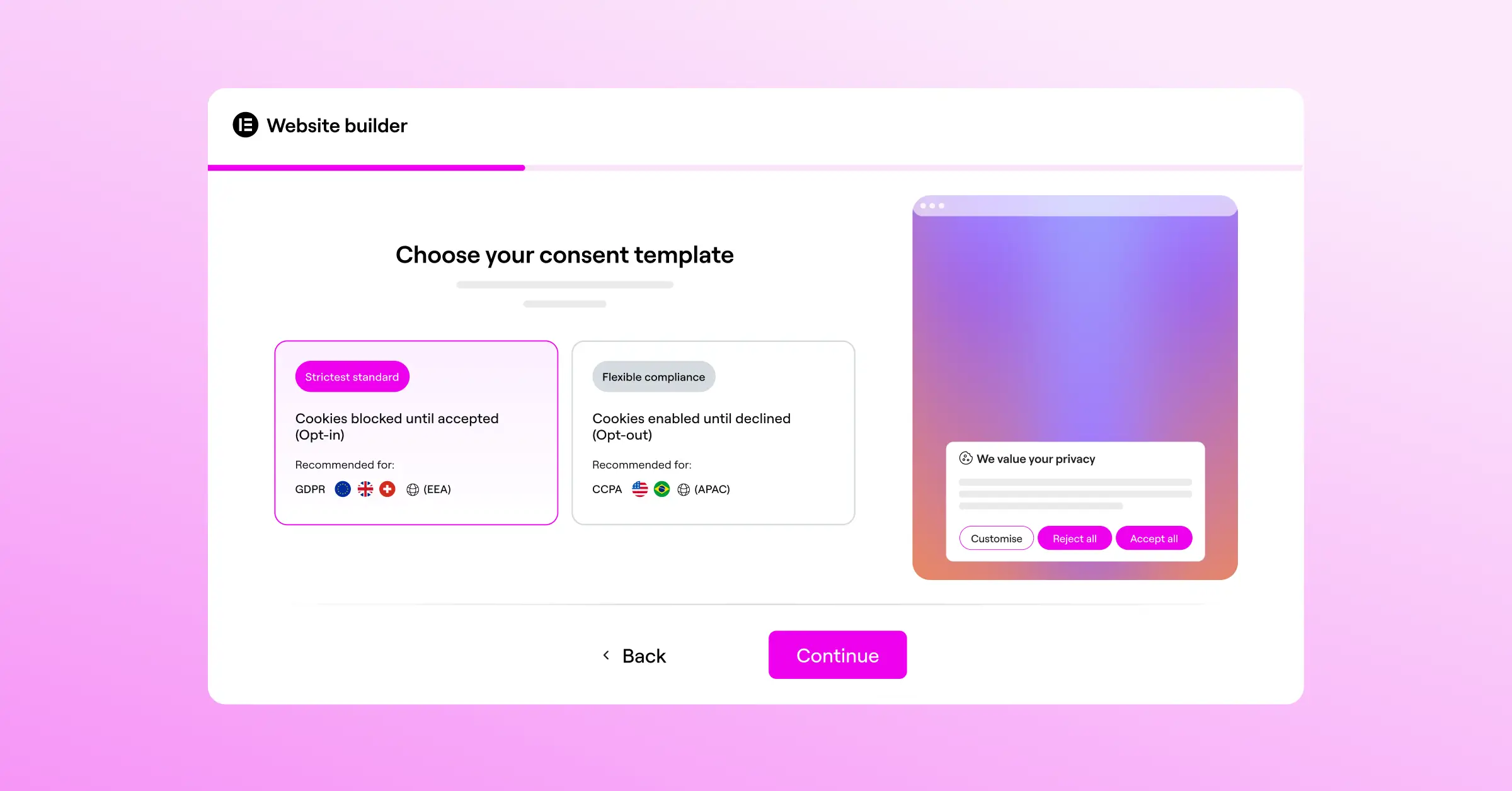
Pros: No external dashboards, fast loading, full visual customization, five-minute setup.
Cons: Built for the WordPress ecosystem, so it’s not for non-WordPress platforms.
Verdict: The top pick for clean, native compliance without monthly fees. It’s included in Elementor One with a free tier.
“To truly meet modern privacy expectations, your consent system must be integrated deeply into your site architecture rather than slapped on as an afterthought. Native logging and accurate cookie categorizing keep you safe.”
– Itamar Haim, Web Compliance Specialist
2. Cookiebot Consent Management Guide
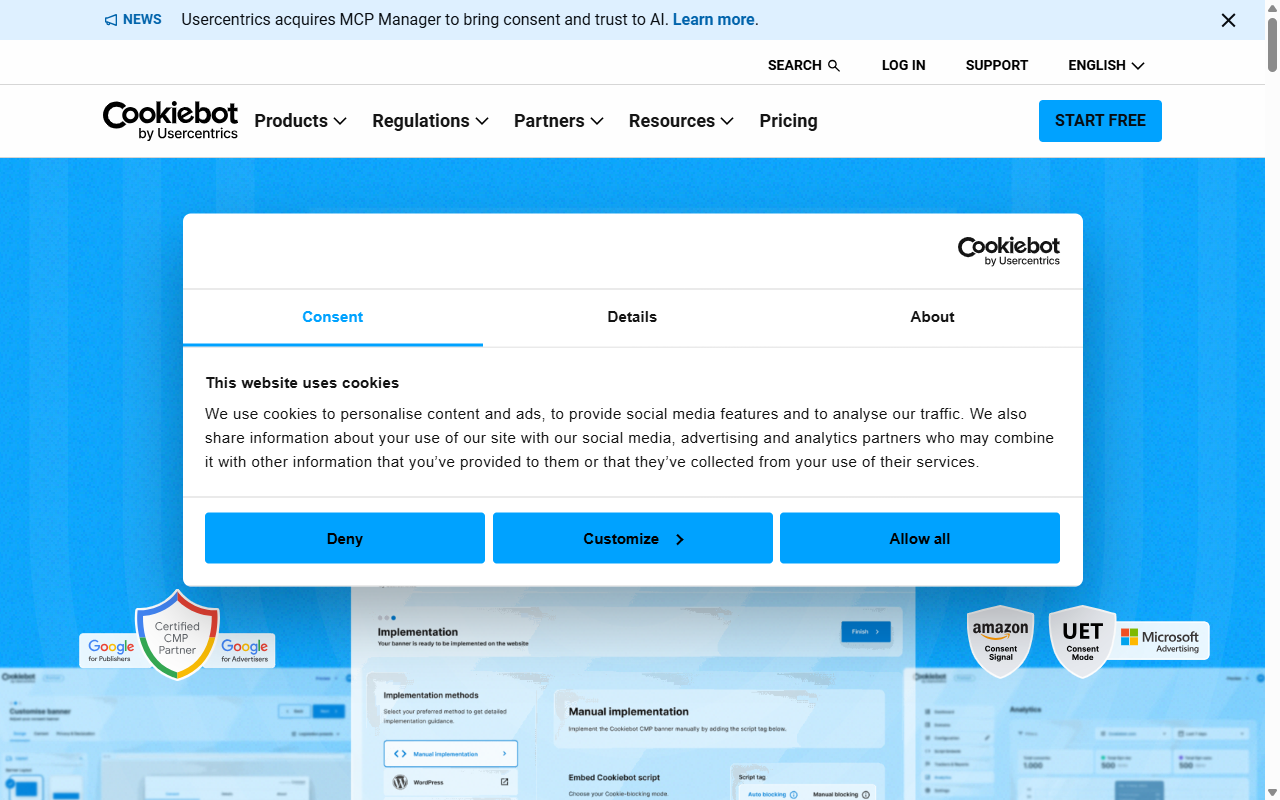
Cookiebot is an industry-standard cloud solution known for its thorough automated scanner. It crawls your site monthly, finds every tracker in use, and compiles the results into a cookie declaration report, connecting to WordPress through a dedicated integration.
Setup is systematic: create a cloud account, configure your settings, and paste a script into your header. For sites running lots of dynamic scripts, the scanner keeps data collection transparent and documented.
- Scans your entire site each month to detect hidden and newly added trackers.
- Categorizes detected cookies into four distinct technical groups.
- Saves all consent records securely in their cloud infrastructure.
- Generates an automated cookie declaration page that keeps itself updated.
Pros: Excellent script-scanning depth and solid multi-language support.
Cons: Costs can rise for large sites, and you’ll manage a separate dashboard alongside WordPress.
Verdict: A reliable, capable choice for sites with complex, frequently changing script stacks.
3. CookieYes Guide and Tool
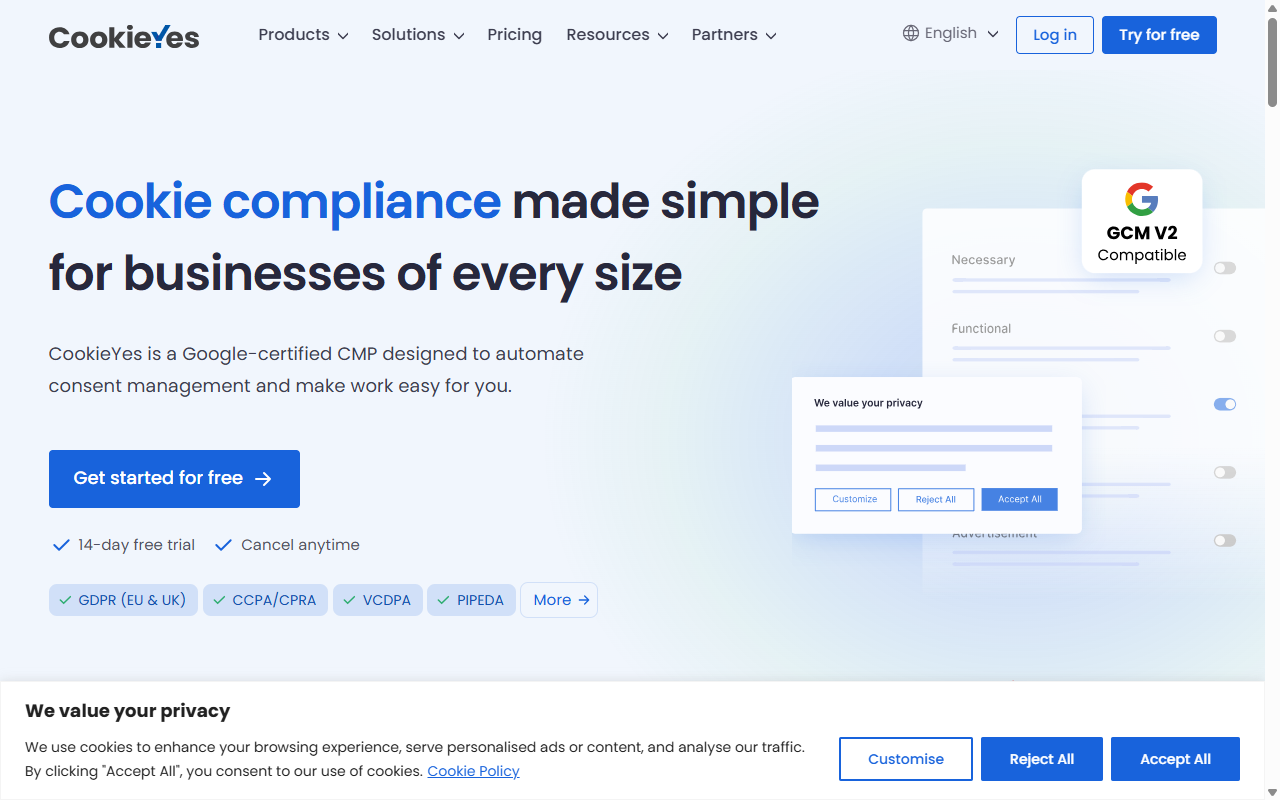
CookieYes is a widely used cloud consent tool that makes cookie consent genuinely straightforward. It gives you a clean dashboard to customize banner templates and view consent analytics in real time, built for low setup friction.
You can get a compliant banner and consent logs running without writing code. It also supports Global Privacy Control (GPC), letting visitors broadcast their privacy preferences through their browser.
- Connects to your site through a lightweight integration script.
- Tracks user consent actions and displays them in clean, readable charts.
- Adapts to regional privacy laws including GDPR, CCPA, and Canada’s PIPEDA.
- Supports a wide range of multilingual translation setups.
Pros: User-friendly interface, responsive support, fast deployment.
Cons: Visual styling on lower-tier plans can feel more limited than native design tools offer.
Verdict: A solid cloud option for straightforward compliance without deep technical configuration.
4. Complianz Privacy Suite Guide
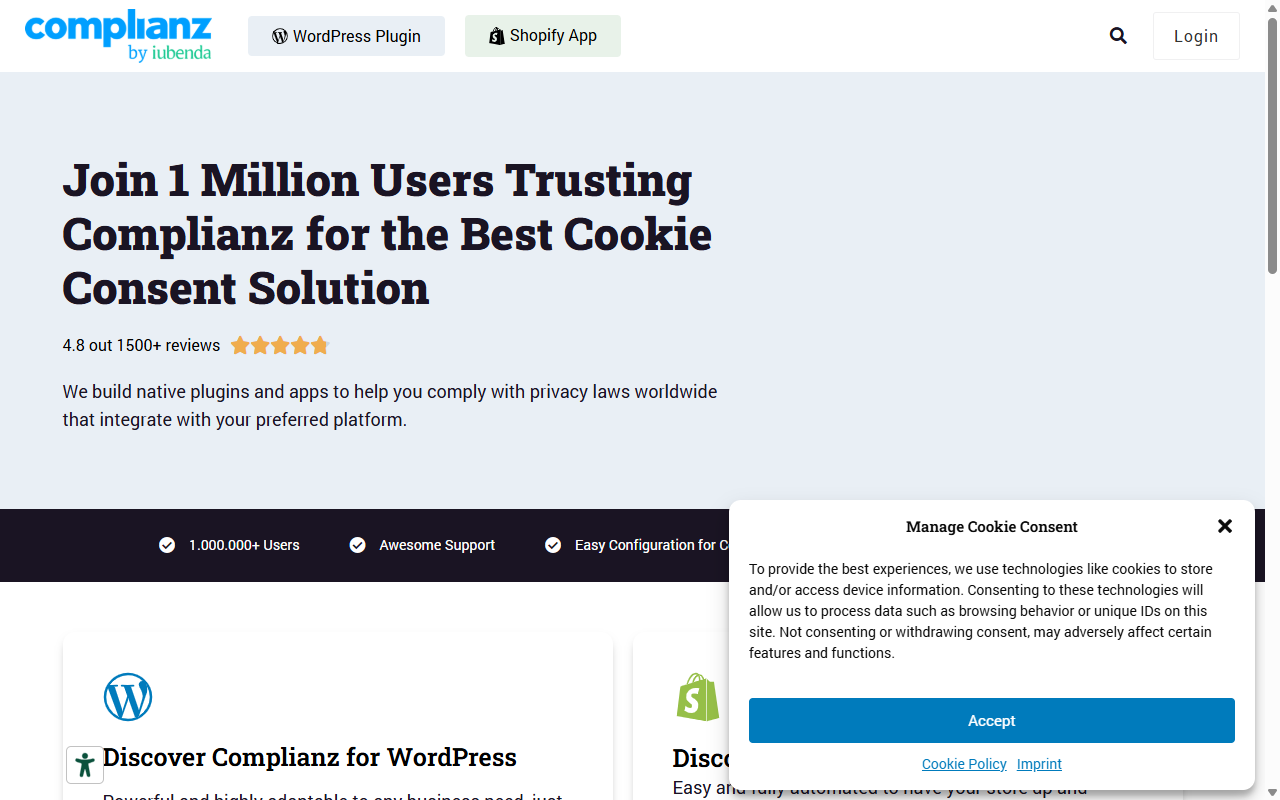
Complianz is a privacy solution built specifically for WordPress. Instead of just placing a banner, it walks you through a step-by-step wizard covering your full legal setup, adjusting your privacy configuration based on your answers.
It also checks your existing plugins and integrations locally, tailoring your documentation to whatever you’re already running, contact forms, payment gateways, or analytics.
- Guides you through a complete privacy configuration questionnaire.
- Generates legal documents customized for your region and business type.
- Blocks third-party social integrations before the visitor gives consent.
- Detects cookie-generating tools already installed on your site.
Pros: Very detailed setup wizard and dependable generation of complex legal documents.
Cons: The backend has a lot of options, which can feel overwhelming at first.
Verdict: A great fit for site owners in regulated European countries who want step-by-step legal guidance inside WordPress.
5. iubenda Compliance Solution
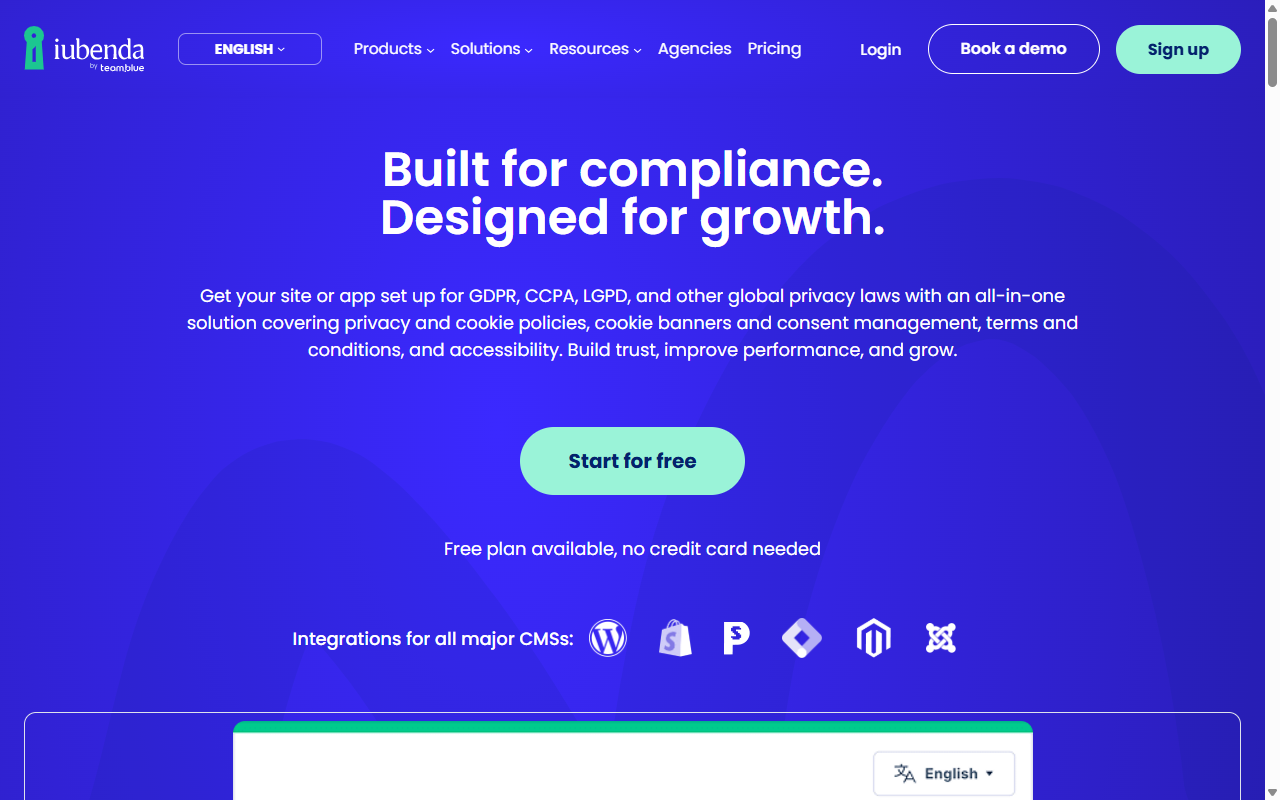
iubenda takes a legal-first approach to GDPR. It’s a compliance suite that handles privacy policies, terms and conditions, and cookie consent in one place. Their legal team maintains the templates, so your policies update automatically as laws shift.
Getting started means placing their scripts on your site, which inject the right privacy policies and consent banners onto your pages.
- Generates professional privacy policies that update automatically as laws change.
- Stores complete consent records for legal auditing purposes.
- Adjusts your consent banner layout based on the visitor’s geographic location.
- Coordinates privacy policies across multiple linked sites or applications.
Pros: Real peace of mind knowing legal professionals are keeping your policies current.
Cons: Script integration can be tricky, and costs add up across multiple sites.
Verdict: A dependable choice for businesses needing professionally maintained policies across sites and apps.
6. OneTrust Enterprise Privacy Guide
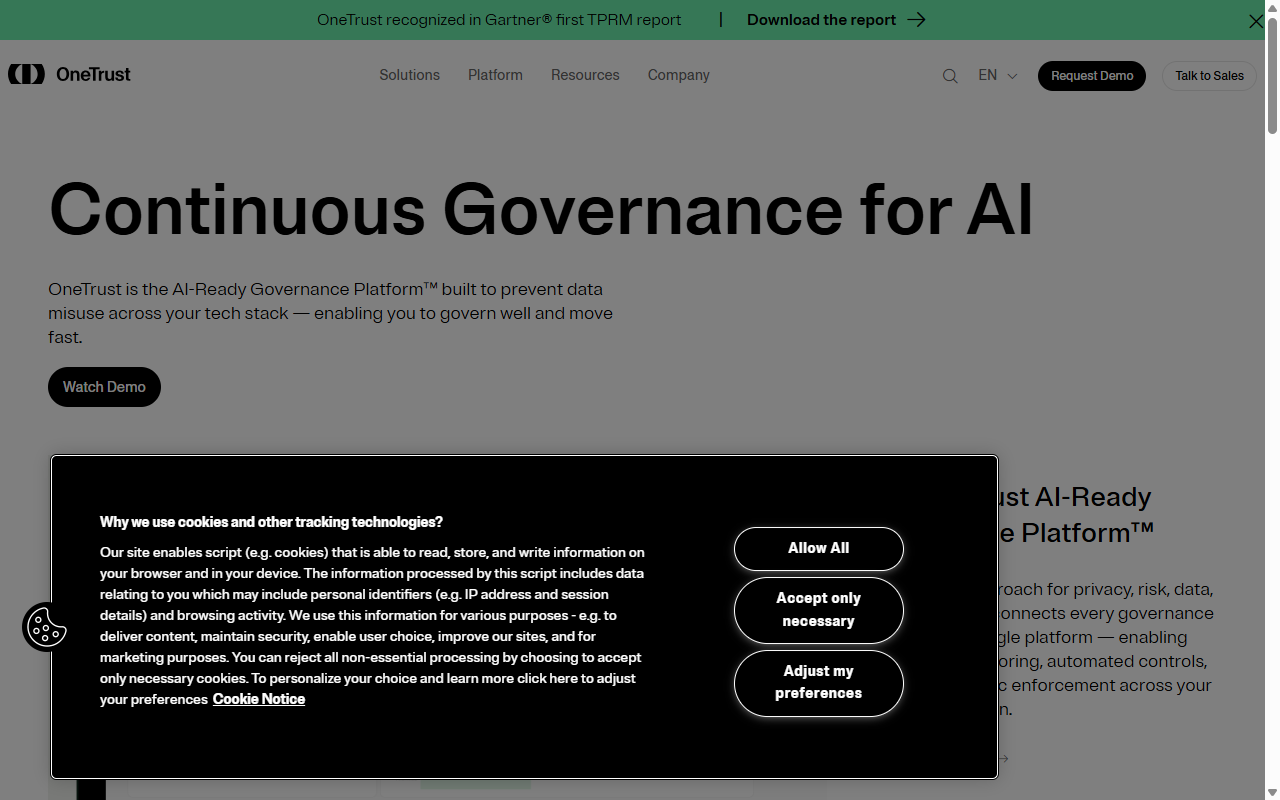
OneTrust is a heavy-duty enterprise privacy platform for large organizations, e-commerce operations, and agencies managing compliance across hundreds of domains. It goes well beyond cookie consent, with data mapping, risk assessment, and vendor management built in.
Implementing it on WordPress typically means adding scripts through a tag manager. It gives exceptional data depth and control, but takes real training to use well.
- Maps complex data flows across multiple servers and business systems.
- Manages vendor compliance checks and audit-ready reporting.
- Scales across thousands of international subdomains without losing consistency.
- Customizes consent preferences down to highly specific user segments.
Pros: One of the most complete enterprise compliance platforms available, well-suited to global organizations.
Cons: Far too complex and pricey for standard blogs or small-to-medium sites.
Verdict: Right for enterprise organizations, likely more than a typical WordPress site needs.
7. Termly Compliance Guide
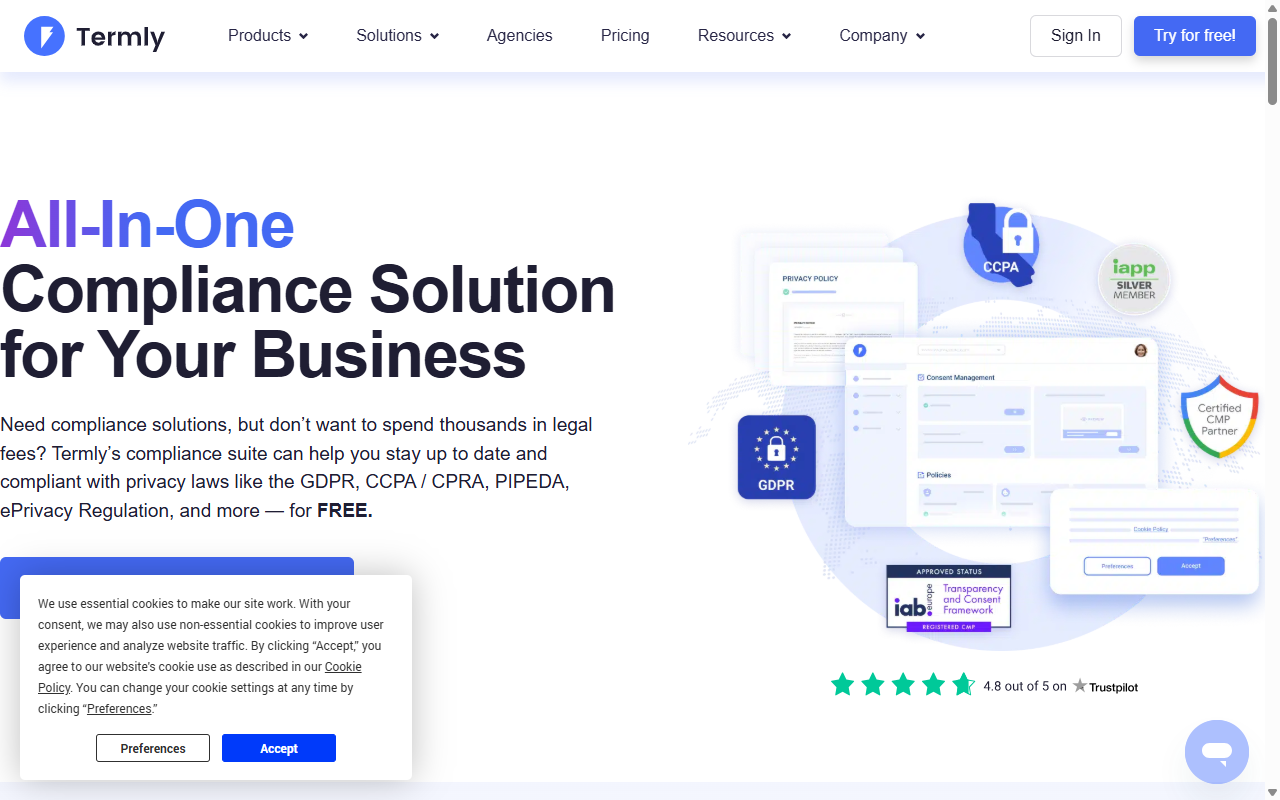
Termly is built with small business owners in mind, bringing together a privacy policy generator, a terms of service builder, and a cookie consent banner in one package, aimed at getting you compliant quickly on a small budget.
The process is cloud-based: follow straightforward prompts to create your legal pages, then embed them on your site. It’s one of the more beginner-friendly options here.
- Assembles customized legal policies based on simple multiple-choice questions.
- Detects cookies automatically using an integrated cloud crawler.
- Saves and exports consent logs so you can verify your compliance at any time.
Pros: Approachable language, clean interface, and a fast legal document builder.
Cons: The entry-level plan shows a Termly badge, and the scanner caps at 100 pages on the basic tier.
Verdict: Budget-friendly for freelancers and small businesses needing basic documentation and a simple banner.
8. Osano Data Privacy Platform

Osano is a cloud privacy platform known for its legal compliance guarantee on premium tiers. It buffers your site from third-party trackers, keeping scripts from loading until a visitor approves them. Setup is simple: add one snippet and let the platform manage the rules.
- Blocks non-compliant scripts automatically before any user interaction.
- Evaluates the data privacy ratings of thousands of popular software vendors.
- Simplifies data subject access requests (DSARs) from your users.
Pros: Strong compliance guarantee and a clean, modern banner design.
Cons: Premium features carry a fairly high price for small, self-funded projects.
Verdict: Good for fast-growing startups and mid-market companies needing strong guarantees without added server load.
9. The WordPress Core Privacy Guide
Many site owners don’t realize WordPress itself includes privacy tools built into the core software. There’s no visual consent banner, but the built-in system handles something critical: data requests from your visitors.
Under the “Tools” menu, you’ll find options to export or erase personal data. When someone submits a GDPR deletion request, you can process it right there, no third-party service needed.
- Log in to your WordPress dashboard and go to the Tools section.
- Select Export Personal Data or Erase Personal Data, depending on the request.
- Enter the visitor’s email address to send an automated confirmation link.
- Once they confirm, click process to generate an export file or remove their data from your database.
Pros: Built directly into WordPress, lightweight, secure, and requires no external services.
Cons: Doesn’t include a cookie consent banner, so pair it with a dedicated tool like Elementor Cookie Consent for the full compliance picture.
Verdict: An essential baseline every WordPress owner should configure alongside whatever else they use.
10. The UK ICO Privacy and Cookie Guide
Sometimes the most useful resource isn’t a tool at all, it’s going straight to the source. The UK’s Information Commissioner’s Office (ICO) publishes a clear, practical guide on using cookies legally, worth reading before you configure anything.
The ICO resource translates complicated legal language into plain, actionable guidance, explaining what counts as “strictly necessary” cookies, what needs active consent, and how to write consent copy people actually understand.
- Explains legal definitions in plain, accessible language.
- Defines exactly which categories of cookies require prior consent from visitors.
- Shows real examples of what good and poor consent implementations actually look like.
Pros: Comes directly from the official regulator, so the guidance reflects exactly what’s expected of your site.
Cons: It’s educational, not a technical implementation, you’ll still need a tool to apply the rules.
Verdict: The best starting point for understanding what’s required before you touch any configuration.
Step-by-Step Checklist to Get Compliant
Getting your site compliant doesn’t have to feel overwhelming. Work through this checklist and you’ll have the essentials covered:
- Audit your plugins, list every active plugin (analytics trackers, contact forms, ad pixels) that might collect visitor data.
- Set up your consent tool, activate your chosen cookie consent capability inside your dashboard.
- Configure geo-targeting, set your banner to display automatically for visitors from the EU, UK, and California.
- Enable Consent Mode v2, make sure your Google scripts respect Consent Mode signals.
- Create your legal pages, use a built-in generator to create and link your Privacy Policy and Cookie Policy pages.
- Test your setup, open your site in an incognito window and confirm no analytics cookies load before a visitor clicks “Accept”.
Frequently Asked Questions
Do I really need a cookie banner if I have a small blog?
Yes, you do. GDPR has no minimum site size or traffic threshold. If your blog runs Google Analytics, a Facebook pixel, or Google AdSense, you’re collecting personal data, and any EU visitor needs legally valid consent before you start tracking them.
What is Google Consent Mode v2, and do I need it?
It’s a system that communicates your visitors’ privacy choices to Google’s ad and analytics networks. If you serve European visitors and use Google Analytics or Ads, you need a tool that supports it, or you can’t legally measure traffic there.
Can I just write my own cookie banner code?
You can, but it’s genuinely complex. A compliant system has to block every external script until consent is given and log decisions for auditing. A tool like Cookie Consent handles that reliably, without a custom build’s security risks.
What happens if I don’t comply with GDPR?
Regulators can issue warnings, run audits, and levy fines up to EUR 20 million or 4% of annual global turnover, whichever is higher. Ad networks and analytics platforms may also suspend accounts collecting EU visitor data without valid consent.
What’s the difference between GDPR and CCPA?
GDPR (Europe) uses an opt-in model, visitors can’t be tracked until they click “Accept.” CCPA (California) uses an opt-out model, tracking is allowed by default, but you must include a clear “Do Not Sell My Personal Information” link. Both can apply if you get international traffic.
Will using a cookie consent tool slow down my WordPress site?
It can, if you use a cloud tool that loads heavy scripts on every page. A native capability like Cookie Consent keeps things local and lightweight, no remote script loading before your page renders.
How long do I need to keep consent logs?
Most legal guidance recommends keeping consent records for at least five years, since investigations can take a while to develop. A good consent tool handles that storage automatically, without touching your main database.

