Table of Contents
However, simply asking if Google has a builder is often the wrong question for a business owner, marketer, or professional creator. The better question—and the one that determines the future success of your online presence—is: Is Google’s website builder capable of running a professional, growth-oriented business in 2026?
For many, the allure of a “Google-made” website suggests intrinsic reliability, blazing speed, and perhaps even a secret advantage in search engine rankings. Yet, the reality of Google Sites is far more nuanced and, for many, restrictive. While it excels as a tool for internal wikis, classroom projects, and basic information hubs, it fundamentally lacks the infrastructure required for modern digital marketing, robust eCommerce, and sophisticated brand differentiation.
This comprehensive guide will dissect the capabilities of Google Sites, explore the implications of the recent shutdown of Google Business Profile websites, and detail why a dedicated website builder platform like Elementor has become the industry standard for those who need more than just a digital brochure. We will explore the technical ceilings of free tools, the strategic importance of data ownership, and how to build a scalable digital asset on the Google Cloud Platform without sacrificing creative control.
Key Takeaways
- Google Sites Exists but has Limits: Google Sites is excellent for internal team hubs, wikis, and simple projects, but it lacks the SEO, design, and eCommerce capabilities required for professional business growth.
- The “Business Profile” Site Shutdown: In March 2024, Google shut down millions of simple websites made via Business Profiles, underscoring the risk of relying on “rented land” rather than owning your digital asset.
- Ownership is Critical: Professional platforms like Elementor allow you to own your content and data completely, whereas proprietary or free builders often lock you into their ecosystem.
- The “Google Cloud” Advantage: You can get the reliability of Google’s infrastructure without the limits of Google Sites by using Elementor Hosting, which is built on the Google Cloud Platform.
- AI is the New Standard: Modern web creation involves AI workflows. While Google Sites is basic, Elementor offers deep AI integration for content, code, and even agentic tasks via Angie.
- eCommerce Requires Power: If you plan to sell online, Google Sites offers no native solution, whereas Elementor’s WooCommerce Builder provides pixel-perfect control over the shopping experience.
The Landscape of Google’s Website Tools in 2026
To understand where Google fits into the website building market, we must first clarify what tools are actually available, what has been discontinued, and what has been sold off. The Google ecosystem is in a constant state of flux, and relying on outdated information can be a costly mistake for a small business.
What is Google Sites?
Google Sites is the only remaining “true” website builder in Google’s portfolio. Originally designed as a competitor to tools like SharePoint, its primary purpose was to allow teams to collaborate on an intranet, a project hub, or a classroom resource. Over time, Google opened it up to the public, allowing anyone with a Gmail account to publish a public-facing site.
The building experience is strikingly similar to using Google Forms or Google Slides. You are presented with a rigid grid system and a sidebar of pre-made elements, such as text boxes, images, buttons, and embeds from Google Drive. It is robust, secure, and hosted on Google’s servers, meaning it rarely, if ever, goes down.
However, it operates as a “walled garden.” You cannot access the server backend, you cannot install third-party plugins to extend functionality, and you cannot edit the source code to add advanced tracking pixels, schema markup, or custom CSS. It is a tool designed for displaying information, not for interacting with customers or driving complex conversion funnels.
The Death of Google Business Profile Websites
For years, the most popular “Google Website Builder” for small businesses wasn’t Google Sites at all. It was the simple, one-click website generator found inside the Google Business Profile (formerly Google My Business). This tool would scrape your business hours, photos, and address to instantly create a business.site domain. It was the ultimate “set it and forget it” solution for local businesses.
In March 2024, Google permanently shut this service down.
Millions of small business websites simply vanished or began redirecting to the generic Google Maps profile. This event served as a stark, painful reminder of the dangers of building your primary digital asset on a platform you do not control. When a service is free and secondary to the provider’s core business model—which, for Google, is advertising—it can be deprecated, altered, or deleted at any moment without recourse.
The Sale of Google Domains
Adding to the confusion for many users, Google sold its domain registrar business, Google Domains, to Squarespace in 2023. For years, buying a domain through Google was the easiest and most trusted way to start a new website. Now, that entire infrastructure is managed by a third party.
This move signals a strategic retreat by Google from the “consumer website hosting” market. It suggests that Google views website creation not as a core product they want to own, but as a utility better handled by dedicated platforms. This leaves Google Sites as a legacy product rather than a core focus for future innovation, further emphasizing why serious businesses should look elsewhere for their web infrastructure.
The “Free” Trap: Why Simple Builders Cost More Later
When launching a new venture, the temptation to use a free tool like Google Sites is understandable. It requires zero financial investment, almost zero learning curve, and allows you to “get something up” in an afternoon. However, “free” often comes with a ceiling that growing businesses hit much faster than they anticipate. This is often referred to as “technical debt”—the cost of reworking a solution later because the initial choice was too limited.
The SEO Ceiling
Search Engine Optimization (SEO) is the lifeblood of most online businesses. It is how new customers find you without you paying for ads. While Google Sites websites can be indexed by Google, they suffer from significant technical SEO handicaps that put them at a disadvantage against competitors using WordPress.
- Limited Metadata Control: You have very little control over advanced meta tags, schema markup, or Open Graph settings. This means you cannot control exactly how your link looks when shared on Facebook, X (Twitter), or LinkedIn, often resulting in generic previews that lower click-through rates.
- URL Structure: You are often stuck with unoptimized URL structures unless you go through a complex domain mapping process. Even then, you lack the granular control over permalinks that is standard in WordPress.
- Technical SEO: You cannot access the robots.txt file or .htaccess file. This means you cannot implement advanced redirects, manage crawler access granularly, or implement specific caching rules to speed up content delivery for specific regions.
The Design Ceiling
In 2026, a website is often the first—and sometimes only—impression a potential customer has of your brand. A generic website signals a generic business.
- The Grid Lock: Google Sites forces all content into a specific, responsive grid. While this ensures the site doesn’t “break” on mobile, it also means you cannot break the grid. You cannot overlap elements for artistic effect, create complex animations, or design unique mobile-specific layouts that differ from the desktop version.
- Template Fatigue: With only a handful of basic themes available, your site will look identical to thousands of others. There is no CSS access to tweak button radii, hover effects, font kerning, or letter spacing to match your specific brand guidelines. You are forced to adapt your brand to the tool, rather than the tool to your brand.
The Scalability Ceiling
What happens when your business succeeds? What happens when you want to add a store? Or a membership area? Or a booking calendar? Or a forum?
On a professional platform, you simply install a plugin or activate a new module. On Google Sites, these features do not exist natively. You are forced to “embed” third-party tools using iframes. This results in a clunky user experience where the embedded content often has its own scrollbar, doesn’t resize correctly on mobile, and looks visually distinct from the rest of your site. Furthermore, iframes can pose security risks and tracking difficulties, breaking your analytics data.
The Professional Standard: WordPress + Elementor
If Google Sites is the digital equivalent of renting a dormitory room—functional, safe, but uniform and restrictive—building with Elementor on WordPress is like buying land and hiring an architect. You own the asset, and you have complete control over every brick, pipe, and window.
Why WordPress?
WordPress powers over 43% of the web. It is open-source software, meaning no single company can “shut it down,” take it away from you, or force you to pay a subscription to access your own content. It is supported by a global community of developers and offers tens of thousands of plugins to extend functionality. It is the operating system of the open web.
Why Elementor?
While WordPress provides the powerful engine, Elementor provides the intuitive interface. Elementor has evolved from a simple page builder into a comprehensive Website Builder Platform. It powers over 18 million websites, making it the de facto standard for web creation.
Elementor bridges the gap between the ease of use of a SaaS builder (like Wix or Google Sites) and the raw power of open-source code. It allows you to design visually—drag and drop—while generating clean, optimized code in the background. It is designed to empower web creators to build professional, pixel-perfect websites seamlessly.
“The best thing marketers can do is diversify with new strategies now so that the change is easily managed. Rather than trying to spend more on ads to acquire fewer customers, brands that invest in authentic ways for customers to engage with them will see dividends.” — Itamar Haim, Digital Marketing Expert
Deep Dive: The Elementor Ecosystem vs. Google Sites
To truly understand why professional creators and growing businesses choose Elementor, we need to look beyond the surface level of “dragging and dropping.” We need to analyze the ecosystem component by component.
1. The Foundation: Hosting and Infrastructure
The irony of the “Google vs. Elementor” debate is that the best way to get Google-grade reliability is actually through Elementor Hosting.
Google Sites is hosted on Google’s massive shared infrastructure. It is reliable, yes, but it is a “black box.” You have no access to server logs, PHP versions, caching controls, or database management. You are a tenant in a massive apartment complex with no key to the utility room.
Elementor Hosting is a managed WordPress hosting solution built directly on top of the Google Cloud Platform (GCP). It utilizes C2 compute-optimized machines, which are some of Google’s fastest servers, and integrates Cloudflare Enterprise CDN for global content delivery.
- The Best of Both Worlds: You get the same speed, security, and uptime associated with Google, but you retain full ownership of your data and access to the WordPress environment.
- Security: It includes enterprise-grade security features like DDoS protection and a premium Web Application Firewall (WAF) by default. This protects your business from threats that basic builders can’t handle.
- Scalability: Because it is built on GCP, it can scale with your traffic. If your marketing campaign goes viral, your site stays up.
2. The Creative Engine: Visual Design
Design is not just about making things look pretty; it’s about usability, accessibility, and conversion. A well-designed site guides the user’s eye to the “Buy” button.
Google Sites offers a “what you see is what you get” editor, but “what you get” is severely limited. You can place an image in a box. You can place text next to it. That is the extent of the layout control. You cannot adjust margins, padding, or z-index (layering).
Elementor Website Builder provides pixel-perfect control.
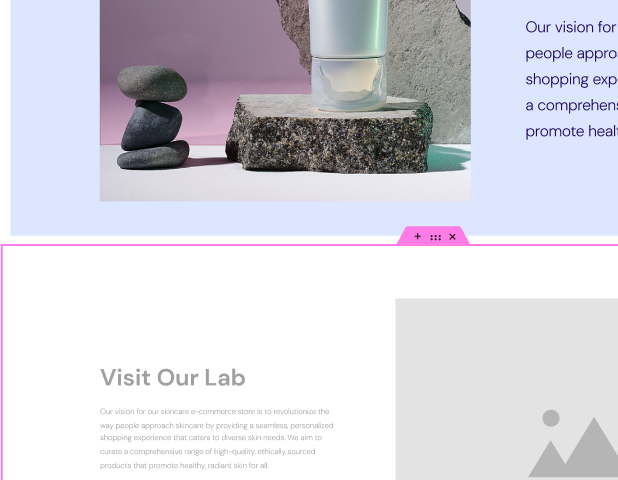
- Flexbox & Grid Containers: Elementor utilizes modern CSS standards like Flexbox and CSS Grid. This allows you to create complex, fluid layouts that align items precisely, distribute space evenly, and adapt perfectly to any screen size.
- Global Design System: You can define your brand’s fonts (including custom uploads) and colors globally. Change your primary brand color in one place, and it updates across every button, heading, and icon on your entire site instantly.
- Motion Effects: You can add entrance animations, scrolling effects (parallax), and mouse tracking to create an immersive experience that keeps visitors engaged longer.
- Responsive Control: Unlike Google Sites, which automates mobile responsiveness (often poorly), Elementor lets you adjust every setting for desktop, tablet, and mobile independently. You can hide a large image on mobile, or change the font size for tablet users specifically.
3. The eCommerce Solution
This is perhaps the most critical difference for businesses.
Google Sites does not have native eCommerce functionality. To sell something, you must use third-party buttons (like PayPal or Stripe links) which usually take the user away from your site to complete the purchase. This friction disrupts the user journey and significantly kills conversion rates.
Elementor features a dedicated WooCommerce Builder. WooCommerce is the world’s most popular eCommerce software.
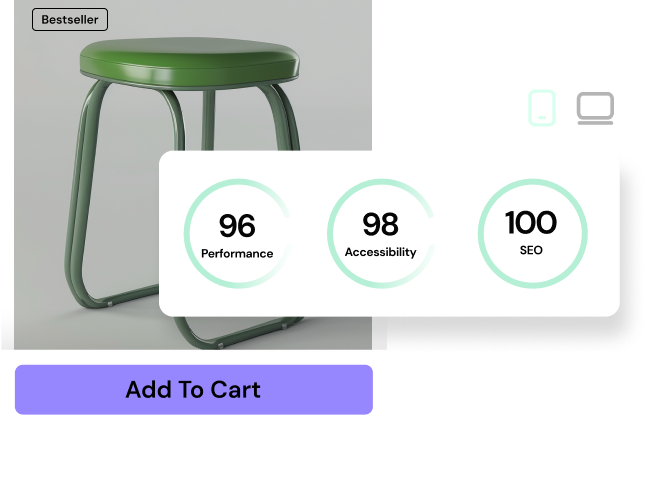
- Custom Product Pages: You aren’t stuck with a default product layout. You can design your single product templates visually, placing the “Add to Cart” button exactly where it creates the most urgency.
- Cart & Checkout: You can customize the look and feel of the cart and checkout flow to match your brand. A branded, trustworthy checkout page reduces cart abandonment.
- Dynamic Content: Elementor allows you to create one template that automatically populates with data from your inventory. This means you design the layout once, and it works for 10 products or 10,000 products.
- Ecommerce Hosting: Elementor offers specialized hosting plans optimized for the database-intensive nature of online stores.
4. The AI Workflow
In 2026, AI is not a novelty; it is a workflow accelerator.
Google Sites has very limited AI integration, mostly relying on external Workspace tools like Gemini for drafting text in a separate document.
Elementor AI offers a natively integrated suite of tools designed to speed up every part of the creation process.
- AI Site Planner: Before you even touch a pixel, you can use the AI Site Planner to generate a full website structure, sitemap, wireframe, and brief in minutes. It acts as a digital strategist, ensuring you don’t miss critical pages.
- Content & Images: You can generate text and unique images directly inside the editor. Need a headline that is shorter and punchier? Ask the AI to rewrite it. Need an image of a “futuristic office with plants”? Generate it instantly.
- Code Assistant: This is a game-changer for non-coders. You can use AI to write custom CSS or HTML snippets to achieve specific design goals. You simply type “make this button pulse on hover,” and the AI writes the code for you.
- Angie: The new agentic AI assistant from Elementor can perform multi-step actions across your WordPress site. It multiplies your productivity by automating tasks like “create a landing page for the Black Friday sale” or “audit my site for accessibility issues.
5. Marketing and Growth
Building the site is only step one. Growing the site—getting traffic and converting it—is step two.
Google Sites leaves you on your own here. There are no built-in email marketing tools, no lead capture popups, and no A/B testing capabilities.
Elementor offers a complete “Grow” stack integrated into the platform.
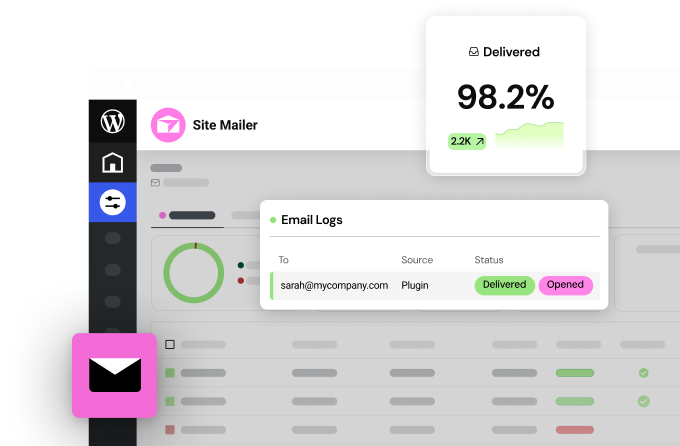
- Site Mailer: One of the biggest pain points in WordPress is that transactional emails (password resets, form confirmations) often go to spam. Site Mailer solves this by ensuring reliable delivery without complex SMTP setups.
- Popup Builder: You can create advanced popups (exit-intent, slide-ins, notification bars) to capture leads. These can be triggered by specific user behaviors, like scrolling 50% down the page or trying to leave the site.
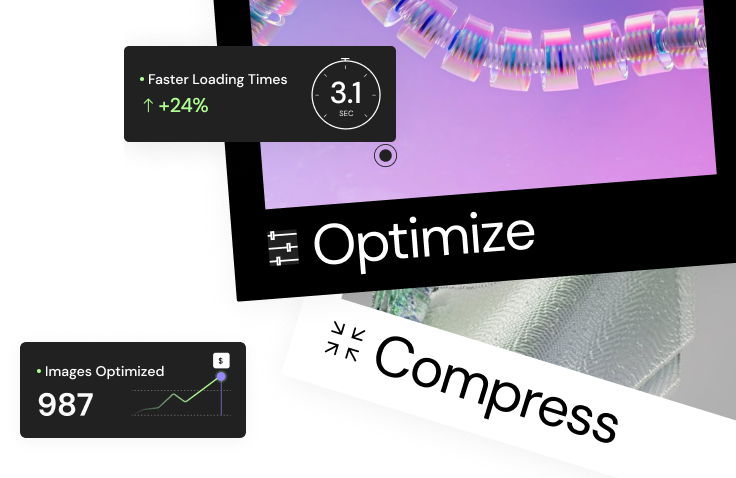
- Image Optimizer: Speed is a ranking factor. This tool automatically compresses your images and converts them to next-gen formats like WebP, ensuring your site loads instantly without you having to manually edit every photo in Photoshop.
Feature Comparison: At a Glance
The following table breaks down the capabilities of Google Sites versus the Elementor Platform across critical business dimensions.
| Feature | Google Sites | Elementor Platform |
| Cost | Free (with Google Account) | Free / Pro / Hosting Plans |
| Hosting Infrastructure | Google Shared Hosting | Google Cloud Platform (via Elementor Hosting) |
| Design Freedom | Rigid Grid | 100% Pixel-Perfect Control |
| Mobile Responsiveness | Automatic (No Control) | Fully Customizable Breakpoints |
| eCommerce | None (Embeds only) | Native WooCommerce Builder |
| SEO Tools | Basic (Meta Title/Desc) | Advanced (RankMath/Yoast Compatible) |
| Data Ownership | Low (Google Proprietary) | High (Open Source WordPress) |
| Marketing Tools | None | Built-in Popups, Forms, Email Marketing |
| Support | Community Forums | 24/7 Premium Support (with Hosting) |
| AI Integration | Minimal | Integrated Generative & Agentic AI |
| Extensibility | Closed Ecosystem | 59,000+ WordPress Plugins |
Competitor Landscape: A Neutral Overview
While Elementor leads the WordPress market, other proprietary platforms exist. It is helpful to understand how they function structurally compared to Google Sites and Elementor.
- Wix: Wix is a SaaS (Software as a Service) platform. It provides a drag-and-drop editor and hosts the website on its own servers. Users pay a monthly subscription that includes hosting and the builder. It operates on a closed system, meaning users cannot migrate their site code to another host if they wish to leave.
- Squarespace: Similar to Wix, Squarespace is an all-in-one platform known for its design-heavy templates. It focuses on providing a curated visual experience where users swap content into pre-set layouts. Like other SaaS tools, it restricts access to the backend code and database.
- Webflow: Webflow is a visual builder that targets designers who understand HTML and CSS. It translates visual design directly into code. It has a steeper learning curve than most builders and is also a closed hosting environment, though it does allow for code export on higher-tier plans.
Unlike these platforms, Elementor operates on WordPress. This means that while it offers the visual ease of Wix or Squarespace, it retains the open-source benefits of data ownership and portability. You are not “renting” the builder; you are building on your own foundation.
Step-by-Step: Building a Professional Site with Elementor
If you have decided to move beyond the limitations of Google Sites, the transition to Elementor is straightforward. Here is a modern workflow for 2026 that leverages the latest tools.
Step 1: Secure Your Foundation
Start by setting up Elementor Hosting. This gives you a pre-installed WordPress environment that is optimized for Elementor right out of the box. You don’t need to mess with databases, FTP clients, or SSL certificates; it is a one-click setup. This effectively solves the “technical headache” that often drives people to simple tools like Google Sites in the first place. You can also claim a free domain name for the first year to get started professionally.
Step 2: Plan with AI
Don’t stare at a blank screen. Use the AI Site Planner.
- Input: Enter your business type (e.g., “Digital Marketing Agency”), your target audience, and your primary goals.
- Generate: The AI will generate a comprehensive sitemap, suggesting exactly which pages you need (e.g., Home, Services, About, Contact, Case Studies).
- Wireframe: It will create a low-fidelity wireframe layout for each page, giving you a structural blueprint before you even begin to design.
Step 3: Choose Your Canvas
For most users, the Hello Theme is the best choice. It is a lightweight, “blank canvas” theme designed specifically by Elementor to work with the builder. It loads incredibly fast and doesn’t add any unwanted styling (like clashing headers or footers), allowing you to control everything via the builder.
- Tip: If you are a total beginner, check out Hello Biz, a version of the theme that comes with guided setup wizards to help you configure basic settings.
Step 4: Design with the Visual Builder
Open the Elementor Editor.
- Drag and Drop: Pull in widgets for headings, images, videos, maps, and buttons.
- Library: If you don’t want to design from scratch, open the Library and import a full “Site Kit.” These are professionally designed, multi-page templates that give you a starting point far superior to Google’s gallery.
- Global Settings: Go to Site Settings and define your typography system and color palette. This ensures that every new page you create automatically inherits your brand style.
Step 5: Extend Functionality
This is where you leave Google Sites in the dust.
- Sell: Install WooCommerce and use the builder to design your shop pages.
- Capture: Use the Form Builder to create a “Contact Us” form that actually integrates with your CRM or email marketing software.
- Optimize: Activate the Image Optimizer to ensure your photos are compressed and converted to WebP format automatically, keeping your site fast and Google-friendly.
Step 6: Launch and Grow
Connect your domain (which is seamless with Elementor Hosting) and publish. Then, use an email marketing platform to start collecting email subscribers and sending out newsletters to drive traffic back to your site. You have now built a growth engine, not just a website.
The Strategic Importance of Owning Your Audience
In the digital age, your website is the only piece of real estate you truly own.
Social media algorithms change; Facebook or TikTok can throttle your reach overnight. Google Search rankings fluctuate. Free tools like Google Business Profiles get shut down.
When you build on a proprietary “walled garden” like Google Sites, Wix, or Squarespace, you are renting. You are subject to the terms of service, price hikes, feature deprecations, and design constraints of the landlord. If they remove a feature you rely on, you have no recourse.
When you build on WordPress with Elementor, you are building equity.
- Portability: You can take your site to any host in the world. Elementor Hosting is the best place for it, but you can leave if you want to. That freedom is valuable.
- Data Access: You own your customer list, your transaction data, and your content database.
- Extensibility: As your business grows, your site can grow. You can turn a blog into a store, or a store into a membership community, or a community into a learning management system (LMS), without having to tear it down and migrate to a new platform.
The Role of Accessibility
Another critical factor often overlooked by free builders is accessibility. In 2026, ensuring your website is accessible to users with disabilities is not just a moral imperative; in many regions, it is a legal requirement (such as the ADA in the US or EAA in Europe).
Elementor includes tools like Ally by Elementor, which provide automated scanning and remediation features. This helps protect your business from lawsuits and ensures you are reaching the widest possible audience—features that are largely absent or manual in basic builders like Google Sites.
10 Common Questions About Google Sites and Website Building
To further clarify the differences, here are answers to the most frequently asked questions regarding Google’s website building capabilities and the alternatives.
1. Is Google Sites completely free? Yes, Google Sites is free to use for anyone with a standard Gmail account. However, if you want more storage or enterprise-level management features, it is included as part of the paid Google Workspace subscription. It is important to remember that “free” usually lacks essential features like a custom domain connection (on personal accounts without a workaround) or advanced SEO tools, which ends up costing you visibility.
2. Can I use a custom domain with Google Sites? Yes, you can connect a custom domain (e.g., www.yourbusiness.com) to a Google Site. However, since Google sold Google Domains to Squarespace, the process now involves purchasing the domain from a third-party registrar and configuring the DNS settings manually. This can be technical and frustrating for beginners compared to the integrated domain purchasing flow in Elementor Hosting.
3. Is Google Sites good for SEO? Google Sites has a reputation for ranking well simply because it is a Google product, but this is a misconception. While it can rank, it lacks the technical SEO controls required for competitive keywords. You cannot edit the schema, customize the robots.txt, or easily manage Open Graph metadata. For competitive niches, this is a significant disadvantage.
4. Can I build an online store on Google Sites? No. Google Sites does not have native eCommerce functionality. You cannot add a product catalog, shopping cart, or checkout process directly. You would need to use third-party “Buy Now” buttons, which provide a disjointed and unprofessional user experience. A dedicated solution like the WooCommerce Builder is necessary for any serious retail business.
5. What happened to the Google My Business websites? Google shut down the website creation feature within Google Business Profiles in March 2024. These simple, one-page sites (ending in business.site) were deactivated, and visitors are now redirected to the Google Maps profile. This forced millions of small businesses to find a new platform and highlights the risk of relying on free tools.
6. How does Elementor compare to Google Sites for beginners? Elementor has a slightly steeper learning curve than Google Sites because it offers significantly more power. However, with tools like the AI Site Planner and the Hello Biz theme, the onboarding process is now incredibly streamlined. Most users find they can build a better site faster with Elementor because the templates are higher quality.
7. Do I need to know how to code to use Elementor? No. Elementor is a “No-Code” platform. You build everything visually using drag-and-drop widgets. However, unlike Google Sites, Elementor allows for custom code if you ever need it. This gives you the best of both worlds—simplicity now, and flexibility later.
8. Is Elementor Hosting reliable? Yes. Elementor Hosting is built on the Google Cloud Platform, utilizing C2 machines and Cloudflare Enterprise CDN. This means you are actually using the same high-performance infrastructure that powers Google’s own services, but with the added flexibility of WordPress.
9. Can I migrate my Google Site to WordPress? There is no automated “one-click” migration tool because the architectures are completely different. You would need to rebuild your site on WordPress. However, because you own the content, you can copy-paste your text and images. Using Elementor’s AI tools can speed up this rebuilding process significantly by generating new layouts for your content.
10. Why is “Data Ownership” such a big deal? When you build on a closed platform like Google Sites (or Wix/Squarespace), you are effectively renting the software. If they raise prices, change features, or ban your account, you lose your website. With WordPress and Elementor, you own the code and the data. You can back it up, move it to a different host, and modify it without permission from a landlord.
Conclusion: Empowering Your Digital Future
Does Google have a website builder? Yes. Is it the right tool for your vision? Likely not.
Google Sites is a relic of a different era of the web—a time when simply “being online” was enough. In 2026, the web is a dynamic, competitive, and essential marketplace. Your website needs to be more than a digital business card; it needs to be a growth engine, a storefront, and a brand ambassador.
By choosing a platform like Elementor, you are not just building a website; you are building a business asset. You gain the freedom to design without limits, the power to sell without friction, and the security of knowing that you—and only you—own your digital presence.
For the hobbyist or the internal team project, Google Sites is a convenient utility. For the professional, the creator, and the entrepreneur, Elementor is the empowering partner that turns a vision into reality. It offers the reliability of Google’s cloud infrastructure through Elementor Hosting, but pairs it with the creative freedom that defines the open web.
If you are ready to take full control of your online presence, you can download Elementor or start with a Pro subscription today.
Looking for fresh content?
By entering your email, you agree to receive Elementor emails, including marketing emails,
and agree to our Terms & Conditions and Privacy Policy.