
Setting up cookie categories on your WordPress site can feel like translating a legal document blindfolded. Your trackers need sorting into groups like analytics, marketing, and necessary, and getting it wrong risks running afoul of privacy laws like GDPR or CCPA. Don’t worry, though, this part’s easier than it looks, and you’ve got this.
You don’t need a data privacy degree to build a compliant site. We’ve pulled together the best tools and methods for creating custom cookie categories in WordPress, from visual setups to direct code, so there’s something here for every skill level, whether a tool lives inside WordPress, connects to an outside dashboard, or is a pure developer framework.
Key Takeaways
- Categorization is critical: sorting cookies into necessary, functional, and marketing groups keeps your site compliant with privacy laws.
- Native tools cut the clutter: a WordPress-native setup means no jumping between browser tabs to manage consent.
- Consent integration matters: modern tools need Google Consent Mode v2 support to keep tracking running legally.
- Automation saves time: script scanning takes the guesswork out of identifying tracking cookies.
Why Custom Cookie Categories Matter for Your Site
When someone visits your site, scripts start loading in the background. Some are harmless, like the ones that remember what’s in a shopping cart. Others, like tracking pixels, follow people across the web to serve targeted ads, and privacy laws require visitors get to choose which types they allow.
Grouping trackers into custom categories lets visitors opt into analytics while keeping marketing cookies blocked. Bundle everything into one switch and most people just click decline, so clear categories build real trust. Standard categories usually cover necessary, preferences, statistics, and marketing, but your site might need something more specific, like its own category for video players or live chat widgets.
1. Cookie Consent by Elementor
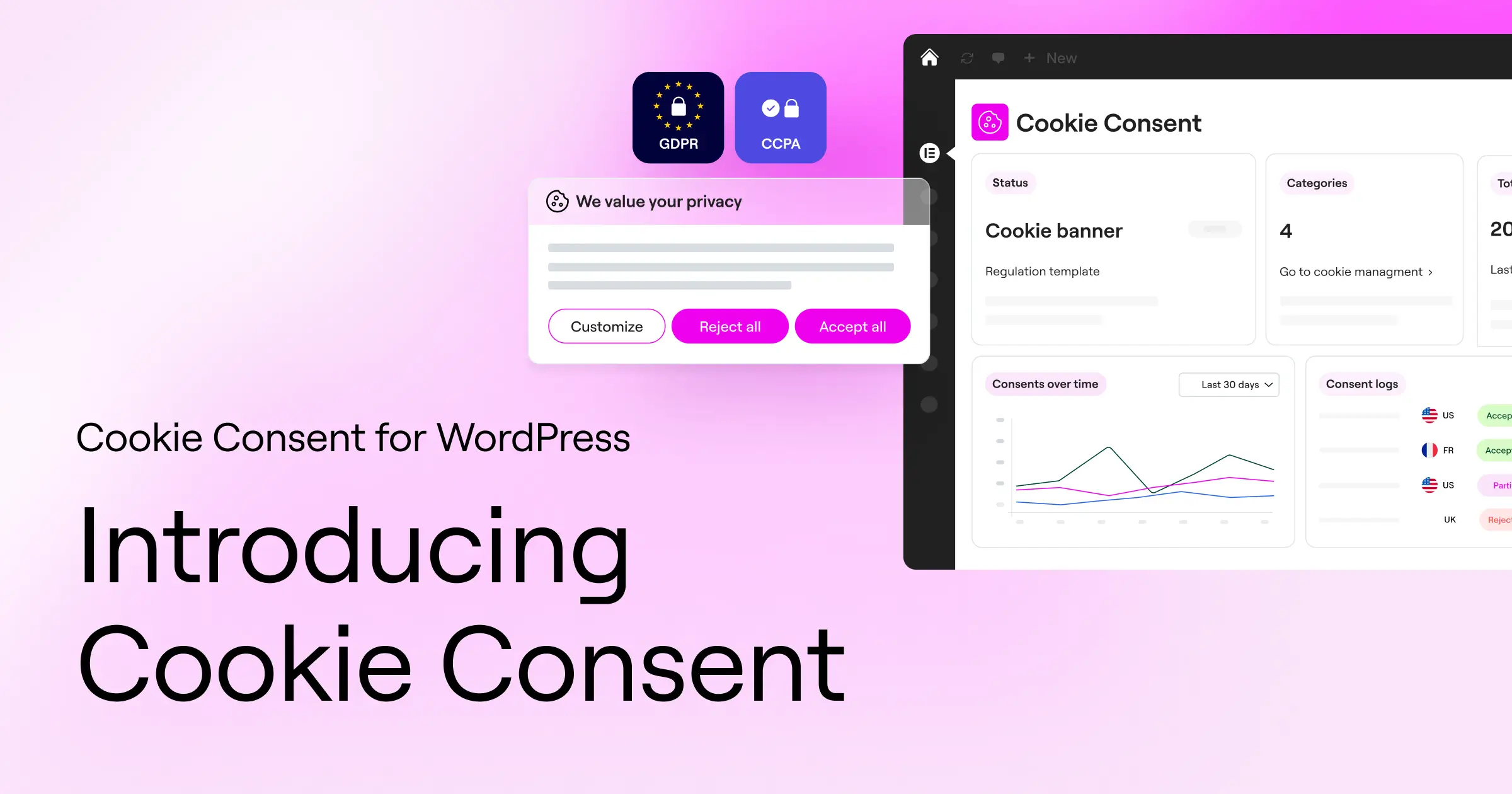
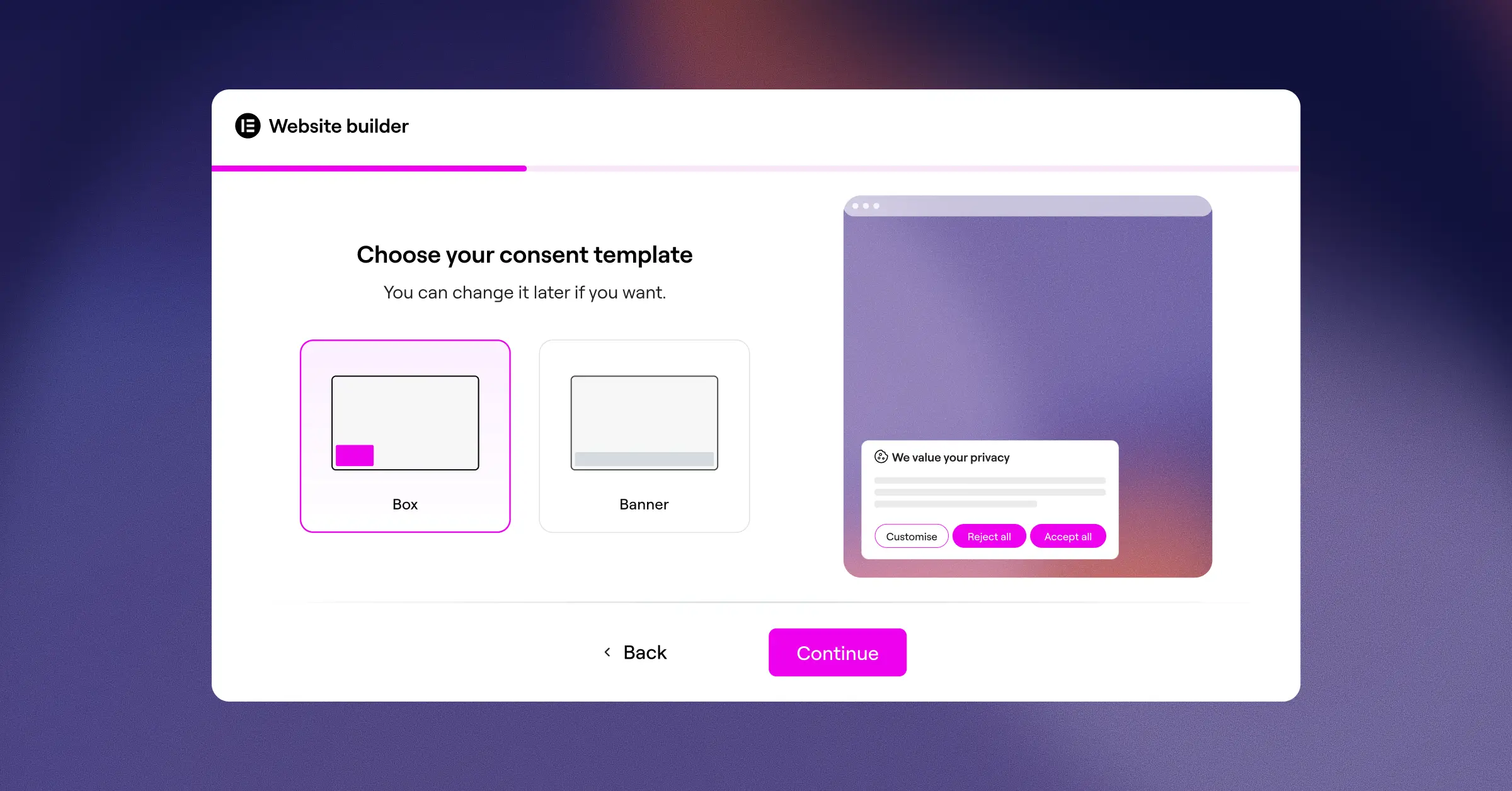
If you run your site on WordPress, Elementor gives you a smooth way to manage privacy right from your dashboard. The built-in Cookie Consent capability keeps custom categories, automatic scans, and script management under one roof, in a three-step setup under five minutes.
Core Capabilities
- Scans your site automatically to categorize tracking scripts.
- Builds consent banners matching your brand’s typography and colors.
- Logs consent history for full audit readiness.
- Applies geo-targeting to show the right banner to EU or California visitors.
- Integrates with Google Consent Mode v2 to keep ad conversion data accurate.
Pros & Cons
Pros: No external accounts, a fast setup, strong visual customization, and full WordPress integration, including Global Privacy Control (GPC) support and a built-in policy generator, all included in Elementor One at no extra cost.
Cons: Best suited to sites already using Elementor for their design workflow.
Our Verdict
For a clean, unified admin experience, the Cookie Consent capability is a top pick for the compliance power you need in 2026. Already on Elementor One? It’s waiting for you.
2. CookieYes
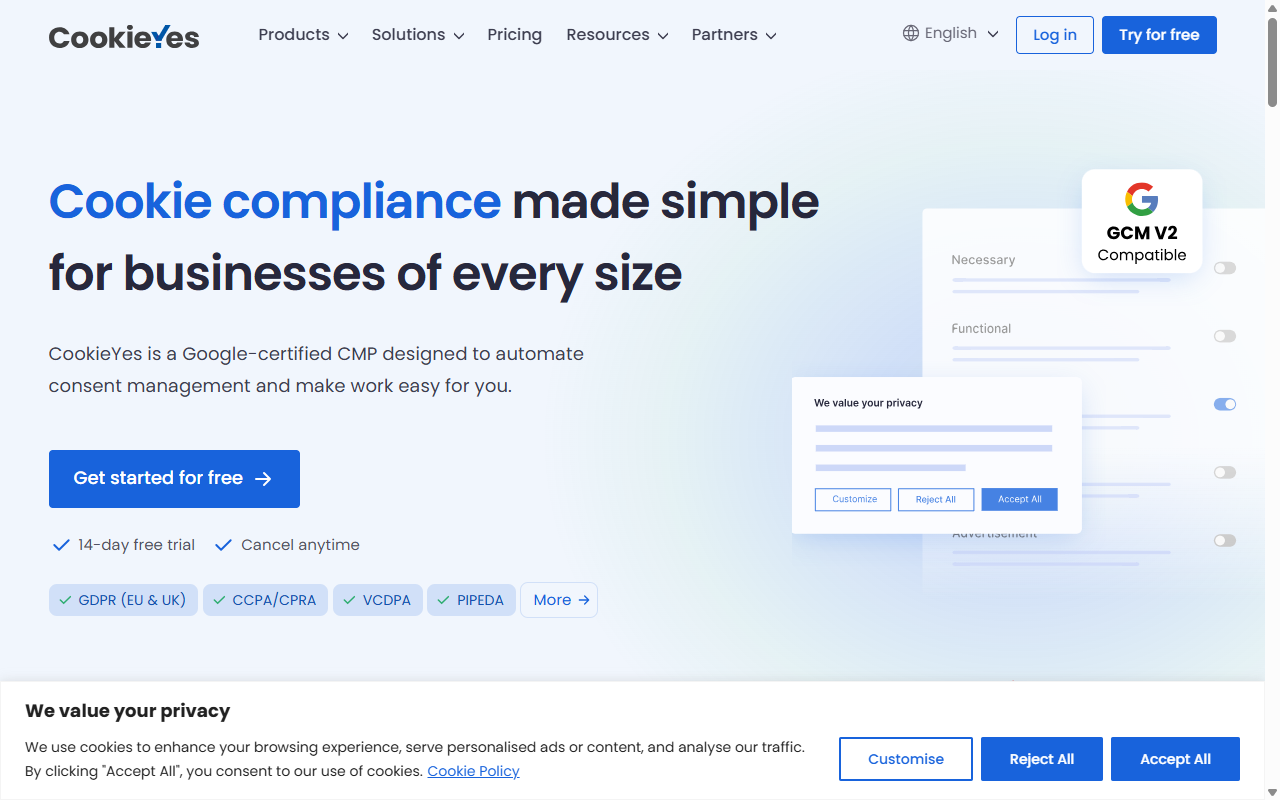
CookieYes is a well-known name in privacy tools, with a WordPress integration connecting your site to its cloud-based platform, a solid pick if you manage multiple sites from one dashboard. It crawls your site to identify trackers, sorts them into standard classifications, and lets you build custom categories in its web app.
Core Capabilities
- Identifies hidden tracking scripts with an automated scanner.
- Generates banners translated into over thirty languages.
- Records consent choices in a cloud ledger for legal proof.
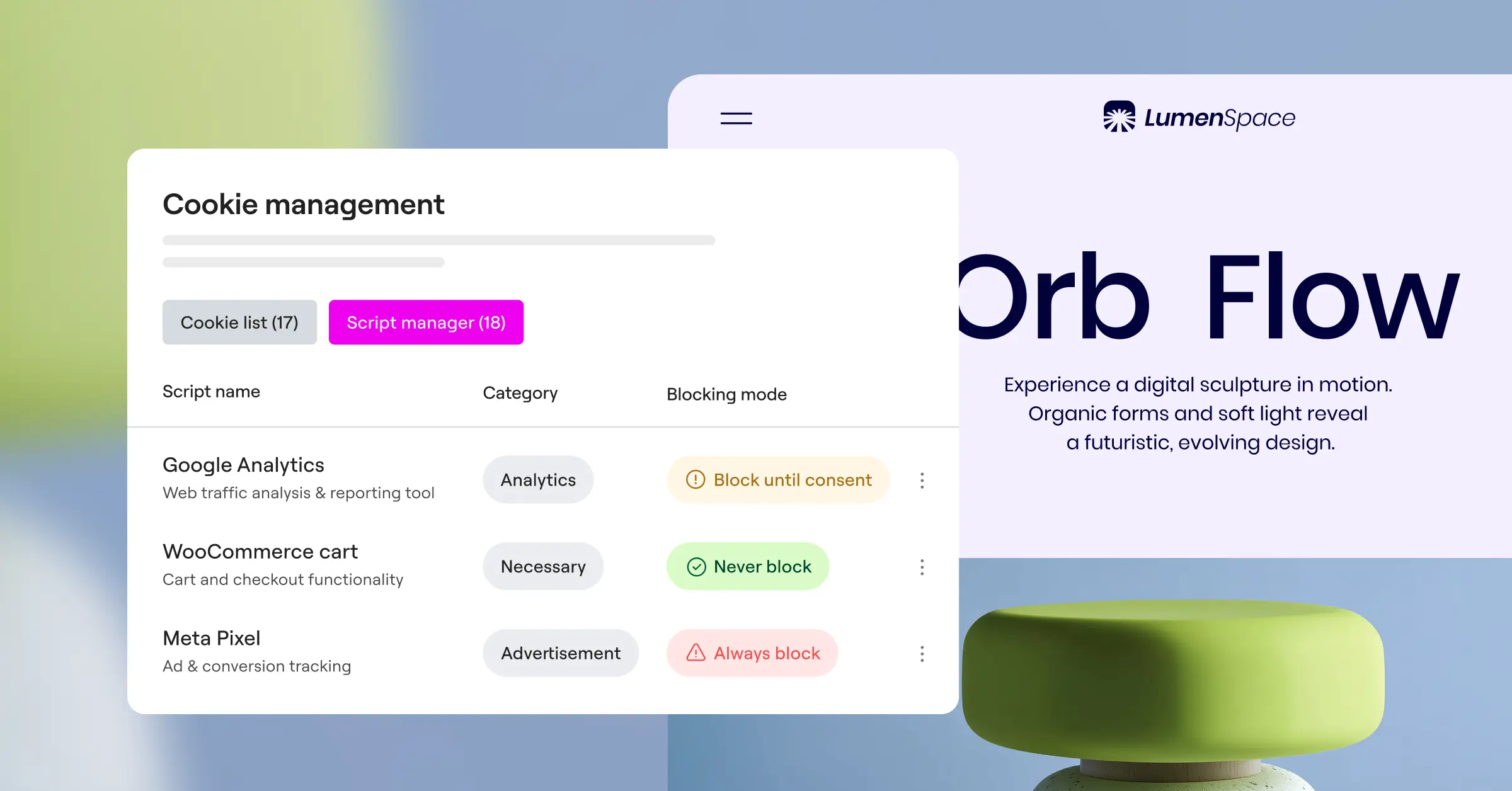
- Blocks script categories until the user toggles them on.
Pros & Cons
Pros: Good multi-site management, a large database of pre-categorized cookies, and a straightforward setup.
Cons: Settings live on an external site, and the entry-level plan has strict pageview limits.
Our Verdict
CookieYes is a reliable, feature-rich service if you don’t mind stepping outside WordPress to configure categories and consent policies.
3. Cookiebot
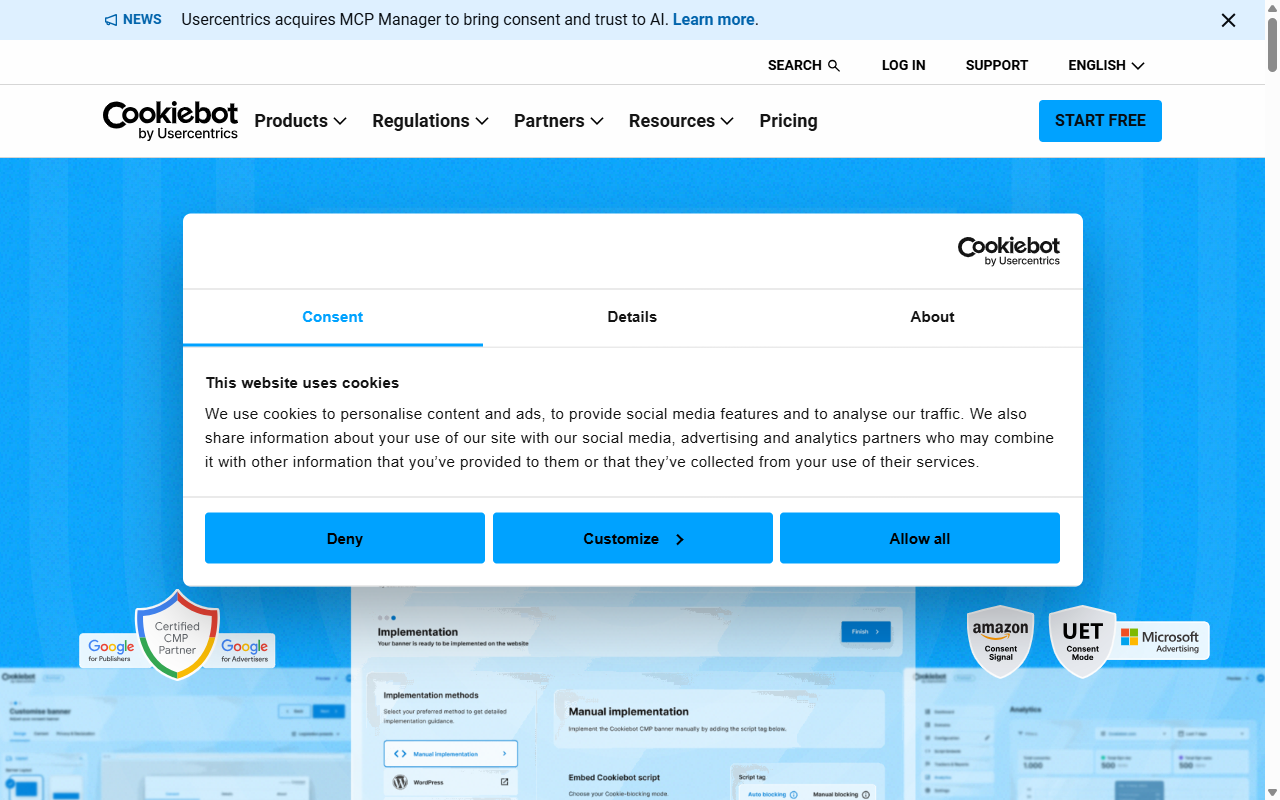
Cookiebot is an enterprise-grade consent provider known for thorough automated scanning, useful if your site runs many third-party integrations, marketing tools, and ad networks. Its main strength is automated monthly reporting showing exactly what trackers changed, with custom banners and cookie groupings set from its cloud dashboard.
Core Capabilities
- Detects active tracking technologies through deep weekly scans.
- Categorizes scripts into functional, statistical, and marketing buckets.
- Presents a clean preference widget with clear choices.
- Delivers compliance reports to your inbox.
Pros & Cons
Pros: A detailed scanning engine, solid compliance for larger sites, and support for Consent Mode v2.
Cons: Pricing can be a factor for smaller sites, with settings in an external cloud dashboard.
Our Verdict
Cookiebot suits larger businesses with complex tracker inventories that want automated, hands-off scanning and don’t mind a cloud-hosted setup.
4. Complianz
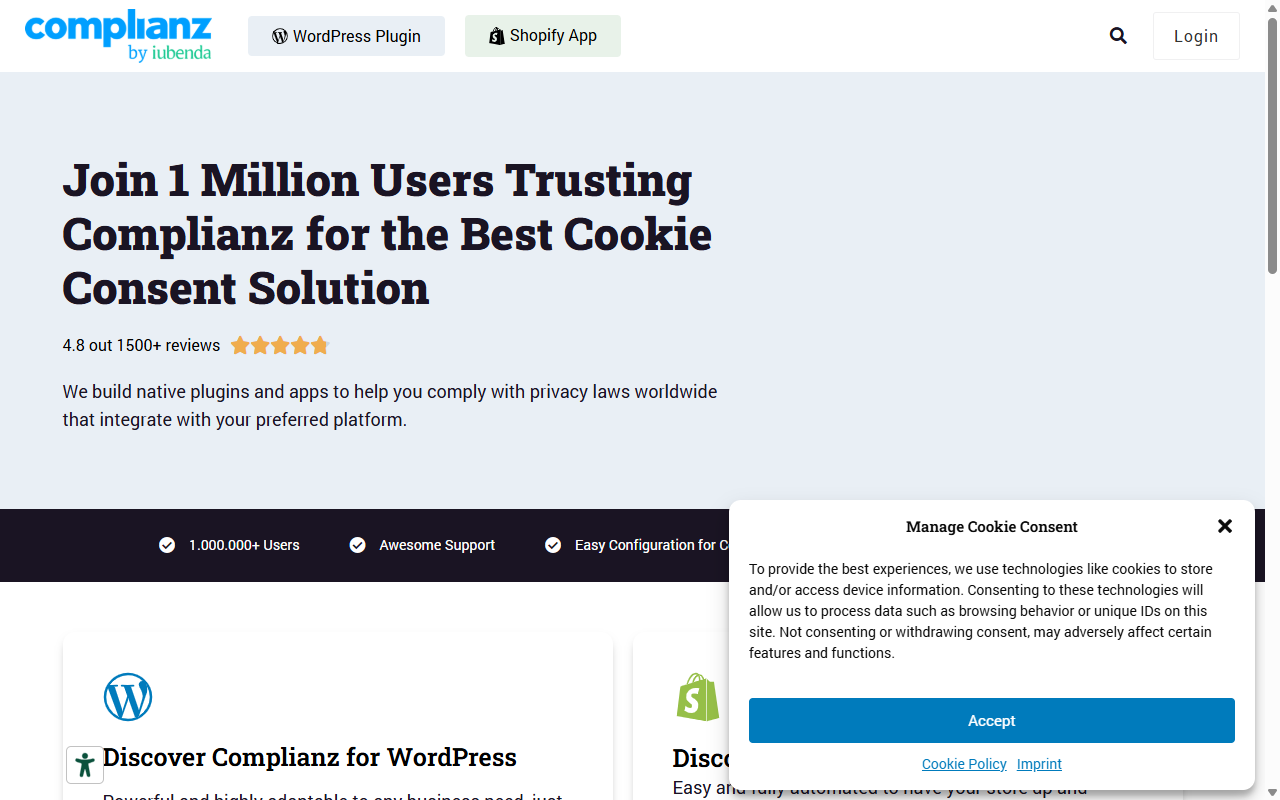
Complianz is a privacy tool built for the WordPress community. Rather than a cloud dashboard, it walks you through a step-by-step wizard inside your WordPress admin, asking about your business as you go, then generates a customized cookie policy and configures banners based on your region’s legal requirements.
Core Capabilities
- Configures banner behavior through a guided setup wizard.
- Blocks social embeds and external frames until consent is granted.
- Generates legal documents that update as your site changes.
- Adapts categorization rules for GDPR, CCPA, and UK law.
Pros & Cons
Pros: Built natively for WordPress, a strong privacy-by-design approach, and automatic blocking of embeds like YouTube.
Cons: The setup wizard can run long, and the interface feels crowded at first.
Our Verdict
If you’d rather have a self-hosted, wizard-driven approach, Complianz handles complex legal logic well.
5. iubenda
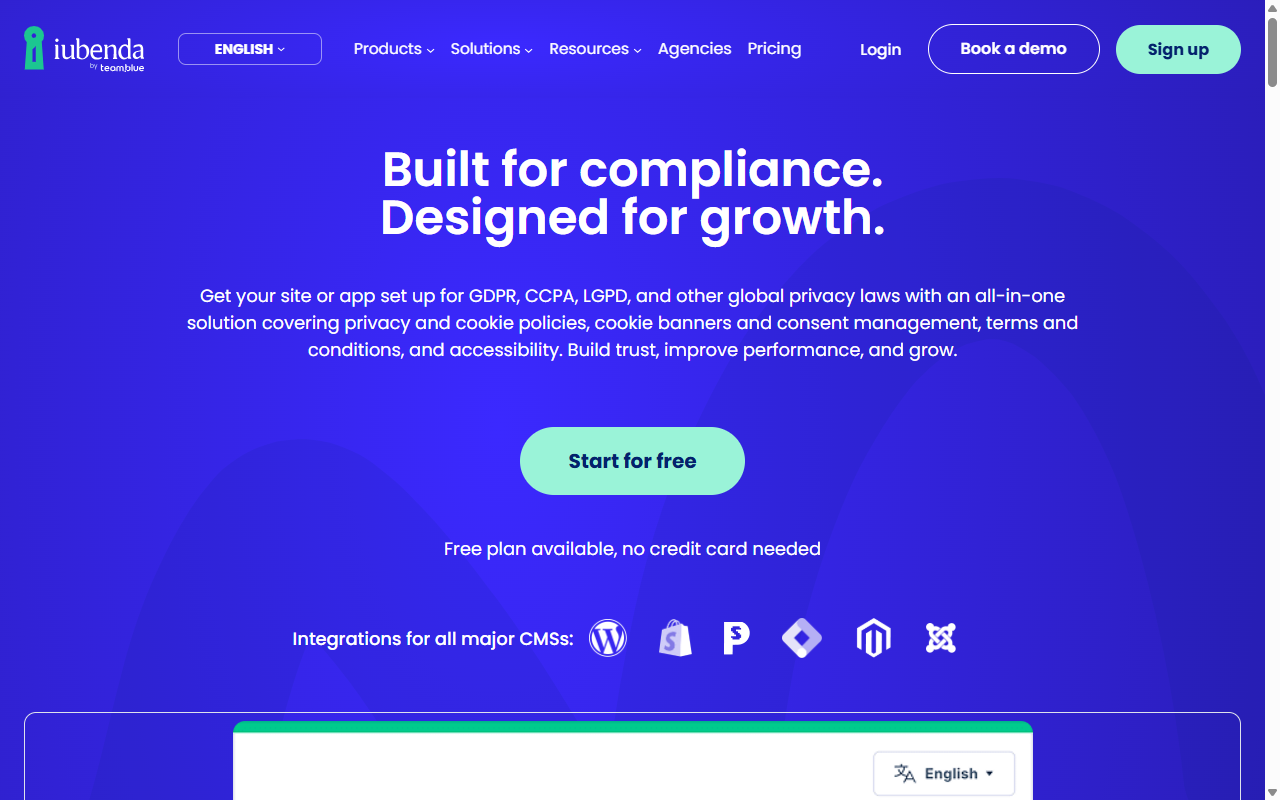
iubenda takes a broader view of compliance, pairing legal document generation with its cookie consent tool, so your privacy policies, terms, and banners stay in sync. Its banner lets you define categories through a cloud dashboard that pushes settings to your site via an integration snippet.
Core Capabilities
- Generates compliant policies that update when laws change.
- Saves consent logs inside a remote cloud database.
- Translates banners and legal documents into multiple languages.
- Configures consent parameters to match privacy rules.
Pros & Cons
Pros: A complete legal compliance suite, customizable templates, and a good fit for international sites.
Cons: Custom configurations have a steeper learning curve, with settings on an external dashboard.
Our Verdict
iubenda suits anyone who needs a full legal compliance package that goes beyond cookie banners.
6. OneTrust
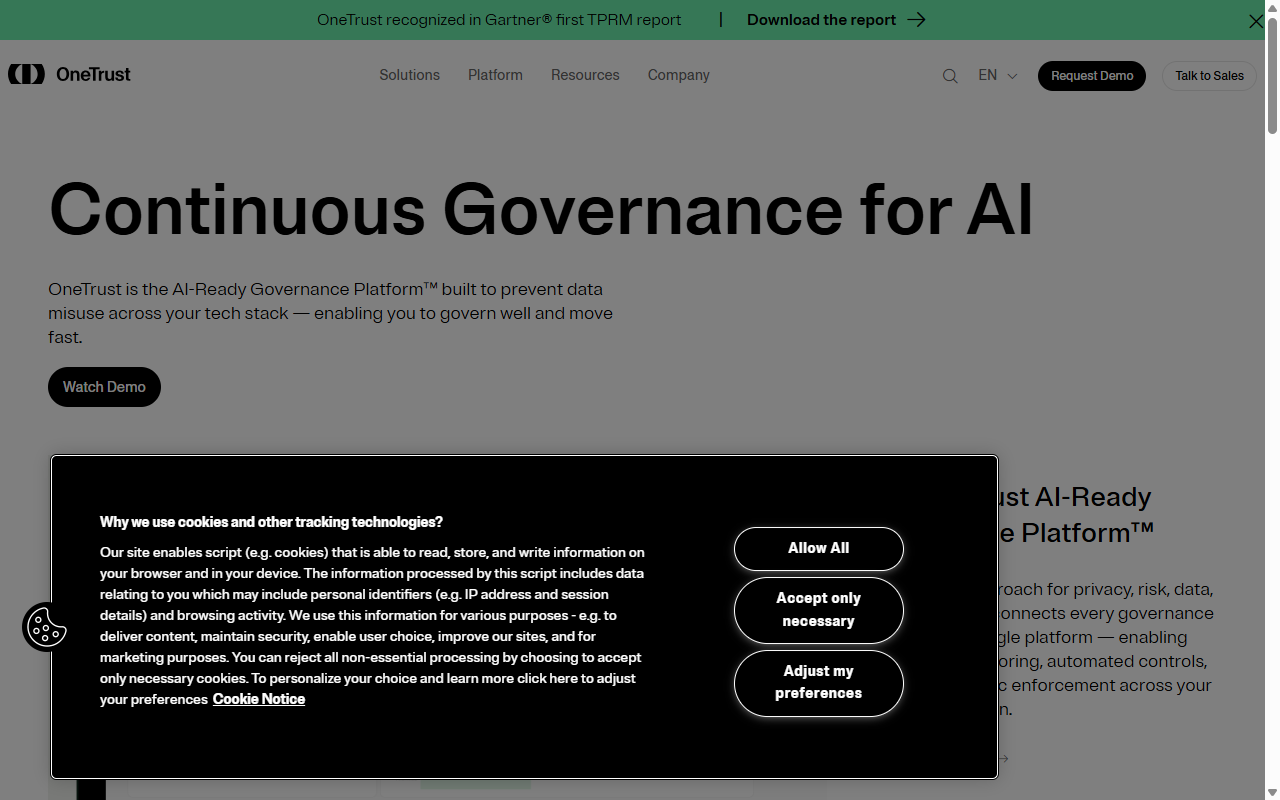
OneTrust is an enterprise privacy platform built for large organizations, global brands, and complex sites facing multi-jurisdictional rules, with cookie consent capabilities that let you configure custom categories and run cross-domain workflows.
Core Capabilities
- Monitors tracker behavior across corporate domains.
- Builds detailed user preference portals.
- Schedules automated scans to catch compliance issues.
- Exports audit logs for regulatory reviews.
Pros & Cons
Pros: A widely used enterprise tool with broad configuration options and deep reporting.
Cons: Complex for small business owners, with pricing to match its enterprise positioning.
Our Verdict
OneTrust fits enterprise-level sites that need complex data governance, though it’s far more than most WordPress blogs or small shops will need.
7. Termly
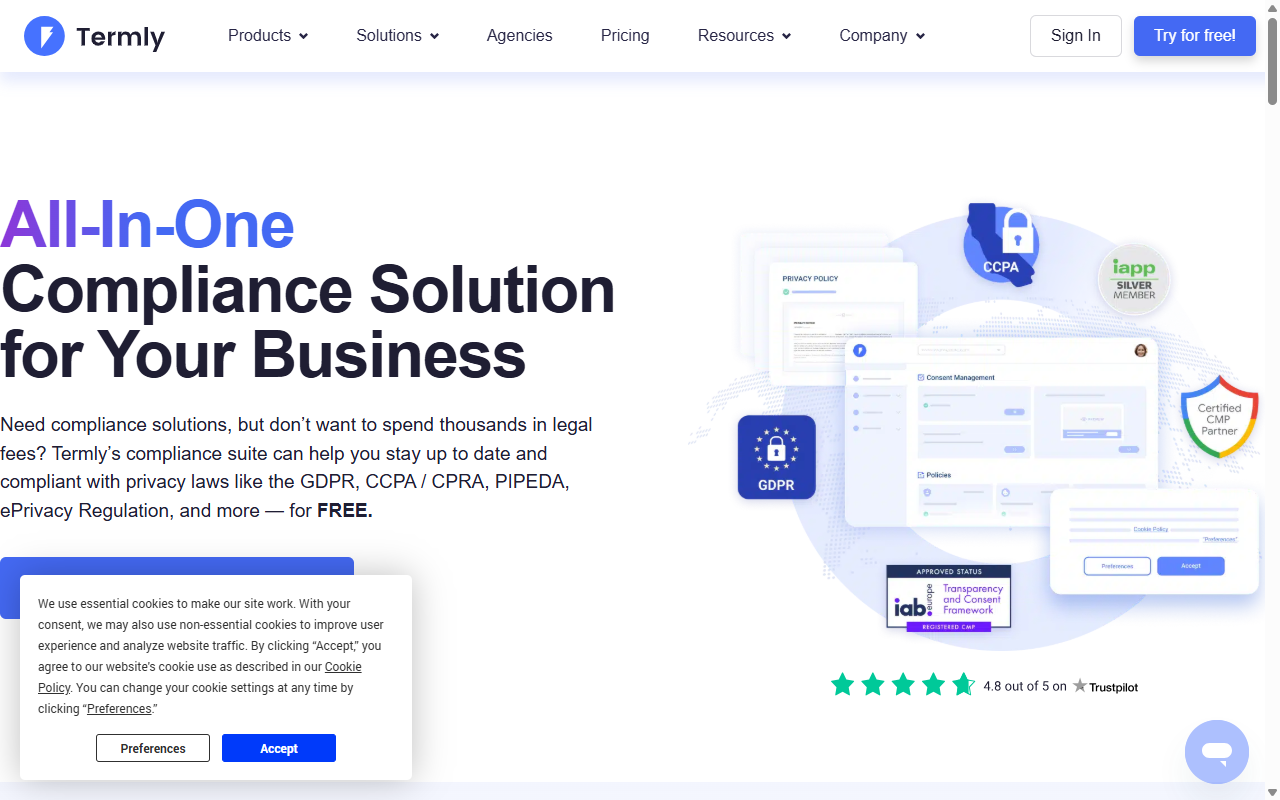
Termly is a compliance platform for small businesses and startups: a privacy policy generator, a terms of service builder, and a cookie consent manager. Its cookie features are simple to configure, letting you categorize cookies and generate a clean banner with little technical overhead.
Core Capabilities
- Creates custom banners with a simple visual editor.
- Scans your site to categorize common tracking codes.
- Drafts cookie policies based on your scanned data.
- Maintains records for basic audit needs.
Pros & Cons
Pros: A user-friendly dashboard, a quick setup for non-technical users, and simple compliance tools.
Cons: The entry-level plan is limited, lacking the depth native WordPress tools offer.
Our Verdict
Termly fits startups wanting an uncomplicated, friendly compliance tool without wrestling with technical code.
8. Osano
Osano is a B-corp compliance platform focused on data privacy, promising to simplify compliance with a legal guarantee for qualified enterprise customers. Its cookie tool uses a polished script blocker that stops tracking scripts until the visitor picks their preferred categories.
Core Capabilities
- Manages privacy requests through a central dashboard.
- Monitors third-party vendor scripts for data issues.
- Displays geo-targeted banners based on visitor location.
- Blocks tracking scripts until the visitor gives explicit consent.
Pros & Cons
Pros: A secure script-blocking engine, clean banner designs, and a strong focus on privacy ethics.
Cons: Premium plans are priced for larger budgets, and custom categories take a bit of a curve.
Our Verdict
Osano is an ethically minded pick for growing companies that want solid compliance and script monitoring in one place.
9. Custom Code via Functions.php & JavaScript
For developers who want complete control, writing your own cookie logic with functions.php and custom JavaScript avoids external tool overhead entirely. You can build your own banner, set preferences in the browser, and load scripts conditionally based on approved categories.
Core Capabilities
- Executes your own script logic without external requests.
- Saves choices instantly in browser cookies or local storage.
- Triggers marketing or analytics tags based on custom toggles.
- Avoids database bloat to keep your site fast.
Pros & Cons
Pros: Zero cost, maximum performance control, and complete freedom over design and behavior.
Cons: Requires advanced coding knowledge, and you’ll need to manually track new cookies as features get added.
Our Verdict
Writing your own categorization code suits developers who want full control over loading behavior and performance, without leaning on a third-party tool.
10. WP Consent API Integration
The WP Consent API is an open-source framework built to standardize how WordPress tools handle cookie consent. It acts as a central registry, so WooCommerce, Google Analytics, and Facebook Pixel can listen to the same settings without stepping on each other.
Core Capabilities
- Standardizes how active tools register consent states.
- Passes consent choices cleanly to third-party scripts.
- Integrates with standard developer hooks in WordPress.
- Minimizes conflicts between active compliance features.
Pros & Cons
Pros: A standardized, modern, developer-friendly approach that’s highly stable.
Cons: Takes some coding knowledge to implement fully, and not every third-party tool supports it yet.
Our Verdict
The WP Consent API points to where standardized WordPress compliance is headed, a great fit for developers building custom themes and integrations.
How the Top WordPress Cookie Tools Compare
Choosing the right approach comes down to your budget, technical comfort, and how much time you want to spend on consent settings. Here’s how the leading tools and methods stack up.
| Tool / Method | WordPress Native | Setup Time | Google Consent Mode v2 | Custom Categories |
|---|---|---|---|---|
| Cookie Consent (Elementor) | Yes | Under 5 Mins | Supported | Fully Supported |
| CookieYes | No (SaaS Connected) | 10-15 Mins | Supported | Supported |
| Cookiebot | No (SaaS Connected) | 15-20 Mins | Supported | Supported |
| Complianz | Yes | 20-30 Mins | Supported | Supported (Pro Only) |
| iubenda | No (SaaS Connected) | 20-30 Mins | Supported | Supported |
| Custom Code | Yes | Hours | Manual Code Needed | Unlimited (Manual) |
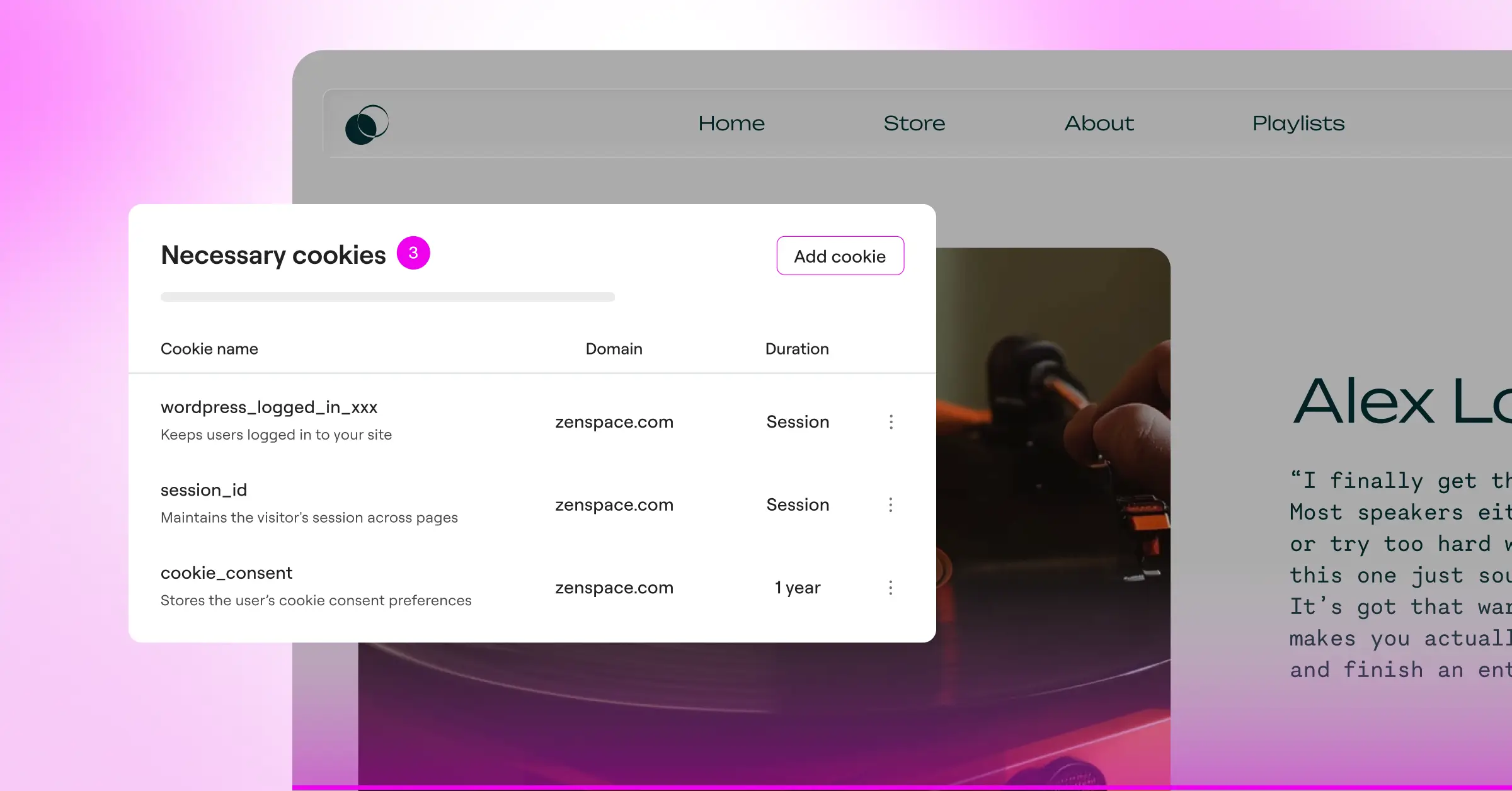
“Managing cookie consent in WordPress is no longer just about showing a banner. It’s about creating a system where tracking scripts actually listen to the user’s choices. Using native tools makes this process significantly easier for site owners because you’re not jump-cutting between external platforms to verify your setup.”
– Itamar Haim, Web Compliance Specialist
Step-by-Step: How to Plan Your Custom Cookie Categories
Before you start toggling settings, map out how your cookies should be categorized. Mis-tag a marketing cookie as “necessary” and you risk legal penalties; block a session cookie and you’ll break your site.
Break this into three phases:
- Run a complete site audit. Use a tool like Elementor Cookie Consent or an online scanner to find every cookie your site uses, checking logged out so you don’t scan admin-only cookies.
- Group your cookies by purpose. A cookie that just shows a YouTube video is functional or media; one tracking Ads conversions is marketing.
- Configure your script blocking. Block scripts until the user opts in, what’s called prior consent, the backbone of GDPR-style privacy rules.
Typical categories on your site:
- Necessary Cookies. Login sessions, security, and cart saves. These don’t need opt-in consent, but you still have to disclose them.
- Functional Cookies. Store preferences like language, display settings, or live chat states.
- Analytical Cookies. Track pageviews, bounce rates, and user flows. Under GDPR, these stay blocked until the visitor actively consents.
- Marketing/Targeting Cookies. Used by ad networks like Meta or Google Ads to track activity across sites, requiring explicit opt-in consent.
Crucial Considerations for Google Consent Mode v2
If you run Google Analytics or Ads campaigns, pay close attention to Google Consent Mode v2, a framework Google built so its tracking tags respect consent choices automatically.
Instead of fully blocking Google tags when a visitor declines consent, Consent Mode v2 lets those tags run in a restricted, cookieless state, so Google can model conversion data without violating privacy. Your cookie consent tool needs native support for this to keep ad campaigns running without data gaps.
Setting this up by hand gets complex fast, since it means loading the right consent states before any Google tags fire. A native tool that handles this handshake automatically saves hours of work. Learn more about GDPR compliance for WordPress sites.
Frequently Asked Questions
What happens if I do not categorize my cookies in WordPress?
Your site loads every tracking script by default, collecting personal data without consent, which can mean real legal penalties for visitors in strict-privacy regions like the EU or California.
Can I create a custom cookie category for just one specific tool or integration?
Yes, most consent tools let you add a separate opt-in toggle for something like a social feed or live chat widget.
Is Google Consent Mode v2 mandatory in 2026?
If you serve EEA visitors and use Google Ads or Analytics to track conversions, yes, effectively, or you can’t capture conversion data or build remarketing audiences.
Do necessary cookies require consent from site visitors?
No, cookies strictly necessary for core site function, like security, shopping carts, and login sessions, don’t need prior consent, though you must still list them in your policy.
Will adding a cookie consent banner slow down my WordPress site?
It can, if a heavy external tool fires off multiple slow API requests. A native tool like Elementor Cookie Consent stays lean, running inside your site framework.
Can I style my cookie consent banners to match my brand?
Yes, most consent tools let you customize layout, typography, and colors, and a WordPress-native tool pulls styling from your site’s global design settings.
How often should I scan my WordPress site for new cookies?
At least once a month, or whenever you add a new tool. New scripts appear quietly, so regular scanning keeps your logs accurate.
What is the difference between GDPR and CCPA regarding cookie consent?
GDPR (Europe) uses “opt-in”: cookies stay blocked until the visitor actively consents. CCPA (California) uses “opt-out,” letting cookies load right away but requiring a way to opt out of data sale.