Protecting your visitors’ privacy shouldn’t require a law degree. If you run a small business site, the California Consumer Privacy Act (CCPA) can feel intimidating, but getting compliant is simpler than it looks. Here’s a walkthrough of the top compliance resources and tools for this year, so you can respect user privacy, build real trust, and keep your site safe from penalties without draining your budget.
Key Takeaways
- CCPA applies widely: if you serve California residents, the rules apply, no matter where your business is based.
- Native integration wins: built-in tools like Cookie Consent manage compliance without leaving your WordPress dashboard.
- Clear opt-outs matter: every site needs a visible “Do Not Sell My Personal Information” link or banner.
- Document everything: precise consent logs are your best defense if an audit comes knocking.
- Pair guides with active tools: the best resources combine legal explanations with software that automates cookie handling.
Why CCPA Compliance Matters for Small Businesses
If you think your small business is too small to worry about California’s privacy law, take a closer look. The CCPA covers any business that collects personal data from California residents once you meet certain criteria, and many partners and ad networks require compliance even below those thresholds. It protects your users’ digital rights and builds long-term visitor trust, since people who see you respect their data feel safer buying from you. Regulators have issued heavy fines for ignoring these rules, though getting it right is simpler than it seems.
3 Core Steps to Verify Your CCPA Status
Before buying any tool, it helps to know where your business stands:
- Check your audience: look at your analytics for consistent traffic from California residents; if you see it, CCPA applies.
- Review your data collection: list every piece of personal data you collect, including emails, IP addresses, tracking pixels, and contact forms.
- Identify data sharing: note whether you share or sell any of it to third-party ad networks, analytics tools, or marketing platforms.
“Managing user consent is no longer just about avoiding a penalty. It’s about building a trustworthy digital doorway where your customers feel respected and safe.”
– Itamar Haim, Web Compliance Specialist
Comparison of the Top CCPA Compliance Tools & Guides
Here’s how the top solutions stack up at a glance.
| Solution Name | Type of Resource | Setup Time | Best For | Dashboard Style |
|---|---|---|---|---|
| Cookie Consent | WordPress-Native Tool & Guide | Under 5 minutes | WordPress & Elementor Users | WordPress Dashboard (No external sites) |
| CookieYes | Cloud Tool & Manual Checklist | 10 to 15 minutes | Multi-platform sites | External Cloud Platform |
| Cookiebot | Automated Compliance Resource | 15 to 20 minutes | Developer-focused sites | External Cloud Platform |
| Complianz | WordPress Compliance Assistant | 15 to 25 minutes | Strict legal-focused sites | WordPress Dashboard |
| iubenda | Policy Generator & Consent Manager | 20 to 30 minutes | Global multi-language sites | External Dashboard |
The 10 Best CCPA Compliance Guides & Tools for 2026
Here are the best resources, guides, and tools for CCPA compliance, each offering something different, whether you want an all-in-one technical tool or a friendly legal guide.
1. Cookie Consent (by Elementor)
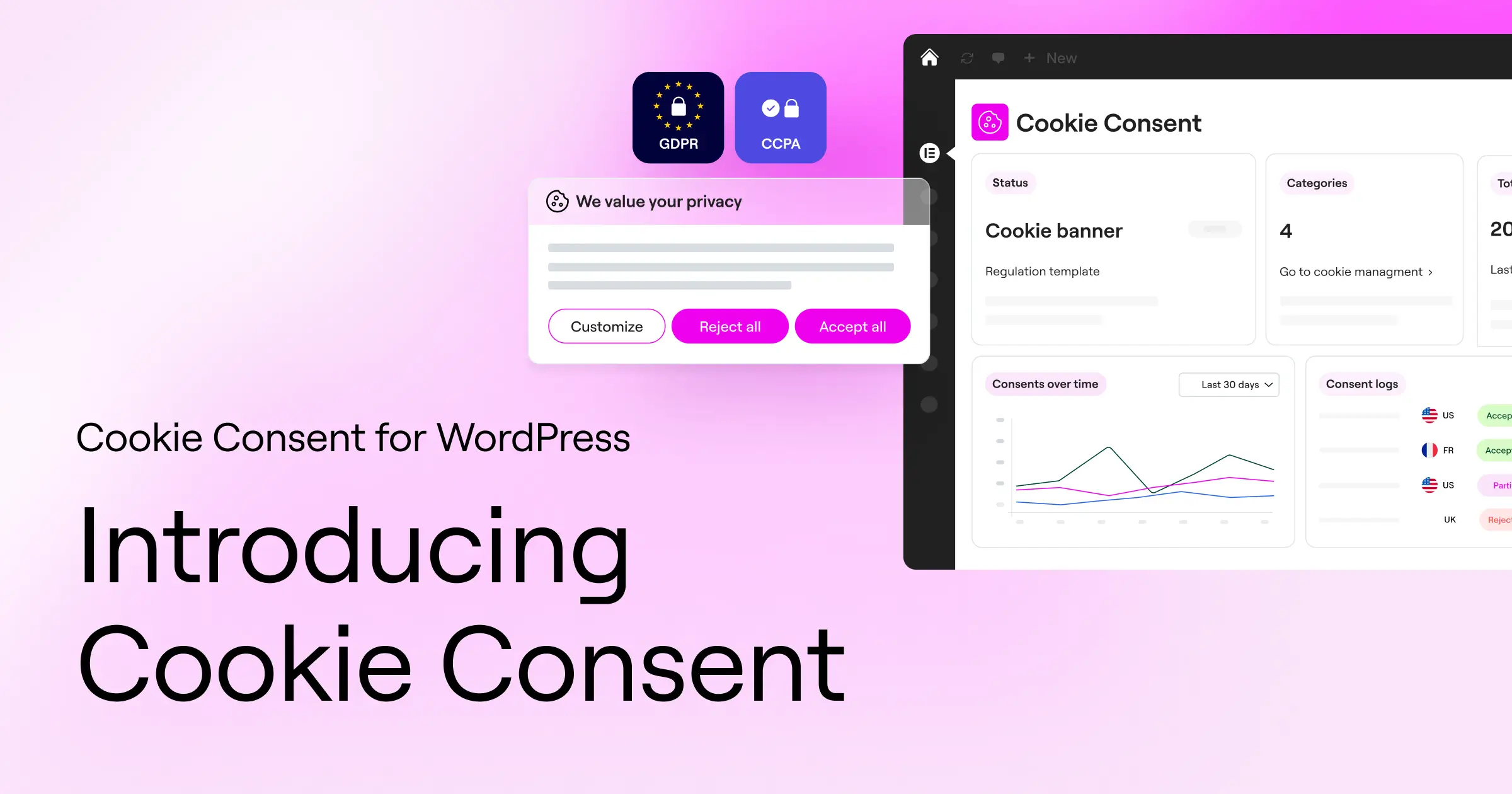
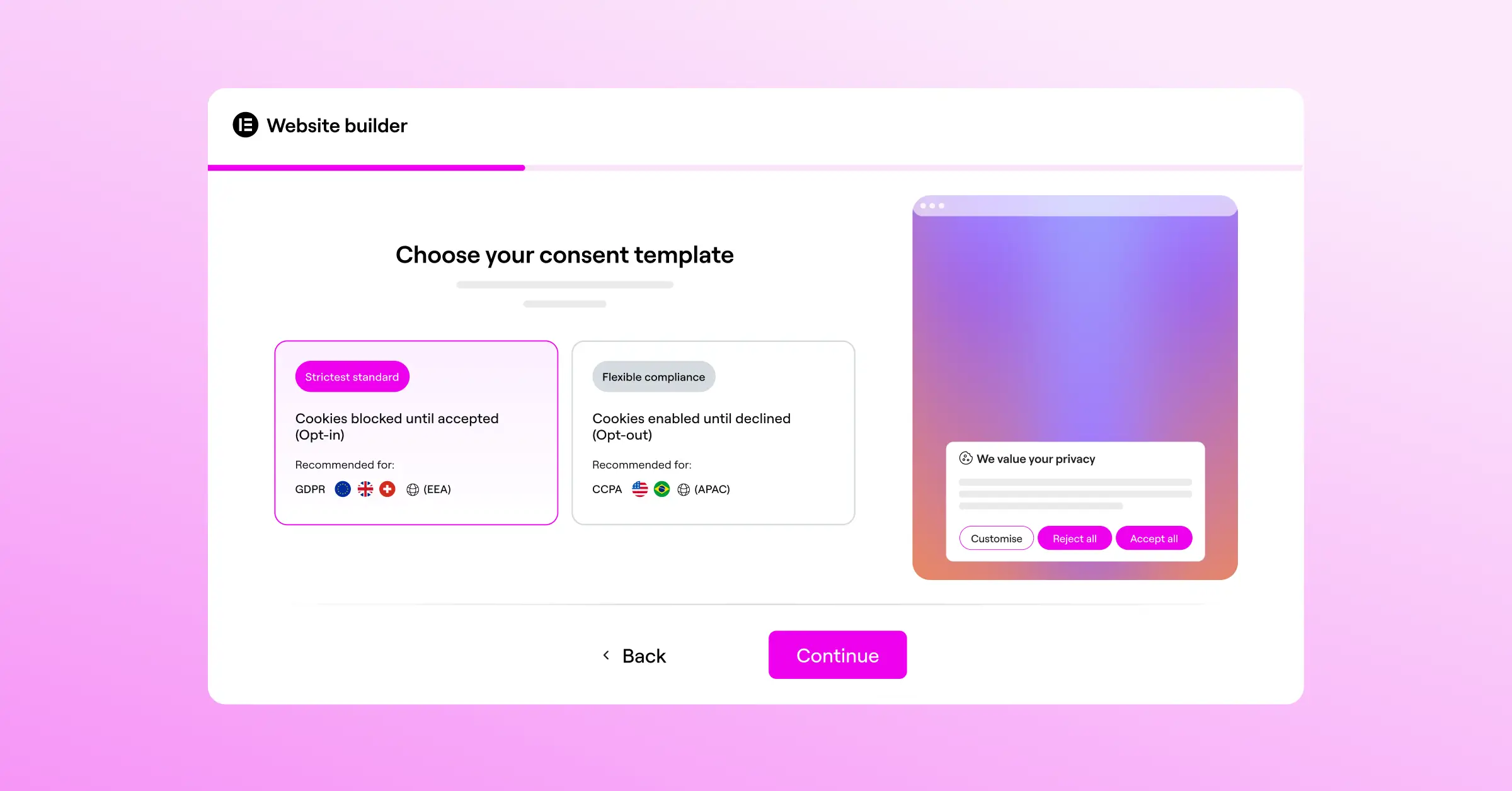
If you run a WordPress site, you want something simple. Cookie Consent is the native cookie consent capability built into WordPress, letting you manage GDPR and CCPA compliance right from your dashboard, no separate platform or external code needed. It also supports Google Consent Mode v2 and Global Privacy Control (GPC), both increasingly required for EU and California traffic.
- Builds custom-branded banners matching your site.
- Logs visitor consent for a clean audit trail.
- Scans your site to categorize cookies and trackers.
- Targets regions, so California and EU visitors see the right notice.
- Generates compliant privacy policies via a step-by-step assistant.
- Blocks third-party scripts until a visitor consents.
Pros:
- Runs entirely inside WordPress, no external accounts needed.
- Includes a free tier via Elementor One.
- Sets up in under five minutes.
- Offers native white-label options for agencies.
Cons:
- Built for WordPress, so it won’t work on Shopify or Wix.
Verdict: The best choice for WordPress owners who want simple, fast cookie consent without third-party dashboard clutter.
2. CookieYes CCPA Compliance Guide & Banner
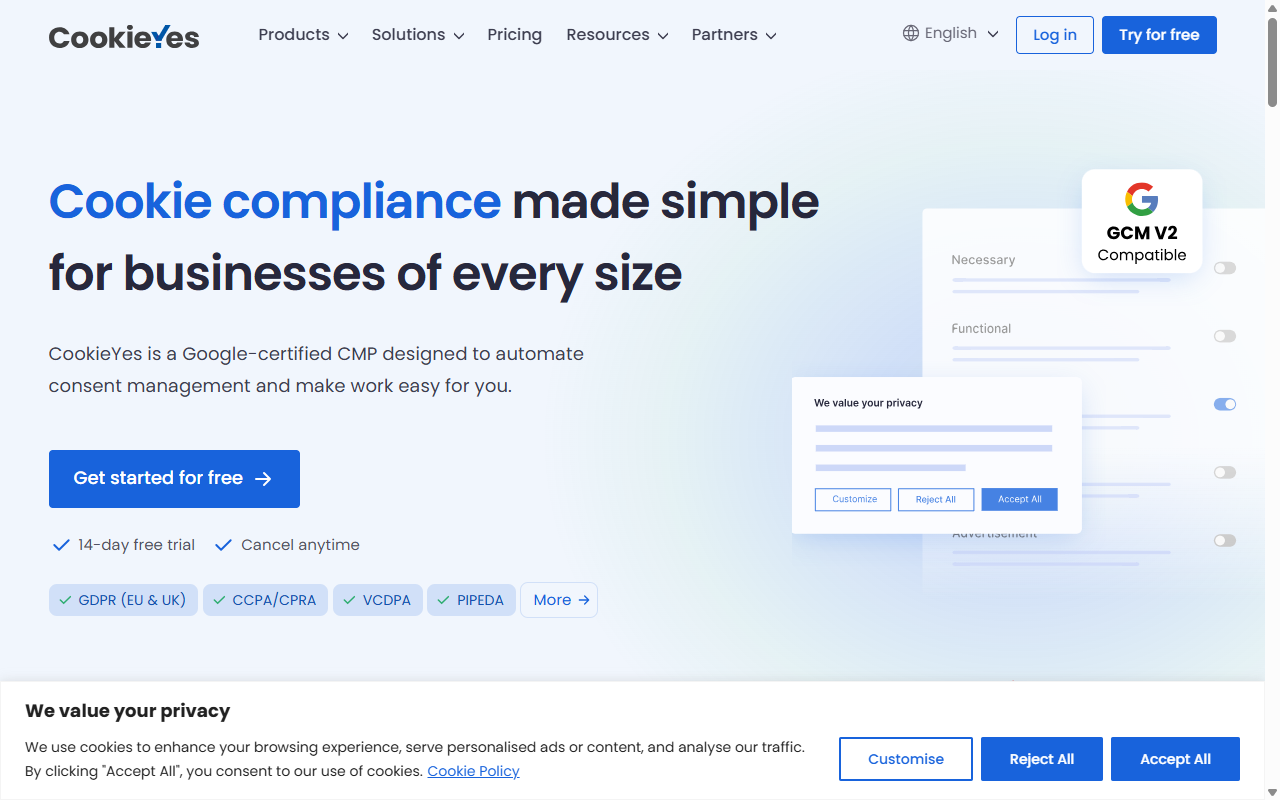
CookieYes is a well-known name in privacy compliance. It pairs a step-by-step guide with a cloud-based banner generator, handy if you run multiple platforms, like a WordPress blog paired with a Shopify store. The guide clarifies opting out versus opting in, and the visual banner setup adds a “Do Not Sell My Info” link easily.
- Tracks consent history across subdomains and platforms.
- Pulls cookie data through automated weekly scans.
- Connects with consent frameworks to share data with partners.
- Blocks scripts dynamically by visitor preference.
Pros:
- Works on virtually any CMS.
- Plain, friendly setup guide.
Cons:
- Requires managing settings on an external dashboard.
- The entry-level plan limits monthly page views.
Verdict: A reliable pick for multiple sites on different CMS platforms wanting centralized tracking.
3. Cookiebot CCPA Implementation Guide
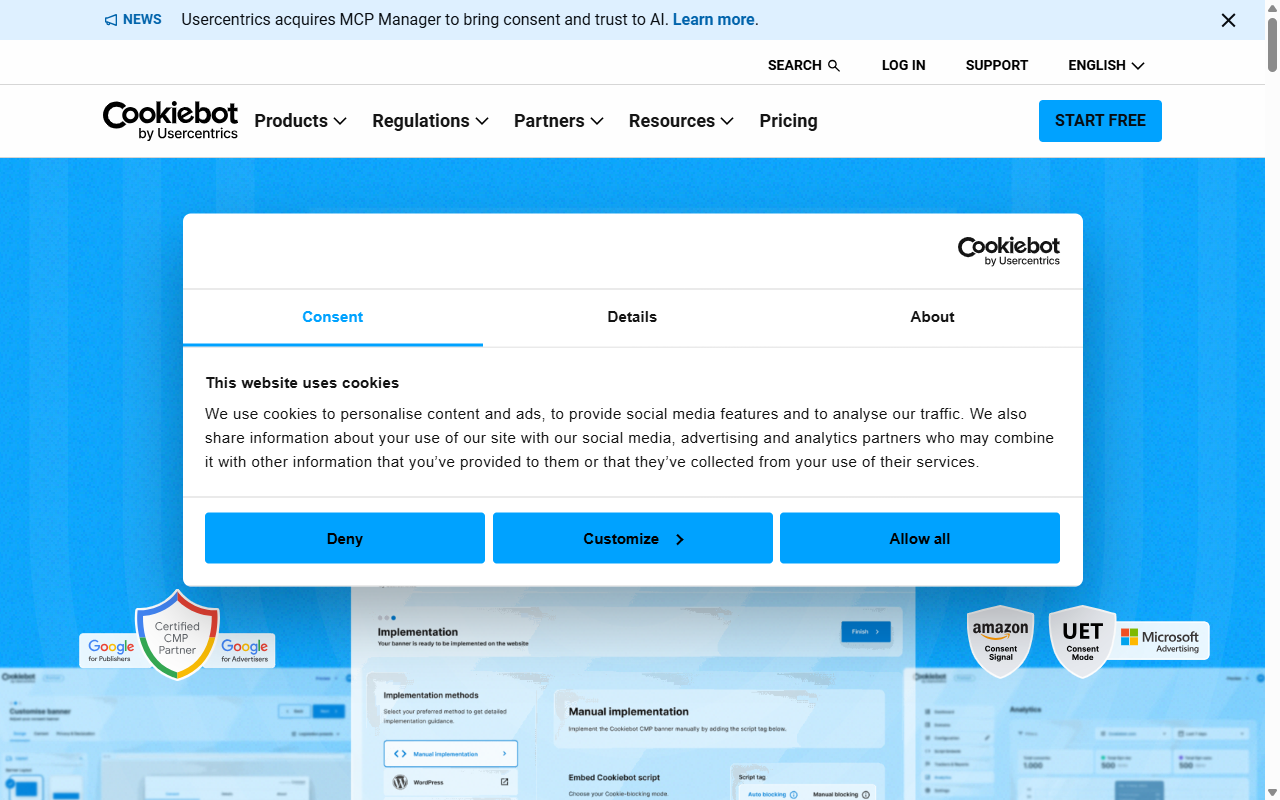
Cookiebot is an enterprise-level tool scaled down for small businesses too. Its guide focuses on script blocking, useful for sites running several marketing pixels or third-party tools. It works through a cloud dashboard and a header script, holding cookies back until a visitor interacts with your banner.
- Scans your site monthly for hidden trackers.
- Blocks cookies before a visitor gives consent.
- Builds clear, customizable consent banners.
- Saves consent data in an encrypted database.
Pros:
- Strong automated scanning catches most trackers.
- Compliance standards updated regularly as laws evolve.
Cons:
- The interface can feel complex for non-technical users.
Verdict: A good fit for tech-savvy owners who want deep, automated scanning and a complex backend.
4. Complianz Privacy Suite for CCPA
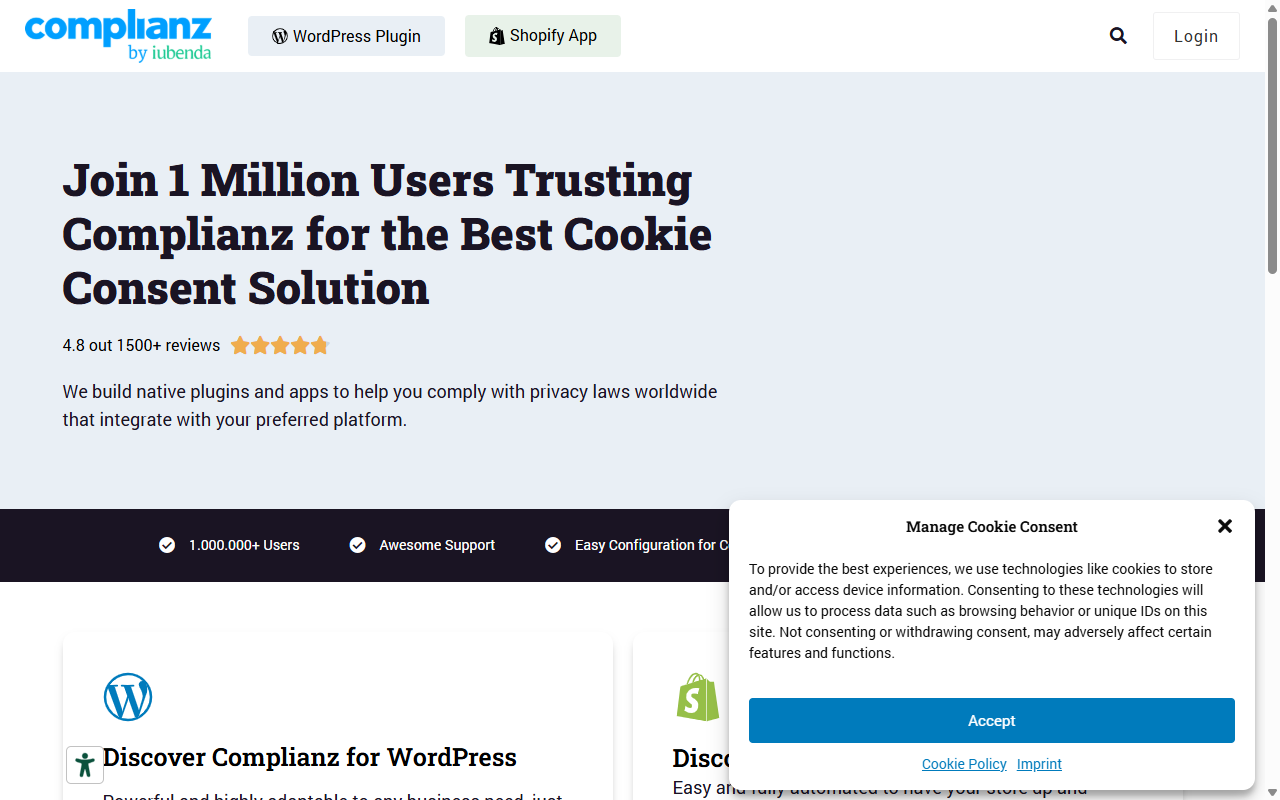
Complianz works within the WordPress ecosystem, using a wizard-style approach: it asks about your business, audience, and data habits, then configures your banner and generates the legal documents you need. It’s well regarded for legal accuracy, backed by privacy lawyers as rules change.
- Generates customized legal documents from a setup wizard.
- Configures your banner style to match regional needs.
- Blocks scripts through integration with common plugins.
- Pulls data policies into your site’s footer.
Pros:
- The wizard is thorough, covering ground others skip.
- Integrates well with the native WordPress admin style.
Cons:
- The wizard takes time, given the number of questions.
- The interface can feel cluttered.
Verdict: A solid option for a guided, questionnaire-style setup, if you don’t mind 20 minutes of legal questions.
5. California Attorney General Official Resource Guide
Sometimes the best guide comes straight from the source. The California Attorney General’s office runs an official portal that explains the CCPA in clear terms. It skips the banner tool, but it’s the gold standard for legal duties, covering consumer rights, business obligations, and enforcement. Pair it with a practical tool like Elementor’s Cookie Consent to implement your banners on-site.
- Explains the definitions of “selling” versus “sharing” data.
- Outlines the timelines for responding to data requests.
- Shares official updates on amendments to the law.
- Lists real-world enforcement examples of common mistakes.
Pros:
- Free, written by the regulators enforcing the law.
- The most accurate resource available online.
Cons:
- No software or banner tools included.
- Can read like dry legal text.
Verdict: A must-read reference for verifying your chosen software meets the state’s expectations.
6. iubenda CCPA & GDPR Compliance Suite
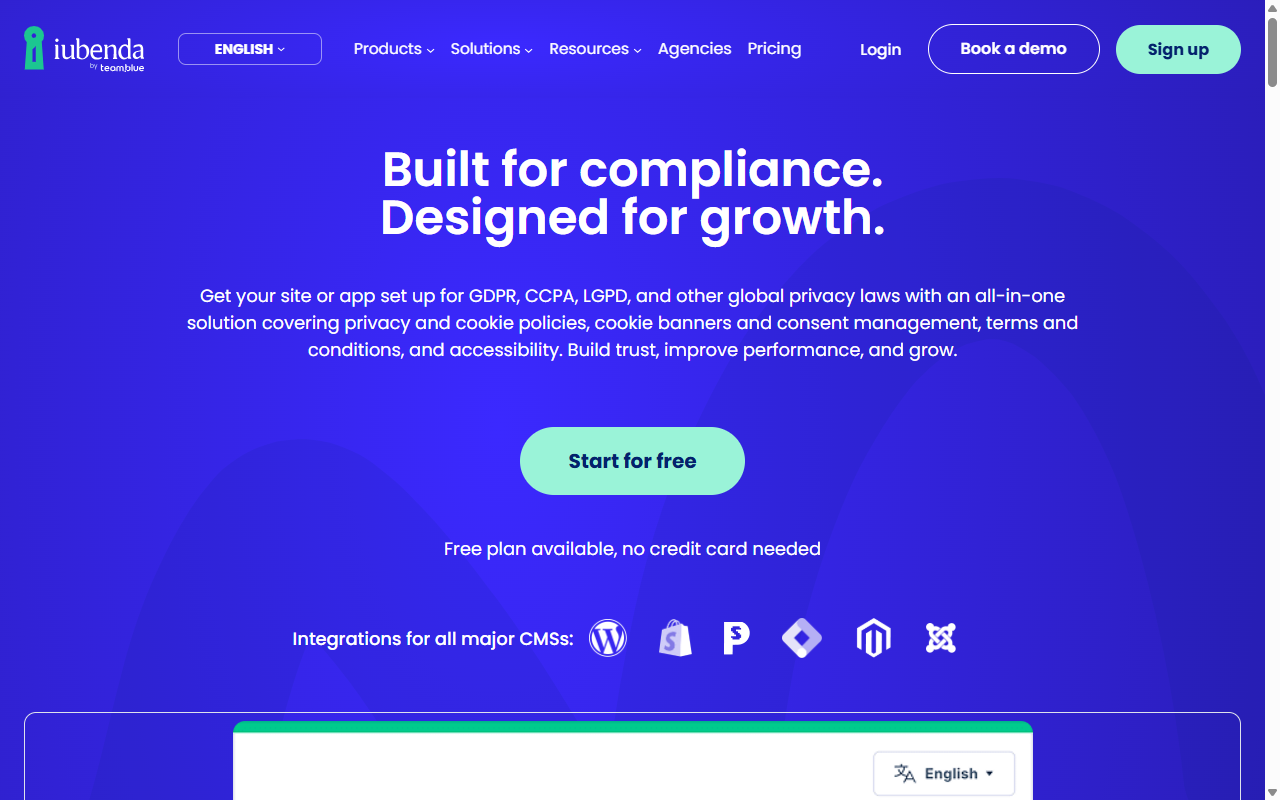
iubenda is an elegant compliance suite covering cookie banners, privacy policies, and terms of service. Its CCPA guide covers one unified policy for California, the UK, and Europe in one dashboard. The policy generator updates itself as California’s rules change.
- Generates self-updating privacy policies on secure servers.
- Customizes consent banners by visitor location.
- Logs consent decisions to meet audit requirements.
- Tracks cookie usage to keep policies accurate.
Pros:
- Updates your policies automatically, so you never rewrite them.
- Clean, modern, pleasant dashboard.
Cons:
- Setup involves embedding external code into your site.
Verdict: A solid pick if you need self-updating policies for a broad, international audience.
7. OneTrust Small Business Privacy Framework
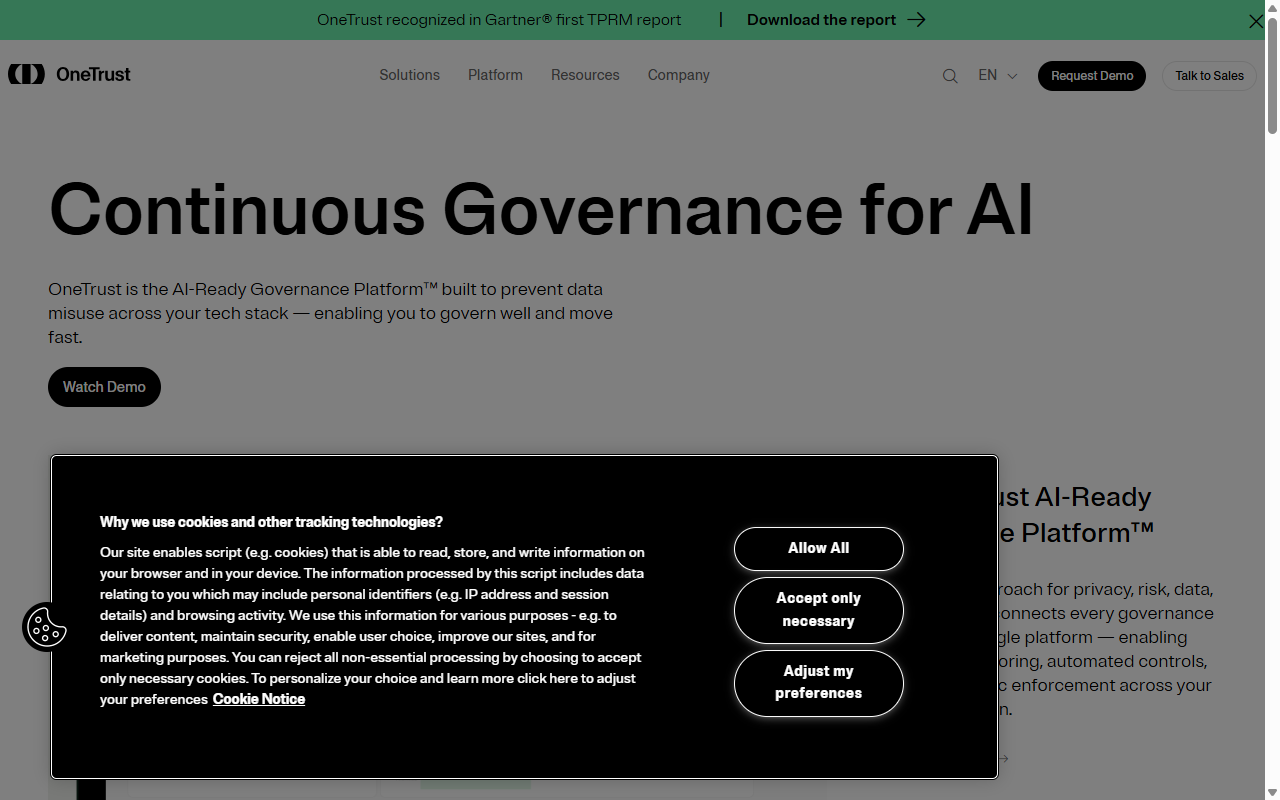
OneTrust is a major name in enterprise compliance that also serves growing small businesses. Its CCPA framework is built to scale, so it grows with you. The guides cover web tracking to data storage, with deep banner configuration.
- Tracks customer consent preferences across touchpoints.
- Builds compliance reports for stakeholders or investors.
- Scans websites and apps for data-leaking scripts.
- Connects your site to a privacy request portal.
Pros:
- Professional-grade security.
- Solid educational resources and webinars for small teams.
Cons:
- Can feel like overkill for a single-author blog.
- The learning curve is steeper than most tools.
Verdict: Best for high-growth startups or small businesses that plan to scale rapidly.
8. Termly CCPA Compliance Guide
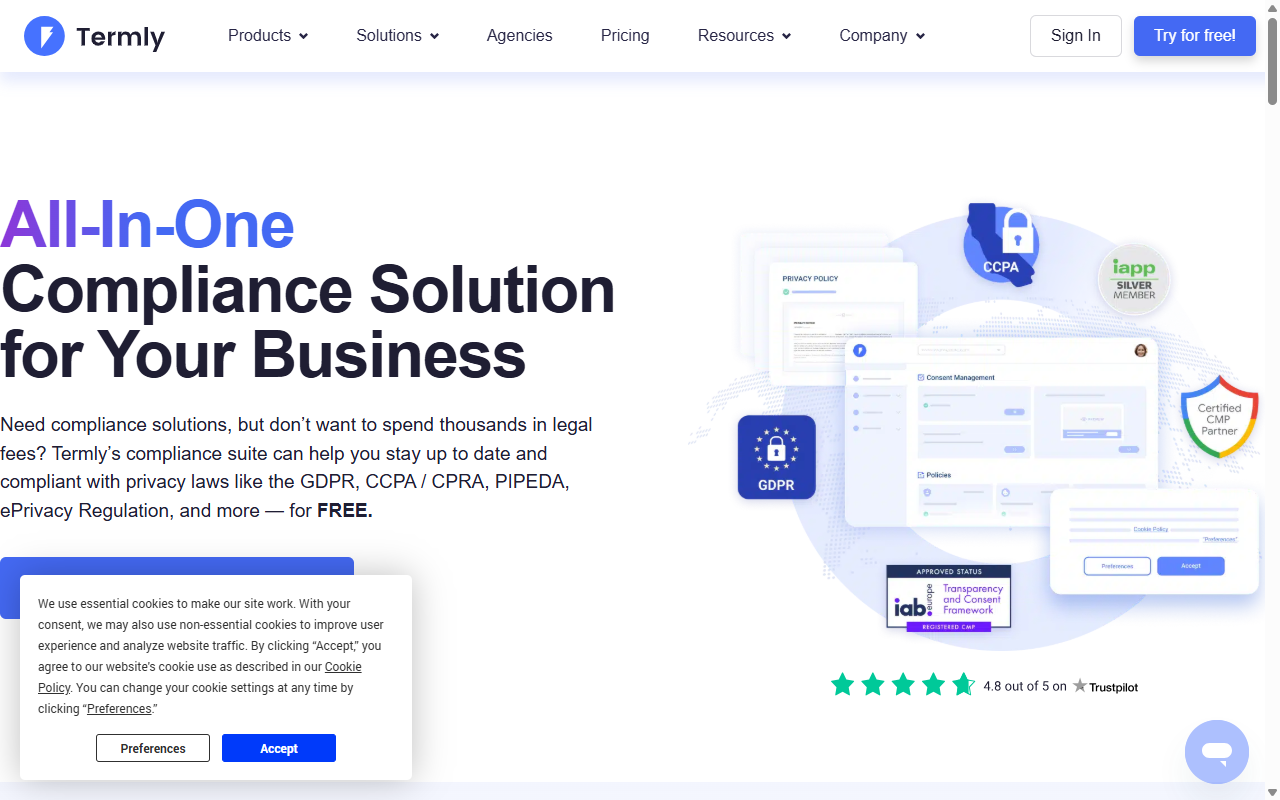
Termly focuses on making compliance simple for small businesses and solo creators. Its CCPA guide and policy generator are approachable and clearly written: a friendly editor asks simple questions, then outputs ready-to-paste HTML or text for your site. It’s a great fit without a developer or IT team on hand.
- Generates tailor-made CCPA policies and terms of use.
- Builds simple, clean banners in a few clicks.
- Scans your site to map active cookies.
- Pulls legal updates into your hosted pages.
Pros:
- Clean, friendly interface that feels welcoming to beginners.
- Solid entry-level plan for a simple policy and banner.
Cons:
- Lacks the deep customization complex e-commerce platforms need.
- Requires hosting policies on their platform for updates.
Verdict: A recommended option for bloggers and small businesses wanting an easy, non-technical setup.
9. Osano CCPA Compliance Toolkit
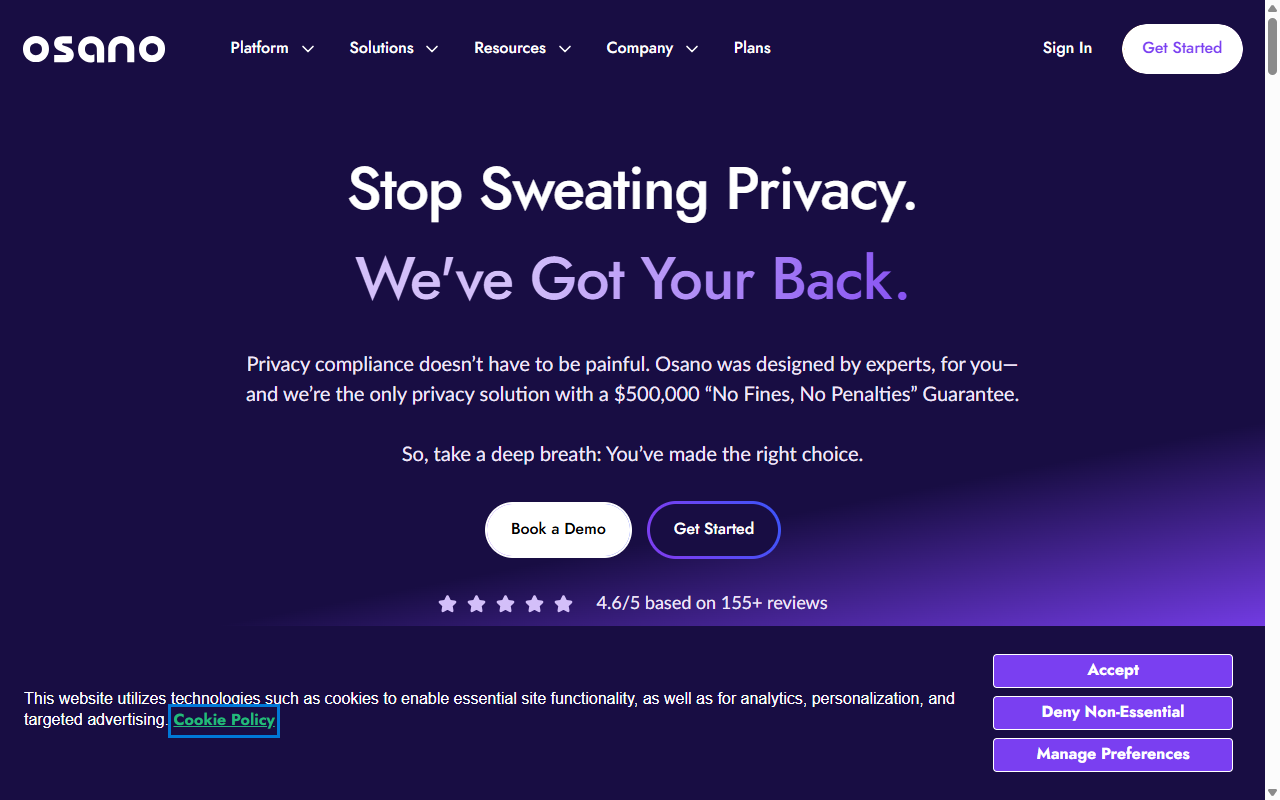
Osano is a B-Corp that treats data privacy as a human right, with a CCPA guide and consent manager built around trust and transparency. Its standout feature is a vendor privacy ratings database that rates how trustworthy your scripts are, helping you choose safer marketing tools.
- Blocks unknown trackers to protect visitors.
- Tracks vendor behaviors to flag risky scripts.
- Customizes banners instantly by country or state.
- Logs visitor choices for record-keeping.
Pros:
- Good visual design and an intuitive dashboard.
- Unique vendor privacy insights for choosing safer tools.
Cons:
- Premium plans cost more than basic WordPress alternatives.
- Requires manual installation of code scripts.
Verdict: A values-driven choice for companies that want privacy woven into their brand.
10. Securiti.ai CCPA Guide
Securiti.ai uses modern intelligence systems to help businesses manage privacy tasks, with a guide focused on data mapping: tracking where user data flows once inside your systems. If you run a data-heavy business, like a SaaS tool, it maps user databases, email lists, and payment processors, automating the discovery of sensitive data.
- Tracks personal data across storage and database tools.
- Builds data-flow maps of where user info sits.
- Automates responses to deletion requests.
- Blocks unapproved scripts on customer-facing pages.
Pros:
- Strong data discovery and mapping features.
- Automates handling of consumer data requests.
Cons:
- Can be overly technical for a basic site.
- Built for privacy officers and IT managers, a learning curve.
Verdict: The top choice for tech startups or platforms managing complex user databases that want automated mapping.
How to Configure Cookie Consent on Your Website
Setting up your cookie banners doesn’t have to be a big project. With a native tool, you can get it running during a coffee break. Here’s how:
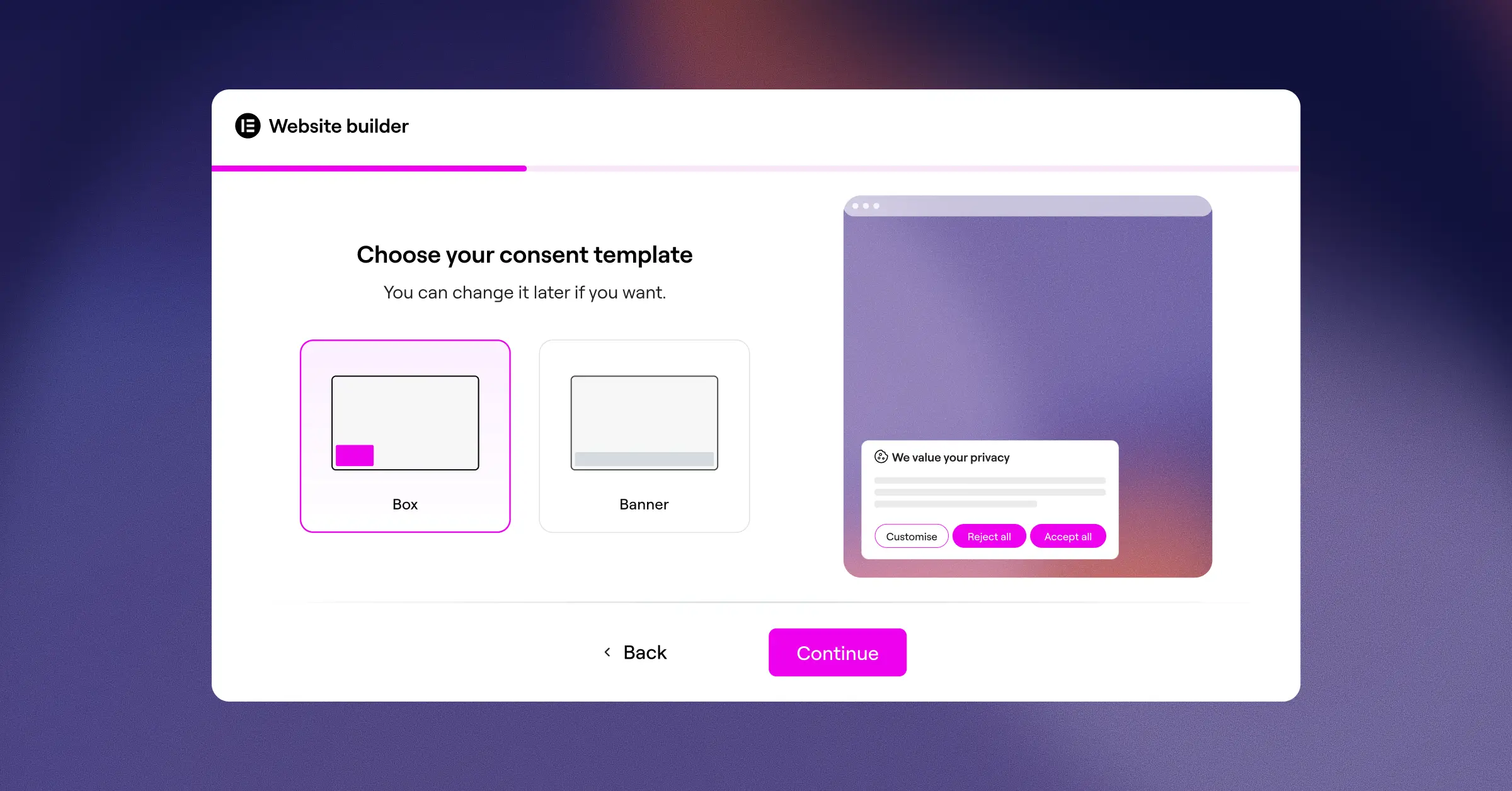
- Install and open: go to your consent tool settings in WordPress.
- Run your first scan: let the tool find and categorize existing cookies.
- Design your banner: pick a layout matching your colors, keeping text clear.
- Add the CCPA opt-out: show the “Do Not Sell My Info” link to California visitors.
- Publish and test: save, open an incognito window, and check the banner loads.
A 5-Step Action Plan for Audit Readiness
If a regulator ever asks about your practices, a clear process is your best protection:
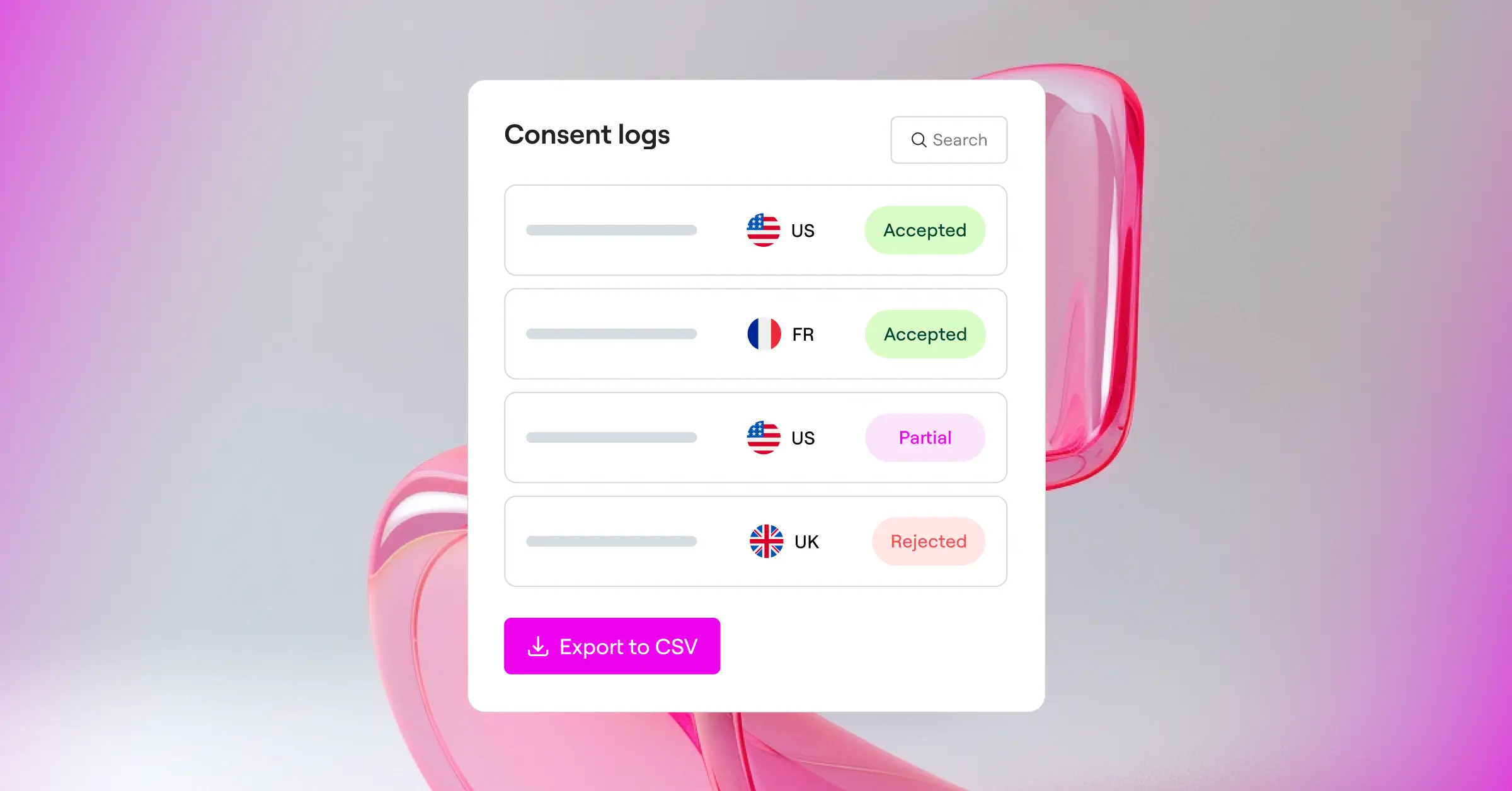
- Keep an active log: make sure your tool logs visitor accept or reject choices.
- Schedule monthly scans: have your software scan for cookies added by new plugins.
- Review your privacy link: check that “Do Not Sell” is visible and links correctly.
- Train your support team: make sure customer email replies can handle data deletion requests.
- Update your documentation: review your privacy policy yearly for current tools and partners.
Frequently Asked Questions
Does the CCPA apply to small businesses located outside of California?
Yes. The CCPA protects California residents no matter where a business is located, so if your site serves, sells to, or collects data from people there, the law applies. A tool like Cookie Consent helps you target these visitors, keeping things smooth elsewhere.
What happens if a small business fails to comply with the CCPA?
Ignoring the rules can bring warnings, audits, or fines from the California Attorney General, and fines can reach significant amounts per violation. Poor privacy practices can also hurt your reputation, cost sales, and get accounts restricted by ad networks. Staying compliant protects both revenue and trust.
Do I need to show a cookie banner to all my website visitors?
Not necessarily. Visitors from Europe (GDPR) and California (CCPA) need specific notices, but others may not. Modern consent tools use geo-targeting, so your site stays clean elsewhere while staying covered where it matters.
What is the difference between CCPA and GDPR for cookie consent?
It comes down to how consent is collected. Under GDPR, you need “opt-in” consent, so non-essential cookies can’t load until a visitor clicks “Accept.” Under the CCPA, the model is generally “opt-out”: cookies can load, but you must give visitors an easy way to stop the sale or sharing of data, usually via a footer link. The CPRA later added opt-out rights for “sharing,” and requires honoring Global Privacy Control (GPC) signals.
What is Google Consent Mode v2, and do I need it?
It’s a framework that lets your site tell Google’s ad and analytics tools how users want their data handled. If you run Google Ads or Analytics and serve visitors in Europe or California, it’s essential for compliant tracking. Cookie Consent supports it automatically, skipping the custom coding.
Can I write my own privacy policy for CCPA compliance?
You can, but it’s easy to miss legal clauses regulators look for. A policy generator built into your compliance tool is a safer route: it asks direct questions about your data use and outputs professional legal language, saving potential review costs later.
Is there a free way to make my small business website compliant?
Yes. Many tools offer generous entry-level plans for smaller sites. Cookie Consent has a free option covering the core essentials, banner design, cookie scanning, and consent logging, so you get compliant without another subscription.
What is Global Privacy Control (GPC), and should my site support it?
It’s a browser setting that tells websites a user’s privacy preferences automatically. Under the CCPA as amended by the CPRA, you must honor GPC signals as a valid opt-out request. Cookie Consent recognizes these signals automatically, no custom code required.

