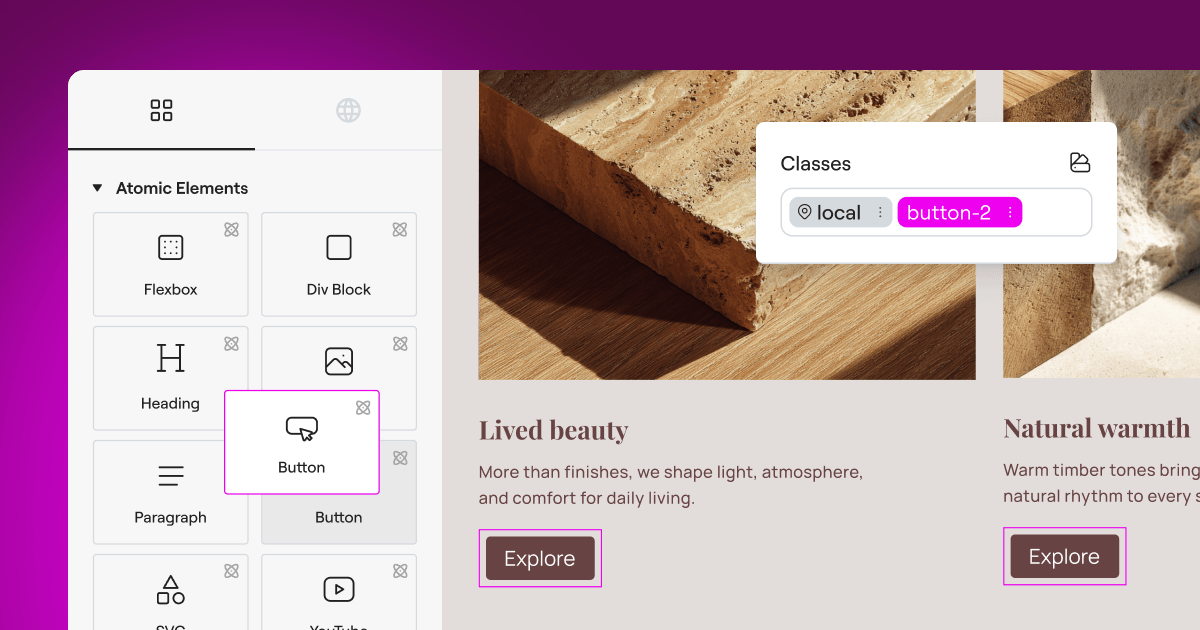
If you run a website, keeping your visitors’ trust matters, and that starts with being upfront about how you handle their data. Setting up a cookie banner is simpler than you’d think. Here’s the easiest way to get it right on your Elementor site.
Key Takeaways
- WordPress-native solutions keep your site fast and skip extra external dashboards.
- Google Consent Mode v2 matters if you use Google services with visitors from Europe.
- Design customization lets your banner match your brand look.
- Geo-targeting features show your banner only where the law requires it.
Why Cookie Banners Matter on Your Website in 2026
Privacy laws keep shifting worldwide, and keeping up with rules like GDPR in Europe or CCPA in California isn’t optional anymore. Visitors expect a clear explanation of how you handle their data, and giving them control over tracking earns their trust. Setting up these notices used to mean pasting scripts into your header, but today the right tool handles compliance without code, keeping your site fast and matching your design.
One thing worth knowing about is Google Consent Mode v2: if you run Google Analytics or ads with visitors from Europe, you need it, so you can respect their privacy while still getting the marketing data you rely on.
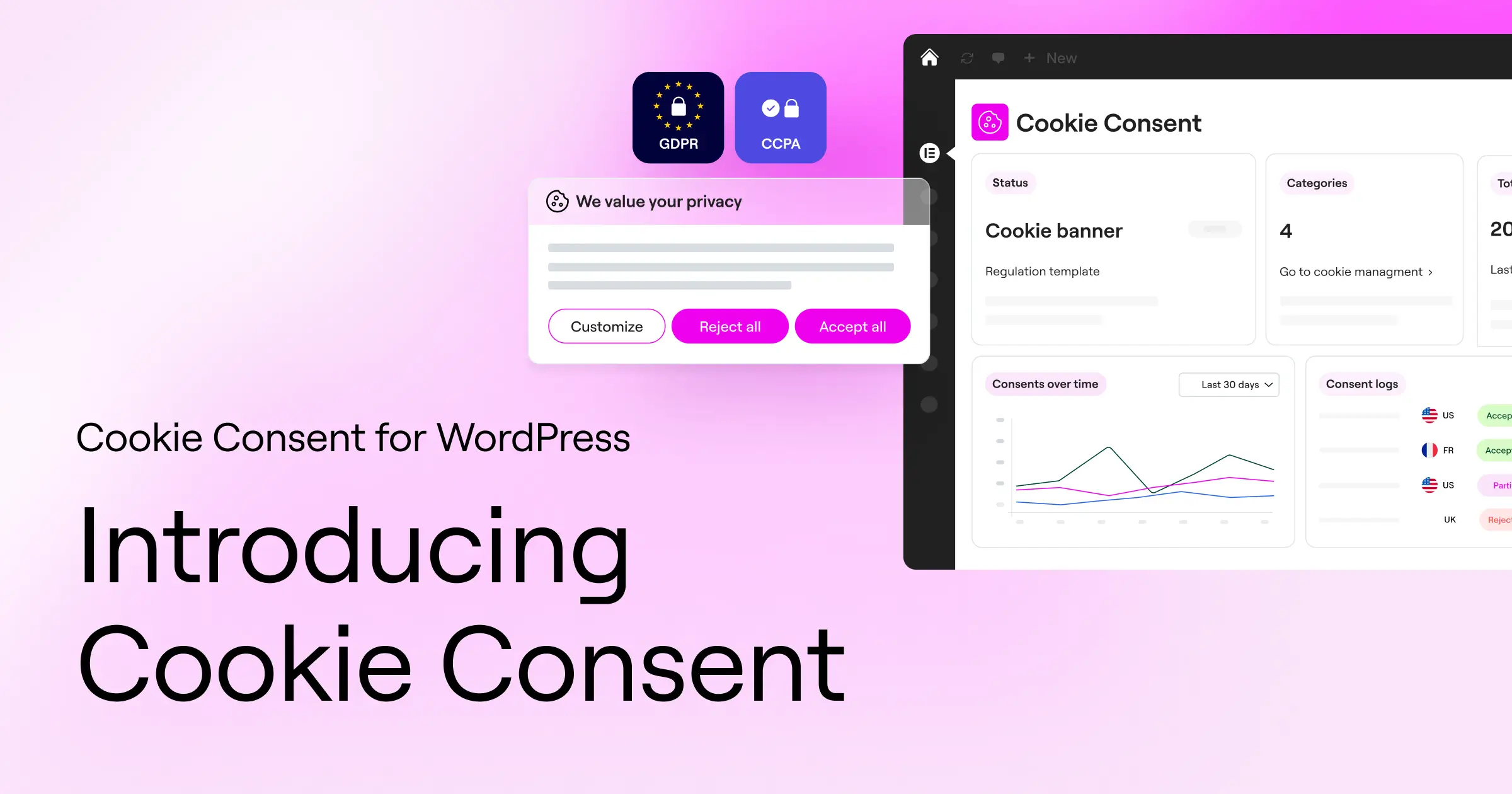
“Privacy compliance is no longer just about avoiding a penalty. It’s about showing your audience that you respect their personal data boundaries from their very first visit.”– Itamar Haim, Web Compliance Specialist
1. Cookie Consent by Elementor
The native Cookie Consent capability from Elementor lives right inside your WordPress dashboard, no outside platform or second login needed. Scanning, banner building, and consent records all happen where you already build your pages, and it’s built to get you compliant in under five minutes.
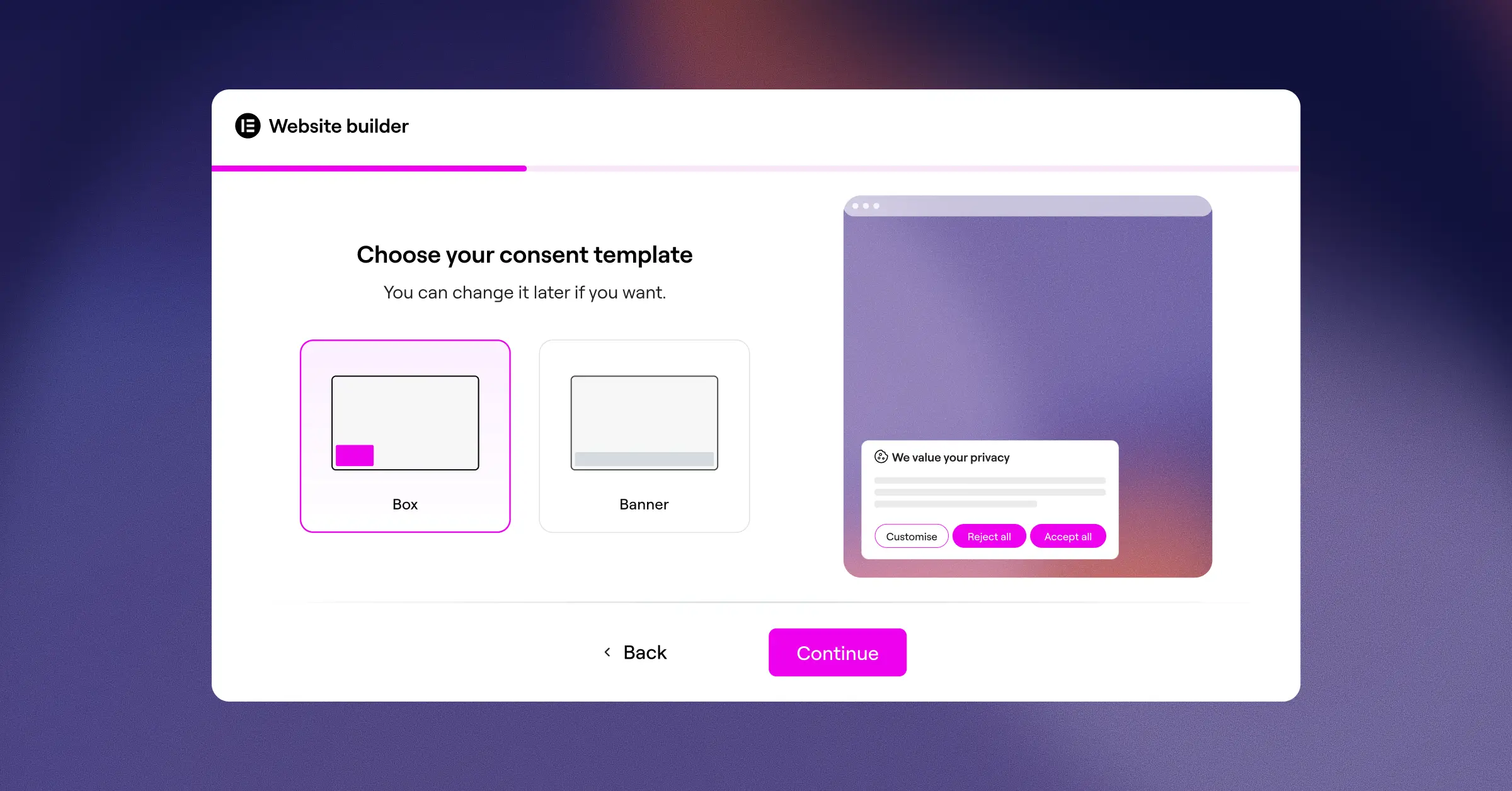
Because Cookie Consent is built into the editor, you get full creative control over your banner’s look without custom CSS. It includes Google Consent Mode v2 support and Global Privacy Control, and comes bundled with Web Accessibility in Elementor One plans, plus a helpful entry-level plan.
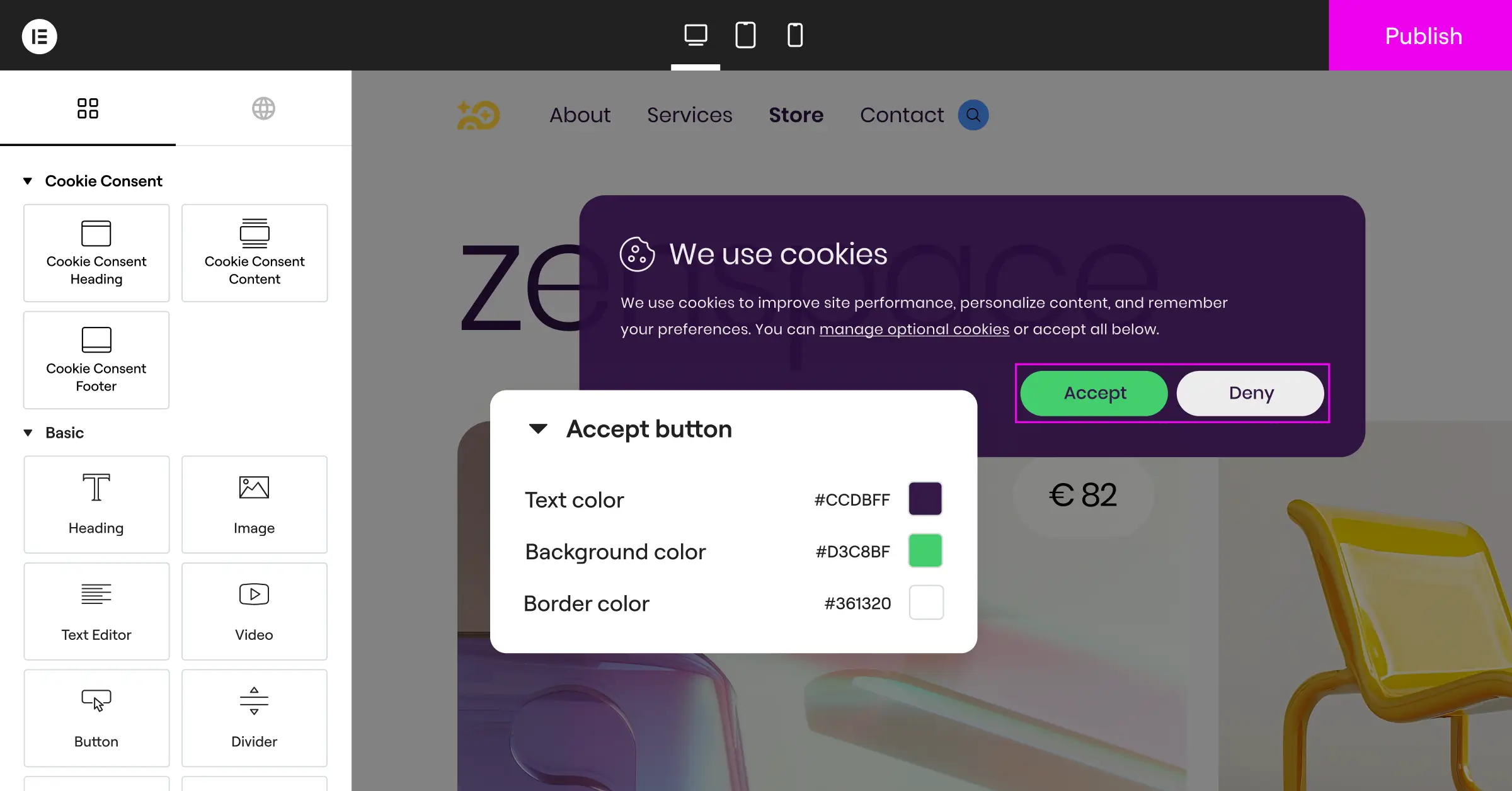
Key Features
- Scans your site to spot active tracking scripts automatically.
- Builds custom banner designs with styling that matches your branding.
- Connects with Google Consent Mode v2 to share preferences with analytics and ad tools.
- Saves detailed consent logs in your WordPress database for audits.
- Displays location-specific banners via geo-targeting, so visitors see what’s relevant.
Pros & Cons
Pros:
- No external account or extra dashboard to manage.
- A simple five-minute setup wizard gets you running fast.
Cons:
- Needs an active WordPress site to run.
- Advanced geo-targeting sits behind the paid tiers.
Our Verdict: The top pick for anyone building with Elementor: native integration, fast setup, no outside service needed.
2. Cookiebot
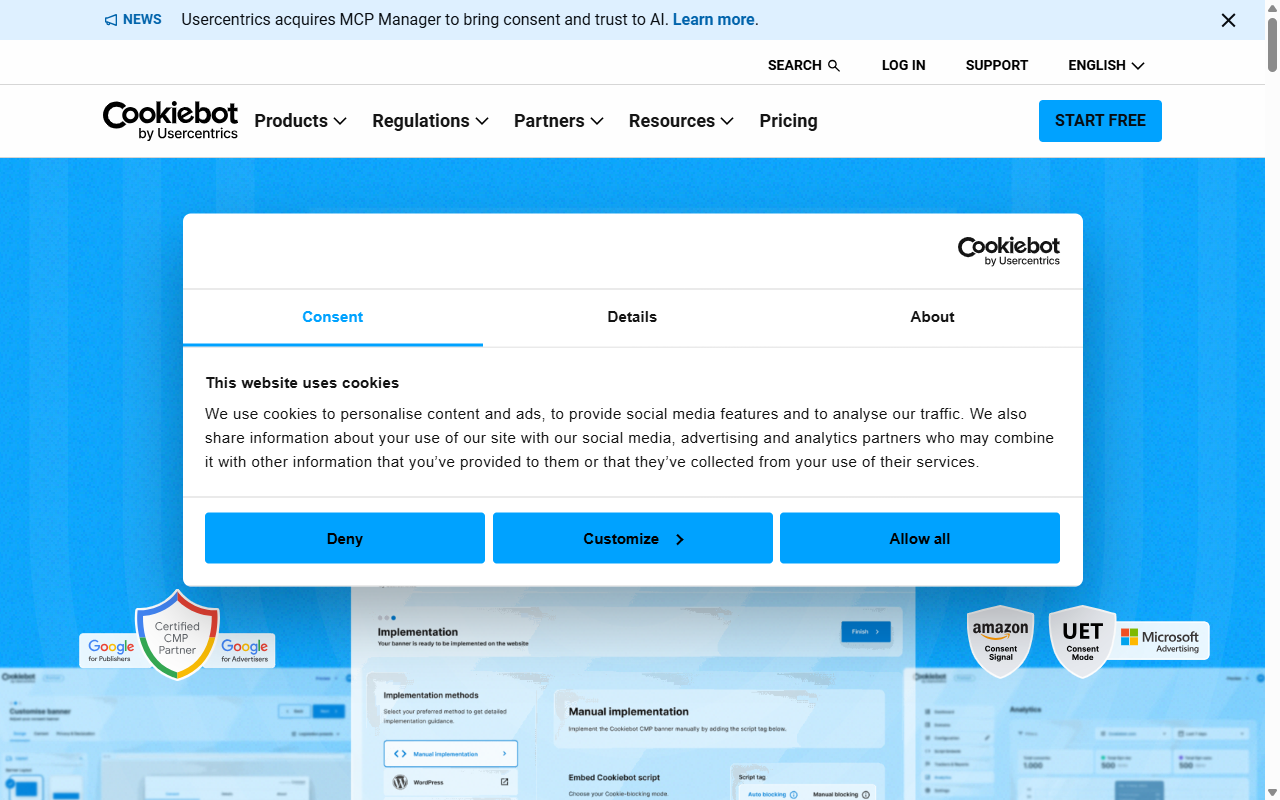
Cookiebot is a well-known cloud-based privacy plugin that works across many platforms. It scans your site each month for hidden tracking scripts, then compiles the results into a report for your cookie policy page. Setup means creating an account on their platform and adding a script to your site. It’s nicely automated, though the design can feel technical if you’d rather stay inside WordPress.
Key Features
- Scans your whole site each month to catch new tracking scripts.
- Stores consent records on Cookiebot’s cloud infrastructure.
- Blocks unauthorized third-party scripts until a visitor gives explicit approval.
- Generates a full, updating cookie list for your privacy policy.
Pros & Cons
Pros:
- Accurate, automated monthly scans.
- Works across different platforms if you run more than one site.
Cons:
- Settings live on an external dashboard.
- The entry-level plan caps out on smaller sites.
Our Verdict: A solid pick if you want hands-off scanning and don’t mind an outside portal for configuration.
3. CookieYes
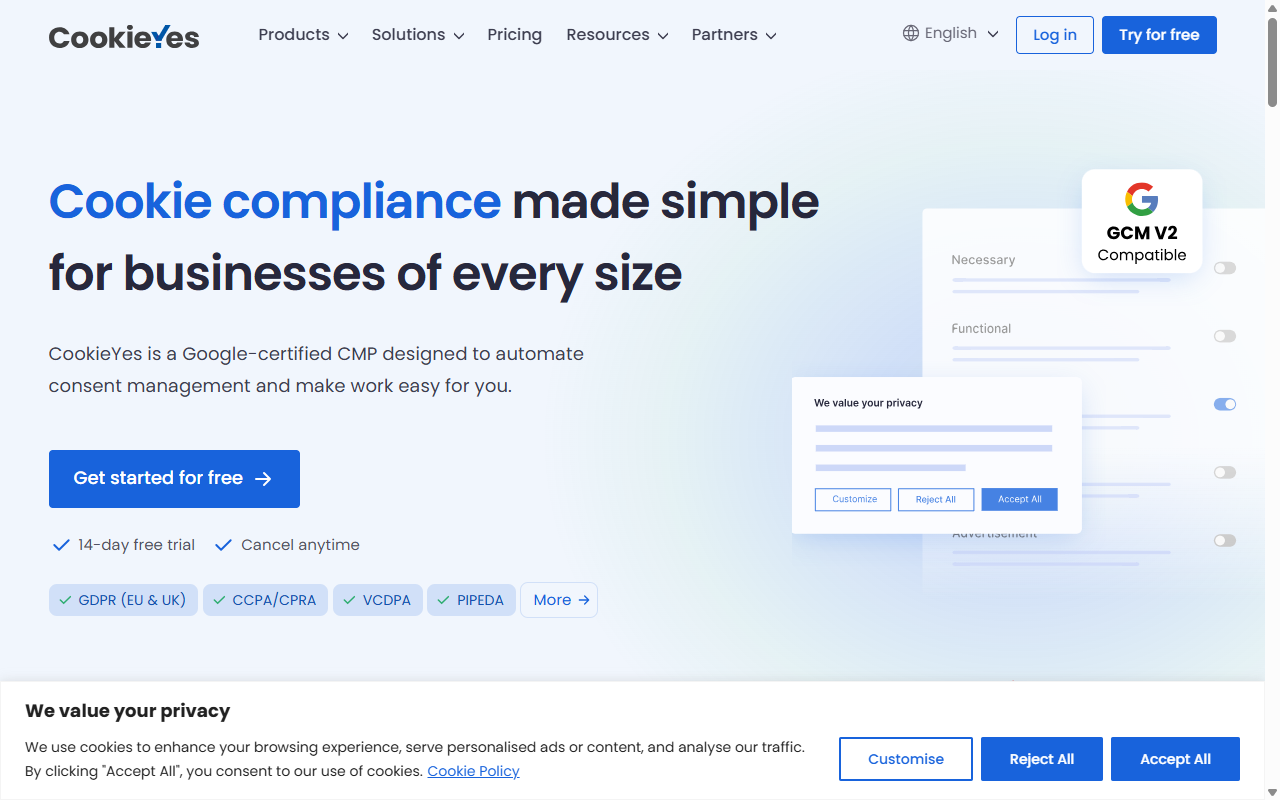
CookieYes is a popular plugin that helps millions of sites manage compliance. You get a web dashboard for customizing your banner, and setup means connecting your WordPress site to their cloud app. It’s well known for wide language support, practical for international businesses, though you’ll still move between platforms for bigger changes.
Key Features
- Manages compliance rules for several global frameworks from one interface.
- Records consent activity in a structured, exportable cloud database.
- Adapts banner sizing to fit mobile and tablet screens.
- Supports translation into dozens of languages based on browser settings.
Pros & Cons
Pros:
- An intuitive setup for non-technical users.
- A helpful entry-level plan for new sites.
Cons:
- Moving between dashboards to update settings.
Our Verdict: A good fit for multilingual sites that need a reliable outside tool for visitors across languages and regions.
4. Complianz
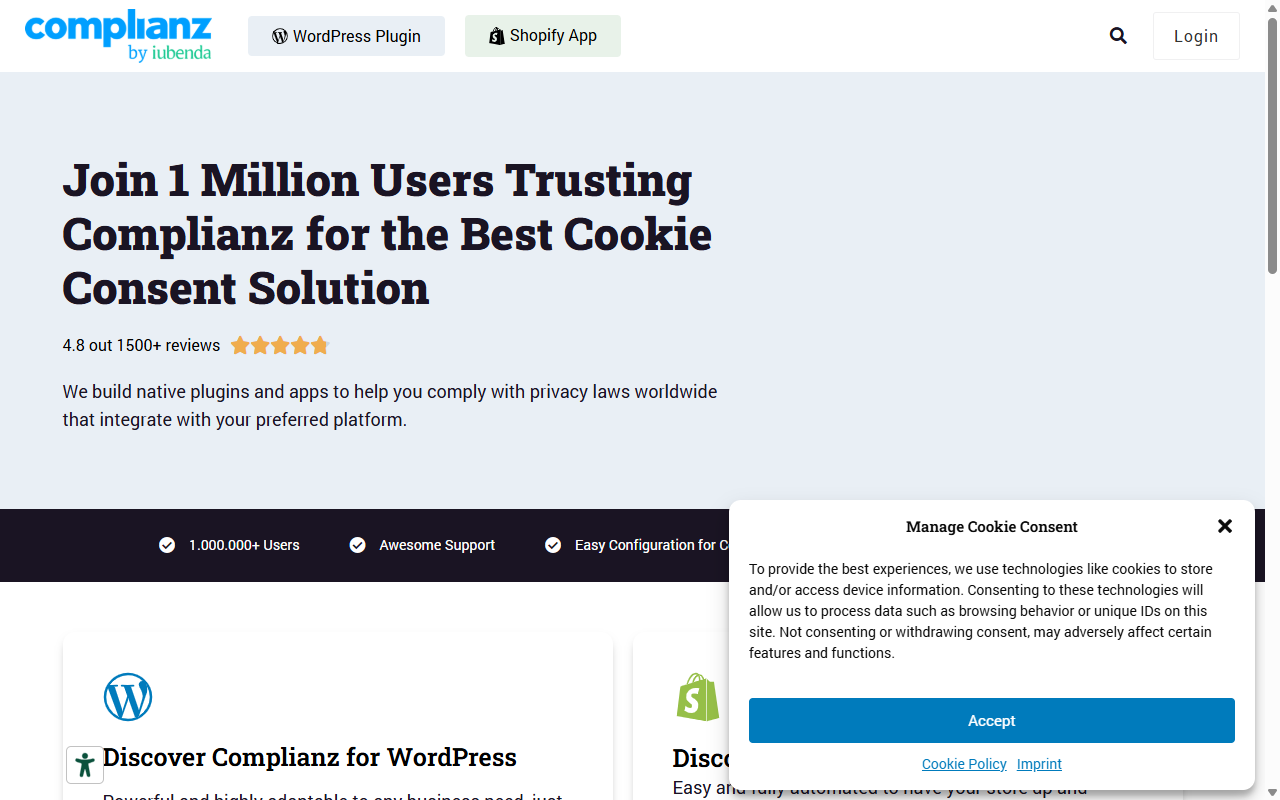
Complianz is a privacy suite built specifically for WordPress. Instead of just a banner, it walks you through building custom legal documents with a wizard that asks about your business and configures your site from your answers. Everything stays on your own hosting, which suits owners who’d rather not hand consent histories to an outside cloud system.
Key Features
- Configures cookie rules from a detailed legal questionnaire.
- Detects local storage and tracking scripts running in the background.
- Integrates with popular script managers to keep things organized.
- Creates custom legal pages like Cookie Policies and Opt-Out forms.
Pros & Cons
Pros:
- Generates legal documents tailored to your region.
- Keeps your compliance data on your own server.
Cons:
- The setup questionnaire takes a while to complete.
- The interface can feel detailed given all the legal options.
Our Verdict: A strong local alternative if you want a guided legal questionnaire and prefer keeping your data on your own server.
5. iubenda
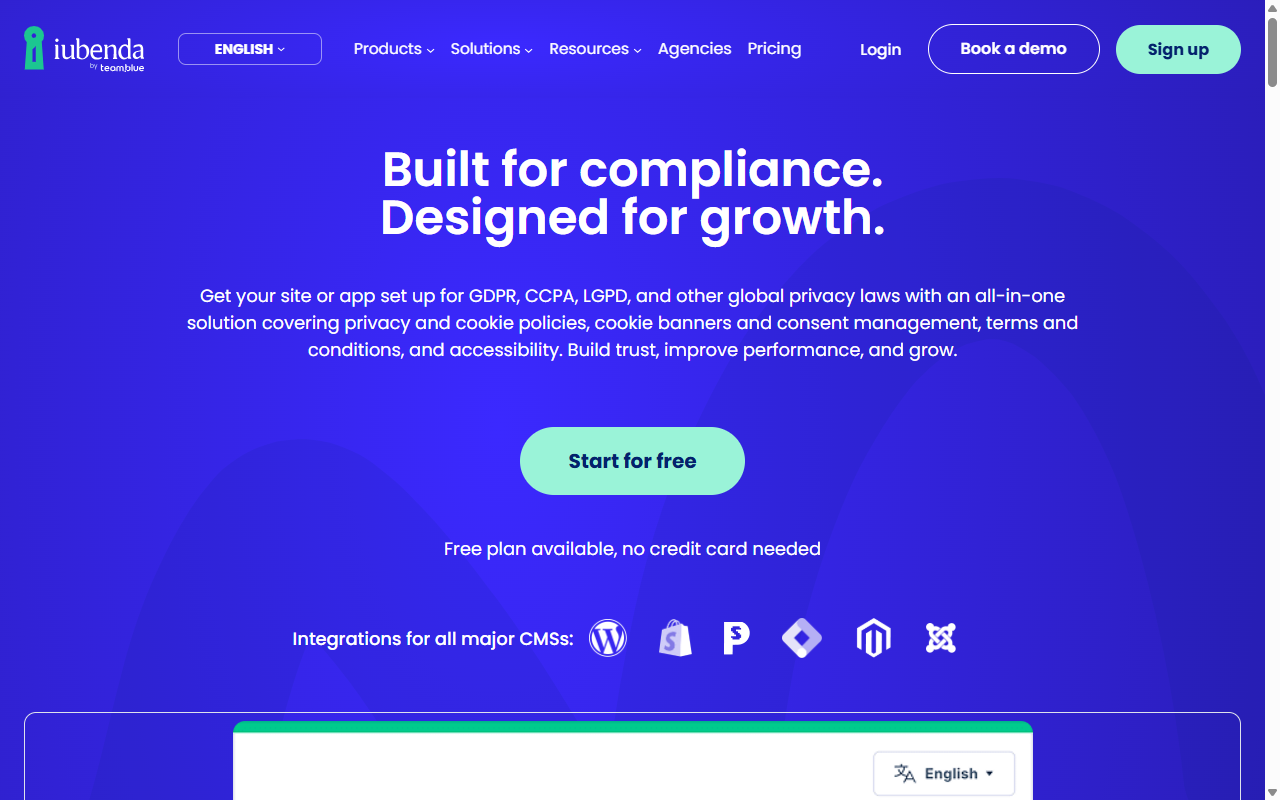
iubenda offers professional compliance solutions built by lawyers, part of a larger family of privacy products including terms and conditions generators. It suits businesses meeting strict legal standards across several countries. The dashboard runs from a central cloud hub, so you generate a code snippet and paste it into your site.
Key Features
- Generates auto-updating privacy policy documents on secure cloud servers.
- Updates your legal text automatically when regional rules change.
- Detects visitor locations to show the right regional consent form.
- Saves user decisions to help you meet strict audit requirements.
Pros & Cons
Pros:
- Maintained by legal experts who track changes closely.
- A good fit for complex sites with several services and dynamic tracking.
Cons:
- An ongoing paid plan for most advanced features.
- Setup can feel involved given the legal-first language.
Our Verdict: A good match for medium to large businesses that want an all-in-one legal suite with lawyers managing the updates.
6. OneTrust
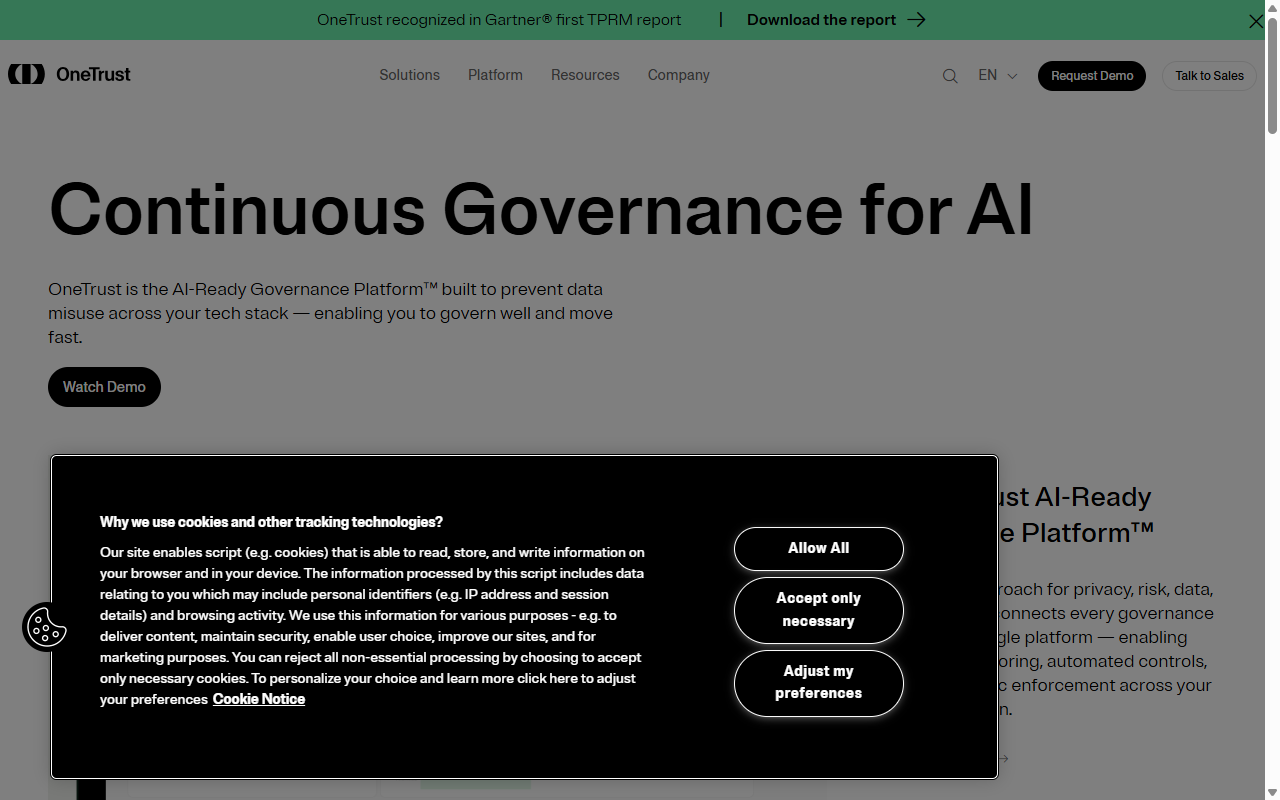
OneTrust is a major name in enterprise privacy, built for large organizations managing compliance across hundreds of sites and apps. For a small business using Elementor, this is usually more than you need, though it’s a capable corporate solution with a dedicated team behind you.
Key Features
- Coordinates privacy compliance across large global website networks.
- Tracks user preferences across different devices and communication channels.
- Scans complex websites to find hidden security risks and trackers.
- Records extensive audit logs to help large organizations meet regulatory demands.
Pros & Cons
Pros:
- Detailed settings built for global enterprise compliance.
- Secure cloud infrastructure designed for major corporations.
Cons:
- Too complex and costly for small to medium websites.
- Needs real training and technical setup time.
Our Verdict: An enterprise-grade platform best suited for large corporate structures with dedicated compliance budgets and IT departments.
7. Termly
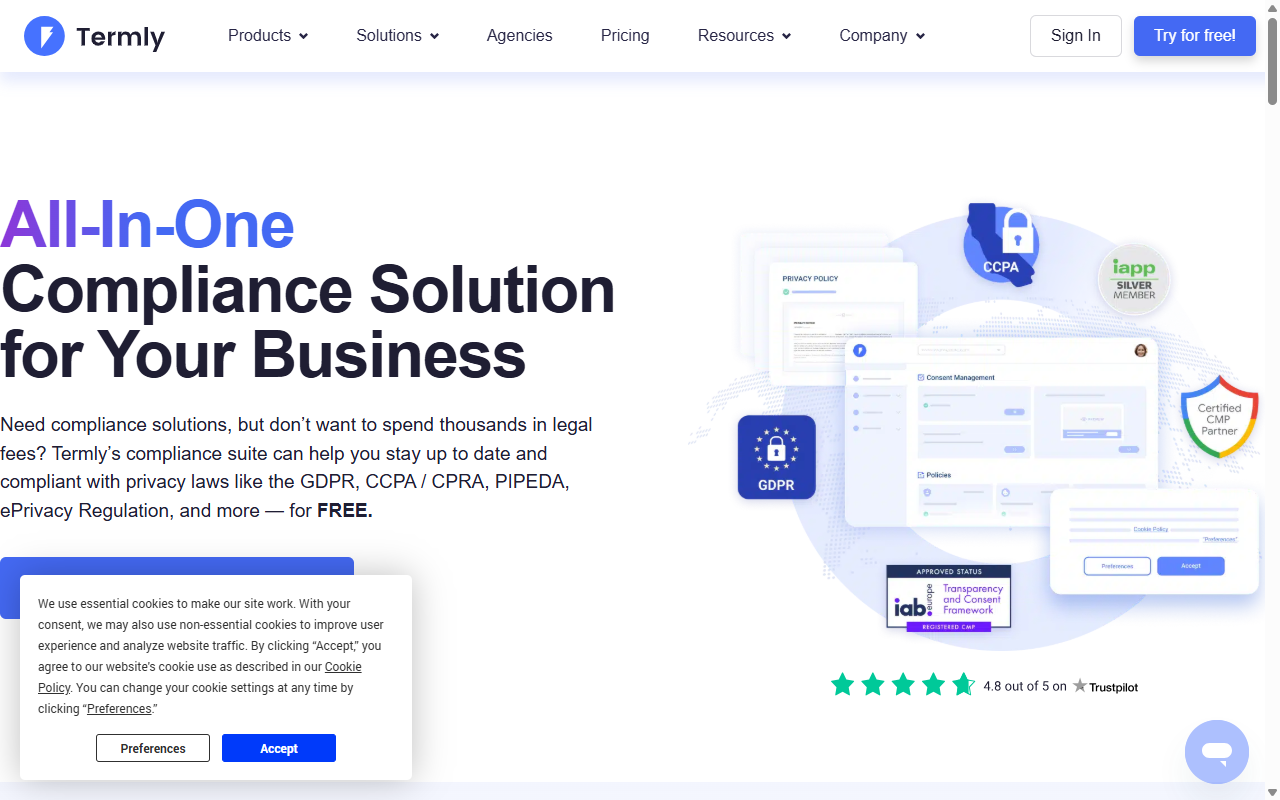
Termly is a legal template provider and compliance manager for small businesses. It gives you a web-based builder for privacy policies, terms of service, and cookie banners. It’s cloud-based, so your policies live on their servers and embed onto your WordPress pages, though you’ll need a paid plan to scan larger sites.
Key Features
- Generates plain-English legal documents for your website.
- Scans your site scripts and sorts them into compliant categories.
- Displays different banner versions based on visitor location laws.
- Updates your policies automatically as new compliance laws take effect.
Pros & Cons
Pros:
- A modern, friendly interface.
- Quick to set up for simple business websites.
Cons:
- Low page limits for cookie scanning on the entry plan.
- Requires embedding external code blocks into your pages.
Our Verdict: A friendly, accessible choice for small business owners who want basic legal documents bundled with their cookie notice.
8. Osano

Osano is a cloud-based data privacy platform focused on transparency. It’s known for its vendor monitoring database, which rates thousands of third-party platforms on how they handle user data, so you can see which scripts might create privacy exposure. The interface is clean, and the banner runs quickly without adding page weight.
Key Features
- Monitors your third-party scripts to check how those companies handle user data.
- Blocks known trackers before visitors have a chance to accept or decline.
- Saves compliance records to protect your brand during legal audits.
- Translates consent messages into dozens of languages automatically.
Pros & Cons
Pros:
- Useful insight into how third-party vendors treat user privacy.
- Supports international privacy regulations well.
Cons:
- Relies on external cloud hosting for script blocking.
Our Verdict: A good option for growing organizations that want deeper insight into vendor privacy practices and have budget for premium tools.
9. WP GDPR Compliance
WP GDPR Compliance is a long-standing plugin built for WordPress. It adds simple compliance checkboxes to your contact forms, comments, and checkout pages, plus a basic consent banner. It’s lightweight and stays within your local WordPress environment, though it doesn’t run deep cloud scans, so you’ll want some manual setup.
Key Features
- Integrates simple consent checkboxes into popular form plugins.
- Keeps all configuration settings and user records on your own server.
- Triggers user requests to view or delete personal data from your database.
- Alerts you when standard WordPress features might be tracking visitor details.
Pros & Cons
Pros:
- Very lightweight, with no impact on load speed.
- Entirely free, with no hidden monthly fees.
Cons:
- Lacks automatic script-blocking and advanced scanning.
- Requires manual styling to match your custom page designs.
Our Verdict: A practical, cost-free option if you only need simple consent checkboxes and don’t run complex marketing tracking scripts.
10. GDPR Cookie Consent (by WebToffee)
The GDPR Cookie Consent plugin from WebToffee is a WordPress-focused solution for managing cookie banners. It gives you direct control over how your scripts are classified and lets you build custom layouts, all running locally on your server. It includes import and export for cookie lists, though managing categories by hand takes practice, and automatic scanning is only on the premium version.
Key Features
- Categorizes active scripts into functional, analytical, and marketing groups.
- Imports pre-defined lists of tracking files using CSV uploads.
- Customizes banner placement across headers, footers, and pop-up boxes.
- Records visitor acceptance data in your local database.
Pros & Cons
Pros:
- Runs inside WordPress without requiring external cloud accounts.
- Includes a CSV import tool for quick manual setups.
Cons:
- Automatic scanning is locked behind the paid upgrade.
- The interface feels a bit dated compared to modern editors.
Our Verdict: A reliable, traditional WordPress option if you’d rather manage your tracking lists by hand and keep local server control.
Comparing the Top Cookie Consent Options for 2026
Here’s a quick look at all ten options: dashboard location, setup speed, and key features.
| Tool Name | Dashboard Location | Setup Speed | Consent Mode v2 Support | Local Logging |
|---|---|---|---|---|
| Cookie Consent (Elementor) | WordPress Native | Under 5 mins | Yes | Yes |
| Cookiebot | External Cloud Portal | Moderate | Yes | No (Cloud) |
| CookieYes | External Cloud Portal | Moderate | Yes | No (Cloud) |
| Complianz | WordPress Native | Slow (Wizard) | Yes | Yes |
| iubenda | External Cloud Portal | Moderate | Yes | No (Cloud) |
| OneTrust | External Enterprise Portal | Slow | Yes | No (Cloud) |
| Termly | External Cloud Portal | Quick | Yes | No (Cloud) |
| Osano | External Cloud Portal | Moderate | Yes | No (Cloud) |
| WP GDPR Compliance | WordPress Native | Quick | No | Yes |
| GDPR Cookie Consent | WordPress Native | Moderate | Yes (Paid) | Yes |
How to Add a Cookie Banner to Your Site (Step-by-Step)
Setting up your banner is easier than it looks. Here’s the typical process with a WordPress-native approach, which keeps your site fast.
- Audit your current tracking files – Check your site to see which tracking tools are active, including analytics, ad pixels, and social scripts.
- Install your chosen tool – Head to your WordPress dashboard and activate your preferred option, like the native Cookie Consent capability.
- Run the initial setup assistant – Follow the wizard to set your compliance frameworks, like GDPR or CCPA.
- Style the banner to match your site – Adjust fonts, colors, buttons, and layout in the visual editor so it fits your brand.
- Configure your script integrations – Connect your banner to Google Consent Mode v2 so your marketing tags respond correctly.
- Publish and test your setup – Save your settings, visit your homepage in an incognito window, and test the accept, decline, and customize options.
Frequently Asked Questions
What is Google Consent Mode v2 and do I need it?
Google Consent Mode v2 relays your visitors’ privacy choices to Google’s tools. If you run Google Analytics or Ads with visitors from Europe, you need this set up so Google can model conversion data while respecting their choices.
Can I use a free cookie consent tool on my Elementor site?
Yes, several options include entry-level plans, including the native Cookie Consent tool from Elementor, which covers the basics. Other platforms offer free tiers, though they often cap page views or require their branding.
Where are my consent logs stored?
That depends on the tool you pick. WordPress-native capabilities keep consent logs in your own database, so you stay in control. Cloud-based plugins store preferences on external servers, so you’ll need their portal for your audit history.
Do cookie banners slow down website performance?
Some cloud-based banners add a small delay fetching scripts from remote servers. WordPress-native tools load faster since they run from your own hosting, keeping your site speed up and protecting your Core Web Vitals.
What happens if a visitor completely ignores my banner?
Under GDPR, ignoring a banner counts as a refusal. Your site shouldn’t load non-essential tracking or marketing scripts until a visitor clicks “Accept,” and good tools block those scripts until you get permission.
How often should I scan my website for new cookies?
About once a month is a smart baseline. New features, social widgets, or marketing campaigns can bring in new tracking scripts over time, so regular scans keep your cookie list accurate.
Is it necessary to use geo-targeting for my cookie notice?
It’s not strictly required, but it’s smart. Geo-targeting lets you show strict opt-in banners where laws are tight, like Europe, and lighter notices, or none, elsewhere.
What is the difference between GDPR and CCPA requirements?
It comes down to how consent gets gathered. GDPR (Europe) is opt-in, so you block tracking files until a user clicks accept. CCPA (California) is opt-out, letting scripts run right away but requiring a clear way to opt out, typically through a “Do Not Sell My Personal Information” link.

