If you run a WordPress site, you’ve probably noticed cookie compliance has become a much bigger deal lately. The good news: sorting your cookies into the right categories is more manageable than it looks, and it matters for both your visitors’ trust and your site’s legal standing. Let’s walk through the best ways to do it.
Key Takeaways
- Proper categorization helps you meet strict GDPR, CCPA, and Google Consent Mode v2 requirements.
- A WordPress-native capability keeps your site fast and spares you complex external dashboards.
- Automated scanners save hours of manual code inspection by auto-detecting tracking scripts.
- Geo-targeted banners keep the experience friendly for visitors while keeping you compliant.
Why Cookie Categorization Matters
Sorting your cookies isn’t just about showing visitors a nice banner. It’s about transparency and control. Privacy regulations require explicit consent before you drop tracking scripts on a visitor’s browser, and if your cookies aren’t properly categorized, you can’t selectively block them based on what someone agreed to.
Privacy compliance has shifted a lot in recent years. Search engines and ad networks now expect sites to communicate consent choices directly, and if you serve visitors in the UK or EU, you’ll need to support systems like Google Consent Mode v2. Without proper categorization, your analytics and marketing campaigns can stop gathering reliable data altogether.
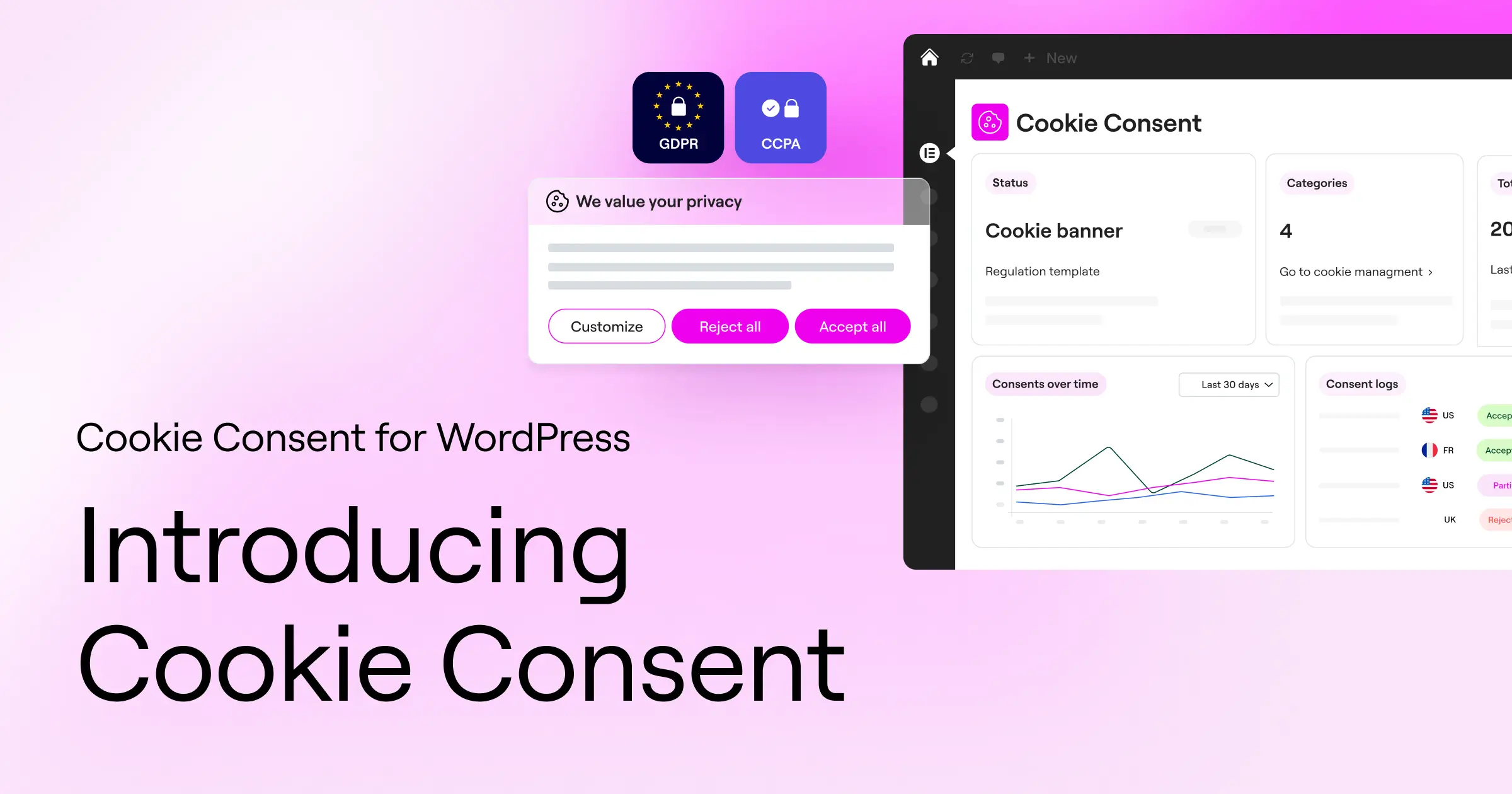
When you classify your tracking technologies, you’ll typically group them into four main categories that tell the browser, and your visitors, exactly what each script is doing behind the scenes.
- Strictly Necessary – Cookies required for the site to function, like shopping carts or secure logins.
- Performance and Analytics – Tools that measure visitor traffic and page performance without identifying individuals.
- Functional – Scripts that remember user preferences, like language choices or video player settings.
- Targeting and Advertising – Trackers used by ad networks to build profiles and show relevant promotions.
10 Best Ways to Categorize Cookies on Your Website
1. Cookie Consent
For WordPress site owners, the most straightforward path to cookie compliance is Cookie Consent, a built-in compliance capability from Elementor. Everything lives right inside your WordPress dashboard, so there’s no juggling separate accounts, no cloud integrations, and no tab-switching to check your compliance status.
Setup takes less than five minutes. It supports Google Consent Mode v2 right out of the box, keeping your ad campaigns running and your measurement data intact. Because it works natively within Elementor’s design system, you can match your banner to your brand without touching a line of CSS. It’s available on a free entry-level plan, and it’s also included with the Elementor One subscription.
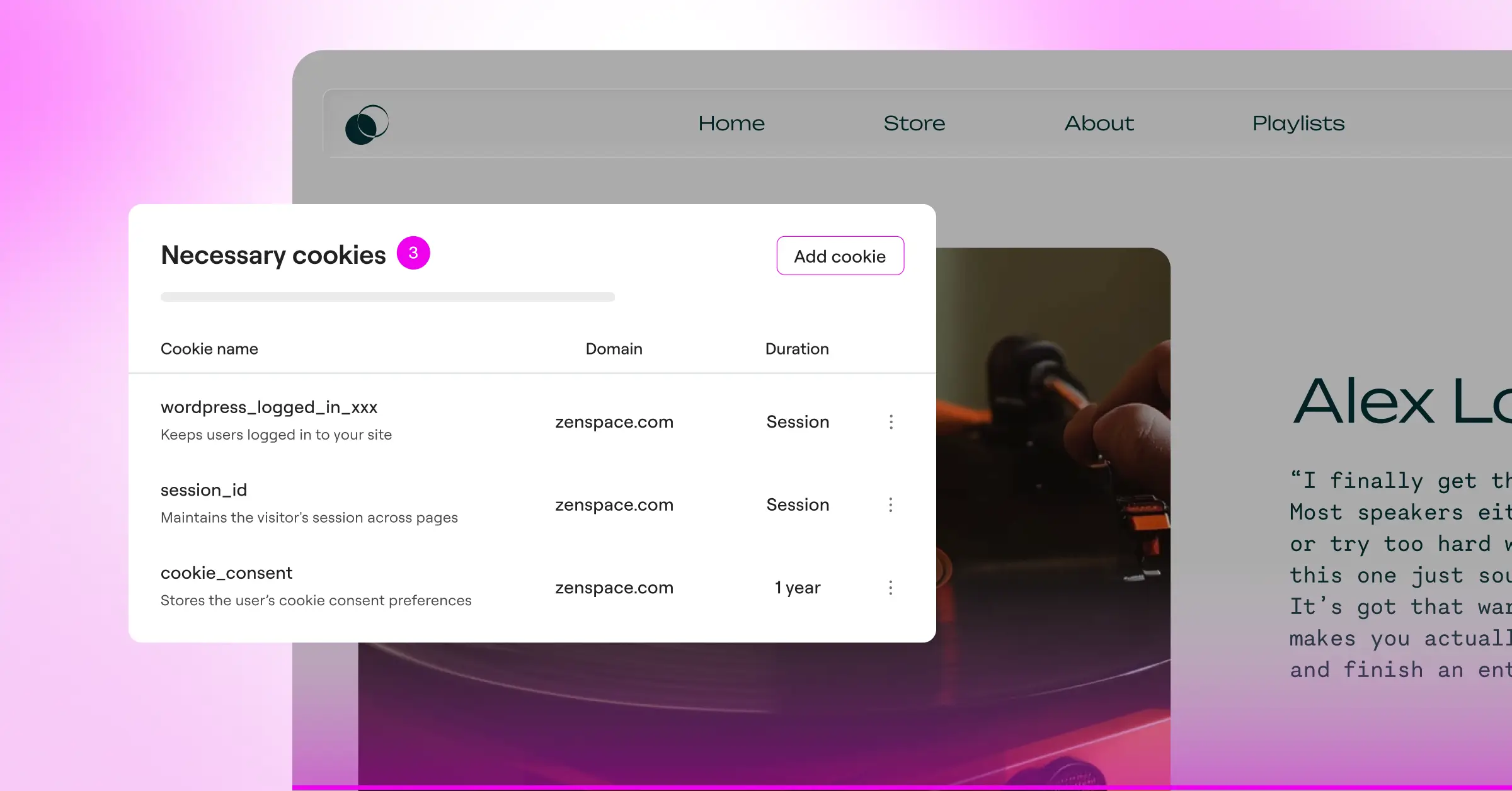
Key Capabilities:
- Scans your whole site to detect and categorize active tracking scripts automatically.
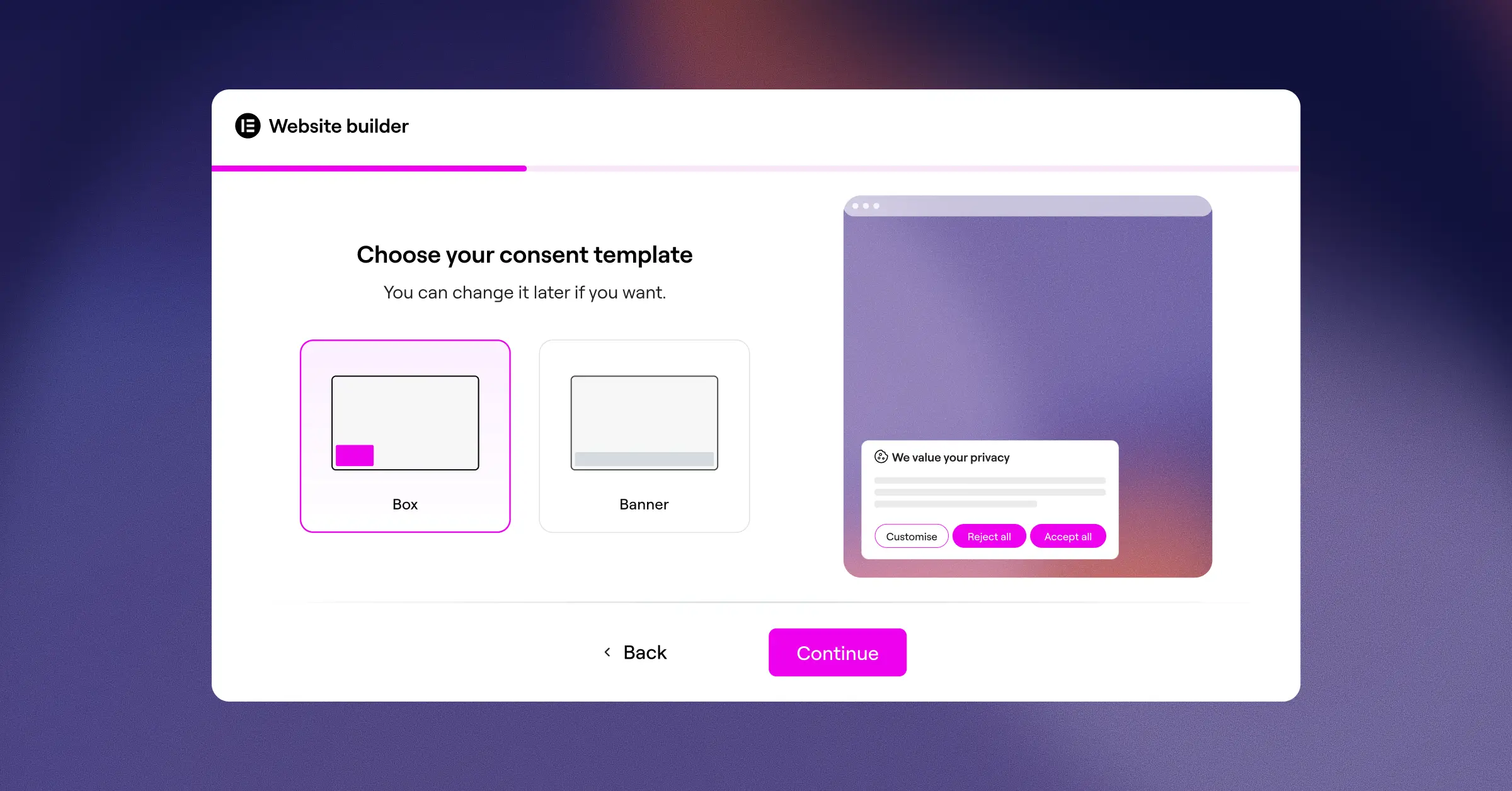
- Builds custom-branded banners that match your site design without extra CSS work.
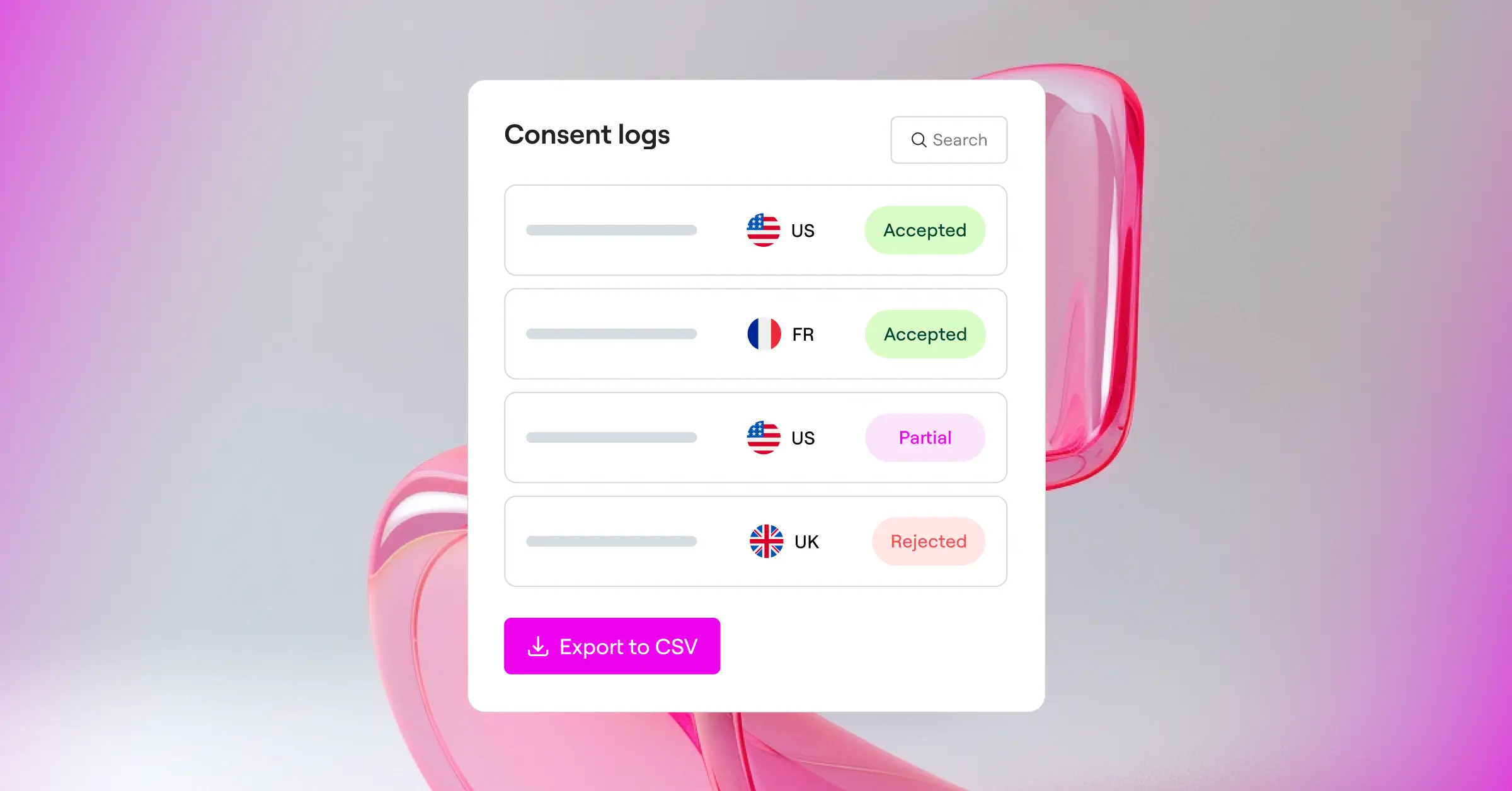
- Logs visitor consent actions securely for a clear audit trail.
- Applies regional rules automatically through smart geo-targeting.
- Supports Global Privacy Control signals to honor visitor privacy choices.
- Translates banner text easily for multilingual sites.
Pros:
- Runs entirely inside WordPress, with no external cloud accounts needed.
- Works smoothly with Google Consent Mode v2.
- Includes a built-in policy generator that saves you legal drafting time.
- Highly customizable templates make matching your brand simple.
Cons:
- Built primarily for WordPress environments.
Verdict: The top choice for WordPress site owners who want a native, straightforward compliance tool that keeps everything inside the dashboard they already know.
2. CookieYes
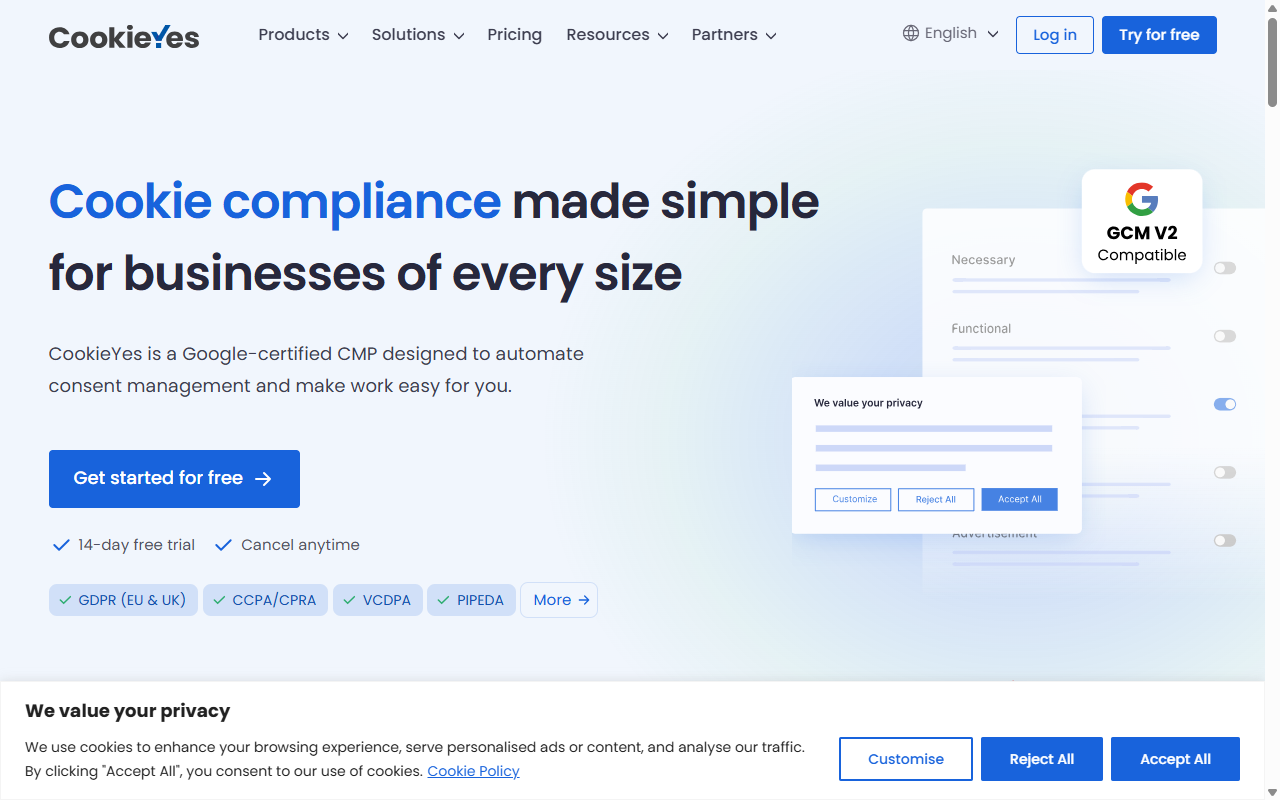
CookieYes is a widely used cloud-based consent management platform that works with WordPress and other content management systems. It runs automated scans to detect trackers, sorts them into categories like functional or marketing, and supports global regulations including GDPR and CCPA, handy if you manage sites serving visitors in different countries.
Key Capabilities:
- Categorizes discovered tracking scripts using a large global database.
- Generates customized privacy policies based on your scanned trackers.
- Blocks third-party scripts automatically until the visitor gives consent.
Pros:
- Compatible with multiple web platforms.
- Clean external reporting dashboard.
Cons:
- Settings are managed outside of WordPress.
- Entry-level plan has monthly pageview limitations.
Verdict: A reliable option if you manage multiple sites across different platforms and prefer working from an external cloud dashboard.
3. Cookiebot
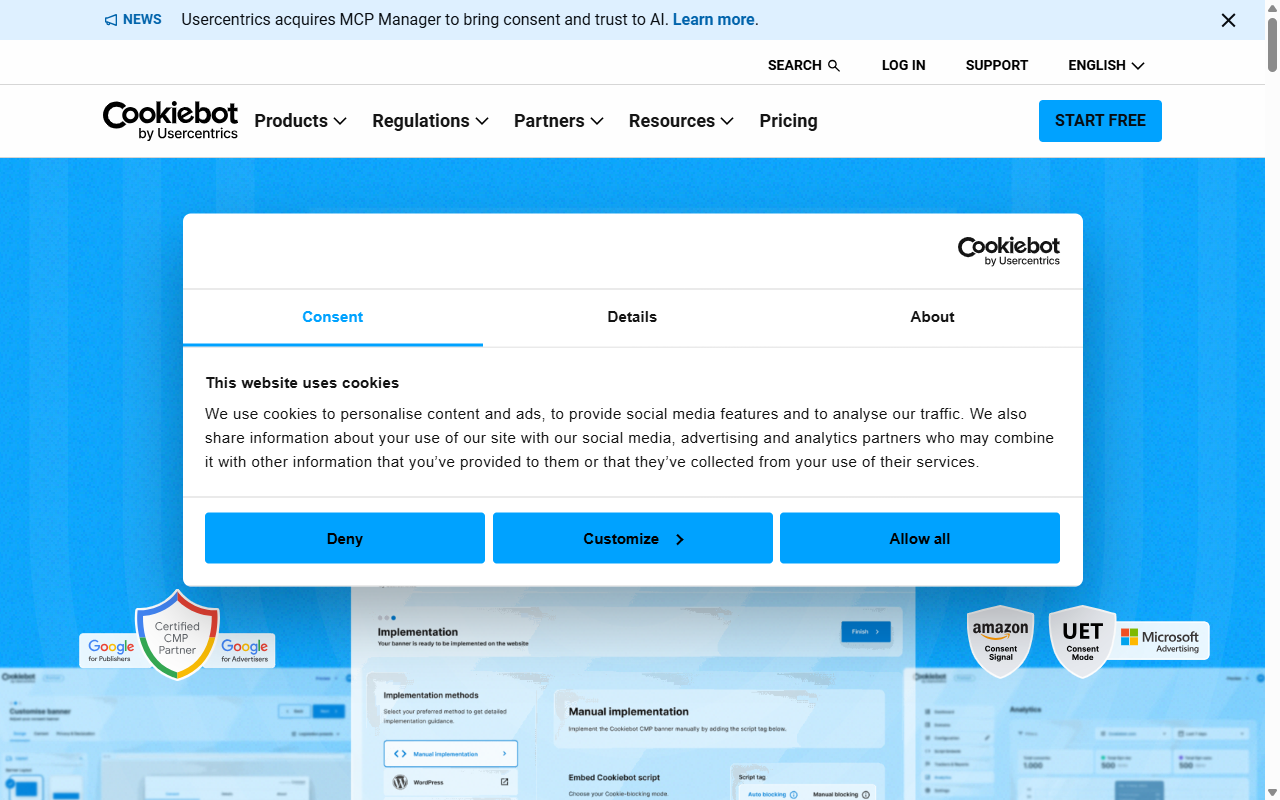
Cookiebot is a popular automated compliance tool known for its thorough scanning technology. Once installed, it scans your site regularly for new scripts, cookies, or trackers, and generates a detailed cookie declaration you can embed directly into your privacy policy page so visitors stay informed.
Key Capabilities:
- Schedules automated periodic scans to find newly added trackers.
- Displays a detailed, categorized list of cookies in a public widget.
- Saves consent data securely in cloud-based storage.
Pros:
- Automated scanning engine with broad tracker detection.
- Detailed categorization database.
Cons:
- External script loading can sometimes affect page loading speeds.
Verdict: A solid fit for larger websites with many pages that need regular automated scanning and detailed compliance reports.
4. Complianz
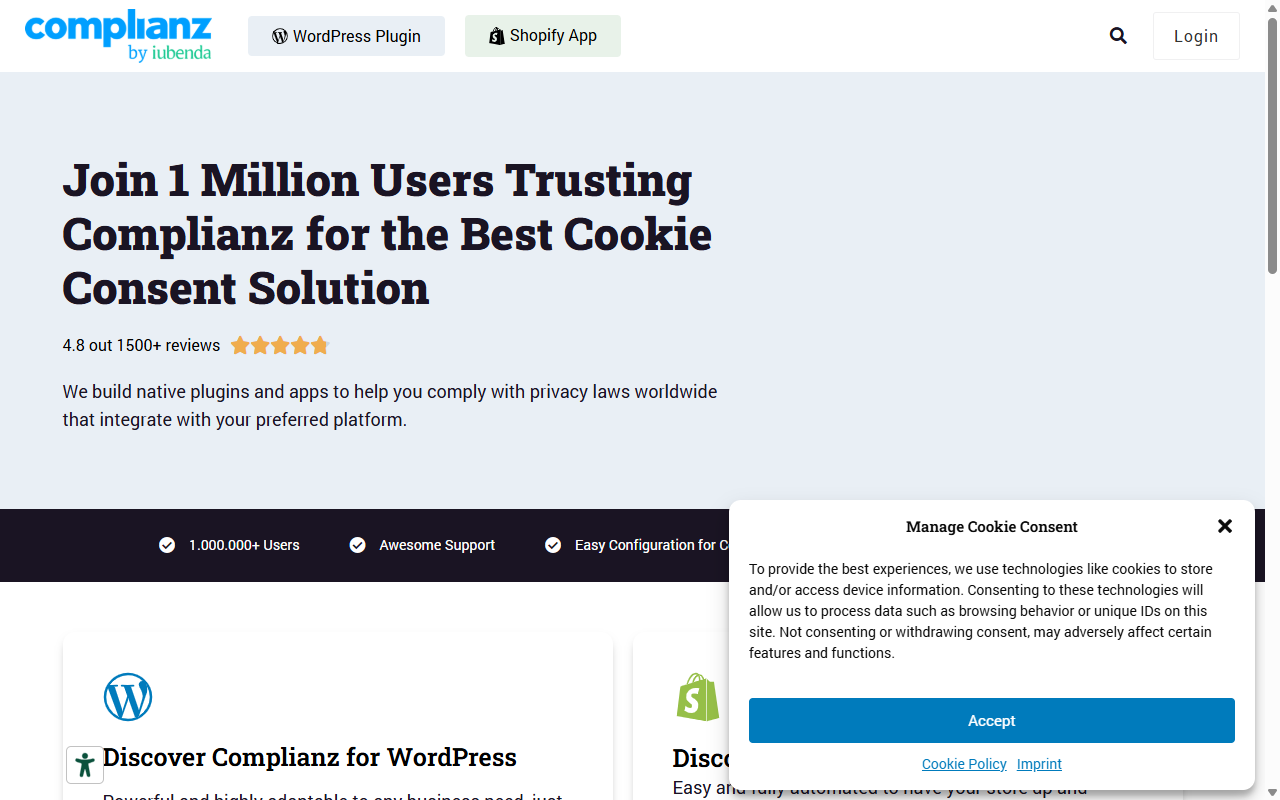
Complianz is a dedicated privacy suite built for WordPress. It uses a wizard-based setup that walks you through questions about your site, then generates your banner and policy documents based on your answers, with distinct settings for regions including the EU, the US, and Canada.
Key Capabilities:
- Guides users through compliance setup with an interactive wizard.
- Syncs with popular cookieless analytics tools.
- Integrates with WordPress system settings directly.
Pros:
- No external dashboard required.
- Structured legal wizard for policy generation.
Cons:
- The interface can feel complex for beginners given the volume of legal questions involved.
- Visual styling may need some custom CSS work to match custom themes.
Verdict: A solid option for users who want a WordPress-native setup and appreciate a structured, legal-wizard approach to compliance.
5. iubenda
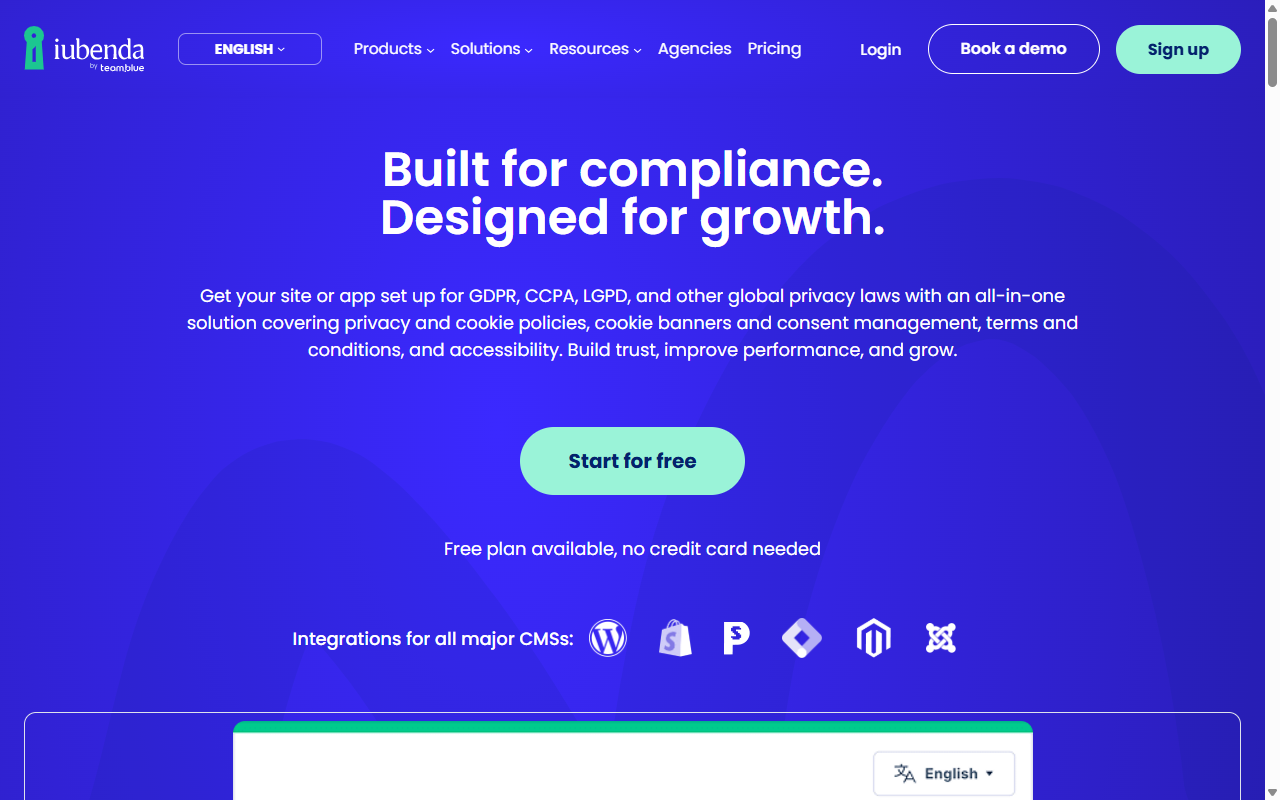
iubenda offers a full legal compliance system for websites, mobile apps, and online businesses, covering privacy policies, terms of service, and consent records in one place. Its cloud dashboard scans your site, auto-categorizes trackers, and generates custom cookie policies that update automatically as regulations change, a genuine time-saver for agencies managing many client sites at once.
Key Capabilities:
- Connects cookie consent to auto-updating privacy policy pages.
- Supports complex enterprise consent requirements.
- Records detailed proof of consent for auditing purposes.
Pros:
- Complete legal suite that goes beyond simple cookie management.
- Policies update automatically when global laws change.
Cons:
- Setting up multiple services can get expensive.
- The external interface has a learning curve.
Verdict: A good choice for agencies and businesses that need complete legal document hosting alongside cookie management.
6. OneTrust
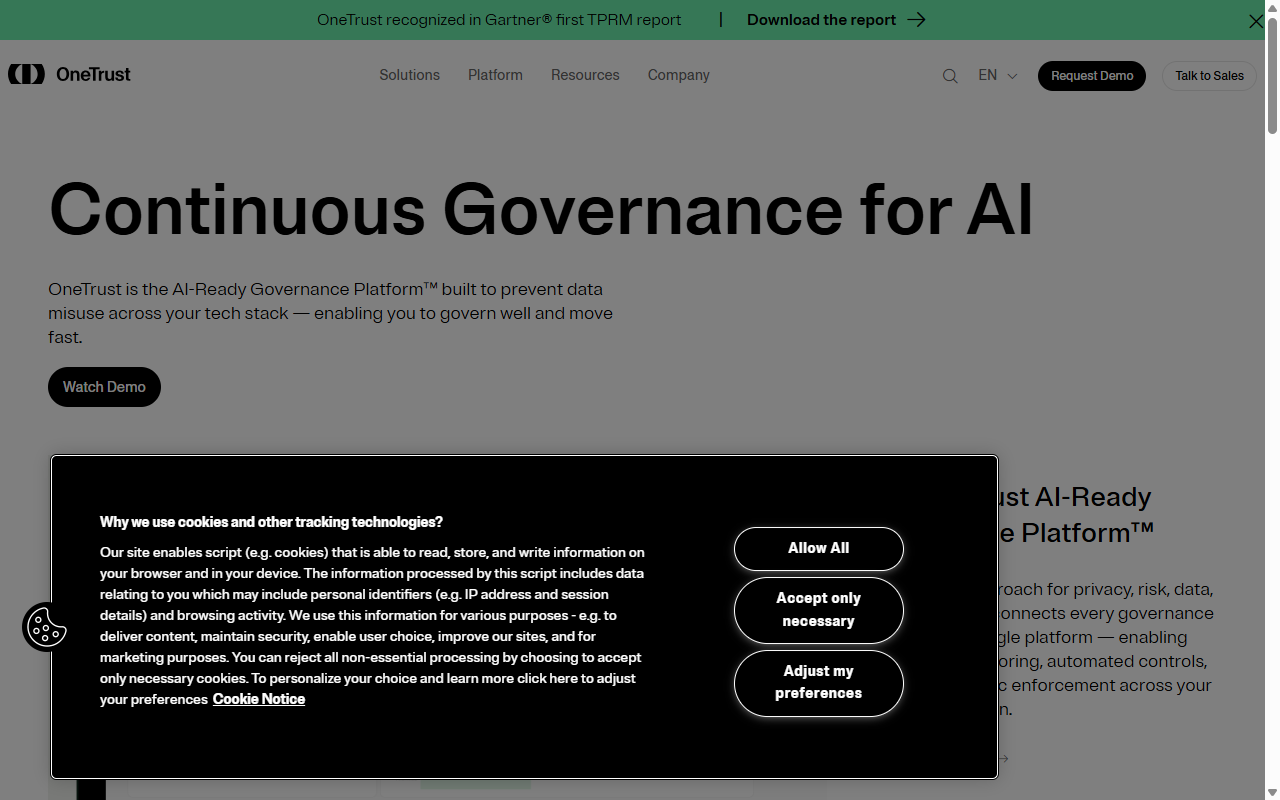
OneTrust is an enterprise-grade privacy and risk management platform built for big corporations and fast-growing businesses that need to follow strict compliance rules across many countries and divisions. Its cookie tool offers deep scanning, detailed categorization, and configurable workflows, integrating with corporate data platforms and CRM systems for complex, multi-team privacy programs.
Key Capabilities:
- Manages enterprise consent workflows across thousands of domains.
- Integrates with internal corporate privacy portals.
- Triggers deep audit scans across complex web applications.
Pros:
- Advanced customization options suited to enterprise needs.
- Built for enterprise scale and formal audits.
Cons:
- Too complex and expensive for typical WordPress sites.
- Requires professional setup in most cases.
Verdict: Suited for large enterprise sites with dedicated legal teams, but generally more than an independent WordPress site owner needs.
7. Manual Auditing with Browser Developer Tools
If you prefer a hands-on approach and want to skip third-party software, inspect your site yourself using your browser’s developer tools. Open the Storage or Application panel to view active cookies, trace which scripts generated them, and document them, a great way to confirm your automated tools are doing what you expect (worth doing at least once even if you already use one).
Key Capabilities:
- Exposes the exact cookies saved in browser storage.
- Identifies third-party script origins without automated tools.
- Requires no external code installation or subscription fees.
Pros:
- Completely free and accurate for the moment of testing.
- Helps you understand exactly how your scripts behave.
Cons:
- Requires manual technical work.
- Doesn’t automatically update when you install new tools.
Verdict: A valuable diagnostic method for verifying your automated tools are categorizing things correctly, worth keeping in your regular workflow.
8. Google Tag Manager Consent Initialization
Google Tag Manager is a widely used system for loading marketing and analytics tags, with built-in consent settings controlling which tags fire based on visitor consent status. Using the Consent Initialization trigger, you can set tags to wait until the browser confirms accepted cookie categories, which works best paired with a compliant banner tool that updates the Google data layer.
Key Capabilities:
- Delays tag execution until consent states are verified.
- Centralizes tracking scripts in one management container.
- Integrates directly with Google Consent Mode v2.
Pros:
- Flexible for complex tracking setups.
- Reduces the amount of hard-coded scripts on your site.
Cons:
- Requires moderate to advanced technical knowledge to configure correctly.
- Still requires a front-end banner to collect the actual consent choices.
Verdict: The industry standard for managing tag firing rules once your consent categories are defined.
9. Web-Based Free Cookie Scanners
Web-based cookie scanners are genuinely useful for quick checks. These online tools scan a single URL and report the trackers they discover, handy for testing your site before and after setting up a banner. They don’t offer live blocking, but they’re a good diagnostic option for catching stray cookies you missed during setup, a second opinion you can run any time.
Key Capabilities:
- Scans public URLs instantly from any device.
- Delivers a clean report of discovered trackers.
- Confirms whether your banner is blocking scripts correctly.
Pros:
- Fast, free, and require no installation.
- Great for auditing client sites quickly.
Cons:
- Only scans publicly visible pages.
- Can’t block cookies for your visitors.
Verdict: A handy quick-check tool worth keeping in your web developer toolkit.
10. Custom PHP and Content Security Policy (CSP) Headers
For developers who want full control over script execution, custom server-side rules and Content Security Policy headers restrict which domains can load scripts at the server level, before anything reaches the browser. Writing custom PHP for WordPress lets you conditionally load scripts only when specific consent cookies are present, bypassing front-end blocking scripts entirely, which can be great for performance on high-stakes sites.
Key Capabilities:
- Restricts external domain script loading via secure server headers.
- Prevents unauthorized trackers from running on your pages.
- Minimizes front-end script weight for improved performance.
Pros:
- One of the most secure ways to control third-party scripts.
- Zero reliance on external cloud platforms.
Cons:
- Requires advanced development and server administration skills.
- Can break site features if configured incorrectly.
Verdict: Best for high-security sites and experienced developers who want absolute control over script performance and security.
Feature Comparison of Best Automated Tools
Here’s a quick look at how the top automated tools compare across key compliance categories.
| Tool Name | Native WP Dashboard | Auto-Categorization | Consent Mode v2 Support | Geo-Targeting |
|---|---|---|---|---|
| Cookie Consent | Yes | Yes | Yes | Yes |
| CookieYes | No (External Dashboard) | Yes | Yes | Yes |
| Cookiebot | No (External Dashboard) | Yes | Yes | Yes |
| Complianz | Yes | Yes (Wizard based) | Yes | Yes |
| iubenda | No (External Dashboard) | Yes | Yes | Yes |
| OneTrust | No (External Dashboard) | Yes | Yes | Yes |
“Modern web compliance is no longer just about showing a notification banner. It’s about deep integration with browser settings and marketing frameworks. Using a tool that integrates natively with your CMS is the most reliable way to maintain both fast site speeds and bulletproof compliance.”
– Itamar Haim, Web Compliance Specialist
How to Categorize Cookies Step-by-Step on WordPress
Ready to set up your own categorization? Here’s how it works, and you’ll find it’s simpler than it looks. Most of these steps take just a few minutes each.
- Run an Initial Scan – Use your compliance tool to scan your whole site. It’ll discover all active tracking scripts and catalog them for you.
- Review the Categories – Check the automatic assignments. Make sure your analytics tools land under Performance, and marketing tags are grouped under Advertising.
- Verify Essential Cookies – Confirm that cookies keeping your cart working or logins secure are locked in the Strictly Necessary category. These should never be blocked.
- Configure Geo-Targeting – Set up rules to display the right banner style based on where your visitor is browsing from.
- Enable Consent Mode v2 – Turn on Google Consent Mode settings so your tag manager and ad networks can read user signals automatically.
- Test Your Setup – Open your site in an incognito window, accept only analytics cookies, and confirm ad trackers don’t load.
If you’re already using Elementor’s Cookie Consent tool to manage your site’s privacy compliance, this whole sequence becomes straightforward. Everything stays inside your familiar Elementor workspace, so you’re not bouncing between tabs, platforms, or accounts to keep things running.
Frequently Asked Questions
What happens if I do not categorize my cookies?
If you don’t categorize your cookies, your consent banner can’t block scripts selectively. Tracking scripts might run before a user gives permission, which can violate privacy regulations like GDPR, and it can also create issues with ad platforms that require proper consent signals before accepting your data.
Do strictly necessary cookies require user consent?
No, strictly necessary cookies don’t require prior consent because your site can’t function without them. You’re still required to list and explain them in your privacy or cookie policy so visitors know they’re active.
What is Google Consent Mode v2 and why is it important?
Google Consent Mode v2 is a framework that lets your site communicate visitor consent states directly to Google platforms. If you serve visitors in the EU or UK and use Google Analytics or Ads, supporting it keeps your measurement data accurate.
Can I use multiple cookie consent tools at the same time?
It’s not recommended. Running multiple tools at once can cause code conflicts, slow your site down, and display confusing overlapping banners. Choosing one native tool that meets your needs is the better approach.
How often should I scan and update my cookie list?
Scan your website at least once a month, or whenever you install a new feature, social widget, or tracking script, to keep your compliance records accurate and your classifications current.
Are cookie consent tools bad for site speed?
Some external tools add heavy scripts that slow your loading times. Choosing a native capability like Cookie Consent keeps everything optimized within WordPress, cutting down on external code and keeping page speeds fast.
Does a cookie banner protect me from all privacy laws?
A cookie banner is an essential step, but full compliance also needs a clear privacy policy page, proper consent logs, and secure user data. A complete native tool set helps you manage all of it in one place.

