
Keeping up with privacy law on your WordPress site can feel like chasing a moving target. With the 2026 regulatory updates, staying compliant with GDPR, CCPA, and other global privacy rules isn’t optional anymore. But don’t worry, it’s easier than it looks, and you don’t need a law degree to keep your site safe. The right tool saves you hours of guesswork, so we tested the top options to help you pick one that fits.
Key Takeaways
- Native integration is simpler. Dashboard-built tools save you from juggling platforms.
- Consent Mode v2 is essential for EU traffic if you use Google services.
- Automation saves time. Scanning and script blocking stop cookies loading before consent.
- Design matters. Branded, customized banners boost opt-in rates.
The Evolving World of Privacy Compliance
The rules of the web have changed a lot. A few years ago, a simple “we use cookies” banner was enough. Today, regulators across Europe and North America expect active, informed consent before non-essential cookies load. If your site runs basic analytics, tracking pixels, or social feeds, you’re probably using cookies that fall under these rules.
The shift away from third-party tracking has made direct consent even more important. Global Privacy Control signals and Consent Mode compliance are now standard, and a tool that handles this automatically keeps you safe from fines.
Comparison Matrix of the Best GDPR Tools
Here’s a quick matrix comparing where each platform runs and what it does best.
| Tool Name | Setup Location | Consent Mode v2 Support | Key Strength |
|---|---|---|---|
| Cookie Consent | WordPress Native Dashboard | Yes (Built-in) | Fastest setup, zero external logins, beautiful design tools |
| Cookiebot | External Cloud Dashboard | Yes | Deep automated compliance scanning |
| CookieYes | Hybrid Dashboard | Yes | Strong multi-platform versatility |
| Complianz | WordPress Dashboard | Yes | Legal wizard-guided setup process |
| iubenda | External Generator Dashboard | Yes | Complete privacy policy generation |
| Termly | External Dashboard | Yes | Simplified policy builder for small brands |
| OneTrust | Enterprise Cloud Platform | Yes | Enterprise-level compliance and auditing |
| Osano | External Cloud Platform | Yes | Strong regulatory monitoring features |
| GDPR Cookie Consent (WebToffee) | WordPress Dashboard | Yes | Simple, classic layout controls |
| WP GDPR Compliance | WordPress Dashboard | Partial | Lightweight consent checkboxes for local forms |
Detailed Reviews: The 10 Best GDPR Compliance Tools
1. Cookie Consent
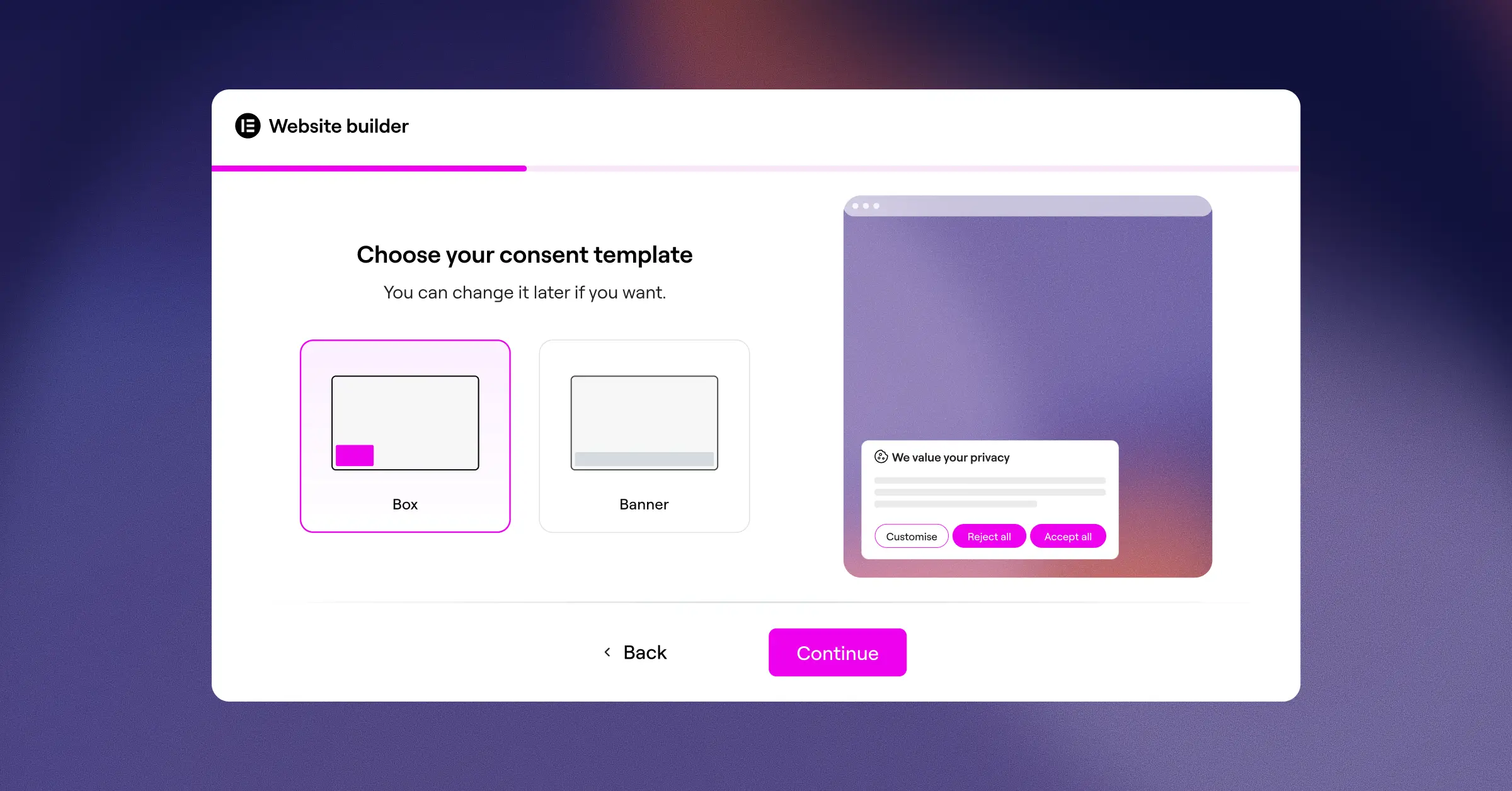
If you want compliance handled right where you build your site, Cookie Consent is the obvious pick. Native to Elementor, it runs entirely inside WordPress, no subscriptions or extra dashboards. A three-step wizard scans, sorts, and builds your banner in under five minutes, with script blocking, geo-targeting, and support for Consent Mode v2 and Global Privacy Control. It pairs with Web Accessibility, with no hidden fees tied to page views on Elementor.
Core Features
- Scans your site to find and group tracking scripts.
- Builds custom banners matching your brand’s colors and fonts.
- Restricts cookies by region, so banners only show where required.
- Saves consent logs in an audit-ready format.
- Synchronizes with Consent Mode v2 to keep analytics accurate.
- Generates custom privacy policies with a built-in assistant.
Pros & Cons
- Pro: Fully native to WordPress, no third-party dashboard.
- Pro: Five-minute setup with polished layout templates.
- Pro: Strong geo-targeting keeps your site fast.
- Con: Best suited to WordPress-centric sites, not multi-platform setups.
Our Verdict: The best pick for WordPress users wanting a simple, dashboard-native compliance tool.
2. Cookiebot
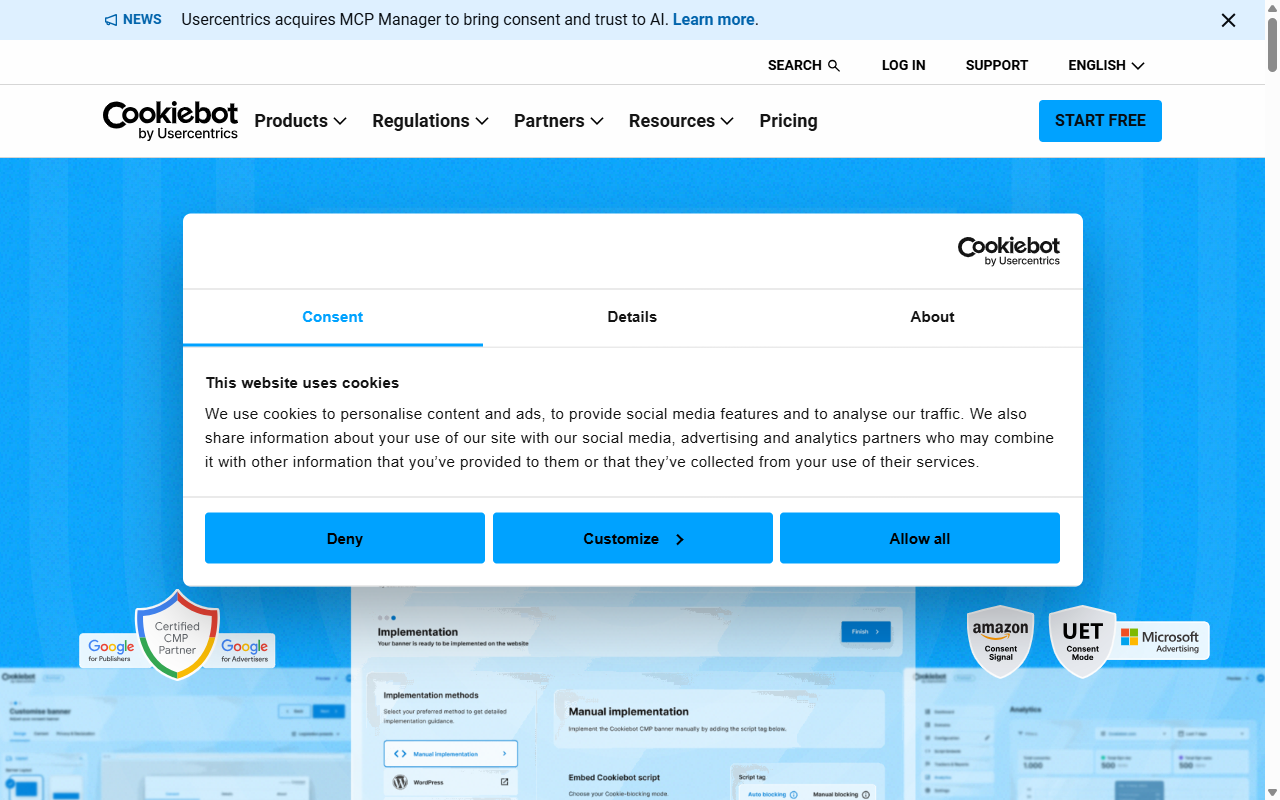
Cookiebot is a well-known cloud-based consent tool that adds its features to WordPress through a companion integration, a solid pick if your tracking setup changes often. It scans monthly, sorts your cookies, and builds a declaration report, with native Consent Mode v2 support popular among Ads and Analytics teams.
Core Features
- Automates monthly audits to catch hidden scripts.
- Categorizes cookies into four groups: Necessary, Preference, Statistics, Marketing.
- Blocks scripts until visitors set preferences.
- Holds a secure registry of consent certificates for proof.
- Supports many languages for global audiences.
Pros & Cons
- Pro: Deep scanner that catches hard-to-find scripts.
- Pro: Good for multi-domain setups from one dashboard.
- Con: Costs can climb on sites with many pages.
- Con: Banners hosted externally can affect load speed.
Our Verdict: A solid choice for corporate sites wanting hands-off scanning and a cloud-based model.
3. CookieYes
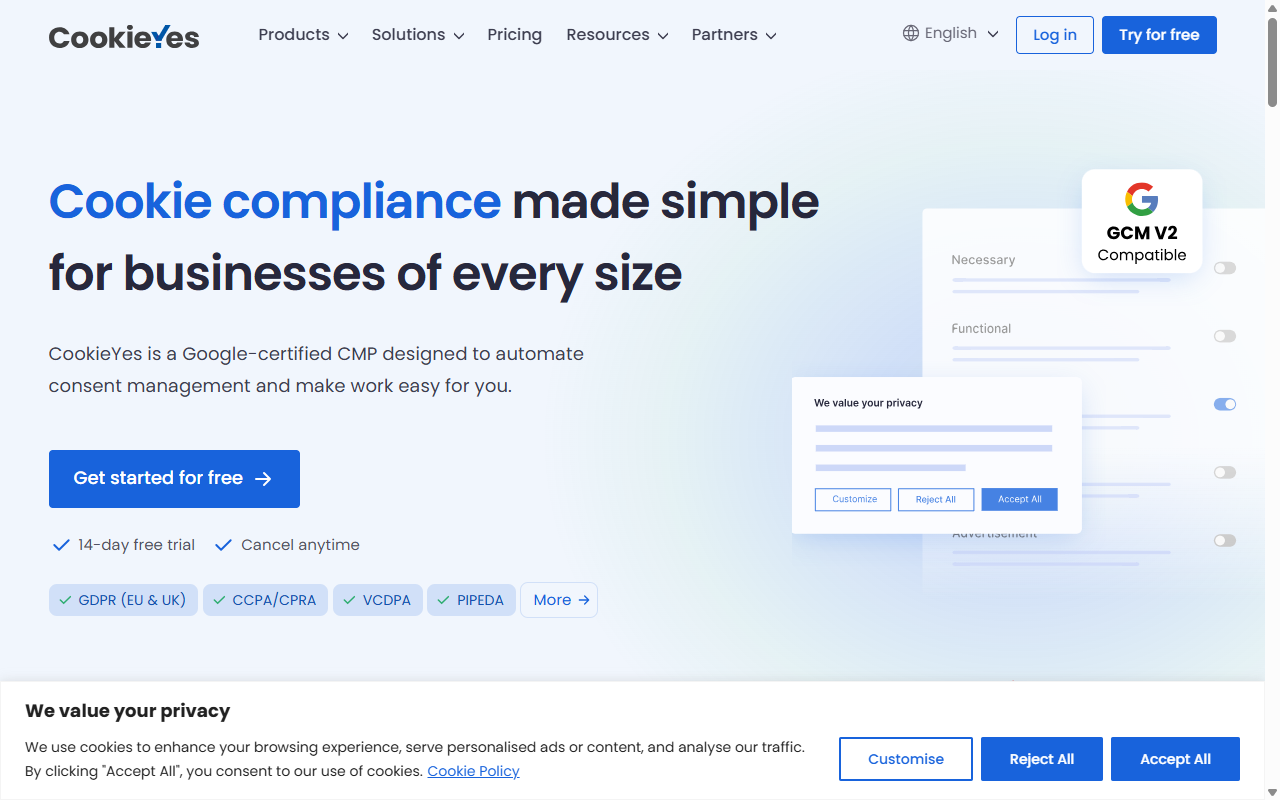
CookieYes is a popular hybrid consent tool: you set the basics inside WordPress while consent logging happens in its web app, keeping your database light with advanced reporting. The interface is clean for non-technical admins, covers GDPR and CCPA out of the box, and its customizable banners make it simple to match your brand.
Core Features
- Manages cookie lists from a clean, web-based dashboard.
- Translates banners into more than thirty languages.
- Integrates with tag managers like Google Tag Manager and Adobe Launch.
- Applies custom CSS for full styling control.
- Monitors consent trends with analytics reports.
Pros & Cons
- Pro: Friendly interface that’s easy for beginners.
- Pro: Good documentation and responsive support.
- Con: Switching between WordPress and the portal can feel disjointed.
- Con: Entry-level plans show a small watermark on your banner.
Our Verdict: A well-rounded performer between native WordPress tools and cloud platforms.
4. Complianz
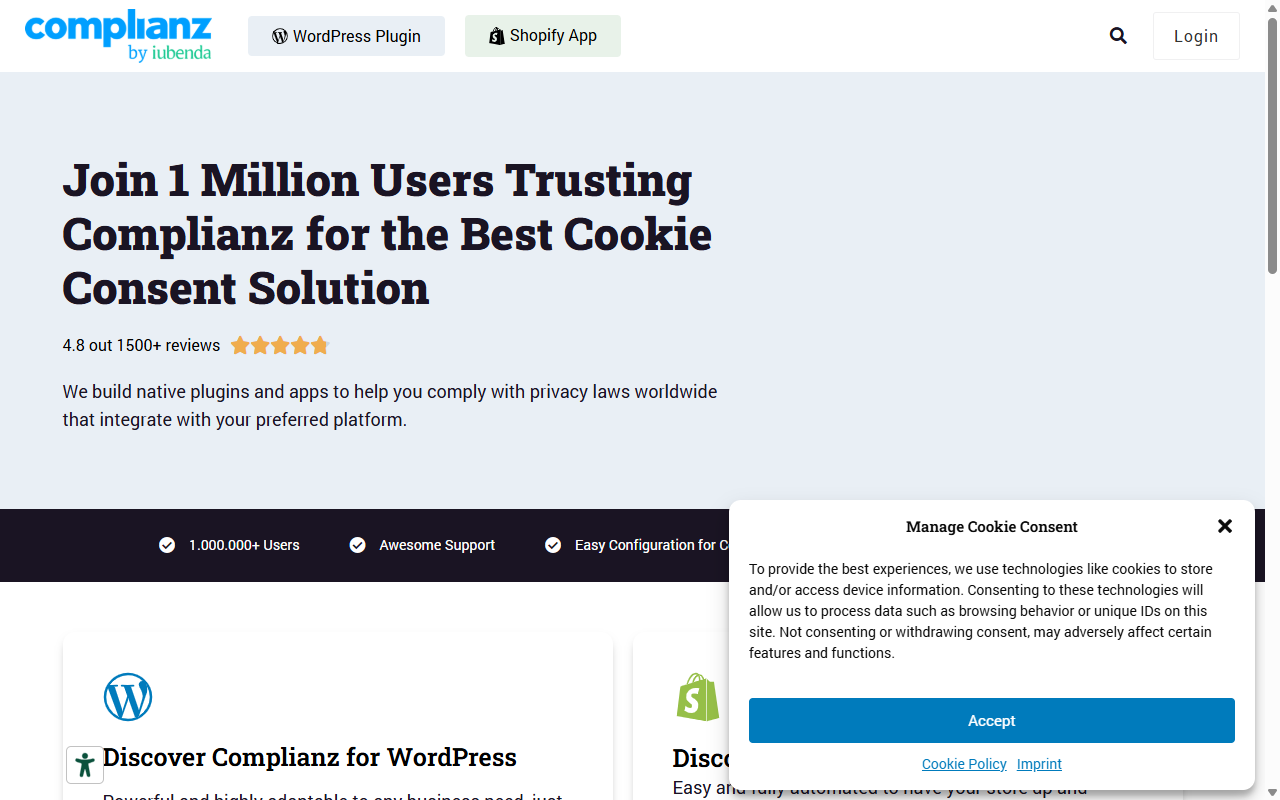
Complianz is a privacy suite for WordPress that acts like a guided legal assistant, using your answers to a short questionnaire to generate legal documents alongside your banner. Because it runs locally on your server, you keep full ownership of your data, a real plus if you’d rather not send visitor data to third-party servers.
Core Features
- Guides you through a legal wizard to pinpoint compliance needs.
- Generates legal documents, including Cookie Policies, Privacy Policies, and Terms of Service.
- Integrates with popular form plugins to block scripts before consent.
- Supports CCPA opt-out with a dedicated “Do Not Sell My Info” link.
- Keeps data local for full control over consent databases.
Pros & Cons
- Pro: Thorough legal setup covering many global jurisdictions.
- Pro: Local storage means no external tracking APIs load.
- Con: The wizard has many steps, a lot for a simple banner.
- Con: Customizing the banner’s look can require custom CSS.
Our Verdict: A good fit for owners wanting legal documents alongside their banner, hosted locally.
5. iubenda
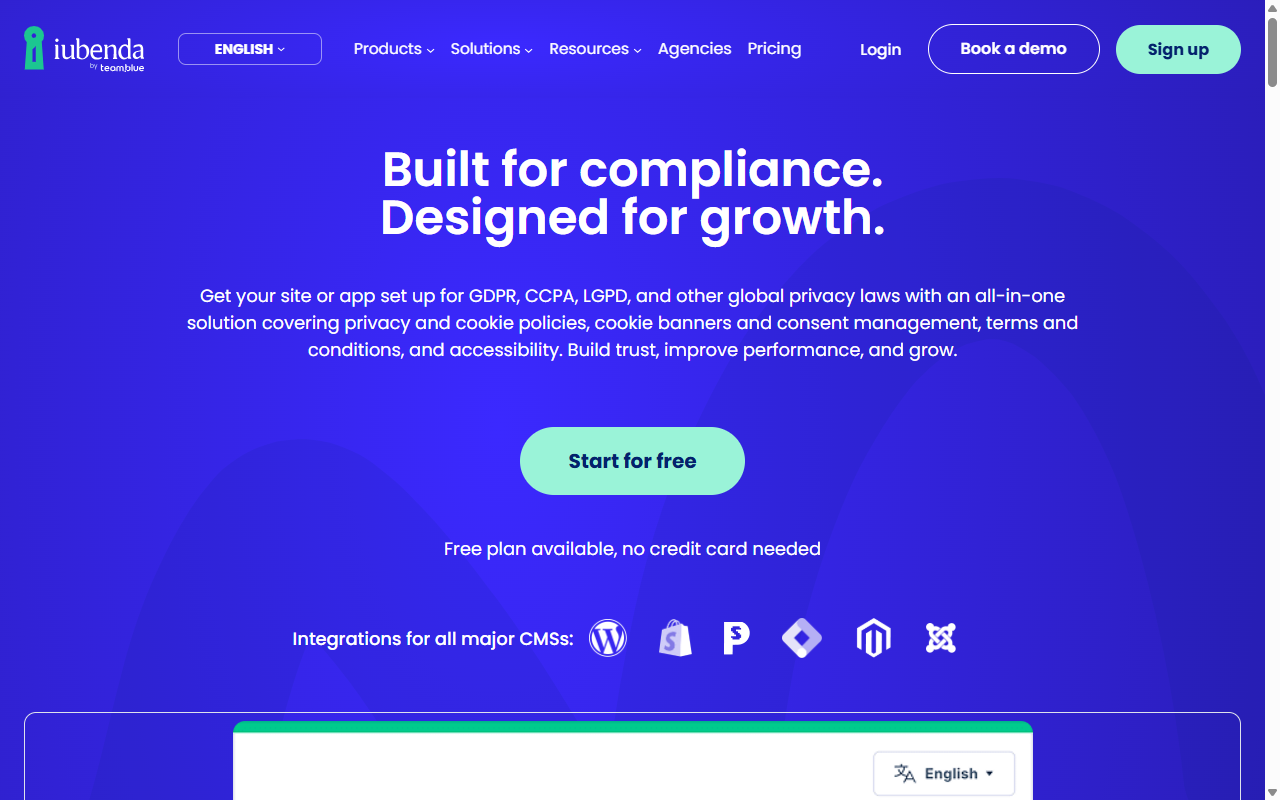
iubenda is a popular SaaS compliance platform for developers and agencies, covering privacy policies, terms generators, and consent databases through a companion WordPress integration. One big advantage is legal backing: templates are built and updated by a professional legal team, so your policy adapts as regulations shift (which happens often).
Core Features
- Updates policies as global laws change.
- Saves consent history in an encrypted cloud database.
- Configures banners with pre-built styling presets.
- Detects visitor location to show the required layout.
- Connects to external mobile apps and custom APIs.
Pros & Cons
- Pro: Lawyer-reviewed policies that take the stress out of compliance.
- Pro: Good for multi-language projects needing precise translations.
- Con: The dashboard and credit system can confuse casual owners.
- Con: Visual changes often need code or their builder.
Our Verdict: A strong pick for agencies managing verified policies across more than WordPress.
6. Termly
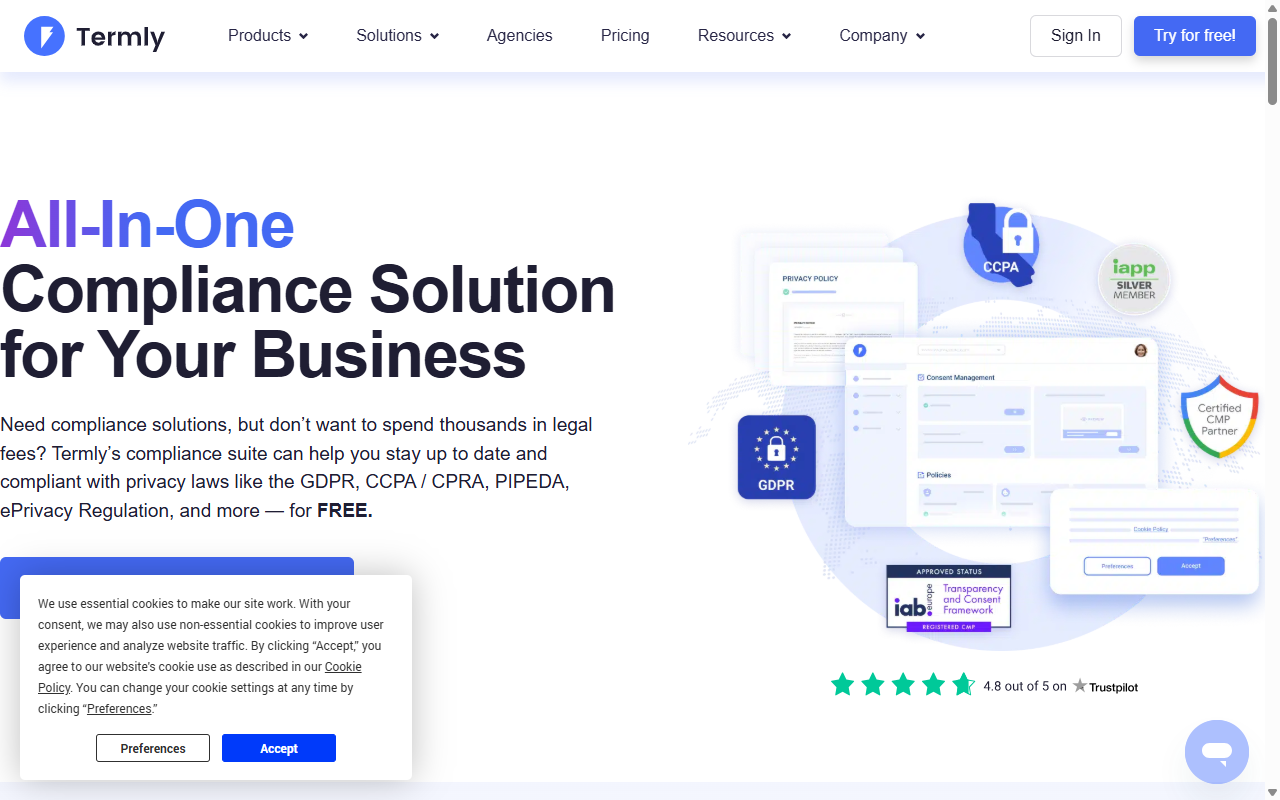
Termly is a compliance suite for small businesses, startups, and independent creators, offering privacy policies, terms, and cookie banners from an external portal added to WordPress via a simple script. Its strength is simplicity (it’s more approachable than most), so you won’t need to wade through dense legal jargon.
Core Features
- Assembles policies through a guided Q&A wizard.
- Scans your site weekly to keep cookie lists accurate.
- Blocks tracking scripts until a visitor accepts terms.
- Optimizes banner views based on detected location.
- Saves preferences to comply with GDPR, CCPA, and UK GDPR.
Pros & Cons
- Pro: Beginner-friendly with clear step-by-step guidance.
- Pro: Quick to set up for standard brochure sites.
- Con: Custom styling is limited next to WordPress-native tools.
- Con: The entry-level plan caps logs, which may not suit fast-growing sites.
Our Verdict: A clean option for small businesses wanting a simple setup.
7. OneTrust
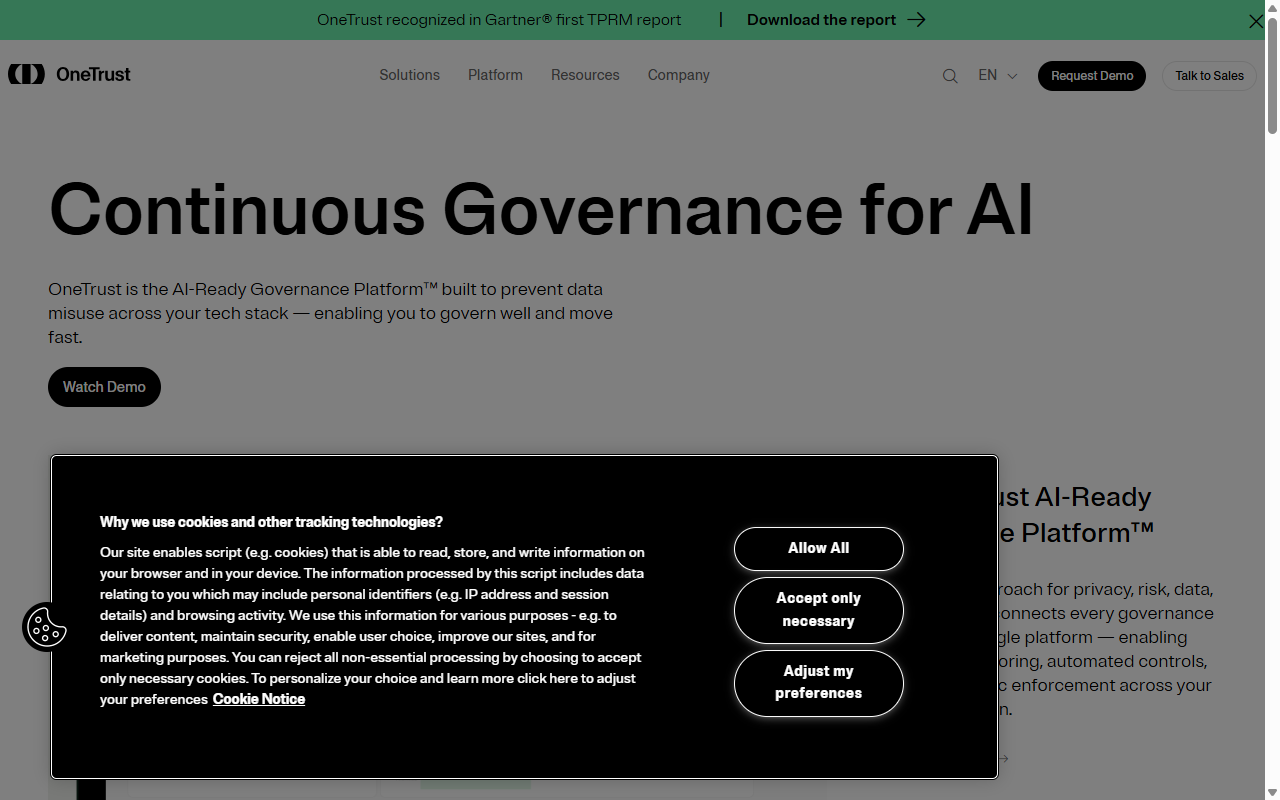
OneTrust is an enterprise-grade privacy platform for large corporations and dedicated compliance teams. It doesn’t live inside WordPress; instead, it deploys enterprise scripts on your site, delivering deep reporting, vendor risk assessments, and highly customizable tracking, a significant undertaking for a typical blog but well-regarded by enterprise teams.
Core Features
- Runs a full suite for data mapping and risk assessments.
- Supports deep customization of banners across thousands of sub-brands.
- Tracks consent across multiple devices, apps, and domains.
- Delivers complete reports and audits for legal and security teams.
- Integrates with major data platforms, CRM tools, and cloud storage.
Pros & Cons
- Pro: Unmatched depth for corporate compliance and audit readiness.
- Pro: Built to handle massive traffic without losing data.
- Con: Steep learning curve that needs technical expertise.
- Con: Enterprise-level pricing that doesn’t suit most small sites.
Our Verdict: The clear pick for enterprise brands needing rigorous audits and resources to support it.
8. Osano
Osano is a cloud-based privacy platform known for simplicity and reliability, handling script injections through a fast, globally distributed network, a premium option for teams wanting minimal admin. One standout feature is its vendor privacy ratings database, letting you check a script’s reputation before trusting it.

Core Features
- Delivers banners through a global content delivery network.
- Monitors third-party scripts for changes in vendor behavior.
- Blocks scripts in real time to prevent data leaks.
- Guarantees compliance up to a set financial limit on premium tiers.
- Supports a clean, modern design that blends into current sites.
Pros & Cons
- Pro: Reliable cloud infrastructure with little impact on load times.
- Pro: Vendor privacy ratings help you make safer choices.
- Con: Custom branding is restricted to paid tiers.
- Con: External hosting means you can’t edit templates in WordPress.
Our Verdict: A secure, reliable pick for mid-sized businesses wanting protection without heavy overhead.
9. GDPR Cookie Consent (WebToffee)
The GDPR Cookie Consent plugin by WebToffee is a long-standing WordPress.org favorite, built to do one thing well: show a clean consent banner and let users toggle scripts on or off. Because it lives entirely on your site, you don’t need external cloud accounts, which makes it popular with DIY builders who like minimal dependencies.
Core Features
- Ships with pre-designed templates, including headers, footers, and floating boxes.
- Categorizes scripts manually or via an integrated database.
- Opens up customization with point-and-click color selectors.
- Includes shortcodes to display cookie lists on your privacy page.
- Creates custom “Accept All” and “Reject All” buttons.
Pros & Cons
- Pro: Familiar interface that fits classic site builds well.
- Pro: Decent feature set in the entry-level plan.
- Con: Design settings can feel dated next to modern editors.
- Con: Manual categorization gets tedious on larger sites.
Our Verdict: A solid, classic option for developers wanting a traditional panel.
10. WP GDPR Compliance
WP GDPR Compliance is a lightweight plugin focused on form consent, adding required checkboxes to contact forms, comment sections, and checkouts instead of cookie banners. If your site doesn’t rely on heavy tracking but does collect data through forms, this offers a quick, clean way to meet GDPR requirements.
Core Features
- Integrates checkboxes into Contact Form 7, Gravity Forms, and WPForms.
- Adds compliance checkboxes to WooCommerce registration and checkout.
- Handles “Right to be Forgotten” requests, letting users request erasure.
- Delivers visitor data downloads for information requests.
- Keeps configurations lightweight to avoid slowing your site.
Pros & Cons
- Pro: Lightweight and focused on form compliance, which many tools overlook.
- Pro: Completely free with no subscription fees.
- Con: No advanced scanning or automated script-blocking.
- Con: Setup is fairly manual, requiring configuration per form plugin.
Our Verdict: The ideal companion for sites securing forms and email boxes without added bloat.
Expert Insights on Consent Management
Compliance isn’t just about a banner anymore; it’s about building visitor trust through clear, direct choices. A native WordPress tool like Cookie Consent lets teams align privacy workflows with their web design, delivering a smoother experience that keeps visitors engaged while fully respecting their data.
– Itamar Haim, Web Compliance Specialist

How to Select the Right Tool for Your Website
With so many options out there, picking the right tool comes down to your workflow and needs:
- Dashboard Location. Decide between your native WordPress dashboard or a separate cloud platform. Juggling logins can slow down daily maintenance.
- Marketing Integrations. If you run paid ads or Google Analytics, make sure your tool integrates with Consent Mode v2.
- Budget. A native capability like Cookie Consent or a flat-rate license is often cheaper than per-pageview pricing.
- Design Flexibility. A clean, branded banner builds trust better than a generic one. Look for tools with visual font, color, and position controls.
Step-by-Step GDPR Compliance Implementation Checklist
Setting up your site for privacy compliance doesn’t have to be stressful. You’ve got this. Just follow these steps:
- Perform a Complete Scan. Use your compliance tool to identify every cookie and script on your pages.
- Categorize Your Scripts. Group cookies into clear categories, like necessary, analytics, and marketing.
- Configure Script Blocking. Double-check non-essential scripts stay blocked until a visitor clicks “Accept.”
- Set Up Regional Rules. Turn on geo-targeting so banners appear by location, keeping things clean for visitors who don’t need them.
- Generate Legal Pages. Create clear Privacy and Cookie Policy pages, linked from your banner and footer.
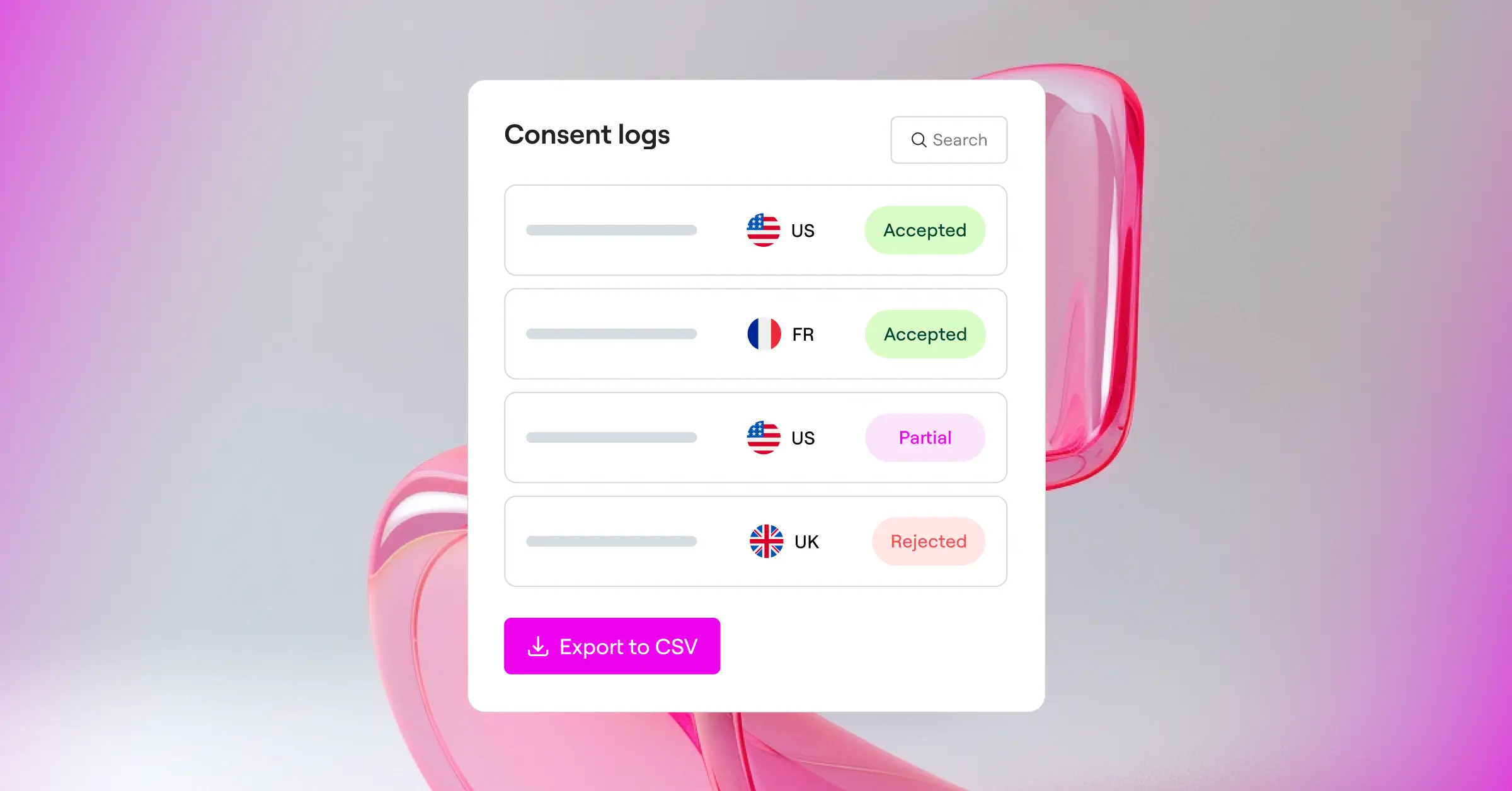
- Enable Consent Logging. Turn on audit logging to save consent histories, giving you proof if a regulator ever checks.
Frequently Asked Questions
Is GDPR compliance required for websites outside of Europe?
Yes. GDPR applies to any site that tracks EU visitors, no matter where your business sits. If you get global traffic, offer GDPR-compliant options to European visitors.
What is Google Consent Mode v2, and do I need it?
Google Consent Mode v2 sends visitors’ consent choices to Google Ads and Analytics. If you serve EU visitors and use these tools, you’ll need a solution that supports it.
Will adding a cookie banner slow down my website loading speed?
Some cloud-hosted tools add a slight delay since they load scripts from third-party servers. A WordPress-native capability like Cookie Consent stays fast since it loads from your own server alongside Elementor.
Can I use a free cookie consent tool for my business website?
Yes, many tools offer strong entry-level plans for smaller businesses. Just make sure the plan doesn’t cap your logs below your traffic or skip essentials like script blocking.
What is the difference between a privacy policy and a cookie policy?
A Privacy Policy explains how your business collects and uses customer data, like emails and phone numbers. A Cookie Policy covers just the scripts and cookies in a browser.
How do I handle visitor requests to delete their personal data?
To comply with GDPR’s “Right to be Forgotten,” your site needs a clear process for deletion requests. Tools with built-in generators often include forms and settings to help you handle this securely.
What happens if my website does not comply with GDPR?
Websites that ignore GDPR can face warnings, processing bans, and financial penalties. Beyond the legal risk, a clear setup builds genuine trust with your audience.

