
Running a website means dealing with cookie banners and privacy laws, and yes, it can feel like a lot. The good news is that it’s easier to sort out than it looks, and picking the right tool is the first step toward earning your visitors’ trust. CookieYes and Termly are two of the most popular platforms out there, but is either the best fit for your setup, or would a dashboard-native option suit you better? Here are the top choices.
Key Takeaways
- CookieYes excels as a standalone tool that works across many different content management systems.
- Termly is a strong choice for an all-in-one compliance suite with terms of service and policy generators.
- For WordPress creators, Cookie Consent by Elementor offers a completely native, zero-setup-hassle alternative right inside your dashboard.
- Support for Google Consent Mode v2 and Global Privacy Control (GPC) is essential for modern privacy compliance.
- Choosing native tools helps keep your website fast by avoiding heavy external scripts.
Why Does Cookie Consent Matter So Much Now?
Privacy regulations aren’t something to quietly ignore anymore. Regulators worldwide actively enforce rules like the General Data Protection Regulation (GDPR) in Europe and the California Consumer Privacy Act (CCPA) in the United States. If your site gets visitors from these regions, you need a clear way to ask permission before any tracking scripts load.
Search engines and ad networks are raising the bar too. If you use Google for advertising or tracking, you need Google Consent Mode v2 to keep your analytics accurate and complete. Handling that by hand is a headache, which is why a reliable, automated cookie consent capability matters so much.
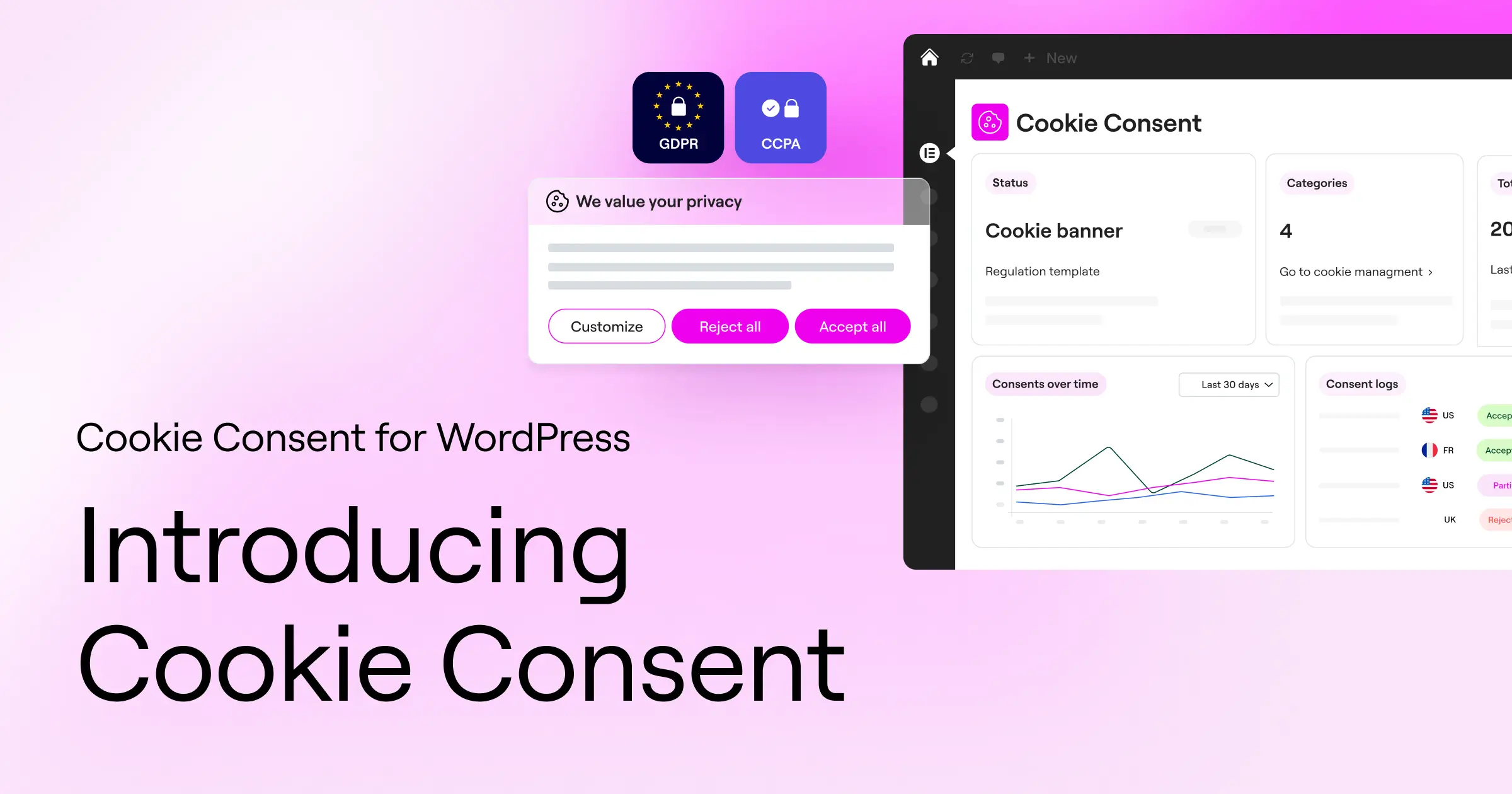
CookieYes vs Termly: The Quick Comparison
Before the full list of ten options, here’s how CookieYes and Termly stack up against a native solution: the Cookie Consent capability built by Elementor.
| Feature / Metric | CookieYes | Termly | Cookie Consent (Native) |
|---|---|---|---|
| Dashboard Location | External Cloud Platform | External Cloud Platform | Native WordPress Dashboard |
| Setup Time | 10 to 15 minutes | 15 to 20 minutes | Under 5 minutes |
| Consent Mode v2 | Yes (Supported) | Yes (Supported) | Yes (Fully Native) |
| Geo-Targeting | Paid Plans Only | Paid Plans Only | Yes (Included) |
| Design Control | Custom CSS / Templates | Basic Style Settings | Full visual brand matching |
With the high-level picture in hand, let’s look at the best options for a compliant site that doesn’t disrupt your design.
The 10 Best Cookie Consent Tools in 2026
1. Cookie Consent (by Elementor)
If you build sites on WordPress with Elementor, you don’t have to look far. The native Cookie Consent capability sits right inside your dashboard, so you never need a separate platform for your banner or settings.
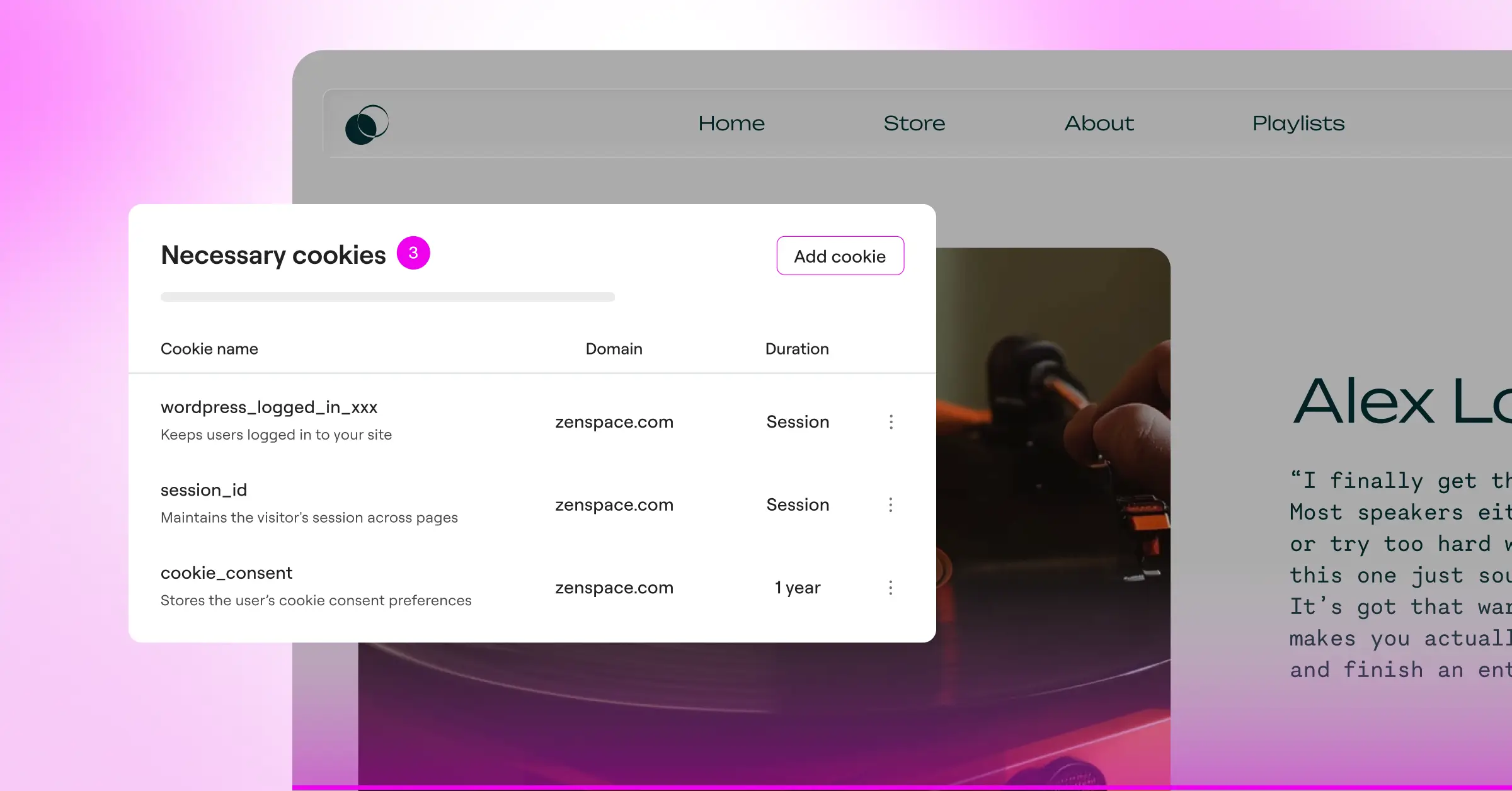
It cuts out the script bloat common with third-party overlays. You handle categorization and consent logs where you edit content, and setup takes under five minutes with a guided wizard.
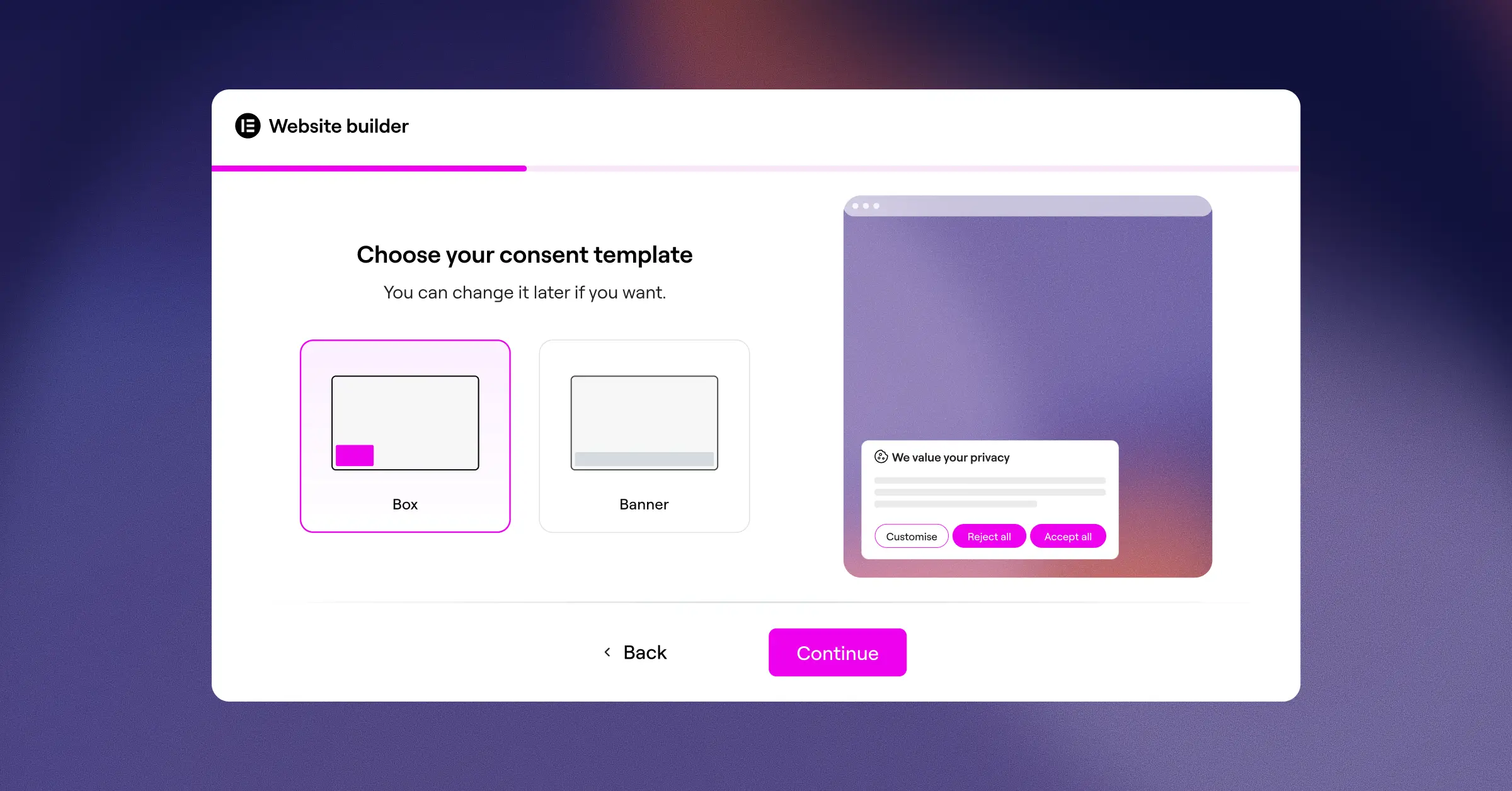
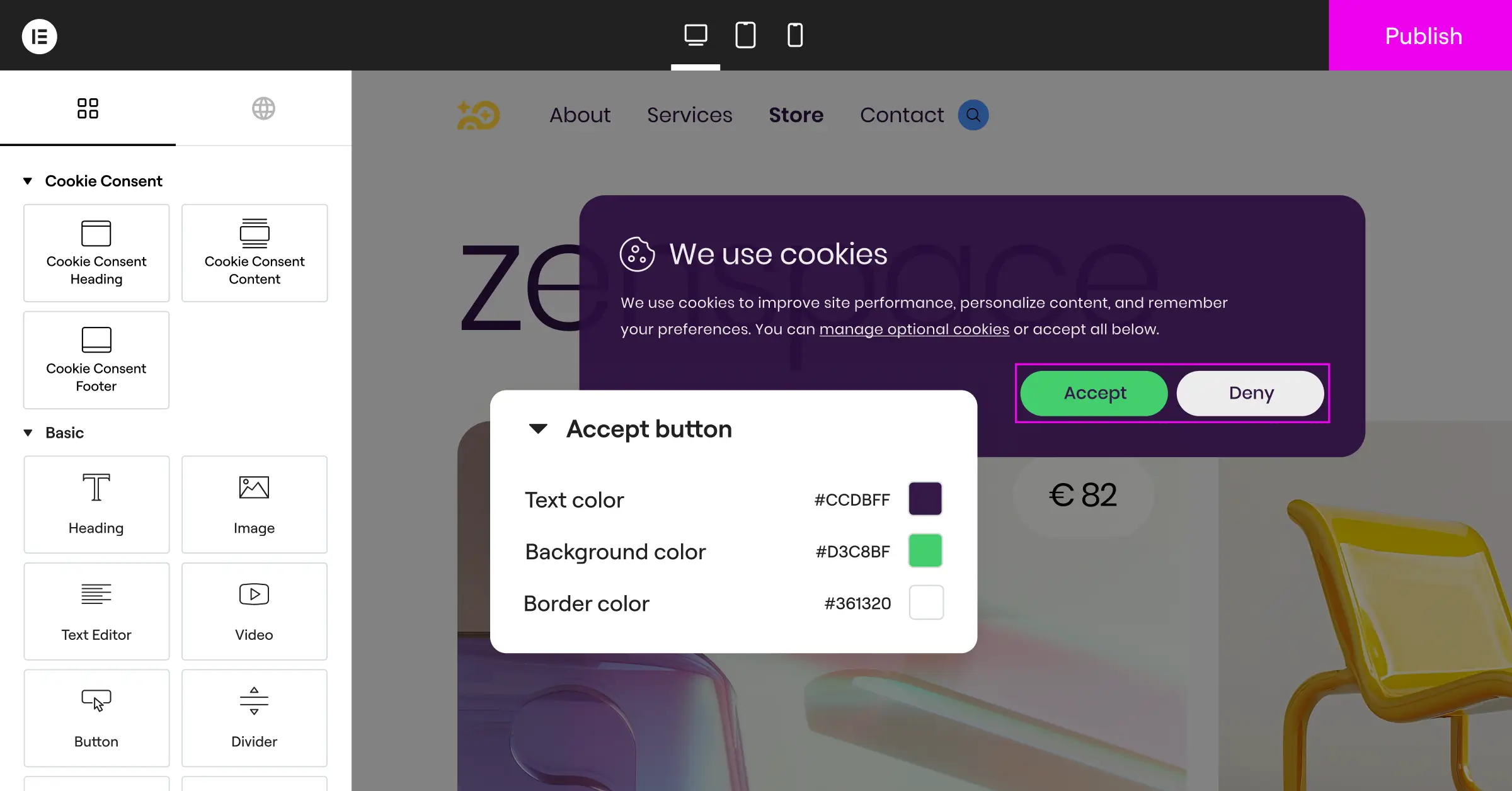
- Builds brand-matching banners instantly using your existing site styles.
- Scans your site automatically to categorize cookies and trackers.
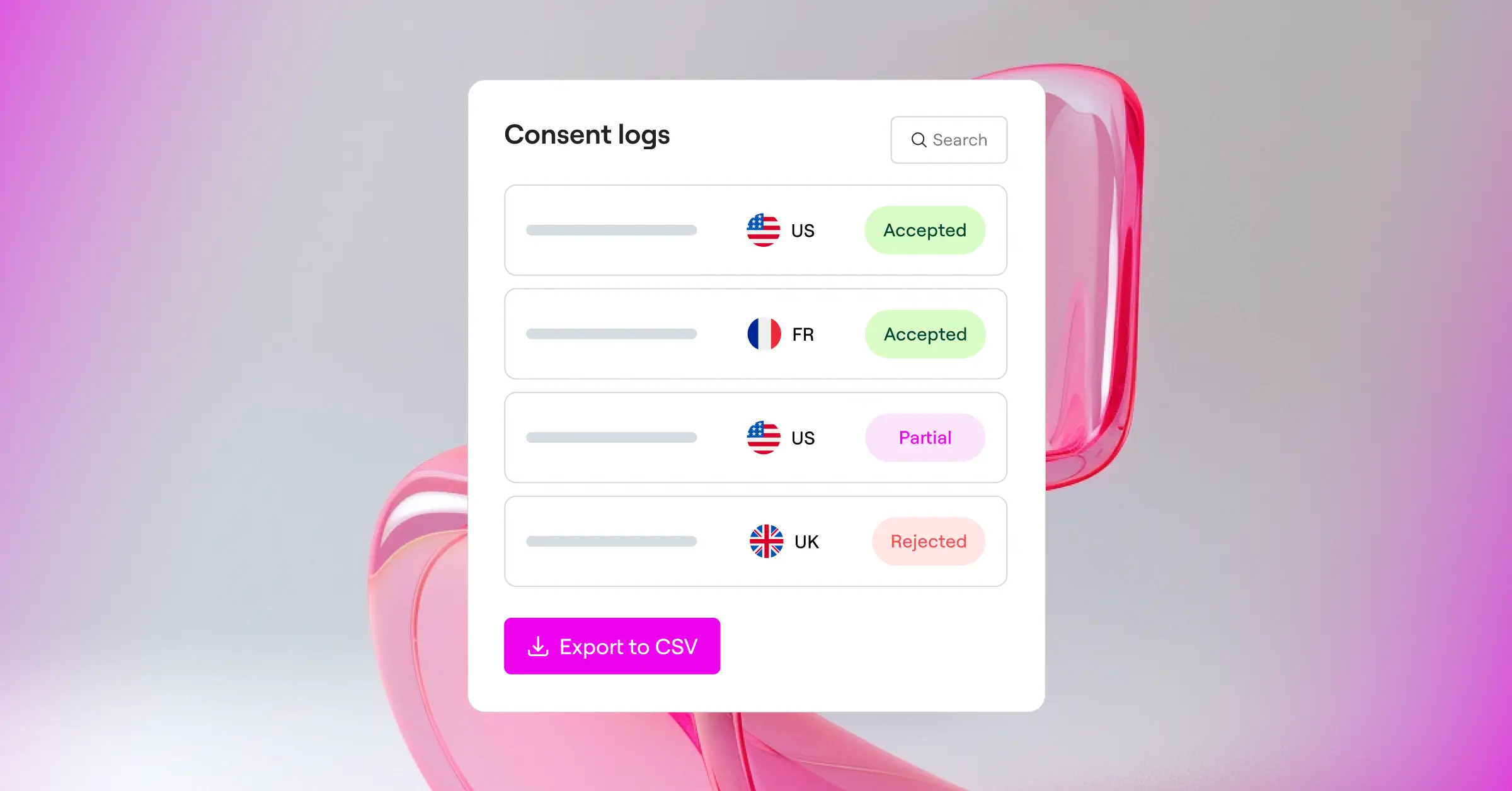
- Logs visitor consent actions securely to satisfy regulatory audit requirements.
- Supports Google Consent Mode v2 and Global Privacy Control out of the box.
- Restricts cookie loads dynamically based on the visitor’s geographic location.
Pros: No external dashboard, five-minute setup, tight design integration, a free tier, and inclusion in Elementor One.
Cons: Built for WordPress and the Elementor ecosystem, so it doesn’t suit non-WordPress platforms.
Verdict: A logical, performance-friendly choice for WordPress designers and agencies.
2. CookieYes
CookieYes is a widely recognized standalone consent platform that works across virtually any web builder, with one external dashboard for consent across multiple sites. It’s well established for teams running Shopify, custom HTML, and WordPress sites.
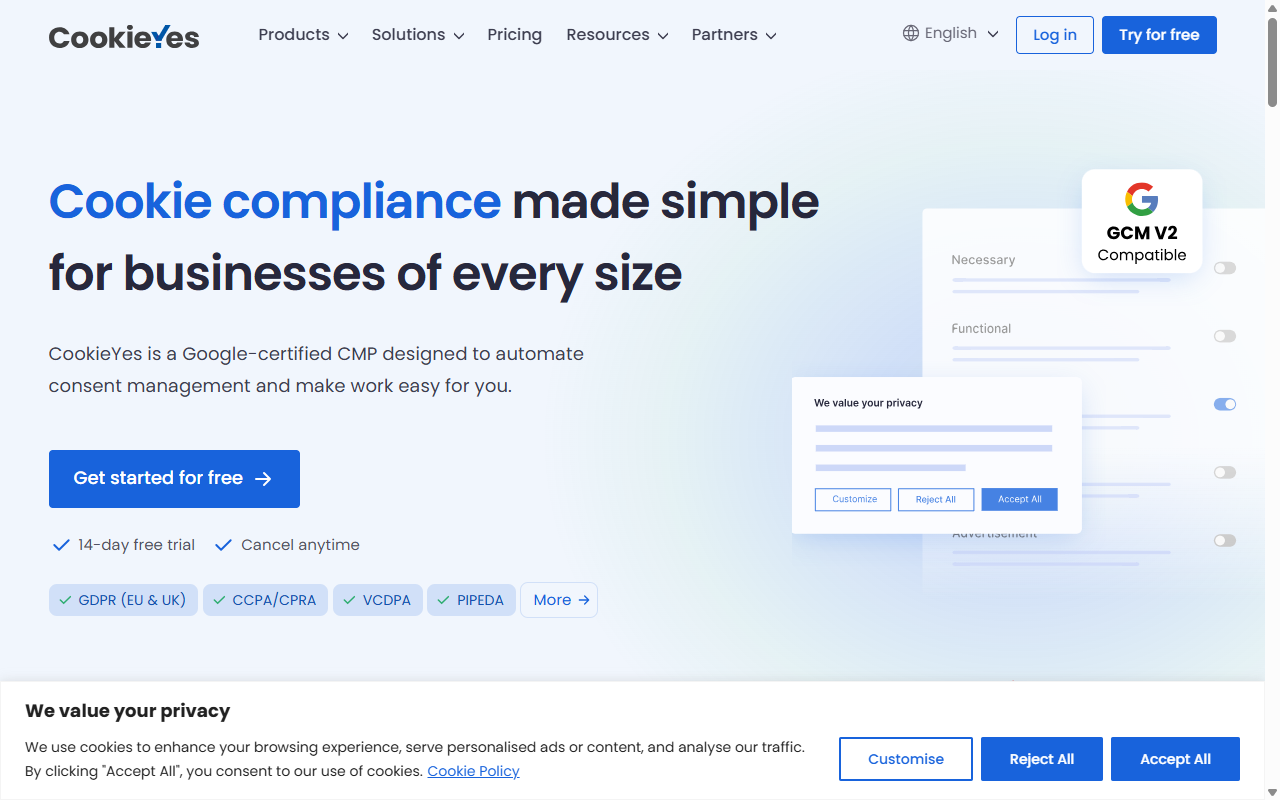
- Scans your website for active cookies and generates an automated report.
- Translates your banner into over thirty languages based on user browser settings.
- Generates a custom cookie policy document that updates automatically.
- Saves historical consent choices in a secure, cloud-based log.
Pros: Versatile across web platforms, a simple copy-and-paste install script, and reliable support.
Cons: Requires managing an external account, and some branding options sit behind higher-priced plans.
Verdict: A solid multi-platform option if you manage sites across different content systems.
3. Termly
Termly positions itself as a full compliance suite, not just a cookie banner tool. If you need privacy policies, terms of service, and a shipping policy generator alongside your cookie manager, it suits small businesses wanting a quick legal setup.
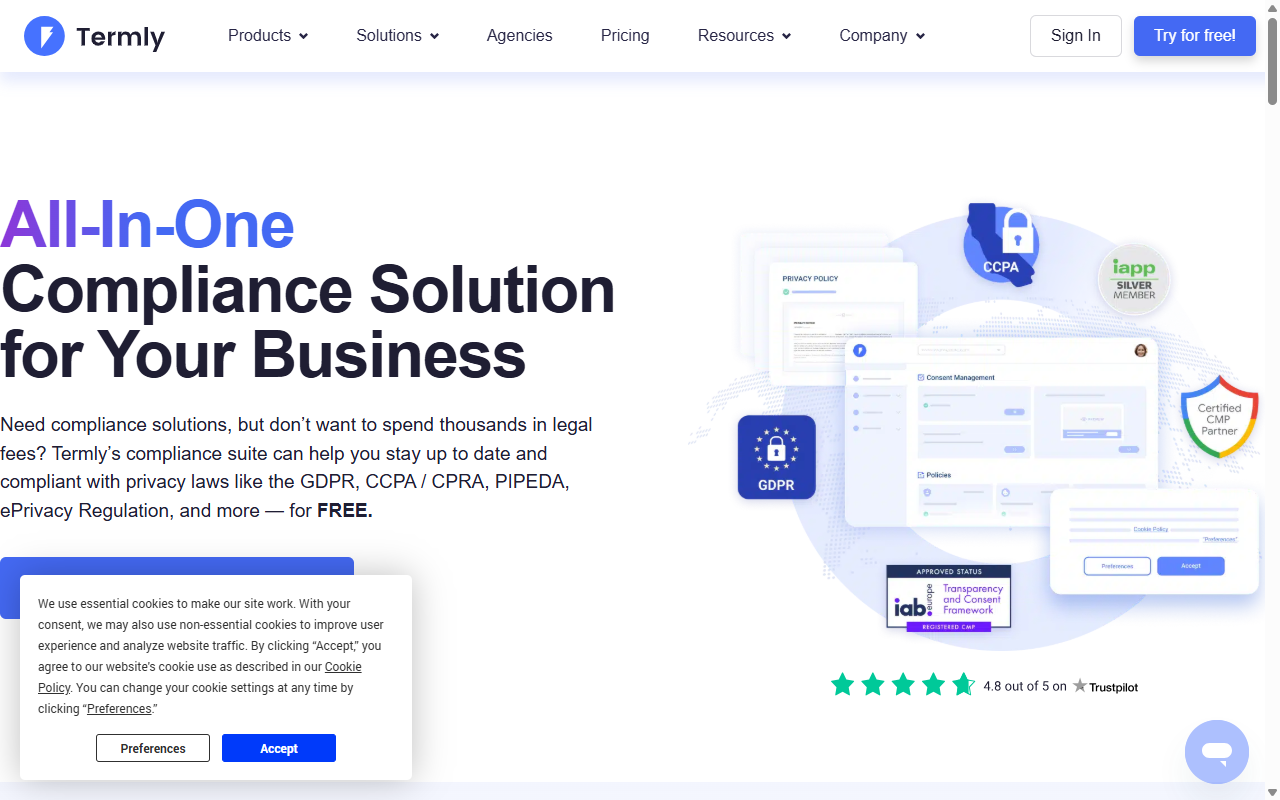
- Generates legally oriented policy documents designed for your specific business model.
- Displays a clean, customizable consent banner that responds to user locations.
- Blocks third-party cookies automatically until the visitor grants consent.
- Monitors changes in regional privacy laws to update your policies automatically.
Pros: Good value for terms and conditions documents, a simple setup wizard, and helpful legal guides.
Cons: Can feel heavy if you only need a simple banner, and entry-level plan pageview limits run modest.
Verdict: A practical choice for startups needing basic legal documents alongside their consent banner.
4. Cookiebot
Cookiebot is an industry standard built for thorough compliance. Its precise scanner identifies and pauses tracking scripts before they load, and its Google Tag Manager integration suits enterprise-scale marketing.
- Detects hidden trackers with a monthly deep-scanning system.
- Holds scripts from firing until explicit user consent is registered.
- Delivers structured consent logs to keep audit trails organized.
- Syncs with Google Consent Mode v2 for accurate ad attribution.
Pros: Thorough scanning technology, well respected in the compliance industry, and strong integration options.
Cons: Pricing scales with pageviews, which adds up quickly for higher-traffic sites.
Verdict: A dependable choice for larger sites needing detailed, automated scanning.
5. Complianz
Complianz is a privacy suite built primarily for WordPress. Its step-by-step wizard walks you through legal requirements based on your location and audience, and it supports several regional privacy frameworks.
- Configures consent options using an interactive, question-based wizard.
- Integrates with popular WordPress analytics and tracking tools.
- Generates customized legal documents based on localized data protection laws.
- Anonymizes IP addresses automatically for tracking scripts where required.
Pros: Detailed localization options, a well-designed setup wizard, and good behavior with caching configurations.
Cons: The wizard can feel lengthy, and the interface has a steeper learning curve than simpler banner tools.
Verdict: A good fit for owners who want a detailed, localized setup guide and don’t mind extra configuration time.
6. iubenda
iubenda is a broad compliance platform handling everything from cookie consent to mobile app privacy policies. It takes a legal-first approach, with legal teams regularly reviewing the code behind its generators.
- Customizes privacy policies using a modular builder with a large library of pre-written clauses.
- Saves and updates your cookie banner choices dynamically in the cloud.
- Adapts to international privacy laws, including Brazil’s LGPD and California’s CCPA.
- Keeps your consent preferences organized through a central management dashboard.
Pros: Professional legal backing, detailed customization for complex setups, and good multi-language support.
Cons: The pricing structure can feel opaque, and some advanced features require a paid subscription.
Verdict: A strong option for international brands needing compliance across multiple regions.
7. OneTrust
OneTrust is a heavyweight in enterprise compliance software. It’s not built for small blogs, but for mid-to-large organizations it offers real depth in privacy and risk management.
- Coordinates global consent campaigns across thousands of regional domains.
- Integrates with enterprise-level customer relationship management (CRM) platforms.
- Logs consent events in a secure, auditable database.
- Analyzes site scripts with advanced technical crawling tools.
Pros: Deep feature set, secure infrastructure, and accepted by major global legal divisions.
Cons: Far too complex and expensive for basic websites, blogs, or local small businesses.
Verdict: The go-to option for enterprises that need deep risk management and corporate-grade compliance.
8. Osano
Osano is known for its straightforward approach and its “no-fine” pledge, giving owners real peace of mind about legal exposure. The interface is clean, modern, and easy to navigate.
- Prevents accidental tracking violations by blocking unauthorized scripts by default.
- Translates banners automatically into dozens of regional dialects.
- Monitors vendor privacy scores to flag potentially unsafe third-party services.
- Displays clear, easy-to-read choices for your site visitors.
Pros: Clean user interface, good brand reputation, and proactive script blocking.
Cons: Premium plans can get costly for growing content creators and medium-sized blogs.
Verdict: A polished option for businesses that want a refined experience and dependable compliance.
9. Usercentrics
Usercentrics is a capable European consent platform for web publishers and app developers. It handles complex tag manager integrations, a solid choice for custom-built web apps and marketing teams.
- Collects user consent across web pages, mobile apps, and smart TV interfaces.
- Connects with advanced tag management frameworks.
- Customizes layout designs to match brand guidelines precisely.
- Optimizes opt-in rates using built-in A/B testing variations.
Pros: Multi-platform support, good styling options, and built-in conversion optimization tools.
Cons: Requires some technical familiarity with script tags and custom setups.
Verdict: A good fit for developers and technical marketers who want full control over consent collection.
10. Consent Manager
Consent Manager is a GDPR-oriented solution with a strong focus on page speed. Its detailed reports on visitor banner interaction help you adjust design to improve compliance rates.
- Optimizes consent rates using integrated machine learning suggestions.
- Scans your site for compliance anomalies or unauthorized trackers.
- Supports major industry frameworks including the IAB TCF standard.
- Reports real-time statistics on opt-in trends and bounce rates.
Pros: Strong focus on page speed, detailed analytics, and good support for publishers.
Cons: The interface looks quite technical and might feel overwhelming to non-technical users.
Verdict: A useful tool for publishers that need to maximize consent rates and ad revenue.
A Closer Look: Direct Category Comparison
Now that you know the major players, let’s look at how these solutions compare in the categories that matter most day to day.
Ease of Setup and Integration
Most creators want something that takes minutes to configure. External tools like CookieYes and Termly need an account, email verification, banner setup, then a code snippet pasted into your header, an extra layer to manage.
A native capability like Cookie Consent in WordPress keeps everything under one roof, no external script needed. Turn it on, run the wizard, and it works right away using your site’s existing styling.
Design and Brand Matching
Your cookie banner is often the first thing a visitor sees, and a generic gray box can chip away at brand credibility. Standalone tools let you tweak colors and fonts, but matching your design precisely often means custom CSS.
A native design tool gives you full control from the start, matching your brand fonts, buttons, and spacing with the visual tools you already use daily, so your cookie consent banner looks like a natural part of your site.
Compliance Features and Consent Mode v2
Google Consent Mode v2 isn’t optional if you run Google Ads or Analytics for visitors in Europe. It tells Google’s systems whether a user has consented to tracking, so Google can model data for those who haven’t. CookieYes and Termly both support it via your tag manager.
A native WordPress capability often handles this quietly in the background, mapping consent settings to the Google tags on your site and keeping data collection accurate and legal.
“True compliance is about transparency and simplicity. When you make it easy for users to express their choices without interrupting their experience, you build long-term trust that’s far more valuable than temporary tracking data.”
– Itamar Haim, Web Compliance Specialist
How to Choose the Best Solution for Your Site
To pick the right fit for your compliance needs, ask yourself these three questions:
- What platform is your site built on? If you use WordPress, a native capability will almost always give better performance and a smoother workflow than a third-party cloud product.
- Do you need other legal documents? If you’re starting a new business and need privacy policies, terms of service, and cookie disclosures at once, Termly or iubenda are practical options to explore.
- How many sites do you manage? If you run an agency managing dozens of client sites across Shopify, Webflow, and custom code, a centralized tool like CookieYes can help you manage things from one dashboard.
There’s no single right answer, only the one that fits your workflow. If you’re on WordPress, Elementor’s Cookie Consent capability is worth a close look.
Frequently Asked Questions
Do I really need a cookie banner if my site is small?
Yes. Privacy laws like GDPR and CCPA protect users based on where they live, not where your business is located. Even one visitor from California or Europe using Google Analytics on your site means you need a clear choice about tracking scripts.
Will adding a cookie consent banner slow down my website?
It can, if you use a heavy external tool loading large scripts from third-party servers, which is why native options are popular with performance-focused creators. Running directly from WordPress, a native capability avoids extra server requests and keeps page loads fast.
What is Google Consent Mode v2, and why should I care?
Google Consent Mode v2 is a required configuration for sites using Google Analytics or ad tracking in Europe. It communicates consent choices directly to Google’s tags so they can adjust data collection. Without it, your marketing analytics can become unreliable.
Is there a difference between GDPR and CCPA requirements for cookies?
Yes, and it’s meaningful. Under the GDPR (Europe), you need explicit opt-in consent before dropping non-essential cookies. Under the CCPA (California), opt-out consent works instead: cookies can load, but users need a clear way to opt out of data sale or sharing.
Can I customize the visual style of my consent banner?
Yes. Most tools offer basic styling like colors and positioning. But for complete design control so your banner matches your brand’s exact fonts, buttons, and layout, a native tool like the one in Elementor gives you that precision without custom code.
Do these tools generate actual privacy policies for my business?
Some do and some don’t. Full-suite options like Termly and iubenda include legal generators for privacy policies and terms of service. Native cookie consent tools focus mainly on script management and banners, though many include a basic policy generator too.
What happens if a user declines my cookie policy?
Your compliance tool must block tracking and marketing scripts from loading in the visitor’s browser. They can still browse normally, but services like Google Analytics or Facebook Pixel won’t track their behavior.
Do I have to keep records of everyone who clicks “Accept”?
Under regulations like the GDPR, you need to be able to prove consent was given if you’re ever audited. A tool that securely saves and organizes consent logs keeps you prepared for any audit requirement.

