Table of Contents
The Ultimate Low Code Web Development Guide for 2026
You already know the web development world is moving fast. Writing every line of HTML and CSS by hand doesn’t make sense for most client projects anymore.
But building a site that’s scalable and fast, without drowning in technical debt, still takes real skill and a solid grip on modern visual development frameworks.
Key Takeaways
- Market growth – The low-code market will reach $44.5 billion by the end of 2026.
- Enterprise adoption – 75% of large enterprises already use at least four low-code tools.
- Speed to market – Visual development cuts application build time by 50% to 90%.
- AI integration – Over 80% of developers now consider AI-assisted workflows critical.
- Performance matters – A 1-second speed improvement can boost conversions by up to 25%.
- App volume – Visual tools will generate over 70% of new enterprise applications this year.
Foundations of the 2026 Low-Code Ecosystem
Let’s get one thing straight. Low code isn’t a crutch for people who can’t program.
It’s an abstraction layer, much like the move from Assembly to C and then to high-level frameworks. You’re still building complex logic, sometimes very complex, just doing it visually now.
Honestly, the line between “developer” and “visual builder” is blurring fast. Why hand-code every flexbox container when a client only cares about the live product?
- No-code tools (like Wix or Squarespace) keep you inside their sandbox, away from the underlying logic.
- Low-code platforms give you visual controls but leave the backend open, so you can inject custom PHP, write JavaScript, and work directly with the DOM.
- Traditional development gives total freedom, but at a much slower pace.
Look at the data. The global low-code development platform market is projected to reach $44.5 billion by 2026. This isn’t a fringe movement anymore.
With platforms like Elementor Editor Pro, you visually define CSS variables and atomic elements, getting the speed of a visual interface with the clean code output of a custom build. Gartner reports low-code tools now power more than 70% of new applications built by enterprises.
Holding onto your text editor out of pure pride is going to cost you money.
The Business Case for Visual Development
I’ve managed teams building hundreds of client sites, and the real bottleneck is almost never the technology. It’s the communication gap between design and development.
Bringing a low code web development workflow into your agency improves your profit margins, merging design and frontend into one continuous motion instead of two handoffs.
You need that efficiency. The global shortage of full-time developers is hitting 4 million this year, and you can’t hire enough traditional engineers to keep up with demand.
| Development Phase | Traditional Hand-Coding | Visual Low-Code Workflow | Average Time Saved |
|---|---|---|---|
| Wireframing & Prototyping | 2-3 weeks (Figma to Code) | 3-5 days (Direct in browser) | 75% faster |
| Frontend Layout | 3-4 weeks (Writing CSS/HTML) | 1 week (Visual builders) | 70% faster |
| CMS Integration | 2 weeks (Custom backend logic) | 2 days (Dynamic tag mapping) | 80% faster |
| QA & Revisions | 2 weeks (Cross-browser checks) | 4 days (Built-in responsive tools) | 65% faster |
Research from S&P Global backs this up: visual platforms cut total development time by 50% to 90% compared to traditional methods, so you can take on three times the client load without growing headcount.
But does the final product convert? Portent’s data shows a 1-second improvement in site speed increases B2B conversion rates by up to 25%, and modern visual tools output clean code so you hit those numbers without manually minifying anything.
Pro tip: don’t bill by the hour on visual development work, move to value-based pricing. Deliver a $20,000 site in two weeks instead of two months, and you shouldn’t be penalized for being fast.
Core Components of a Modern Tech Stack
Building a stack in 2026 takes real discipline. A professional stack is modular, keeping the visual presentation, background logic, and database as distinct, manageable pieces, not twenty plugins slapped onto a server.
- Handles the DOM directly as your Visual Engine. Elementor Editor Pro gives you full control over structural HTML5 tags, defining a `
`, wrapping it in an ` `, and assigning global CSS classes. - Handles the event logic modern sites need as your Logic Layer, connecting your frontend to tools like Make or Zapier for form submissions, user routing, and API triggers.
- Stores where your content lives as your Data Architecture, using Custom Post Types (CPTs) and Advanced Custom Fields (ACF) in WordPress, structured in the backend and pulled dynamically into your templates.
- Links your stack to the outside world through your Connectors. Forrester reports 87% of low-code platforms include native API connectors for major SaaS products, letting you push leads to Salesforce without a single cURL request.
- Protects what you’ve built through your Security Protocols. Dark Reading notes 67% of IT professionals rank security as their top concern, and visual builders cut human error in custom code, lowering SQL injection risk.
- Keeps everything running as your Hosting Infrastructure. Your stack means little if it goes down, so professional setups target 99.9% uptime, backed by Google Cloud or AWS containerized environments.
Think of your stack like a custom home build: framing, foundation, plumbing, and wiring, all needing to work together.
Lean on the visual builder alone for complex database queries, and you’ll end up with a slow, heavy mess, so keep your logic separate from your layout.
Integrating AI and Predictive Workflows
Let’s talk about AI, not just asking a chatbot for a generic blog post. The industry’s moved past simple text generation into agentic AI, and over 80% of low-code users now call AI-assisted development critical to their daily workflow.
This is where a tool like Angie changes things: it isn’t just a text prompt, it’s an agentic AI for WordPress built on the Model Context Protocol (MCP) that takes action.
Say you’re building a directory site. Instead of manually creating twenty post types and mapping every field, tell Angie you need a real estate listing structure with custom taxonomies for location and property type, and it builds the production-ready WordPress assets on the spot.
From there, you jump into your visual editor and map those dynamic fields to your layout grids. It’s fast, and it goes well beyond initial setup, into predictive layout optimization too.
When you’re designing landing pages for conversions, AI tools can generate A/B test variants of your hero sections in seconds, based on a design system you set and established UX patterns.
If you’re not using agentic AI to handle the tedious setup work, generating dummy data, structuring taxonomies, writing regex for form validation, you’re leaving development hours on the table.
Extending Platforms with Custom Code and APIs
Here’s the honest truth about visual builders: eventually, you’ll hit a wall, and a client will ask for something highly specific, a totally custom integration you can’t handle purely visually.
This is where the “code” in low-code comes in, and you need a systematic approach to extending your tools.
- Identify the platform’s native limitations first. Check for a native hook or filter before writing a custom script. In the Elementor ecosystem, extensive developer APIs let you register custom widgets or change how existing ones render with simple PHP functions.
- Build a custom plugin for business logic instead of putting complex PHP inside a theme’s functions.php file. A simple, site-specific plugin keeps your custom logic separate from visual updates, so the client can’t break the site during a theme update.
- Use the HTML/Code widget for isolated scripts, like a Three.js canvas or GSAP animation, dropping a code widget exactly where you need it in the DOM. Enqueue larger scripts properly in the backend to avoid render-blocking issues.
What about external data? Clients always want live dashboards.
- Authenticate the API connection. Generate your API keys from the external service, like a weather app or a financial data feed.
- Fetch the JSON payload with a lightweight PHP script using `wp_remote_get()`, and cache the response as a transient. Never hit an external API on every page load, or you’ll wreck your server performance.
- Inject via shortcode or dynamic tag. Take that parsed JSON data and output it directly into your visual builder’s text fields via dynamic content mapping.
You get the exact layout you want with visual tools, and the data underneath stays custom and alive, the hybrid workflow that actually works.
Performance and Optimization Standards
A beautiful website that takes six seconds to load is still a failed website.
Google’s data is pretty brutal here: 53% of mobile site visits get abandoned if pages take longer than 3 seconds to load, so you can’t afford lazy performance habits.
Visual builders used to have a bad reputation for heavy DOM structures. Today, tools like Elementor Editor Pro use CSS-first foundations and atomic elements that strip away wrapper divs. But you still have to do your part.
- Implement strict image compression. Never upload a 3MB PNG, and serve everything in WebP or AVIF format using automated compression pipelines.
- Audit your custom fonts. Stop loading seven weights of Google Fonts, pick two, preload them, and use `font-display: swap` so text stays visible during the initial request.
- Minify and defer non-critical scripts. If a script doesn’t render the hero section, push it to the footer instead of the header.
- Rely on edge caching, using a solid CDN like Cloudflare Enterprise to serve static assets from edge nodes closest to the user.
- Monitor your Core Web Vitals. Largest Contentful Paint (LCP) needs to happen within 2.5 seconds, and Cumulative Layout Shift (CLS) needs to stay under 0.1.
“The future of web development isn’t just about building faster; it’s about building smarter. Search engines demand flawless technical performance, and modern visual platforms finally give us the semantic HTML and CSS controls needed to achieve perfect Core Web Vitals without sacrificing design flexibility.”
Itamar Haim, SEO Team Lead at Elementor. A digital strategist merging SEO, AEO/GEO, and web development.
Remember, your hosting environment dictates your absolute speed limit. Professional environments deliver excellent Time to First Byte (TTFB) metrics, so don’t build a Ferrari and skimp on the tires.
Choosing Your Platform in the Current Market
You’ve got dozens of options in 2026, and choosing the right one depends on your business model and what your clients need.
Let’s break down the major players.
- Elementor Editor Pro –
- Best for – Scalable agency workflows and complex CMS integrations.
- The reality – It dominates the open-source WordPress space, giving you complete data ownership and flexibility.
- Cost factor – Cost-effective for agencies managing dozens of sites, since you aren’t paying per-site SaaS fees.
- Capabilities – Deep dynamic content mapping, advanced global design systems, and smooth plugin integration.
- Webflow –
- Best for – High-end visual interactions and designers who think in CSS properties.
- The reality – It’s a closed SaaS ecosystem, so you trade data portability for a tightly managed environment.
- Cost factor – Cost climbs as you scale. A basic CMS plan runs $23/month, and a Business plan runs $39/month per site.
- Capabilities – Strong native scroll animations and a clean UI for managing CSS classes.
- Framer –
- Best for – Rapid prototyping and highly stylized, design-centric landing pages.
- The reality – It feels like Figma brought to life, and designers pick it up fast.
- Cost factor – The Pro site plan runs about $30/month per site.
- Capabilities – Strong for component-based design and fluid, app-like transitions. Heavy backend data structures are more the territory of WordPress-based tools.
Which one do you pick? A big real estate directory needs an open-source database structure. A boutique design portfolio with dramatic scroll effects might do better on a dedicated SaaS tool.
Don’t fall in love with a tool. Fall in love with solving your client’s problem well.
Future-Proofing Your Developer Career
The industry is moving fast. Memorize where the buttons are in one specific UI, and you’ll be obsolete in two years.
You need to understand the underlying principles of the web. Gartner reports 41% of employees outside traditional IT roles now act as “Citizen Developers” who can drag and drop just as well as you can, so offer something deeper.
- Master native web technologies. Know how CSS Grid calculates fractional units and how JavaScript’s asynchronous functions work, because when a visual builder breaks, your knowledge of the raw DOM saves the project.
- Focus on Information Architecture (IA). Anyone can make a pretty page, but few know how to structure a complex taxonomy system for a 10,000-product e-commerce store, so learn data modeling well.
- Embrace agentic workflows, bringing in AI tools like Angie to handle the heavy lifting of backend asset creation. Be the person who directs the AI, not the one competing with it.
- Deepen your UX psychology skills. Tools change every year, but human behavior doesn’t. Understand visual hierarchy, cognitive load, and accessibility standards (WCAG).
I’ve seen hundreds of developers panic about AI taking their jobs. The ones who make it through treat AI and low-code platforms as tools to use, not threats to fear.
You aren’t just a coder anymore. You’re an architect, so start acting like one.
Frequently Asked Questions
Is low code web development bad for SEO?
Not at all. Modern visual platforms output clean, semantic HTML5. Search engines care about load speed, mobile responsiveness, and clean DOM structure, and these tools handle all three well.
Can I build complex web apps without hand-coding?
Yes, though you’ll likely need a few tools working together: a visual builder for the frontend, connected via APIs to a backend database like Supabase or Xano, with a logic tool like Make.
What’s the real difference between no-code and low-code?
No-code platforms are closed systems for simple use cases, with no access to the code. Low-code platforms give a visual interface but let developers add custom JavaScript, PHP, and API calls to extend the site.
How do these tools impact my agency’s profitability?
They cut production time significantly: shrinking development cycles by 50-90% lets agencies take on more clients a year without growing payroll, improving margins directly.
Is vendor lock-in a serious risk?
It depends on the platform. Closed SaaS platforms, like Webflow or Wix, keep your data on their own servers. Open-source setups, WordPress with a visual builder, let you export your database and switch hosts anytime.
Do I still need to learn JavaScript in 2026?
Yes. You won’t write JS for basic interactivity anymore, but you’ll still need it for custom API integrations, complex conditional logic, and advanced DOM manipulation when visual tools hit their limits.
How does agentic AI fit into visual development?
Agentic AI, like Angie for WordPress, goes beyond text suggestions. It carries out tasks directly, generating custom post types, configuring taxonomies, and building backend structures from natural language commands.
Can visual builders pass Core Web Vitals?
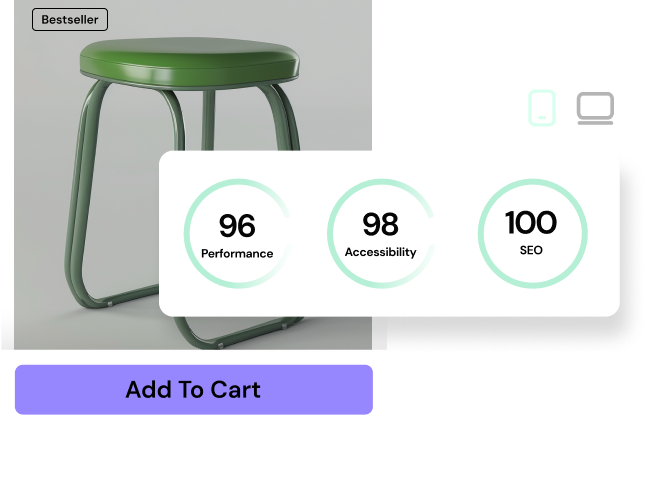
Yes, easily, with solid practices: WebP images, deferred non-critical scripts, and a good edge CDN. Sites built visually can score perfect 100s on performance audits.
What happens if the visual platform goes out of business?
On a hosted SaaS tool, your site goes down with it. On an open-source ecosystem, like WordPress with Elementor Editor Pro, your site keeps working because the code lives on your own managed server.
Looking for fresh content?
By entering your email, you agree to receive Elementor emails, including marketing emails,
and agree to our Terms & Conditions and Privacy Policy.