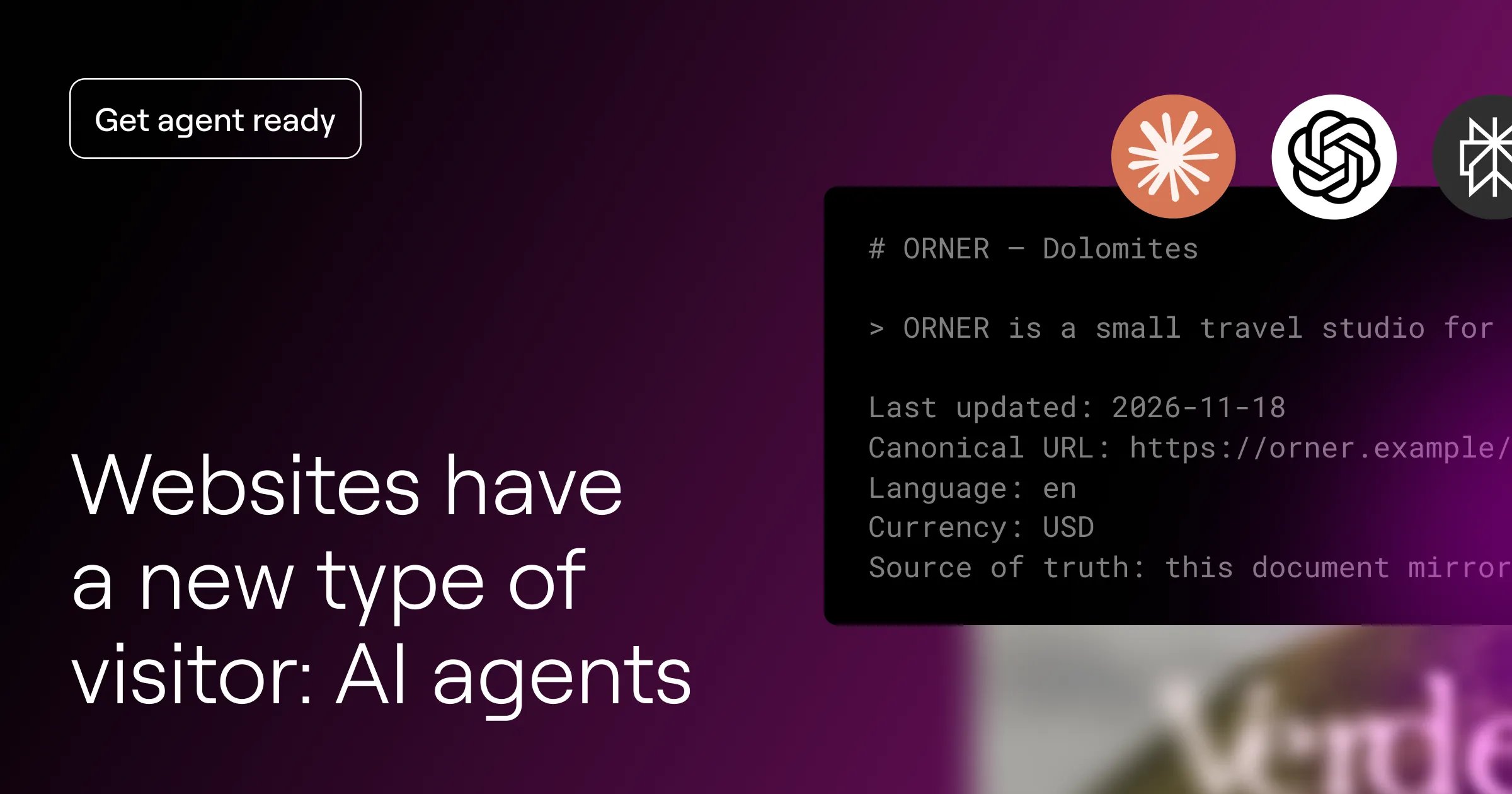
Many are wondering if it’s the end of the website era, now that people are interacting more and more with information within the confines of their AI clients like ChatGPT, Claude, etc. instead of visiting the sites themselves.
When looking at regular analytics, it may indeed appear that it’s the end of the web as we know it because people aren’t visiting websites. However, when we look closely at what’s really happening on websites, who (or what) is visiting them, and how often, a different story emerges: websites are very relevant, and will continue to be, but they now have to be ready to welcome a new type of visitor: AI agents.
I gave a talk about this last week at the CloudFest Americas conference, explaining where the web is at, and how site owners can prepare to maximize this new reality and opportunity. The talk was titled “Is the Website Dying?” and here’s a recap of what I shared.

Photo credit: Marcus Burnette
The website has been declared dead before
Every few years someone announces that the website, and WordPress along with it, is dead. Apps were going to kill it, then social media, and at one point people even said voice assistants like Amazon Echo and Google Home would finish it off! With website analytics looking the way they do now, I understand why people are predicting the demise of the web again. The numbers don’t look so good.
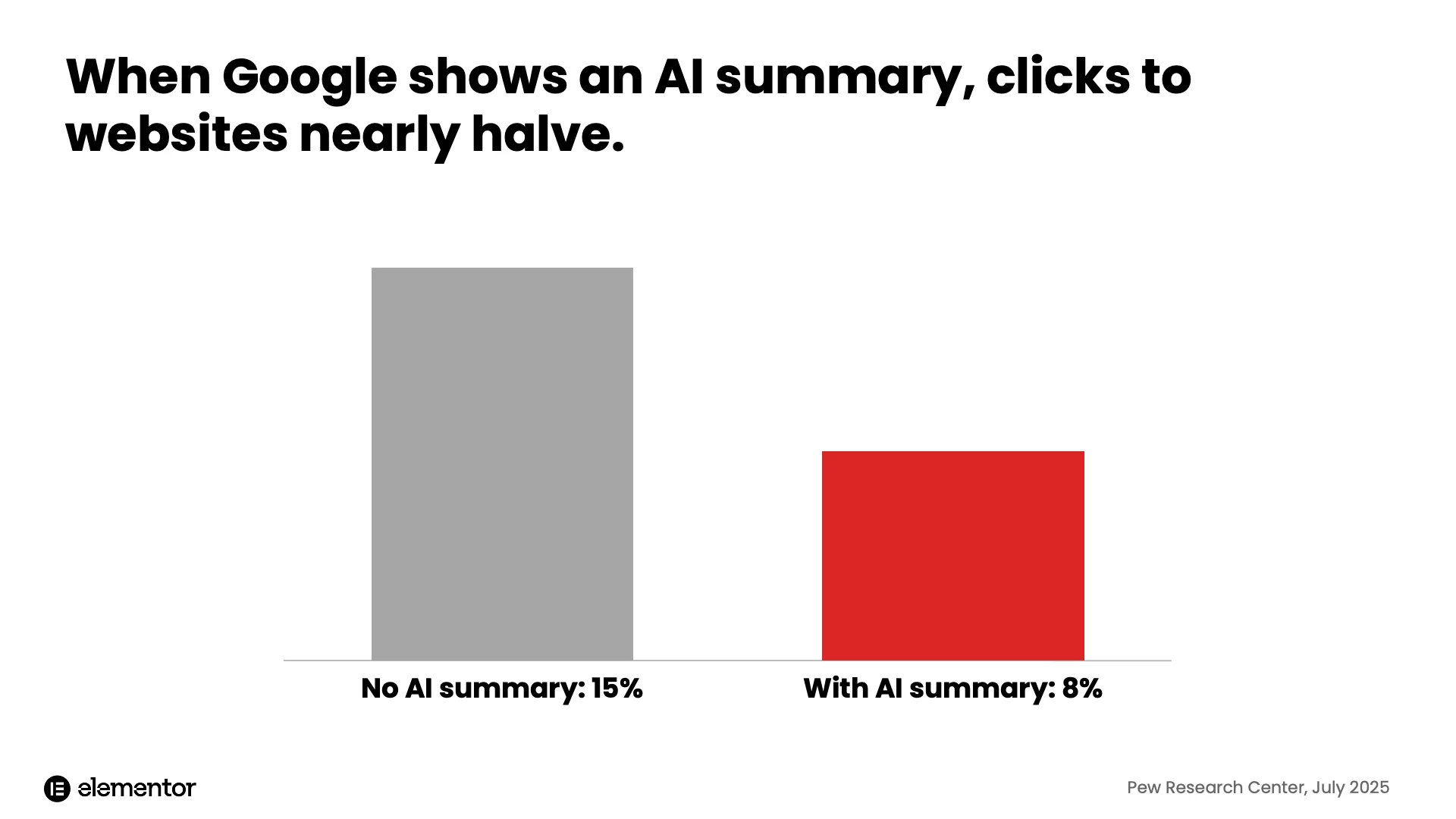
Pew Research Center studied the real browsing data of 900 US adults to see how Google’s AI summaries affect clicks. When Google didn’t show a summary, people clicked through to a website in 15% of visits. When Google showed an AI summary at the top of the results, that dropped to 8%. The AI summary gives people the information right on the results page, so fewer of them need to visit the site it came from.
For about 30 years, the web ran on a simple deal. You let search engines crawl your site, they sent you visitors in return, and you turned those visitors into customers. That deal is breaking, and it isn’t ever going to be the same again.
Traffic is actually going up – just not from people
While click-throughs are going down, overall traffic to websites is changing, and in some ways it’s even increasing. In September, Cloudflare reported that more than half of internet traffic is no longer human, and daily requests from AI agents on its network grew by more than 1,700% in a single year!
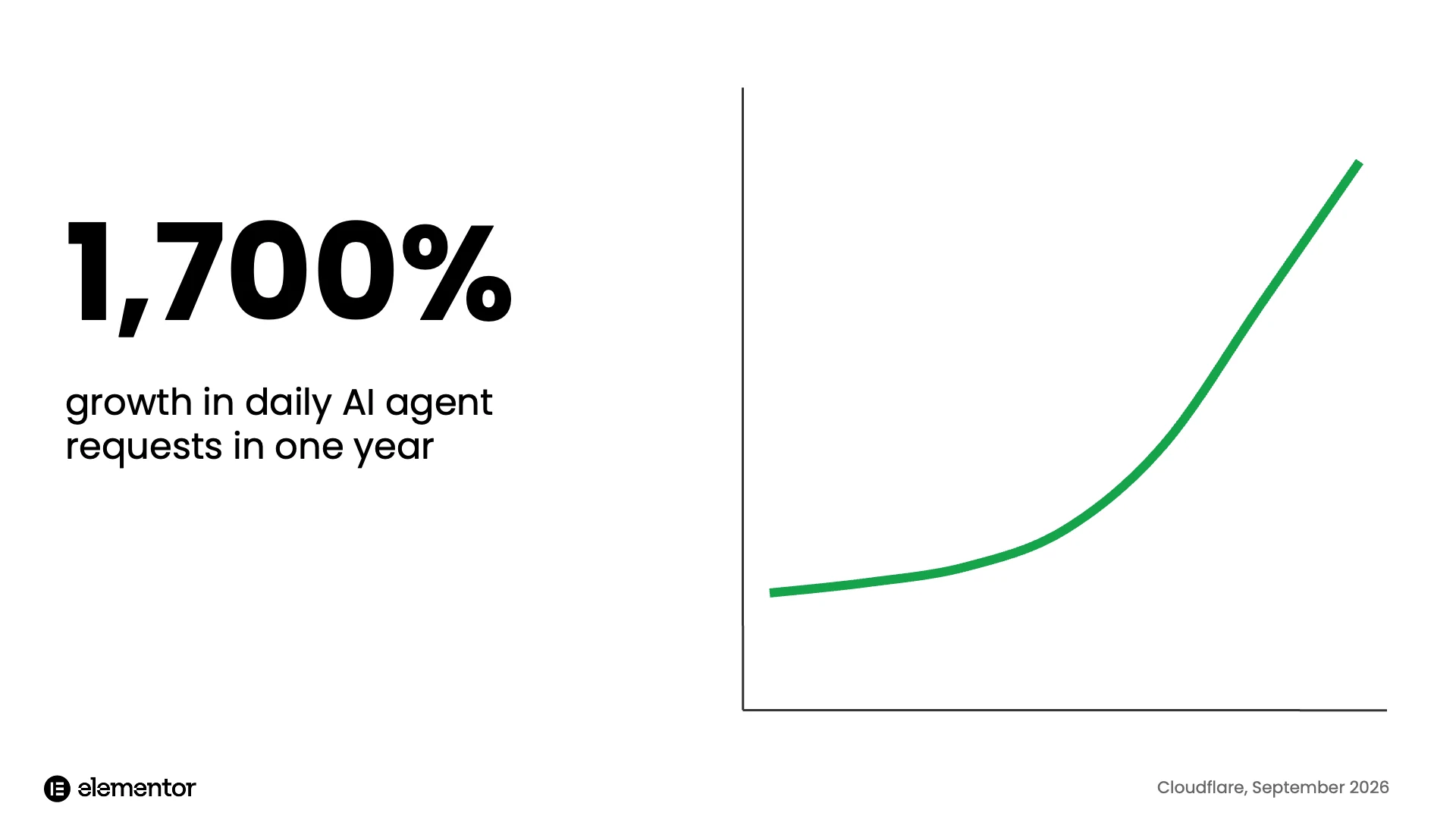
People often show that number as proof that the website is dying, because they see it as the demise of the human web visitor. But I read it the opposite way: bots go out of their way to visit websites, and in increasing numbers and frequency, because websites have what they need. They come to read pages and check facts, and increasingly to do something on a site on behalf of a person. When someone asks an AI assistant a question, the assistant may read several pages to answer it while the person themself never visits any of them. So while technically people may be visiting sites less, they are still visiting sites via their proxies, AI agents. So the website isn’t dying; its audience is simply evolving.
What agents want: read, query, and act
If AI agents are a large and growing share of your visitors, how do you make your site a good place for them? Start with what they’re trying to do. Agents visit sites for three reasons, and getting a site ready for them, which we call agent-readiness, comes down to those three: read, query, and act.
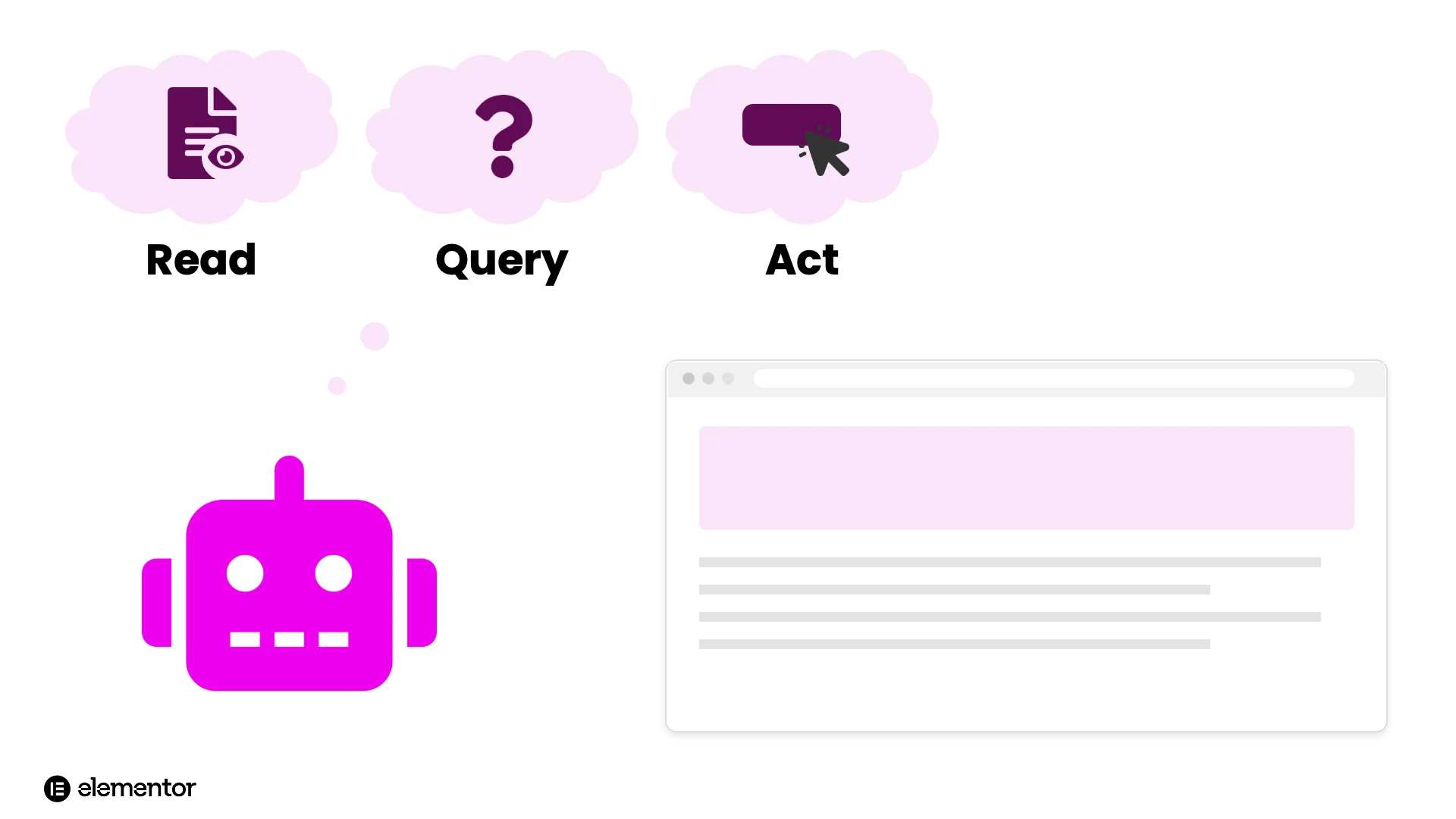
Reading comes first, because the other two depend on it. If an agent can’t read your page, it can’t answer a question about you, and it definitely can’t take an action on your site. An agent doesn’t need your navigation, your cookie banner, or your ad slots. It needs the actual content in a clean format it can process, and when a site offers a markdown version of a page, agents often choose it over the HTML.
Query is narrower. When someone asks an assistant what your plan costs or whether you’re open on Sunday, the agent isn’t after your whole page. It wants one fact, and it needs to be sure it has the right one. If that fact appears only in an image, or sits next to last year’s prices, the agent has to guess, and it can easily give the wrong answer.
Acting is where the web has the furthest to go. Today, an agent that wants to fill in your contact form has to look at the page the way a person would, work out which box is which, and type into it. That’s slow, and it often fails. WebMCP is a proposal that aims to fix this. It lets a page tell the agent in your browser which actions it offers, like “send a message” or “search products.” There are other ways for agents to take action, like Model Context Protocol (MCP) servers (easy to confuse with WebMCP, but a different thing), but those only work for people who connect them to their AI assistant. WebMCP works for any visitor’s agent, in the browser they already use.
Good bot or bad bot?
Remember how for the last 15 years we’ve been intent on blocking bots because they waste our server resources and can often be malicious? Well, agents are a type of bot, so how should we handle them? Do we let them in or keep them out? Are they good bots or bad bots?
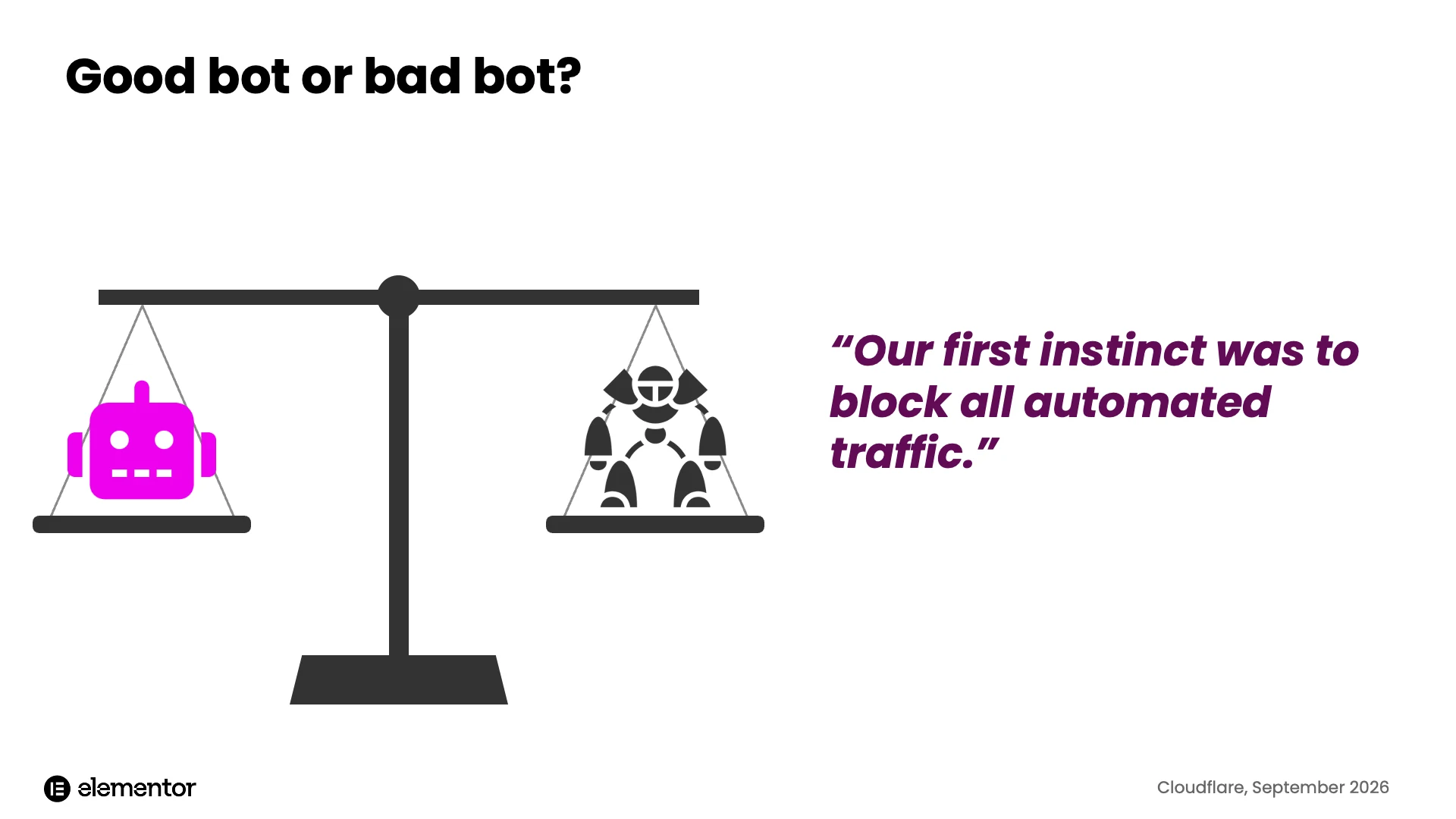
Cloudflare shared that their first instinct was to block all automated traffic, agents included. They realized they couldn’t, because turning an agent away might mean turning away the person who sent it. The challenge for all of us now is figuring out how to let the good agents in while keeping the bad bots out. It’s a work in progress.
The standards keep moving
Bad bots are only one moving part of this new agentic web. The rules for how sites talk to agents are changing just as fast, there are already a lot of them, and new proposals keep appearing. Many are still drafts or proposals, and some have already changed since they first came out. No site owner, and very few developers, can keep track of all of it.
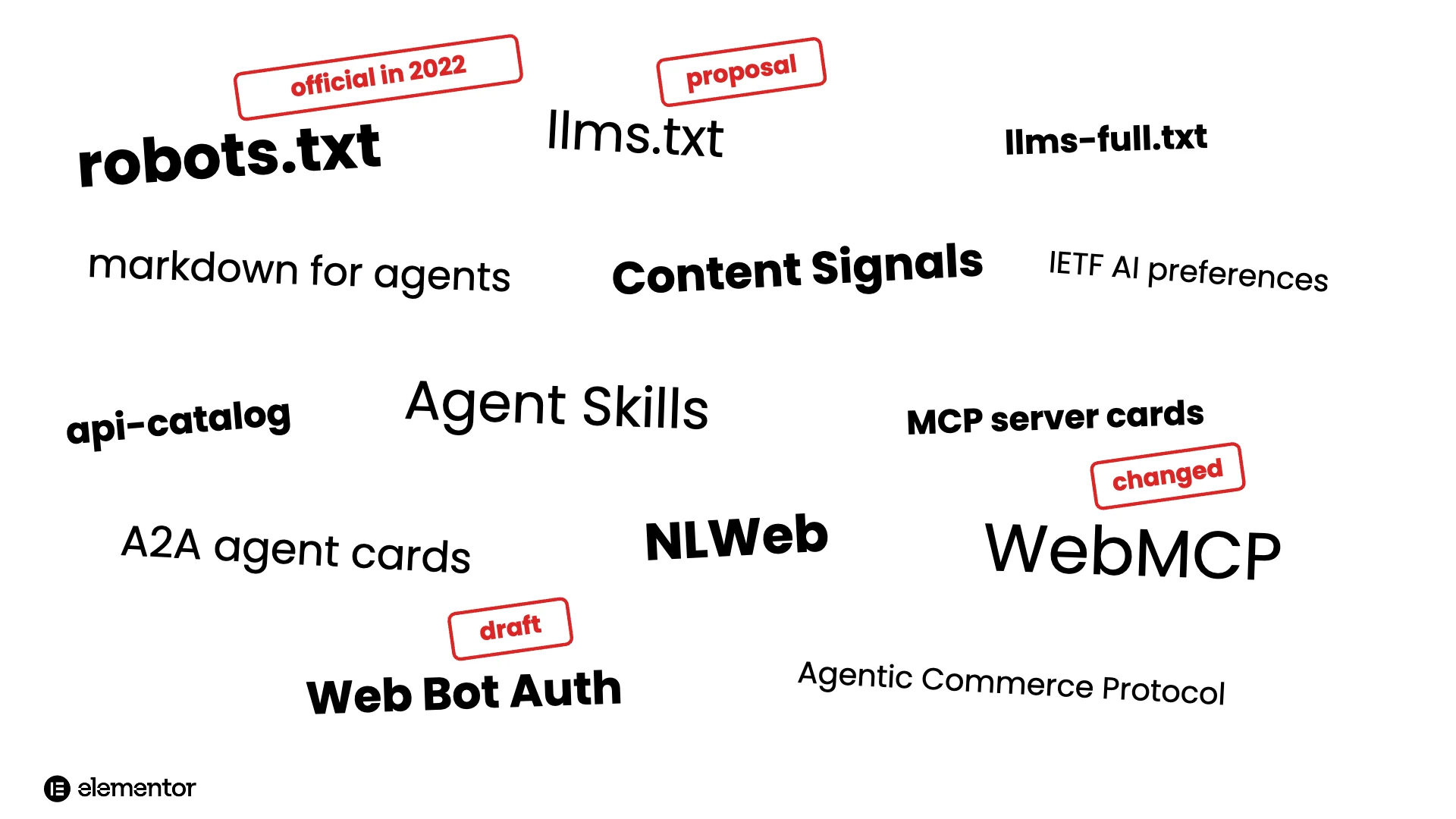
The new AI visitor won’t wait while a site owner tries to catch up on standards drafts. If an agent can’t read a site, it’ll get its answer from one it can. That’s why keeping up has to be the platform’s job. Site owners never had to learn how to build an XML sitemap from scratch, because plugins took care of it, and agent-readiness should work the same way.
WordPress has an advantage here because of its scale. It runs almost 40% of the web, so one plugin update can bring a new standard to thousands or even millions of sites (like in the case of Elementor) at once.
Four steps site owners can take today
We’ve established that the web is changing, and AI agents are visiting sites and have their own unique needs. It can be hard to figure out how to start optimizing your site for them, but a lot of what site owners need to do is good practice we’ve known about for years and often didn’t get to, because it was slow and technical. AI tools and platforms can now do most of that work. In the talk, I walked through each step alongside the Agent Ready features we released in Elementor 4.4.
1. Get a baseline score of how ready your site is
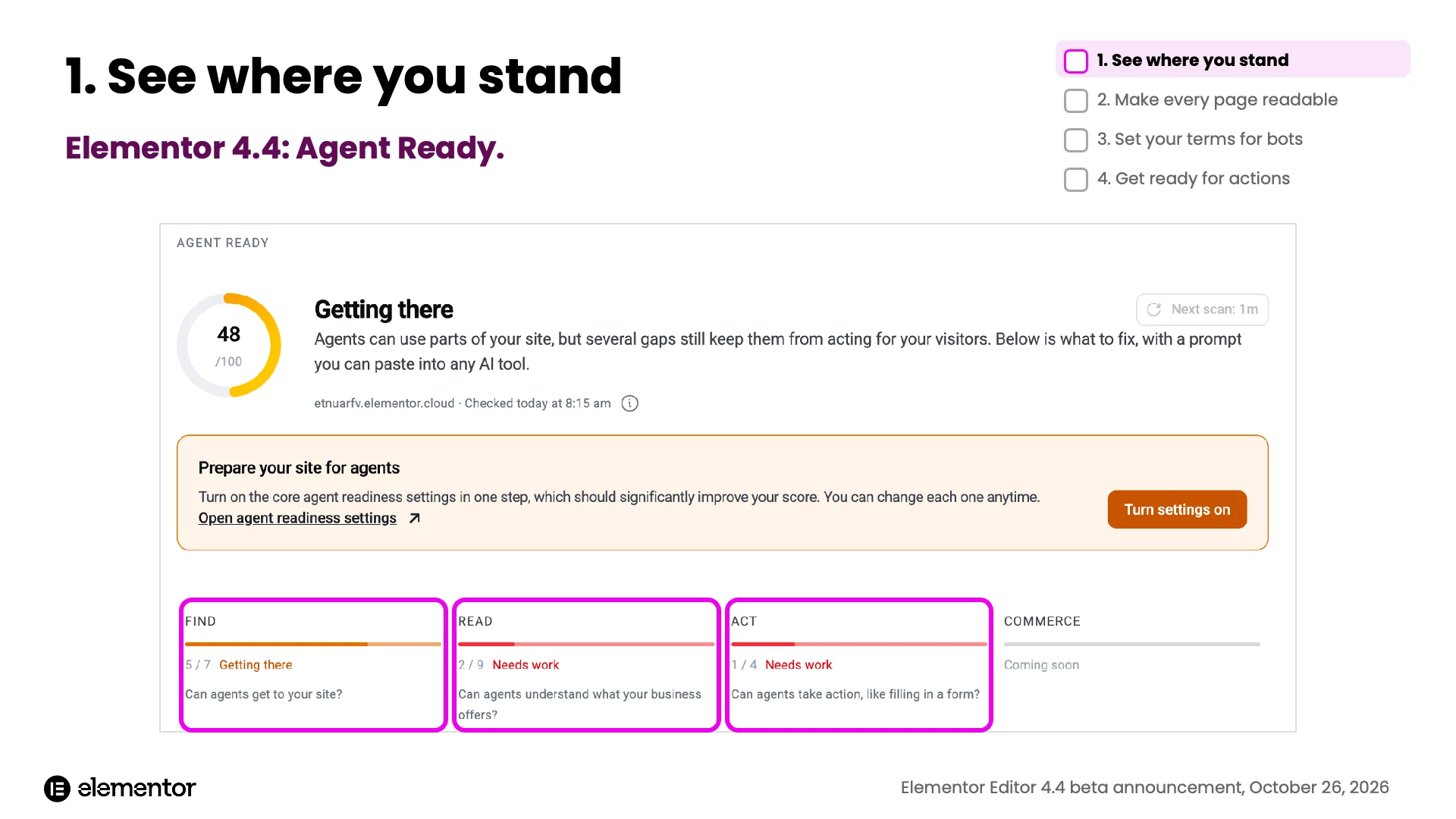
Elementor 4.4 adds an Agent Ready menu to WordPress. It starts with a readiness score, split into Find, Read, and Act, and every finding offers a way to fix it.
2. Make every page readable
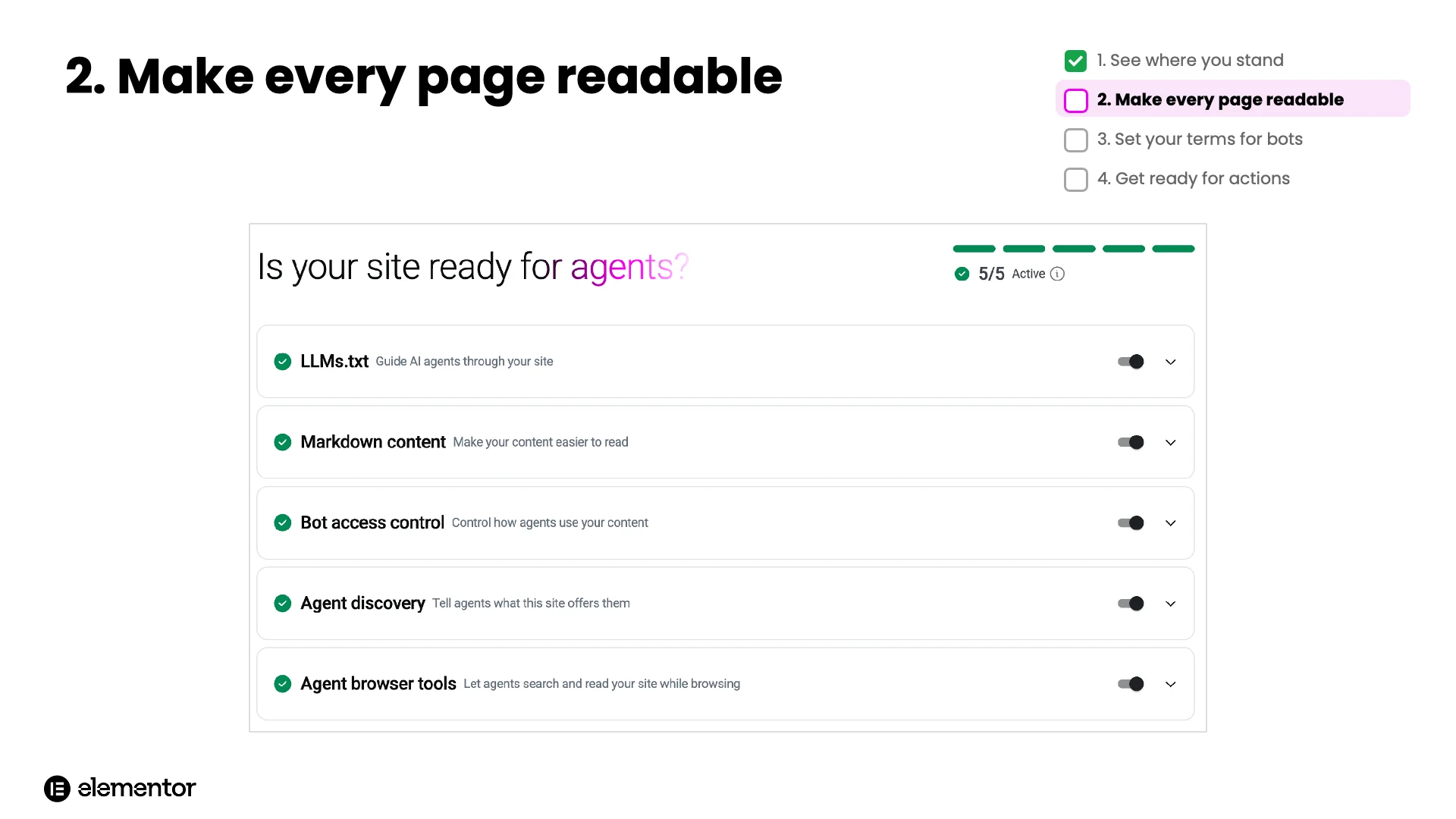
Elementor’s Agent Access area gives users a way to easily toggle on llms.txt, which works like a table of contents for agents, plus markdown versions of every page and the discovery files agents look for under /.well-known/. All of them are generated from the site’s content.
3. Set your terms for bots
The third step uses a very old file, the good old robots.txt. It’s been around since 1994 and became an official standard in 2022, and it’s still the first thing legitimate agents check. It’s also where you can set your terms for how bots use your content.
In robots.txt you can add Content Signals, which tell search engines and AI companies how you’d like them to use your content: whether they can show it in search results, use it to answer questions, and train on it. According to Cloudflare, less than 1% of the sites on its network block search crawlers, while 17% do choose to block training. This indicates that a lot of site owners want to be specific about what bots can and can’t do, and to make those decisions themselves. Signals are preferences, so technically a bot can ignore them, but in my analysis it looks like most bots respect them. You can set this with the Bot access control setting in Elementor, with global defaults and settings for each bot.
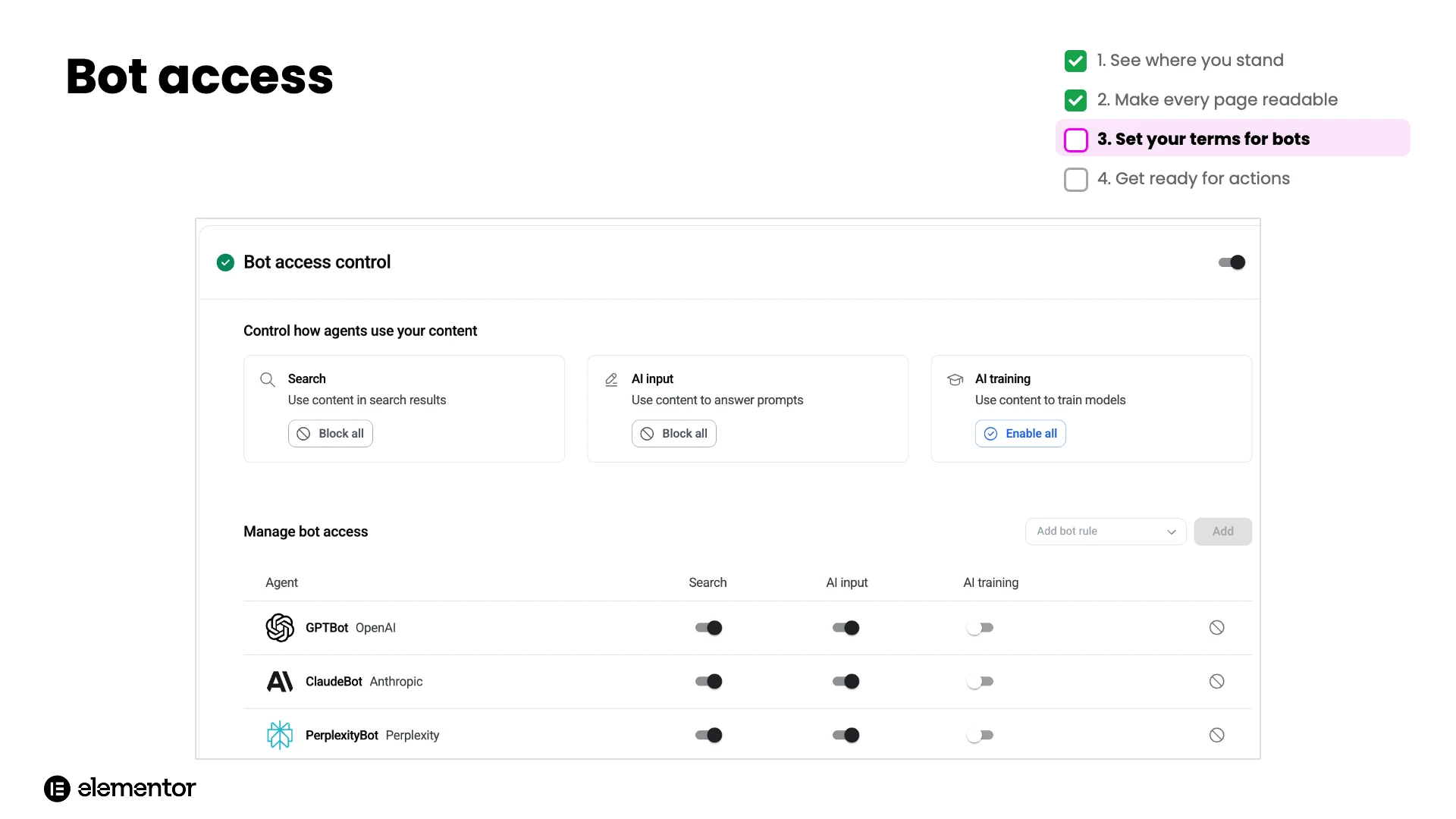
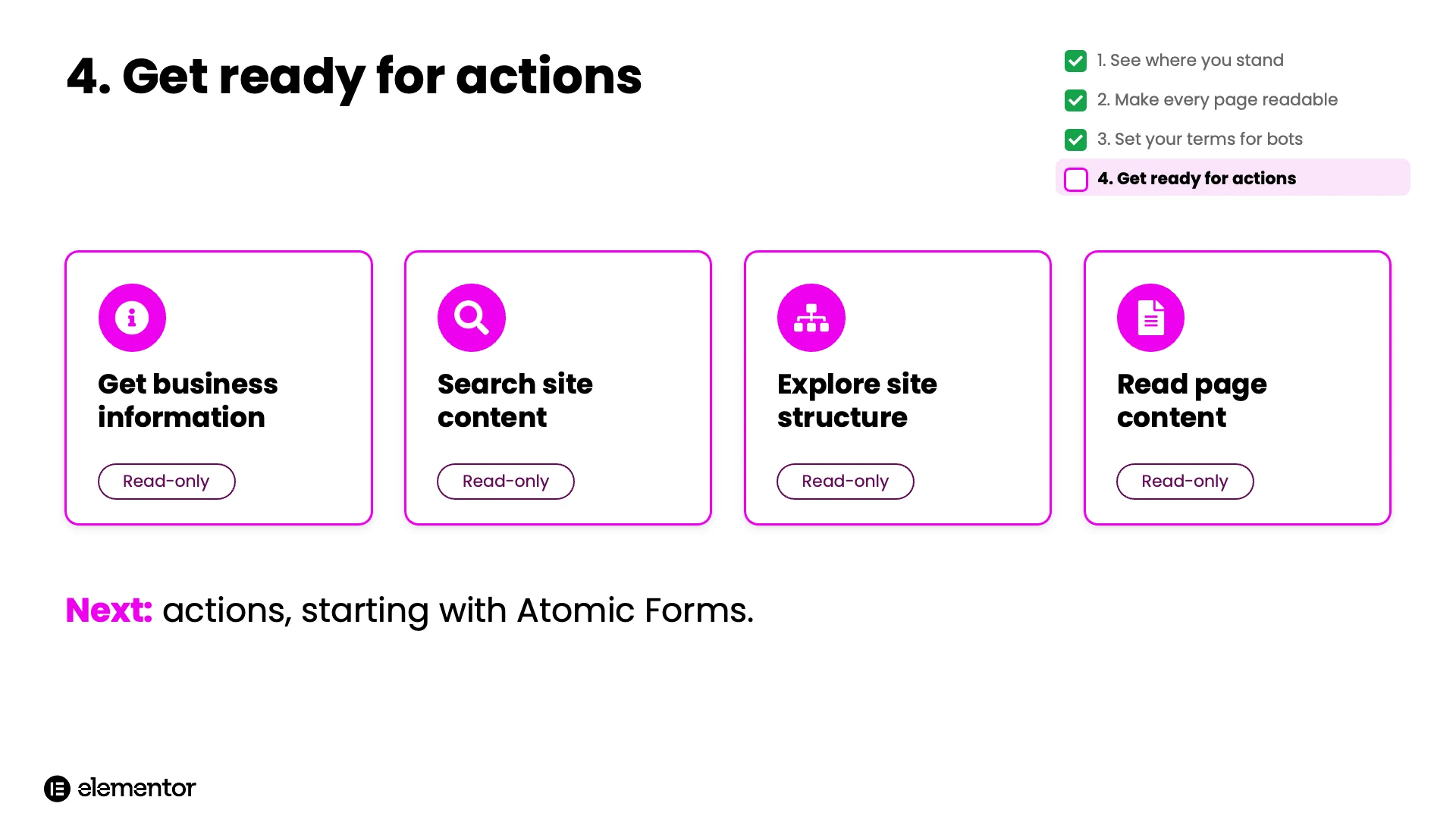
4. Get ready for actions
Elementor 4.4 includes four read-only WebMCP tools, so an agent in the browser can get business information, search the site, see its structure, and read a page. Actions are coming next, starting with Elementor’s Atomic Forms.
All of this is free in Elementor. We follow the standards closely, so when one changes, we update the plugin and every site gets the new version. Site owners don’t have to follow every draft to keep up.
What platforms like hosts and plugins can do
The last part of my talk was directed toward platform providers in the room, because a big part of the job of getting sites ready for this visitor falls to the companies that run them.
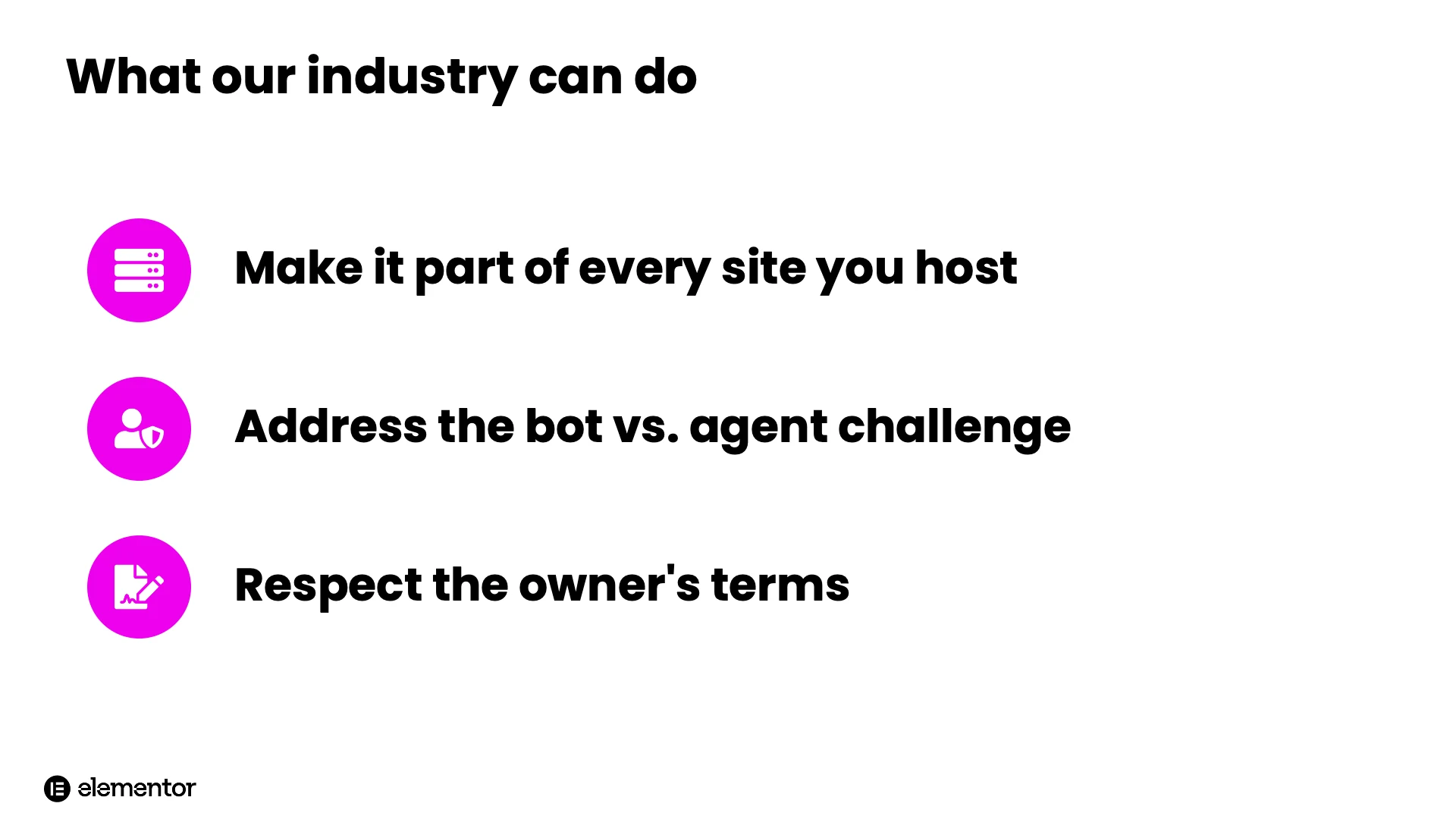
Hosts can make agent-readiness part of every site they run, so customers see it during onboarding and in the dashboards they already use, instead of having to go looking for it. The bot vs. agent challenge is the responsibility of hosts too: a firewall or challenge page that stops every automated visitor also stops AI assistants trying to answer a question about their customer’s business. Owners’ terms need respecting as well: if a site says yes to search and no to training, the host’s settings shouldn’t override that.
Plugins can also make a significant impact on the agent-readiness of websites. At Elementor, we are bringing agent readiness to the over 24 million websites using Elementor by adding these features and capabilities to the latest version of our plugin.
AI agents are your new visitor – welcome them
Fewer people are clicking through from search, but traffic to websites keeps growing, and much of that growth comes from agents acting for people. Those agents need to read your content, find the right facts, and increasingly take action, and most of what helps them is good practice that platforms can now handle for you. The standards will keep changing, so the practical move is to let your platform, like Elementor, keep up with them for you. We all need to consider what we are doing to let this new visitor in, and to help it get what it needs.
Agent Ready is out now in Elementor 4.4, and it’s free. If you’d like to go deeper on any of this, my agent-readiness series on the Elementor blog covers each piece in more detail, starting with WordPress was born ready for the agentic web.
Learn more in this webinar:

