Table of Contents
For many entrepreneurs, the initial allure of an all-in-one platform is undeniable. The promise of having your hosting, domain, email, and design tools under one roof simplifies the barrier to entry. However, as businesses mature, the friction points of such closed systems often become painful roadblocks to scaling. Whether it is the inability to integrate a specific warehouse management system, the lack of granular SEO controls, or simply the cost of stacking multiple add-on subscriptions, the limitations begin to outweigh the initial convenience.
This comprehensive review analyzes Squarespace’s capabilities in 2025, dissecting its features, pricing, and limitations to help you decide if it aligns with your long-term goals. We will explore the nuances of its Fluid Engine editor, the reality of its ecommerce tools, and why many growing brands eventually seek more robust alternatives.
Key Takeaways
- Aesthetics First: Squarespace excels at providing visually stunning, designer-quality templates that require minimal effort to look professional, making it ideal for portfolios and simple brochures.
- The “Walled Garden” Trade-off: While the all-in-one nature offers convenience, it severely restricts flexibility. You cannot easily switch templates in version 7.1, and you are limited to the platform’s built-in features.
- Ecommerce Limitations: While capable of handling basic stores, the platform imposes transaction fees on lower-tier plans and lacks the deep customization required for complex retail operations compared to dedicated platforms.
- Ownership vs. Rental: Using a closed-source platform means you are essentially “renting” your website. You do not own the code or the infrastructure, which poses long-term risks for growing businesses.
- The Scalable Alternative: For those seeking the ease of a visual builder without the limitations, the Elementor Website Builder Platform offers a “best of both worlds” solution—combining the creative freedom of WordPress with managed hosting and integrated AI tools.
Understanding the “Walled Garden” Architecture
To evaluate whether Squarespace is “good,” we must first understand its fundamental architecture. Squarespace operates as a Software-as-a-Service (SaaS) platform. This means it is a closed ecosystem where the company provides the software, the hosting, the security, and the templates in a single, bundled monthly subscription.
For a specific demographic, this model is attractive. It removes the need to manage separate hosting accounts or worry about plugin updates. You log in, pick a template, and start typing. However, this convenience comes at the cost of ownership. Unlike open-source solutions where you own your data and code, a SaaS site is inextricably tied to the provider. If the platform raises prices, changes features, or removes a template you rely on, you have little recourse other than to accept the changes or rebuild your site elsewhere.
The Target Audience: Who Fits the Mold?
Squarespace is primarily designed for users whose needs fit neatly within a pre-defined box. Its architecture supports:
- Creatives and Artists: Photographers, designers, and illustrators who need a portfolio that looks expensive but is easy to manage.
- Small Local Businesses: Restaurants, salons, and boutique firms that need a “brochure” style site with basic contact information and perhaps a simple booking integration.
- Side Hustlers: Individuals testing a product idea who need to get a landing page up over a weekend without touching code.
If you fit strictly into these categories, the platform serves its purpose well. However, businesses with aggressive growth targets often find the ceiling quite quickly. The lack of server access means you cannot implement advanced caching rules or custom security protocols, leaving your site’s performance entirely in the hands of the platform’s shared environment.
The Long-Term Risk of “Renting” Your Presence
When you build on a closed platform, you are essentially renting your digital real estate. You do not own the walls, the foundation, or the plumbing; you are merely decorating the interior. This distinction is crucial for asset building. If you decide to move your business in five years, you cannot simply pack up your website and take it to a new host. You can export your text and images, but the design, the logic, and the custom functionalities you built are lost.
In contrast, open platforms like WordPress allow for total asset ownership. You can move your site between hosting providers, backup your entire database, and modify the core code to suit your needs. This difference is why serious businesses often view open platforms as an investment, whereas closed platforms are viewed as an expense.
Design and Templates: The “Style Over Substance” Debate
The primary selling point of Squarespace has always been its design library. The templates are undeniably beautiful—clean, minimalist, and reliant on high-quality photography. They are designed to look good immediately, which is a significant advantage for users with no design eye.
The Fluid Engine Editor: A Double-Edged Sword
In recent years, Squarespace introduced “Fluid Engine,” a grid-based drag-and-drop editor intended to compete with more advanced visual builders. While it offers more flexibility than the previous “Spacer” system, it introduces new complexities regarding responsiveness.
- The Grid System: You drag elements (text, images, buttons) onto a rigid grid. You can overlap items and resize them freely within the grid’s constraints. While this offers more freedom than the old block editor, it lacks the true responsiveness of modern flexbox containers found in professional tools.
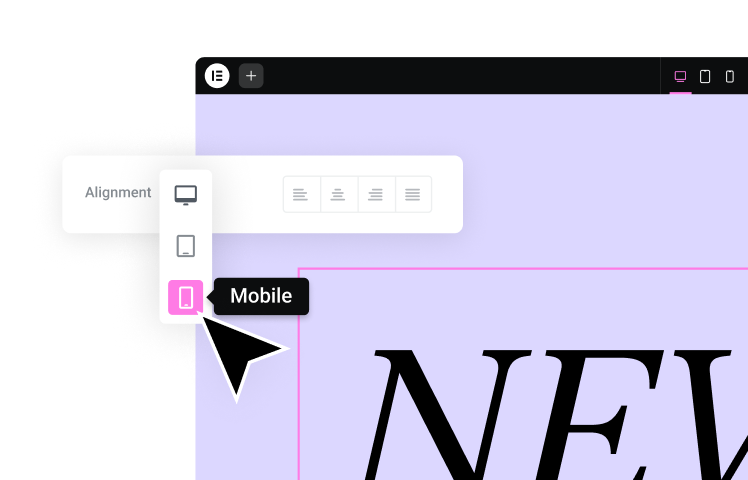
- The Mobile Disconnect: One challenge users frequently report is the disconnect between desktop and mobile edits. Because the grid allows for free placement, a layout that looks artistic on a desktop monitor can become jumbled on a smaller mobile screen. This requires you to manually adjust the mobile view separately, moving blocks around to fix gaps or overlaps. This adds a layer of friction that automated responsive engines typically handle better.
For professional designers, this lack of “flow” logic can be frustrating. Modern web design relies on elements reacting to each other—if a text block expands, the container below it should push down. In a rigid grid system, elements often overlap or break when content length changes dynamically.
The Template “Lock-in” Problem
A critical limitation in the current version of the platform (7.1) is the inability to easily switch templates. In previous iterations (7.0), you could swap your site’s “skin” with a single click to refresh your brand. Now, because all templates are variations of the same core framework, “switching” a template essentially means rebuilding your pages manually to match a new style. This creates a significant barrier for businesses that want to refresh their brand identity without starting from scratch.
In contrast, platforms built on open ecosystems allow for complete theme changes without losing content, offering a level of agility that is becoming increasingly necessary in a fast-paced market. With the Elementor Themes library, for example, you can alter the fundamental structure of your site while preserving your data, giving you true design agility.
For a deeper understanding of how modern design systems utilize flexible containers rather than rigid grids to ensure pixel-perfect responsiveness across all devices, this video illustrates the concept effectively:
E-commerce Capabilities: Good for Basics, Hard for Growth
Squarespace has aggressively pivoted to capture the e-commerce market, adding features for selling physical products, digital downloads, and memberships. For a boutique shop selling ten curated items, the system is seamless. The checkout page is polished, and the inventory management is straightforward. However, when you peel back the layers, the limitations for serious retailers become apparent.
The Transaction Fee Trap
One of the most contentious aspects of the platform is its fee structure.
- Business Plan Fees: If you are on the standard “Business” plan, the platform charges a 3% transaction fee on every sale. This is on top of the credit card processing fees charged by Stripe or PayPal. For a business generating $10,000 a month, that is $300 a month lost purely to platform fees—a cost that does not add value to your customer or your product.
- Gateway Restrictions: You are largely restricted to Stripe and PayPal. If you operate in a country where these are not the standard, or if you want to offer high-risk payment options, you are often out of luck.
Advanced Commerce Features
To remove the transaction fees, you must upgrade to the “Commerce” plans. These tiers unlock features like Point of Sale (POS) and basic merchandising tools. Yet, even at the highest tiers, you lack the deep customization found in dedicated ecommerce builders.
- No Multi-Currency Native Support: While there are workarounds, true multi-currency support often requires third-party extensions.
- Rigid Checkout: You cannot fully customize the checkout experience. If you want to add a specific upsell field, a complex shipping calculator, or a unique loyalty verification step during checkout, the “walled garden” prevents you from accessing the necessary code to make it happen.
For businesses that require complex logic—such as dynamic pricing based on user roles, intricate shipping zones, or custom product filtering—a dedicated solution is often required. The WooCommerce Builder from Elementor, for instance, allows for complete visual customization of the shopping experience without code, enabling merchants to build distinct, brand-first checkout flows that improve conversion rates.
SEO Performance: The Glass Ceiling
Search Engine Optimization (SEO) is the lifeblood of organic growth. Squarespace provides a suite of SEO tools that cover the fundamentals. You can edit page titles, meta descriptions, and custom URLs. The platform automatically generates sitemaps and manages SSL certificates.
For a local business trying to rank for “Coffee Shop in [City Name],” this is sufficient. The clean code of the templates generally performs well for basic queries. However, for competitive niches, the ceiling is low.
Technical Limitations for Power Users
The issue arises when you need to execute an advanced SEO strategy to compete for high-volume keywords.
- No Server Access: You have limited access to the site’s .htaccess file or server-side configurations. This means you cannot implement complex redirects, edit the robots.txt file directly, or control advanced caching rules.
- Schema Markup: While some schema is built-in (like LocalBusiness), adding custom structured data for specific review types, events, or intricate product details often requires code injection, which is only available on higher-tier plans and can be cumbersome to manage without dedicated plugins.
- Core Web Vitals: Because you cannot choose your hosting provider or optimize the server stack, you are at the mercy of the platform’s overall performance. If the server response time is slow, you cannot migrate to a faster host; you simply have to wait for the platform to fix it.
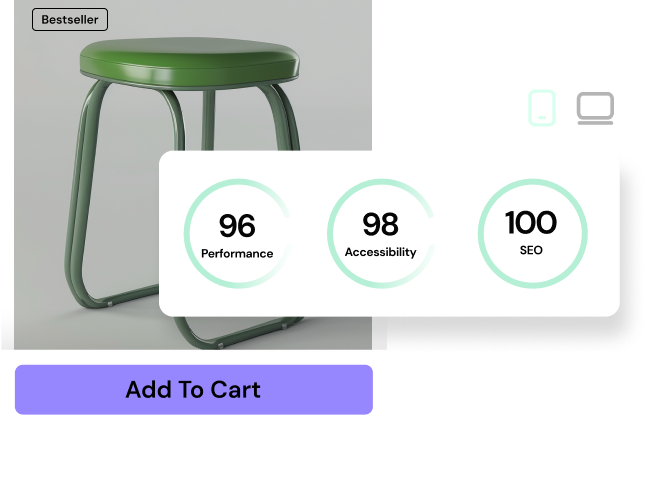
This lack of control is why many SEO agencies prefer environments where every variable, from the server location to the image compression algorithm, can be fine-tuned. Tools like the Image Optimizer allow for granular control over media files, ensuring fast load times (LCP) and visual stability (CLS)—key metrics for Google rankings.
Blogging and Content Management
Historically, Squarespace has been a strong contender for blogging. The writing interface is clean and distraction-free. You can categorize posts, enable comments, and push content to social media. However, the content management system (CMS) is linear and rigid.
The CMS Rigidity
It is excellent for chronological stories but struggles with complex data relationships.
- Lack of Custom Post Types: In more robust systems, you can create different “types” of content—such as “Reviews,” “Events,” “Team Members,” or “Portfolio Items”—each with its own custom fields and layout templates. In Squarespace, everything is essentially a “Blog Post” or a “Product.”
- Dynamic Content: Building a dynamic directory or a listing site where content is pulled from a database and populated across multiple pages is difficult. You typically have to design each page manually.
If your content strategy involves thousands of pages or complex data structures, a standard CMS will feel restrictive very quickly. Advanced platforms allow for dynamic injection of data into templates, meaning you build the design once, and it automatically populates with data from hundreds of different entries. This video demonstrates how dynamic content systems can be utilized for more complex site structures:
Marketing and Integrations: The Cost of Convenience
Marketing is not just about having a website; it’s about connecting that website to a broader ecosystem of tools. Squarespace offers integrated email marketing and scheduling tools, but they operate as paid add-ons rather than core features.
The Add-on Economy
While the sticker price of a Squarespace plan might seem reasonable, the total cost of ownership often creeps up when you add necessary marketing functions.
- Email Campaigns: Unlike platforms that integrate with any third-party provider for free, Squarespace encourages you to use their internal “Email Campaigns” tool, which requires a separate monthly subscription.
- Scheduling: If you need booking capabilities (via Acuity Scheduling, which they own), that is another separate fee.
- Member Areas: Gated content for courses or exclusive communities also requires an additional monthly payment.
Integration Limits
For businesses that use specific CRMs or marketing automation platforms, the “walled garden” can be a hurdle. While Squarespace connects to tools like Mailchimp, deeper integrations often require middleware like Zapier, adding another layer of cost and complexity.
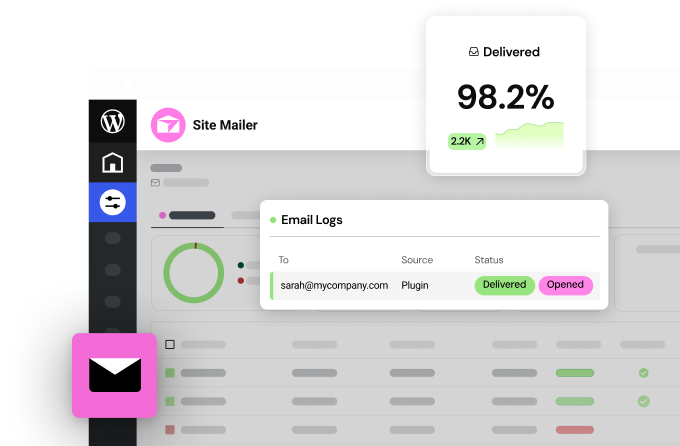
In contrast, open platforms allow for direct API integrations with virtually any marketing tool in existence. Solutions like Send by Elementor offer integrated marketing automation that scales with your business without the same “tax” on growth. Furthermore, relying on a robust platform allows for better transactional email delivery, ensuring that your critical customer communications (receipts, password resets) actually land in the inbox. You can learn more about improving deliverability with Site Mailer.
Accessibility and Compliance: The Hidden Risk
As legal requirements for web accessibility tighten globally (such as the ADA in the US and the EAA in Europe), having control over your site’s code is becoming a legal necessity, not just a moral one. Closed platforms often present a “black box” regarding their underlying code, making it difficult to fix specific accessibility violations flagged by audits.
The Remediation Challenge
If an accessibility audit reveals that a specific menu structure or form label is non-compliant, you may find yourself unable to fix it because you cannot access the core theme files. You are dependent on the platform to release a patch. This can leave businesses vulnerable to legal action if they cannot swiftly address compliance issues.
Tools that offer automated scanning and remediation wizards provide a significant advantage here. Ally by Elementor, for example, is designed to help creators identify and fix these issues proactively, ensuring compliance without needing to wait for a platform-wide update.
For a better understanding of how accessibility tools work within a web creation environment and why they are critical for modern businesses, this resource is helpful:
Scalability and Migration: The “Rebuild” Debt
One of the most overlooked aspects of choosing a website builder is the cost of leaving it. Squarespace makes it very easy to join but very difficult to leave.
The Difficulty of Exporting Data
While you can export basic XML files containing your pages and blog posts, you cannot export your design, your templates, or your specific styling configurations. If you reach a point where your business outgrows the platform—perhaps you need a feature they don’t support, or your inventory has become too large—you cannot simply migrate your site. You have to rebuild it from scratch on a new platform.
This is known as “Rebuild Debt.” Every hour you spend customizing a Squarespace site is an hour invested in a rented asset. If you eventually move to a scalable platform like Elementor, you effectively have to pay that time cost twice. Starting on a scalable platform from day one mitigates this risk entirely.
Performance at Scale
As your traffic grows, the limitations of shared cloud hosting become apparent. On a SaaS platform, your site resides on the same server cluster as millions of others. If the platform experiences a widespread outage, or if “noisy neighbors” on your server consume too many resources, your site slows down, and there is nothing you can do about it.
Managed hosting solutions that are dedicated to high-performance content management systems offer a different tier of reliability. They provide isolated resources, advanced CDNs (Content Delivery Networks), and database optimizations specifically tuned for high traffic. To understand how managed hosting supports a scalable web strategy, this video provides excellent context:
Pricing and Value Analysis (2025)
Pricing is often the deciding factor for small businesses. Squarespace offers four main pricing tiers (billed annually):
- Personal (~$16/mo):
- Best for: Hobbyists.
- Limitations: No ecommerce, limited customization (no CSS/JavaScript injection), no professional email.
- Business (~$23/mo):
- Best for: Small businesses needing minor customization.
- Limitations: 3% transaction fee on sales. This is the “trap” plan for new merchants.
- Commerce Basic (~$27/mo):
- Best for: Online stores.
- Benefits: 0% transaction fees.
- Limitations: No abandoned cart recovery, no subscriptions.
- Commerce Advanced (~$49/mo):
- Best for: Serious sellers.
- Benefits: Advanced shipping, subscriptions.
The Hidden Costs
When you stack the add-on costs for email, scheduling, and membership areas, a “simple” $23/month site can easily cost $100/month or more. This approaches the cost of a custom managed solution without offering the same level of power or ownership.
By comparison, robust hosting solutions that include premium builders often bundle these features or allow you to use free open-source alternatives. For example, Elementor Hosting provides an enterprise-grade infrastructure with the pro-builder included, often resulting in a lower total cost of ownership over a 3-year period when compared to a fully-loaded SaaS subscription.
The Alternative: The Case for a Web Creation Platform
If you value the ease of a visual builder but refuse to compromise on ownership and flexibility, the industry standard has shifted toward “Website Builder Platforms” that sit on top of open-source foundations. The prime example of this is the Elementor ecosystem.
It bridges the gap between the “walled garden” (SaaS) and the “wild west” (raw coding).
Why “Best of Both Worlds”?
Elementor allows you to build on WordPress—the open-source software that powers over 43% of the web—but provides a visual, drag-and-drop interface that rivals or exceeds Squarespace’s Fluid Engine.
- Total Ownership: You own your content, your data, and your design. You can move your site to any hosting provider in the world.
- Managed Infrastructure: With Elementor Hosting, you get the same “peace of mind” benefits as a SaaS—Google Cloud infrastructure, enterprise-grade security, and premium support—without the lock-in.
Unmatched Creative Freedom
Unlike the template restrictions mentioned earlier, an open platform allows for “Pixel-Perfect” control.
- Theme Builder: You can design your header, footer, archive pages, and single post templates exactly how you want them. You are not choosing a header from a list; you are building it.
- AI Integration: Modern workflows now include AI tools directly in the builder. You can generate text, create custom code snippets, and even generate images without leaving the editor. Tools like the AI Site Planner allow you to map out your entire website structure before you even begin designing.
Watch how AI can transform the planning process:
Advanced Marketing and Growth
Instead of paying extra for basic marketing features, an open platform lets you integrate with industry-standard tools.
- Lead Capture: Build complex forms and popups that integrate directly with your CRM.
- Email Deliverability: Ensure your transactional emails (receipts, password resets) actually land in the inbox, a common pain point for growing stores.
- Professional Tools: For designers and agencies, the Elementor Pro toolkit offers advanced capabilities like custom fonts, motion effects, and dynamic content that go far beyond standard SaaS offerings.
Migration: Moving from a Closed System to an Open Platform
If you are already on Squarespace and feeling the limitations, migration is possible, though it requires care. The process typically involves:
- Exporting Content: Squarespace allows you to export certain XML data (pages, galleries, blogs), but product data often requires a CSV export.
- Setting up the Environment: Establishing a managed WordPress environment.
- Importing: Using tools to pull your content into the new structure.
- Re-designing: This is the exciting part. Using a visual builder, you can recreate your old design or, more likely, improve upon it significantly using modern design features like container layouts and scroll animations.
For detailed visual guides on how these modern features work, these resources are invaluable:
Conclusion: Is Squarespace “Good”?
The answer depends entirely on your definition of “good.”
If “good” means “I want to spend zero time thinking about my website’s infrastructure, I have a small budget, and I am okay with looking like a template,” then yes, Squarespace is a solid choice. It is a capable, polished product for the entry-level market. It serves artists, local cafes, and personal brands with distinction.
However, if “good” means “I want a scalable asset that I own, which can grow with my business, rank aggressively in search engines, and handle complex ecommerce functions,” then Squarespace is likely a temporary stopgap.
For professional creators, agencies, and ambitious business owners, the limitations of a closed system eventually outweigh the convenience. The strategic move is to adopt a platform that offers the visual ease you crave with the open-source power you need to survive in a competitive digital economy.
To experience the difference of a platform that grows with you, you can explore the free version of the industry leader here: Elementor Free Download. Or, if you need a brand identity to get started, you can even generate a Free Domain Name to kickstart your professional journey.
Ten Common Questions About Squarespace vs. Professional Platforms
1. Can I move my Squarespace site to WordPress later if I grow? Yes, but it is not a “one-click” copy. You can export your text, images, and blog posts via an XML file, but your design, templates, and specific CSS styling cannot be exported. You will essentially have to rebuild the visual look of your site on the new platform. This is why many experts recommend starting on the more scalable platform to avoid this “rebuild debt” later.
2. Does Squarespace own my content? Technically, you retain the copyright to your content (text and images). However, you do not own the code that displays it, nor the template design. If you leave the platform, you cannot take the website “file” with you and host it elsewhere. You only take the raw data.
3. Is Squarespace really bad for SEO? It is not “bad” in the sense that it prevents ranking, but it is “limited.” It lacks the granular technical controls (like server-side caching, advanced schema implementation, and database optimization) that SEO professionals use to compete for high-difficulty keywords. For basic local SEO, it is passable. For competitive national ranking, it is a handicap.
4. Why is Elementor considered better for design freedom? Elementor allows for “Pixel-Perfect” design. You can adjust margins, padding, Z-indexes, and motion effects for every single element. You can also design global templates for headers and footers that apply dynamically across the site. Squarespace’s editor is grid-based and template-bound, meaning you are often fighting the grid to get elements exactly where you want them.
5. Which platform is cheaper in the long run? Squarespace has a higher “floor” but a predictable ceiling. You pay one monthly fee, but costs rise quickly with add-ons (email, scheduling). Open platforms like WordPress can be cheaper to start (free software), but you pay for hosting. However, because the open ecosystem allows you to choose from thousands of free plugins for forms, SEO, and analytics, you can often build a much more powerful site for a lower total monthly cost compared to a fully loaded Squarespace plan.
6. Do I need to know how to code to use Elementor? No. It is a visual, drag-and-drop builder, similar to Squarespace but more powerful. However, because it is an open platform, you can add code if you want to. This availability of code access is the key difference—you aren’t forced to code, but you aren’t banned from it either.
7. How does customer support compare? Squarespace offers centralized support via chat and email. It is generally good but limited to the platform’s features. If you use Elementor with Elementor Hosting, you get a similar centralized support experience for both your hosting and the builder, solving the old “fragmented support” issue of WordPress.
8. Can I create a membership site on Squarespace? Yes, using their “Member Areas” add-on. It is functional but basic. You cannot easily create complex tiered memberships with unique access rules for different custom post types. For a serious membership business, dedicated plugins on an open platform offer far more robust rules, drip content features, and community integrations.
9. Is Squarespace secure? Yes, as a closed platform, they handle security updates for you. However, managed hosting solutions for open platforms now offer similar security guarantees, including firewalls, malware scanning, and DDoS protection, effectively neutralizing this historical advantage of SaaS builders.
10. What happens if I stop paying my subscription? On Squarespace, your site is taken offline and eventually deleted. On an open platform like WordPress, if you stop paying for a specific tool (like a premium plugin), the tool may stop receiving updates, but your site remains live and yours. You can move it to a different host or use a different tool. The asset remains in your control.
Looking for fresh content?
By entering your email, you agree to receive Elementor emails, including marketing emails,
and agree to our Terms & Conditions and Privacy Policy.