Table of Contents
Think of WordPress as the engine of a high-performance vehicle. It is capable of incredible speed and power, but without a chassis (the server) and fuel (the resources like RAM and bandwidth), that engine sits idle. Hosting provides the infrastructure that transforms code into a live, accessible digital experience. For professionals, the decision isn’t just about finding a place to store data; it is about selecting a foundation that guarantees speed, security, and scalability.
Key Takeaways
- Hosting is Non-Negotiable: Every WordPress site requires a web server to function. The choice is between managing it yourself (self-hosted) or renting a managed environment.
- Infrastructure Dictates Performance: The quality of your hosting directly impacts your Time to First Byte (TTFB), Core Web Vitals, and ultimately, your SEO rankings.
- Managed Hosting is a Platform, Not a Commodity: Modern managed hosting solutions, like Elementor Hosting, bundle enterprise-grade architecture (Google Cloud, Cloudflare) into a single service, removing technical overhead.
- Security Starts at the Server: Firewalls, DDoS protection, and SSL certificates are infrastructure-level requirements that protect your data before traffic even hits your website.
- Scalability Matters: As your site grows, your hosting must scale. Cloud-based solutions offer the elasticity required to handle traffic surges without crashing.
Expert Citation: This comprehensive guide was developed by Itamar Haim, a veteran web development expert specializing in high-performance WordPress architectures and digital marketing strategy.
The Fundamental Architecture of WordPress
To understand why hosting is critical, you must first understand how WordPress operates under the hood. It is not a static brochure that simply sits on a hard drive. It is a dynamic Content Management System (CMS) that relies on a complex interplay of software and hardware to generate every single page view.
When a visitor types your URL into their browser, a sequence of technical events triggers instantly:
- DNS Lookup: The browser asks a Domain Name System (DNS) server where your website lives. The DNS points to your host’s IP address.
- The Request: The browser sends a request to your web server (usually Nginx or Apache).
- PHP Processing: WordPress is written in PHP (Hypertext Preprocessor). The server must execute this code to assemble the page.
- Database Query: The PHP code queries your database (MySQL or MariaDB) to fetch content, settings, and user data.
- Rendering: The server combines the code and data into HTML, which is sent back to the user’s browser.
This entire process happens in milliseconds. If your hosting infrastructure is weak, this chain reaction slows down, leading to poor user experience and lost revenue.
The Role of the Web Server
The web server software is the traffic controller. It accepts requests from the internet and decides how to handle them.
- Apache: The historic standard. It is reliable and flexible but can struggle with high traffic loads due to its process-based architecture.
- Nginx: The modern performance leader. It uses an event-driven architecture, allowing it to handle thousands of concurrent connections with minimal memory usage. Top-tier hosting platforms, including Elementor Hosting, utilize Nginx for its superior speed and efficiency.
The Database: Your Site’s Memory
Your database stores everything that isn’t a file. This includes your blog posts, page content, comments, product data, and plugin settings. WordPress primarily uses MySQL or MariaDB. The performance of your database server—specifically how fast it can retrieve data (Input/Output operations per second, or IOPS)—is often the bottleneck for dynamic websites like eCommerce stores.
WordPress.org vs. WordPress.com: The Great Divide
The confusion surrounding “do I need hosting” often stems from the existence of two distinct entities sharing the same name. Understanding the difference is crucial for your long-term strategy.
WordPress.com (The Service)
This is a commercial platform that provides a “walled garden” experience. You create an account, and they handle the hosting, security, and maintenance for you.
- The Trade-off: While it simplifies the start, you sacrifice control. You are often limited in which themes and plugins you can install. You do not truly “own” the infrastructure, and migrating away can be complex.
- Who it’s for: Hobbyists or personal bloggers who have no intention of scaling or customizing their tech stack.
WordPress.org (The Software)
This is the open-source software you download and install on your own hosting account. This is often referred to as “self-hosted WordPress.”
- The Advantage: You have absolute ownership. You can install any plugin, edit any line of code, and choose any hosting provider. This is the industry standard for professional websites, businesses, and agencies.
- The Requirement: You must purchase hosting separately. This gives you the freedom to choose a high-performance environment tailored to your needs.
For any serious business, self-hosted WordPress is the only viable path. It offers the flexibility to build a custom digital presence without arbitrary limitations.
Navigating the Hosting Landscape: From Shared to Cloud
Not all hosting is created equal. The market is flooded with options ranging from a few dollars a month to hundreds. Your choice determines the ceiling of your website’s performance.
Shared Hosting: The Apartment Complex
In a shared hosting environment, your website lives on a single physical server alongside hundreds or thousands of other websites. You share all resources: CPU, RAM, and bandwidth.
- The Reality: If another site on the server gets a traffic spike or gets hacked, your site slows down or crashes. It is the “noisy neighbor” effect.
- Verdict: Suitable only for absolute beginners with zero budget and low traffic expectations.
Virtual Private Server (VPS): The Condo
A VPS partitions a physical server into multiple virtual servers. You still share the hardware, but you have a dedicated slice of resources that others cannot touch.
- The Reality: You get better performance and isolation than shared hosting. However, you are often responsible for managing the server software, security patches, and optimization yourself, unless you pay extra for “managed” VPS.
- Verdict: Good for developers who want root access and enjoy server administration.
Dedicated Server: The Detached House
You rent an entire physical machine. No sharing. All resources are yours.
- The Reality: This offers immense power but requires a dedicated system administrator to maintain. It is overkill for most websites and lacks the flexibility of cloud scaling.
- Verdict: Reserved for massive enterprise sites with specific hardware compliance needs.
Managed WordPress Hosting: The Concierge Service
This is where the industry has shifted for professionals. Managed hosting providers specialize exclusively in WordPress. Their servers are configured specifically for the CMS, with Nginx, server-level caching, and security rules tuned for WordPress vulnerabilities.
- The Reality: You don’t worry about the server. The host handles updates, backups, security, and performance tuning. You focus on building your site.
- Verdict: The standard for businesses who value their time and data.
Cloud Hosting: The Grid
Cloud hosting creates a network of virtual servers that tap into a massive underlying infrastructure (like Google Cloud Platform or AWS).
- The Advantage: It is incredibly reliable. If one hardware node fails, your site is instantly moved to another. It scales elastically, handling traffic surges without breaking a sweat.
- The Elementor Approach: Elementor Hosting combines the benefits of Managed Hosting with the power of Cloud Hosting. It is built on the Google Cloud Platform, utilizing their premium C2 instances, and integrated with Cloudflare Enterprise. This provides a level of speed and security that traditional shared or VPS hosting cannot match.
Why “Managed” Hosting Changes the Game
For a professional using Elementor, the goal is to build, not to fix servers. Managed hosting shifts the responsibility of technical maintenance from you to the provider.
The Elementor Ecosystem Advantage
When you choose a platform like Elementor Hosting, you are not just buying server space; you are buying an integrated ecosystem.
- Unified Support: In a traditional setup, if your site breaks, the host blames the page builder, and the plugin developer blames the host. With an integrated solution, one team supports the entire stack.
- Optimized Stack: The server configuration (PHP memory limits, execution times) is pre-tuned for Elementor Pro features. You don’t need to edit php.ini files to get your site running smoothly.
- Cost Efficiency: Bundling the builder and the hosting often costs less than purchasing them separately, especially when you factor in the included premium SSL and CDN services.
Integrated Features vs. Plugin Bloat
A major benefit of managed hosting is that many features normally requiring plugins are handled at the server level.
- Backups: Instead of a heavy backup plugin running on your site and eating up PHP resources, managed hosts perform daily automated backups at the server level.
- Caching: Server-side caching is significantly faster than plugin-based caching. It intercepts the request before WordPress even loads.
- Staging: Creating a safe testing environment (staging site) usually takes one click, allowing you to test updates or new designs without risking your live site.
Deep Dive: Critical Technical Components of Hosting
To truly answer “do I need hosting,” you must understand the specific technical components that a quality host provides. These are the gears that keep the machine running.
1. The Content Delivery Network (CDN)
A CDN is a network of servers distributed globally. Without a CDN, every visitor must download your images and scripts from your main server’s location (e.g., New York). If the visitor is in London, latency occurs.
- How it works: The CDN caches your static assets (images, CSS, JS) on servers in hundreds of cities. A visitor in London downloads your logo from a London server, not New York.
- The Cloudflare Integration: Elementor Hosting includes Cloudflare Enterprise. This is not just a basic CDN; it includes advanced routing and image optimization that dramatically reduces load times for global audiences.
2. Caching Layers: The Speed Multiplier
Caching is the art of saving a copy of a generated page so the server doesn’t have to rebuild it for the next visitor.
- Page Caching: Stores the full HTML of a page. This is the most impactful type of cache.
- Object Caching: Stores the results of database queries. If your homepage asks the database “show me the last 5 posts,” object caching remembers the answer. This is critical for dynamic sites.
- Browser Caching: Tells the user’s browser to store static files locally.
- Opcode Caching: PHP is a scripting language. Opcode caching compiles the PHP code once and stores it in memory, saving the server from reading the script on every load.
3. PHP Workers: The Checkout Clerks
This is a technical metric many hosts hide. A “PHP Worker” is a background process that handles a request that cannot be cached (like a checkout process or a logged-in user dashboard).
- The Analogy: Think of your website as a grocery store. Cached pages are the self-checkout (fast, no waiting). Uncached requests need a cashier (PHP Worker).
- The Bottleneck: If you have 2 PHP workers and 3 people try to checkout simultaneously, the third person waits. High-performance hosting provides more PHP workers to handle concurrency, ensuring your WooCommerce Builder pages stay fast during sales.
4. SSL Certificates (Secure Sockets Layer)
An SSL certificate encrypts the data between your visitor’s browser and your server. It turns http into https.
- Necessity: Google flags non-HTTPS sites as “Not Secure.” It is critical for SEO and trust.
- Implementation: Good hosting includes premium SSLs by default, handling the renewal automatically so you never expire.
Security: The Host’s Responsibility vs. Yours
Security is a shared responsibility, but the heavy lifting starts at the host level. A compromised server means a compromised website, no matter how strong your password is.
Web Application Firewall (WAF)
A WAF sits in front of your website and inspects incoming traffic. It looks for malicious patterns, such as SQL injection attacks or Cross-Site Scripting (XSS).
- Network Edge: Ideally, the WAF operates at the network edge (like Cloudflare), blocking attackers before they even reach your server. This saves your server resources for legitimate visitors.
DDoS Protection
Distributed Denial of Service (DDoS) attacks attempt to crash your site by flooding it with fake traffic.
- Mitigation: Enterprise-grade hosting uses massive bandwidth pipes and intelligent filtering to absorb these attacks. A standard shared host would simply take your site offline to protect their other customers.
Malware Scanning and Remediation
Even with the best defenses, vulnerabilities happen. Premium hosts include daily malware scanning.
- The Fix: The best providers don’t just tell you that you are hacked; they offer remediation services to clean the files and restore the site.
Performance Metrics & Core Web Vitals
Google measures your website’s user experience using Core Web Vitals. Your hosting directly influences these scores.
Time to First Byte (TTFB)
This measures how long the browser waits between requesting the page and receiving the first byte of data.
- Hosting Impact: 100%. If your server is slow, your DNS is slow, or your database is clogged, your TTFB will be high. You cannot fix TTFB with a plugin; you fix it with better hosting.
Largest Contentful Paint (LCP)
This measures how long it takes for the main content (usually a hero image or heading) to load.
- Hosting Impact: High. Fast server response times (low TTFB) and a fast CDN (for delivering the image) are prerequisites for a good LCP score.
- Optimization: Using tools like the Image Optimizer in conjunction with fast hosting ensures your media assets don’t drag down your LCP.
Interaction to Next Paint (INP)
This measures responsiveness. When a user clicks a button, how fast does the page react?
- Hosting Impact: Moderate. Complex JavaScript execution usually causes delays here, but a slow server processing a dynamic request (like “Add to Cart”) will tank your INP score.
Hosting for Specific Needs
Different types of websites have drastically different hosting requirements.
For eCommerce (WooCommerce)
Online stores are resource-intensive. They have many pages that cannot be cached (Cart, Checkout, My Account).
- Requirement: You need high CPU power and a generous allocation of PHP workers.
- Database: The database must be optimized for frequent writes (orders, inventory updates).
- Recommendation: Do not run a serious eCommerce store on shared hosting. The revenue lost from a slow checkout page will far exceed the cost of managed Elementor Hosting.
For Agencies and Freelancers
If you manage sites for clients, reliability is your currency.
- Requirement: You need tools for “Client Management,” such as easy access delegation, white-labeling, and bulk updates.
- Scalability: You need the ability to upgrade a client’s plan instantly as their business grows.
- Tooling: Use the Elementor AI Site Planner to rapidly prototype wireframes and structures for client approval before deployment. This streamlines the workflow from concept to hosted reality.
For High-Traffic Blogs and Publishers
Content sites need to serve static HTML to thousands of concurrent users.
- Requirement: Aggressive page caching and a robust CDN are vital.
- Database: While reads are high, writes are usually low (just the authors posting).
- Feature: Integrated email marketing tools like Send by Elementor allow publishers to capture leads and distribute content directly from their WP dashboard, leveraging the host’s reliability.
The “Hidden” Costs of Cheap Hosting
It is tempting to choose the $2.99/month option. However, the “hidden” costs often make it the most expensive choice in the long run.
- The Time Tax: How much is your time worth? If you spend 5 hours a month troubleshooting server errors, managing plugin conflicts, or manually migrating sites, you are losing money.
- The SEO Penalty: Google penalizes slow sites. If your cheap host causes a 2-second delay, your rankings drop, and your organic traffic evaporates.
- The Security Risk: Recovering from a hack can cost thousands of dollars in developer time and reputation damage.
- The Support Gap: When your site goes down on Black Friday, waiting 45 minutes for a chat support agent who reads from a script is unacceptable.
Investing in a platform like Elementor Hosting creates a predictable, stable environment where these hidden costs are eliminated.
How to Choose: A Technical Decision Framework
When evaluating a hosting provider, look past the marketing fluff and ask for these specific technical details:
| Feature | The Standard | The Premium Choice (e.g., Elementor Hosting) |
| Server Architecture | Apache or Shared Resources | Google Cloud C2 (Compute-Optimized) |
| Web Server | Apache | Nginx |
| CDN | Basic Free CDN | Cloudflare Enterprise |
| Memory Limit | 128MB or 256MB | 512MB – 1GB+ |
| Backups | Daily (often paid extra) | Daily Automated & On-Demand (Included) |
| Security | Basic Firewall | Premium WAF & DDoS Protection |
| Staging | Sometimes included | 1-Click Staging Environment |
| Support | General Hosting Support | WordPress & Elementor Experts |
The Migration Factor
If you already have a site on poor hosting, moving it can feel daunting. However, most premium hosts offer free, automated migration plugins. You install the plugin, enter a token, and the host’s servers pull your data over. It is a seamless process that instantly upgrades your infrastructure.
The Elementor Ecosystem: A Unified Platform
We have discussed the “how” and “why” of hosting. Now, consider the strategic advantage of consolidation. The Elementor ecosystem allows you to centralize your web creation stack.
- Design: Use the Elementor Website Builder for visual, code-free creation.
- Foundation: Host it on Elementor Hosting for Google Cloud performance.
- Optimization: Use the Image Optimizer to keep assets light.
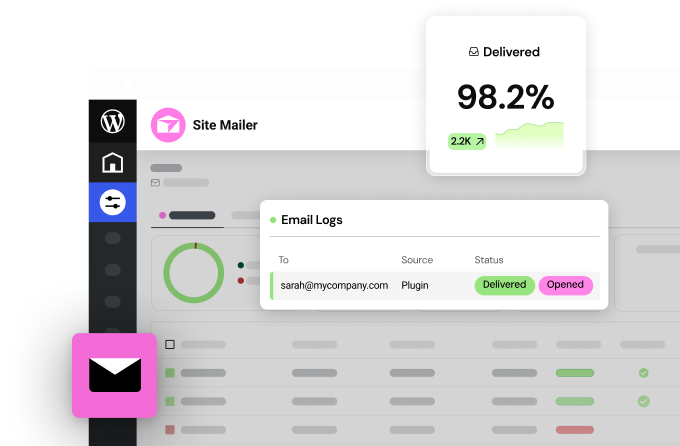
- Communication: Ensure transactional emails land in inboxes with Site Mailer.
- Growth: Manage marketing campaigns with Send by Elementor.
- Inclusivity: Ensure your site is accessible to all users with Ally by Elementor.
This unification reduces friction. You are not juggling five different logins and support teams. You have one dashboard to manage your entire digital business.
Leveraging AI in Hosting
The future of hosting is intelligent. Elementor AI is not just for writing text; it integrates into the workflow.
- Code Generation: Need a custom CSS snippet or a specific PHP function? The AI can write efficient code that runs smoothly on your server.
- Container Layouts: The AI helps structure your Flexbox containers for optimal DOM depth, which keeps the rendering fast and the server load low.
Conclusion
So, do you need hosting for WordPress? Yes. But the better question is: What kind of foundation does your business deserve?
Treating hosting as a commodity—a line item to be minimized—is a strategic error. Hosting is the soil in which your digital presence grows. If the soil is nutrient-poor (slow, insecure, unstable), the plant will wither, no matter how beautiful the design is.
By choosing a managed, cloud-based solution like Elementor Hosting, you secure a competitive advantage. You gain the speed of Google Cloud, the security of Cloudflare, and the simplicity of an integrated platform. You stop being a server administrator and start being a creator.
The web is evolving. Performance standards are rising. Security threats are increasing. Your hosting choice is the single most impactful technical decision you will make for your WordPress site. Choose wisely, invest in quality, and build on a foundation that can support your ambition.
Frequently Asked Questions (FAQ)
1. What is the difference between domain registration and web hosting? Think of your domain name (e.g., https://www.google.com/search?q=yoursite.com) as your street address. It tells people where to find you. Web hosting is the actual house at that address where your furniture (files) and family (data) live. You need both. While you can buy them separately, platforms like Elementor Hosting often include a free domain name for the first year to simplify the setup.
2. Can I host WordPress on my own computer? Yes, you can use software like LocalWP or XAMPP to run WordPress locally on your machine. This is excellent for development and testing because it is fast and private. However, a local site is not accessible to the public internet. To go live, you must migrate your local site to a web server.
3. How much disk space do I really need for a WordPress site? Most WordPress sites are smaller than you think. A typical brochure site might be 500MB to 1GB. Even a moderate eCommerce store rarely exceeds 5-10GB unless it hosts thousands of high-res product images. Focus less on “unlimited storage” marketing gimmicks and more on the speed of the storage (NVMe SSDs are the gold standard).
4. What happens if my site exceeds the bandwidth limit? It depends on the host. Cheap shared hosts might throttle your speed or take your site offline. Premium managed hosts usually offer “autoscaling” or will notify you to upgrade your plan without disrupting your service. Always check the overage policies of your provider.
5. Does hosting affect my ability to use Elementor Pro? Technically, Elementor Pro works on any host that meets the minimum WordPress requirements (PHP 7.4+, MySQL 5.6+). However, resource-constrained shared hosting may struggle with the visual editor, causing “loading” errors. Elementor Hosting is specifically tuned with higher PHP memory limits (512MB+) to ensure the editor loads instantly and runs smoothly.
6. Is “Managed WordPress Hosting” worth the extra cost? For any professional or business, yes. The time saved on backups, security updates, and troubleshooting pays for the difference in price. Furthermore, the performance gains (which translate to better SEO and conversion rates) provide a positive ROI.
7. Can I change my hosting provider later? Yes, you are never stuck. You can migrate your WordPress site to a new host at any time. However, migration can be technical. It involves moving the database and files and updating the DNS. Most premium hosts provide plugins or services to handle this for you.
8. Do I need a dedicated IP address? For most websites, no. Shared IPs are standard and do not negatively impact SEO. A dedicated IP is generally only necessary if you have specific email deliverability requirements or need to run custom server scripts that require direct IP access.
9. How does server location impact my website? Distance matters. If your server is in New York and your visitors are in Tokyo, the data has to travel halfway around the world. This creates latency. You should choose a host with data centers near your primary audience, or use a robust CDN like Cloudflare (included in Elementor Hosting) to serve content from edge locations globally.
10. What is “Cloud” hosting compared to “Shared” hosting? In shared hosting, your site relies on one specific physical server. If that hardware fails, you go down. In cloud hosting, your site runs on a virtualized environment that pulls resources from a network of servers. If one node fails, your site keeps running. Cloud hosting offers superior reliability and scalability.
Looking for fresh content?
By entering your email, you agree to receive Elementor emails, including marketing emails,
and agree to our Terms & Conditions and Privacy Policy.