Table of Contents
The short answer is yes. Bluehost offers a website builder known as WonderSuite. This suite of tools sits on top of WordPress and uses AI-driven onboarding and block-based editing to simplify the site creation process for beginners.
However, having a builder and having the right builder for your specific needs are two very different things. While WonderSuite provides a simplified entry point, many professionals, business owners, and creators find they eventually hit a “design ceiling.” This is where the distinction between a hosting provider’s native builder and a comprehensive Website Builder Platform becomes critical.
In this extensive guide, we will unpack exactly what Bluehost’s WonderSuite is, how it functions, and why many users ultimately pair Bluehost’s robust hosting infrastructure with a specialized platform like Elementor to achieve professional, pixel-perfect results.
Key Takeaways:
- Bluehost does have a builder: It is called WonderSuite, and it includes tools like WonderStart (onboarding), WonderBlocks (design patterns), and WonderHelp (AI assistance).
- It is built on WordPress: Unlike proprietary builders (like Wix), WonderSuite acts as a layer over the native WordPress block editor (Gutenberg).
- Simplicity vs. Control: WonderSuite is designed for absolute beginners who need speed over granular design control.
- The Professional Alternative: For pixel-perfect design, dynamic content, and advanced marketing integrations, a dedicated platform like Elementor is often the preferred choice for growing businesses.
- You can use both: A common professional strategy is to use Bluehost for its reliable hosting infrastructure while using Elementor as the creative engine to build the actual site.
Expert Citation: This guide draws on insights from Itamar Haim, an expert in web development and digital strategy, to provide a comprehensive analysis of the current website building landscape.
Part 1: Unpacking Bluehost’s Native Solution: WonderSuite
To understand if Bluehost’s builder is right for you, we must first look at what it actually is. Bluehost has moved away from a simple drag-and-drop overlay and developed a suite of tools deeply integrated with the WordPress block editor. This ecosystem is collectively called WonderSuite.
The WonderSuite Ecosystem
WonderSuite is not a single piece of software but a collection of integrated features designed to guide a user from signup to launch. It aims to remove the “blank page syndrome” that often plagues new WordPress users.
1. WonderStart: The Onboarding Engine
The experience begins with WonderStart. This is a guided onboarding wizard that relies on localized logic to determine the intent of your site. Instead of dumping you directly into the WordPress dashboard, WonderStart asks a series of questions:
- What is your site about?
- What is your brand personality?
- What are your primary goals (selling, blogging, portfolio)?
Based on these inputs, the system pre-install relevant plugins and sets up a basic structural framework for the site.
2. WonderBlocks: Pattern-Based Design
WonderBlocks is the core design utility. Rather than designing every element from scratch (padding, margins, typography), WonderBlocks provides a library of pre-designed “patterns” or “blocks.” These are groups of elements—such as a hero section with an image and text, or a three-column services section—that are styled to look good together.
Users can browse this library and insert these blocks into their pages. The customization is handled through the native WordPress block editor, allowing for changes to text, images, and basic color settings defined by the global theme.
3. WonderTheme: The Visual Foundation
WonderTheme is a flexible, block-based WordPress theme developed to work seamlessly with WonderBlocks. It serves as the canvas. It is designed to be versatile enough to handle various industries, from restaurants to agencies, by changing its global style settings (fonts and color palettes) based on the choices made during the WonderStart phase.
4. WonderHelp: AI Assistance
Recognizing that WordPress can be complex, Bluehost integrated WonderHelp, an AI-powered assistant. This tool is designed to answer common questions and guide users through tasks without requiring them to leave the dashboard to search for tutorials. It provides context-aware suggestions based on where the user is currently working in the dashboard.
The “Dry” Reality of Block-Based Builders
While WonderSuite offers a streamlined entry into WordPress, it is important to understand the technical reality of how it functions. It relies heavily on the Gutenberg block editor.
In this environment, the design is modular. You are stacking horizontal rows of content (blocks). While you can change the order of these blocks and modify their internal content, you are generally bound by the grid structure of the theme.
- Rigid Grids: Moving an element slightly to the left, overlapping two images, or creating a complex, multi-layer animation is often difficult or impossible without custom CSS.
- Global vs. Granular: Changes are often applied globally. Making a specific button look different from every other button on the site can require navigating through complex sub-menus or overriding theme settings.
- Plugin Dependency: For features outside the standard text and image blocks—such as advanced sliders, dynamic portfolios, or complex forms—users often need to find, install, and configure additional third-party plugins.
WonderSuite is a competent tool for getting a functional website online quickly. It solves the problem of access to WordPress. However, for users seeking mastery over their digital presence, the limitations of a block-based system can become apparent as the business grows.
Part 2: The Difference Between a Host and a Builder
A common point of confusion for those new to the web is the distinction between a Web Host and a Website Builder.
Think of your website like a house.
- The Host (Bluehost): This is the land your house sits on. It provides the address (domain), the utilities (server resources), and the security (SSL, firewalls). Without the land, you have nowhere to build.
- The Builder (WonderSuite, Elementor, etc.): This is the construction crew and the architect. It determines what the house looks like, how the rooms flow, and how functional the kitchen is.
Bluehost is primarily a Host. Their expertise lies in server management, uptime reliability, and infrastructure. They offer WonderSuite as an added convenience—a “prefab house” option included with the land.
However, just because you buy the land from a specific company doesn’t mean you are forced to use their construction crew. One of the greatest strengths of WordPress is its modularity. You can lease the high-quality land from Bluehost (leveraging their infrastructure) but bring in a world-class architect and construction crew like Elementor to build the actual structure.
This distinction is crucial. Many users stay with Bluehost for years because the hosting is reliable, but they switch their builder to Elementor to unlock the design freedom and marketing capabilities that a dedicated platform provides.
Part 3: The Comprehensive Platform Alternative: Elementor
If WonderSuite is the “prefab” solution, Elementor is the custom architectural firm. It is not just a plugin; it has evolved into a comprehensive Website Builder Platform.
Elementor’s mission is to empower web creators to build professional, pixel-perfect websites seamlessly. It powers over 18 million websites, making it the market leader in the WordPress ecosystem. This massive adoption is not accidental; it stems from a fundamental difference in philosophy. Elementor prioritizes creative freedom and professional scalability.
Let’s analyze the specific pillars where a dedicated platform like Elementor diverges from the native hosting builder experience.
1. The Creative Engine: Visual Design Without Limits
The most immediate difference a user notices is the interface. Elementor uses a live, drag-and-drop editor. Unlike the block editor, which is often an abstraction of the final page, Elementor is “What You See Is What You Get” (WYSIWYG) in the truest sense.
Pixel-Perfect Control: In Elementor, you are not restricted to rigid rows. You have granular control over every element.
- Positioning: You can adjust margins and padding by the pixel. You can use absolute positioning to place an element anywhere on the screen, independent of the grid.
- Flexbox and Grid Containers: For modern layout design, Elementor utilizes Flexbox and CSS Grid containers. This allows for complex, responsive layouts that realign intelligently based on the device—mobile, tablet, or desktop.
- Motion and Interaction: Elementor includes a robust animation engine. You can set entrance animations, hover effects, and even scroll-based motion effects (parallax, transparency changes, rotation) directly in the editor without writing code.
Global Design Systems: For a site to look professional, it needs consistency. Elementor’s Design System allows you to define global colors, typography, and theme styles once. These settings ripple across the entire site. If you decide to change your brand’s primary blue to a shade of teal, you update it in the Global Settings, and every button, heading, and icon using that color updates instantly.
2. The Power of “Platform” vs. “Plugin”
While Elementor started as a page builder, it has evolved into a platform. This means it integrates tools that usually require separate subscriptions into a single environment.
The Marketing Hub: Most websites exist to generate leads or sales. Usually, this requires a separate popup plugin, a form builder plugin, and a marketing integration plugin.
- Popup Builder: Elementor Pro includes a professional Popup Builder. You can design popups (marketing banners, login forms, announcements) using the same visual editor used for the rest of the site. Crucially, you can set advanced triggers (e.g., “show after 50% scroll” or “show on exit intent”) and conditions (e.g., “show only on product pages”).
- Form Builder: The native Form Builder allows for the creation of complex, multi-step forms. These forms integrate directly with marketing automation tools and email platforms, streamlining the lead generation process.
eCommerce Architecture: For those selling online, the WooCommerce Builder in Elementor is a game-changer. Standard WooCommerce provides a functional but generic store layout. Elementor allows you to break that mold. You can custom design your Single Product templates, Shop Archive pages, and even the Cart and Checkout pages. This means the entire shopping journey matches your brand identity, optimized for conversion rather than relying on the default theme layout.
3. AI as a Creative Partner
Both Bluehost and Elementor utilize AI, but the application differs. WonderHelp is primarily navigational—helping you find settings or answer questions. Elementor AI is generative and integrated into the creative workflow.
Context-Aware Creation: Elementor AI lives inside the editor. If you are building a Hero section and need a headline, you can ask Elementor AI to “write a catchy headline for a coffee shop” directly within the text widget. It understands the context.
- Code Generation: Perhaps the most powerful feature for professionals is the Code Assistant. If you need a specific CSS effect (like a gradient border that rotates), you can describe it to Elementor AI, and it will generate the custom CSS code and insert it into the Custom CSS field. This bridges the gap between a no-code user and a front-end developer.
- Image Generation: You can generate unique images or edit existing ones (expanding backgrounds, removing objects) without leaving the platform to use a separate tool like Midjourney or Photoshop. Tools like Elementor AI can streamline this process, while the AI Site Planner helps map out your website’s architecture before you even start building.
4. Performance as a Priority
A common misconception is that page builders slow down sites. While poorly optimized sites can be slow, a platform like Elementor provides tools to actively manage performance.
Image Optimizer: Large media files are the number one culprit for slow loading times. The Image Optimizer by Elementor is a plugin that automatically compresses and resizes images upon upload. It also converts them to next-gen formats like WebP or AVIF, which are significantly smaller and faster to load than standard JPEGs or PNGs. This happens in the background, ensuring that the site remains fast without manual intervention.
Hosting Synergy: While Elementor works on any host (including Bluehost), the brand also offers Elementor Hosting. This is a managed WordPress hosting solution running on Google Cloud Platform. It is specifically tuned for the Elementor builder, meaning the server configurations (memory limits, caching strategies) are optimized for the platform. This eliminates the common “finger-pointing” between hosts and plugin developers when issues arise, as support for both comes from a single team.
Part 4: Analyzing the Ecosystem: Themes and Growth
The choice of a builder often dictates the choice of a theme. In the Bluehost WonderSuite ecosystem, you are largely tied to WonderTheme. While functional, it locks you into that specific ecosystem’s logic.
The “Hello” Concept
Elementor introduces a different philosophy with the Hello Theme. The Hello Theme is what developers call a “starter theme.” It is incredibly lightweight because it is essentially empty. It provides the bare minimum code required to run WordPress.
- Why is this good? It acts as a blank canvas. It carries no “opinion” on design—no pre-set header styles or sidebar widgets that you have to fight against. You build exactly what you want using Elementor.
- Hello Biz: For those who find a blank canvas intimidating, Elementor offers Hello Biz. This is a theme variation designed for small businesses and DIYers. It provides a guided setup and pre-designed structural kits, bridging the gap between the “blank slate” professional approach and the “guided hand” beginner approach. You can check out the different themes available to find the best fit for your project.
Marketing and Growth
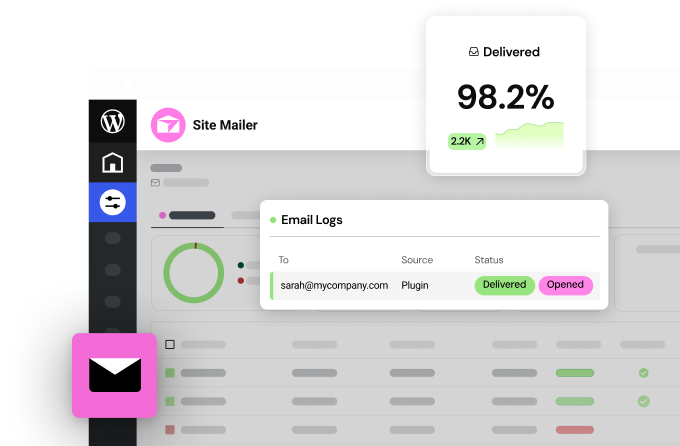
Building the site is only step one. Growing the site is the long game. This is where the ecosystem concept becomes vital. A platform like Elementor extends into Send by Elementor (now part of their growth suite), a newsletter and email marketing solution that integrates with the website. Instead of exporting leads to a third-party CSV and then importing them into a separate email tool, the data flow is unified. This allows for automation: a user fills out a contact form, and they are immediately entered into a nurturing email sequence managed within the same ecosystem. You can also ensure your transactional emails are delivered reliably with Site Mailer, avoiding common WordPress delivery issues.
Furthermore, as accessibility becomes a legal and ethical priority, tools like Ally by Elementor integrate scanning and remediation features directly into the site management workflow, ensuring that the beautiful site you build is usable by everyone.
Part 5: How to Choose: A Strategic Framework
So, does Bluehost have a website builder? Yes. Should you use it? That depends entirely on your objectives, timeline, and desired outcome.
When to Use Bluehost WonderSuite
WonderSuite is an excellent solution for a specific type of user. It is built for speed and simplicity.
- The “Business Card” Website: If you need a simple, 5-page website that lists your hours, services, and contact info, and you need it live by this afternoon, WonderSuite is perfect.
- The Absolute Beginner: If the concept of margins, padding, or hex codes is overwhelming, the rigid guidance of WonderStart and WonderBlocks will keep you on the rails. It prevents you from making design mistakes by limiting your choices.
- Budget Constraints: WonderSuite is included with Bluehost hosting. If you have zero budget for premium tools, it allows you to get online using only your hosting fee.
When to Use Elementor (on Bluehost or Elementor Hosting)
Elementor is the choice for users who view their website as a primary business asset rather than a digital placeholder.
- Brand Differentiation: If your brand requires a unique look that doesn’t fit into a standard “block” layout, you need the free-form design capabilities of Elementor.
- Marketing-Driven Sites: If you plan to run ads, build landing pages, or use popups to capture leads, the integrated marketing tools in Elementor Pro will save you money and complexity in the long run.
- eCommerce: For online stores, the ability to customize the checkout flow and product pages is often directly tied to conversion rates. Elementor’s WooCommerce Builder offers this control.
- Scaling Agencies and Freelancers: For those building sites for clients, Elementor provides a scalable workflow. You can save your own templates, export them, and reuse them across different client sites.
The Hybrid Approach
It is important to remember that this is not a binary choice between “Bluehost” and “Elementor.” You can—and many do—purchase Bluehost hosting for its reliability and 24/7 support, and then immediately install the WordPress plugin for Elementor to build the site. This bypasses the WonderSuite interface and gives you the powerful hosting infrastructure of Bluehost combined with the world-class creative engine of Elementor.
Part 6: Key Takeaways and Final Thoughts
The digital landscape is crowded with tools promising to build your website in minutes. Bluehost’s WonderSuite is a strong contender in this space, offering a frictionless entry into WordPress for beginners. It effectively masks the complexity of the CMS behind a friendly, AI-guided interface.
However, as businesses grow, their needs invariably become more complex. They require specific design integrations, advanced marketing behaviors, and a level of polish that block-based builders often struggle to deliver.
Elementor positions itself not just as a builder, but as a growth platform. By offering a cohesive ecosystem—from the Hello Theme to Elementor Hosting, Image Optimizer, and AI tools—it provides a runway for growth. It allows a creator to start simple and scale up to a complex, dynamic, enterprise-grade website without ever having to migrate to a new platform.
Summary Checklist:
- Choose WonderSuite if: You are a beginner, budget is your primary constraint, and you need a simple, standard layout quickly.
- Choose Elementor if: You need specific design control, marketing integrations, dynamic content, or you are building a site for a client.
- The Power Move: Consider combining reliable hosting (whether from Bluehost or Elementor Hosting) with the creative power of the Elementor platform to get the best of both worlds—stability and limitless creativity.
10 Frequently Asked Questions (FAQ)
1. Is the Bluehost website builder free? Yes, the WonderSuite builder is included for free with most Bluehost WordPress hosting plans. However, it relies on the WordPress block editor, so while the tool is free, you are still paying for the hosting service.
2. Can I use Elementor on Bluehost? Absolutely. Elementor is a WordPress plugin. You can purchase a hosting plan from Bluehost, install WordPress, and then install the Elementor plugin (either the free version or Elementor Pro). In fact, this is a very common setup for many professional web creators.
3. What happens to my content if I switch from WonderSuite to Elementor? Since both tools run on WordPress, your core content (blog posts, pages, images) remains in your database. However, the design of the pages will not automatically transfer. You would likely need to rebuild the layout of your pages using the Elementor editor to take advantage of its advanced styling features.
4. Does Elementor Hosting use Bluehost? No. Elementor Hosting is a separate, managed hosting service provided directly by Elementor. It is built on the Google Cloud Platform and is specifically optimized for websites built with Elementor. It is an alternative to using Bluehost.
5. Is WonderSuite good for eCommerce? WonderSuite includes WonderCart, which offers some eCommerce features for WooCommerce. It is suitable for simple stores. However, for fully customized product pages, custom cart designs, and advanced checkout flows, a dedicated tool like the Elementor WooCommerce Builder is generally more robust.
6. Do I need to know how to code to use Elementor? No. Elementor is a “no-code” platform. It uses a visual drag-and-drop interface. For advanced users who want to add custom code, Elementor AI can actually generate CSS and HTML snippets for you, bridging the gap between visual design and coding.
7. How does the speed of a Bluehost builder site compare to an Elementor site? Speed is determined by many factors, including hosting quality, image sizes, and plugin weight. Both can be fast if optimized. Elementor offers the Image Optimizer plugin and performance settings to ensure high speeds. If you use Elementor Hosting, the server environment is pre-tuned for speed.
8. Can I use the Hello Theme with Bluehost? Yes. You can install the Hello Theme on a WordPress site hosted by Bluehost. This gives you the lightweight “blank canvas” benefits of the Hello Theme while using Bluehost’s server infrastructure.
9. Is Elementor AI included in the free version? Elementor AI is a premium feature that integrates with the platform. It usually requires a separate subscription or credits, though it is often deeply integrated into Elementor Pro workflows for maximum efficiency.
10. Which is better for SEO: Bluehost Builder or Elementor? Both output HTML that Google can read. However, Elementor (especially with Elementor Hosting) often provides more tools for technical SEO optimization, better code structure controls, and integration with performance tools (like image optimization) that indirectly boost SEO rankings through better Core Web Vitals scores.
Ready to get started? You can download the free version of the builder to test the features, and many hosting plans even include a free domain name to help you launch your site.
Looking for fresh content?
By entering your email, you agree to receive Elementor emails, including marketing emails,
and agree to our Terms & Conditions and Privacy Policy.