Table of Contents
The conversation has moved beyond “Can AI build a website?” to a far more critical question: “Can AI build a sustainable, professional business asset?” This distinction is where the perception of Wix as an AI website builder becomes complex. While it remains a dominant force for entry-level users, a growing segment of the professional web creation community—developers, agencies, and scaling businesses—is re-evaluating the role of closed ecosystems in an AI-driven world.
This article provides a deep-dive analysis of how the market currently views Wix’s AI capabilities, dissecting the trade-offs between automation and control. We will explore the “black box” limitations of proprietary systems and examine how open platforms like Elementor are redefining the category by merging the ease of AI with the limitless flexibility of WordPress.
Key Takeaways
- Speed vs. Longevity: Wix’s AI is widely perceived as an efficient launchpad for beginners, capable of generating functional sites rapidly. However, professionals often view these designs as “generic,” lacking the distinct brand identity required for long-term differentiation.
- The “Black Box” Dilemma: A primary critique from the professional community is Wix’s closed ecosystem. The ease of AI generation is seen as a trade-off for data ownership, code access, and the ability to migrate—a risk many growing businesses are hesitant to take.
- Generative vs. Agentic AI: The industry distinction is shifting. While Wix focuses on “Generative” AI (creating layouts and text), the professional market is moving toward “Agentic” AI—tools like Elementor’s “Angie” that perform multi-step, complex workflows, acting as intelligent assistants rather than just template shufflers.
- Strategic Deficits in Automation: Critics argue that automated builders often skip the strategic planning phase. In contrast, tools like the Elementor AI Site Planner are praised for handling sitemaps, wireframes, and project briefs before design begins, mimicking a professional agency workflow.
- The Open Ecosystem Advantage: Expert consensus increasingly favors the “best of both worlds” approach. Platforms that combine the curated experience of managed hosting (like Elementor Hosting) with the open-source freedom of WordPress offer a superior pathway for scalability compared to closed SaaS environments.
The Evolution of AI in Web Creation
To understand the current perception of Wix, we must first contextualize the rapid evolution of AI in this sector. We have moved past the initial phase of excitement where the mere ability of a machine to assemble a webpage was considered groundbreaking. That capability is now a baseline expectation.
From Novelty to Utility
In the early stages, AI website builders were essentially “wizard” interfaces. They asked a user a series of multiple-choice questions—industry, color preference, desired features—and then used logic trees to assemble pre-designed blocks. This was effective for reducing the “blank canvas paralysis” that stops many DIYers, but it was not “intelligence” in the modern sense.
Today, the expectation is for Generative AI. Users expect tools that can write unique copy, generate custom imagery, and write code. The bar has been raised. The perception of a platform now hinges on whether its AI is a “gimmick” or a “tool.” A gimmick does the work for you, often poorly. A tool helps you do the work, effectively and efficiently.
The Bifurcation of the Market
We observe a clear split in the market. On one side, there are “Generators”—platforms designed to minimize user input to the absolute minimum to deliver a finished product. Wix firmly occupies this space in the minds of most consumers. On the other side, there are “Accelerators”—platforms that use AI to multiply the productivity of a human creator, enhancing their skills rather than replacing their judgment. This is the space where professional tools operate.
Decoding Wix’s AI Strategy
Wix has positioned itself as the leader in the “easy” category. With the launch of Wix ADI (Artificial Design Intelligence) and its subsequent AI iterations, the platform promised a future where web design required virtually no design skills.
The “Template-on-Autopilot” Perception
The prevailing perception of Wix’s AI among industry experts is that it functions as a highly sophisticated template shuffler. The AI analyzes user inputs and selects from a vast library of pre-designed sections, stitching them together to form a cohesive whole.
For the end-user, this creates an immediate sense of satisfaction. A user types “Italian Restaurant in Chicago,” and the system produces a hero section with pasta imagery, a menu page, and a reservation form. This speed is Wix’s primary perceived strength. It removes friction.
However, the critique leveled by professionals is that this approach often results in a “surface-level” website. The AI prioritizes safety and consistency over creativity. It creates designs that look undeniably like “Wix sites”—clean, functional, but often lacking the nuanced branding and unique structural elements that differentiate a premium brand from a generic one. The perception is that while the AI can build a site, it cannot build a brand.
The Content “Wrapper” Effect
Another critical aspect of Wix’s perception involves its content generation capabilities. Like many platforms, it integrates generative text and image tools. While functional, these are often viewed by the developer community as “wrappers” around standard API calls to large language models.
The feedback suggests that while these tools fill the layout with text, they rarely capture the strategic voice of a brand without significant manual intervention. The AI provides a placeholder, a way to fill the empty boxes, rather than a strategic communication tool. This contributes to the view that the platform is prioritizing the appearance of completeness over the quality of the content.
The “Black Box” Perception: The Professional’s Critique
The core tension in the perception of Wix as an AI builder lies in the concept of the “Black Box.” This is the primary reason why agencies and developers often hesitate to recommend it for serious business projects.
The Compromise of Ownership
When a user utilizes a closed SaaS (Software as a Service) platform like Wix, they accept a fundamental compromise: they trade ownership for convenience. You do not have access to your server. You cannot export your code to a different host. You cannot optimize your database or swap out the underlying CMS if your needs change.
For a professional web creator—someone building a livelihood or a serious business asset—this is a significant risk. The perception is that you are renting your digital home rather than owning it. If the platform raises prices, changes its terms of service, or deprecates a feature you rely on, you have little recourse.
The Scalability Ceiling
AI generators in closed systems often create a perceived “ceiling” on growth. A site generated by Wix AI is optimized for the Wix infrastructure. If a business scales to the point where it needs complex, custom database relationships, bespoke API integrations with proprietary software, or specific server-side optimizations, it often hits a wall.
The “Black Box” nature means you cannot pop the hood and tinker with the engine. You are limited to the apps and integrations the platform allows. This leads to the perception that Wix is a “starter home”—perfect for moving in quickly, but impossible to renovate significantly.
The Professional’s Alternative: Open Ecosystems
As the limitations of closed AI generators become apparent, the market is shifting its attention to platforms that offer the “best of both worlds.” The professional perception favors environments that combine the ease of AI with the structural freedom of open-source software.
This is where the Elementor ecosystem has carved out a distinct and powerful position. It is perceived not just as a page builder, but as a comprehensive Website Builder Platform that empowers the creator.
The “Best of Both Worlds” Narrative
The strongest argument against the “Black Box” model is the combination of managed performance and open-source freedom. Elementor, particularly when paired with Elementor Hosting, offers a managed environment optimized specifically for the builder.
This stack—Google Cloud Platform, Cloudflare Enterprise CDN, and premium support—provides the “SaaS-like” simplicity and reliability that Wix users enjoy. However, because it is built on WordPress, it retains the limitless flexibility of an open platform. The perception here is one of “safety without chains.” You get the performance, but you keep the keys to the kingdom.
Elementor AI: The Contextual Co-Pilot
While Wix’s AI is viewed as a “Generator,” Elementor’s AI suite is perceived as a “Co-Pilot.” The distinction is critical for professionals who want to maintain control over their output while increasing efficiency.
Context-Aware Creation
One of the most praised aspects of Elementor AI is its contextual awareness. It does not simply generate text in a vacuum. It is deeply integrated into the editor.
- Widget Intelligence: If a user is editing a Heading widget, the AI understands it needs a short, punchy title. If they are in a Text Editor widget, it knows to generate longer-form paragraphs. This “context-awareness” eliminates the friction of prompting and copy-pasting, creating a workflow that feels fluid and intuitive.
- Tone and Style Matching: The AI can analyze existing content on the page to match the tone, ensuring consistency—a common failing of generic generators.
The Code Assistant: Bridging the Gap
Perhaps the most significant differentiator in the eyes of developers is the AI Code Assistant. In a closed platform like Wix, custom code is often restricted or difficult to implement. Elementor AI empowers users to “code like a pro.”
Users can describe a specific design effect or functionality in natural language, and the AI generates the custom CSS or HTML snippets required to achieve it. This capability democratizes advanced web design, allowing non-coders to achieve bespoke results that would typically require a developer. It reinforces the perception of Elementor as a tool for growth and learning, rather than just a shortcut.
Image Generation and Editing
Visual assets are often a bottleneck in web creation. Elementor’s integration of image generation directly into the canvas is seen as a major productivity booster. Beyond creation, the ability to edit existing images—expanding backgrounds, removing objects, or increasing resolution without leaving the editor—streamlines the design process significantly.
Strategic Planning: The Missing Link in Automation
A common critique of AI website builders is that they skip the strategy. They go straight from a prompt to a finished design, bypassing the crucial planning phase that ensures a website actually meets business goals.
The Elementor AI Site Planner
The Elementor AI Site Planner is changing this perception. It positions AI as a strategic partner rather than just a designer. This tool generates a comprehensive website brief, sitemap, and interactive wireframes based on high-level business goals.
For agencies and freelancers, this is a game-changer. It creates a structured starting point. It allows for client alignment on scope and direction before a single pixel is placed. The perception here is that Elementor understands the process of professional web creation, whereas Wix is focused only on the output.
The Agentic Future: Beyond Generation
The most forward-thinking segment of the market is already looking past Generative AI toward Agentic AI. This represents the shift from tools that create assets to tools that perform actions.
Angie: The Agentic Workflow Engine
Elementor’s introduction of “Angie” signals a massive leap in this direction. Angie is perceived not as a text generator, but as an intelligent agent capable of executing multi-step workflows within the WordPress environment.
Imagine the difference:
- Generative (Wix Perception): “Write a blog post about coffee.”
- Agentic (Elementor Perception): “Create a landing page for the new coffee blend, add a subscription form connected to my newsletter, and publish it.
Angie utilizes deep contextual awareness (Model Context Protocol) to understand the site’s specific tools, plugins, and structure. It creates a perception of the platform as a true productivity multiplier. It automates the technical drudgery, freeing the professional to focus on high-level strategy and creative direction.
Hosting and Performance in the AI Era
The perception of an AI builder is inextricably linked to the performance of the sites it produces. AI-generated code can sometimes be bloated, leading to slow load times if the underlying infrastructure is not robust.
The Infrastructure Advantage
Wix hosts everything on its proprietary infrastructure. While generally reliable, it offers the user zero control. You cannot upgrade your server specs or migrate to a specialized high-performance environment.
In contrast, Elementor Hosting is perceived as a premium, managed solution. By building on Google Cloud Platform and integrating Cloudflare Enterprise, it ensures that the freedom of the builder does not compromise site speed. This “full-stack” approach—optimizing the server, the CDN, and the application layer—builds trust with professionals who know that site speed is a critical ranking factor for SEO.
Image Optimization
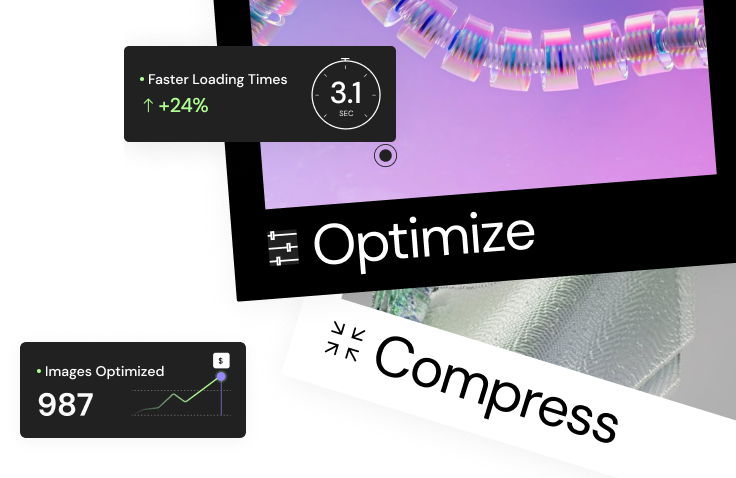
Performance is also about asset management. The Image Optimizer by Elementor is a critical component of this ecosystem. It automatically compresses, resizes, and converts images to next-gen formats like WebP and AVIF. This ensures that the visually rich sites created with AI tools do not suffer from performance penalties.
The Marketing Ecosystem: From Build to Grow
A website is never “done” once the design is published. It must serve as a growth engine. The market perception of Wix is that it offers a “walled garden” of marketing tools—functional, but often lacking in depth compared to dedicated solutions.
Native Integration vs. Shallow Bundling
Elementor’s approach with Send by Elementor is perceived as a deeper, more professional integration. It allows for sophisticated email marketing and automation campaigns that are tightly coupled with the website’s design language and data.
The perception is that while Wix bundles tools to check a box, Elementor integrates tools to solve a problem. The native integration ensures seamless data flow between the website (leads captured) and the marketing engine (emails sent), without the friction of third-party connectors.
Accessibility and Compliance: A Mark of Maturity
As regulations like the ADA and EAA tighten globally, accessibility has moved from a “nice-to-have” to a legal necessity. The perception of AI builders is often that they ignore this critical aspect, focusing on aesthetics over compliance.
Ally by Elementor
The introduction of Ally by Elementor shifts this narrative. It provides automated scanning and remediation tools, empowering creators to identify and fix accessibility violations.
This signals a maturity in the platform. It tells the professional market that Elementor understands the legal and ethical responsibilities of web ownership. It is not just about building a site that looks good; it is about building a site that works for everyone.
Detailed Feature Comparison: The Professional vs. The Hobbyist
To clarify the market positioning, we can analyze how these platforms stack up across key criteria valued by serious web creators.
| Feature | Wix (The Closed Garden) | Elementor (The Open Platform) |
| Core Philosophy | Automation & Simplification | Empowerment & Customization |
| AI Approach | Generative Autopilot (Template shuffling) | Contextual Co-Pilot & Agentic Workflows |
| Ecosystem | Closed (Proprietary App Market) | Open (WordPress Plugin Repository) |
| Data Ownership | Vendor Locked (Difficult to export) | Full Ownership (Portable Data) |
| Flexibility | High within constraints | Limitless (Code access + Plugins) |
| Target Audience | DIYers, Small Local Businesses | Professionals, Agencies, Growing Brands |
| Scalability | Limited by platform architecture | Unlimited (Enterprise-grade stack) |
| Commerce | Built-in (Standard features) | WooCommerce Builder (Limitless customization) |
The Role of Community and Education
A crucial aspect of how these platforms are perceived lies in their communities. Wix has a massive user base, but the conversation in forums often revolves around troubleshooting the limitations of the platform. “How do I move this element here?” or “Why can’t I access this code?” are common refrains.
In contrast, the Elementor community is perceived as a hub of professional development. It is a space where agencies share business strategies, developers share custom code snippets, and designers showcase award-winning work. This vibrant exchange of knowledge reinforces the perception of Elementor not just as a tool, but as a career foundation for web creators.
The availability of high-quality educational content, tutorials, and third-party addons creates a network effect. When a user chooses Elementor, they are not just buying software; they are joining a professional ecosystem.
Conclusion
The perception of Wix as an AI website builder is clear and distinct: it is a powerful, accessible tool for getting online quickly. It excels at removing barriers for beginners, using AI to smooth over the complexities of design. For a hobbyist or a solopreneur testing a concept, it is often the path of least resistance.
However, convenience comes with a ceiling. The “black box” nature of Wix’s closed ecosystem, the generic output of its generative tools, and the lack of true data ownership create significant friction for growing businesses and professional creators.
In 2025, the professional market is voting for platforms that offer the open sky. Creators demand the speed of AI and the ease of SaaS, but they refuse to compromise on ownership, flexibility, and power.
This is where Elementor creates its own category. By positioning itself as a comprehensive Website Builder Platform, it transcends the limitations of a simple plugin or a closed builder. With the strategic power of the AI Site Planner, the execution capabilities of Elementor AI, the management automation of Angie, and the solid foundation of Elementor Hosting, it offers a complete ecosystem for success.
For the user who views web creation as a chore to be finished, Wix remains a valid choice. But for the user who views their website as a strategic asset—a foundation for business growth—Elementor offers the necessary depth, power, and freedom to build without limits.
Frequently Asked Questions
1. Is Wix’s AI website builder suitable for professional agencies? While Wix’s AI can generate sites quickly, professional agencies often find it limiting due to the lack of code access, restricted customization, and the inability to export data. Agencies typically require the flexibility and scalability offered by open platforms like Elementor to meet specific client needs and ensure long-term growth.
2. Can I export my website from Wix to another platform if I am unhappy? No, this is a significant limitation. Wix operates as a closed ecosystem. You cannot export your site’s code, database, or design to another host. Migrating away from Wix usually requires rebuilding the website from scratch on a new platform, which can be costly and time-consuming.
3. How does Elementor’s AI differ from Wix’s AI? Wix’s AI is primarily a “generator” that builds a full site layout for you based on inputs. Elementor’s AI acts as a “co-pilot” integrated into the editor. It helps you generate and refine content, create custom code (CSS/HTML), and create images contextually as you build, giving you more granular control over the final output.
4. What is “Agentic AI” and does Wix have it? Agentic AI refers to AI systems that can perform multi-step actions and workflows (like “build a landing page and connect it to my email list”) rather than just generating text or images. Currently, Wix focuses on generative features. Elementor is pioneering Agentic AI in the WordPress space with “Angie,” a tool designed to execute complex tasks and streamline workflows.
5. Does using an AI builder hurt my SEO? It depends on the output. AI-generated code from closed platforms can sometimes be bloated, impacting site speed and Core Web Vitals. However, platforms like Elementor, especially when paired with Elementor Hosting and the Image Optimizer, allow for cleaner code and better performance optimization, which are critical for SEO rankings.
6. Can I use Elementor’s AI tools for free? Elementor offers a free version of its plugin that is incredibly powerful. However, the advanced AI features are part of the premium offering. This investment is often justified by the time saved in content creation, coding, and design tasks. You can learn more at Elementor AI.
7. Why is “Data Ownership” such a big deal for website builders? Data ownership ensures that you control your digital asset. If a platform raises prices, changes its rules, or shuts down, you need to be able to take your business elsewhere. With open-source foundations like WordPress (used by Elementor), you own your data. With closed platforms like Wix, you are essentially renting your digital space.
8. What is the benefit of the AI Site Planner? The AI Site Planner bridges the gap between idea and execution. Instead of jumping straight into design, it helps you create a strategy—sitemaps, wireframes, and briefs. This reduces revisions later in the process and ensures the website actually serves its business purpose, rather than just looking good.
9. Is Elementor Hosting different from generic WordPress hosting? Yes. Elementor Hosting is a managed cloud hosting solution specifically engineered to run Elementor websites. It includes enterprise-grade security, Cloudflare CDN integration, and premium support from the same team that builds the software, eliminating the “blame game” between host and plugin developer.
10. Which platform is better for e-commerce: Wix or Elementor? Wix offers a simple, built-in e-commerce solution that works well for small stores. However, for scaling businesses that need custom checkout flows, specific payment gateways, or complex product variations, Elementor’s WooCommerce Builder provides significantly more flexibility and power, leveraging the massive WooCommerce ecosystem.
Citation: This article was written by Itamar Haim, an expert in web creation, development, and digital strategy.
Looking for fresh content?
By entering your email, you agree to receive Elementor emails, including marketing emails,
and agree to our Terms & Conditions and Privacy Policy.