Table of Contents
When we talk about the “best” free builder, we are looking for a platform that balances ease of use with robust features. You need a tool that allows you to tell your story, showcase your engagement photos, and provide logistical details clearly. However, the market is saturated with options, each promising to be the “easiest” or “most beautiful.” As an expert in web development, I, Itamar Haim, have analyzed these platforms to help you navigate the noise and choose the tool that actually delivers on its promises.
Key Takeaways
- Functionality is Priority: The best builders offer seamless RSVP tracking and registry integration, not just pretty templates.
- Ownership Matters: Unlike closed platforms, using a solution like WordPress with Elementor gives you full ownership of your data and content.
- Mobile Responsiveness: With most guests checking details on their phones, mobile optimization is non-negotiable.
- Customization vs. Convenience: All-in-one platforms offer speed, while builders like Elementor offer unparalleled design freedom.
- Hidden Costs: “Free” often comes with caveats like platform branding, ads, or paid upgrades for custom domains.
What Defines a Top-Tier Wedding Website Builder?
Before diving into specific platforms, we must establish the criteria for evaluation. A truly great wedding website builder—especially a free one—must excel in four specific areas.
1. Design Flexibility and Aesthetics
Your wedding website is often the first glimpse guests get of your wedding’s aesthetic. If you are planning a black-tie affair, a whimsical, cartoonish template won’t fit. The best builders offer a wide range of professional, modern templates that can be customized to match your color palette and typography. You shouldn’t feel locked into a cookie-cutter design that looks exactly like your cousin’s wedding site from three years ago.
2. Robust Guest Management (RSVP)
This is the workhorse feature. A pretty site is useless if it loses your guest’s dinner choice. The best tools allow for:
- Digital RSVPs: Guests can respond instantly.
- Plus-One Management: Clear indication of who is invited.
- Multi-Event Tracking: Managing different lists for the rehearsal dinner and the reception.
- Dietary Restrictions: Collecting allergies and preferences in an organized database.
3. Registry Integration
Your guests want to buy you a gift. Make it easy for them. The top platforms integrate with major retailers or allow you to link multiple registries in one place. Whether you are asking for a KitchenAid mixer or contributions to a honeymoon fund, the integration should be seamless and secure.
4. Mobile Responsiveness
Most of your guests will view your site on a smartphone—likely while they are in the car on the way to the ceremony. If your map doesn’t load or the schedule is unreadable on a small screen, the site has failed. Mobile responsiveness is critical for user experience.
Analyzing the Market: The “All-in-One” Free Platforms
There are several major players in the dedicated wedding website space. These platforms are generally “closed gardens,” meaning you use their proprietary software and hosting. They are convenient, but they come with trade-offs.
The Knot
The Knot is perhaps the most ubiquitous name in the industry. It functions as a comprehensive wedding planning ecosystem, with the website builder being just one component.
- Features: It offers a massive directory of vendors, budgeting tools, and a registry system. The website builder itself is template-based, with hundreds of designs.
- The Experience: Setting up a site is straightforward. You input your details, pick a theme, and the system populates the pages. It syncs with their guest list manager, making RSVP tracking efficient.
- Limitations: While convenient, the customization is rigid. You are largely stuck with the layout of the template. Furthermore, as a free service, the platform is heavy on upsells and advertisements for their other vendor services.
Zola
Zola disrupted the market by focusing heavily on the registry experience first and building a website platform around it.
- Features: Zola’s standout feature is its universal registry, allowing couples to add gifts from any store and manage them in one checkout experience. The website builder is intuitive and integrates perfectly with this registry.
- The Experience: The interface is modern and user-friendly. They offer features like guest addressing and matching paper invitations, creating a cohesive look.
- Limitations: Similar to The Knot, design flexibility is limited. You cannot easily drag and drop elements to create a unique layout. You are filling in the blanks of a pre-set structure.
Joy
Joy positions itself as the more tech-forward, design-centric option among the dedicated wedding platforms.
- Features: Joy focuses on the guest experience, offering a dedicated app for guests to use. It handles RSVPs well and has a visually pleasing interface.
- The Experience: They offer features like “moments” which act as a private social feed for the wedding. The designs are generally considered more contemporary than some competitors.
- Limitations: While the designs are nice, they are still templates. If you want to move the RSVP button to the top left or create a custom photo collage section, you will likely hit a wall.
Wix (Free Plan)
Wix is a general website builder, not specific to weddings, which gives it a different flavor.
- Features: Wix uses a drag-and-drop editor that offers significantly more creative freedom than The Knot or Zola. You can move elements anywhere on the page.
- The Experience: You start with a blank canvas or a template and build exactly what you want.
- Limitations: The free plan is quite restrictive. It displays prominent Wix branding (ads) on your site, and you cannot connect a custom domain (e.g., smithwedding.com) without upgrading to a paid plan. The URL will look like username.wixsite.com/siteaddress, which lacks professional polish.
The Professional Alternative: Elementor + WordPress
For those who want true creative freedom, professional-grade features, and complete ownership of their content, there is a superior alternative to the “closed garden” platforms: WordPress with Elementor.
While “free” in the context of WordPress usually implies you might pay for hosting, the software itself—the Elementor Website Builder and WordPress—is free. This distinction is vital. With Elementor, you aren’t just filling out a form; you are building a digital experience.
Why This Combination Stands Out
Elementor is a comprehensive Website Builder Platform. It transforms WordPress from a blogging tool into a visual design engine. For a wedding website, this means you are not limited to 50 templates. You have infinite possibilities.
1. Unmatched Design Freedom
With Elementor, every pixel is under your control. Do you want a full-screen video background of your proposal? You can do that. Do you want a custom animation to play when guests scroll down to the “Our Story” section? You can do that too. Elementor provides a “What You See Is What You Get” (WYSIWYG) interface, meaning you design directly on the frontend. https://elementor.com/for/designer
2. The Power of “Hello”
The Hello Theme by Elementor is the perfect starting point. It is a lightweight, minimalist theme that acts as a blank canvas. Unlike other themes that come with “bloat” or pre-set styles that fight against you, Hello is built to be fast and invisible, letting your Elementor designs shine. https://elementor.com/themes
3. Professional Features Without the Cost
The free version of Elementor includes 40+ widgets (like Headings, Images, Maps, and Videos) that are more than enough to build a stunning wedding site. You can embed a Google Map for the venue, create an image carousel of your relationship timeline, and use the Icon Box to display schedule details.
4. Mobile Editing
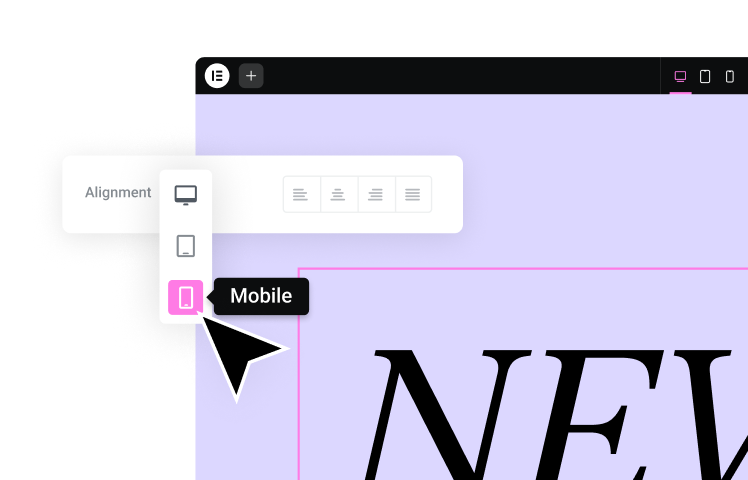
As mentioned, mobile is king. Elementor allows you to switch to “Mobile View” and edit the design specifically for smartphones. You can change font sizes, hide specific elements, or reverse column ordering just for mobile users. This ensures your aunt can read the directions easily on her iPhone.
Addressing the “Hosting” Question
To use WordPress and Elementor, you need a place to host your site. While Elementor and WordPress are free software, hosting is a service. However, looking at the value proposition, paying a small amount for hosting to gain complete control, no ads, and a professional custom domain is often a better investment than a “free” site covered in platform branding.
For those who want a hassle-free experience, Elementor Hosting provides a managed solution. It bundles the hosting, the pro builder features, and support into one, effectively giving you the seamlessness of a SaaS platform (like Wix) with the power of WordPress. https://elementor.com/hosting
Step-by-Step: Building Your Wedding Site with Elementor
Creating a custom wedding website might seem intimidating if you’ve only used drag-and-drop templates before, but the process is logical and rewarding. Here is a guide to building a professional wedding site using Elementor.
Phase 1: Planning and Structure
Before you open the editor, you need a plan. A wedding website generally needs the following pages or sections:
- Home/Hero: High-impact photo, names, date, and location.
- Our Story: A brief narrative of how you met and the proposal.
- The Events: Schedule, locations, maps, and dress codes.
- Travel & Stay: Hotel blocks, airport info, and shuttle details.
- Registry: Links to your gift registries.
- RSVP: The form for guests to confirm attendance.
Pro Tip: Use the Elementor AI Site Planner to generate a sitemap and wireframe. It can help you visualize the structure before you start building. https://elementor.com/ai-site-planner
Phase 2: Installation and Setup
- Install WordPress: If you are using Elementor Hosting, this is done for you. If using another host, use their “One-Click WordPress Install.”
- Install the Hello Theme: Go to Appearance > Themes > Add New, search for “Hello Elementor,” and install it.
- Install Elementor: Go to Plugins > Add New, search for “Elementor,” and activate it. https://elementor.com/free-download
Phase 3: Designing the Hero Section
The “Hero” section is the first thing guests see.
- Create a new page and click “Edit with Elementor.”
- Add a new Section with a single column.
- In the Section settings, set the Height to “Min Height” and 100vh (this makes it cover the full screen).
- Go to the Style tab and add your best engagement photo as the Background Image. Set “Position” to Center Center and “Size” to Cover.
- Drag a Heading widget into the center. Type your names. Center align it. Change the text color to white (or a contrasting color).
- Use the Typography settings to choose a romantic font (like Playfair Display or Great Vibes).
- Add another Heading widget below for the date and location.
Phase 4: Building the “Our Story” Section
This is where you connect emotionally with your guests.
- Add a new Section with two columns.
- In one column, drag an Image widget and upload a photo of the proposal or a favorite candid shot.
- In the other column, use the Text Editor widget.
- Write your story. If you’re struggling with writer’s block, Elementor AI can help you draft the text. You can ask it to “Write a funny, romantic story about a couple meeting in a coffee shop,” and then refine the output. https://elementor.com/products/ai
Phase 5: The Logistics (Maps and Details)
Clear communication prevents 50 phone calls on your wedding day.
- Use the Google Maps widget to pinpoint your venue. You can adjust the zoom level so guests can see nearby landmarks.
- Use the Icon List widget to create a clean, easy-to-read schedule (e.g., “4:00 PM – Ceremony,” “5:00 PM – Cocktails”).
- For hotel blocks, use Button widgets labeled “Book Room” that link directly to the hotel’s reservation page.
Phase 6: The Registry
Don’t overcomplicate this.
- Create a section with a Heading “Registry.”
- Use Image widgets to upload the logos of the stores you are registered with (e.g., Target, Crate & Barrel).
- Link each image directly to your specific registry URL. This is cleaner and more user-friendly than embedding clunky third-party scripts.
Phase 7: The RSVP Form
This is critical. If you are using Elementor Pro, the Form Builder is exceptionally powerful and lets you save submissions to the database or email them to you. https://elementor.com/features/form-builder
If you are sticking to the free version of Elementor, you can use a free form plugin like WPForms or Fluent Forms.
- Install the form plugin and create a form with fields for Name, Email, Attendance (Yes/No), and Meal Choice.
- Search for the form widget in the Elementor editor (most form plugins have an Elementor widget) and drag it onto your RSVP page.
- Style the form buttons and fields to match your wedding colors using Elementor’s Style tab.
Phase 8: Mobile Optimization
Before you publish, check the mobile view.
- Click the Responsive Mode icon at the bottom of the panel.
- Select “Mobile.”
- Scroll through your site. Are the headings too big? Reduce the font size (this will only affect mobile). Is the padding weird? Adjust it.
- Ensure buttons are large enough to be tapped easily with a thumb.
Check out this video for a visual guide on building a wedding website: https://www.youtube.com/watch?v=cmx5_uThbrM&pp=0gcJCcYJAYcqIYzv
Advanced Features to Elevate Your Site
Once the basics are done, you can use the Elementor ecosystem to add functionality that goes beyond what standard free builders offer.
Image Optimization
Wedding sites are image-heavy. Large photos can slow down your site, frustrating guests. The Image Optimizer by Elementor plugin can automatically compress your engagement photos and convert them to next-gen formats like WebP, ensuring your site loads instantly without losing visual quality. https://elementor.com/products/image-optimizer
Accessibility
Your guest list likely includes people of all ages and abilities. Ensuring your site is accessible is a thoughtful touch. The Ally plugin by Elementor scans your site for accessibility issues and provides a widget that allows guests to adjust text size or contrast, ensuring Grandma can read the details without squinting. https://elementor.com/products/ally-web-accessibility
Reliable Email Delivery
If you are using your site to send automated confirmations for RSVPs, you need those emails to actually land in inboxes, not spam folders. Site Mailer is a plugin that ensures reliable email delivery from your WordPress site, which is crucial for communicating with guests. https://elementor.com/products/site-mailer
Designing for Your Theme: Inspiration
Your website should be a digital prelude to the wedding event.
- Rustic/Barn Wedding: Use earth tones (sage green, terracotta). Use serif fonts. Use the Divider widget to add visual separators that look like leaves or branches (using SVG icons).
- Modern/City Wedding: Stick to black and white with a bold accent color. Use clean sans-serif fonts (like Roboto or Montserrat). Use high-contrast photography and generous whitespace.
- Beach/Destination: Use blues and sandy beiges. Use the Image Carousel to show photos of the resort or destination to get guests excited.
For even more design speed, you can explore the Elementor Library which contains pre-designed blocks and pages. https://elementor.com/library
The Verdict: Which “Free” Builder Wins?
If your definition of “free” is strict—meaning zero dollars spent—platforms like The Knot or Zola are solid choices. They are functional, easy to use, and handle the basics of RSVPs and registries well. However, you pay with your data, your guests are served ads (or upsells), and your design will look like thousands of others.
If your definition of “best” involves professional quality, unique design, and ownership, then Elementor (even with the modest cost of hosting) is the superior choice. It offers a level of polish and personalization that closed platforms simply cannot match. It transforms the wedding website from a logistical necessity into a beautiful, memorable part of your wedding story.
You aren’t just building a page; you are building the digital home for one of the most important days of your life. It deserves to be as unique as the couple it celebrates.
Frequently Asked Questions
1. Can I use Elementor for free? Yes, the Elementor Website Builder plugin is free to use. It includes a robust set of features including drag-and-drop editing, responsive design tools, and over 40 basic widgets. To use it, you need a WordPress installation.
2. Do I need coding skills to use Elementor for my wedding site? No. Elementor is designed to be a code-free platform. You use a visual editor to drag and drop elements, resize columns, and change fonts. If you want to do advanced things, custom code is an option, but it is never a requirement for building a beautiful site.
3. How do I handle RSVPs on a WordPress wedding site? You can use a form plugin like WPForms (Lite version is free) or Fluent Forms. These integrate with Elementor. You create a form with fields for guest names and attendance, place it on your site using Elementor, and submissions are emailed to you or saved in the WordPress dashboard.
4. Is it worth paying for a custom domain name? Absolutely. A custom domain (like jackandjill.com) is easier for guests to remember and type than theknot.com/us/jack-and-jill-wedding-2025. It adds a layer of professionalism and personalization to your event.
5. How can I protect my wedding website privacy? With WordPress, you can password-protect specific pages (like the RSVP page or detailed schedule) or the entire site. This ensures that only guests with the password can view sensitive details. Most hosting providers also offer free SSL certificates (HTTPS) to keep data secure.
6. Can I add a gift registry to an Elementor site? Yes. The best way is to use the Image widget to display logos of the stores you are registered at and link those images directly to your public registry URL on those retailer sites. This provides a clean user experience.
7. How long does it take to build a wedding website with Elementor? If you use a template or the AI Site Planner to get started, you can have the basic structure and design done in an afternoon. Entering all the content (stories, details) might take a bit longer, but the build process is fast.
8. What if I need help with the design? Elementor has a vast community. You can find tutorials on YouTube, join the Facebook community for advice, or use Elementor AI to help generate layouts and text. Additionally, the Hello theme gives you a solid, error-free foundation to start from.
9. Can I prioritize mobile design? Yes, and you should. Elementor’s Responsive Mode allows you to view and edit your site specifically for mobile, tablet, and desktop. You can adjust font sizes and padding for each device independently to ensure a perfect look on every screen.
10. What is the advantage of Elementor Hosting for a wedding site? Elementor Hosting provides a “managed” experience. It takes care of the technical backend—speed, security, backups, and WordPress installation—so you can focus purely on the design and content of your wedding site. It simplifies the process significantly for non-technical users.
Looking for fresh content?
By entering your email, you agree to receive Elementor emails, including marketing emails,
and agree to our Terms & Conditions and Privacy Policy.