Table of Contents
This deep dive analyzes the IONOS website builder from the perspective of a web creation professional. We will look under the hood at its code structure, design flexibility, and ecosystem to help you decide if it’s a stepping stone or a stumbling block for your digital future.
Key Takeaways
- Speed vs. Control: IONOS excels at getting a site live quickly using AI-driven setup and structured templates, but this comes at the cost of creative freedom and pixel-perfect design control.
- The Pricing Reality: While introductory rates are incredibly low (often $1/month), renewal prices jump significantly. True cost analysis must include the long-term price of essential add-ons and features.
- Proprietary vs. Open: IONOS is a closed system. You cannot easily migrate your site code elsewhere, limiting your ability to scale or switch providers without rebuilding from scratch.
- The “Platform” Advantage: Modern web creation demands more than just a builder. Comprehensive solutions like the Elementor Website Builder Platform offer an integrated ecosystem (hosting, AI, marketing) that scales with you, unlike standalone builders that hit a functional ceiling.
- E-commerce Limitations: While functional for small shops, proprietary builders often lack the granular control over checkout flows, shipping logic, and tax calculations found in dedicated solutions like the WooCommerce Builder.
- Data Ownership: Building on open-source foundations (like WordPress) ensures you own your content and data. Building on closed platforms means you rent your digital presence.
Understanding the IONOS Ecosystem
To fairly evaluate the builder, you must understand the company behind it. IONOS (formerly 1&1) is primarily a massive hosting registrar and cloud infrastructure provider. Their website builder is a value-added service designed to on-ramp users into their hosting ecosystem. This distinction matters because their core competency is infrastructure, whereas companies like Elementor focus entirely on the creation and design experience.
IONOS currently offers two distinct builder experiences, often confusing new users:
- MyWebsite Now: An AI-driven, block-based builder. It is extremely rigid but very fast. You essentially stack pre-made sections.
- MyWebsite Creator: A slightly more flexible editor that allows for more drag-and-drop capability but still operates within a strict proprietary framework.
The Appeal of the “Instant” Build
There is a reason IONOS captures a segment of the market. The onboarding process is frictionless. You answer a few questions about your industry (e.g., “Landscaping” or “Consulting”), and the system generates a template with relevant stock imagery and text placeholders.
For a non-technical user, this feels like magic. You get a header, a hero section, a services list, and a contact form in seconds. The interface is clean, keeping complex tools hidden. If your goal is to publish a brochure site to prove your business exists, this “painting by numbers” approach works.
The Hidden Ceiling of Proprietary Systems
The frustration usually sets in three to six months later. As your business grows, your website needs to evolve. You might want to:
- Add a custom post type for a specific portfolio layout.
- Integrate a specific third-party CRM that isn’t in their limited app library.
- Tweak the CSS to match a very specific brand color gradient or animation.
In a closed ecosystem like IONOS, you hit a hard wall. You cannot access the source code. You cannot upload a custom PHP script. You are limited to the widgets and integrations they choose to support. This is the fundamental trade-off of proprietary builders: they lower the floor for entry, but they drastically lower the ceiling for growth.
Design Flexibility: Structured Blocks vs. Pixel Perfection
Web design is no longer just about putting information on a screen; it’s about crafting an experience. User experience (UX) drives conversions.
The Block-Based Constraints
IONOS uses a section-based editor. You can change the order of sections, swap out images, and change text, but you cannot easily break the grid. If you want an element to overlap another for a dynamic 3D effect, or if you want a specifically positioned motion effect on scroll, you will struggle. The system is designed to prevent you from “breaking” the layout, which paradoxically prevents you from making it unique.
The Elementor Approach: Fluid Design
Compare this to a platform rooted in professional design principles. Elementor, for instance, operates as a comprehensive Website Builder Platform. It allows for absolute design freedom. You can position elements absolutely, control Z-index (layering), and utilize flexible containers (Flexbox and CSS Grid) to create responsive layouts that adapt perfectly to any device.
In a professional context, you need the ability to adjust padding and margins by the pixel, not just “Small, Medium, or Large.” You need to control how a typeface renders on a specific mobile viewport. This level of granularity, often referred to as “pixel-perfect” control, is what elevates a brand from looking generic to looking premium.
The Performance and SEO Equation
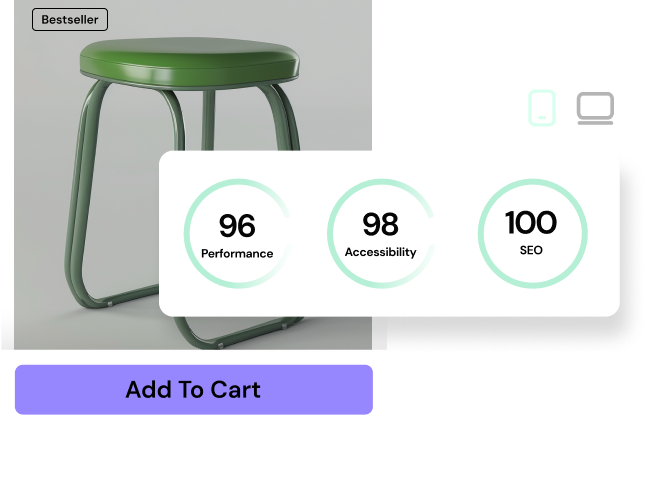
Speed is a ranking factor. Google’s Core Web Vitals measure not just how fast a page loads, but how stable it is visually and how quickly it becomes interactive.
Infrastructure and Optimization
IONOS leverages its own massive data centers. Generally, their uptime is reliable. However, shared hosting environments for website builders can sometimes suffer from “noisy neighbor” issues, where other sites on the server impact your performance. Furthermore, because you don’t have access to the server configuration, you cannot implement server-side caching rules or advanced compression techniques yourself.
SEO Capabilities
Basic SEO is available on almost all builders: you can edit meta titles, descriptions, and URL slugs. IONOS covers these basics. However, modern SEO requires more.
- Schema Markup: Advanced SEO relies on structured data (Schema) to tell Google what your content is (a recipe, a product, an event). In closed builders, adding custom JSON-LD schema often requires hacky workarounds or is impossible on specific pages.
- Technical Access: Sometimes you need to edit your .htaccess file or manage redirects in bulk.
- Code Bloat: Drag-and-drop builders can generate excessive code. Specialized platforms focus on generating clean, minified output. Elementor Hosting, for example, integrates enterprise-grade CDNs (like Cloudflare) and image optimization tools directly into the infrastructure, ensuring that the heavy lifting of performance is handled at the server level, specifically optimized for the builder being used.
E-commerce: Selling vs. Scaling
Setting up a shop on IONOS is straightforward. You can add products, set prices, and connect a payment gateway. For a hobbyist selling ten items, it functions adequately.
However, serious e-commerce is a game of margins and conversion rate optimization (CRO).
- Checkout Customization: Can you edit the checkout field to remove unnecessary steps?
- Upsells and Cross-sells: Can you design a custom “Thank You” page that offers a discount on the next purchase?
- Dynamic Shipping: Can you integrate with a specific regional carrier that offers better rates?
This is where open platforms shine. The WooCommerce Builder within Elementor allows you to visually design every part of your store—from the product archive to the single product page and the cart. You aren’t stuck with the default “store look.” You can build a checkout flow that matches your specific business logic.
Furthermore, specialized hosting for e-commerce (like Elementor’s Ecommerce Hosting) ensures that the server is tuned for the database-heavy queries that online stores generate, preventing slowdowns during traffic spikes.
The Role of AI in Modern Web Creation
Artificial Intelligence has shifted from a novelty to a core workflow requirement. IONOS utilizes AI primarily for initial setup: generating text and sourcing images to fill your template. This gets you to “Version 1” quickly.
However, the future of AI in web design is about ongoing workflow enhancement, not just setup. It’s about having an assistant that lives inside your editor.
Contextual AI
A truly integrated AI tool shouldn’t just write a generic “About Us” paragraph. It should understand the context of the specific widget you are editing.
- Code Generation: If you need a specific CSS hover effect, the AI should be able to write that snippet for you instantly.
- Container Layouts: AI should assist in building complex wireframes.
- Image Generation & Editing: Instead of just stock photos, modern AI tools allow you to generate unique assets or expand existing images to fit different aspect ratios directly within the canvas.
Advanced platforms are even moving toward AI Site Planners, which can generate comprehensive website briefs, sitemaps, and wireframes before a single pixel is designed. This strategic use of AI separates professional workflows from amateur ones.
Marketing and Ecosystem Integration
A website does not exist in a vacuum. It is the hub of a marketing ecosystem that includes email, social media, and analytics.
The “All-in-One” Illusion
IONOS bundles email and domain registration, which is convenient. They also offer some basic email marketing tools. However, these tools are often basic versions compared to dedicated industry leaders. You might find the email automation lacks conditional logic (e.g., “If user clicks link A, send email B; if not, send email C”).
The Integrated Ecosystem Approach
The alternative strategy is to use a platform that integrates natively with professional-grade tools.
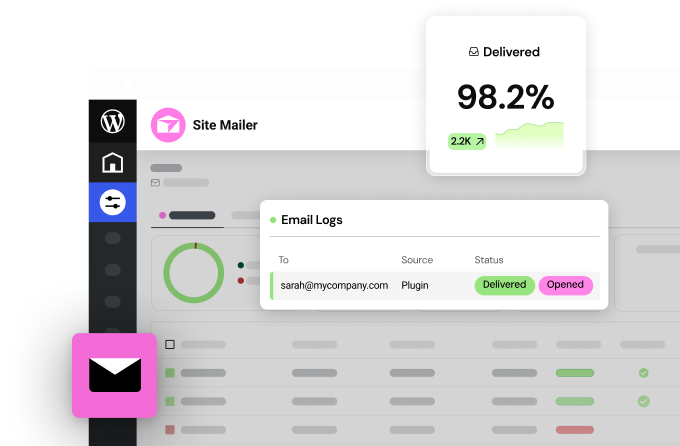
- Transactional Emails: Ensuring your contact forms actually land in your inbox is a common struggle with WordPress. Solutions like Site Mailer solve this by replacing the default sending method with a reliable API, without requiring complex server setups.
- Marketing Automation: Native integrations with tools that allow for sophisticated lead capture and nurturing are essential. Send by Elementor exemplifies this by bringing marketing automation directly into the website dashboard, bridging the gap between “visitor” and “customer.”
https://elementor.com/products/site-mailer https://elementor.com/products/site-mailer
The Cost of “Free” and “Cheap”
We must address the elephant in the room: pricing. IONOS is famous for its “$1 for the first month” or “$12 for the first year” offers.
These are loss leaders. They are designed to get you into the ecosystem. Once your site is built and your domain is registered, the friction of leaving is high. Renewal prices often jump by 1000% or more.
- Domain Renewal: That free domain often renews at a higher-than-average rate.
- Add-ons: Features that seem standard (like advanced analytics or removed branding) often require tier upgrades.
When evaluating cost, you must calculate the Total Cost of Ownership (TCO) over three years. Often, a “premium” open-source stack (Managed WordPress Hosting + a Pro Builder) costs roughly the same or slightly more than a renewal-price proprietary builder, but offers exponentially more value, power, and ownership.
Scalability and Migration: The Exit Strategy
Here is the most critical question expert developers ask: “Can I leave?”
With IONOS, like Wix or Squarespace, the answer is “Not easily.” Your design is tied to their database. You cannot export your site as HTML/CSS/PHP and move it to a different host. If you outgrow their platform, you are looking at a manual migration—literally copy-pasting text and downloading images one by one to rebuild on a new system.
With a WordPress-based foundation, you own the code. You can pack up your site (database and files) and move to any host in the world. You are not held hostage by a platform’s pricing changes or feature deprecations. This data sovereignty is critical for any serious business.
The Verdict: Who is IONOS For?
IONOS is a viable choice for:
- Micro-businesses: The local dog walker or dry cleaner who needs a phone number and address on the web.
- Strict Budget constraints: If you literally have $20 to spend for the first year.
- Technophobes: If the idea of “installing a plugin” terrifies you, the walled garden is safe.
IONOS is NOT ideal for:
- Design-conscious brands: You will fight the templates.
- Growing E-commerce: You will hit feature limits.
- Content Marketers: The SEO tools are basic.
- Professionals & Agencies: The lack of code access and workflow tools makes it unsuitable for client work.
The Professional Alternative: The Elementor Ecosystem
For those who find IONOS too restrictive, the logical step up is not just “WordPress” (which can be daunting on its own), but Elementor running on WordPress.
This combination offers a unique proposition: it feels like a SaaS builder. You get visual drag-and-drop, integrated hosting, and unified support. But under the hood, it is open-source. You have the safety of a managed platform with the infinite potential of code.
https://elementor.com https://elementor.com/hosting
It allows you to start simple (using a Hello Theme and a template kit) and grow indefinitely—adding custom post types, membership areas, intricate animations, and dynamic content that IONOS simply cannot support.
Expert Analysis: Feature-by-Feature Breakdown
To provide a granular comparison, let’s break down the specific feature sets that matter most to web creators.
1. Template Quality and Modernity
- IONOS: The templates are functional and industry-specific. They are “safe.” They won’t win design awards, but they won’t look broken. They lean heavily on standard grid layouts.
- The Alternative: A platform like Elementor offers a Library of thousands of Kits. Because the community is vast, trends are adopted instantly. If “Bento Grids” or “Neumorphism” are trending, you’ll find an Elementor Kit for it the next day.
2. The Editor Experience
- IONOS: The editor is “modal-heavy.” You often click an element, a sidebar opens, you make a change, and you save. It disconnects you slightly from the canvas.
- The Alternative: True WYSIWYG (What You See Is What You Get). You type directly onto the page. You drag a handle to resize a column. The tactile immediacy of the Elementor Website Builder speeds up workflow significantly.
3. Mobile Responsiveness
- IONOS: Sites are mobile-responsive by default. You generally cannot break the mobile view, but you also cannot deeply customize it. You rely on the builder’s automated resizing.
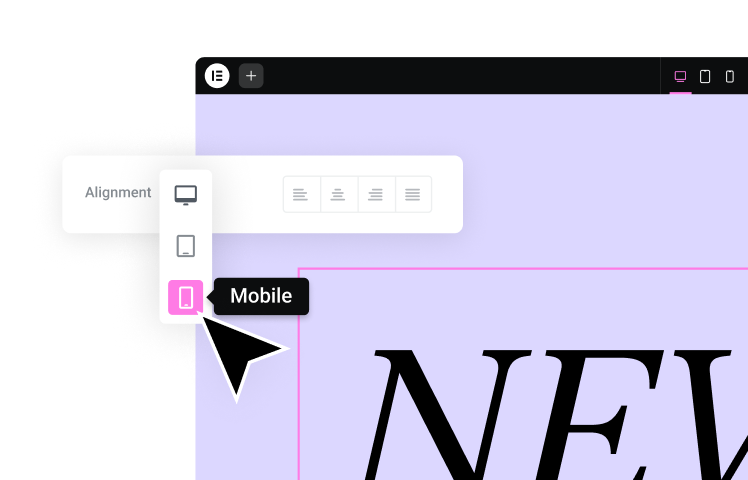
- The Alternative: Professionals need “Device Mode.” You need to be able to hide a specific image on mobile, reverse the order of columns on tablets, or change the font size specifically for mobile devices. This level of Responsive Control is non-negotiable for high-end web design.
4. Accessibility
- IONOS: Provides basic alt-text capabilities. Compliance with strict standards (ADA, WCAG) largely falls on the user to check.
- The Alternative: Automated tools are changing the game. Solutions like Ally by Elementor provide integrated scanning and remediation tools directly within the WordPress dashboard, helping to ensure your site is usable by everyone and legally compliant.
Making Your Decision
If you are reading this, you likely have a project in mind. Ask yourself these three questions:
- Where will this business be in 3 years? If the answer involves significant growth, custom functionality, or high traffic, a proprietary builder like IONOS is a temporary patch, not a foundation.
- Do I want to learn web skills? Learning a proprietary builder teaches you that builder. Learning WordPress and a professional design platform teaches you web design principles that apply everywhere.
- How much is my brand worth? If your brand relies on a specific aesthetic, do not compromise it for the sake of an easier setup wizard.
While IONOS provides a competent service for the entry-level market, the “good enough” era of web design is ending. Audiences expect speed, personalization, and polished design. For those prepared to invest a little more time in a learning curve, the rewards of an open, professional platform are immeasurable.
Frequently Asked Questions
1. Can I move my IONOS website to WordPress later? No, you cannot directly export your site. You would need to rebuild the design from scratch on WordPress and manually copy-paste your text and download/upload your images. This is the main drawback of proprietary builders.
2. Is IONOS good for SEO? It is adequate for basic local SEO. You can edit meta tags and descriptions. However, it lacks advanced technical SEO capabilities like schema markup customization, advanced caching controls, and deep control over URL structures that are available on platforms like WordPress.
3. Does IONOS own my domain name? If you register your domain through them (often free for the first year), they are the registrar. You “own” it, but if you want to leave, you must transfer the domain out, which can sometimes be a bureaucratic process with holding periods.
4. How does Elementor Hosting differ from IONOS hosting? IONOS offers general shared hosting which can host any type of site but isn’t tuned for one specific application. Elementor Hosting is a Managed WordPress solution specifically engineered to run Elementor. It includes server-level optimizations, caching, and CDNs that are pre-configured for the builder.
5. Can I build an online store with IONOS? Yes, they have an e-commerce plan. It is suitable for small catalogs. It lacks the vast extension library of WooCommerce, meaning if you need a specific payment gateway or a niche shipping integration, you might be out of luck.
6. What is “Agentic AI” in web design? Most builders use Generative AI (creating text/images). Angie, an Agentic AI tool in the Elementor ecosystem, goes further by performing multi-step actions within the site, like “Create a landing page and set up the contact form,” acting more like a virtual employee than a text generator.
7. Is Elementor harder to learn than IONOS? There is a slightly steeper learning curve because Elementor offers more power. IONOS hides options to make things simple. Elementor exposes options to give you control. However, Elementor’s interface is visual and intuitive, making it accessible for beginners who are willing to learn.
8. Why do designers prefer open-source platforms? Designers and developers prefer open-source (like WordPress) because it allows for total control. If a feature doesn’t exist, it can be coded. If a plugin is buggy, it can be swapped. Proprietary platforms are “take it or leave it.”
9. What happens if I stop paying IONOS? Your website is taken offline and eventually deleted. With a WordPress site, even if you stop paying your host, you still have your site files and database (if you made a backup). You can take those files to any other hosting provider in the world.
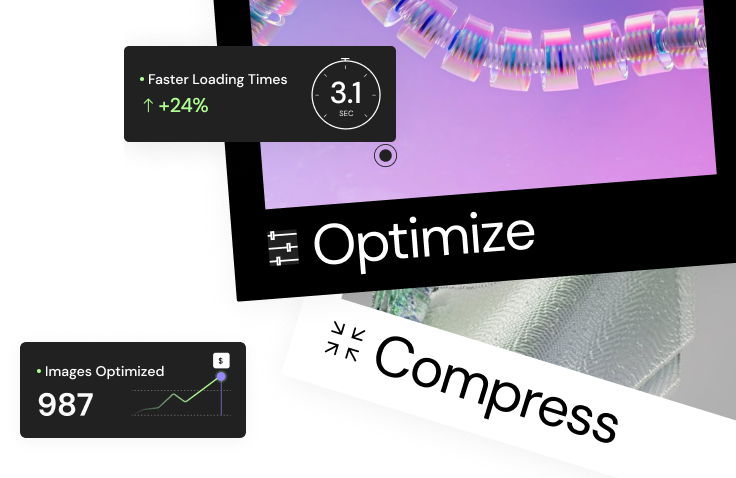
10. How important is image optimization for my site? Crucial. Large images slow down sites, hurting Google rankings. While IONOS does some compression, using a dedicated tool like Image Optimizer by Elementor ensures images are converted to modern formats (WebP/AVIF) and sized correctly automatically, drastically improving Core Web Vitals.
Citation
Expert insights and technical analysis provided by Itamar Haim, a specialist in web development and digital strategy.
Related Video Resources
- How Elementor’s Ally Plugin Transforms Web Accessibility: https://www.youtube.com/watch?v=-2ig5D348vo
- Elementor AI Site Planner: https://www.youtube.com/watch?v=QKd7d6LueH4
- Building Custom Layouts: https://www.youtube.com/watch?v=gvuy5vSKJMg
- Advanced Design Capabilities: https://www.youtube.com/watch?v=sK7KajMZcmA
- Optimizing Workflow: https://www.youtube.com/watch?v=cmx5_uThbrM&pp=0gcJCcYJAYcqIYzv
Looking for fresh content?
By entering your email, you agree to receive Elementor emails, including marketing emails,
and agree to our Terms & Conditions and Privacy Policy.