Table of Contents
In this rapidly evolving ecosystem, effectiveness is measured by a platform’s ability to streamline workflows without sacrificing quality. It is about the intelligent automation of the mundane—structure planning, image optimization, basic coding—so that the human element can focus on strategy and brand identity. As we explore the anatomy of these advanced tools, we will discover that the best platforms are those that bridge the gap between open-ended design freedom and AI-driven efficiency, creating a symbiotic relationship that redefines what is possible on the web.
Key Takeaways
- Symbiosis of Control and Automation: The most effective AI builders offer a balance where AI handles structural and technical heavy lifting (like code generation and layout planning) while leaving creative direction and strategy to the user.
- Integrated Workflow Ecosystem: A truly powerful tool doesn’t just build pages; it integrates hosting, performance optimization, and e-commerce capabilities into a single, cohesive environment.
- Performance as a Priority: AI shouldn’t just create content; it should optimize it. Features like intelligent image compression and clean code generation are non-negotiable for modern SEO and user experience.
- Accessibility by Default: Effective AI tools proactively address web inclusivity, ensuring sites meet WCAG standards through automated scanning and remediation suggestions.
- Scalability: The ability to start with an AI-generated blueprint and scale to a complex, enterprise-level e-commerce store is the hallmark of a professional-grade platform.
The Core Pillars of AI Web Development
To understand what makes a builder effective, we must first dismantle the misconception that AI is merely a “make it for me” button. While that exists, it is rarely effective for professional results. True effectiveness stems from a platform’s ability to act as a sophisticated copilot. This distinction is crucial. A generic generator might spit out a cookie-cutter site that looks identical to thousands of others. In contrast, a professional AI website builder serves as an extension of the designer’s mind, offering tools that understand context, design principles, and technical requirements.
The effectiveness of these platforms is built on three pillars: Intention, Integration, and Iterability. Intention refers to the AI’s ability to understand what you are trying to build—not just a “bakery website,” but a “high-end, artisanal pastry shop in Paris with a dark, moody aesthetic.” Integration ensures that the AI tools talk to the hosting, the CMS, and the marketing tools seamlessly. Iterability allows the human user to take the AI’s output and refine, tweak, and perfect it without being locked into a rigid framework.
1. Intelligent Architecture: The Power of the Site Planner
The blank page is often the most daunting part of the web design process. An effective AI builder tackles this paralysis not by guessing, but by planning. This is where the concept of an AI Site Planner becomes revolutionary. Instead of jumping straight into visuals, a robust system analyzes the user’s business goals, target audience, and functional requirements to generate a comprehensive sitemap and wireframe.
From Brief to Blueprint
Imagine feeding a system a prompt about a logistics company needing a client portal and a fleet tracking showcase. An effective AI tool doesn’t just paste stock photos of trucks; it structures the user journey. It outlines a homepage that builds trust, a “Services” page that segments offerings, and a “Contact” flow designed for lead generation. This structural intelligence saves hours of cognitive load.
The AI Site Planner by Elementor exemplifies this workflow. It allows creators to generate a site’s structure and layout wireframes instantly. This is not just about placing boxes on a screen; it is about establishing a hierarchy of information that aligns with UX best practices. By automating the information architecture phase, designers can move faster to the visual styling phase, confident that the foundation is solid.
Wireframing with Context
Effectiveness is also found in the fidelity of the draft. A simple list of pages is helpful, but a wireframe populated with context-aware placeholder content is transformative. This allows the creator to see the volume of text needed, the aspect ratios of images required, and the flow of the scroll. It turns the abstract into the concrete in seconds, facilitating better communication between agencies and clients.
2. The Content Engine: Text and Visuals
Content is the lifeblood of the web, and creating it is often the primary bottleneck in development. An effective AI builder must possess a native, deeply integrated content engine. This goes beyond a simple Lorem Ipsum generator. We are talking about context-aware writing assistants that understand tone of voice, length constraints, and SEO intent.
Contextual Text Generation
When working on a WordPress site, the ability to generate copy directly within the editor is a game-changer. You might be designing a hero section and need a punchy, two-line headline. Switching tabs to a separate chatbot breaks flow. An effective builder brings that intelligence inside the interface. You highlight a text block, select “Make it professional,” or “Shorten this,” and the AI adapts the content instantly to the design constraints.
This integration extends to translation as well. In a globalized digital economy, the ability to instantly translate site content into multiple languages without leaving the builder is a hallmark of efficiency. It democratizes localization, allowing small businesses to reach international audiences with a few clicks.
Visual Synthesis and Manipulation
Images define the aesthetic of a website. However, sourcing high-quality, royalty-free assets that perfectly match a brand’s color palette is notoriously difficult. An effective AI builder includes generative image capabilities. This allows creators to generate unique assets—from vector-style icons to photorealistic backgrounds—tailored to the specific needs of the layout.
Furthermore, it’s not just about creation; it’s about modification. The ability to use AI to expand an image (outpainting) to fill a wide header, or to smartly remove a background to create a clean product cutout, is essential. These tools, when integrated into the Elementor AI suite, eliminate the need for expensive external photo editing software for everyday tasks, keeping the workflow contained and efficient.
3. The Code Beneath: AI as a Technical Copilot
One of the most profound markers of an effective AI builder is how it handles code. For a long time, “no-code” meant “no access to code.” If the builder didn’t support a feature natively, you were stuck. The new generation of effective AI builders breaks this barrier by acting as a coding assistant.
Custom CSS and HTML Generation
Designers often encounter scenarios where a specific hover effect or a unique layout quirk is required that isn’t part of the standard widget library. An effective AI tool allows the user to describe the desired effect in plain English—”Make this button pulse with a neon glow on hover”—and generates the clean, functional CSS to execute it. This empowers designers who may not be fluent in code to achieve bespoke results, blurring the line between developer and designer.
This capability is particularly vital for those using Elementor Pro, where advanced customization is a key selling point. The AI doesn’t just write code; it writes code specific to the element’s selector, ensuring that the custom styling applies correctly without breaking the rest of the site’s styles.
4. Performance and Optimization: The Invisible Hand
A beautiful website is useless if it is slow. Performance is a critical metric for Google (Core Web Vitals) and for user retention. An effective AI website builder must prioritize what happens under the hood. This brings us to the crucial role of automated optimization.
Intelligent Image Optimization
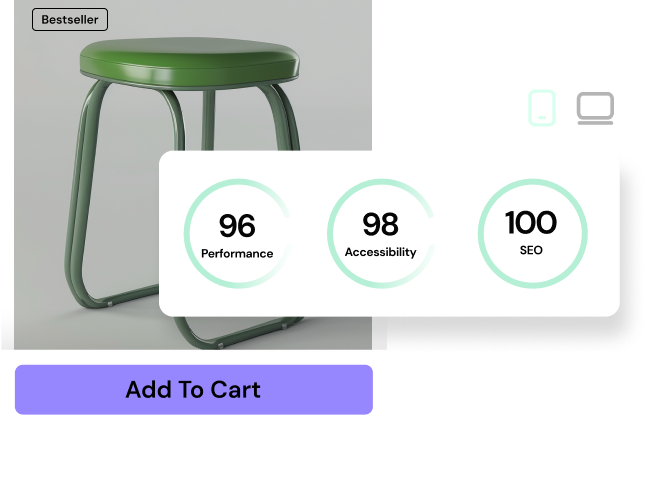
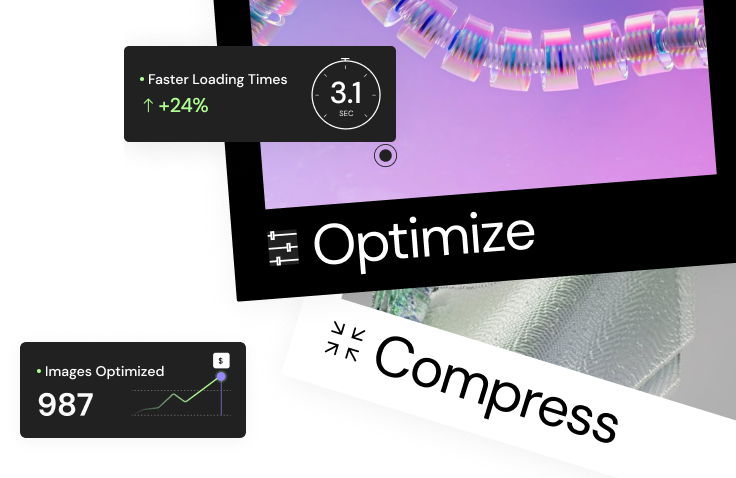
Images are the heaviest assets on most websites. Manually resizing, compressing, and converting images to next-gen formats like WebP is a tedious chore. An effective builder integrates this process. The Image Optimizer is a prime example of this efficiency. It automatically compresses media files without perceptible loss of quality, ensuring that the visual impact remains high while the page load time stays low.
This automated handling of assets significantly reduces the carbon footprint of a website and improves SEO rankings. It is a “set and forget” feature that defines modern, effective web infrastructure.
Hosting and Infrastructure
The software is only as good as the server it lives on. The most effective AI builders offer an all-in-one solution that includes managed hosting. This is not generic shared hosting; it is infrastructure tuned specifically for the platform. For Elementor users, this means servers optimized for WordPress, with server-side caching, CDNs (Content Delivery Networks), and database optimizations pre-configured.
When the builder and the hosting are unified, the AI can make smarter decisions about resource allocation. It simplifies the technical stack for the user, removing the need to manage DNS settings, SSL certificates, and PHP versions manually.
5. E-Commerce Evolution: Building Stores with Intelligence
E-commerce is where the stakes are highest. A broken layout or a confusing checkout means lost revenue. An effective AI builder for e-commerce needs to offer deep customization of the shopping experience, not just the storefront.
The WooCommerce Builder
WordPress is the dominant force in e-commerce thanks to WooCommerce. However, styling WooCommerce default pages is notoriously difficult for non-developers. An effective builder, like the WooCommerce Builder, unlocks every part of the store. You can design custom product loops, cart pages, and checkout flows.
AI plays a role here by helping to generate product descriptions that convert. Writing unique, SEO-friendly descriptions for hundreds of products is exhausting. AI writing assistants can automate this, taking a list of specs and turning them into persuasive copy. Additionally, specialized hosting solutions, such as Ecommerce Hosting, ensure that these transaction-heavy sites remain fast and secure during traffic spikes.
6. Accessibility: The Moral and Legal Imperative
In 2025, an effective website builder must be inclusive. Accessibility is no longer an afterthought; it is a legal requirement in many jurisdictions and a moral imperative globally. However, WCAG (Web Content Accessibility Guidelines) are complex.
Automated Remediation
This is where tools like Ally Web Accessibility come into play. An effective AI system scans the site for common violations—low contrast text, missing alt tags, improper heading structures—and suggests fixes. While AI cannot replace a full human audit, it raises the baseline significantly, ensuring that the site is usable by people with visual, motor, or cognitive impairments. This proactive approach to inclusivity is a hallmark of a mature, effective platform.
7. The Designer’s Workflow: Efficiency Meets Creativity
For professional designers, the fear is that AI will make their work generic. However, the most effective tools are designed specifically for designers. They function as productivity multipliers.
The Library and Assets
A robust Library of templates and kits is standard, but AI enhances this by helping designers mix and match components intelligently. Instead of building every footer from scratch, a designer can pull a structural template and use AI to restyle it to match the client’s brand guidelines instantly.
The Free Entry Point
An effective ecosystem also allows for easy entry. The availability of a Free Download allows new users to test the core mechanics of the drag-and-drop editor before committing to pro features. This “freemium” model is effective because it builds a community of users who learn the tool, create tutorials, and support one another.
8. Analyzing the Landscape: A Neutral Perspective
To truly understand effectiveness, we must look at the broader market. Different platforms cater to different needs, and “effective” is often subjective based on the user’s technical proficiency.
Wix has made significant strides with its ADI (Artificial Design Intelligence). Its strength lies in its all-in-one, closed ecosystem. For absolute beginners who want a hands-off experience, it is effective. However, the trade-off is often flexibility; moving a site away from Wix is difficult, and customization is limited to what their specific editor allows.
Squarespace focuses heavily on aesthetics. Its AI tools are often subtle, focused on layout adjustments and copy. It is highly effective for creatives who want a portfolio that looks beautiful out of the box. Yet, like Wix, it can feel restrictive for developers who want to inject custom logic or deeply modify the e-commerce checkout flow.
Webflow targets the professional designer who understands code but wants to build visually. Its “AI” features are more focused on logic and localization. It generates extremely clean code, but the learning curve is steep. It is effective for high-end agency work but perhaps overkill for a simple small business site.
Elementor, built on WordPress, strikes a unique balance. It leverages the open-source freedom of WordPress—meaning you own your data and can move your site anywhere—while providing the visual ease of Wix and the design power of Webflow. Its effectiveness lies in this middle ground: deep power for pros, approachable tools for beginners, and an AI layer that assists both.
9. Future-Proofing: Scalability and Marketing
A website is a living entity. It needs to grow. An effective AI builder provides tools that go beyond launch day.
Marketing Integration
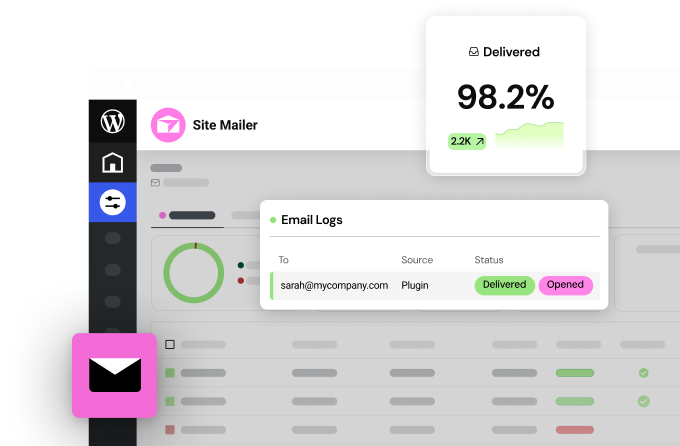
Once a site is live, it needs traffic. Tools like Site Mailer facilitate communication with customers, ensuring that transactional emails and newsletters look as good as the website itself. Integrating these tools prevents the data silos that occur when using disparate third-party services.
Themes and Design Systems
The concept of a “theme” is changing. Instead of rigid skins, we now have flexible design systems. Themes in the AI era are starting points, not endpoints. An effective builder allows you to set global design rules—fonts, colors, button styles—and have the AI respect these rules when generating new pages or sections. This ensures consistency as the site scales from 5 pages to 500.
10. The Elementor Advantage: A Synthesis of Features
When we analyze the landscape, Elementor consistently surfaces as a leader because it addresses the full spectrum of web creation. It is not just a builder; it is a comprehensive platform.
- Hosting: By offering a Free Domain Name and managed hosting, it lowers the barrier to entry.
- Design: The drag-and-drop interface is industry-standard.
- AI: The integration of text, image, and code generation is native, not bolted on.
- Commerce: The specialized WooCommerce tools are unmatched in the visual builder space.
- Community: The sheer number of third-party addons and tutorials makes it a safe long-term bet.
For a user like Send2, or any digital entity looking to establish a robust online presence, the choice of platform dictates the ceiling of their growth. An effective AI builder removes that ceiling.
Conclusion: The Era of the Augmented Creator
The question “What makes an AI website builder effective?” has a multi-faceted answer. It is not about one specific feature, but the orchestration of many. It is the site planner that saves days of strategy work. It is the code assistant that solves technical roadblocks in seconds. It is the image optimizer that ensures the site loads instantly on a mobile device in a subway tunnel.
Effectiveness is the measure of how well a tool empowers its user. The best AI builders are those that make the user feel like a better designer, a better writer, and a better developer. They handle the “how” so the creator can focus on the “why.” As we move forward, the tools that will win the market are not those that promise to replace the human, but those that promise to unleash them.
Whether you are a freelancer building sites for clients, a business owner taking control of your digital storefront, or a creative agency scaling your output, the effectiveness of your tools will define your success. In this new digital age, the most effective builder is the one that transforms the complex into the simple, the thought into the visual, and the static into the dynamic.
Frequently Asked Questions (FAQs)
Question: Will using an AI website builder hurt my site’s SEO compared to hand-coding? Answer: Not necessarily. In fact, effective AI builders like Elementor often improve SEO by generating cleaner code than an inexperienced human developer might. Features like the Image Optimizer automatically compress media to improve load speeds—a key ranking factor. Furthermore, AI writing assistants can help structure content with proper headings and keywords, ensuring your on-page SEO is solid from day one.
Question: Can I migrate my AI-built website to another host later? Answer: This depends heavily on the platform. Closed platforms like Wix or Squarespace make migration difficult because the design is tied to their proprietary software. However, if you use an AI builder based on WordPress, such as Elementor, you have full ownership of your data. You can export your entire site and move it to any hosting provider that supports WordPress, giving you ultimate flexibility.
Question: Is AI-generated code secure? Answer: Generally, yes, but context matters. AI code assistants in reputable builders are trained on standard, secure coding practices. However, AI is a tool, not a security guard. It is always recommended to use builders that operate within a secure environment, like Elementor Hosting, which includes enterprise-grade security features, firewalls, and regular updates to protect against vulnerabilities.
Question: Do I still need a professional designer if I use an AI builder? Answer: AI tools are powerful, but they lack human intuition and strategic brand understanding. For simple sites, an AI builder might suffice. However, for complex business needs, a professional designer uses these AI tools to work faster and deliver higher value. The AI handles the rote tasks, allowing the designer to focus on high-level strategy, complex UX flows, and unique brand differentiation.
Question: How does the AI Site Planner differ from just picking a template? Answer: A template is a static visual starting point. The AI Site Planner is a dynamic architectural tool. It interviews you about your business goals and generates a custom sitemap and wireframes specifically for your needs. It plans the logic and flow of your site before you even touch the visuals, ensuring the structure supports your specific business objectives rather than forcing your content into a pre-made mold.
Question: Can Elementor’s AI write content in languages other than English? Answer: Yes, Elementor AI creates and translates content in over 25 languages. This is a massive advantage for businesses targeting global markets. You can draft your content in your native language and have the AI instantly translate it for a secondary language version of your site, maintaining the tone and context across borders.
Question: Is Elementor Hosting necessary to use the AI features? Answer: No, you can use the Elementor plugin and its AI features on any WordPress hosting provider. However, Elementor Hosting is optimized specifically for the builder, ensuring maximum performance and compatibility. It simplifies the setup process and often provides a smoother experience since the server environment is tuned to handle the dynamic nature of the page builder.
Question: How often are the AI models updated in these builders? Answer: Leading platforms update their AI models continuously. Because these tools often tap into large language models (LLMs) and image generators via API, improvements in the broader AI field (like better natural language processing or more realistic image generation) are quickly integrated into the website builder, ensuring users always have access to state-of-the-art capabilities.
Question: Can I use AI to generate a custom e-commerce checkout flow? Answer: While AI can help draft the copy and generate design assets for a checkout page, the functional logic of a checkout flow is usually handled by the e-commerce core (like WooCommerce). However, using Elementor’s WooCommerce Builder, you can visually customize every step of that flow—cart, checkout, thank you page—and use AI to create the CSS or custom code snippets to style it exactly how you want.
Question: What is the learning curve for these AI tools? Answer: The goal of AI in web design is to flatten the learning curve. Tools like the AI Site Planner and text generators are intuitive and conversational, requiring no technical skill. However, advanced features like the Code Assistant do require a basic understanding of what you are asking for (e.g., knowing you need “CSS for a hover effect”). Overall, these tools make sophisticated web design significantly more accessible to beginners while speeding up workflows for pros.
Citation: *Expert insights
Looking for fresh content?
By entering your email, you agree to receive Elementor emails, including marketing emails,
and agree to our Terms & Conditions and Privacy Policy.