Table of Contents
Key Takeaways:
- Speed vs. Scalability: GoDaddy Website Builder excels at getting a simple site online in minutes, making it ideal for absolute beginners who need a digital business card. However, this speed comes at the cost of long-term scalability and deep customization.
- The “Section-Based” Limit: Unlike professional design platforms, GoDaddy uses a rigid section-based editor. You cannot move elements freely, which ensures mobile responsiveness but strictly limits creative freedom.
- Ecosystem Differences: GoDaddy is a closed ecosystem, meaning you are limited to their built-in tools. In contrast, comprehensive platforms like Elementor offer an open ecosystem (WordPress) with unlimited integrations, ensuring you never outgrow your website.
- Cost Implications: While initial pricing looks attractive, renewal rates can increase significantly. Furthermore, the cost of “convenience” is often the inability to migrate your site’s design elsewhere if you decide to leave.
- The Verdict: GoDaddy is “good” for a specific, narrow use case: rapid, simple deployment. For anyone seeking a professional, scalable, and unique web presence, a dedicated website builder platform offers superior value and ownership.
But as with any business decision, the devil is in the details. “Good” is a relative term. A plastic hammer is “good” for a toddler’s toy set, but it is useless for a carpenter building a house. Similarly, a website builder might be “good” for a temporary event page but entirely insufficient for a growing eCommerce brand or a professional service provider looking to dominate local search results.
To truly answer this question, we must move beyond the marketing slogans and dissect the platform’s mechanics, features, limitations, and long-term value. As an expert in web creation strategies, I have spent years analyzing the tools that power the internet, from simple SaaS builders to complex content management systems. This guide serves as a definitive resource to help you decide if GoDaddy’s proprietary builder aligns with your vision or if you need the robust capabilities of a complete website builder platform like Elementor.
Part 1: The Landscape of Modern Web Creation
Before we dissect GoDaddy specifically, you must understand the two primary categories of website creation tools available today. This distinction is critical because it dictates what you can and cannot do with your website in the future.
The Closed SaaS Model (Software as a Service)
GoDaddy Website Builder falls into this category, along with platforms like Wix and Squarespace. In this model, the provider controls everything. They own the hosting, the software, the templates, and the code. You rent the website from them.
- The Upside: It is an all-inclusive experience. You do not worry about updates, security patches, or hosting configurations.
- The Downside: You are locked within their walls. If you need a feature they do not build, you cannot add it. If you want to move your site to a different host, you cannot take your design with you. You have traded ownership and flexibility for convenience.
The Open Source & Platform Model
This category is dominated by WordPress, often powered by advanced visual builders like Elementor. Here, you own the data. You have access to thousands of third-party plugins and can host your site anywhere.
- The Upside: Limitless possibility. You can build anything from a simple blog to a complex enterprise application. You own your content and your design.
- The Downside: It traditionally required a steeper learning curve, though modern tools have largely eliminated this barrier by integrating hosting and visual editing into a seamless package.
Understanding this landscape is vital because asking “Is GoDaddy good?” is really asking, “Is a closed, rental model right for my business?”
Part 2: Deep Dive into GoDaddy Website Builder
GoDaddy’s current iteration of its builder, often referred to as “Websites + Marketing,” focuses heavily on speed. Their promise is that you can build a site in under an hour, even on a mobile phone. Let’s break down how this holds up in reality across five critical dimensions.
1. Interface and Ease of Use
The strongest selling point for GoDaddy is its “ADI” (Artificial Design Intelligence) onboarding. When you start, you answer a few questions about your industry and site name. The system then generates a near-complete website with stock images and placeholder text relevant to your field.
The editor itself is “section-based.” This means you build your pages by stacking pre-designed horizontal strips (sections) on top of each other. You might add a “Header” section, followed by an “About Us” section, and then a “Contact” section.
- The Pro: It is almost impossible to “break” your design. Because you cannot drag elements freely around the canvas, everything stays neatly aligned. It guarantees that your site will look acceptable on mobile devices without you needing to tweak settings.
- The Con: You have zero freedom. If you want a button to be three inches to the left, you cannot move it. If you want to overlap an image with text for a modern look, you cannot do it. You are filling in the blanks of a rigid structure rather than designing a unique experience.
2. Design and Templates
GoDaddy offers a library of clean, professional templates. They cover a wide range of industries, from plumbing and real estate to fashion and photography. The designs are modern, typically featuring large hero images, clean typography, and plenty of white space.
However, “clean” often borders on “generic.” Because the customization options are so limited (you can generally only toggle between a few layout variations for each section), GoDaddy sites tend to look very similar to one another. There is a “GoDaddy look” that experienced users can spot instantly. It lacks the unique brand character that you can achieve with a Elementor Theme or a custom design system.
3. Features and Functionality
GoDaddy bundles various marketing tools directly into the dashboard.
- Marketing Tools: You get built-in email marketing (with limitations on the number of sends) and a social media creator (GoDaddy Studio) that helps you design posts. These are nice value-adds for beginners who do not want to set up separate accounts with Mailchimp or Canva.
- SEO Tools: GoDaddy includes an “SEO Wizard” that walks you through basic optimizations. It asks you to input keywords and suggests page titles and descriptions. While helpful for novices, it lacks the depth required for competitive ranking. You cannot easily control schema markup, advanced canonical tags, or technical SEO structures that are standard in the WordPress ecosystem.
- Ecommerce: The ecommerce functionality is straightforward. You can add products, set prices, and manage inventory. It supports physical and digital products. However, it lacks the deep customization of a dedicated WooCommerce Builder. You cannot custom-design your single product page layout or checkout flow to maximize conversions; you must use their default templates.
4. Pricing and Value
GoDaddy’s pricing strategy is a classic “introductory offer” model. You might sign up for a very low monthly rate for the first term, but the renewal price can jump significantly. It is also important to note what is not included. While you get the builder, you are paying a premium for the convenience of the all-in-one ecosystem. As your business grows, you might find that you are paying for a higher tier just to unlock a single feature (like appointment booking) that would be free or cheap via a plugin on an open platform.
5. Performance and Security
As a closed SaaS platform, GoDaddy handles the technical heavy lifting.
- Security: They manage SSL certificates and firewalls. You do not need to worry about updating software versions.
- Speed: GoDaddy sites generally load quickly because the code is simple and hosted on their optimized servers. However, you have little control over optimization. You cannot install an advanced caching solution or an Image Optimizer to fine-tune performance if your site starts to slow down due to heavy media.
Part 3: The Strategic Limitations of a “Builder” vs. a “Platform”
To understand why a professional might steer you away from GoDaddy despite its ease of use, we need to discuss the concept of “Technical Debt.” When you build on a closed system like GoDaddy, you are making a trade: you gain speed today, but you accrue technical debt for tomorrow.
The “Ceiling” Effect
Every business hopes to grow. You might start selling t-shirts today, but in two years, you might want to launch a subscription box, a wholesale portal for retailers, and a complex loyalty program.
- On GoDaddy: You will likely hit a wall. Their ecommerce features are fixed. If they do not support a specific wholesale logic or subscription model, you cannot build it. You are stuck. Your only option is to leave the platform and rebuild your site from scratch elsewhere.
- On a Platform (like Elementor): You never hit a ceiling. Because it is built on WordPress, if you need a specific feature, there is almost certainly a plugin for it. If there isn’t, a developer can build it. You can scale from ten visitors to ten million without changing your core platform.
The Portability Problem
This is the most critical risk. You cannot export a GoDaddy website. The code that makes your site look good is proprietary to GoDaddy. If you decide to move to a different host because you want better performance or cheaper rates, you cannot take your website files with you. You own your text and images, but you do not own the design or the structure. In contrast, a site built with Elementor Hosting is yours. It is built on open-source standards. You can pack up your site and move it to any host in the world at any time. This data ownership provides a layer of security and business continuity that proprietary builders cannot match.
Part 4: A Feature-by-Feature Analysis
Let’s scrutinize specific capabilities to see how GoDaddy compares to market standards for professional web creation.
Design Flexibility and Responsiveness
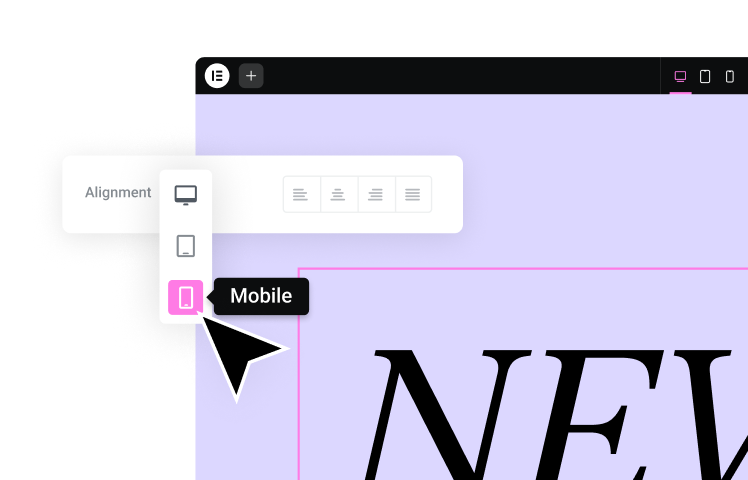
GoDaddy’s mobile view is automatic. You cannot edit it separately. While this prevents errors, it also prevents optimization. You cannot hide a large image only on mobile to speed up load times, or change the font size specifically for tablet viewers. Compare this to a professional tool where you can adjust every margin, padding, and font size by device type. For a business, how your site looks on a phone is arguably more important than how it looks on a desktop. Lack of mobile editing control is a significant handicap in 2024.
Marketing Integrations
GoDaddy’s built-in marketing tools are convenient silos. They work well within the GoDaddy universe, but they often lack deep integration with the broader marketing technology stack. For instance, a professional marketer might want to connect their website forms directly to a CRM like HubSpot or Salesforce with complex tagging rules. On GoDaddy, integration options are limited. On a platform like Elementor, you can use built-in form builders to map fields to any CRM, or use tools like Site Mailer to ensure your transactional emails (like order confirmations) actually hit the inbox, solving a common deliverability issue that basic builders often overlook.
Artificial Intelligence
GoDaddy has introduced AI features to help write copy and generate logs. These are functional but basic. The market standard for AI in web creation has moved far beyond simple text generation. Advanced platforms now use AI to generate entire page layouts, create custom code snippets for unique functionality, and even generate images from scratch. For example, the Elementor AI suite works directly inside the editor, allowing you to generate and edit images, write copy, and create custom CSS without leaving your design workflow. This integration of AI into the creation process, rather than just the writing process, represents a significant leap in productivity that GoDaddy’s current tools haven’t matched.
To see how advanced AI is changing the planning phase of web design, you can look at tools that generate comprehensive strategies before you even start building. https://www.youtube.com/watch?v=gvuy5vSKJMg
Part 5: The Case for the Comprehensive Platform
If GoDaddy is the “fast food” of website building—quick, consistent, but not nutritious enough for long-term health—what is the alternative? The alternative is the “Website Builder Platform.” This is a solution that combines the ease of a visual builder with the power of an open ecosystem.
Why Professionals Choose Ecosystems
When you ask an expert, “What should I use to build my business website?”, they rarely suggest a closed builder. They suggest an ecosystem. An ecosystem approach, like that offered by Elementor, provides a modular stack of tools that work together.
- The Core Builder: A visual, drag-and-drop interface that writes clean code in the background.
- The Hosting: Managed hosting that is tuned specifically for the platform, ensuring speed and security without the user needing to be a server admin.
- The Extensions: Access to plugins for specialized needs, from Image Optimizer for speed to Ally for accessibility compliance.
The “All-in-One” Myth vs. Reality
GoDaddy claims to be “all-in-one,” but usually, that means “a basic version of everything.” A true platform approach offers “the best of everything.”
- Instead of a basic built-in email tool, you can integrate with top-tier marketing platforms or use a native solution like Send by Elementor that is designed to grow with you.
- Instead of a generic store module, you get a WooCommerce Builder that lets you customize every pixel of your shopping cart, product archives, and my-account pages.
Addressing the “It’s Too Hard” Objection
The primary reason users choose GoDaddy over WordPress/Elementor is the perception of difficulty. “I don’t want to manage plugins,” they say. This gap has largely closed. Modern “Managed WordPress” hosting solutions now handle the updates, backups, and security for you. They offer “one-click” installations where the builder, theme (like the Hello Theme), and essential plugins are pre-installed. You open the box, and it is ready to go. For example, the AI Site Planner can essentially build the structure of your site for you based on a prompt, negating the “blank canvas” fear that drives many users to GoDaddy’s templates.
Part 6: Competitor Analysis (Neutral Overview)
To provide a complete picture, we must acknowledge that GoDaddy is not the only player in the closed-source game.
Wix
Wix is often compared to GoDaddy. It offers a visual editor that is much more flexible than GoDaddy’s. You can drag elements anywhere. However, like GoDaddy, it is a closed system. You cannot export your code. Wix focuses heavily on its own “App Market,” which offers add-ons, but these are often proprietary and can add up in monthly costs. It strikes a balance between GoDaddy’s rigidity and Elementor’s total freedom.
Squarespace
Squarespace is the choice for design purists who do not want to design. Their templates are award-winning and heavily reliant on high-quality photography. The editor is section-based, similar to GoDaddy, but offers slightly more stylistic control. It is excellent for portfolios but can feel restrictive for complex business sites or large ecommerce stores.
Webflow
Webflow targets a different audience entirely: designers who know code but want to build visually. It generates incredibly clean code but has a steep learning curve that is often too high for the average business owner. It is a powerful tool, but not a quick one.
The WordPress Ecosystem
This is the dominant force on the web, powering over 40% of all websites. It is free, open-source software. While the core software is basic, it transforms into a powerhouse when paired with a builder like Elementor Pro. It offers the ultimate “future-proofing” for any business.
Part 7: When is GoDaddy Actually the Right Choice?
I want to be fair. There are scenarios where GoDaddy Website Builder is the correct choice.
- The “Check the Box” Website: If you are a local consultant who gets 100% of your business from referrals and just needs a site so people can verify you exist, GoDaddy is fine. It is fast, cheap (initially), and professional enough.
- The Temporary Project: If you need a landing page for a wedding, a weekend charity event, or a temporary promotion, the speed of GoDaddy is unbeatable. You do not need scalability; you need speed.
- The Non-Tech Phobic: If the mere thought of logging into a dashboard makes you sweat, GoDaddy’s extreme simplicity is a comfort.
Part 8: When You Should Avoid GoDaddy
Conversely, you should avoid GoDaddy (and look toward a platform like Elementor) if:
- You rely on SEO: If you need to rank for competitive keywords, you need granular control over technical SEO that GoDaddy hides.
- You are building a Brand: If you want a specific layout that doesn’t look like a template, you will be frustrated by GoDaddy’s constraints within an hour.
- You plan to scale Ecommerce: If you plan to have hundreds of products, complex shipping rules, or international sales, GoDaddy’s commerce tools will likely fall short.
- You value Data Ownership: If you want to ensure that no matter what happens to your hosting provider, you own your website files and can move them anywhere.
Conclusion
Is GoDaddy Website Builder good? It is good at being what it is: a simplified, restricted, fast-deployment tool for the mass market. It is the “microwave dinner” of web design—fast, convenient, and it solves the immediate problem of hunger (or needing a website).
But for businesses that treat their website as a digital asset—a primary engine for growth, branding, and revenue—”good enough” is rarely enough. The digital landscape is competitive. Standing out requires unique design, blazing fast performance, and the ability to adapt to new technologies (like AI and new marketing channels) instantly. For those users, the shift from a “website builder” to a “website creation platform” is inevitable. Starting with a robust foundation like Elementor Hosting allows you to bypass the migration headache down the road. You start with professional power, you own your work, and you build without ceilings.
In the end, your website is your digital real estate. You have to decide if you want to rent an apartment where you can’t paint the walls, or if you want to build a house that you own forever.
Frequently Asked Questions (FAQ)
1. Can I move my GoDaddy website to WordPress later? No, you cannot directly migrate a GoDaddy Website Builder site to WordPress. GoDaddy does not allow you to export the design or code of your website. If you decide to move to WordPress later, you will have to manually copy-paste your text and download/re-upload your images, effectively rebuilding the site from scratch. This is why many experts recommend starting on an open platform like WordPress with a tool like Elementor to avoid this “lock-in” effect.
2. Is GoDaddy Website Builder good for SEO? GoDaddy provides basic SEO tools that are sufficient for very small, local businesses with low competition. However, for serious growth, it lacks advanced capabilities. You cannot easily edit schema markup, control canonical URLs for every page, or access the .htaccess file for technical optimizations. Platforms like WordPress allow you to use specialized SEO plugins that provide much deeper control over your search engine visibility.
3. Does GoDaddy take a percentage of my online sales? GoDaddy charges a transaction fee for payments processed through their system, which is standard for the industry. However, you must also pay for the higher-tier “Commerce” plan to even have the ability to sell. Unlike open platforms where you can choose from dozens of payment gateways (some with lower fees), you are generally funneled into GoDaddy’s payment ecosystem or a few select partners.
4. Can I add custom code to GoDaddy Website Builder? GoDaddy allows you to add a “HTML” section to a page, which lets you embed basic widgets like a booking calendar or a map. However, you cannot access the site’s core CSS or HTML files. This means you cannot add custom styling to the rest of the site or integrate complex third-party applications that require header/footer code injection in the same way you can with a customizable platform.
5. What is the difference between GoDaddy Hosting and GoDaddy Website Builder? This is a common point of confusion. GoDaddy Hosting is a service where you rent server space; you can install WordPress on it and use any builder you want (including Elementor Pro). GoDaddy Website Builder is a specific product—a proprietary software tool that helps you build a site. You can use GoDaddy Hosting without using their Website Builder, which is often the preferred route for professionals.
6. Is Elementor harder to use than GoDaddy? Elementor has a slightly steeper learning curve than GoDaddy because it offers significantly more power. GoDaddy removes choices to make things fast; Elementor gives you choices to make things perfect. However, with modern tools like the Elementor AI and pre-designed template kits, the difficulty gap has narrowed immensely. Most users find they can learn Elementor in a few afternoons, whereas the limitations of GoDaddy frustrate them for years.
7. How much does GoDaddy Website Builder actually cost? GoDaddy often advertises low introductory rates (e.g., $10.99/month), but these prices usually require you to pay for a full year upfront. When that term ends, the renewal price can jump by 30-50%. Additionally, essential features like appointment booking or ecommerce are locked behind more expensive tiers. In comparison, an open-source site might have a higher setup effort but often has lower long-term recurring costs for the software itself.
8. Can I use my own domain name with GoDaddy free trial? You can start building on the free trial, but you cannot connect a custom domain (like yourbusiness.com) until you upgrade to a paid plan. Until then, your site will live on a generic GoDaddy subdomain. This is standard practice for SaaS builders. Most professional platforms also offer a way to start for free, such as the Elementor Free Download, allowing you to experiment before committing to a domain.
9. Is GoDaddy Website Builder mobile responsive? Yes, GoDaddy sites are mobile responsive. The rigid, section-based editor ensures that content stacks neatly on smaller screens. However, you have very little control over how it looks on mobile. You cannot hide specific elements on mobile or change the mobile font size independently of the desktop version. Professional builders provide these “responsive editing” controls to ensure a perfect experience on every device.
10. What happens if I stop paying GoDaddy? Since GoDaddy Website Builder is a rental model (SaaS), if you stop paying, your website is taken offline. After a grace period, your data may be deleted permanently. This contrasts with a self-hosted WordPress site where, if you decide to change hosting providers, you can take your files and database with you and redeploy them elsewhere, preserving your digital asset.
Cited Expert: Itamar Haim is a recognized expert in web development, digital marketing, and the Elementor ecosystem. With deep experience in helping businesses scale their online presence, Itamar advocates for platforms that offer creators true ownership and limitless design flexibility.
Video Resources:
Looking for fresh content?
By entering your email, you agree to receive Elementor emails, including marketing emails,
and agree to our Terms & Conditions and Privacy Policy.