Setting up a website is exciting, but the compliance side can feel like a chore. If you run WordPress, you need a clear cookie policy and a way to collect visitor consent. Privacy laws like GDPR and CCPA are stricter than ever in 2026, so here are the best ways to build one right inside WordPress.
Key Takeaways
- Privacy laws are strict in 2026, so a clear cookie policy and consent banner matter for any business.
- A WordPress-native tool keeps management simple and skips slow external dashboards.
- Google Consent Mode v2 support matters if you run analytics or ads targeting European audiences.
- Automated scanning keeps your policy current as you add new features or scripts.
- Design matters, since brand-matching banners build visitor trust.
Why Your WordPress Site Needs a Cookie Policy Page in 2026
Every modern website uses cookies to function. Whether you run a simple blog or a large store, you’re almost certainly tracking visitor data in some form. Analytics tools, social buttons, and ad networks all drop small text files onto visitors’ devices, and regulators treat those files as personal data.
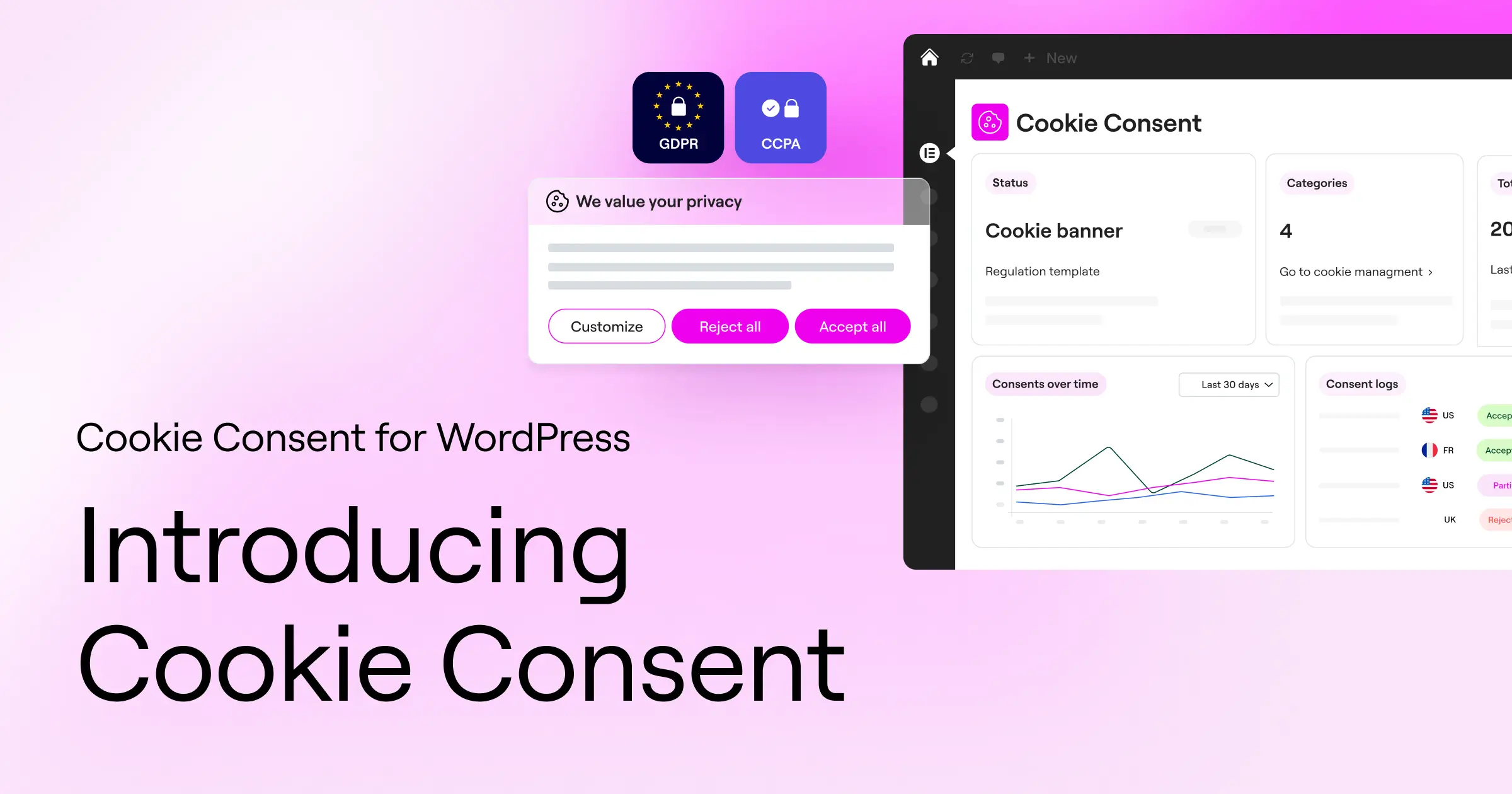
To comply with GDPR in Europe and CCPA in the US, your site needs a clear cookie page and a mechanism that blocks cookies until a visitor gives explicit consent. If you use Google tools for marketing, that mechanism also needs to support Google Consent Mode v2, or your European ad data will stop working.
1. Cookie Consent (Elementor’s Native Tool)
The simplest way to build a compliant site is to keep your tools close to home. Cookie Consent is Elementor’s native cookie consent capability, handling GDPR and CCPA compliance right from your dashboard.
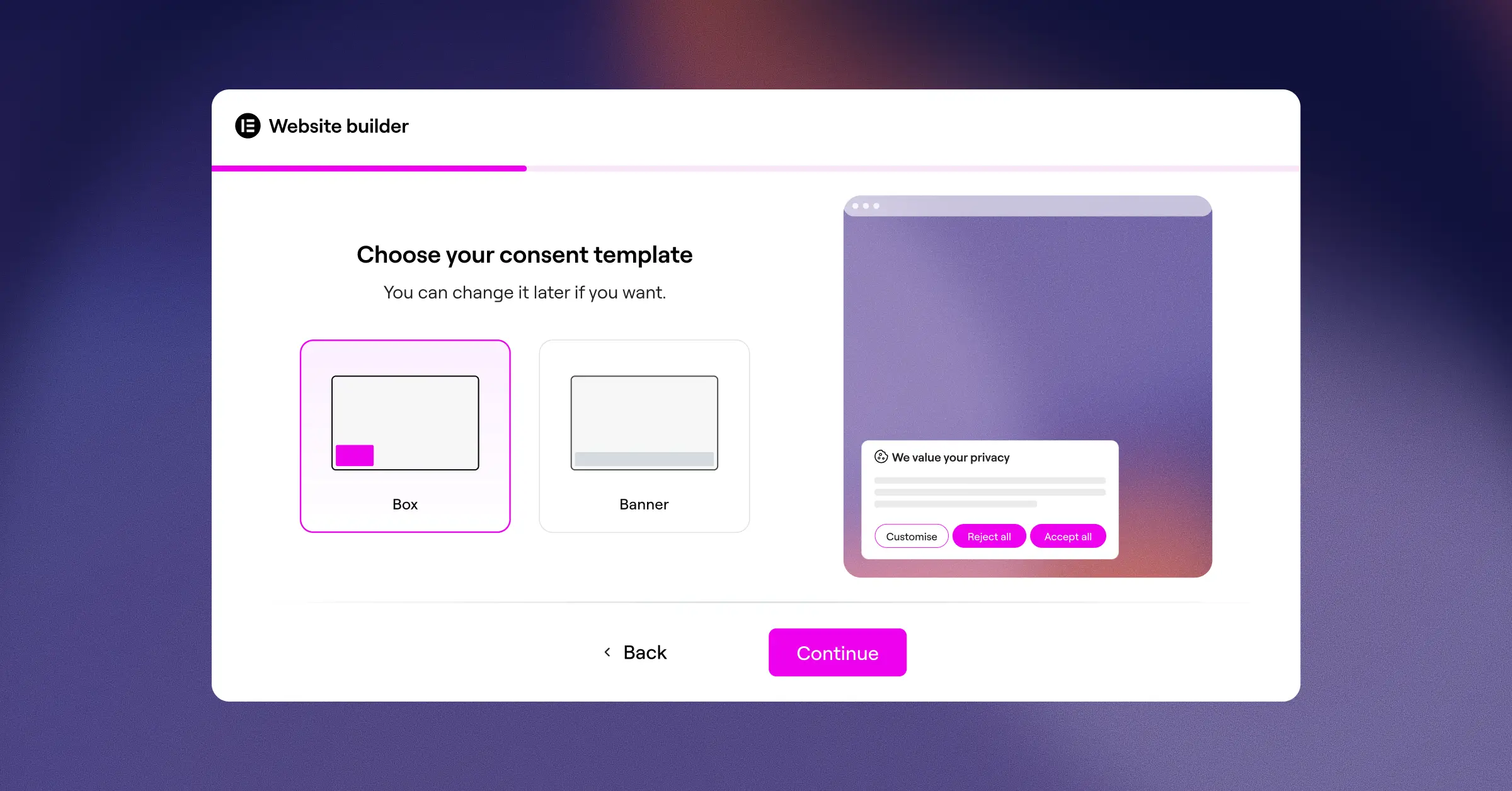
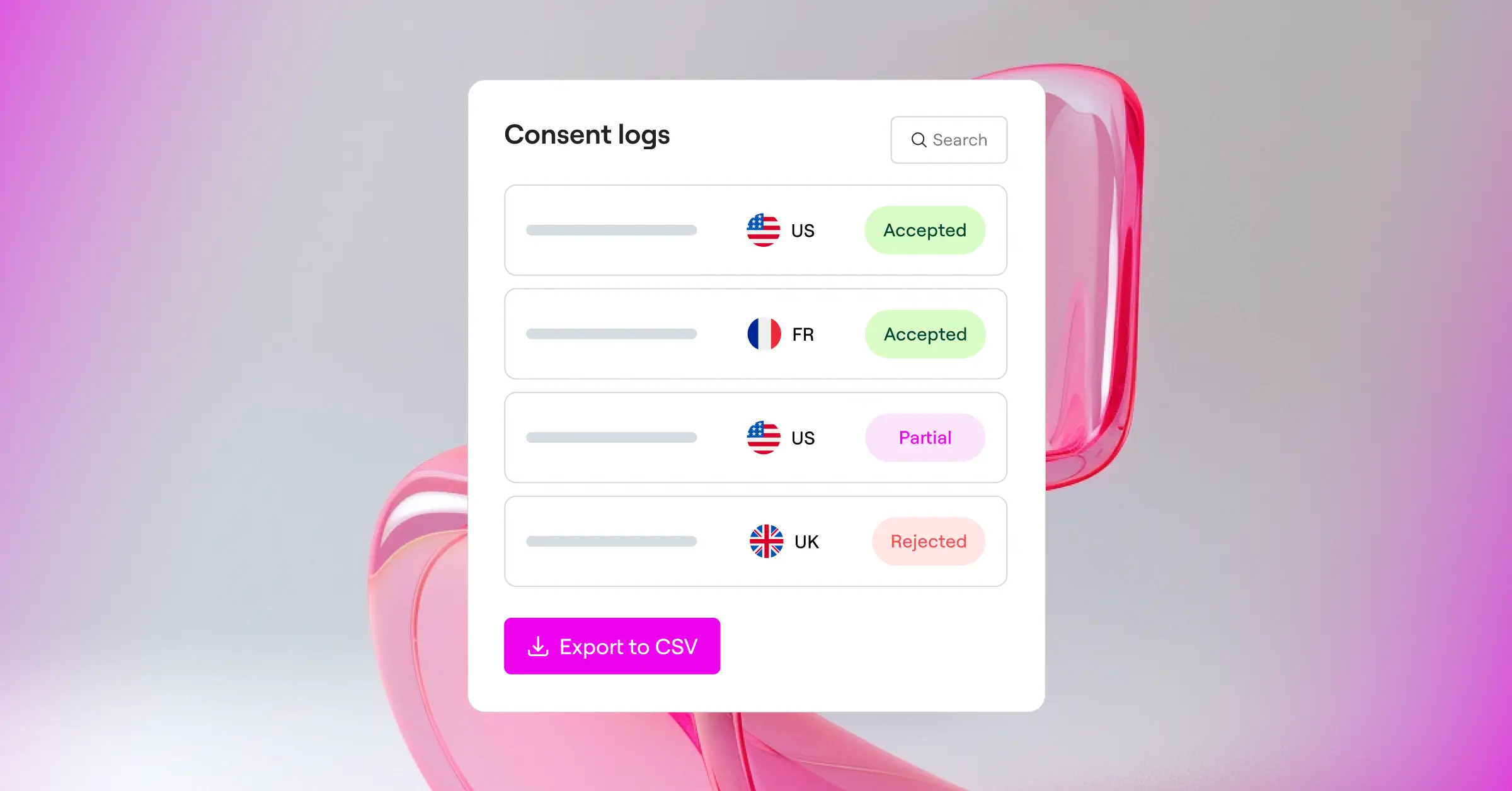
Setup takes minutes across three steps, with brand-matched banners, automatic scanning, consent logs, and geo-targeting. Built by Elementor, it connects with Web Accessibility and includes a free tier.
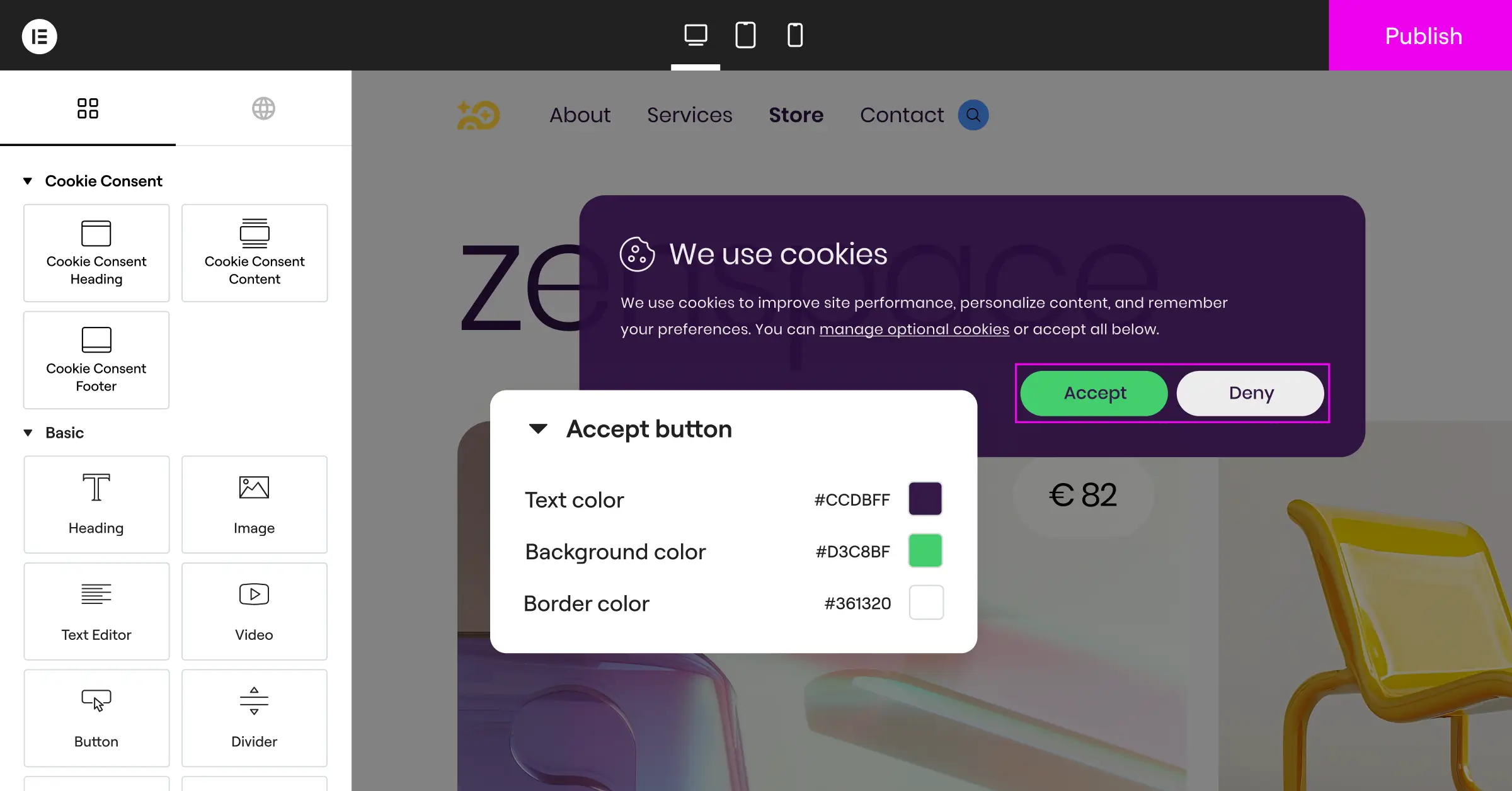
Key Features of Cookie Consent
- Saves audit histories automatically.
- Scans your site for active tracking scripts.
- Generates compliant policies automatically.
- Matches your site styling.
- Applies local rules via geo-targeting.
- Supports Google Consent Mode v2.
Pros
- No external accounts or dashboards.
- Setup takes under five minutes.
- Deep integration with the WordPress dashboard.
- Highly customizable templates for any brand.
- Free tier available, with room to grow.
Cons
- Requires WordPress as your content management system.
- Advanced cloud templates are tied to premium tiers.
Verdict: For WordPress users, especially those building with Elementor, Cookie Consent is the easy pick for a compliant setup in minutes.
2. Cookiebot
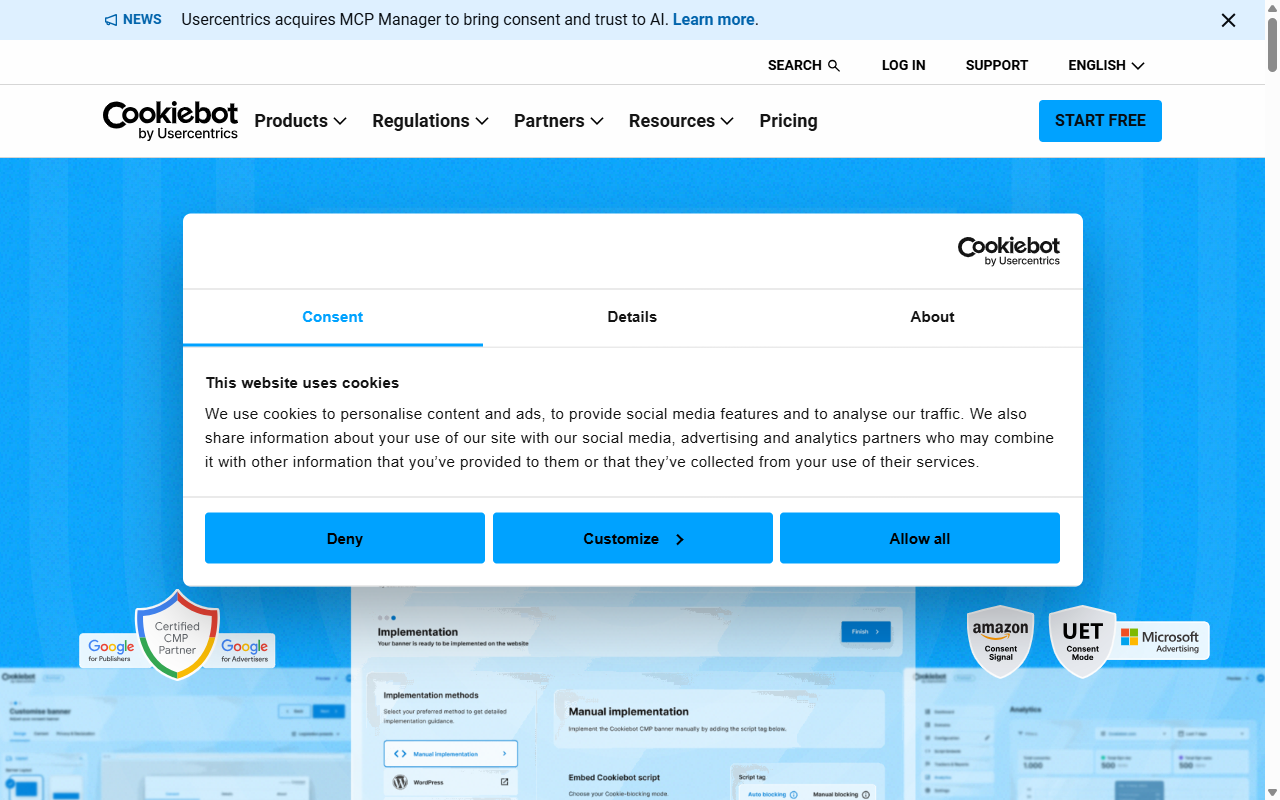
Cookiebot is a well-known name in privacy compliance. It’s a cloud service that scans your site, categorizes cookies, and generates a dynamic policy, then pushes the consent banner to WordPress through an integration.
Once it crawls your site, it builds a detailed table for your privacy page that updates automatically every month, so you don’t edit anything by hand.
Key Features
- Crawls your site monthly to find hidden tracking files.
- Updates your cookie policy after every scan.
- Stores consent states in a secure database.
- Presents consent choices in multiple languages.
Pros
- Hands-off, automated monthly policy updates.
- Solid compliance history globally.
- Accurate script blocking before consent is granted.
Cons
- You manage settings on an external platform.
- Entry-level plan caps out under 100 pages.
Verdict: Cookiebot suits owners who want hands-off, automated policy updates and don’t mind an external dashboard.
3. CookieYes
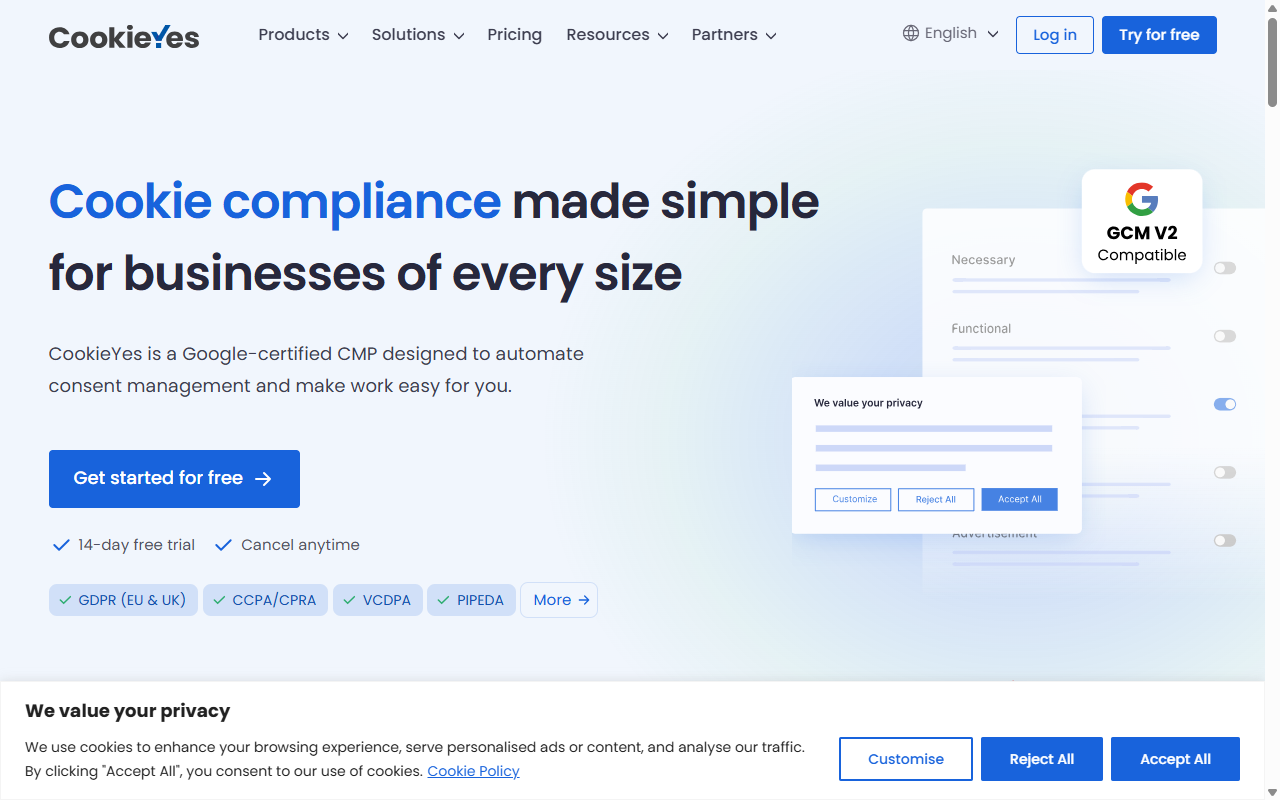
CookieYes is another popular cloud platform for cookie banners and documenting user choices, supporting GDPR, CCPA, and LGPD with a straightforward banner-design interface.
Its scanner finds active scripts on your site, and a simple code snippet shows your cookie audit list on your privacy page. It also connects with Google Consent Mode v2.
Key Features
- Builds custom banners with a visual layout builder.
- Blocks third-party scripts before authorization.
- Records consent choices for compliance audits.
- Tracks compliance trends on a dashboard.
Pros
- Clean, easy-to-use interface.
- Supports many languages out of the box.
- Simple setup for standard sites.
Cons
- Requires an external account to manage settings.
Verdict: CookieYes works well for a cloud-managed approach with a simple visual banner editor.
4. Complianz
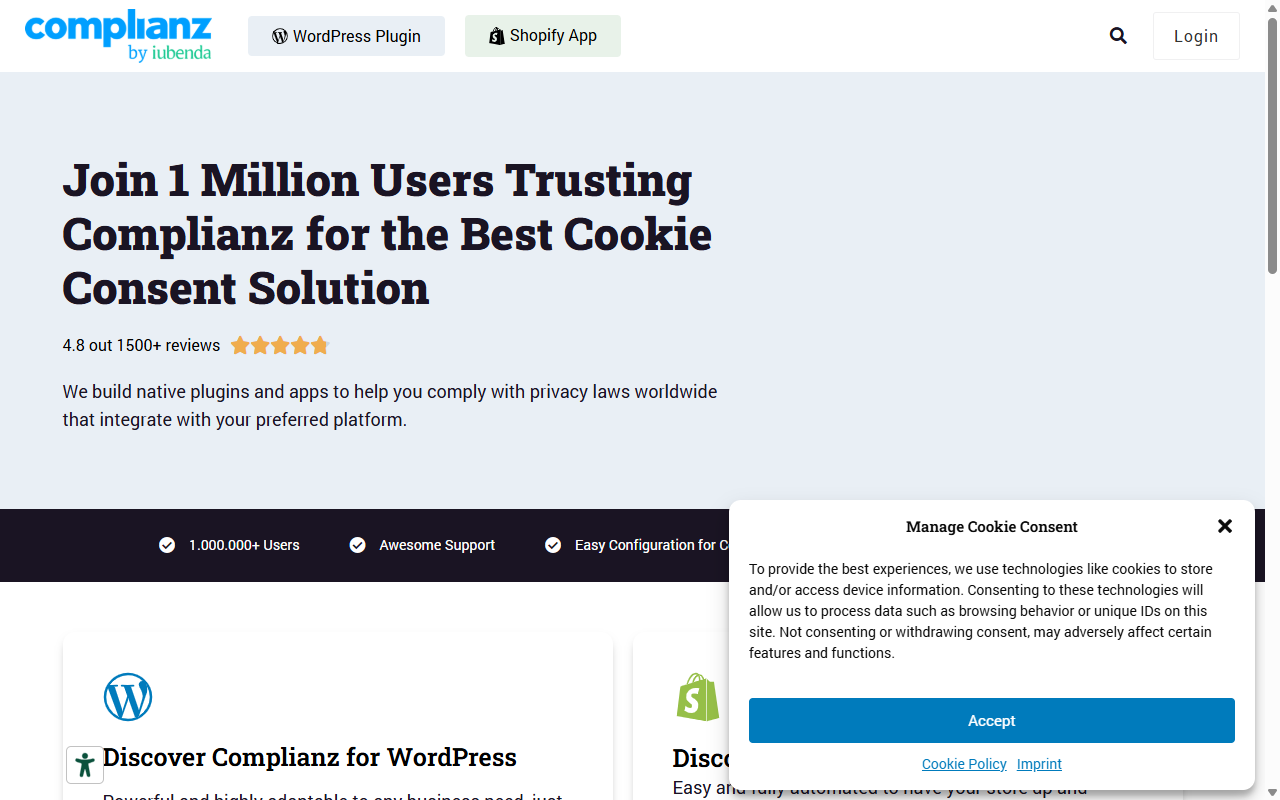
Complianz is a privacy suite built for WordPress that runs on your own hosting server. A wizard asks about your business, audience, and tools, then generates a complete legal cookie policy.
It also blocks scripts like Google Analytics and Facebook Pixels until visitors accept them. Running locally keeps you in full control of your data (plenty of people assume cloud means better, but local control has real upsides for ownership).
Key Features
- Guides policy generation with a step-by-step wizard.
- Saves documents on your own hosting server.
- Adapts your banner based on visitor region.
- Connects with contact form tools to capture consent.
Pros
- Highly localized documents for specific regions.
- No external database dependencies.
- Good documentation and walk-throughs.
Cons
- Setup wizard can feel long for beginners.
- Can sometimes conflict with caching or optimization features.
Verdict: Complianz suits anyone who wants a guided, document-first approach to localized compliance without third-party cloud services.
5. iubenda
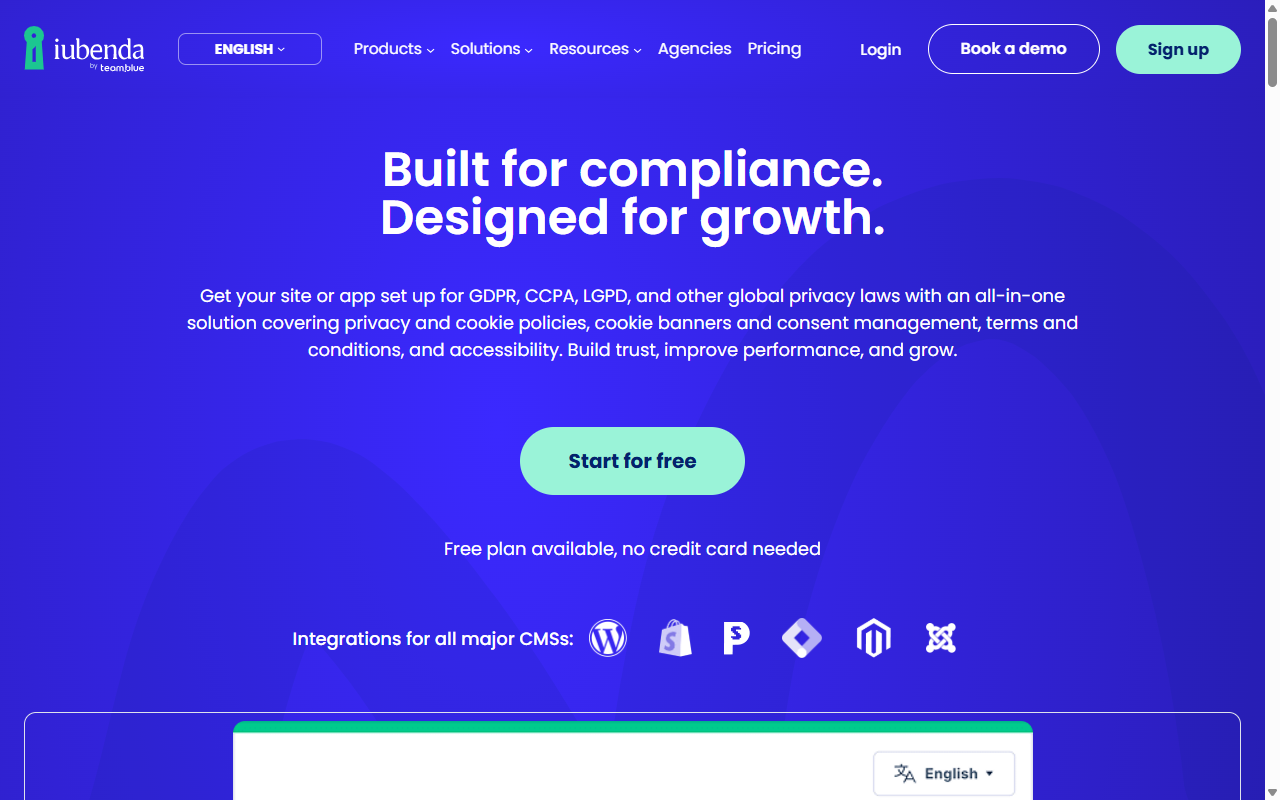
iubenda takes a broader legal view of cookie compliance, offering auto-updating legal policies, including privacy policies, cookie policies, and terms and conditions, maintained by legal professionals as laws change.
You build your policy on their cloud platform by picking services like Google Analytics, Mailchimp, or Stripe. iubenda generates a legal document and matching banner you embed via their integration.
Key Features
- Compiles legally checked policies that update as laws change.
- Links your cookie policy with your main privacy policy.
- Saves and exports consent preferences for European audit standards.
- Customizes banners for mobile apps and responsive sites.
Pros
- Documents written and updated by legal professionals.
- A complete option for several legal policies at once.
- Supports global compliance standards across many countries.
Cons
- Configuration dashboard has a steep learning curve.
- Can get pricey across multiple sites.
Verdict: iubenda fits owners who want professionally drafted documents that update as international laws shift.
6. Termly
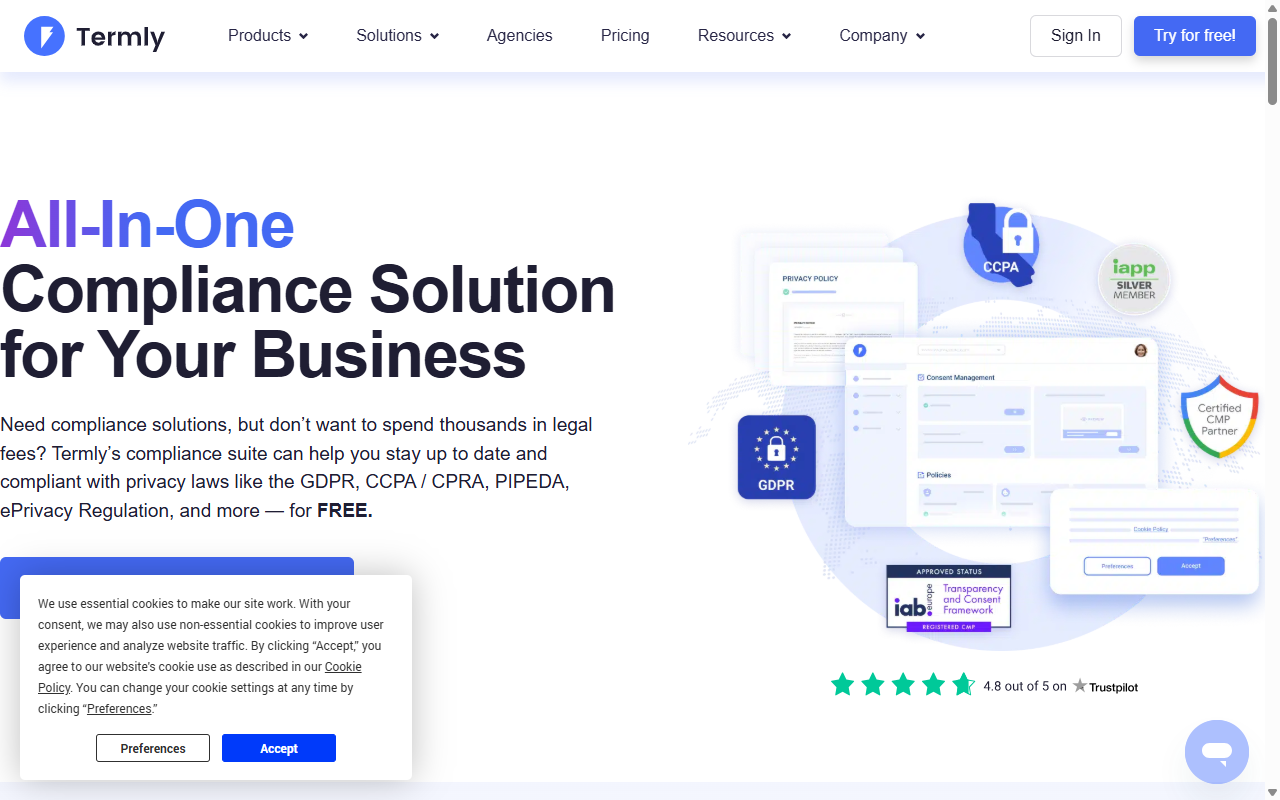
Termly is a compliance platform for small businesses, offering policy generators like a cookie policy builder and consent banner manager, plus site scanning to spot tracking scripts.
Setup guides are straightforward, and the generator asks simple questions requiring no legal experience. Your policy can live on Termly or embed into a WordPress page.
Key Features
- Assembles policy pages with a question-and-answer format.
- Identifies third-party cookies with an automated scanner.
- Generates responsive banners for mobile.
- Maintains cloud-hosted pages that update in real time.
Pros
- User-friendly for non-technical users.
- Good templates for terms and privacy policies.
- Affordable options for single-site owners.
Cons
- Entry-level plan shows Termly branding on banners.
- Less design flexibility than native tools.
Verdict: Termly is a friendly pick for small businesses that want their legal pages handled from one dashboard.
7. OneTrust
OneTrust is a heavy-duty, enterprise-level privacy platform used by large companies for complex data privacy compliance, with deep customization, consent logging, and risk-assessment tools.
For WordPress sites, OneTrust offers a cookie consent integration, genuinely powerful and built for larger businesses with dedicated compliance teams and extensive tracking controls.
Key Features
- Tracks consent data across millions of visitors.
- Manages compliance rules for global corporate sites.
- Saves consent trails in a secure cloud vault.
- Reports analytics on how users interact with banners.
Pros
- Enterprise-grade security and reliability.
- Deep customization of consent paths and rules.
- Well-suited for multinational organizations with complex needs.
Cons
- Complex setup that needs technical knowledge and dedicated resources.
- Pricing and scope can be overkill for smaller sites.
Verdict: OneTrust is the pick for enterprise organizations and large e-commerce businesses that need deep compliance tracking and the team to run it.
8. Osano
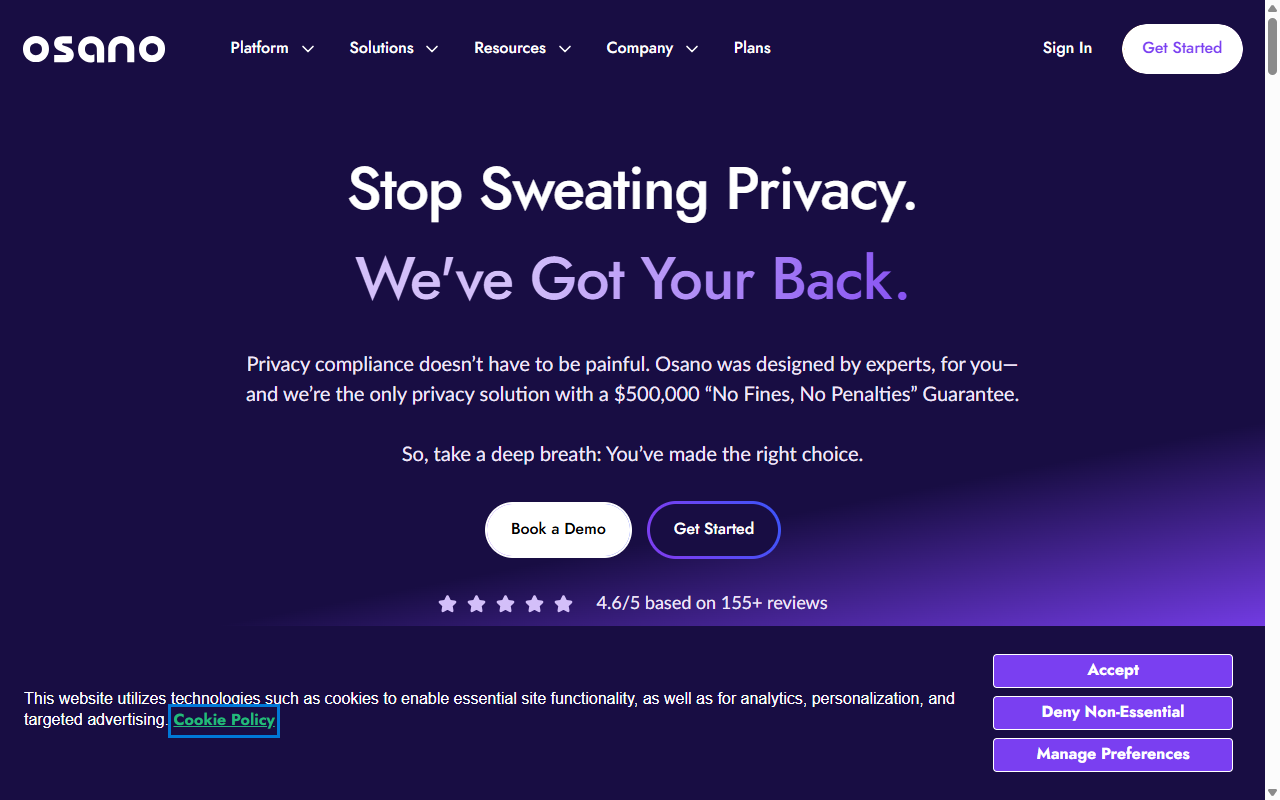
Osano is a B-Corporation focused on trust and transparency online, with a consent platform built to be reliable and fast while keeping sites compliant internationally.
Setup is simple: copy one script tag into your header. The platform then manages script blocking, banners, and policy updates from its cloud dashboard, built for WordPress and other major platforms.
Key Features
- Blocks unapproved cookies before a visitor consents.
- Translates banners into dozens of languages.
- Monitors vendor policies to flag risks.
- Keeps consent records in a secure ledger.
Pros
- Fast script loading that doesn’t hurt search performance.
- Good multilingual support.
- Clean, modern banner designs.
Cons
- Pricing starts at a higher tier, which may not suit smaller sites.
- Styling changes go through their external cloud interface.
Verdict: Osano is a premium, trustworthy pick for businesses that care about speed, easy integration, and strong compliance.
9. Built-In WordPress Privacy Tools
If you’d rather skip third-party tools, WordPress itself has basic privacy features built into its core, including a privacy policy generator that’s a decent starting point for simple sites.
This method won’t give you an automated banner or script-blocking, but it gives you a template to fill in manually. To be properly compliant, you’ll need to research your site’s cookies and set up a separate script blocker.
Key Features
- Generates a basic privacy draft from the settings panel.
- Saves your document as your official privacy page.
- Suggests standard text for data collection.
- Integrates with your default theme styles.
Pros
- Free and already installed on your site.
- No external tracking scripts or added security concerns.
- Lightweight and won’t slow down your server.
Cons
- Doesn’t block cookies or tracking scripts automatically.
- Requires you to research and list every cookie your site uses.
Verdict: The built-in tools work fine for simple, static sites that skip third-party tracking, analytics, or advertising scripts.
10. Manual Legal Templates (The DIY Method)
For those who want full control without automated tools, the manual template method works: buy or download a cookie policy template, fill in your site details, and paste it into a WordPress page.
This method needs you to know exactly what scripts run on your site (plugins often add cookies without you realizing it). Once your page is built, pair it with a simple, manual consent banner to stay compliant.
Key Features
- Gives you full control over wording and styling.
- Saves you from monthly subscription fees.
- Keeps your site free of external scripts, helping speed.
- Works with any custom theme or builder.
Pros
- No recurring costs or platform lock-in.
- Fast-loading pages with no external code.
- Highly customized language for your unique business.
Cons
- You must update the page for every new plugin or tracking pixel.
- No automated cookie scanning.
Verdict: The DIY method suits tech-savvy owners, or those with legal support, who want a script-free site and don’t mind manual updates.
How the Top Cookie Consent Options Compare
To help you pick the right fit, here’s a comparison of the top five options by ease of use, platform integration, and key compliance features.
| Method | Platform Style | Setup Time | Google Consent Mode v2 | Geo-Targeting Support | Dashboard Location |
|---|---|---|---|---|---|
| Cookie Consent | WordPress-Native | < 5 Minutes | Yes | Yes | WordPress Admin |
| Cookiebot | Cloud-Based | 15-20 Minutes | Yes | Yes (Premium) | External Dashboard |
| CookieYes | Cloud-Based | 10-15 Minutes | Yes | Yes | External Dashboard |
| Complianz | WordPress-Native | 20-30 Minutes | Yes | Yes (Premium) | WordPress Admin |
| iubenda | Cloud-Based | 30+ Minutes | Yes | Yes | External Dashboard |
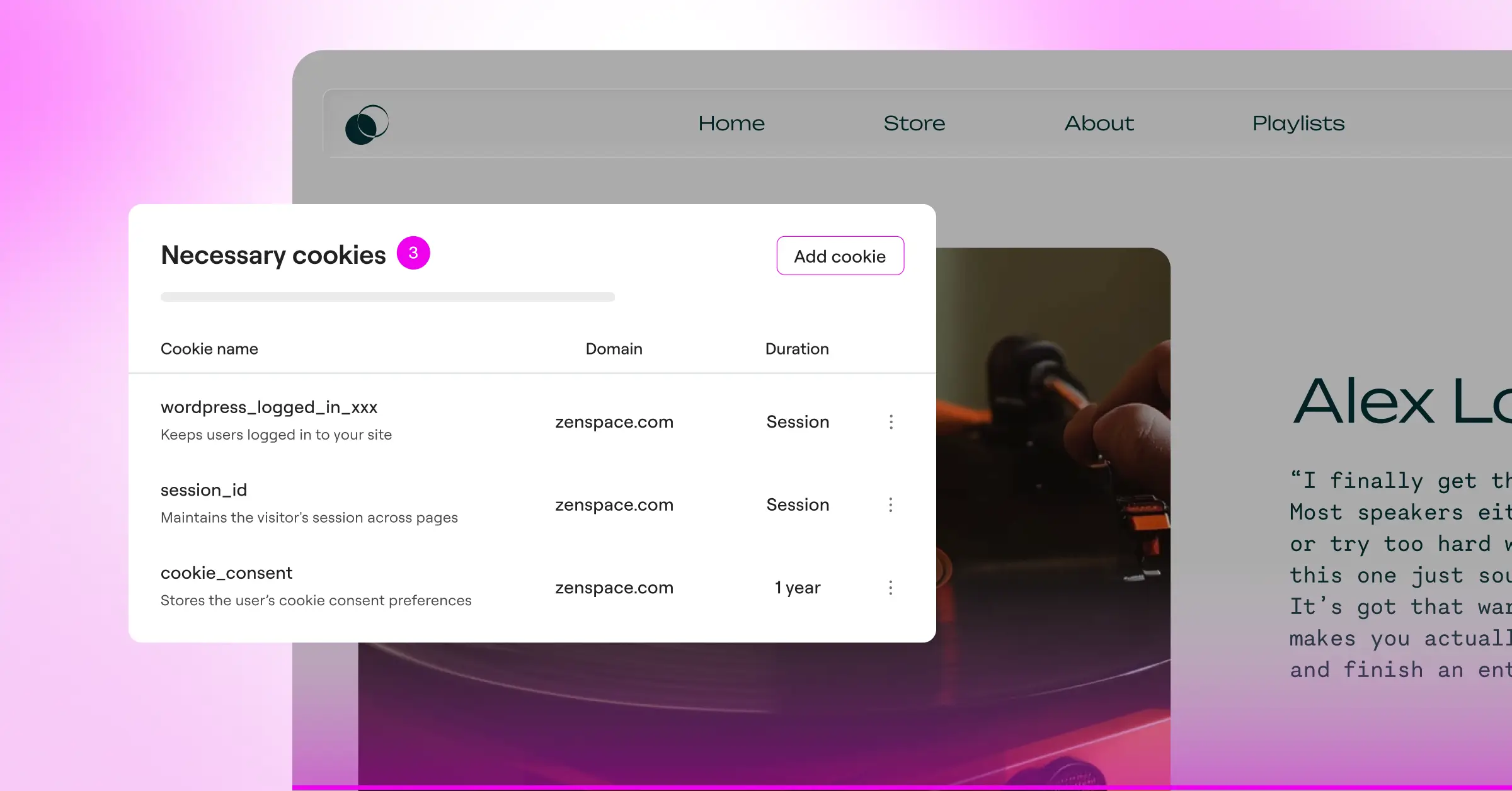
“In 2026, privacy compliance is no longer an afterthought. Websites that use native, dashboard-integrated tools to manage user consent save time, avoid costly regulatory mistakes, and build genuine trust with their audience.”
– Itamar Haim, Web Compliance Specialist
How to Choose the Best Cookie Policy Method for Your Site
With so many choices out there, finding the right tool can feel overwhelming. Narrow it down fast by asking three questions.
Do You Prefer a Native Experience or an External Dashboard?
If you like keeping everything in one place, Cookie Consent stays inside WordPress with no extra login. Running multiple platforms, like Shopify and WordPress together? A cloud option like Cookiebot or CookieYes might suit you better.
Are You Targeting Visitors in the European Union or California?
If your site draws traffic from strict-privacy regions, you need geo-targeting: a strict opt-in banner for Europe, as GDPR requires, and a simpler opt-out banner for California, as CCPA requires.
Do You Run Google Ads or Google Analytics?
If you use Google tools to market your business, your consent tool must support Google Consent Mode v2. Without it, you’ll lose accurate tracking for European traffic.
Step-by-Step: How to Set Up Your Cookie Policy Page in WordPress
Getting compliance pages live doesn’t have to be a big project. Here’s a simple guide to setting up your cookie policy page today, using Cookie Consent or any tool.
- Scan Your Site. Scan to see what scripts and cookies already run on your site.
- Generate the Policy Document. Use a built-in generator; Cookie Consent matches your theme automatically.
- Publish Your Cookie Page. Create a page, title it “Cookie Policy,” paste your document, and publish.
- Add the Link to Your Footer. Add a footer link so visitors can find it easily.
- Configure and Style Your Consent Banner. Adjust colors and fonts so it fits your site.
- Enable Google Consent Mode v2. Toggle it on to keep marketing data flowing accurately.
- Test Your Setup. Open an incognito window and confirm scripts don’t load until you click “Accept.”
Frequently Asked Questions
Do I really need a separate cookie policy page if I have a privacy policy?
Yes. Some sites combine them, but many privacy laws require a separate, clear explanation of what tracking files land on visitors’ devices.
What happens if I don’t have a cookie consent banner on my WordPress site?
If you serve EU or California visitors without a banner, you’re violating laws like GDPR and CCPA, risking fines and restricted tracking on Google.
What is Google Consent Mode v2 and do I need it?
Google Consent Mode v2 communicates consent choices to Google’s services. You need it for Analytics or Ads targeting the European Economic Area, or tracking data won’t work properly.
Can I just use a free cookie policy template I found online?
You can, but be careful. Free templates are often generic and skip cookies your site actually uses, so you’ll still need to audit your scripts.
How often should my website scan for cookies?
Once a month is a good rule of thumb. WordPress plugins update often and can introduce new tracking scripts, so regular scans keep your policy accurate.
Does a cookie consent banner slow down my website?
Some heavy, poorly coded tools can slow things down. But native capabilities like Cookie Consent are built for WordPress, loading fast without hurting speed.
Can I customize the look of my cookie banner to match my brand?
Absolutely. Modern consent tools let you change colors, fonts, spacing, and layouts, keeping your banner consistent with your site.
Do I need consent logs, and what are they used for?
Consent logs are digital records proving visitors agreed before your site loaded tracking cookies. Under GDPR, you need proof of consent if a regulator audits your business.

