If you run a website, you know how tricky it is to balance marketing data with user privacy. Install an analytics tool or an ad pixel, and your site can start dropping cookies before a visitor says yes or no. Privacy laws are stricter than ever, and a cookie banner alone isn’t enough. Don’t worry, this part’s easier than it sounds. Here are the best ways to block tracking scripts responsibly.
Key Takeaways
- Prior consent is mandatory: GDPR and CCPA require scripts to stay blocked until the user clicks “Accept.”
- Native tools are simpler: WordPress-native capabilities cut dependencies and keep your site fast.
- Google Consent Mode v2 matters: if you run Analytics or Ads, pick a tool that supports it.
- Automated scanning saves time: finding every cookie by hand is hard, so built-in scanners help.
- No single method fits everyone: visual builders are easiest, but some prefer tag managers plus custom code.
Understanding Prior Consent: Why You Must Block Scripts First
The core idea behind privacy compliance is prior consent: any cookie, pixel, or script that isn’t essential must stay inactive until a visitor agrees to it. Showing a banner while scripts keep tracking anyway can trigger real fines and quietly erode trust. Your server should only send the code needed to render the page, letting analytics and social pixels wait, paused, until the visitor accepts.
“Blocking tracking scripts before a user consents is no longer an optional optimization; it’s the baseline standard for web compliance. If your site triggers a tracking script before the user clicks accept, you’re not compliant.”
– Itamar Haim, Web Compliance Specialist
Here are the ten best ways to block tracking scripts this year.
1. Cookie Consent
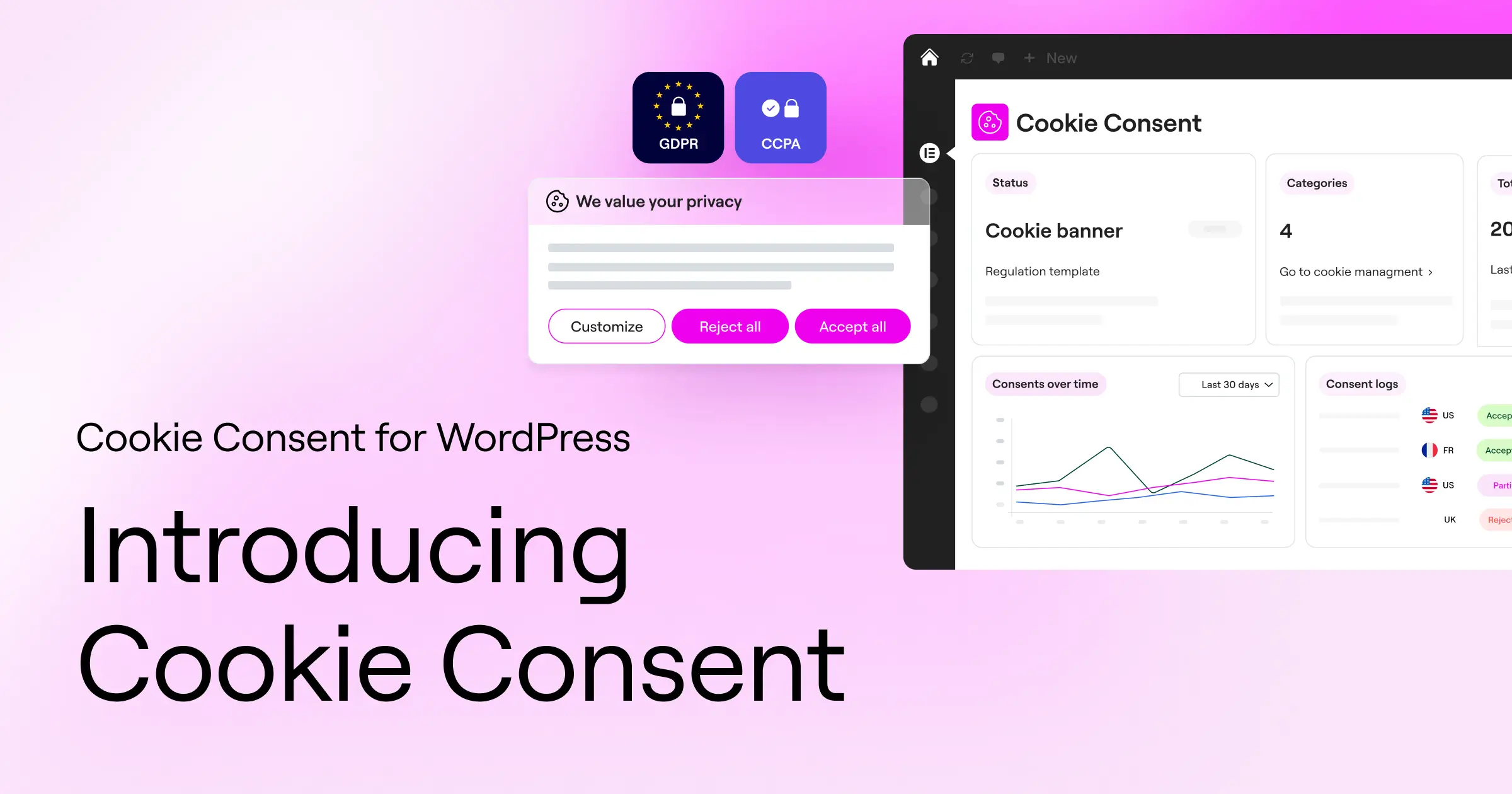
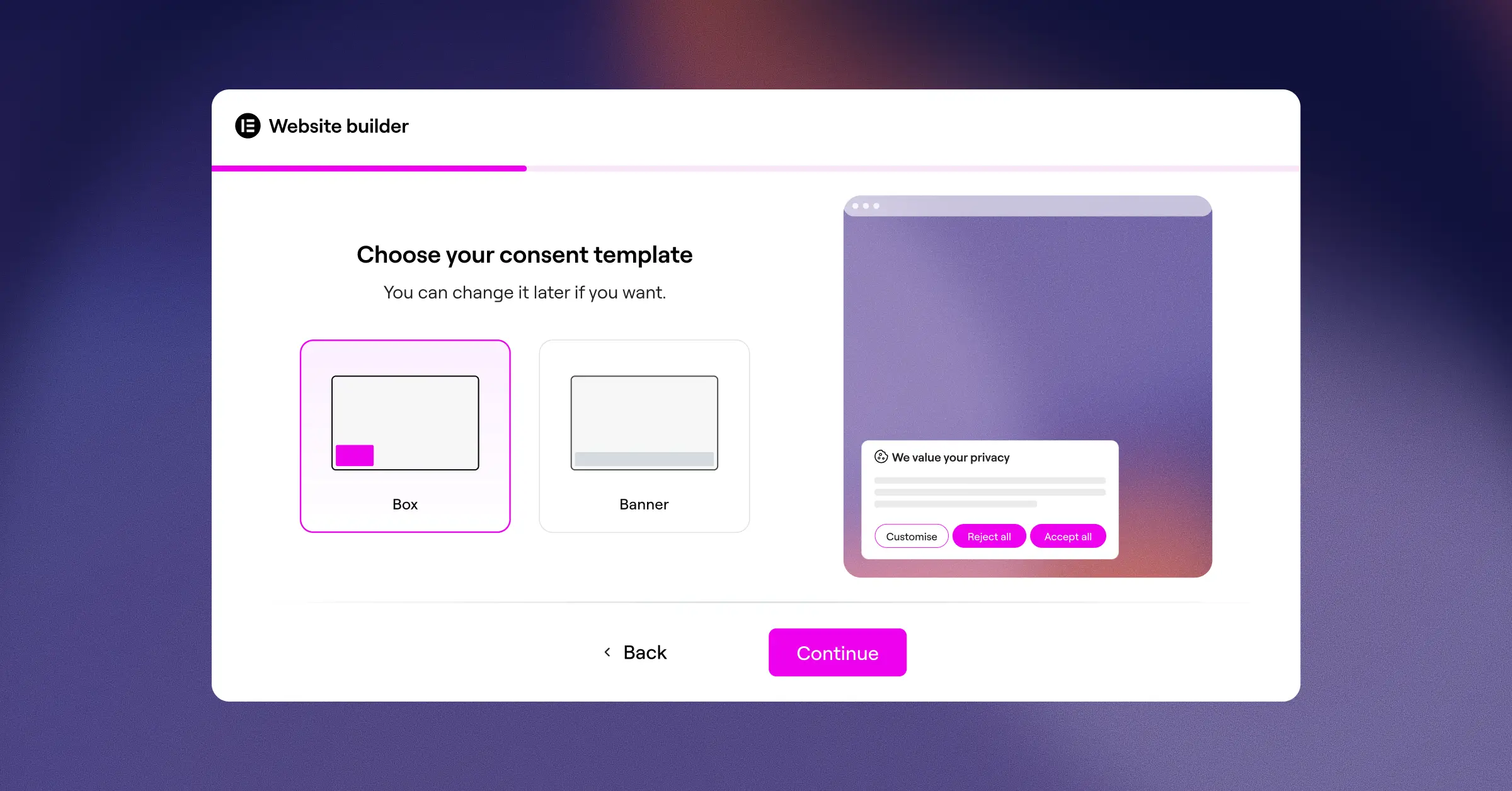
Cookie Consent is the built-in privacy compliance capability from Elementor, managing consent right from your WordPress dashboard. Because it’s part of the Elementor ecosystem, it stays native: build custom banners, scan for cookies, and block tracking scripts automatically until visitors opt in, no extra tag managers needed.
Key Features
- Blocks tracking scripts before any user interaction.
- Scans your site to find active cookies.
- Logs consent records for a clear audit trail.
- Supports Google Consent Mode v2 natively.
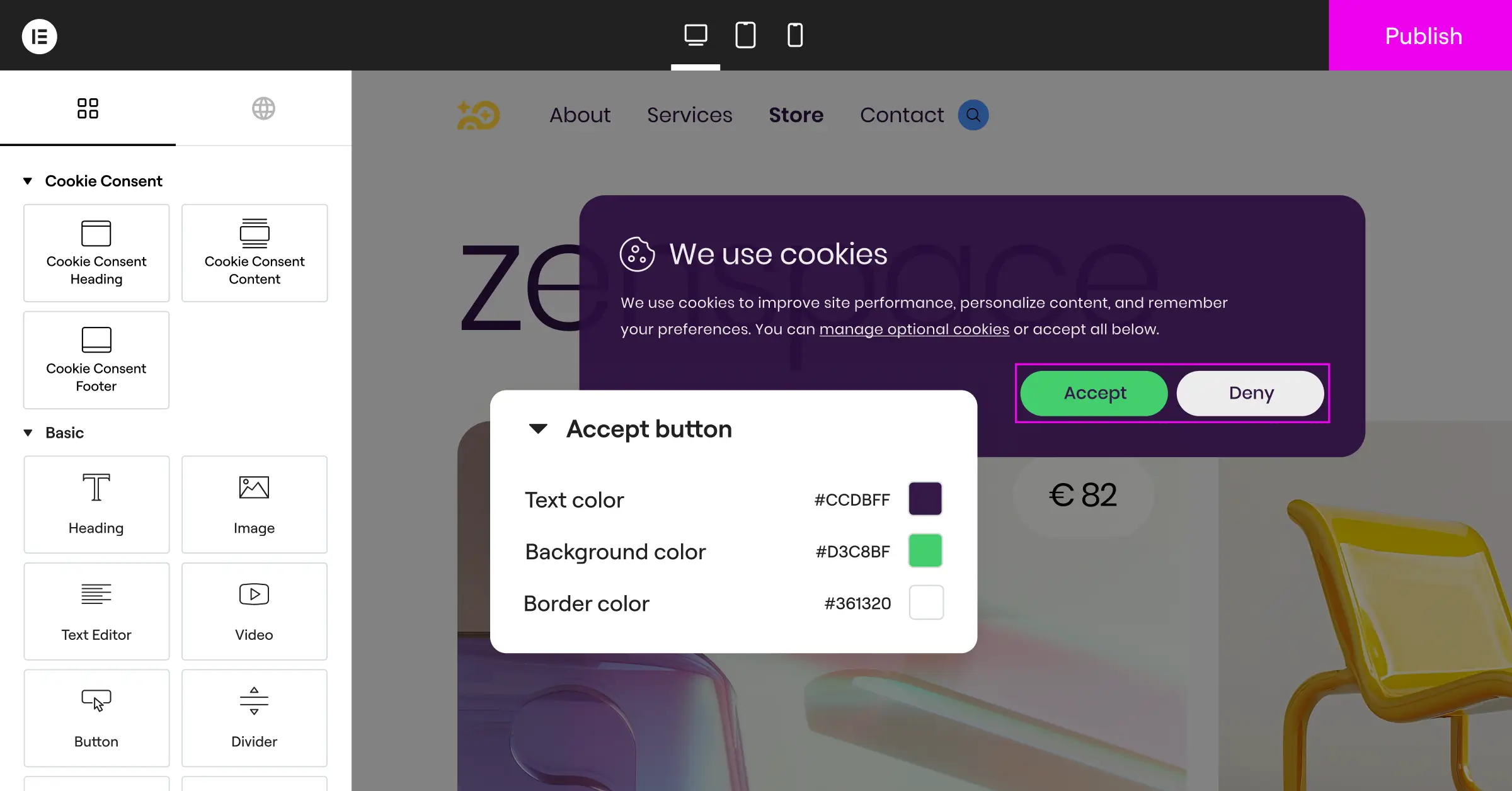
- Customizes banner templates to match your brand.
- Targets visitors by location with regional banners.
Pros and Cons
- Pro: runs natively inside WordPress, no external dashboard.
- Pro: five-minute setup with ready-made templates.
- Pro: integrates fully with Consent Mode v2 and Global Privacy Control.
- Con: best suited to sites already on Elementor.
- Con: simplifies script editing for highly custom setups.
Verdict: The best pick for WordPress owners who want a native, straightforward way to manage consent, and it’s included in Elementor One too.
2. Cookiebot
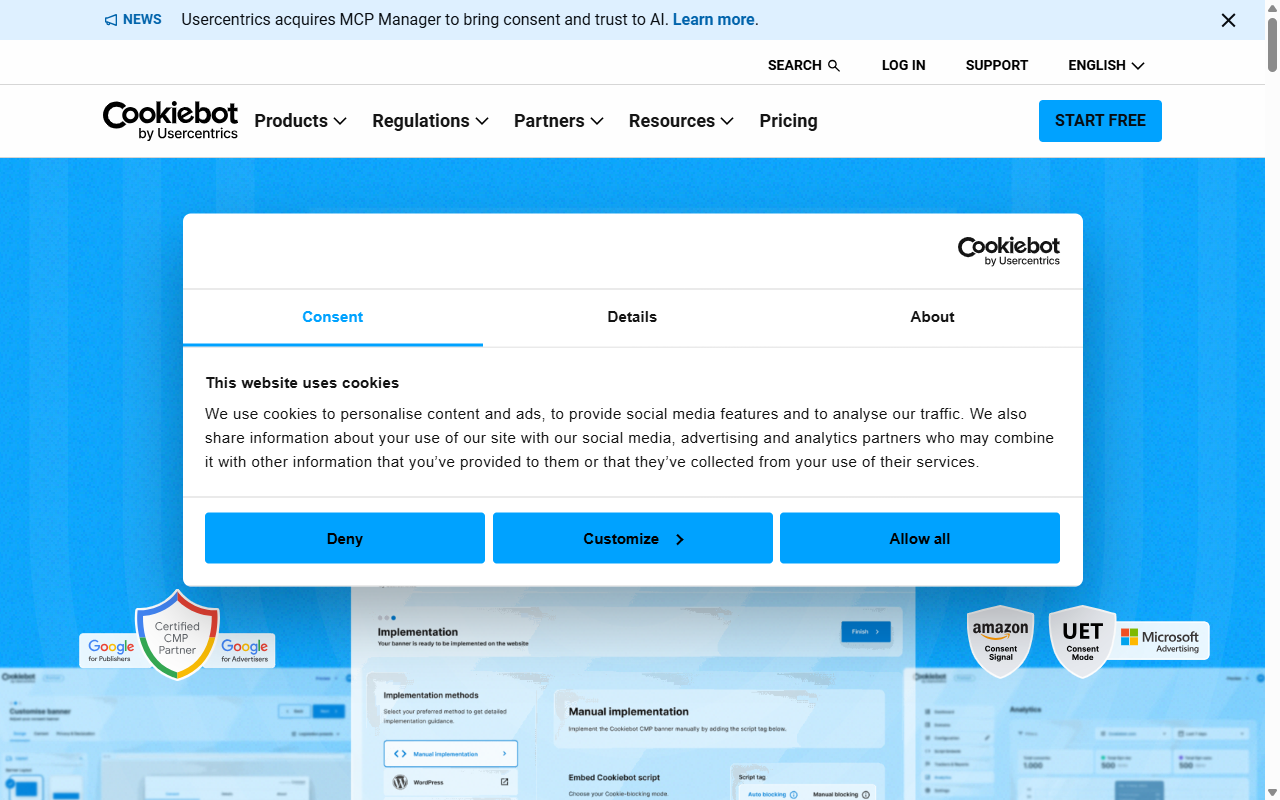
Cookiebot is a widely recognized cloud-based consent platform that helps sites comply with global privacy rules. It scans your site weekly, categorizes cookies and scripts, and blocks them until the user accepts. Setup means adding one script tag to your header, then managing settings through an external dashboard.
Key Features
- Identifies trackers with a weekly automated scan.
- Classifies cookies into four categories.
- Holds scripts until the user chooses.
- Translates banners into dozens of languages.
- Delivers monthly compliance reports.
- Integrates with major tag managers.
Pros and Cons
- Pro: accurate scanner that reliably finds hidden trackers.
- Pro: strong geo-targeting for international traffic.
- Con: can get pricey as your site grows.
- Con: compliance data lives on an external platform.
Verdict: A solid, enterprise-ready option if you don’t mind an external dashboard and automated reports.
3. CookieYes
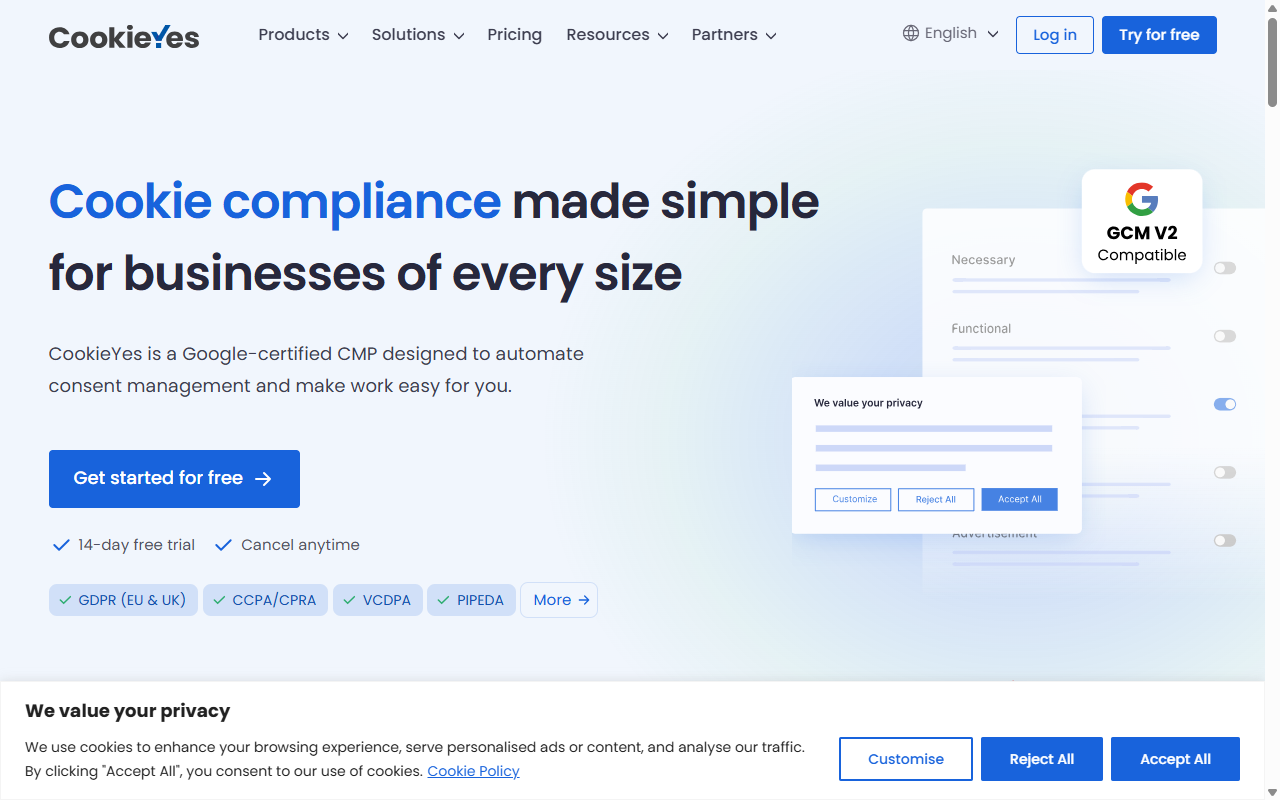
CookieYes offers both a cloud platform and a WordPress integration that make prior consent easy, automatically blocking popular scripts like Google Analytics, Facebook Pixel, and Hotjar before consent is granted. The interface is clean, with visual customizers, and it supports GDPR, CCPA, and Brazil’s LGPD.
Key Features
- Intercepts tracking scripts with a smart blocking mechanism.
- Builds custom banners with drag-and-drop settings.
- Records consent choices in a downloadable log.
- Tracks compliance trends with dashboard stats.
- Supports do-not-track signals and Global Privacy Control.
- Saves regional settings for localized banners.
Pros and Cons
- Pro: clean interface that’s easy for beginners to pick up.
- Pro: generous entry-level plan for small, low-traffic sites.
- Con: advanced styling requires custom CSS.
- Con: entry-level plans show visible branding.
Verdict: A reliable, user-friendly pick for small to medium sites that want an easy setup.
4. Complianz
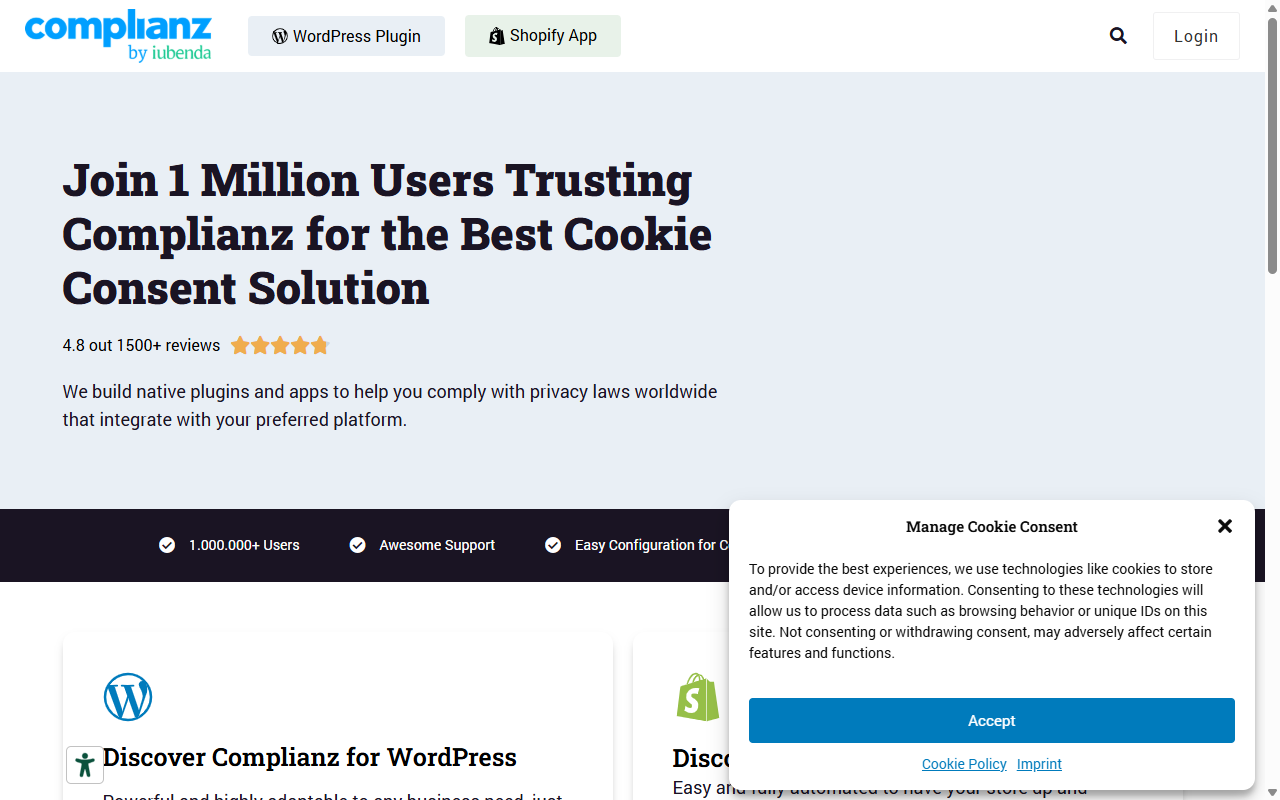
Complianz is a privacy suite built for WordPress. Unlike cloud tools, it runs on your own server, so your data stays private, and a wizard walks you through your policy and script blocking. It integrates with popular plugins, detecting and blocking their cookies until visitors accept.
Key Features
- Configures script blocking through a step-by-step wizard.
- Generates legally validated privacy policies.
- Detects social media sharing integrations automatically.
- Saves consent data locally on your own server.
- Blocks placeholders like YouTube videos until users consent.
- Handles complex legal requirements across regions.
Pros and Cons
- Pro: runs entirely on your own server, keeping data private.
- Pro: solid wizard that helps you generate policy documents.
- Con: the interface can feel overwhelming with so many settings.
- Con: complex script blocks take some technical know-how.
Verdict: A strong choice for self-hosted WordPress users who want to keep consent data on their own servers.
5. iubenda
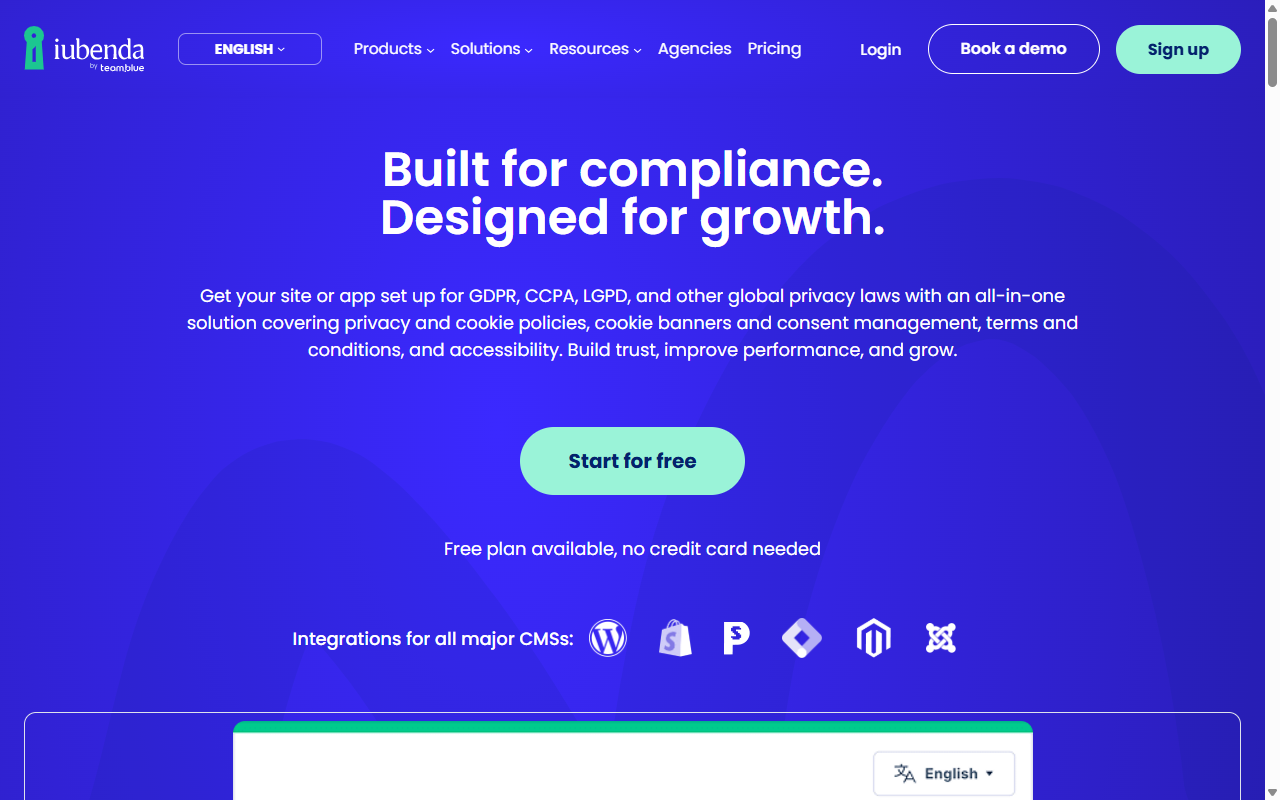
iubenda offers a complete legal compliance suite for websites and apps, going beyond cookie banners with auto-updating privacy policies, terms, and consent management. Its cookie solution blocks scripts by modifying code or using its automated engine, popular with agencies managing multiple sites.
Key Features
- Syncs banners with auto-updating legal documents.
- Blocks tracking code with an automated filter.
- Manages consent records for strict GDPR audits.
- Customizes aesthetic details to match your site.
- Detects visitor jurisdiction to show matching terms.
- Exposes developer-friendly APIs for custom integrations.
Pros and Cons
- Pro: professional legal protection that updates automatically as laws change.
- Pro: great for agencies managing multiple client sites.
- Con: the setup process is technical and can confuse beginners.
Verdict: Best for agencies and enterprise sites that need a complete, legally backed compliance solution.
6. Google Tag Manager with Consent Mode v2
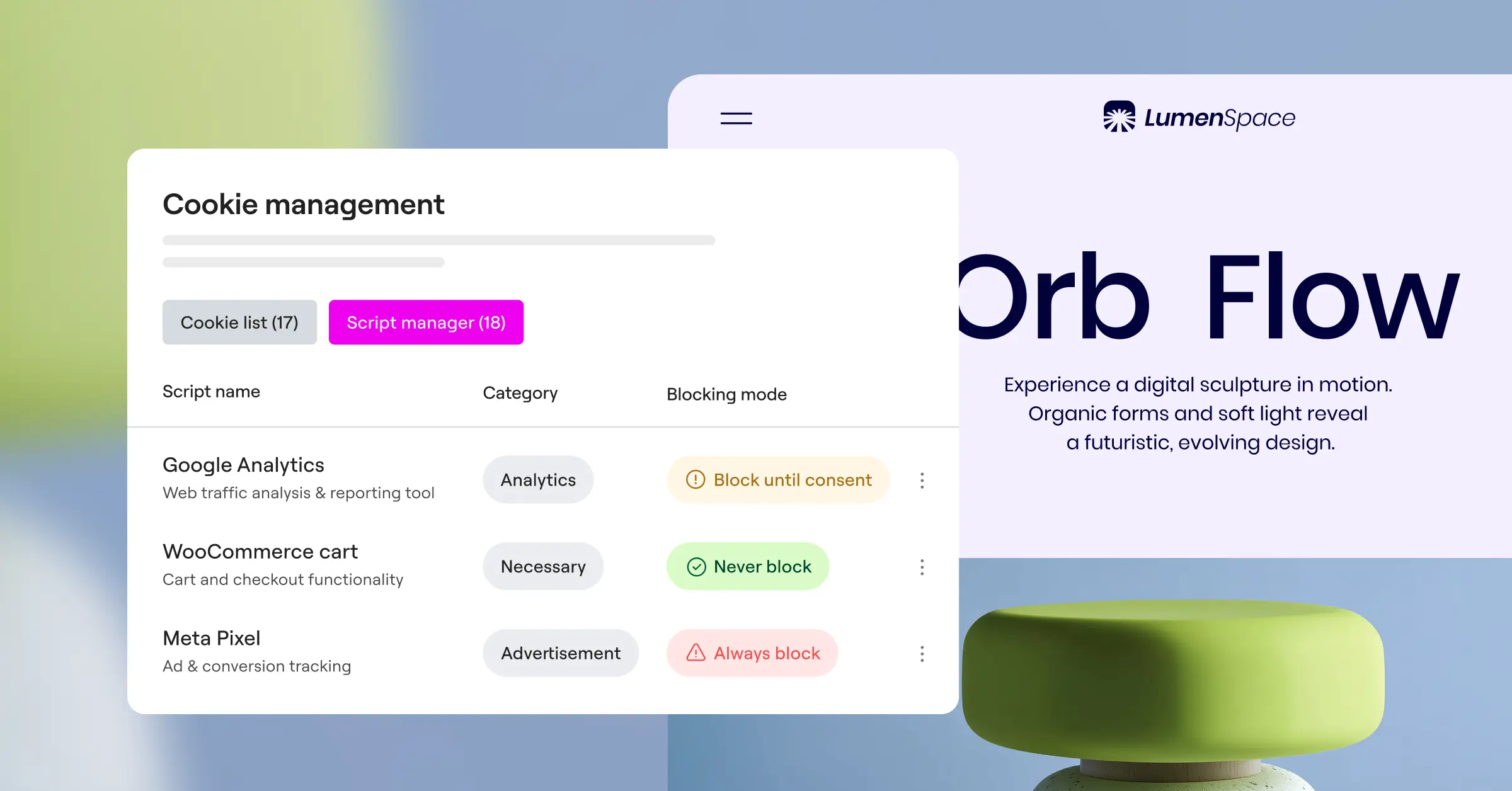
If you prefer a hands-on developer setup, pairing Google Tag Manager (GTM) with Consent Mode v2 is a powerful way to block scripts: configure GTM to read consent status and fire tags only when the right triggers are met. This gives total control over every tag, but takes a solid grasp of GTM, variables, and the Consent Mode API, not for beginners.
Key Features
- Regulates tag firing based on custom-built consent triggers.
- Communicates directly with Google services using Consent Mode v2.
- Consolidates marketing and tracking tags into one interface.
- Adjusts tag behavior dynamically by regional settings.
- Allows advanced testing of triggers in a preview mode.
- Minimizes hardcoded scripts to keep code clean.
Pros and Cons
- Pro: total flexibility and fine-grained control over every tag.
- Pro: no software cost, since GTM is free.
- Con: steep learning curve that requires real technical expertise.
- Con: still needs a separate front-end banner to collect choices.
Verdict: The go-to setup for advanced developers who need precise control over tag execution.
7. Manual Script Wrapping with PHP and JavaScript
If you’d rather skip third-party tools, manual script wrapping is the leanest way to block scripts before consent. Editing template files (like header.php) lets you conditionally load scripts based on a cookie set once a visitor accepts your banner. This keeps your site fast, with no extra database queries, though it means manual upkeep.
Key Features
- Evaluates consent cookies using custom PHP conditions.
- Prevents the browser from downloading scripts until allowed.
- Reduces page weight by skipping heavy compliance scripts.
- Runs directly on your server with no external dependencies.
- Saves on performance with minimal, hand-crafted JavaScript.
- Allows a fully custom front-end banner built from scratch.
Pros and Cons
- Pro: excellent site performance with no bloat or database queries.
- Pro: complete freedom to code your banner and consent system.
- Con: requires strong coding skills in PHP, HTML, and JavaScript.
- Con: needs manual updates whenever you add new tracking tools.
Verdict: Ideal for minimalist developers who want zero added weight.
8. OneTrust
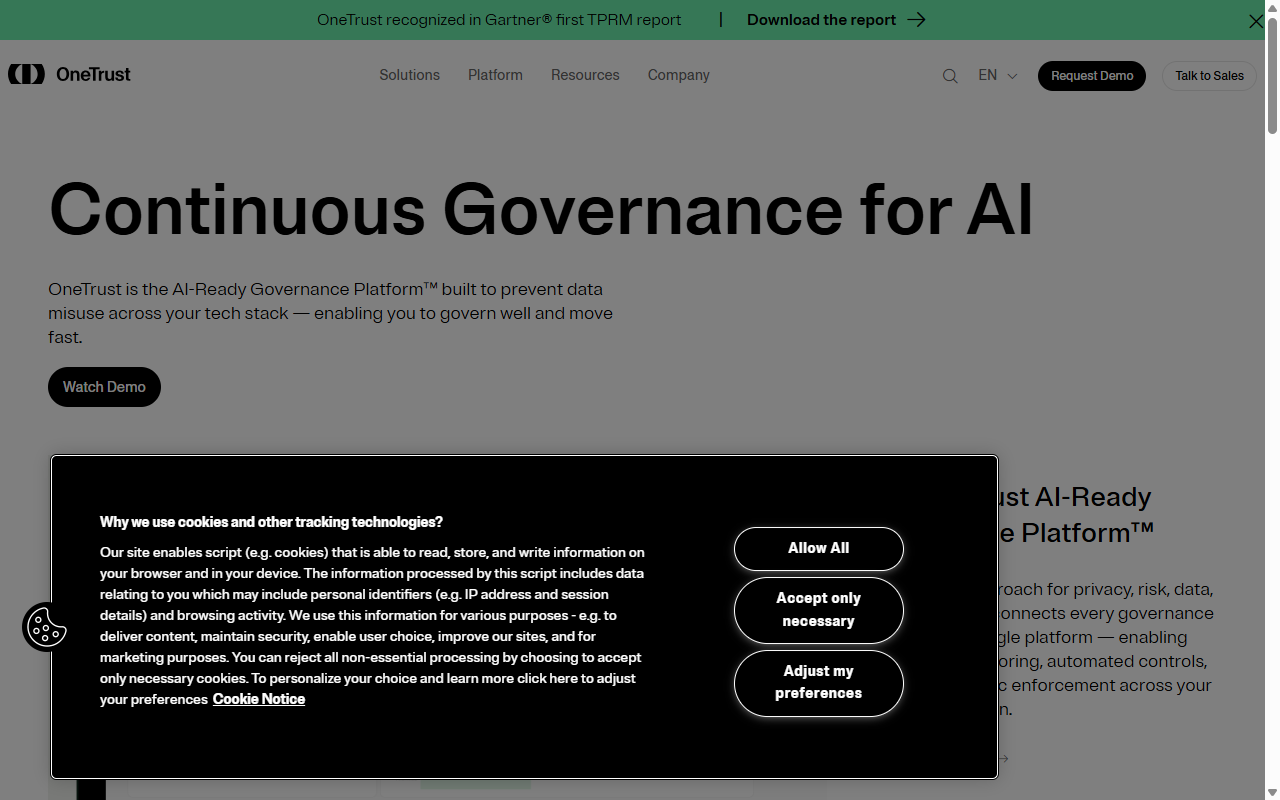
OneTrust is a large enterprise-grade privacy and risk management platform, built for organizations managing compliance across thousands of domains and apps. It comes with script-blocking, automated scanning, and reporting tools to help large teams stay compliant, though its size and pricing suit bigger operations.
Key Features
- Scans complex enterprise networks for hidden tracking technologies.
- Classifies scripts automatically using a global tracker database.
- Deploys geo-specific cookie banners across thousands of properties.
- Secures consent audits for regulatory checks.
- Integrates with CRM databases and internal software.
- Delivers dedicated compliance dashboards for legal teams.
Pros and Cons
- Pro: one of the most complete compliance platforms available today.
- Pro: built to hold up under strict regulatory audits.
- Con: complex setup that often requires a dedicated team.
- Con: high cost that puts it out of reach for smaller organizations.
Verdict: The industry standard for large corporations with dedicated compliance departments.
9. Termly
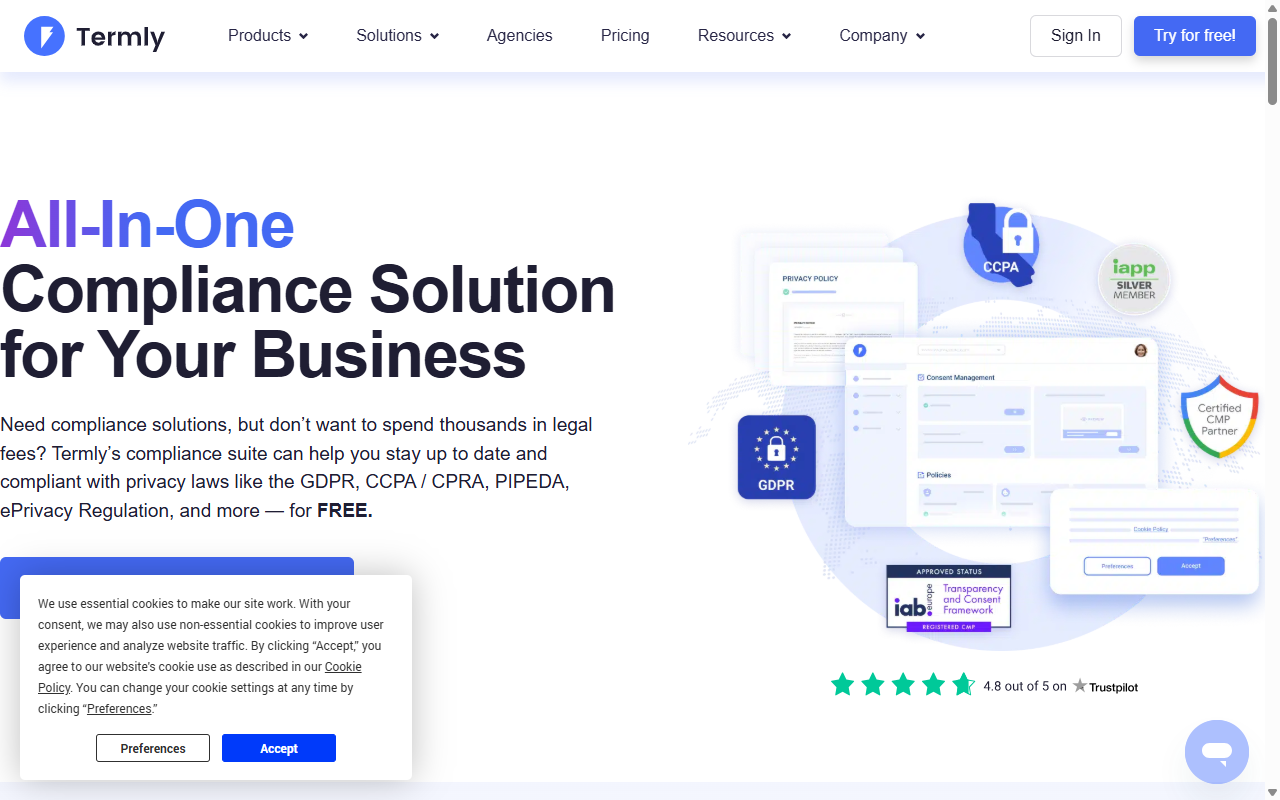
Termly is a compliance platform built with small business owners in mind, giving you one dashboard for cookie banners, privacy policies, and terms of service. Its script-blocking engine detects scripts and pauses them until the visitor interacts, no coding knowledge needed, a real win if you’re managing your site solo.
Key Features
- Blocks third-party scripts through simple integration code.
- Scans your site regularly to keep your cookie list current.
- Builds policy documents inside a simple dashboard.
- Allows basic visual styling to match your branding.
- Updates legal terms automatically as regulations change.
- Delivers a clean interface, easy to manage without help.
Pros and Cons
- Pro: very easy for small businesses to set up and manage.
- Pro: affordable pricing with a free entry tier.
- Con: limited advanced customization for unique site layouts.
- Con: entry-level plans restrict monthly page views.
Verdict: A great starter for small businesses that want policy documents alongside script blocking.
10. WP Consent API Integration
The WP Consent API is an open-source initiative that standardizes consent management across WordPress. It acts as a central hub: compliance tools register consent categories, and other plugins query the API to check whether they can load. It’s future-proof, but only works if plugin developers support it.
Key Features
- Standardizes how WordPress plugins register and check consent.
- Coordinates script loading smoothly across different plugins.
- Prevents script conflicts by keeping one source of truth.
- Reduces duplicate cookie banners by unifying the interface.
- Supports developer queries to check consent states in theme files.
- Promotes a cleaner, more efficient WordPress core.
Pros and Cons
- Pro: standardized approach that cuts down on conflicts.
- Pro: completely free and open-source for the WordPress community.
- Con: relies on other plugin developers actively supporting the API.
- Con: requires some technical understanding to configure correctly.
Verdict: A future-proof framework for developers who want a well-organized WordPress site.
Comparing the Best Script-Blocking Solutions
Here’s a quick comparison of each script-blocking solution.
| Solution | Setup Difficulty | Native WordPress Dashboard | Auto Cookie Scanner | Google Consent Mode v2 | Best Fit For |
|---|---|---|---|---|---|
| Cookie Consent | Very Easy | Yes | Yes | Yes | WordPress & Elementor Sites |
| Cookiebot | Medium | No (External Cloud) | Yes | Yes | Medium to Large Sites |
| CookieYes | Easy | No (Hybrid Cloud) | Yes | Yes | Small to Medium Sites |
| Complianz | Medium | Yes (Self-Hosted) | Yes | Yes | Privacy Purists |
| iubenda | Hard | No (External Cloud) | Yes | Yes | Agencies & Legal Focus |
| Google Tag Manager | Very Hard | No (GTM Panel) | No | Yes | Advanced Developers |
| Manual Script Wrapping | Very Hard | Yes (Theme Files) | No | Manual | Performance Minimalists |
| OneTrust | Very Hard | No (Enterprise Portal) | Yes | Yes | Large Corporations |
| Termly | Easy | No (External Cloud) | Yes | Yes | Small Businesses |
| WP Consent API | Hard | Yes (API Driven) | No | Depends | WordPress Developers |
Best Practices for Setting Up Prior Consent on Your Website
Choosing your tool is just the first step. Here are three essentials for staying compliant and fast.
Step 1: Perform a Full Audit of Your Website Tracking Scripts
Before turning on any blocking tool, find out what’s loading on your site. Open an incognito window, right-click, select “Inspect,” and check the “Application” tab for cookies set immediately. You might find cookies from old widgets or embedded videos.
Step 2: Group Your Scripts into Clear Compliance Categories
Once you’ve listed your cookies and scripts, group them into four categories most privacy laws recognize:
- Strictly Necessary: scripts the site needs to function, like logins or shopping carts, no consent required.
- Preferences: scripts that remember user choices, like language selections or UI themes.
- Statistics/Analytics: scripts like Google Analytics that monitor performance, blocked until consent is given.
- Marketing/Targeting: scripts like the Facebook Pixel that track visitors for ads, blocked until consent is given.
Step 3: Test Your Script Blocking Thoroughly
After setup, test it. Clear your browser cookies, load your homepage, and confirm no analytics or marketing cookies appear. Click around, then accept the banner and confirm your tags fire.
Frequently Asked Questions
What is prior consent and why does it matter?
Prior consent means blocking tracking scripts and non-essential cookies until a visitor actively agrees. Laws like GDPR enforce this strictly, and skipping it can mean real financial penalties.
Will blocking scripts before consent ruin my Google Analytics data?
It briefly limits data for opted-out visitors. But tools supporting Consent Mode v2 send anonymous pings to Google, recovering some conversion data.
Can I just write my own manual code to block tracking scripts?
Yes, you can write custom PHP or JavaScript wrappers to load scripts conditionally. It’s great for speed, but means ongoing maintenance as you add features or regulations change.
What happens if a user declines my cookie consent banner?
Your website must keep blocking non-essential analytics and marketing scripts. The visitor can still use your site fully, and your banner should disappear once their choice is recorded.
Is Elementor’s Cookie Consent capability free to use?
Yes, Cookie Consent is available on a free entry-level plan, easy for small sites. It’s also part of the broader Elementor One toolkit, alongside features like Web Accessibility.
Do I need to block YouTube video embeds before user consent?
Yes. Standard YouTube embeds set tracking cookies immediately, so use YouTube’s privacy-enhanced mode, or a tool that blocks the video until the user accepts cookies.
Can I use Google Tag Manager to handle script blocking?
Yes, Google Tag Manager can block scripts before consent. You’ll need variables and triggers that read consent settings, so tags only fire once the visitor approves.
How does geo-targeting help with cookie consent banners?
Geo-targeting lets you show different banners by visitor location, like a strict opt-in banner for the European Union under GDPR, and a simpler opt-out notice elsewhere.
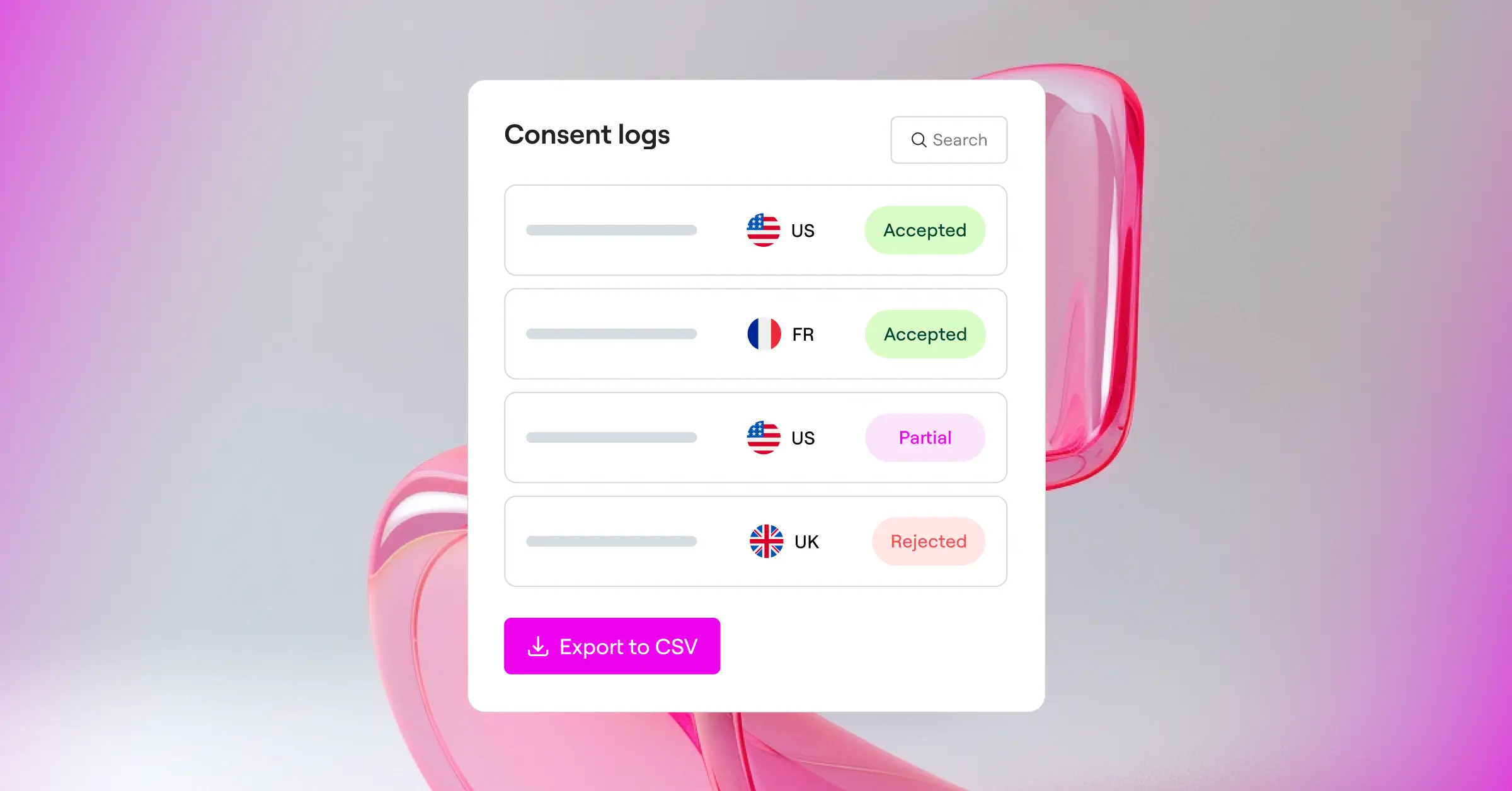
What are consent logs and do I really need them?
Consent logs are secure records of your visitors’ choices, documenting when and how they consented, giving you an audit trail for regulators if you’re ever investigated.