Running a website today means taking visitor privacy seriously. If you get visitors from the European Union, the United Kingdom, or California, you need to comply with GDPR and CCPA. It can feel overwhelming, but it’s simpler than it looks, and you don’t need a law degree to protect your site and users. The right tools handle the heavy lifting, and we’ve compared this year’s best options below.
Key Takeaways
- Native tools reduce script bloat and keep your site loading fast.
- Google Consent Mode v2 is essential for any site running analytics or ads in Europe.
- Dashboard integration saves time by letting you manage everything without leaving WordPress.
- Geo-targeting keeps your site user-friendly by only showing banners to visitors who need them.
- Consent logs are vital for proving compliance during an audit.
Why Privacy Compliance Matters More Than Ever
Privacy regulations no longer only affect massive corporations. Regulators have fined sites of every size, and that trend isn’t slowing down. Compliance isn’t just about avoiding penalties, it’s also about building trust with your audience: a clear, honest privacy banner makes visitors feel safer on your site.
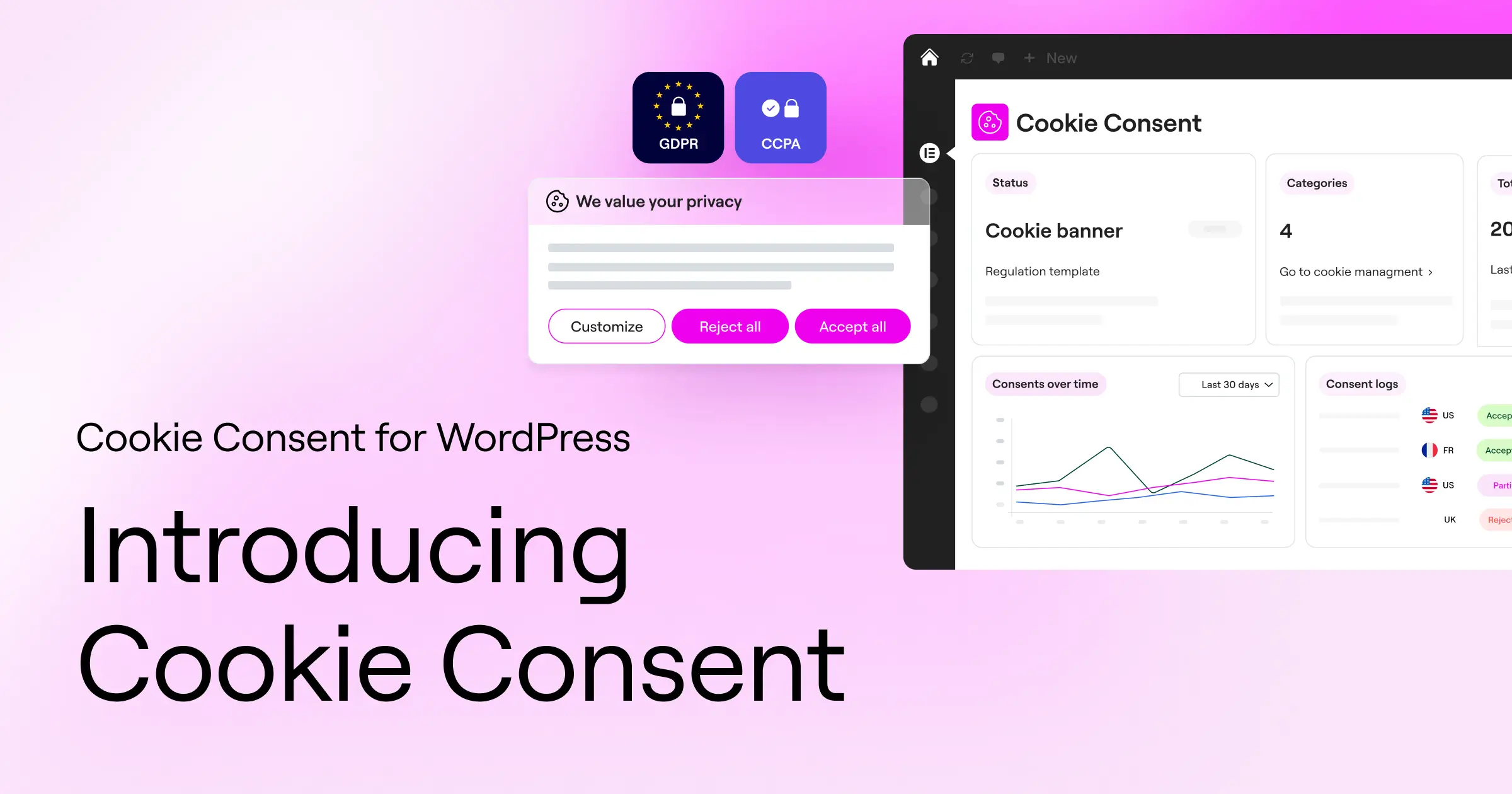
The technical landscape has shifted too. Major browsers are phasing out third-party cookies, and ad networks expect smarter consent tracking. If you run Google Analytics or marketing campaigns in Europe, you need Google Consent Mode v2, or your tracking data won’t work. A system that handles this automatically keeps your marketing accurate while respecting user choices.
How to Select the Right Consent Tool
Choosing the right tool comes down to how you run your site. If you like managing everything from one place, a native WordPress option is your best bet: you won’t need separate platforms to update a policy or check logs. External consent managers often load heavier scripts, while a lighter, native capability keeps pages fast.
Comparison of the Best WordPress GDPR Tools
Here’s a quick look at how the top options compare on Google Consent Mode v2, native setup, and ease of use.
| Tool Name | WordPress Native | Consent Mode v2 | Setup Difficulty | Best For |
|---|---|---|---|---|
| Cookie Consent by Elementor | Yes | Yes | Very Easy (Under 5 mins) | WordPress site owners wanting dashboard-native compliance |
| Cookiebot | No (SaaS with plugin) | Yes | Medium | Large multi-platform sites |
| CookieYes | No (SaaS with plugin) | Yes | Easy | Multi-site networks needing cloud management |
| Complianz | Yes | Yes | Medium | Users looking for complex wizard-based setups |
| iubenda | No (SaaS with plugin) | Yes | Medium | Sites needing complete legal document generation |
1. Cookie Consent
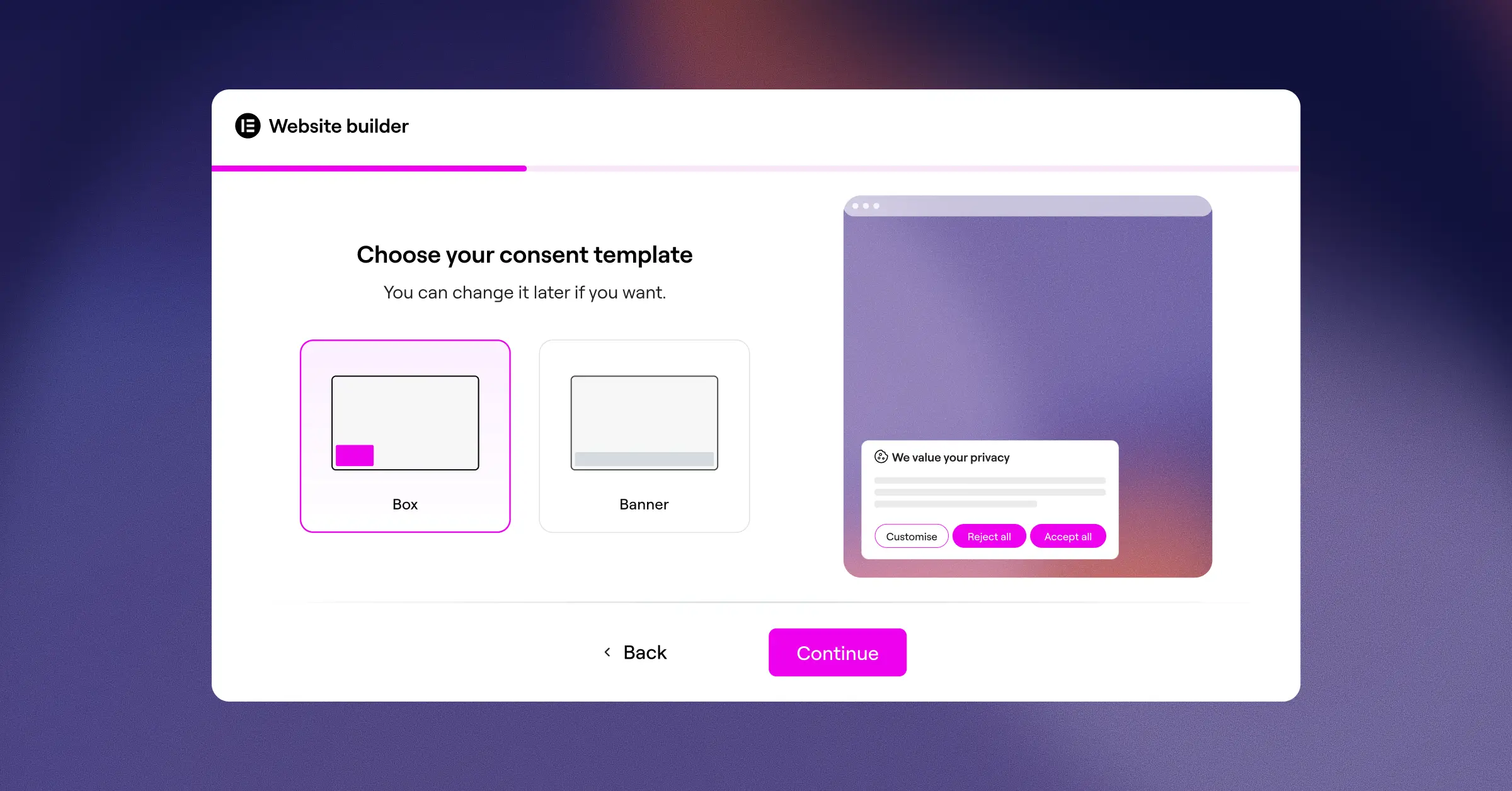
If you use Elementor to build your site, Cookie Consent is the natural choice. This built-in capability is made for WordPress, so you manage GDPR and CCPA requirements from your dashboard, with no external accounts to connect. Setup takes under five minutes: the tool scans your site, finds your cookies, and sorts them into clear categories. Your banner matches your brand styling with no custom CSS, and it handles Consent Mode v2 and Global Privacy Control automatically.
Key Features of Cookie Consent
- Builds custom consent banners that match your site design.
- Scans your site to discover and categorize cookies automatically.
- Saves consent logs directly in WordPress for audit readiness.
- Supports Google Consent Mode v2 out of the box for accurate data.
- Filters banners by visitor location so only relevant users see them.
- Creates privacy policies using a built-in document helper.
Why It Stands Out
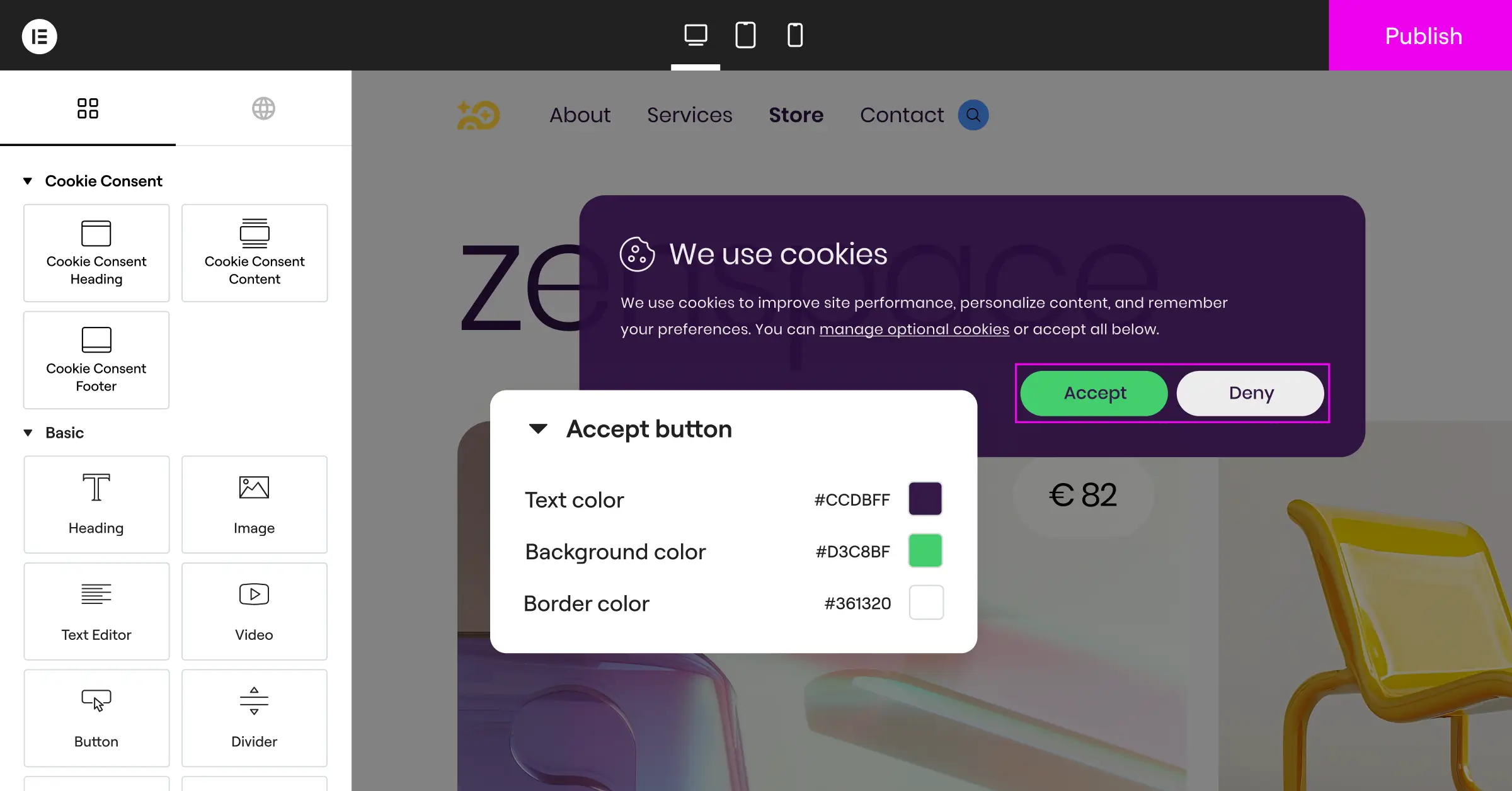
The biggest benefit is native dashboard integration: managing cookie consent alongside your page building keeps your workflow simple and your site lean. Cookie Consent is included in Elementor One and also has a free tier, so it’s genuinely affordable. Just know it’s built for WordPress, so it won’t work on non-WordPress platforms.
“Managing privacy laws doesn’t have to be a technical nightmare. Keeping your cookie consent tools native to your website dashboard reduces script issues and makes compliance much easier to manage over time.”
– Itamar Haim, Web Compliance Specialist
2. Cookiebot
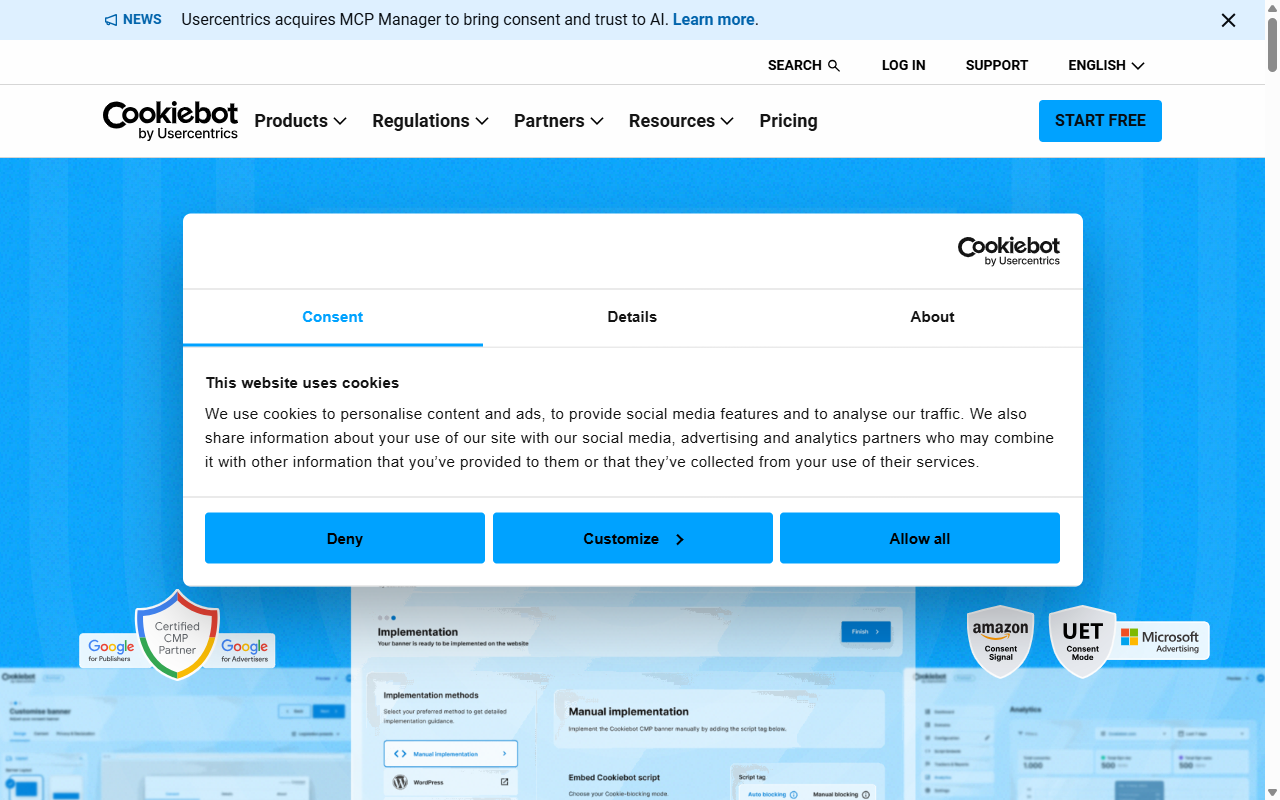
Cookiebot is a widely used consent management platform that runs as an external SaaS system, integrating with WordPress through a separate plugin. It’s a solid choice if you run multiple sites across WordPress, Shopify, and custom HTML, and want one central cloud dashboard. It scans monthly for new trackers, though you’ll need to leave WordPress to configure templates or view logs.
Key Features of Cookiebot
- Scans your site monthly to find new cookies.
- Categorizes trackers automatically into four compliance groups.
- Blocks third-party scripts from loading before consent.
- Supports multi-language setups with automated translations.
- Stores user choices securely in an external database.
- Integrates with Google Tag Manager for script management.
Things to Know
The monthly scan is reliable and keeps reports accurate. The entry-level plan limits pages, so growing sites will likely need a paid tier, and the external script can add a small load delay.
3. CookieYes
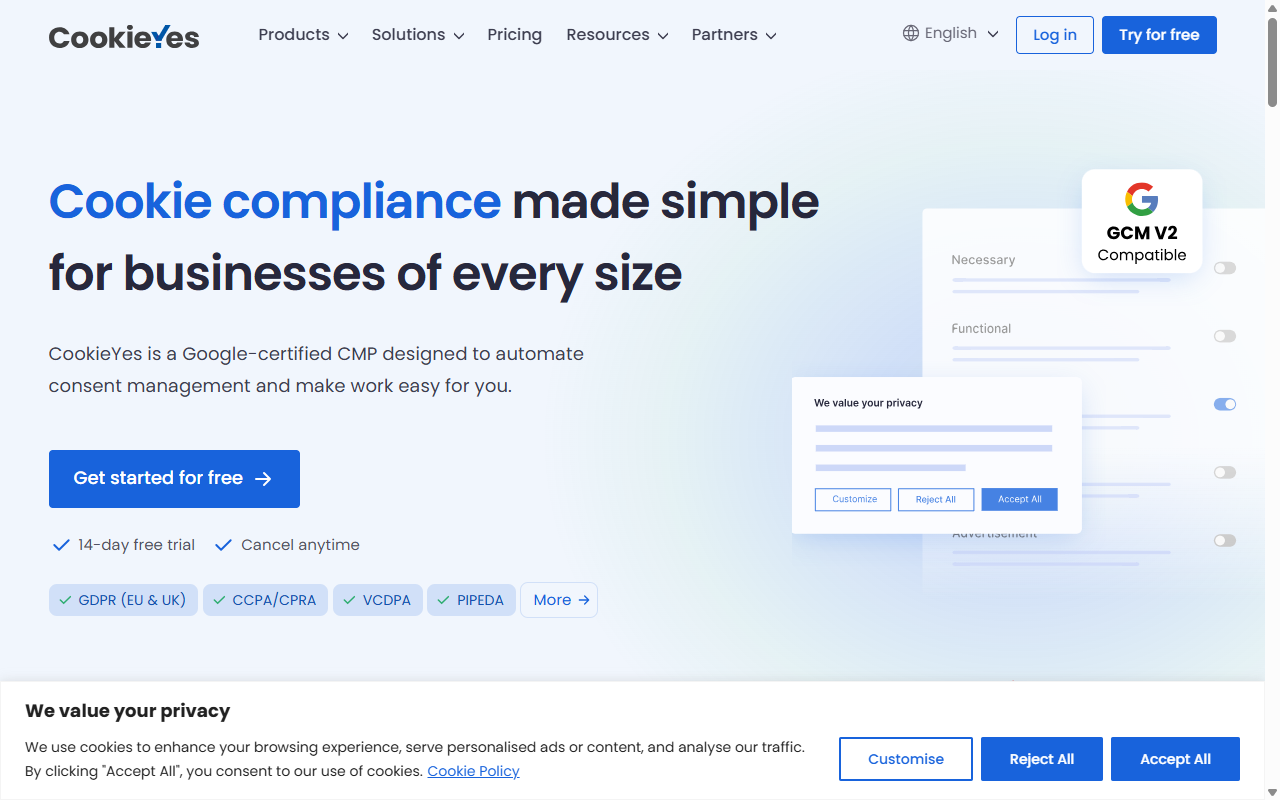
CookieYes is another cloud-based tool that connects to WordPress, well-regarded for its clean interface. It helps site owners deploy cookie banners quickly and manage multiple sites from one place. Installation is simple: copy a script or use their connector plugin, and your banner goes live. It handles Consent Mode v2 well, useful for agencies managing sites across CMS platforms.
Key Features of CookieYes
- Generates customizable banners with custom colors and text.
- Maintains a record of consents to keep you audit-ready.
- Identifies trackers using an extensive database of known cookies.
- Controls script execution based on user preferences.
- Targets banners by country using built-in geo-targeting.
- Keeps a simple layout that works well on mobile.
Things to Know
The interface is friendly for beginners. Since it’s a cloud service, billing and configuration happen on their external site, one more account to track.
4. Complianz
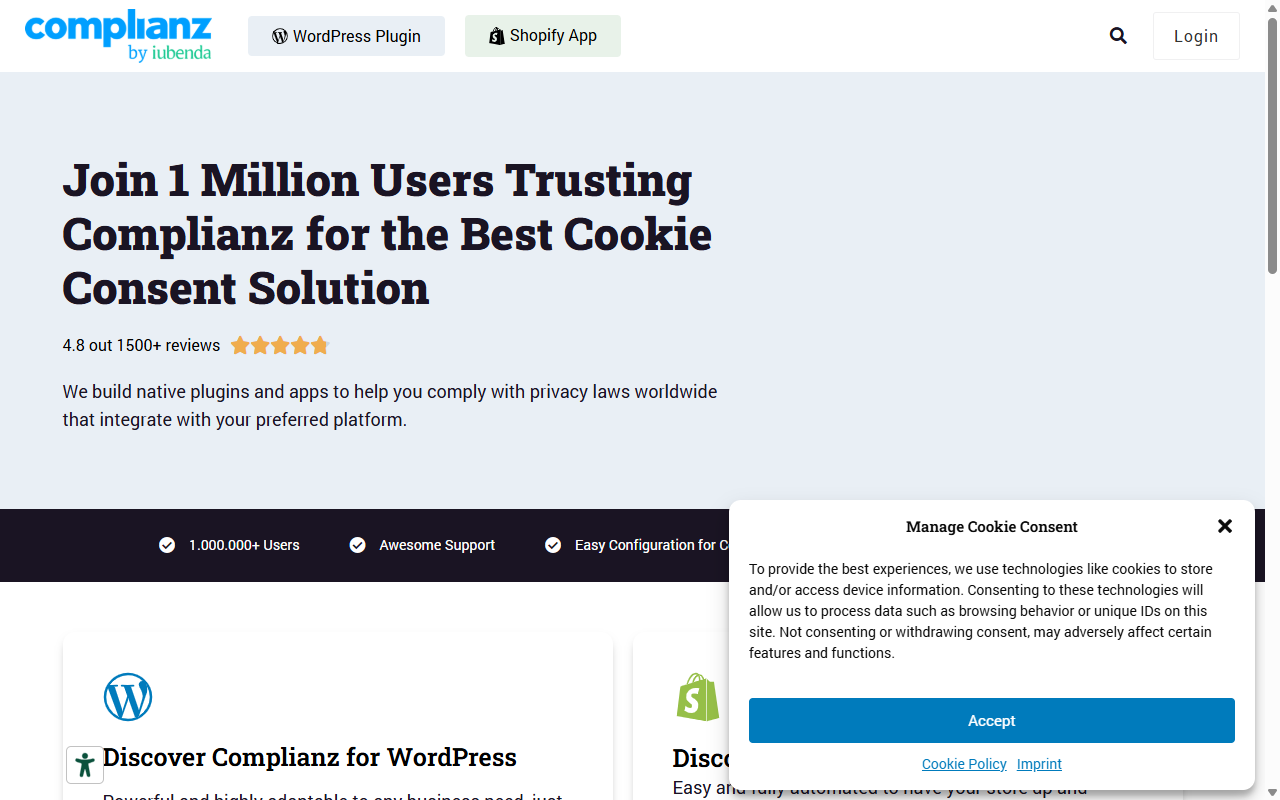
Complianz is a privacy suite built specifically for WordPress. Instead of a settings page, it guides you through a wizard that asks about your business and audience, then configures settings automatically. It’s highly configurable, supporting everything from GDPR to Canada’s PIPEDA, and since it runs locally, you don’t have to worry about cloud outages.
Key Features of Complianz
- Guides you through a detailed wizard to determine your legal needs.
- Integrates with popular WordPress translation plugins for multilingual support.
- Blocks scripts like YouTube and Google Maps until consent is given.
- Generates legal documents including custom cookie policies.
- Saves anonymous consent records on your local database.
- Detects if you need specialized regional privacy laws.
Things to Know
The wizard is genuinely helpful and teaches you your privacy needs as you go, though the interface can feel dense if you just want a simple banner.
5. iubenda
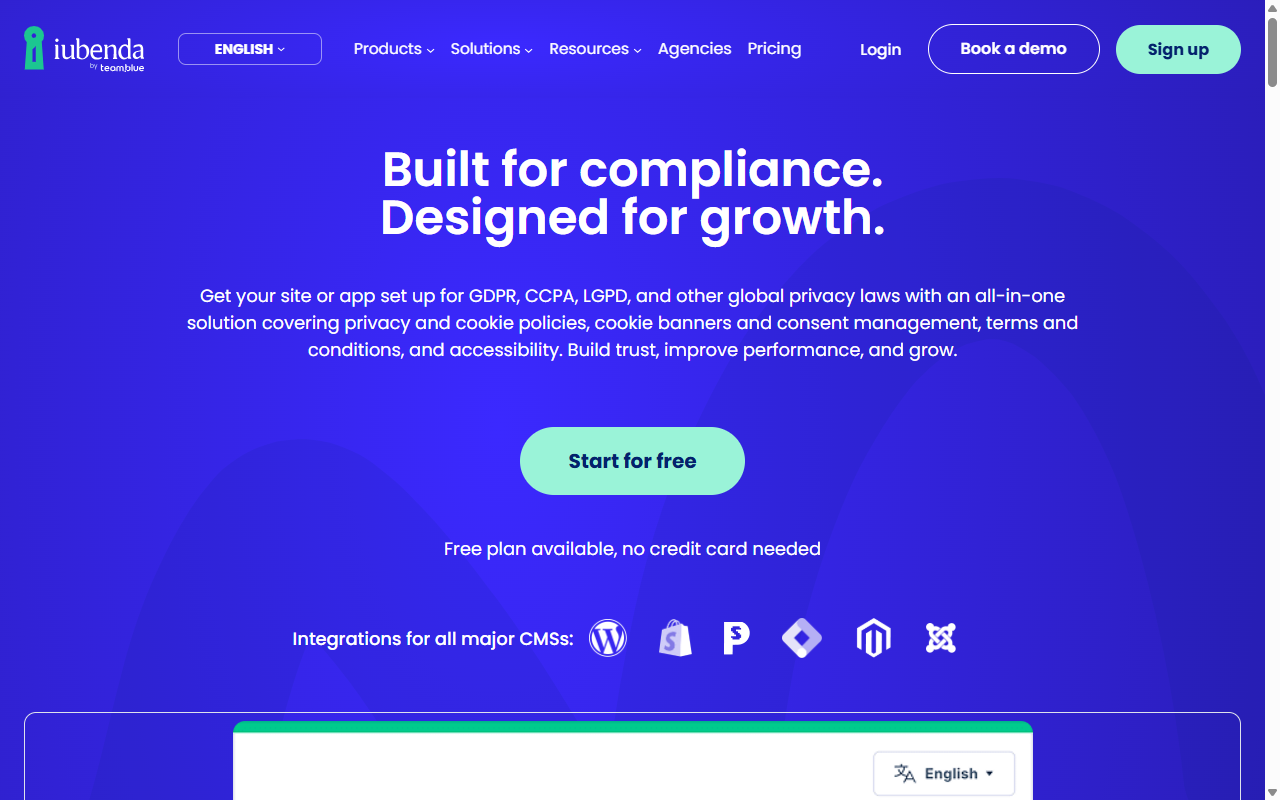
iubenda is a complete compliance tool focused on legal documents. It does more than show a consent banner, it helps you build your privacy policy, terms, and cookie policy, kept current by legal experts. The consent feature is part of their larger platform, a strong option for e-commerce sites needing attorney-reviewed legal text.
Key Features of iubenda
- Generates attorney-crafted privacy policies that update automatically.
- Syncs consent banner choices directly with your privacy documents.
- Supports advanced consent options for CCPA and GDPR.
- Saves detailed consent records in a secure dashboard.
- Adapts to new legal regulations without manual updates.
- Configures custom banner designs to match your branding.
Things to Know
The legal protection and automated updates are reassuring for businesses that need thorough documentation. The trade-off: your configuration and logs live outside WordPress, in their cloud dashboard.
6. Termly
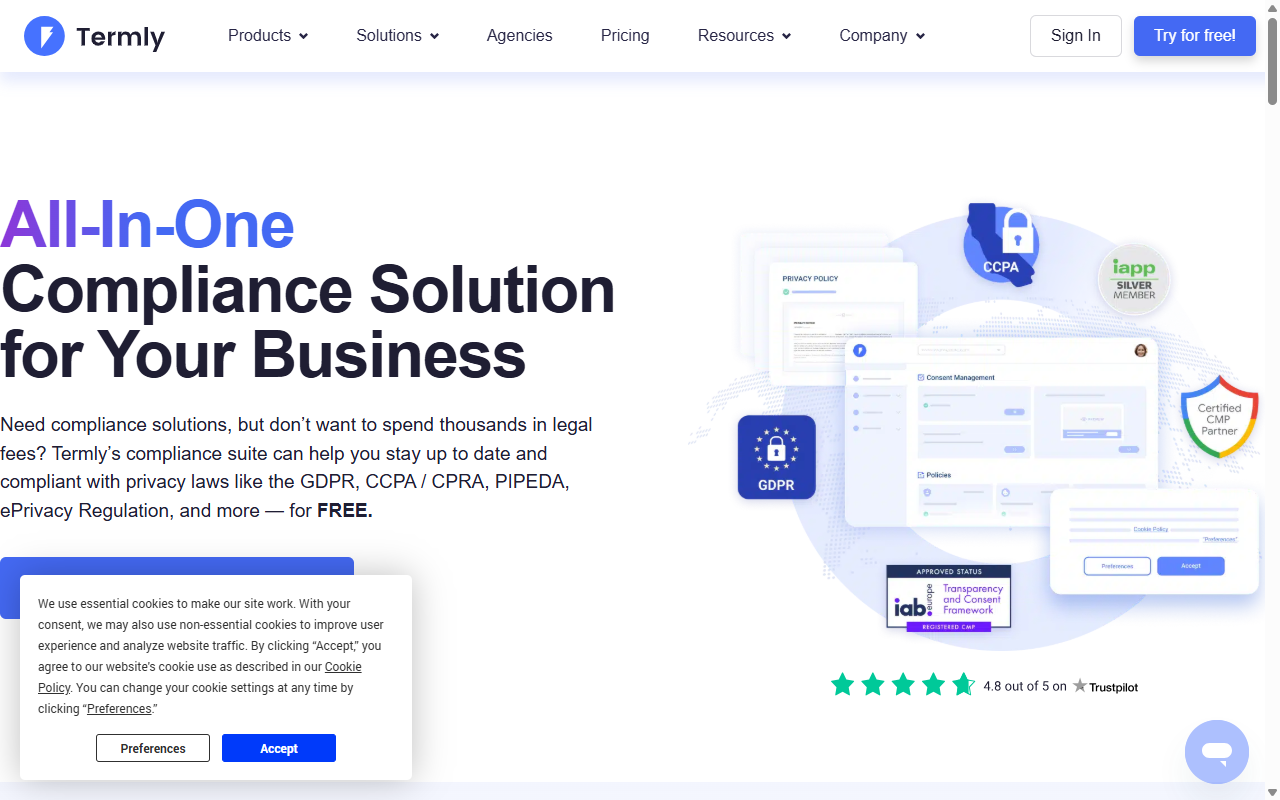
Termly is a compliance suite built with small businesses in mind, pairing legal policy generators with a consent manager for affordable compliance without hiring a lawyer. The banner is managed from the Termly web portal, which scans your site, builds a cookie policy, and displays a clean banner with Consent Mode v2 support.
Key Features of Termly
- Creates legal policies designed for your business model.
- Scans your site to catalog trackers and update your policy.
- Translates your banner into multiple European languages.
- Keeps track of consent trends through basic analytics.
- Blocks tracking codes automatically to preserve user choice.
- Updates your policies automatically as regulations change.
Things to Know
It’s practical for small business owners who need quick legal documents on a budget. Keep in mind the entry-level plan includes Termly branding, and scanning limits can be tight for larger sites.
7. OneTrust
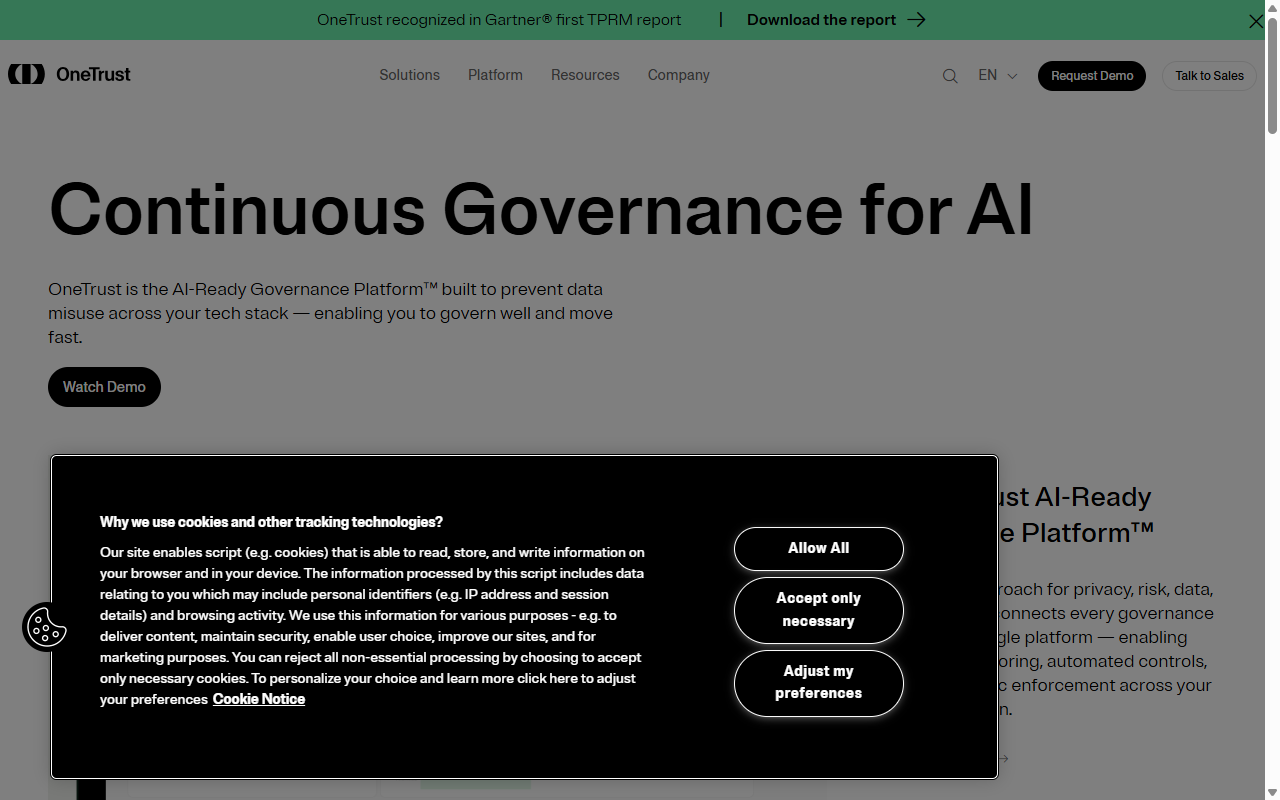
OneTrust is an enterprise-grade privacy management platform, built for large companies needing strict compliance across hundreds of sites and apps. The WordPress integration works through a script connecting your site to the enterprise system, with deep reporting and vendor risk assessments, more than most blogs need but common for corporate IT departments.
Key Features of OneTrust
- Manages enterprise-scale privacy workflows across multiple brands.
- Tracks vendor records and data processing activities.
- Builds custom preference centers for user configuration.
- Automates compliance reporting for corporate auditing teams.
- Integrates with major enterprise marketing and CRM systems.
- Maintains deep security standards to protect customer data.
Things to Know
The level of detail, security, and scale suits enterprise businesses well. Setup is involved, typically needs dedicated training, and costs considerably more than the other options here.
8. Osano
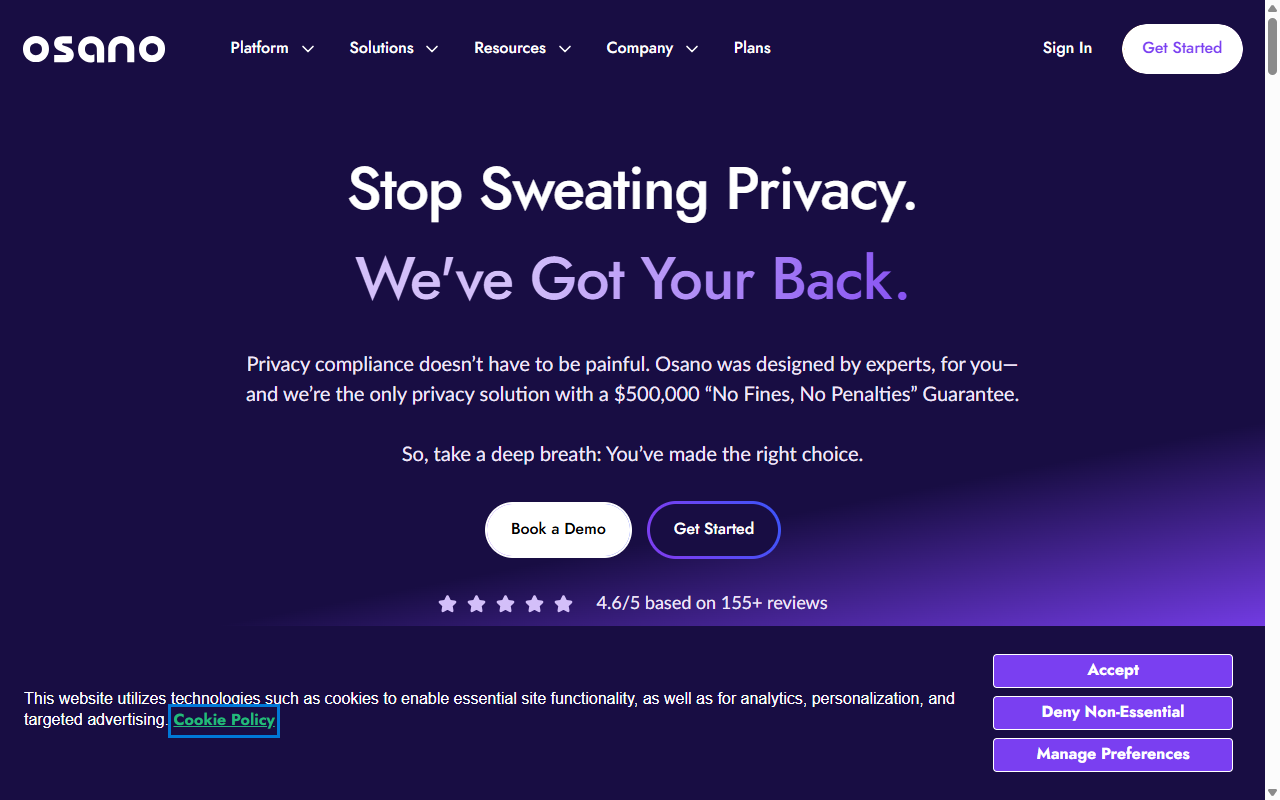
Osano is a cloud compliance platform known for being simple and reliable, focused on protecting sites from data privacy lawsuits. Their “No Fine Pledge” gives financial backing if their platform causes a compliance fine. It runs on a fast, global network, so your banner loads quickly anywhere, and connects to WordPress with a light script.
Key Features of Osano
- Delivers consent banners quickly using a global network.
- Analyzes vendor privacy practices to flag risky trackers.
- Translates text automatically into dozens of languages.
- Stores consent logs securely using advanced technology.
- Supports geo-targeting to show the correct layout by region.
- Works across different platforms with a single script.
Things to Know
The platform is well-regarded for reliability, and the vendor risk rating gives useful visibility into third-party data practices. Like other cloud-based options here, your data lives outside WordPress.
9. GDPR Cookie Consent by WebToffee
GDPR Cookie Consent by WebToffee is a dedicated WordPress plugin around for years, built to handle basic compliance directly inside your dashboard with no external account needed. Design your banner, write cookie descriptions, and set up script blockers from one screen, a budget-friendly option for single-site owners wanting basic capabilities without a subscription.
Key Features of GDPR Cookie Consent
- Renders custom banners styled as headers, footers, or modals.
- Imports and exports cookie lists using simple CSV files.
- Displays a clean list of active cookies using shortcodes.
- Supports basic script blocking for Google Analytics and Facebook Pixels.
- Includes templates to help you style your banner quickly.
- Works cleanly with popular cache tools to protect performance.
Things to Know
It’s budget-friendly for sites that don’t need advanced features, though it lacks cloud capabilities like deep-scanning and multilingual translation, so expect more manual management.
10. WP GDPR Compliance
WP GDPR Compliance is a helper plugin built for broad data protection. Instead of focusing only on cookies, it adds consent checkboxes to contact forms, comments, and WooCommerce checkout, and keeps other plugins compliant. If a user requests their data or asks to be forgotten, it helps you process those requests easily, a handy utility alongside your main consent tool.
Key Features of WP GDPR Compliance
- Adds compliance checkboxes to contact forms automatically.
- Integrates with WordPress comments to store user consent.
- Helps users submit data access and deletion requests.
- Anonymizes personal user data on your site database.
- Keeps a clean record of form submissions and consent events.
- Works natively inside your standard WordPress admin settings.
Things to Know
It’s completely free and fills compliance gaps in forms and checkouts well. That said, it doesn’t include a sophisticated cookie scanner, so you’ll still want a dedicated cookie consent tool alongside it.
Step-by-Step Guide: Setting Up Your First Cookie Consent Banner
Setting up your banner is simpler than it sounds. Follow these steps to get compliant in under five minutes.
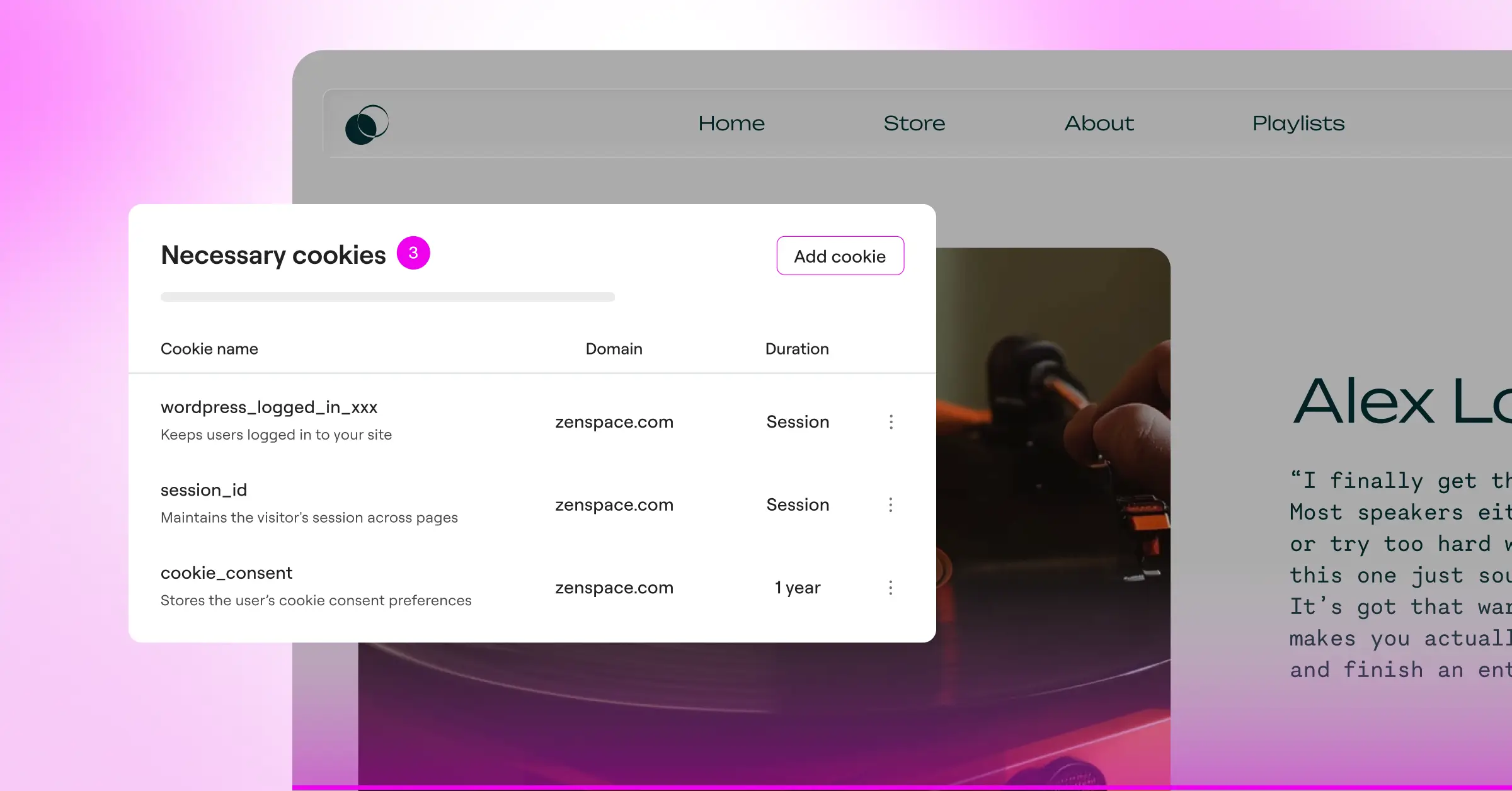
- Activate your tool in settings. If you’re using Elementor, open your active features and turn on Cookie Consent.
- Run an automated scan so the tool can crawl your site and find every cookie set by your plugins, themes, and marketing scripts.
- Categorize your trackers into the four standard groups: Necessary, Preferences, Statistics, and Marketing.
- Design your banner: pick colors, layout, and text that match your brand.
- Enable Consent Mode v2 if you use Google services, to keep tracking accurate for visitors in Europe.
- Publish and test by visiting your site in an incognito window to confirm the banner loads and blocks scripts until you click accept.
Frequently Asked Questions
Do I really need a GDPR tool on my WordPress site?
Yes. If your site gets visitors from the European Union, the United Kingdom, or similar regions, you need explicit consent before saving non-essential cookies on their devices, even if your business is elsewhere.
What is Google Consent Mode v2 and is it mandatory?
Google Consent Mode v2 lets your site communicate users’ consent choices to Google services like Analytics and Ads. It’s required if you want accurate ad performance and analytics data for users in Europe.
Will a cookie consent banner slow down my website?
Some external cloud-based banners add a small delay since they load scripts from outside your server. A native dashboard capability keeps files local, helping your site stay fast.
Can I use a free cookie consent tool for my business?
Yes, many quality tools offer generous free tiers. Cookie Consent, for one, has a free plan that works well for standard business sites. Just confirm any free option covers Consent Mode v2 and audit logs.
How often should I scan my website for new cookies?
It’s a good habit to scan whenever you install a new plugin, update your theme, or add a marketing script. If your site doesn’t change often, once a month is usually enough.
What’s the difference between GDPR and CCPA compliance?
GDPR requires users to actively opt in before you can load any tracking cookies (prior consent). CCPA is an opt-out model, meaning you can load cookies but must offer a clear way for users to opt out, such as a “Do Not Sell My Personal Info” link.
How do I prove that a visitor gave their consent?
You need a tool that records anonymous consent logs: the user’s randomized ID, the date and time accepted, and the categories agreed to. Those records are your proof if audited.
Does a cookie banner protect me from all privacy laws?
A consent banner is a major part of compliance, but not the only piece. You also need a complete privacy policy, secure contact forms, and a way to handle requests to access or delete personal data.

