Table of Contents
10 Best WordPress Theme Builders in 2026
WordPress runs 43.5% of the internet in 2026. You can’t just slap a basic template on a domain and expect high conversion rates anymore.
Building a custom, high-performing site requires serious technical firepower. We’ve evaluated the top WordPress theme builders available right now, strictly based on rendering speed, design flexibility, and modern AI capabilities.
Key Takeaways
- Mobile speed dictates survival – 53% of mobile users abandon pages taking longer than three seconds to load.
- Elementor dominates the market – The platform controls roughly 22.4% of the entire WordPress ecosystem.
- Core Web Vitals remain a massive hurdle – Only 40% of WordPress sites currently pass all three critical metrics.
- AI integration isn’t optional – 90% of professional web designers use AI-driven tools for layout generation in 2026.
- E-commerce depends on deep integration – 20.4% of WordPress sites use WooCommerce, making custom product loops essential.
- Accessibility is severely lacking – 96.3% of the top million homepages fail basic WCAG 2 standards.
How We Evaluated the Top Builders
The global Content Management System market size will hit $27.3 billion soon. The sheer volume of tools fighting for your attention makes choosing one incredibly difficult. We ignored the marketing fluff.
Instead, we looked directly at what actually moves the needle for professional web developers and agency owners.
- Code Output Quality – We prioritized builders that output semantic HTML and minimal CSS. A heavy Document Object Model (DOM) destroys your search rankings.
- Dynamic Data Handling – If a builder can’t pull custom fields from Advanced Custom Fields (ACF) or Meta Box into a custom post type archive, it didn’t make the cut.
- E-commerce Capabilities – Building a basic shop isn’t enough anymore. You need complete control over the cart, checkout, and custom product loops.
- AI Infrastructure – We checked if the platform uses basic text generators or actual agentic AI that builds production-ready assets.
The technical demands of 2026 require builders that output semantic, lightweight code by default. You can’t out-cache a heavy DOM structure, especially when optimizing for AI-driven search engines.
Itamar Haim, SEO Team Lead at Elementor. A digital strategist merging SEO, AEO/GEO, and web development.
1. Elementor Pro: The Industry Standard
Elementor sets the benchmark for visual site creation. Powering over 21 million websites globally, it’s the professional choice for designers who demand total control without touching PHP.
The platform shifted heavily toward performance and AI recently. Elementor version 3.10 and beyond introduced a 25% reduction in DOM output, dramatically improving rendering times. And the upcoming Editor V4 (Atomic), launching in beta in February 2026, introduces a pure CSS-first foundation with native classes and variables.
Look, Elementor One unifies the entire site creation process. You don’t need to patch together twelve different plugins anymore.
Key Features
- Advanced Theme Builder – Design custom headers, footers, search results, and 404 pages visually.
- Massive Widget Library – Access 118+ widgets (32 Core and 86 Pro) covering everything from pricing tables to complex login forms.
- Elementor AI – A built-in creative assistant that generates custom CSS, writes copy, and creates images directly in the editor.
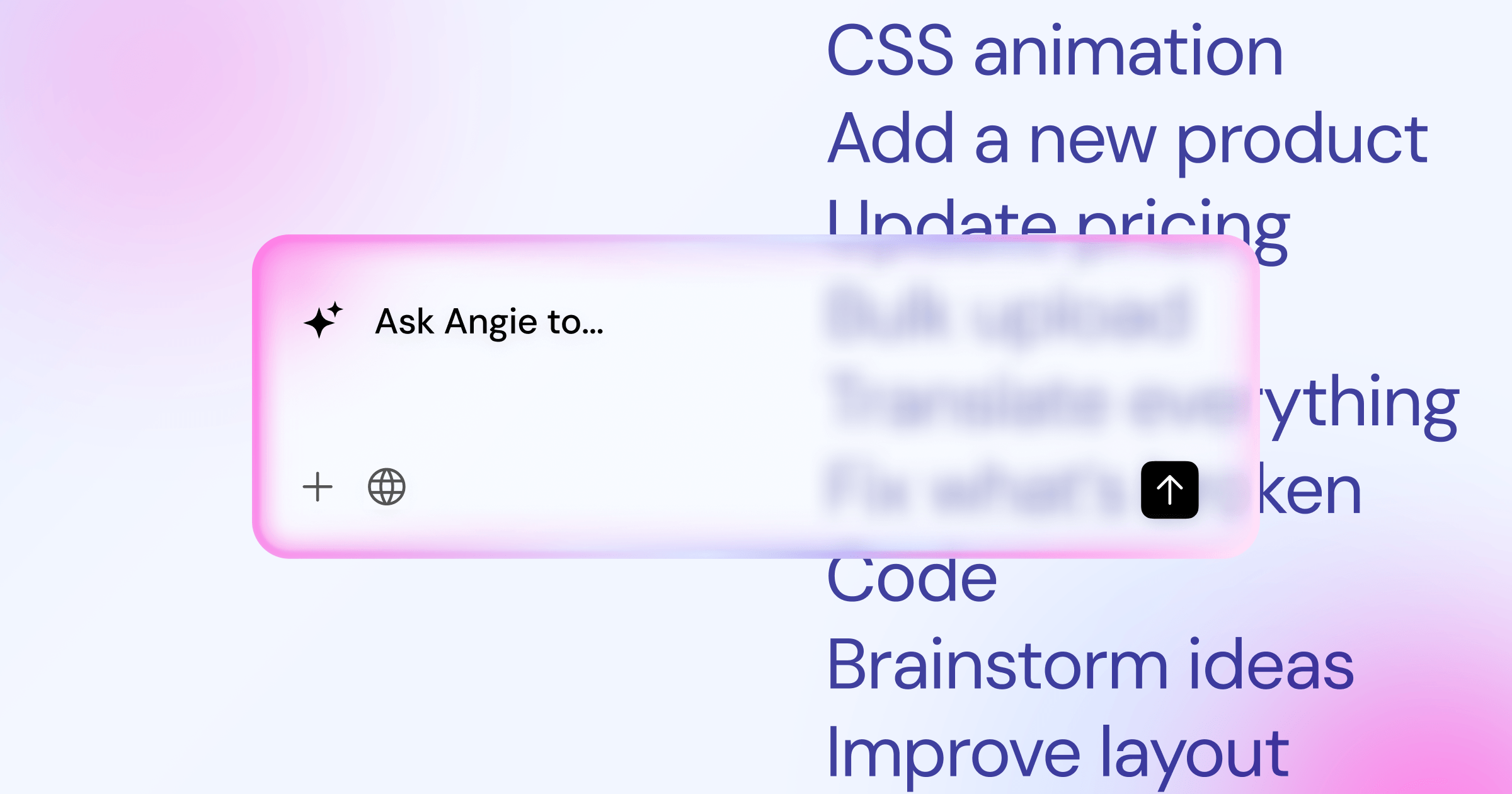
- Angie Integration – Works beautifully with Angie, the native agentic AI for WordPress. Angie uses the Model Context Protocol to take action, turning your natural language prompts into production-ready assets.
- WooCommerce Builder – Total control over the single product layout, cart, and checkout experiences.
Pricing
The Essential plan starts at $60/year for one site. Advanced Solo runs $84/year, while the complete Elementor One platform costs $168/year and includes optimization tools and extensive AI credits.
Pros
- Unmatched third-party ecosystem – Thousands of add-ons exist specifically for this platform.
- Responsive precision – Custom breakpoints give you absolute control over mobile layouts.
- Constant innovation – Features like the unified AI Site Planner speed up wireframing massively.
Cons
- Learning curve – The sheer number of design controls can overwhelm absolute beginners initially.
- Server requirements – Requires decent PHP memory limits to run smoothly in the backend.
Verdict: Elementor Pro is the most flexible, powerful option on the market. It’s the default choice for agencies prioritizing design freedom and advanced dynamic content.
2. Divi Builder: The Visual Powerhouse
Elegant Themes takes a highly visual approach with Divi. Used by approximately 1.2% of all websites, it’s a massive player in the agency space.
Divi relies entirely on a modular, front-end editing experience. You click on a paragraph, and you type. It feels more like a desktop publishing app than a traditional web design tool. Recently, they’ve pushed hard into AI with Divi AI, generating text and imagery inside their modules.
But there’s a catch. Divi relies heavily on shortcodes.
Key Features
- Global Elements – Update a design element once and watch it sync across your entire site instantly.
- Built-in Split Testing – Divi Leads lets you A/B test different modules against each other without third-party software.
- powerful Color Manager – Automatically generates cohesive color palettes based on your initial selections.
- Shape Dividers – Easily add custom SVG shapes between sections for dynamic layouts.
Pricing
Divi costs $89 for yearly access. They also offer a $249 one-time lifetime payment for unlimited websites.
Pros
- Lifetime pricing – The $249 one-time fee offers incredible long-term value for prolific agencies.
- Template library – Hundreds of full website packs are included at no extra cost.
- Built-in marketing – Features like A/B testing reduce reliance on external tools.
Cons
- Shortcode lock-in – If you ever deactivate Divi, your content becomes a messy pile of unreadable shortcodes.
- Backend sluggishness – Complex pages can cause the visual editor to lag on older machines.
Verdict: Divi is perfect for web designers building dozens of sites who want a flat, predictable lifetime expense.
3. Beaver Builder: The Developer’s Reliable Choice
Beaver Builder ignores the flashy trends. They focus on one thing: absolute stability.
When WordPress pushes a major core update, many visual builders break. Beaver Builder doesn’t. This predictable reliability makes it a darling among technical developers who hate getting frantic client calls on a Friday night. It outputs surprisingly clean HTML and leaves your content intact if you ever decide to uninstall the plugin.
You’ll need the Beaver Themer add-on to actually build headers and footers, though.
Key Features
- White Labeling – Agency plans let you strip out all Beaver Builder branding and replace it with your own.
- Developer API – Extensive documentation makes it easy to build your own custom modules.
- Clean Uninstall – Deactivating the builder simply pushes your text back into the native WordPress editor.
- Revision History – Easily roll back to previous versions of your layout.
Pricing
Plans range from $99/year to $549/year. All tiers support unlimited sites.
Pros
- Bulletproof stability – It almost never conflicts with major plugins or WordPress core updates.
- Client-friendly UI – You can lock down specific elements so clients can’t break the layout.
- Unlimited licensing – Even the base tier allows installation on infinite client sites.
Cons
- Dated interface – The user interface feels like it belongs in 2018.
- Fragmented products – You’ve to buy Beaver Themer separately to get full site editing capabilities.
Verdict: Choose Beaver Builder if you manage a high volume of maintenance contracts and prioritize stability over flashy new design features.
4. Oxygen Builder: The Performance King
Performance matters more than ever. Oxygen takes a radical approach to speed: it completely disables the native WordPress theme system.
By stripping out the default theme layer, Oxygen removes the bloat associated with traditional WordPress setups. The resulting code is incredibly lean. If you’re obsessing over passing Core Web Vitals, Oxygen gives you the lowest DOM depth possible. But you’re going to write some code.
This isn’t a tool for beginners. At all.
Key Features
- Theme Disabler – Bypasses the traditional WordPress hierarchy for pure performance.
- Advanced CSS Control – Write custom CSS and JavaScript directly targeting specific IDs and classes.
- Flexbox and Grid – Native, deep integration with modern CSS layout modules.
- Dynamic Data – Pull complex data structures from any custom field plugin with ease.
Pricing
Oxygen uses a one-time payment structure. Packages run from $129 for Basic up to $179 for Composite.
Pros
- Unbeatable speed – Consistently achieves perfect 100/100 Lighthouse scores out of the box.
- Developer-centric – Offers precise control over every single HTML tag on the page.
- One-time cost – No recurring yearly fees.
Cons
- Brutal learning curve – You need a strong understanding of CSS flexbox and grid to use it effectively.
- Client hostility – Handing an Oxygen site over to a non-technical client usually ends in disaster.
Verdict: Oxygen is the ultimate weapon for technical SEOs and front-end developers who demand absolute control over their code structure.
5. Bricks Builder: The Modern Contender
Bricks exploded onto the scene recently and captured a massive segment of the developer market. It acts as a theme, not a plugin.
Built entirely on Vue.js, the editor itself is blazingly fast. You won’t wait for loading spinners when switching between pages. Bricks strikes a rare balance: it outputs clean, semantic HTML like Oxygen, but offers a user interface that feels much more modern and intuitive.
It’s aggressively targeting the performance-conscious crowd.
Key Features
- Vue.js Editor – The backend building experience is arguably the fastest in the industry.
- Native Query Loop – Build complex grids of custom post types without any third-party add-ons.
- Pseudo-classes – Visually style hover, active, and focus states directly in the panel.
- Pinning Elements – Sticky positioning is built right into the core controls.
Pricing
Bricks offers a $99 Starter license for one site. The Ultimate license costs $249 as a one-time payment for unlimited sites.
Pros
- Incredible frontend speed – Assets load conditionally; if you don’t use a feature, its CSS won’t load.
- Modern UI – The workspace is clean, logical, and highly customizable.
- Active development – The team releases major user-requested features at a rapid pace.
Cons
- Smaller ecosystem – The third-party template and add-on market is still growing compared to older rivals.
- Requires basic CSS knowledge – While easier than Oxygen, you still need to understand CSS concepts to use it well.
Verdict: Bricks is the smartest choice for modern developers who want Oxygen’s performance wrapped in a much better user interface.
6. Breakdance: The E-commerce Specialist
Created by the same team behind Oxygen, Breakdance aims to solve Oxygen’s biggest problem: it was too hard for normal people to use.
Breakdance positions itself aggressively against the big players. It includes over 130 built-in elements, severely reducing your need for external plugins. Where it truly shines is WooCommerce integration. The default styling for shop pages looks premium right out of the box, saving you hours of CSS tweaking.
So, if you build online stores, pay attention.
Key Features
- Deep WooCommerce Integration – Customizing the cart, checkout, and account pages takes minutes, not hours.
- Mega Menu Builder – Create complex, multi-column dropdown menus visually without extra plugins.
- Global Styling – Set typography and colors universally to maintain strict brand consistency.
- Form Builder – Includes a highly capable built-in form module with conditional logic.
Pricing
Breakdance costs $199/year for unlimited websites.
Pros
- Out-of-the-box design – Default elements look highly professional with zero tweaking.
- Replaces multiple plugins – Built-in sliders, popups, and mega menus save you money.
- Client friendly – Much easier to hand off to store owners than Oxygen.
Cons
- No lifetime deal – Strict subscription pricing model.
- Brand new ecosystem – Finding highly specific tutorials can still be difficult.
Verdict: Breakdance dominates when building high-end WooCommerce stores quickly without writing custom CSS.
7. Spectra (by Brainstorm Force): The Gutenberg Specialist
Brainstorm Force, the team behind the massive Astra theme, took a different path. Spectra isn’t a standalone builder; it transforms the native WordPress block editor (Gutenberg) into a viable theme-building tool.
By layering advanced blocks on top of native WordPress architecture, Spectra ensures your site remains as lightweight as possible. When paired with the Spectra One theme, it offers Full Site Editing (FSE) capabilities. It’s incredibly clean.
And because it lives inside Gutenberg, tools like Angie can manipulate Spectra blocks easily, automating large chunks of your site creation.
Key Features
- Flexbox Containers – Brings modern layout capabilities to the native block editor.
- Copy/Paste Styles – Easily duplicate complex block designs across different pages.
- Wireframe Blocks – Instantly insert unstyled layouts to map out a page structure quickly.
- Performance Settings – Automatically minifies CSS and loads Google Fonts locally for GDPR compliance.
Pricing
The core plugin is free. Spectra Pro costs $49/year for one site.
Pros
- Zero bloat – Relies on native WordPress functions, keeping your database clean.
- Future-proof – As WordPress core evolves, Spectra naturally benefits from those updates.
- Extremely cheap – The free version is surprisingly capable for small projects.
Cons
- Gutenberg limitations – You’re still constrained by the native block editor’s clunky interface.
- Less design freedom – You can’t achieve complex overlapping layouts as easily as you can in Elementor.
Verdict: Spectra is the best option for minimalists who want to strictly rely on the native WordPress Full Site Editing experience.
8. Thrive Architect: The Conversion Specialist
Most builders focus on making things pretty. Thrive Architect focuses strictly on making you money.
Built as part of the broader Thrive Suite, this tool caters specifically to affiliate marketers, course creators, and small business owners. Every element inside Architect is engineered to capture leads or drive sales. You won’t find highly abstract design tools here.
Instead, you’ll find countdown timers, lead generation forms, and guaranteed-to-convert sales page templates.
Key Features
- Conversion Elements – Built-in scarcity countdowns, testimonials, and lead-gen forms.
- Smart Landing Pages – Hundreds of templates optimized purely for opt-ins and sales.
- Thrive Theme Builder Integration – smoothly connects with their global site builder for header/footer management.
- A/B Testing – Deep integration with Thrive Optimize to test different page variations.
Pricing
Available primarily through the Thrive Suite, which costs $299/year for access to all their marketing plugins.
Pros
- Marketing focused – Everything is designed to increase your email list and sales.
- Rapid deployment – You can launch a highly effective sales funnel in hours.
- All-in-one suite – Replaces dozens of expensive third-party marketing tools.
Cons
- Expensive lock-in – The $299 yearly price tag is steep if you only want a page builder.
- Rigid designs – The templates can feel a bit corporate and repetitive.
Verdict: Thrive Architect is the absolute best choice for digital marketers prioritizing lead generation over modern web design.
9. Visual Composer: The Original Pioneer
Visual Composer invented the modern WordPress page builder category years ago. After a period of stagnation, they completely rebuilt the platform from the ground up for the modern web.
The current iteration operates heavily via a cloud-based interface. Instead of downloading hundreds of megabytes of elements you might never use, Visual Composer lets you download specific widgets from their cloud Hub on demand. This keeps your WordPress installation remarkably light.
It’s a solid, predictable tool that gets the job done.
Key Features
- Cloud Hub – Download elements, templates, and stock images directly from their cloud servers.
- Theme Builder – Full control over headers, footers, sidebars, and custom layouts.
- Popup Builder – Integrated tool to design exit-intent and timed popups.
- Maintenance Mode – Built-in coming soon and maintenance screens.
Pricing
Starts at $49/year for a single site license.
Pros
- Clean interface – The rebuilt backend is highly intuitive and easy to navigate.
- Asset management – The cloud approach keeps your local database perfectly optimized.
- Extensive element library – Hundreds of content modules available on demand.
Cons
- Brand confusion – Often confused with WPBakery (their older, separate legacy product).
- Slower workflow – Having to connect to the cloud hub to download new elements can interrupt your design flow.
Verdict: Visual Composer provides a highly organized, modular building experience for users who want to keep their local installations light.
10. Brizy: The Most Intuitive UI
If WordPress normally gives you a headache, Brizy is your cure.
Brizy strips away the complex sidebars and multi-tabbed property panels that define other builders. Instead, it uses a contextual, floating toolbar. When you click on an image, only the controls relevant to that image appear right next to your cursor. It’s incredibly smooth.
It also offers a unique cloud-hosted option, allowing you to bypass WordPress entirely if you just need a quick landing page.
Key Features
- Contextual Menus – Options appear floating near your mouse exactly when you need them.
- Global Styling – Change a primary color once, and it updates across all connected elements instantly.
- Brizy Cloud – An alternative SaaS hosting option included with Pro accounts.
- Pre-made Blocks – Over 500 beautifully designed section blocks ready to insert.
Pricing
Brizy Pro costs $60/year for one site, or $199 for a lifetime license.
Pros
- Zero learning curve – Absolute beginners can figure it out in ten minutes.
- Beautiful templates – The design quality of their pre-made blocks is exceptionally high.
- Cloud option – Great for firing up temporary marketing pages quickly.
Cons
- Limited advanced features – Lacks the deep dynamic data capabilities developers need.
- Occasional bugs – The editor can sometimes feel glitchy during massive updates.
Verdict: Brizy is the undisputed champion for DIY business owners who want a stunning website without learning a complex tool.
Comparison Summary
Data drives decisions. When comparing these builders side-by-side, specific patterns emerge regarding performance constraints and financial investment.
Here’s how the top contenders stack up across critical metrics.
| Builder | Primary Focus | Starting Price | Best For |
|---|---|---|---|
| Elementor Pro | Design flexibility & AI | $60/year | Agencies & Designers |
| Divi Builder | Visual editing | $89/year | High-volume Agencies |
| Oxygen | Code optimization | $129 (One-time) | Technical SEOs |
| Bricks | Speed & UI | $99 (One-time) | Modern Developers |
| Breakdance | E-commerce | $199/year | WooCommerce Stores |
Your choice depends entirely on your technical skills. If you want maximum design control and modern AI features, Elementor Pro is your best bet. If you write CSS in your sleep and demand perfect Lighthouse scores, buy Oxygen or Bricks.
Frequently Asked Questions
Do I need coding skills to use a theme builder?
Not necessarily. Tools like Brizy and Divi require zero coding knowledge. However, builders like Oxygen and Bricks demand a solid understanding of CSS flexbox and HTML structure to achieve professional results.
Will a page builder slow down my website?
It can, but it shouldn’t. Older builders generated excessive DOM elements. Modern tools in 2026 use CSS flexbox, native containers, and conditional asset loading to ensure fast rendering times. Hosting quality matters just as much.
What happens if I deactivate my builder plugin?
It depends entirely on the tool. Beaver Builder gracefully leaves your text in the WordPress editor. Divi leaves behind a massive mess of unreadable shortcodes. Always build on a staging environment first.
Can I use Elementor and Gutenberg together?
Absolutely. You can use Elementor to build your global headers, footers, and complex landing pages, while using the native Gutenberg editor for simple blog posts to keep your database light.
Is a theme builder different from a page builder?
Yes. A page builder only controls the content area of a specific page. A theme builder allows you to design global elements like headers, footers, custom post type archives, and 404 pages across the entire site.
What is the Model Context Protocol (MCP) mentioned with Angie?
MCP is a standardized way for AI tools to interact with external systems. In WordPress, it allows agentic AI like Angie to actually execute commands-like building a page or configuring a setting-rather than just generating text suggestions.
Do these builders work with WooCommerce?
Yes, all major builders integrate with WooCommerce. However, Breakdance and Elementor Pro currently offer the deepest native integration, allowing you to completely customize the checkout and cart flows without writing PHP.
Are lifetime licenses worth the cost?
If you run an agency building multiple sites a month, absolutely. A $249 lifetime deal pays for itself in weeks. But if you’re only building one site for your personal business, an annual single-site license is more cost-effective.
Looking for fresh content?
By entering your email, you agree to receive Elementor emails, including marketing emails,
and agree to our Terms & Conditions and Privacy Policy.

