Table of Contents
Key Takeaways
- AI is a Workflow Multiplier: The most effective AI tools do not simply generate content; they integrate into the entire web creation lifecycle—from planning and building to optimization and management—solving complex problems like code generation and accessibility compliance.
- Contextual Intelligence is Critical: Generic AI models often fail to grasp the specific needs of a website. Superior tools utilize “context-aware” technology, understanding site structure, design systems, and widget functionality to deliver precise, usable results.
- The Shift to Agentic AI: The industry is moving beyond simple prompts. Advanced tools like Angie represent “Agentic AI,” capable of executing multi-step operational tasks—such as auditing site health or updating pricing—autonomously.
- Strategic Planning Prevents Rework: Tools like the AI Site Planner allow creators to strategize sitemaps and wireframes before a single pixel is placed, significantly reducing revision cycles.
- Open Source Offers True Ownership: While closed SaaS platforms provide speed, open ecosystems like WordPress (powered by Elementor) ensure that AI efficiency does not come at the cost of data ownership, portability, or flexibility.
- Automated Compliance: AI is now essential for legal safety. Tools like Ally by Elementor automatically scan and remediate accessibility violations, ensuring adherence to ADA and EAA standards.
- Unified Ecosystems Drive ROI: Disconnected tools create friction and data silos. A unified platform where hosting, building, and marketing tools communicate seamlessly provides the highest return on investment.
Part 1: The Evolution of AI in Web Creation
To determine which website builder offers the “best” AI tools, we must first establish a framework for evaluation. The implementation of AI in this sector has evolved through three distinct phases. Understanding these phases allows creators to identify which platforms are cutting-edge and which are relying on outdated technology.
Phase 1: The Gimmick Phase (Generative Text & Image)
In the early stages, “AI” in website builders was synonymous with simple text generation. A user might click a button to “Write a headline,” and the system would connect to a generic Large Language Model (LLM) to produce a sentence. While helpful for overcoming writer’s block, this offered little strategic value. It did not understand the brand voice, the layout constraints, or the SEO strategy. Similarly, early image generation tools produced low-resolution, often bizarre visuals that required extensive editing. Platforms stuck in this phase treat AI as a content filler rather than a design partner.
Phase 2: The Assistant Phase (Context-Awareness)
The current standard for professional tools is context awareness. In this phase, the AI understands where it is working. If a user is editing a “Call to Action” button, the AI knows to generate short, action-oriented text. If the user is in a “Custom CSS” field, the AI knows to generate code. This reduces friction significantly. The Elementor AI suite exemplifies this phase by embedding intelligence directly into the widgets, allowing for seamless translations, tone adjustments, and code writing without leaving the editor.
Phase 3: The Agentic Phase (Autonomous Operations)
We are now entering the third and most transformative phase: Agentic AI. Unlike generative models that wait for a prompt to “make” something, agentic models are given goals to “do” something. An agent can be instructed to “Audit the entire website for broken links and fix them,” or “Create a landing page for the summer sale and link it to the email marketing campaign.” This shifts the user’s role from operator to manager. Tools like Angie are pioneering this shift, utilizing technologies like the Model Context Protocol (MCP) to understand the deep structure of a site—including plugins, databases, and themes—to execute complex workflows autonomously.
Part 2: Competitor Analysis: The Current Landscape
When evaluating the market, we see distinct strategies emerging from the major players. Each platform targets a specific demographic, and their AI implementations reflect these priorities.
Wix: The Automation-First Strategy
Wix targets the DIY market with a focus on speed and ease of use. Their AI strategy revolves around “Artificial Design Intelligence” (ADI) and the “Create with AI” suite.
- Functionality: Wix allows users to input business details into a chat interface. The system then generates a fully structured website, complete with stock images and generic text. They also offer tools for generating social media posts and simple logos.
- Target Audience: This approach suits users who require a functional website immediately and possess little to no design experience.
- Limitations: The primary trade-off is flexibility. The sites generated are tied strictly to the Wix infrastructure. While the AI builds quickly, the underlying code and structure are often rigid. Professional designers may find it difficult to break out of the generated templates without encountering system constraints.
Squarespace: The Curated Aesthetic Strategy
Squarespace has built its reputation on high-quality, curated design templates. Their AI strategy, “Squarespace Blueprint,” aligns with this ethos.
- Functionality: Instead of generating unique layouts from scratch, Squarespace uses AI to assemble sites from a vast library of pre-designed, designer-approved components. Their “Beacon” tool helps rewrite text to match a specific brand voice.
- Target Audience: This platform appeals to users who prioritize visual aesthetics and want to ensure their site “looks good” without needing to make granular design decisions.
- Limitations: The “walled garden” effect is strong here. The AI is excellent at filling in the blanks of a Squarespace template but offers little in terms of structural innovation or custom functionality. It acts more as a sophisticated content wizard than a true development partner.
Webflow: The Developer Assistant Strategy
Webflow targets designers and developers who value clean code and granular control.
- Functionality: Webflow’s AI features focus on assisting with the technical aspects of building. This includes an AI assistant that can suggest CSS classes, help with logic flows, and translate content for multi-language sites.
- Target Audience: This tool is built for professionals who already understand HTML and CSS concepts (the box model, flexbox, grid).
- Limitations: The learning curve remains steep. The AI does not “build the site for you” in the consumer sense; rather, it helps you write code faster. It does not bridge the gap for non-technical users in the way that visual drag-and-drop combined with AI can.
Divi: The Generative Plugin Strategy
Divi, a popular theme for WordPress, integrates generative AI directly into its visual builder.
- Functionality: Divi AI allows users to generate text and images inside their modules. It can analyze the page context to suggest relevant copy and offers code generation for custom styling.
- Target Audience: Existing WordPress users who prefer a visual building experience.
- Limitations: Divi’s AI is primarily generative. It lacks the broader “platform” integration found in comprehensive ecosystems. It focuses on creating content for the page being edited but does not extend to managing the site’s hosting, security, or broader marketing operations.
Part 3: The Elementor Ecosystem: A Unified Platform Approach
While competitors focus on specific slices of the web creation process, Elementor has adopted a holistic “Platform” approach. By acknowledging that a website is a living business asset, Elementor has integrated AI into every stage of the lifecycle: Planning, Building, Managing, and Growing. This section details how each component of the ecosystem utilizes AI to solve specific workflow challenges.
Strategic Planning: The AI Site Planner
The most expensive mistakes in web design happen at the beginning. Poor site structure leads to confusing navigation and costly redesigns. The AI Site Planner addresses this by bringing professional strategy to the forefront.
- Workflow Integration: Users describe their business concept in natural language. The AI analyzes industry standards and user intent to generate a comprehensive Sitemap and Wireframe.
- Interactive Blueprint: Unlike static text generators, this tool produces a functional, interactive layout. Users can adjust the hierarchy, add or remove sections, and finalize the user journey before opening the design editor.
- Export Capability: Once the plan is approved, it exports directly into the Elementor Website Builder. This creates a seamless bridge between strategy and execution, ensuring the final site matches the initial vision.
Context-Aware Building: Elementor AI Copilot
Inside the editor, the AI functions as an embedded partner. The key differentiator is its deep integration with the Elementor Pro widget system.
- Text & Translation: The AI is aware of the widget type. It writes headlines for Heading widgets and long-form copy for Text Editor widgets. It can instantly translate content into multiple languages, preserving the original tone and intent.
- Generative Image Editing: Access to custom visuals is often a bottleneck. Users can generate images from prompts or use Generative Fill to edit existing assets. For example, if a user has a portrait-oriented photo that needs to fit a landscape hero section, the AI can “outpaint” the background seamlessly.
- Custom Code Generation: For advanced customization, the Code Assistant writes HTML and CSS. A user can request a “glassmorphism effect” or a “hover animation,” and the AI will generate the precise CSS code and apply it to the specific element’s Custom CSS tab.
Autonomous Management: Angie (Agentic AI)
Angie represents the frontier of web creation. As an Agentic AI, it moves beyond content creation into site management.
- Deep Integration: Angie utilizes the Model Context Protocol to read and understand the site’s database, plugins, and settings.
- Operational Tasks: Users can issue complex commands such as “Update the pricing for all ‘Winter Collection’ products by 10%,” or “Audit the media library for unused images and delete them.”
- Accessibility & SEO: Angie can autonomously scan the site for missing alt text or broken links and remediate them in bulk, saving hours of manual labor.
Compliance and Optimization: Ally & Image Optimizer
Technical performance and legal compliance are often overlooked until they become problems. Elementor uses AI to handle these proactively.
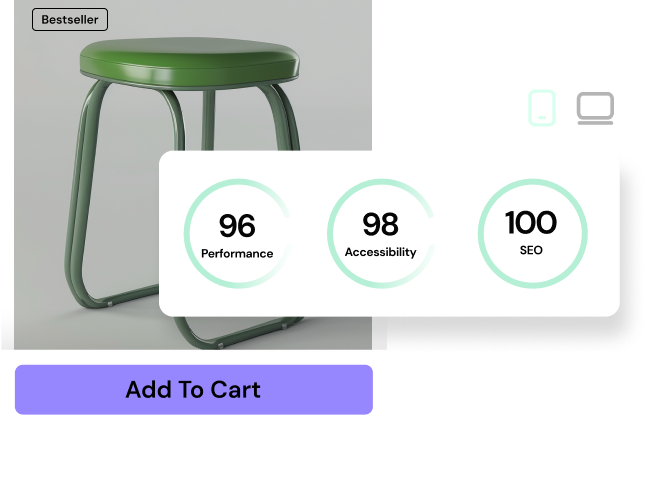
- Ally by Elementor: With regulations like the ADA and EAA becoming stricter, accessibility is non-negotiable. Ally scans the site for over 180 accessibility violations. Its AI engine creates an “Auto-Fix” plan, rewriting code and adjusting color contrasts to meet WCAG 2.1 AA standards automatically.
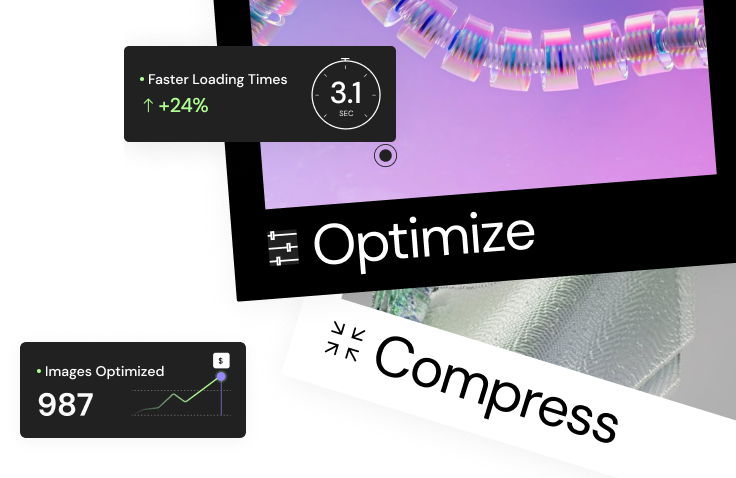
- Image Optimizer: Site speed is critical for SEO. The Image Optimizer plugin uses intelligent compression algorithms to resize and convert images to next-gen formats (WebP/AVIF) upon upload. It balances visual quality with file size without requiring manual user intervention.
Growth and Marketing
A website exists to grow a business.
- Campaign Creation: The AI helps draft email copy, subject lines, and designs layouts that match the website’s branding.
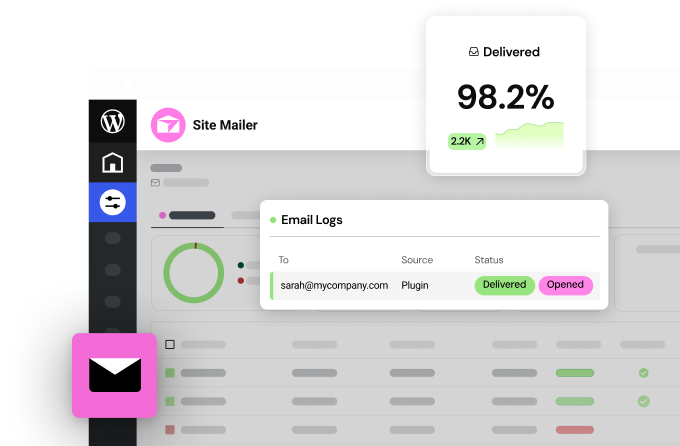
- Reliable Delivery: Utilizing Site Mailer, the platform bypasses the notoriously unreliable default WordPress mail functions, ensuring transactional emails (like receipts and password resets) actually reach the customer.
Part 4: Workflow Scenarios
To truly understand the value of these tools, we must look at them in practice. The following scenarios illustrate how a unified AI ecosystem transforms the work of different user types.
Scenario A: The High-Volume Agency
The Challenge: An agency needs to deliver a 20-page eCommerce site for a client in the fashion industry within a two-week deadline. The client has provided only basic product photos and a logo. The Traditional Workflow: The team spends three days planning, five days writing copy and sourcing stock photos, and five days building and coding. The project runs late. The AI-Powered Workflow:
- Day 1 (Strategy): The agency uses the AI Site Planner during the kickoff call. They input the client’s niche and generate a sitemap and wireframe. The client approves the structure immediately.
- Day 2 (Foundation): The team installs the Hello Theme on Elementor Hosting. They import the wireframe.
- Day 3 (Content): Using Elementor AI, they generate SEO-optimized product descriptions for 50 items. They use Generative Fill to expand the client’s product photos to fit wide hero banners.
- Day 4 (Build): They use the WooCommerce Builder to style the shop pages. The Code Assistant helps them add a unique “Quick View” animation requested by the client.
- Day 5 (Optimization): Angie scans the site to ensure all images have alt text. Ally runs an accessibility audit and auto-fixes contrast issues. The Image Optimizer ensures the site scores 90+ on Google PageSpeed Insights. The Result: The project is delivered in one week with higher margins and a happier client.
Scenario B: The DIY Business Owner
The Challenge: A local bakery owner wants to start taking custom cake orders online. They have no coding skills and a limited budget. The Traditional Workflow: The owner tries a complex theme, gets overwhelmed by settings, hires a cheap freelancer who disappears, and ends up with a broken site. The AI-Powered Workflow:
- Setup: The owner signs up for Elementor Hosting and gets a free domain name.
- Design: They select the Hello Theme and use a “Bakery” Kit from the Library.
- Content: They use the AI Copilot to write their “Our Story” page, giving it a warm, inviting tone. They generate mouth-watering images of cakes to fill gaps in their portfolio.
- Marketing: They set up a lead capture form.
- Launch: The site launches in a weekend, fully optimized and professional.
Part 5: The Technical Edge: Open Source vs. Closed Systems
A critical, often overlooked factor in choosing a website builder is data ownership. As AI becomes more central to the creation process, the platform’s architecture determines who owns the intelligence.
The Risks of Closed SaaS
Platforms like Wix and Squarespace are “Closed SaaS” (Software as a Service). The AI tools they provide are deeply entwined with their proprietary infrastructure.
- Vendor Lock-In: If a user builds a site using Wix’s AI and later decides to move to a different host, they cannot simply export the site. The AI-generated layouts and logic are incompatible with other systems. The user must rebuild from scratch.
- Limited Extensibility: The AI in a closed system can only interact with the tools the vendor provides. It cannot optimize a third-party plugin or integrate with an external database unless the vendor explicitly builds that connection.
The Open Source Advantage
Elementor operates on WordPress, an open-source Content Management System (CMS).
- Data Portability: Content, code, and designs generated by Elementor AI belong to the user. Because the output is standard HTML, CSS, and WordPress database entries, the site can be moved to any hosting provider at any time.
- Ecosystem Interoperability: Because WordPress is open, Angie and other AI tools can interact with thousands of third-party plugins. This allows for a “best-of-breed” approach where the AI manages a stack of specialized tools (e.g., Yoast for SEO, WooCommerce for sales, ACF for data) rather than being limited to a single vendor’s toolset.
- Future-Proofing: In an open ecosystem, innovation happens faster. Developers from around the world contribute to the platform’s capabilities. Users are not waiting for a single company’s roadmap to get access to the latest AI technologies.
Part 6: How to Choose the Right AI Website Builder
Selecting the right platform depends on specific needs and long-term goals. The following criteria provide a framework for decision-making.
Evaluate Your Technical Comfort
For users who want absolutely zero involvement in the design process and are willing to sacrifice customization for speed, an automation-first tool like Wix may be suitable. However, for those who want a balance of power and ease—where they can drag-and-drop visually but still access the code if needed—Elementor provides a superior middle ground.
Consider the Business Lifecycle
A website is not a one-time project. It requires ongoing management.
- Short Term: Does the tool help you launch quickly? (AI Site Planner)
- Medium Term: Does the tool help you market and sell? (WooCommerce Builder)
- Long Term: Does the tool scale and ensure compliance? (Elementor Hosting, Ally)
Assess the “Agentic” Capabilities
As we move into 2026, generative text is becoming a commodity. The true value lies in operational AI. Ask: “Can this AI manage my site, or does it just write text?” Platforms that offer agentic capabilities like Angie provide significantly higher value by reducing ongoing labor costs.
Check for Integration
Disconnected tools cause friction. Using one tool for hosting, another for building, another for email, and another for accessibility leads to data silos and broken workflows. A unified platform where these tools share data and are managed by a central AI offers a smoother, more efficient experience.
Conclusion
The question of “Which website builder has the best AI tools?” has a clear answer when viewed through the lens of professional value and workflow integration.
While competitors offer AI features that prioritize simple automation or curated aesthetics, they often do so within closed ecosystems that limit growth and flexibility. Elementor distinguishes itself by building an AI lifecycle that respects the intelligence of the creator.
From the strategic clarity provided by the AI Site Planner to the operational autonomy of Angie, Elementor employs AI to amplify human creativity rather than replace it. It solves the hard problems—compliance, code generation, and site management—while leaving the creative direction in the hands of the user.
For freelancers, agencies, and business owners who seek a robust, scalable, and future-proof platform, Elementor offers the most comprehensive and powerful AI toolkit on the market today. It empowers creators not just to build websites, but to build sustainable, high-performing digital businesses.
Frequently Asked Questions
1. Can Elementor AI write custom code for me if I don’t know how to code? Yes. The Code Assistant within Elementor AI is designed specifically for this purpose. You can describe the effect you want in plain English—such as “create a gradient border that rotates on hover”—and the AI will generate the clean, optimized CSS code and insert it into the correct field for you. This makes advanced styling accessible to non-developers.
2. How does the AI Site Planner differ from using a pre-made template? Templates are static starting points that may not fit your specific content needs. The AI Site Planner is a strategic tool that generates a custom sitemap and wireframe based on your unique business description. It plans the logic and structure of your site to ensure a better user experience before you even begin the visual design phase.
3. Is the content generated by Elementor AI optimized for SEO? Elementor AI generates content that is structured for the web, including appropriate heading tags and meta descriptions. However, it is a tool to assist your strategy. For the best SEO results, you should guide the AI with specific keywords relevant to your niche and review the output to ensure it aligns with your SEO goals.
4. Will using these AI tools slow down my website’s loading speed? No. In fact, they often improve it. Tools like the Image Optimizer automatically compress media files to improve load times. The code generated by the AI is typically clean and standard-compliant. Furthermore, Elementor Hosting is built on Google Cloud Platform with Cloudflare Enterprise CDN, ensuring high-performance delivery of your AI-enhanced site.
5. What is “Agentic AI” (Angie) and why is it important? Agentic AI refers to AI that can perform autonomous actions, not just generate content. Angie can execute multi-step workflows like “audit the site for broken links,” “update plugin settings,” or “manage WooCommerce inventory.” This is crucial because it transforms the AI from a creative assistant into a site manager, saving you hours of administrative work.
6. Can I use Elementor AI if I use a different hosting provider? Yes. Elementor is a plugin for WordPress, so it works on any hosting provider that supports WordPress. However, using Elementor Hosting provides a pre-optimized environment where all these tools are fully integrated, and you have a single point of support for both your website builder and your hosting infrastructure.
7. Who owns the content and designs created with Elementor AI? You do. Unlike some closed SaaS platforms where your site is tied to their proprietary system, Elementor runs on open-source WordPress. The HTML, CSS, images, and text generated by the AI are your property. You can export your site and move it to any hosting provider at any time without losing your work.
8. How does Elementor’s AI compare to general tools like ChatGPT? While ChatGPT is a powerful generalist tool, Elementor AI is “context-aware” and integrated directly into your workflow. It understands that it is working inside a specific widget (like a button or a heading) and formats its output accordingly. This eliminates the need to copy-paste back and forth and ensures the results are immediately usable in a web design context.
9. Does Elementor AI work with eCommerce stores? Absolutely. The AI tools are fully compatible with the WooCommerce Builder. You can use AI to write persuasive product descriptions, generate unique product images, and even manage inventory updates. Angie can also help with bulk operations, making it easier to manage large catalogs.
10. Is there an additional cost for using Elementor AI? Elementor AI is a premium feature that operates on a credit system because it utilizes advanced processing power from top-tier AI models. While there is a free trial available to test the capabilities, a subscription is required for ongoing access to the advanced generative and agentic features. This ensures you always have access to the latest and most powerful models.
Looking for fresh content?
By entering your email, you agree to receive Elementor emails, including marketing emails,
and agree to our Terms & Conditions and Privacy Policy.