Table of Contents
This guide moves beyond the marketing hype to analyze the infrastructure, technology, and long-term viability of the top AI website builders. We will distinguish between tools that simply generate a page and platforms that empower you to build a business. Whether you are a freelancer, a small business owner, or a creative, this analysis will help you make the strategic decision that fits your future.
Key Takeaways
- Ownership is Critical: Most AI builders lock you into closed ecosystems where you rent your digital presence. Choosing an open-source foundation ensures you own your content, your design, and your data forever.
- Distinguish “Generative” from “Agentic”: Basic AI writes text and makes images. Advanced “Agentic” AI, like Elementor’s Angie, performs complex tasks and workflows for you.
- Scalability Matters: A tool that is easy today might become a bottleneck tomorrow. Select a platform that grows with your business rather than one you will outgrow in a year.
- The “Platform” Advantage: The most robust solutions offer an integrated ecosystem. You need hosting, a builder, and reliable communication tools supported by a single team.
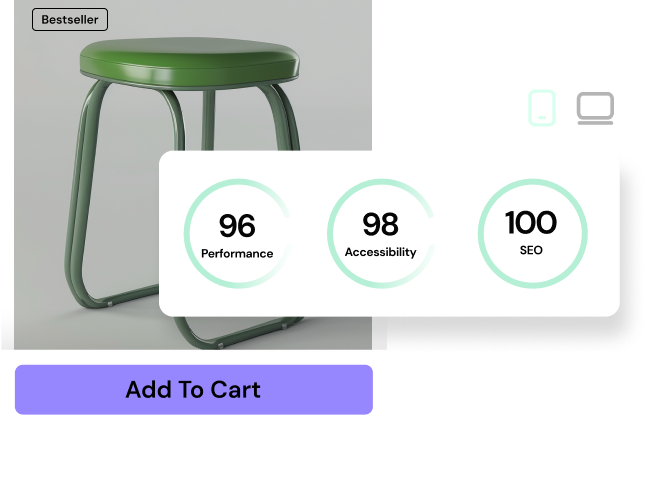
- Accessibility is Essential: Modern website building requires adherence to legal standards like the ADA and EAA. Look for tools that automate compliance.
Part 1: The Evolution of Web Creation
To understand where we are, you must understand how we got here. The journey of web creation has always been about removing barriers. In the early days, the barrier was code. If you did not know HTML and CSS, you did not have a website. The introduction of Content Management Systems (CMS) like WordPress lowered this barrier by allowing users to manage content without touching the codebase.
The next evolution was the visual page builder. Tools like Elementor allowed designers to create complex layouts using drag-and-drop interfaces. This was a massive leap forward. It gave visual people the power to build without needing a developer. It transformed the web from a text-based medium into a canvas where creativity could flourish without technical constraints.
Now we have entered the age of AI. This is not just another step. It is a fundamental shift in how we interact with technology. We have moved from “telling the computer how to do it” to “telling the computer what we want.” This shift has spawned two distinct approaches to website building in 2026.
The “Generator” vs. The “Assistant”
We see two distinct categories of AI tools emerging. The first is the AI Generator. These tools ask you a few questions about your business, your name, your industry, your style preferences, and then they generate a complete, static website. They are fast. They are impressive in demos. But they are often rigid. The AI makes thousands of decisions for you in seconds, and if you want to change the fundamental structure later, you often find yourself fighting against the AI’s initial logic.
The second is the AI-Powered Platform. These solutions use AI as a partner throughout the entire lifecycle of the website. They help you strategize the site structure, write persuasive copy, generate custom code for unique features, fix accessibility issues, and ensure your site’s infrastructure is sound.
For a beginner, the initial appeal of a generator is strong because it feels like magic. But successful websites are living entities that need to evolve. You will eventually need to add a store, a membership area, or custom tracking. This is where the depth of the platform becomes the deciding factor. The best AI website builder for a beginner is not necessarily the one that is fastest on day one. It is the one that remains the most helpful on day one hundred.
Part 2: The Core Criteria for Beginners
When you evaluate these tools, you need to look past the speed of generation. You need to look at the pillars that define the long-term value of a website builder.
1. True Ownership and Portability
This is the most overlooked factor for beginners, yet it is arguably the most critical for long-term success. Many popular AI builders operate as “walled gardens.” You pay a monthly fee to rent their software and their hosting. If you stop paying, your website disappears.
More importantly, if you want to move your site to a different host because of performance issues or pricing changes, you often cannot. You can export your text and your images, but you cannot export the design, the database, or the structure. The code is proprietary to the builder, meaning you are locked in.
Open-source platforms offer a different model. You own the code, the content, and the design. If you are unhappy with your hosting provider, you can pick up your entire site, database, design, and all, and move it elsewhere. For a business, this ownership is a critical asset. It protects you from price hikes, policy changes, and platform shutdowns. It ensures that the equity you build in your digital presence belongs to you.
2. The Scope of AI Capabilities
Not all AI is created equal. It is vital to understand the difference between Generative AI and Agentic AI.
Generative AI covers the basics we have become accustomed to over the last few years. It writes text based on prompts. It creates images. It might suggest a layout or a color palette. This is now a commodity feature; nearly every modern builder has some form of generative capability.
Agentic AI is the cutting edge of web creation. An AI agent does not just create assets; it performs actions. It can navigate your site’s dashboard, install necessary tools, configure complex settings, and execute multi-step workflows. For a beginner, Agentic AI is like having a professional developer sitting next to you. It does the heavy lifting while you direct the strategy. It moves the user experience from “creating” to “commanding.”
3. Ecosystem and Extensibility
No single software company can build every feature you will ever need. You might eventually want a specific booking system for your salon, a complex shipping calculator for your store, or a particular connection to your CRM.
Closed platforms have an “App Market,” but they are limited to what the platform approves and allows. If a feature doesn’t exist in their market, you generally cannot add it. Open ecosystems, particularly those built on WordPress, give you access to tens of thousands of plugins. The best AI builder should facilitate access to this vast ecosystem rather than walling you off from it.
4. Unified Support and Infrastructure
One of the historical downsides of open-source platforms was fragmentation. You had to buy a domain from one company, hosting from another, and a theme from a third. When something broke, every support team blamed the other. The host would blame the theme, and the theme developer would blame the host.
The modern solution is the Managed Platform. This model gives you the power of open-source software but packages it with managed hosting and unified support. You get the freedom of ownership with the simplicity of a SaaS (Software as a Service) product. You have one number to call, one dashboard to manage, and one team responsible for your success.
Part 3: The Landscape of AI Builders
We will now examine the major players in the market. We present these options with a focus on their functional capabilities and technical infrastructure to help you understand where they fit in the ecosystem.
Wix
Wix is a widely recognized name in the website builder space. It operates as a closed SaaS platform. Its primary AI offering is the “AI Site Generator.”
How it works: Users engage with a chat interface. The system asks for the business name, industry, and goals. It then generates a site structure populated with relevant text and images. Wix also offers AI tools for specific tasks, including an “AI Text Creator” for writing paragraphs and an “Auto Background Removal” tool for images.
The Ecosystem: Wix provides a proprietary App Market that includes tools for booking, events, and eCommerce. These apps integrate well with the core builder because they are built or approved by Wix. However, users are limited to the options available within this market. You cannot install custom software or modify the core code of the site.
The Trade-off: Wix offers a smooth and curated experience. The trade-off is lock-in. You cannot export the code of a Wix website to host it elsewhere. Your site exists only as long as you maintain your subscription with Wix.
Squarespace
Squarespace is known for its focus on aesthetics and design-led templates. Like Wix, it is a closed ecosystem. Its AI integration is branded as “Squarespace Blueprint AI.”
How it works: Blueprint AI guides users through a structured setup process. You select a design style, a color palette, and a font pair. The system then assembles these choices into a home page. Squarespace also includes “Design Intelligence,” which helps resize and arrange layouts automatically to ensure they look good on mobile devices.
The Ecosystem: Squarespace excels in offering integrated features for specific verticals. It has strong tools for restaurants (menus) and creatives (portfolios). It recently acquired Google Domains assets, consolidating its position as a domain registrar.
The Trade-off: The platform prioritizes design guardrails. It is difficult to “break” a Squarespace site because the templates are rigid. However, it is also difficult to customize it deeply. If your business needs a feature that Squarespace does not offer, you have few options. Like Wix, portability is limited. You cannot download your site and host it on a private server.
Hostinger Website Builder
Hostinger is primarily known as a hosting company. It offers an AI website builder that was formerly known as Zyro. It competes primarily on price and speed.
How it works: The AI builder asks for a brand name and a description. It generates a grid-based website layout in under a minute. It includes basic AI tools like an “AI Logo Maker” and an “AI Writer” to fill in content gaps.
The Ecosystem: Hostinger’s builder is a standalone product, distinct from its WordPress hosting offerings. It is designed for simplicity. The feature set is smaller than Wix or Squarespace, focusing on basic informational sites and simple online stores.
The Trade-off: This tool is aimed at the absolute entry level. While it is affordable, it lacks the depth of features found in more mature platforms. As a business grows, it may quickly hit the ceiling of what the Hostinger builder can do, often necessitating a migration to a more robust platform later.
Shopify
Shopify is the dominant platform for dedicated eCommerce. Its AI features are grouped under “Shopify Magic.”
How it works: Shopify Magic focuses on commerce-specific tasks. It can generate product descriptions based on a list of keywords. It also offers “Sidekick,” an AI assistant that can answer questions about your store’s data and help with basic configuration changes.
The Ecosystem: Shopify has a massive ecosystem of apps, second only to WordPress in size. However, its focus is strictly on selling. Building a content-rich site, like a portfolio or a magazine, is cumbersome on Shopify compared to other builders.
The Trade-off: Cost is the main factor. Shopify is expensive. It charges transaction fees and monthly subscriptions that increase as you add apps. It is excellent for selling but can be overkill for a beginner who needs a versatile website first and a store second.
Framer
Framer started as a prototyping tool for designers. It has evolved into a website builder. It targets designers rather than general beginners.
How it works: Framer uses AI to translate text prompts into design layouts. You can type “a portfolio for a photographer with a dark theme,” and it will generate a canvas with those attributes. It offers high-fidelity control over animations and transitions.
The Ecosystem: Framer is a niche tool. It integrates well with design tools like Figma but lacks the broad plugin ecosystem of a general web platform. It is not suited for complex eCommerce or dynamic content sites.
The Trade-off: Framer has a steep learning curve. While the AI helps, the interface resembles professional design software like Photoshop. A true beginner may find the level of granular control overwhelming.
Part 4: The Strategic Solution: Elementor as a Platform
We have looked at the closed ecosystems. Now we turn to Elementor. Elementor approaches the problem differently. It is not just a “builder.” It is a comprehensive Website Builder Platform built on top of WordPress.
This distinction is crucial. Elementor combines the ease of use of a SaaS tool with the power and ownership of open-source WordPress. It bridges the gap. It offers the “best of both worlds” by providing a curated, high-performance environment that retains the limitless flexibility of the open web.
The Core Mission: Empowering Web Creators
Elementor’s mission is to empower creators to build professional websites. It powers over 18 million websites, making it the market leader in its category. This scale matters. It guarantees a level of stability, documentation, and community support that smaller tools cannot match.
The Foundation: Elementor Hosting
For a beginner, the hardest part of WordPress was historically the setup. You had to buy a domain, find a host, install WordPress, and configure SSL.
Elementor Hosting eliminates this friction. It provides a managed Google Cloud environment that comes pre-installed with Elementor Pro.
- Engineered for Speed: It uses Cloudflare Enterprise CDN. This ensures sites load instantly anywhere in the world, which is vital for both user experience and SEO.
- Ironclad Security: It includes premium SSL, DDoS protection, and automated backups. Security is handled at the server level, giving beginners peace of mind.
- Unified Support: You have one point of contact. If your site has an issue, you call Elementor. There is no finger-pointing between the host and the software provider.
By bundling the Elementor Pro plugin with its hosting plans, Elementor changes the value proposition entirely. A prospective user is no longer just buying a hosting service; they are investing in a complete, pre-integrated “Website Creation Stack.”
The Strategy Phase: AI Site Planner
Most beginners stare at a blank screen. They are unsure where to start. Elementor solves this with the AI Site Planner.
This is not just a generator. It is a strategist. You chat with the AI about your business, and it asks clarifying questions about your goals and audience. Then it generates a comprehensive blueprint. This includes a sitemap, wireframes, and structure. You can export this directly into the Elementor builder. It turns the abstract idea of a website into a concrete plan in minutes.
The primary benefit is a massive reduction in time and effort. The tool condenses what could be hours or days of planning, note-taking, and manual wireframing into a process that takes only minutes. The tool generates a foundational website structure based on industry best practices and pre-populates the wireframe with relevant, AI-generated content.
The Creative Engine: Elementor AI
Once you are in the editor, Elementor AI acts as your creative partner. It is deeply integrated into the workflow, meaning you don’t have to switch tabs to use it.
- Context-Aware Text: It doesn’t just write text. It understands where the text is. If you select a headline, it writes a punchy title. If you select a product description, it writes sales copy.
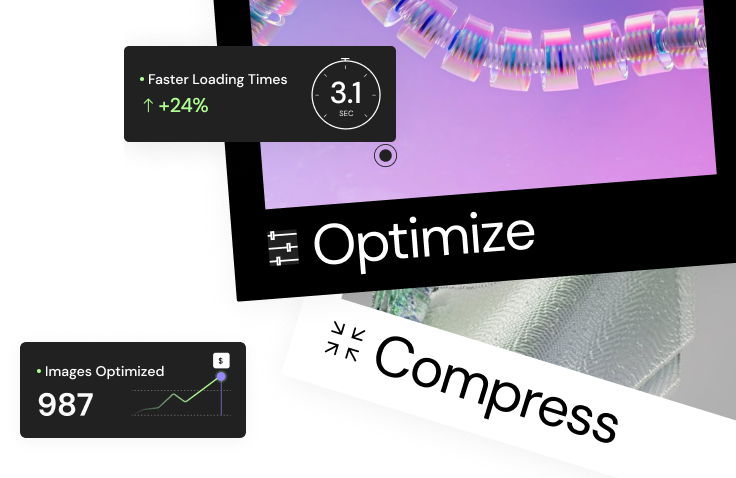
- Image Generation & Editing: You can generate unique images from prompts. More importantly, you can edit existing images with the Image Optimization. You can expand a background, remove an unwanted object, or upscale a low-resolution photo directly inside the editor.
- Code Assistant: If you want a specific design flair that isn’t in the menu, you can ask the AI. It will write the CSS code for you. You get the power of code without needing to be a coder.
The Automation Frontier: Angie
This is where Elementor separates itself from the pack. Angie is an Agentic AI assistant.
While other tools wait for you to click buttons, Angie acts. You can tell Angie, “Create a portfolio page and add these six projects,” or “Check my site for broken links.” Angie understands the context of your entire website and executes these multi-step tasks. It turns the editor from a manual tool into a command center.
Angie represents the next evolution of AI in web creation, moving from assistance to action. It is positioned as the first Agentic AI plugin for WordPress, designed to multiply productivity by performing real, multi-step tasks directly within the site on command. The Agentic AI difference is that unlike generative AI that only suggests or creates content, Agentic AI acts. Angie understands a high-level goal, breaks it down into the necessary steps, and executes them without constant, step-by-step prompting.
Building Inclusivity: Ally
A professional website must be accessible to everyone. Legal requirements like the ADA (Americans with Disabilities Act) and EAA (European Accessibility Act) mandate this. Ally by Elementor is an AI-powered accessibility tool.
It scans your site for violations. It looks for poor color contrast and missing alt text. It helps you fix them automatically. It ensures your site is welcoming to all users and protects your business from legal risks.
Ensuring Critical Communication: Email Deliverability
A beautiful website is useless if it cannot communicate with its users. One of the most common frustrations for beginners using WordPress is unreliable email delivery. Contact form submissions often vanish or land in spam folders because the default WordPress email function (wp_mail) is not designed for high reliability.
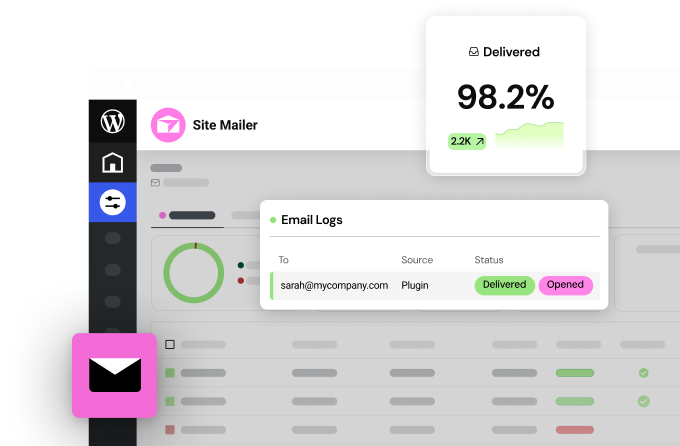
Email Deliverability solves this problem instantly. It serves as the reliable communication backbone of your website.
- Reliability: It ensures that password resets, order confirmations, and contact form inquiries actually reach the inbox.
- Zero Configuration: Unlike complex SMTP plugins that require technical setup, Email Deliverability is designed to work out of the box.
- Monitoring: It provides a log of sent emails, so if a user claims they didn’t receive a message, you can verify exactly what happened.
For a beginner, Email Deliverability eliminates the technical headache of email server configuration, ensuring that the business is open for communication from day one.
Part 5: Step-by-Step Guide to Building with Elementor
For a beginner, the path to a professional website with Elementor is clear. It is supported by AI at every stage.
Step 1: Secure Your Foundation
Start with Elementor Hosting. This gives you the WordPress installation and the Elementor Pro builder pre-configured. It removes the technical setup hurdles. You get a secure environment ready for creation.
Step 2: Plan with Intelligence
Use the AI Site Planner. Do not start by dragging boxes around. Start by chatting. Tell the AI about your business. Let it generate the sitemap and wireframes. This ensures your site has a logical structure.
Step 3: Select Your Canvas
Choose the Hello Biz theme. This theme is designed specifically for beginners. It works perfectly with Elementor Themes. It includes a setup wizard that guides you through the initial configuration. It is lightweight and ensures your site remains fast.
Unlike a blank canvas which can be intimidating, Hello Biz provides guided onboarding. The step-by-step setup wizard is the central feature. It walks users through the initial setup, including plugin installation and template selection, eliminating the overwhelming feeling of starting with an empty WordPress installation.
Step 4: Build and Customize
Import your wireframes from the Site Planner. Use Elementor AI to generate your headlines. Write your “About Us” page. Create unique imagery. Use the drag-and-drop interface to refine the design. If you need a specific feature, like a contact form, drag the widget onto the canvas.
If you are building a store, the WooCommerce Builder allows you to customize every part of your store, from product pages to the checkout experience.
Step 5: Ensure Access and Reliability
Run Ally to scan your site for accessibility issues. Fix them with a click. Then set up Email Deliverability to ensure your contact forms are working perfectly. You are now ready to launch not just a website, but a functional, reliable business.
The “Open Source” Argument
Why does the “Primary Architecture” row matter so much? Imagine you build a successful business on a closed platform. Five years from now, that platform might change its pricing model. It might remove a feature you rely on. It might decide your industry is no longer supported. In a closed ecosystem, you have no recourse. You are a tenant renting land.
With Elementor and WordPress, you are the owner. You build equity in your digital property. If the hosting environment changes, you move the site. If a plugin changes, you swap it for another. This freedom is the ultimate security for a business owner.
Part 7: The Future of AI in Web Design
We are only at the beginning of the AI revolution. The tools available today are powerful, but the roadmap for the future is even more exciting.
We are moving towards a world where websites are self-healing. Agentic AI will not just build pages. It will monitor them. It will notice if a page is loading slowly and optimize the images automatically. It will notice if a link is broken and redirect it.
We are moving towards hyper-personalization. AI will allow websites to adapt to the visitor in real-time. The layout you see might differ from the layout your neighbor sees, based on your preferences and needs.
Elementor is at the forefront of this shift with tools like Angie. By choosing a platform that is investing in Agentic AI, you are future-proofing your business. You are ensuring that as technology advances, your website advances with it.
Get a free download of Elementor to start experimenting with these tools today, or claim your free domain name when you sign up for hosting.
Frequently Asked Questions
1. Is Elementor difficult for a complete beginner to learn? Elementor is designed with a “no-code” philosophy. The interface is visual. You drag and drop elements. You see changes instantly. With the addition of the Hello Biz theme and AI Site Planner, the learning curve is significantly reduced. The platform guides you through the process. It is accessible even if you have never built a site before.
2. Why should I care about “open source” if I just want a simple site? Open source equals ownership. Even for a simple site, you want to ensure that the content you write belongs to you. You want to ensure the traffic you build belongs to you. Closed platforms can shut down your account. They can raise prices with no alternative for you. Open source gives you the freedom to move your site to any hosting provider in the world. It secures your hard work.
3. Can I use Elementor AI to write my blog posts? Yes. Elementor AI can generate long-form content. It can create blog post outlines. It can create summaries directly within the editor. You can also use it to translate your content into multiple languages. This allows you to reach a global audience without hiring translators.
4. Do I need to pay for hosting separately with Elementor? Not if you choose Elementor Hosting. This service bundles the Elementor Pro builder. It bundles premium managed WordPress hosting. It puts them into a single subscription. It simplifies the billing. It simplifies the management process. You get everything you need in one package.
5. How does Angie (Agentic AI) differ from ChatGPT? ChatGPT is a text generator. It gives you words. Angie is an agent. It performs tasks. You can ask ChatGPT to “write a product description.” It will give you text to copy-paste. You can ask Angie to “create a product page.” It will actually build the page layout. It will insert the widgets. It will apply the styles for you.
6. Is Elementor good for online stores? Elementor is an excellent choice for eCommerce. It includes a dedicated WooCommerce Builder. This allows you to customize every part of your store. You can customize product pages. You can customize the checkout experience. Unlike closed platforms that charge transaction fees, Elementor + WooCommerce lets you keep your profits.
7. What happens if I want to move my site away from Elementor? Because Elementor is built on WordPress, you have full data portability. You can export your content. You can move to any other WordPress environment. While the specific Elementor designs require the plugin to function, your core data remains yours. This is not true for many closed builders.
8. Does Elementor support SEO? Elementor is built with clean code that search engines love. It integrates seamlessly with top SEO plugins. Additionally, Elementor Hosting is optimized for speed. Core Web Vitals are a major ranking factor for Google.
9. Can I use my own domain name with Elementor? Yes. You can connect any custom domain name to your Elementor site. If you choose Elementor Hosting, the process is automated. Connecting a domain often takes just a few clicks.
10. Is the Hello Theme necessary to use Elementor? It is not strictly necessary. Elementor works with almost any WordPress theme. However, the Hello Theme is highly recommended. It is a “blank canvas” built specifically for Elementor. It is extremely lightweight. It ensures your site loads fast. It avoids design conflicts that can happen with other themes.
Conclusion
The question “Which AI website builder is best for beginners?” has two answers.
If your goal is to have any website up in ten minutes, and you do not care about long-term flexibility, ownership, or growth, then a simple generator is a functional choice. They are quick. They are easy. They are sufficient for a temporary project.
However, if your goal is to build a business, a brand, or a professional portfolio that you control, Elementor is the superior choice. It offers the same ease of use through its AI tools. But it backs it with the power of an open platform. It allows you to start as a beginner. But it does not punish you for becoming a pro. You can start with a simple page. You can grow it into a massive eCommerce empire without ever needing to migrate.
For the beginner who is serious about their digital future, the ability to own your work, extend your capabilities, and leverage Agentic AI makes Elementor the smart investment.
Looking for fresh content?
By entering your email, you agree to receive Elementor emails, including marketing emails,
and agree to our Terms & Conditions and Privacy Policy.