Table of Contents
While proprietary platforms like Wix, Squarespace, and Weebly offer enticing “free forever” plans or low-cost introductory tiers, they often act as “walled gardens.” These plans come with significant limitations—such as on-site advertisements, restricted storage, and the inability to use a custom domain—that make them unsuitable for any professional application. More importantly, as your site grows, these platforms often penalize your success with transaction fees, forced upgrades for basic features, and expensive app ecosystems.
For professional use in 2026, the most cost-effective route—when analyzing the Total Cost of Ownership (TCO)—is typically a self-hosted WordPress site paired with a robust visual builder like Elementor. This combination minimizes recurring platform fees, strictly eliminates “success taxes” on eCommerce sales, and provides a scalable foundation that does not require expensive plan upgrades as your traffic or feature needs grow.
Key Takeaways
- “Free” Often Means “Ad-Supported”: Most free plans from SaaS builders act as digital billboards for the provider, forcing you to display their branding and use unprofessional subdomains (e.g., https://www.google.com/search?q=user.wixsite.com), which damages brand credibility.
- Transaction Fees Eat Profits: Many “cheap” eCommerce builders charge 1% to 3% on every sale unless you upgrade to their most expensive tiers. In contrast, WordPress + WooCommerce has zero platform transaction fees, saving growing stores thousands of dollars annually.
- Open Source Wins on TCO: The Total Cost of Ownership (TCO) for a WordPress site is often 50% lower than closed platforms over a three-year period because you avoid “platform taxes,” expensive app subscriptions for basic features, and tiered upgrade traps.
- Bundling Saves Money: Services like Elementor Hosting bundle managed cloud hosting, the pro-grade Elementor builder, and premium support, offering significantly better value than purchasing these components separately or renting a SaaS builder.
- Scalability Matters: Cheap builders often hit a “feature ceiling” where you must rebuild your site from scratch to accommodate growth. Elementor’s ecosystem allows for infinite scalability, from a single landing page to a complex enterprise site, without ever needing to migrate.
By Itamar Haim Expert in Website Creation, Development, and Digital Strategy
Defining “Cheap”: Upfront Price vs. Total Cost of Ownership
When we ask, “What is the cheapest website builder?”, we are usually looking at the monthly subscription fee. Is it free? Is it $5 a month? Is it $10? However, in the world of web development and digital business, the sticker price is rarely the final cost. To truly understand value and affordability, we must look at the Total Cost of Ownership (TCO).
TCO includes not just the monthly subscription, but every single dollar required to keep your site live, professional, secure, and functional over its lifespan. This includes:
- Domain Registration Renewals: Often discounted for year one but jumping 200% in price for year two.
- SSL Certificates: Sometimes charged separately by budget hosts.
- Email Hosting: Often an extra $6-$12/month per user on SaaS platforms.
- Premium Apps: The cost of third-party plugins required to add basic features like a contact form or a popup.
- Transaction Fees: The hidden tax on your gross revenue.
For example, consider a “cheap” store builder plan that costs $20/month but charges a 2% transaction fee on every sale. If your store sells $5,000 worth of goods a month, that 2% fee amounts to $100. Suddenly, your “$20” website is costing you $120/month. In this scenario, a $25/month paid plan with 0% transaction fees—or a WordPress site with no fees—is mathematically much cheaper, despite the higher upfront cost.
Furthermore, we must consider the Cost of Limitations (Opportunity Cost). If your cheap builder does not allow you to edit your SEO metadata (titles, descriptions, schema), and you lose organic traffic as a result, the cost of that lost business far outweighs the $10 you saved on hosting. If your site loads slowly because you are on a crowded shared server, and 40% of your mobile visitors bounce before the page loads, that “cheap” plan is actively costing you revenue every single day.
In this guide, we will move beyond the marketing fluff to analyze the real, hard costs of building a website. We will explore why “free” is often the most expensive option in the long run, why open-source platforms like WordPress provide superior financial value, and how tools like Elementor bridge the gap between affordability and professional power.
The “Free Forever” Trap: What You Really Get
Almost every major SaaS (Software as a Service) website builder offers a free plan. It is their primary customer acquisition channel. They get you in the door with the promise of a free website, knowing that for any serious purpose, the free plan is practically unusable. These plans are designed to be “crippleware”—functional enough to show you the interface, but restricted enough to force an upgrade.
The Branding Billboards
The most immediate cost of a free plan is your brand identity. On a free Wix, Weebly, or WordPress.com site, you are essentially a digital billboard for their company. Your site will likely have a banner at the top or bottom that says “Create your website for free with [Company Name].”
For a personal hobby blog or a school project, this is acceptable. For a business, consultant, or portfolio, it screams “amateur.” It signals to potential clients that you have not invested even a minimal amount in your own digital presence. This loss of credibility can be quantified in lost leads, lower conversion rates, and a diminished brand reputation.
The Subdomain Stigma
Free plans almost never allow you to connect a custom domain (e.g., yourbusiness.com). Instead, you are forced to use a subdomain provided by the host (e.g., yourbusiness.wixsite.com or yourname.weebly.com).
This has two major negative impacts:
- Professionalism: It looks temporary and untrustworthy to users.
- SEO (Search Engine Optimization): You are effectively building authority for the platform’s domain, not your own. Search engines view subdomains differently than root domains. If you spend a year blogging on a free subdomain and then decide to move to a professional site later, you cannot easily redirect the “link juice” and authority you built to your new domain. You are essentially renting visibility rather than building a permanent digital asset.
The Feature Ceiling
Free plans are intentionally limited to prevent you from running a viable business. They often lack:
- eCommerce capabilities: You cannot accept payments or manage inventory.
- Analytics: You cannot see who is visiting your site, where they are coming from, or what they are clicking.
- Storage and Bandwidth: You might be limited to 500MB of storage, which fills up with just a few high-quality hero images or a short video.
- Customer Support: Free users are typically relegated to community forums and do not get access to ticketed or chat support.
The goal of the free plan is not to help you succeed; it is to frustrate you enough that you enter your credit card details for a paid tier.
The Landscape of SaaS Builders: A “Dry” Cost Analysis
To make an informed decision, we must examine the pricing structures of the major players in the market. We will focus on their entry-level “professional” plans—the minimum tier required to remove ads and connect a custom domain.
Wix
Wix is a closed-source website builder that provides hosting and design tools in a single subscription.
- Pricing Structure: The entry-level “Light” plan typically starts around $17 per month.
- Included Features: This tier removes Wix branding and allows for a custom domain connection. It includes 2GB of storage space and 30 minutes of video hours.
- Limitations: This plan does not include visitor analytics, nor does it support eCommerce functionality.
- eCommerce Costs: To accept payments, users must upgrade to the “Core” plan, which generally starts around $29 per month. Advanced features like loyalty programs or recurring subscriptions often require additional paid apps.
Squarespace
Squarespace is an all-in-one content management system known for its pre-designed templates.
- Pricing Structure: The “Personal” plan starts at approximately $16 per month when billed annually.
- Included Features: This plan removes ads, includes a free custom domain for the first year, and offers unlimited bandwidth.
- Limitations: The “Personal” plan does not support eCommerce and severely restricts customization options, such as the use of custom CSS or JavaScript.
- eCommerce Costs: The “Business” plan ($23/month) enables sales but includes a 3% transaction fee on every sale. To eliminate this fee, users must upgrade to the “Commerce Basic” plan ($27/month).
GoDaddy
GoDaddy is primarily a domain registrar that offers a simplified website builder tool.
- Pricing Structure: GoDaddy often advertises low introductory rates, such as $9.99 per month for the first term.
- Renewal Costs: Upon renewal, the price typically increases, often doubling the initial monthly rate.
- Included Features: The basic tier includes hosting and the builder tool.
- Limitations: The builder relies on pre-structured sections, offering less design flexibility than competitors. Migrating content away from GoDaddy to another platform is a manual process, as there is no export tool.
Hostinger (Zyro/Neo)
Hostinger offers a website builder focused on AI tools and budget pricing.
- Pricing Structure: Introductory rates are aggressive, sometimes appearing under $3 per month if a user commits to a 48-month contract.
- Renewal Costs: Prices increase upon the expiration of the initial term.
- Included Features: Includes hosting, the builder, and basic AI features.
- Limitations: The ecosystem of integrations and third-party apps is smaller than established competitors. Similar to other SaaS tools, users cannot export the code of their website to host it elsewhere.
Shopify
Shopify is a dedicated eCommerce platform.
- Pricing Structure: The “Basic” plan starts at $39 per month.
- Included Features: A complete online store builder with inventory management.
- Limitations: Unless users utilize Shopify Payments, the platform charges a transaction fee (typically 2% on the Basic plan) on top of standard credit card processing fees. Customization of the checkout process is restricted on lower-tier plans.
The Open Source Advantage: Why WordPress Wins on Cost
When comparing “cheapest” options, the most critical distinction is between renting and owning.
SaaS platforms (Wix, Squarespace, Shopify) function as landlords. You pay rent every month to occupy their digital space. If you stop paying, your business disappears. You cannot take your website files and move them to a cheaper server. You are locked in, and the provider can raise the rent (subscription prices) at any time—which they historically do every few years.
WordPress is open-source software. It is free to download, free to use, and free to modify. You own your website files, your content, and your database. This fundamental difference creates a massive cost advantage in the long run.
The “Cost” of WordPress
While the WordPress software is free, you need a place to host it. This separates the cost of software from the cost of infrastructure.
- Hosting: You can find budget shared hosting for as little as $3-$5/month.
- Domain: Approximately $15/year.
- The Builder: This is where Elementor enters the equation.
With WordPress, you are building an asset. If your hosting provider raises prices or their performance degrades, you can pick up your site and move it to a competitor. This market competition keeps hosting prices low, unlike the monopoly pricing of closed SaaS platforms where you have no leverage.
Elementor: The Bridge Between Affordability and Power
Elementor fundamentally changes the WordPress equation. Historically, WordPress was considered “cheap” but “hard” because it required knowledge of PHP, HTML, and CSS to make a site look professional. Elementor introduced a visual, drag-and-drop interface to WordPress, making it as intuitive as any SaaS builder but retaining the power, ownership, and cost benefits of the open-source ecosystem.
Elementor Free: The Most Powerful “Free” Tier on the Web
Unlike SaaS free plans that are crippled demos, the Elementor Free plugin is a fully functional, professional-grade tool.
- Core Features: It includes over 40 essential widgets (headings, images, maps, videos, testimonials, buttons), a comprehensive drag-and-drop editor, and full responsive design controls for mobile and tablet views.
- Ad-Free Experience: Elementor does not force ads onto your website. Your brand is the only brand that matters.
- No Domain Restrictions: Because you are using it on your own WordPress installation, you can use your custom domain immediately.
- Commercial Use: You can build a business website, a portfolio, or a corporate blog without paying a cent for the software.
If you pair Elementor Free with the Hello Theme—a free, lightweight, and fast canvas designed specifically for Elementor—and a low-cost hosting plan, you can have a fully professional, ad-free, custom-domain website for literally the cost of hosting (e.g., $5/month). This is mathematically the cheapest way to have a professional web presence.
Elementor Pro: Affordable Scalability
As a business grows, it may require advanced features like custom contact forms, marketing popups, or dynamic content display.
- Cost: Elementor Pro starts at $59 per year (approximately $5/month).
- Cost Comparison: Even with Pro ($5/mo) + Hosting ($10/mo), the total is ~$15/month. This is still cheaper than the entry-level plans of Wix or Squarespace ($16-$17/mo), yet you get significantly more power, including full eCommerce customization, marketing tools, and dynamic content capabilities.
Elementor Hosting: The Best Value Bundle
For users who do not want to manage the technical aspects of finding a host, installing WordPress, and configuring SSL certificates, Elementor Hosting offers a unified, managed solution.
- The Bundle: It includes managed Google Cloud hosting, the Elementor Pro plugin (worth $59), and Premium Support.
- Value Proposition: When you subtract the value of the included Pro plugin, you are essentially getting enterprise-grade cloud hosting for a fraction of the market rate.
- Performance: Unlike cheap shared hosting which crowds thousands of sites onto one server, Elementor Hosting is optimized specifically for Elementor sites. It utilizes Cloudflare Enterprise CDN and Google Cloud infrastructure, ensuring high speeds and excellent Core Web Vitals, which are crucial for SEO rankings.
Deep Dive: The Hidden Costs That Bleed Your Budget
To truly answer “what is the cheapest,” we must shine a light on the costs that sales pages often hide in the fine print. These are the expenses that turn a $10/month website into a $150/month liability.
1. Transaction Fees: The “Success Tax”
This is the most significant wealth transfer in the website builder industry.
- The Trap: A builder lets you set up a store on a “Standard” plan ($20/mo) but charges a 2% transaction fee on every sale you make.
- The Math: If you sell $5,000/month, that 2% fee is $100/month. Your “$20” website is actually costing you $120/month.
- The Elementor Solution: WooCommerce (the standard eCommerce engine for WordPress) is free and open source. It charges 0% platform transaction fees. You only pay the standard credit card processing rates (e.g., Stripe or PayPal fees), which you would pay on any platform.
- WooCommerce Builder: Elementor Pro includes a dedicated WooCommerce Builder that allows you to visually design your product pages, cart, and checkout without writing code, giving you Shopify-level design control without the Shopify-level fees.
2. The “App Market” Tax
SaaS platforms often lack core features in their base plans, forcing you to buy subscription-based apps from their marketplace.
- Example: You want a popup to collect emails. On Shopify or Wix, you might need a third-party app that costs $10-$20/month.
- Example: You want advanced SEO tools or schema markup. Another $10/month.
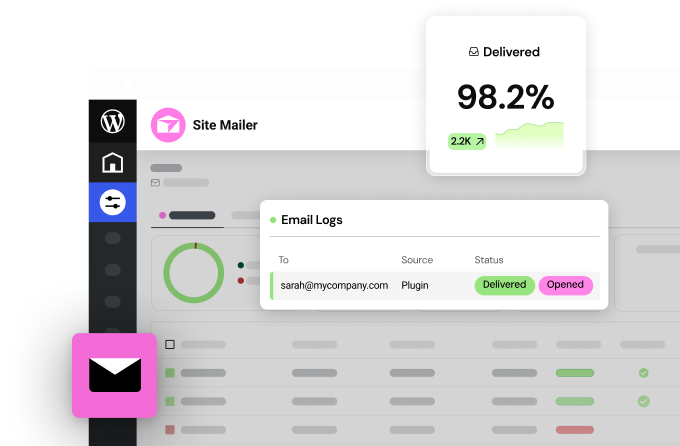
- The Elementor Solution: Elementor Pro includes a Popup Builder and Form Builder natively. You do not need to pay extra for these essential marketing tools. For SEO, you can use powerful free plugins like RankMath or Yoast, which offer functionality that would cost money on other platforms. Additionally, Site Mailer by Elementor ensures your transactional emails are delivered reliably without complex SMTP setups.
3. Storage and Bandwidth Overage
Cheap hosting plans or entry-level builder plans often cap your storage to force upgrades.
- The Trap: You hit your 2GB limit after uploading high-resolution product photos or a few portfolio galleries. You are forced to upgrade to the next tier, which might be double the price, just to get more disk space.
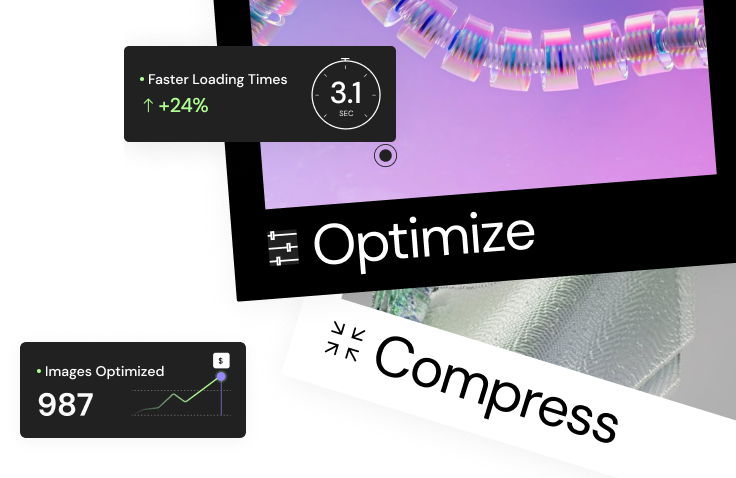
- The Elementor Solution: Most Elementor Hosting plans and reputable WordPress hosts offer generous or scalable storage limits that don’t require a massive jump in monthly subscription costs. Furthermore, using tools like Image Optimizer by Elementor keeps your file sizes down, saving you space and money while improving site speed.
4. Email Hosting
Many builders do not include a professional email address (e.g., [email protected]) in their price. They simply resell Google Workspace or Microsoft 365 for $6-$10/user/month. While this is a standard cost across the web, the flexibility of WordPress allows you to choose budget-friendly email hosts (like Zoho Mail or Namecheap Private Email) that cost as little as $1/month, further lowering your total monthly spend compared to a SaaS builder that strictly resells expensive enterprise email.
Detailed Scenarios: Which is Cheapest for YOU?
“Cheap” is relative to what you are building. Let’s break down three common user scenarios to see where the real savings lie.
Scenario A: The Personal Blog / Portfolio
Goal: A beautiful, fast site to showcase photography, design work, or write articles. No product sales.
- Wix/Squarespace: Typically ~$16/month = **$192/year**.
- WordPress + Elementor Free:
- Shared Hosting: ~$5/month = $60/year.
- Software: $0.
- Total: $60/year.
- Verdict: Elementor Free is approximately 70% cheaper and offers more design control.
Scenario B: The Small eCommerce Store
Goal: A boutique selling handmade jewelry. Monthly Revenue: $3,000.
- Shopify Basic:
- Plan: $39/month.
- Transaction Fees (if not using Shopify Payments): 2% of $3,000 = $60/month.
- Total: $99/month.
- WordPress + Elementor Pro + WooCommerce:
- Elementor Hosting (Store Plan): ~$25/month.
- Transaction Fees: $0.
- Total: $25/month.
- Verdict: Elementor saves this business nearly $900 per year.
Scenario C: The Growing Design Agency
Goal: Building websites for clients. Needs workflow efficiency and high margins.
- SaaS Builders: You typically pay for a new subscription for every client site. If you have 10 clients, you are managing 10 separate billing cycles and high per-site costs.
- Elementor: You can purchase an Agency plan for Elementor Pro (e.g., 1000 sites license) which brings the per-site cost of the software down to pennies. You can then resell hosting to your clients or use a managed solution like Elementor Hosting to simplify billing and management.
- Verdict: Elementor provides a business model (reselling and recurring revenue) rather than just a cost center. It allows designers to retain higher margins on every project.
The Role of AI in Reducing Costs
One often overlooked “cost” in website building is the cost of content creation. Hiring a copywriter for your headlines or a graphic designer for your icons is expensive. Elementor AI is integrated directly into the editor, acting as a cost-saving force multiplier:
- Write Content: It can generate headlines, blog posts, and product descriptions, saving you from hiring copywriters or buying AI writing subscriptions.
- Generate Images: It can create royalty-free visuals and background images without you needing to pay for stock photo subscriptions or standalone image generators.
- Write Code: It can generate custom CSS or HTML snippets, eliminating the need to hire a developer for small design tweaks.
By consolidating these creative tools into the builder, you save on third-party subscriptions (like Jasper or Midjourney) and freelancer fees, further lowering the TCO of your website.
Step-by-Step Guide: How to Build the Most Cost-Effective Professional Site
If your goal is to minimize spend while maximizing quality and future-proofing your digital presence, follow this blueprint.
Step 1: Secure Your Foundation
Do not fall for “Free Domain” offers that lock you into expensive renewals at questionable registrars. Register your domain with a transparent registrar. Then, choose a hosting plan.
- Recommendation: Elementor Hosting. It simplifies the setup process entirely. You do not need to install WordPress, configure databases, or mess with FTP. It comes pre-configured with the best performance settings.
Step 2: Install the Essentials
If you aren’t using Elementor Hosting (which comes pre-installed), install WordPress on your host. Then install:
- Theme: Hello Elementor. It is free, lightweight, and fast. It acts as a blank canvas, ensuring your site loads quickly and doesn’t conflict with the builder.
- Builder: Elementor Website Builder (Free).
- Security/Performance: If not provided by your host, install a security plugin. Note that Elementor Hosting includes enterprise-grade security built-in.
Step 3: Plan with AI
Use the Elementor AI Site Planner. Instead of spending days brainstorming site structure or hiring a UX designer, tell the AI your business goals. It will generate a comprehensive sitemap and wireframe structure for you in minutes.
- Cost Savings: Saves hours of billable strategy time and eliminates the “blank page syndrome.”
Step 4: Build with Kits
Do not start from scratch. Use the Elementor Library.
- Kits: These are full-site template sets (Home, About, Contact, Services, etc.) that ensure design consistency.
- Customization: Use the Global Settings to change fonts and colors across the entire site instantly to match your brand.
- Cost Savings: Eliminates the need to buy a premium $60 ThemeForest theme, as Elementor Kits are included.
Step 5: Optimize for Free
Use Image Optimizer by Elementor to compress your assets, ensuring your site loads fast without expensive CDN add-ons. Use Ally by Elementor to check for accessibility issues.
- Cost Savings: Replaces paid optimization and accessibility audit tools, protecting you from potential legal issues regarding ADA compliance.
Comparison: The “Cheapest” Ad-Free Plans
(Approximate monthly pricing based on annual billing)
| Platform | Entry Plan Cost | Includes Domain? | Storage | eCommerce? | Verdict |
| Wix | ~$17.00 | Free for 1 yr | 2 GB | No | Expensive for storage limits. |
| Squarespace | ~$16.00 | Free for 1 yr | Unlimited | No | Good design, higher starting price. |
| GoDaddy | ~$10.00 | Free for 1 yr | Unlimited | No | Cheap start, expensive renewal. |
| Elementor Hosting | ~$10-15.00 | Free for 1 yr | Scalable | Yes | Best Value (Includes Pro Builder) |
| DIY WordPress | ~$5.00 | No (~$15/yr) | Varies | Yes | Cheapest Absolute Price |
Why “Scalability” is the Ultimate Money Saver
The most expensive website is the one you have to delete and rebuild.
Imagine you start on a cheap SaaS builder because it saves you $5 a month. You grow. You need a specific feature—say, a custom integration with a niche Real Estate CRM, a complex booking system for your salon, or a specific way to display dynamic data. You ask the SaaS support team, and they say, “Sorry, our platform doesn’t support that.”
You are now stuck. You have to migrate. Migrating away from proprietary platforms is painful, technical, and expensive. You cannot just export your site. You often have to copy-paste content manually and rebuild the design from scratch.
With Elementor and WordPress, you never hit this wall. Because it is open source, if a feature doesn’t exist, a developer can build it. You can scale from 10 visitors to 10 million. You can start with a blog and turn it into an eCommerce empire without changing your platform.
This “future-proofing” is the hidden value of the Elementor ecosystem. You are investing in a platform that grows with you, rather than a starter kit you will eventually have to discard.
10 Questions and Answers
1. Is Elementor truly free to use? Yes, the core Elementor plugin is completely free. It includes over 40 widgets and full drag-and-drop capabilities. You can build professional websites with the free version without ever paying for a subscription, provided you have your own hosting.
2. Why shouldn’t I just use a free Wix site? A free Wix site displays Wix ads, uses a subdomain (https://www.google.com/search?q=yourname.wixsite.com), and lacks essential features like analytics and eCommerce. It undermines professional credibility and is not suitable for a business entity.
3. Does Elementor Hosting include the Pro plugin? Yes, this is a major value differentiator. Elementor Hosting plans come with Elementor Pro pre-installed and activated. This saves you the separate cost of the plugin license, bundling hosting and the builder into one price.
4. What is the cheapest way to start an online store? The combination of WordPress, WooCommerce (free), and Elementor (Free or Pro) is the most cost-effective. Unlike Shopify or Wix, WooCommerce has no monthly subscription fees and charges no platform transaction fees on your sales.
5. Are there hidden transaction fees with Elementor? No. Elementor and WooCommerce do not charge platform transaction fees. You only pay the standard processing fees to your payment provider (like Stripe or PayPal), which is unavoidable on any platform.
6. Is WordPress harder to use than Wix? Historically, yes. However, with Elementor, the experience is very similar. You get a visual, drag-and-drop interface. Elementor Hosting further simplifies it by handling the technical setup (installation, SSL, backups) for you, removing the technical barrier.
7. Can I switch hosting providers later if I use Elementor? Absolutely. This is the beauty of open source. You own your site. You can migrate your WordPress site from Elementor Hosting to any other host (or vice versa) whenever you want. You are never locked into a single provider.
8. Do I need to pay for a theme? No. Elementor recommends the Hello Theme, which is free. It provides a lightweight, blank canvas optimized for the builder, ensuring high performance without the cost of premium themes.
9. How much does a domain name cost? Typically, a .com domain costs between $12 and $20 per year. Many Elementor Hosting plans include a free custom domain for the first year, adding to the initial savings.
10. What if I need help? Is support included? With the free plugin, support is community-based. However, if you choose Elementor Hosting or Elementor Pro, you get access to 24/7 premium support from a team that specializes in both the hosting and the builder.
Conclusion
When searching for the cheapest website builder, you must look beyond the introductory monthly fee. A “free” or “$5” plan that hits you with transaction fees, forces expensive upgrades for basic features, or locks you into a proprietary system is not actually cheap—it’s a financial leak waiting to happen.
For 2026, the smartest financial move for most creators and small businesses is to leverage the power of Elementor on WordPress. Whether you choose the DIY route with the Free plugin to keep costs to the absolute bare minimum, or the Elementor Hosting route for a managed, high-value bundle, you are building on a foundation of ownership.
You avoid the “platform tax.” You avoid the “feature ceiling.” You get a professional, pixel-perfect website that you actually own, with the flexibility to scale as your business succeeds. That is the definition of true value.
Looking for fresh content?
By entering your email, you agree to receive Elementor emails, including marketing emails,
and agree to our Terms & Conditions and Privacy Policy.