Table of Contents
This guide cuts through the marketing noise. We will analyze the technical capabilities, workflow advantages, and ecosystem value of the top contenders to help you decide which platform truly empowers you to build, manage, and grow professional websites.
Key Takeaways
- Control is Non-Negotiable: Professional designers need granular control over CSS properties like flexbox, grid, and positioning without relying on rigid templates.
- The Ecosystem Defines the Value: A builder is only as good as the hosting, marketing, and performance tools that support it.
- Open Source Offers Longevity: Building on an open foundation ensures you own your data and can extend functionality indefinitely.
- AI is a Force Multiplier: Modern workflows now demand AI integration for strategic planning, asset generation, and workflow automation.
- Client Handoff Must Be Seamless: The best tools facilitate a smooth transition to clients with simplified dashboards and billing options.
The Designer’s Dilemma: Freedom Versus Convenience
Every web creator faces a fundamental choice at the start of a project. You must decide between the convenience of a closed ecosystem and the freedom of an open platform. This decision impacts your daily workflow, your profitability, and the long-term viability of your client projects.
On one side, you have closed Software-as-a-Service (SaaS) platforms. These tools offer a curated experience where the hosting, security, and builder are packaged together in a single subscription. They are convenient, stable, and easy to sell to clients who fear technology. However, they often come with significant trade-offs. You rarely own your data completely. You are limited to the features the platform chooses to release. If you need a specific functionality that the platform does not support—like a specific payment gateway integration or a complex database relationship—you hit a dead end. You simply cannot build what you envision if the tool does not allow it.
On the other side, you have open-source solutions like WordPress. This path offers absolute freedom. You own your code, your content, and your data. You can extend the functionality with tens of thousands of plugins. You can build anything from a simple portfolio to a complex enterprise application. But this freedom historically came with fragmentation. You had to piece together hosting from one provider, a theme from another, and plugins from a dozen different developers. This often led to compatibility issues, security vulnerabilities, and the dreaded “blame game” when something broke.
The ideal solution for a professional designer occupies the gap between these two worlds. You need the seamless, integrated experience of a SaaS platform combined with the limitless power and ownership of an open-source foundation. You need a tool that acts as a comprehensive Elementor Website Builder platform rather than just a page editor.
The Anatomy of a Professional Tool
Before we compare specific platforms, we must establish the criteria for a professional-grade tool. Hobbyist builders prioritize speed and templates, while professional designers prioritize control, scalability, and workflow efficiency.
Granular Design Control
A professional tool must expose the underlying CSS properties through a visual interface. You need to control margins, padding, z-index, and flexbox behaviors directly. You cannot rely on a system that abstracts these controls away to prevent you from breaking the layout. You need the ability to break the grid if the design calls for it. The ability to switch between absolute units (pixels) and relative units (EM, REM, VW, VH) is essential for modern responsive design.
Data Ownership and Portability
You are building assets for your clients. If a platform locks you into their hosting and makes it impossible to export your content, you are creating a liability. A professional tool ensures that the data belongs to the site owner. It allows for migration and backups that are independent of the platform’s existence. If a client outgrows a platform, you should be able to move them without rebuilding from scratch.
Scalability and Extensibility
A brochure site today might become an e-commerce empire tomorrow. Your tool must be able to grow with the business. It needs to handle increased traffic without crashing. It needs to integrate with third-party CRMs, marketing tools, and payment gateways. If the tool hits a ceiling where you have to rebuild on a new platform, it was the wrong choice to begin with.
Evaluating the Landscape: A Technical Analysis of Competitors
To identify the best builder, we must look at the specific tools available in the market today. We will analyze the most popular options by focusing on their technical architecture and functional capabilities. We will look at these tools through the lens of a professional designer who understands the importance of clean code and semantic structure.
Webflow: The Code-Based Visualizer
Webflow markets itself directly to designers who want to bridge the gap between design and development. It utilizes a visual interface that maps directly to HTML and CSS properties.
The Webflow Designer looks and feels like professional design software such as Adobe Photoshop or Figma. You do not drag and drop elements loosely; you place them into a strict box model structure. This gives you precise control over padding, margins, and flexbox behaviors. You can manipulate classes and styles globally. This appeals to designers who have a strong grasp of frontend development principles.
However, this precision comes with a steep learning curve. If you do not understand the underlying concepts of CSS classes, the DOM structure, and cascade logic, you will struggle to use the tool effectively. Furthermore, Webflow functions as a closed ecosystem. While it allows for some integrations, you cannot install server-side plugins or run custom backend code. You are limited to the hosting and CMS limitations defined by their pricing tiers. E-commerce functionality is present but lacks the deep extensibility found in dedicated open-source platforms. You build within their walls, and you play by their rules.
Wix: The Template-Driven SaaS
Wix is a dominant player in the consumer market. It utilizes a drag-and-drop editor that allows users to place elements anywhere on the canvas.
Wix focuses on ease of use above all else. It offers hundreds of templates and tools that build sites based on user inputs. The platform handles all maintenance, security, and updates. This appeals to beginners or those who need a brochure site quickly. The interface is intuitive for users who do not understand web structure.
For a professional designer, the absolute positioning model of the classic Wix editor can be problematic for responsive design. Elements may overlap or behave unpredictably on different screen sizes unless carefully managed. While they have introduced new modes to address responsiveness, the platform remains a closed garden. You cannot migrate your site easily to another host. You are bound by their transaction fees and ecosystem rules. You rent the platform rather than owning the foundation.
Squarespace: The Curated Grid
Squarespace is known for its high-quality templates that rely heavily on visuals. It targets creatives and photographers who want a polished look with minimal effort.
Squarespace uses a structured layout engine. You cannot simply drag an element anywhere; you must snap it into a predefined grid. This ensures that designs rarely break. It keeps the layout consistent and prevents users from making design errors. The templates are aesthetically pleasing and require very little configuration to look good.
The trade-off is that the customization options are limited compared to other builders. Adding custom CSS is possible but often requires complex workarounds to override the rigid template styles. It is an excellent tool for users who want a specific aesthetic and do not need to deviate from it. It is less suitable for designers who want to build a truly bespoke brand experience. You are effectively painting by numbers within a very beautiful book.
The Elementor Platform: A Comprehensive Solution
Elementor has evolved from a simple WordPress plugin into a comprehensive website builder platform. It strategically addresses the dilemma between SaaS convenience and open-source freedom. It provides a unified ecosystem that includes hosting, design, marketing, and performance tools all built on the open foundation of WordPress.
This platform approach allows you to build professional and pixel-perfect websites with a single point of support and billing while retaining full ownership of your data. You have the ability to extend the site with any WordPress plugin. This versatility makes it a unique proposition in the market—offering the stability of a managed service with the infinite potential of open source.
The Visual Engine: Pixel-Perfect Creation
The core of the platform is the website builder itself. It replaces the standard WordPress editor with a live frontend visual interface. This is where you spend most of your time, and it offers the depth designers require.
Granular Design Control
Designers demand precision. The platform provides controls for every CSS property relevant to a visual designer. You can adjust margins, padding, and border radius with immediate visual feedback. You can control z-index and absolute positioning when necessary. The introduction of the Flexbox Container and CSS Grid widgets allows you to build complex and responsive layouts that adapt perfectly to any device. You are not fighting the theme; you are defining the structure using modern web standards.
Global Design Systems
Consistency is key to professional design. The Site Settings panel allows you to define global fonts and colors. You set your primary, secondary, text, and accent colors once, and they apply across the entire site. If a client requests a brand color change, you update it in one place, and it propagates instantly. This workflow mimics professional design tools, making the transition from prototype to build seamless.
Dynamic Content and Theming
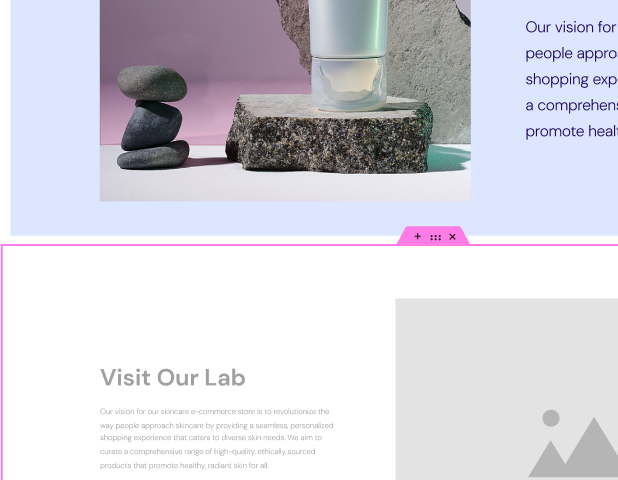
A pretty static page is not enough for modern clients. You need to build dynamic experiences. The Theme Builder allows you to design templates for headers, footers, single posts, and archive pages. You can pull in dynamic data like post titles, featured images, or custom fields directly into your design. This means you can design one “Single Project” template, and it will control the layout for hundreds of portfolio items. You design the system, and the content fills it.
To explore how these features specifically cater to design professionals, you can visit the Elementor for Designers page.
The Foundation: Managed Hosting
A great design fails if the website is slow or insecure. Historically, designers had to become impromptu sysadmins, managing servers and dealing with downtime. Elementor Hosting provides the infrastructure necessary for high performance, removing the technical headache.
Engineered for Speed
The hosting stack is built on the Google Cloud Platform, utilizing C2 compute-optimized instances which are designed for high-performance workloads. This is critical for dynamic and visually rich websites. The infrastructure integrates an enterprise-grade Content Delivery Network (CDN) by Cloudflare. This ensures that your assets—images, CSS, and scripts—are delivered from servers closest to your visitors, significantly reducing latency and improving load times.
Unified Support
One of the biggest pain points for WordPress designers is the fragmentation of support. If a site breaks, the host often blames the plugin, and the plugin developer blames the host. By utilizing a unified hosting solution, the builder and the infrastructure are supported by the same team. You have a single point of contact for any issue. This unified approach mirrors the simplicity of a SaaS platform but keeps you in the open-source environment. You get peace of mind without sacrificing control.
For a deeper dive into how this hosting infrastructure supports high-performance design, watch this overview: https://www.youtube.com/watch?v=sK7KajMZcmA
The Strategic Workflow: AI Integration
Modern web design is not just about placing pixels; it is about strategy and efficiency. Elementor AI integrates artificial intelligence directly into the workflow, acting as a force multiplier for the designer.
Planning and Strategy
The process begins before you open the editor. The AI Site Planner helps you generate a comprehensive website brief. You input the client’s business details, goals, and target audience, and the tool generates a structured sitemap and a wireframe. This wireframe is not a static image; it imports directly into the editor as a structured layout with placeholder content. This eliminates “blank canvas paralysis” and accelerates the client approval process. You start with a blueprint rather than a blank page.
Context-Aware Creation
Inside the editor, the AI works contextually. If you are editing a heading, it suggests titles. If you are working on a text block, it can rewrite, shorten, or translate your copy. It can also generate custom CSS code. If you want a specific hover effect or a unique animation that is not in the standard controls, you can describe it to the AI, and it will write the code for you. This allows designers who do not know code to implement advanced visual effects.
Agentic Capabilities The ecosystem is evolving to include agentic AI capabilities. Tools like Ally by Elementor now feature AI assistants that can perform multi-step tasks within the WordPress environment. Instead of manually creating pages or updating settings one by one, you can instruct the agent to perform these actions. This shifts the designer’s role from manual laborer to creative director, overseeing the execution of complex tasks rather than clicking through endless menus.
To see how AI can transform your design workflow, check out this video: https://www.youtube.com/watch?v=cmx5_uThbrM&pp=0gcJCcYJAYcqIYzv
The Blank Canvas: Hello Theme
To maximize the power of a visual builder, you need a theme that does not get in the way. Elementor Themes are led by the Hello Theme, a lightweight starter theme built specifically for the platform.
Performance Focus Many WordPress themes come bloated with their own styling, scripts, and fonts. This slows down the site and forces the designer to overwrite existing styles, leading to “CSS bloat.” The Hello Theme provides a stripped-down foundation. It loads only the bare minimum required for WordPress to function. This results in faster load times and better Core Web Vitals scores.
Design Freedom Because the theme has minimal styling, the designer has complete control. You do not have to fight against the theme’s default header or typography. You build exactly what you want using the Theme Builder. It is the perfect canvas for your creativity, ensuring that your design intent is realized 100% without interference.
The Business of Design: Marketing and Growth
A website is rarely a standalone project; it is usually the hub of a business’s marketing strategy. The platform integrates tools that allow you to offer ongoing value to your clients, moving beyond just “design” and into “growth.”
Reliable Communication
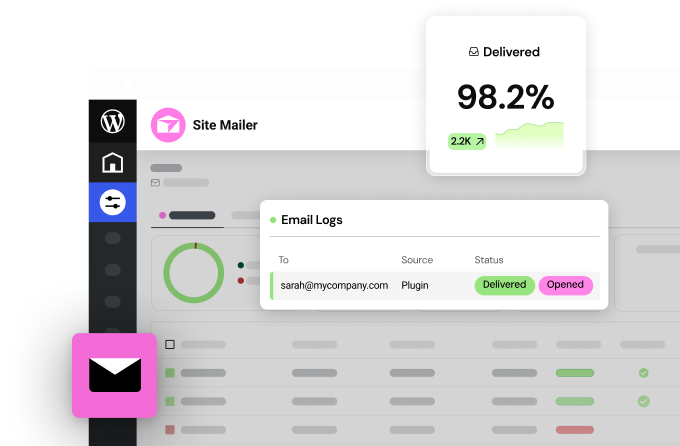
WordPress sites often struggle with email deliverability. Transactional emails, like password resets or form submission notifications, frequently end up in spam folders. Site Mailer is a built-in solution that ensures these emails are delivered reliably. It removes the need for complex SMTP configurations and solves a technical headache that often plagues designers.
The Essential Standard: Accessibility
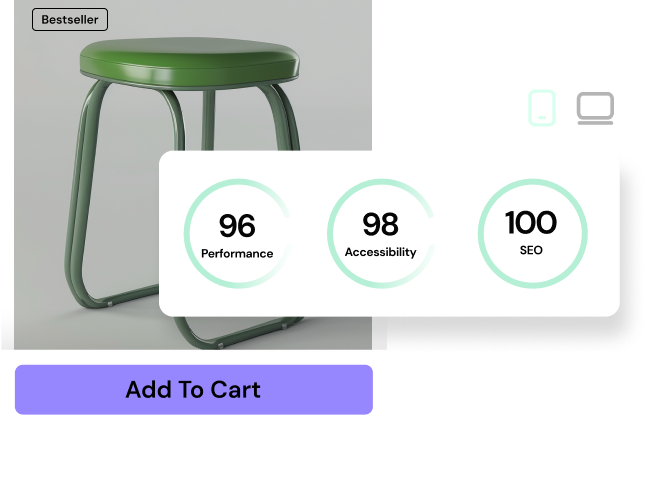
Creating accessible websites is no longer optional. Legal regulations like the ADA and EAA require websites to be usable by people with disabilities. Ally Web Accessibility is a tool designed to simplify compliance.
Automated Remediation
Ally scans the website for accessibility violations and provides an actionable checklist for fixing them. It also offers an AI-powered assistant that can automatically remediate certain issues, such as adding alt text to images.
User Preferences
The tool includes a frontend widget that allows visitors to customize the site’s appearance to their needs. They can adjust contrast, font size, and spacing without altering the site’s core design. This demonstrates a commitment to inclusivity and protects your clients from potential legal risks.
For a comprehensive look at accessibility features, watch this video: https://www.youtube.com/watch?v=-2ig5D348vo
Optimizing for Speed: Visual Performance
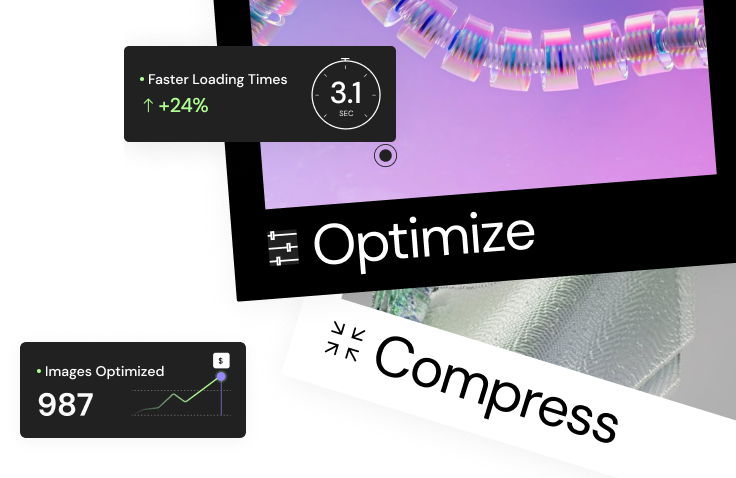
Designers love high-quality images, but large files kill website speed. The Image Optimizer plugin addresses this conflict.
Smart Compression
The tool automatically compresses images as you upload them. It creates next-generation formats like WebP and AVIF, which offer superior quality at smaller file sizes. This process happens in the background. You do not need to manually save images for the web in Photoshop or worry about clients uploading 5MB raw files. This ensures that the beautiful visual experience you design loads instantly for the user, improving both user experience and SEO rankings.
Designing for eCommerce
For designers building online stores, the stakes are even higher. The shopping experience must be seamless to drive conversions. The WooCommerce Builder within Elementor Pro unlocks the ability to customize every part of a WooCommerce store.
Custom Product Templates
You are not stuck with the standard product page layout. You can design a custom Single Product template that highlights the specific features of the items you are selling. You can create custom cart and checkout pages that align with the brand’s identity. This reduces friction and cart abandonment, directly impacting the client’s bottom line.
Hosting for Commerce
E-commerce sites require more server resources than standard brochure sites due to database queries and un-cached shopping cart sessions. Elementor Ecommerce Hosting plans are tuned for these demands. They provide the caching rules and database performance necessary to handle dynamic shopping carts and customer sessions without slowing down.
The Agency Workflow: Scaling Your Business
If you run an agency or freelance business, your tool choices impact your bottom line. You need tools that allow you to work faster and manage multiple clients efficiently.
Collaboration Tools
The platform includes a Notes feature that allows you and your clients to pin comments directly to specific elements on the live site. This replaces the messy chain of emails and screenshots that usually accompanies the feedback process. Clients can point to a headline and say “Make this bigger,” and you see exactly what they are referring to.
See how collaboration works in practice here: https://www.youtube.com/watch?v=QKd7d6LueH4
Scalable Infrastructure
The ability to clone sites and save templates as Kits allows you to build your own library of assets. If you have a standard layout that works well for dentists, you can save it as a Kit and deploy it for a new client in minutes. This reuse of intellectual property increases your profit margin on every project.
Template Library Access
You also gain access to a vast Template Library of Kits designed by professionals. You can use these as starting points or inspiration, further accelerating your workflow.
Detailed Feature Deep Dive
To truly understand why this platform serves as the optimal choice for designers, we need to look closer at specific features that solve daily design problems.
The Power of Nested Elements
Historically, page builders relied on a rigid section-column-widget structure. This often led to “divitis,” where designers had to nest multiple columns to achieve simple layouts. The introduction of Flexbox Containers and Nested Elements solves this. You can now place any element inside another container. You can nest a slider inside a tab, or place a form inside a carousel. This capability unlocks layout possibilities that were previously impossible without custom coding.
Loop Grid for Dynamic Listings
Displaying dynamic content like blog posts or products usually required rigid grid widgets with limited styling options. The Loop Grid widget changes this. It allows you to design a single item template using the full power of the editor. You design one card with the image, title, and metadata exactly how you want it. The Loop Grid then repeats this design for every item in your query. This gives you complete freedom over the design of your archives and listings.
Responsive Breakpoints
Web design is multi-device design. The platform allows you to define custom breakpoints for different screen sizes. You are not limited to just mobile, tablet, and desktop. If you need a specific design adjustment for ultra-wide monitors or specific tablet orientations, you can add a breakpoint and style accordingly. This ensures your design looks intentional on every screen.
To see these advanced features in action, check out this video: https://www.youtube.com/watch?v=gvuy5vSKJMg
The Economics of Web Design
Choosing the right builder is also a financial decision. You need a platform that allows you to build a sustainable business model.
Recurring Revenue
Because the platform is based on WordPress Solutions, you can build a recurring revenue stream by offering maintenance and hosting plans. You can resell hosting to your clients and bundle it with your care plans. This creates a steady income that stabilizes your cash flow.
Lower Cost of Ownership
While SaaS platforms often charge per site with increasing costs for advanced features, the open ecosystem offers a more predictable pricing model. You can purchase a license for multiple sites, which lowers the cost per project. The vast library of free plugins also reduces the need to pay for every add-on feature. Furthermore, you can start with the Free Download and upgrade only when necessary.
Professional Legitimacy
Using a professional platform allows you to charge professional rates. Clients perceive value in bespoke designs and high-performance hosting. Offering a package that includes a Free Domain Name and enterprise-grade security positions you as a premium service provider rather than a commodity freelancer.
Practical Workflow Scenarios
To illustrate the power of the platform, let’s look at how it functions in real-world scenarios.
Scenario 1: The Fast-Paced Freelancer
You just landed a client who needs a site in three weeks.
- Planning: You open the AI Site Planner and input the client’s details. In minutes, you have a sitemap and a wireframe.
- Setup: You spin up a new instance. The Hello Theme and Pro plugins are pre-installed.
- Design: You import the wireframe. You use the Theme Builder to set up the header and footer. You use Global Settings to apply the client’s brand colors.
- Content: You use AI to generate placeholder text and images where the client hasn’t provided assets yet.
- Launch: You run the optimization tools to ensure speed. You set up reliable email delivery. You hand off the site.
Scenario 2: The E-commerce Agency
You are building a custom store for a fashion brand.
- Architecture: You need a custom post type for “Lookbooks.” You use a plugin to create the post type and Theme Builder to design the template.
- Product Page: You design a completely custom Single Product template. You hide the standard WooCommerce tabs and create a custom layout that emphasizes the photography.
- Marketing: You integrate email capture on the checkout page. You set up an automation to email customers who abandon their carts.
- Scaling: As the brand grows, you rely on the C2 instances of the hosting infrastructure to handle the traffic spikes during sales.
Competitor Comparison Summary
To provide a clear view of where Elementor stands, we can summarize the key differences with the major competitors discussed earlier.
| Feature | Elementor | Webflow | Wix | Squarespace |
| Foundation | Open Source (WordPress) | Proprietary | Proprietary | Proprietary |
| Design Control | Pixel-Perfect / Freehand | Box Model / CSS | Drag-and-Drop | Grid / Template |
| Learning Curve | Moderate | Steep | Low | Low |
| Extensibility | Unlimited (Plugins) | Limited (Integrations) | App Market | Limited |
| Data Ownership | Full Ownership | Platform Locked | Platform Locked | Platform Locked |
| Hosting | Integrated Managed Cloud | Included | Included | Included |
| E-commerce | WooCommerce (Full Control) | Native (Limited) | Native (Basic) | Native (Basic) |
Elementor offers a distinct advantage for designers who want the control of a professional tool like Webflow but need the ecosystem and ownership of WordPress. It avoids the lock-in of Wix and Squarespace while providing the ease of use that those platforms are known for.
Future-Proofing Your Career
The web design industry moves fast. Tools that were industry standards five years ago are now obsolete. Choosing a platform is an investment in your future skills.
The Open Ecosystem Advantage
By building on WordPress and Elementor, you are investing in an open ecosystem. You are not dependent on the roadmap of a single company. If a new technology emerges—like a new payment gateway or a new marketing tool—someone in the WordPress community will build a plugin for it. This ensures that your sites can always adapt to the latest trends. AI Website Builder Solutions are rapidly changing how we work, and open platforms are adopting these changes faster than closed systems.
Community and Resources
The community is vast. There are millions of users, thousands of third-party developers, and endless tutorials and resources. If you encounter a problem, the answer is out there. This network effect provides a safety net that smaller, proprietary platforms cannot match.
Conclusion
The best website builder for designers is the one that removes barriers. It should not limit your creativity with rigid templates. It should not limit your business with restrictive ecosystems. It should not limit your growth with performance ceilings.
Elementor stands out as the premier choice because it respects the designer’s need for control. It provides a visual canvas that behaves like professional design software. It backs that canvas with an enterprise-grade hosting infrastructure. It surrounds the core builder with a suite of tools—from AI to marketing automation—that streamline the entire web creation lifecycle.
For the designer who wants to build beautiful, high-performance websites that they truly own, this platform offers the most complete and strategic solution available today. It bridges the divide between the ease of SaaS and the power of open source, empowering you to create without compromise.
Frequently Asked Questions
1. What makes a website builder “design-friendly”? A design-friendly builder offers granular control over visual elements. It allows you to adjust padding, margins, fonts, and colors precisely. It should support modern web standards like CSS Grid and Flexbox, enabling complex, responsive layouts without requiring you to write code. It must also provide global design settings to ensure consistency across the entire site.
2. Why should a designer choose WordPress over a dedicated SaaS builder? WordPress offers unparalleled freedom and ownership. Unlike SaaS builders where you “rent” your site, with WordPress, you own your data and content. It has a massive ecosystem of plugins that allow you to add virtually any feature. This extensibility ensures you can say “yes” to any client request, no matter how complex.
3. How does hosting impact the design process? Hosting directly affects performance and reliability. A slow server makes the builder lag, disrupting your creative flow. For the live site, poor hosting hurts user experience and SEO rankings. Managed hosting optimized for your specific builder ensures the editor loads instantly and the published site performs flawlessly for visitors.
4. Can I build an online store with a visual builder? Yes, powerful visual builders integrate deeply with e-commerce platforms. For example, using the WooCommerce integration allows you to design custom product pages, cart templates, and checkout flows. This gives you complete control over the customer journey, rather than forcing you to use generic store layouts.
5. Do I need to know how to code to use professional builders? While knowing code is helpful, modern professional builders are designed to be “no-code” or “low-code.” They provide visual interfaces for advanced CSS properties. AI tools further bridge the gap by generating custom code snippets for specific effects, allowing you to achieve developer-level results visually.
6. What is the benefit of an integrated marketing suite? Integrated marketing tools streamline your workflow. Instead of exporting data to external platforms, you can manage email campaigns and lead capture directly from your website dashboard. This ensures data consistency and reduces the cost and complexity of maintaining multiple software subscriptions.
7. How does AI help in the web design workflow? AI acts as a productivity multiplier. It can assist in the planning phase by generating sitemaps and wireframes. During the build, it can generate and refine text, create unique images, and write custom code. Agentic AI can even automate repetitive maintenance tasks, freeing you to focus on high-level strategy and design.
8. Is accessibility really that important for a designer? Yes, accessibility is critical. It ensures your site is usable by everyone, regardless of ability. It is also a legal requirement in many jurisdictions. Using tools that automate accessibility scanning and remediation protects your clients from lawsuits and expands their potential audience.
9. What happens if I want to move my site away from the builder? This depends on the platform. With proprietary SaaS builders, moving is often difficult or impossible; you may have to rebuild from scratch. With an open-source platform like WordPress, you own the content. While the design relies on the specific plugin, the underlying data belongs to you and can be migrated to any standard hosting environment.
10. How do I handle client feedback during the build process? Effective feedback loops are essential. Professional platforms often include collaboration tools that allow clients to leave comments directly on the live website prototype. This eliminates confusing email chains and ensures you know exactly which element the client wants to change, speeding up the approval process.
Looking for fresh content?
By entering your email, you agree to receive Elementor emails, including marketing emails,
and agree to our Terms & Conditions and Privacy Policy.