
If you run a website, you’ve felt the pressure of keeping up with privacy rules that shift every few months. Finding the right tool to handle user consent genuinely matters, and two names come up constantly: OneTrust and Cookie Consent. Both keep your site on the right side of the law but take very different paths. Here’s how they compare.
Key Takeaways
- OneTrust is built for large enterprises requiring deep cross-platform compliance management across multiple business units.
- Cookie Consent runs natively inside your WordPress dashboard, offering a quick five-minute setup with no external platform logins.
- Google Consent Mode v2 support is fully integrated into both tools to keep your marketing data accurate and legal.
- Cost structures differ significantly, with Cookie Consent offering a free tier and inclusion in Elementor One packages.
- Design controls in Cookie Consent align directly with your theme styling without needing heavy custom code.
The Evolving Privacy Landscape in 2026
The rules of the web have changed fast. Privacy regulations aren’t just for big tech anymore, they apply to almost anyone running a website: if you get visitors from Europe, California, or dozens of other jurisdictions, you need explicit consent before running tracking cookies. (Small blogs aren’t exempt, since the law follows the visitor’s location, not your business’s.)
To keep your site safe and running smoothly, you need to understand the main regulations governing user data collection:
- General Data Protection Regulation (GDPR) protects citizens within the European Union and requires strict opt-in consent before any non-essential cookies load.
- California Consumer Privacy Act (CCPA) requires businesses to let users opt out of the sale or sharing of their personal information with ease.
- Global Privacy Control (GPC) is a browser-level signal that tells websites automatically that a user wishes to opt out of tracking.
- Google Consent Mode v2 is now required by Google for any website using its advertising or analytics services to target users in the European Economic Area.
Managing this means you need a system that detects where your visitor is, shows the right regulatory banner, and logs their choice for audits. Skip it and you risk losing analytics access or facing real fines from regulatory bodies.
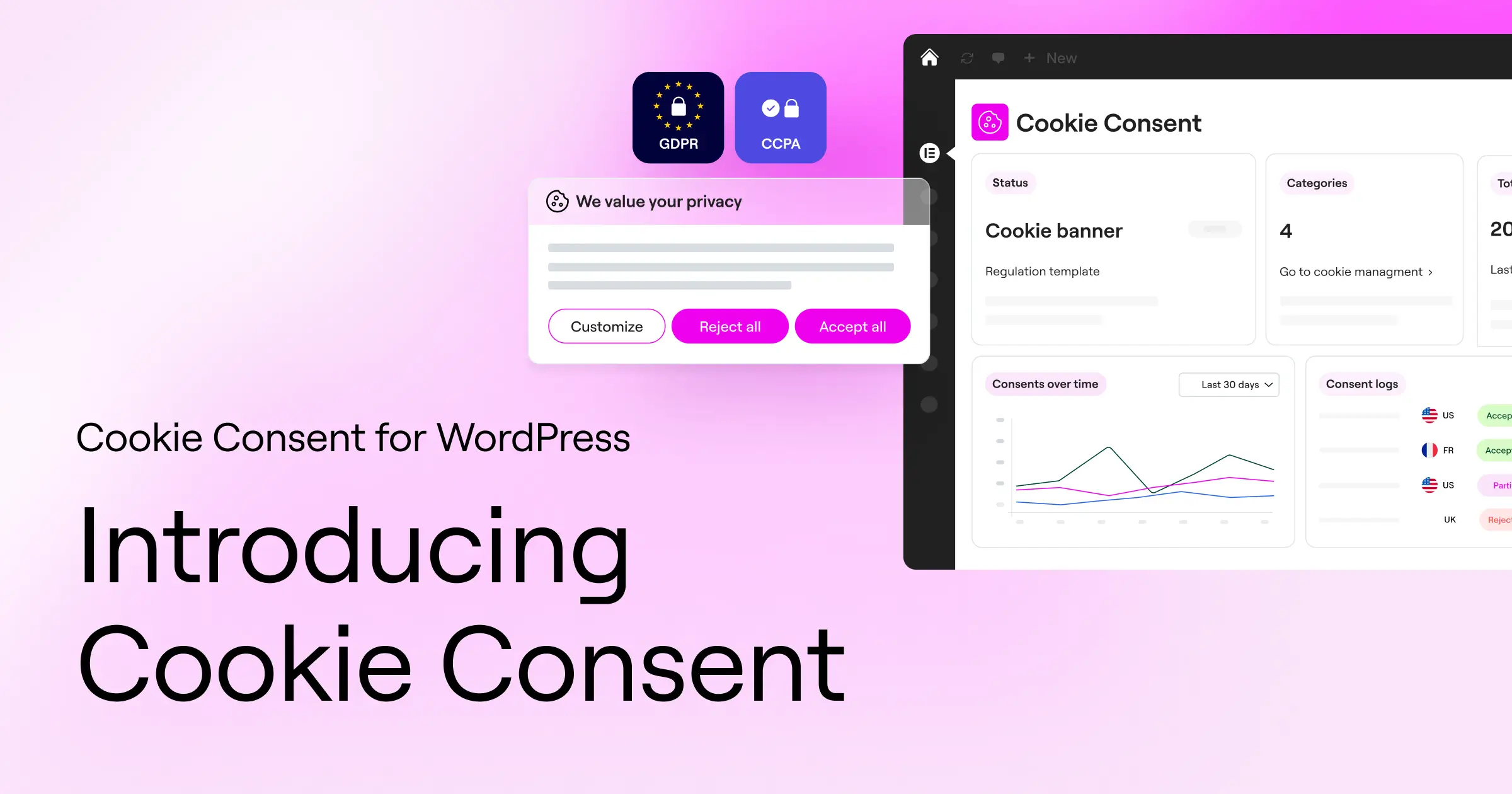
Introducing the Contenders
Both tools are genuinely good at what they do, but they target very different audiences. Understanding their core design philosophy makes the decision easier.
What is OneTrust?
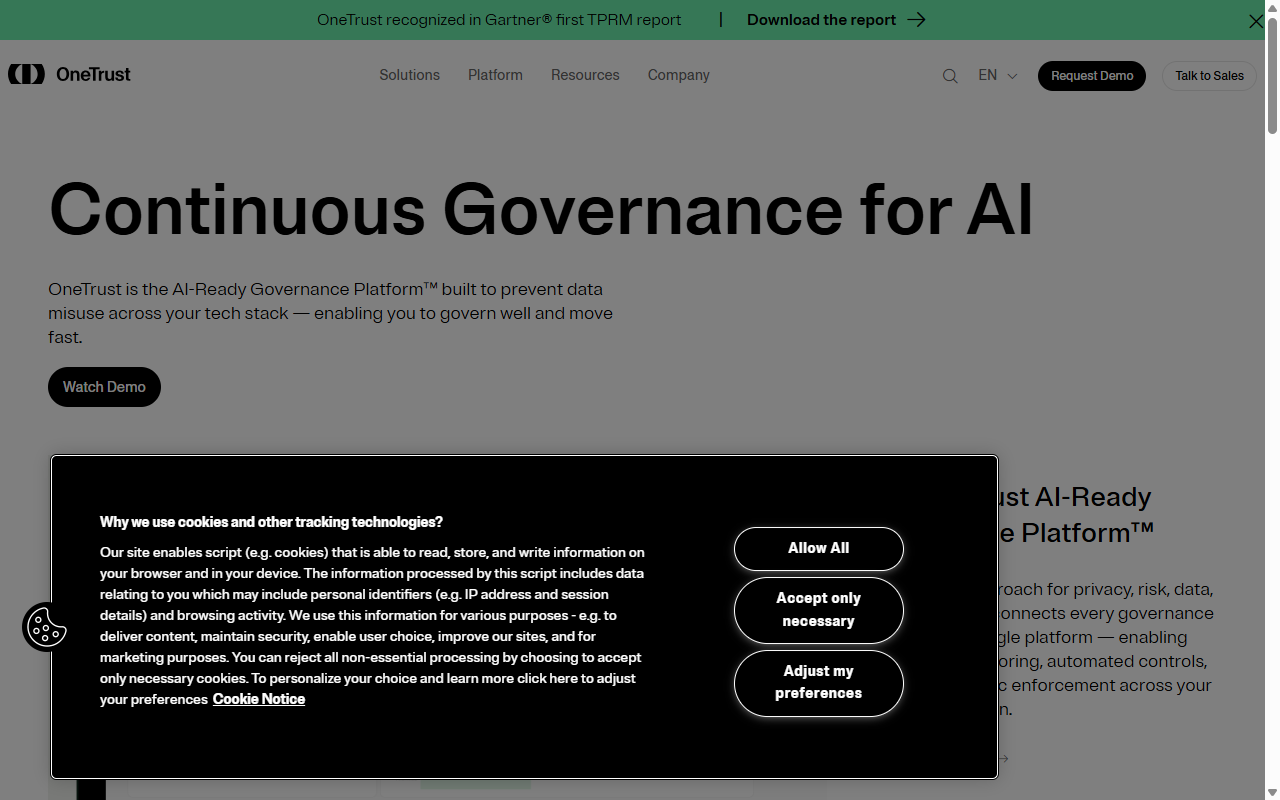
OneTrust is a large-scale, enterprise-level trust and privacy management platform. It goes beyond cookies, covering vendor risk management, data mapping, employee privacy training, and corporate governance, all from a centralized, external cloud dashboard, where you configure privacy banners, scan domains, and publish scripts using custom code snippets.
What is Cookie Consent?
Cookie Consent is a cookie consent capability built natively for WordPress by the team at Elementor. Rather than pushing you to an external platform, it handles your full GDPR and CCPA compliance right from your WordPress dashboard: set up banners, scan and categorize cookies, manage tracking scripts, and view consent logs, all without leaving your site. It saves time for site owners, agencies, and independent creators.
OneTrust vs Cookie Consent: Quick Comparison
Here’s a direct comparison of the details that actually affect your daily workflow.
| Feature or Capability | OneTrust | Cookie Consent |
|---|---|---|
| Primary Platform Location | External enterprise cloud portal | Native WordPress dashboard |
| Setup Time | Requires setup of external account and script installation | Three-step process taking under five minutes |
| Google Consent Mode v2 | Supported via manual integration or tag manager | Built-in native support with simple toggle controls |
| Consent Logging | Stored on enterprise cloud databases | Stored natively in your WordPress database for audit trails |
| Design and Customization | Requires custom CSS or platform editor tools | Full design match with native editor controls |
| Geo-Targeting Banners | Supported on higher enterprise tiers | Included natively to match visitor locations |
| Target Audience | Fortune 500 firms and enterprise compliance teams | WordPress creators, business owners, and digital agencies |
A Category-by-Category Look
To help you decide which tool fits your workflow, here’s how they perform across five areas that matter in real life: ease of setup, dashboard management, script blocking, visual customization, and cost.
1. How easy is the installation and setup?
Setting up a cookie banner shouldn’t require a computer science degree. You want to get compliant fast and get back to building your site.
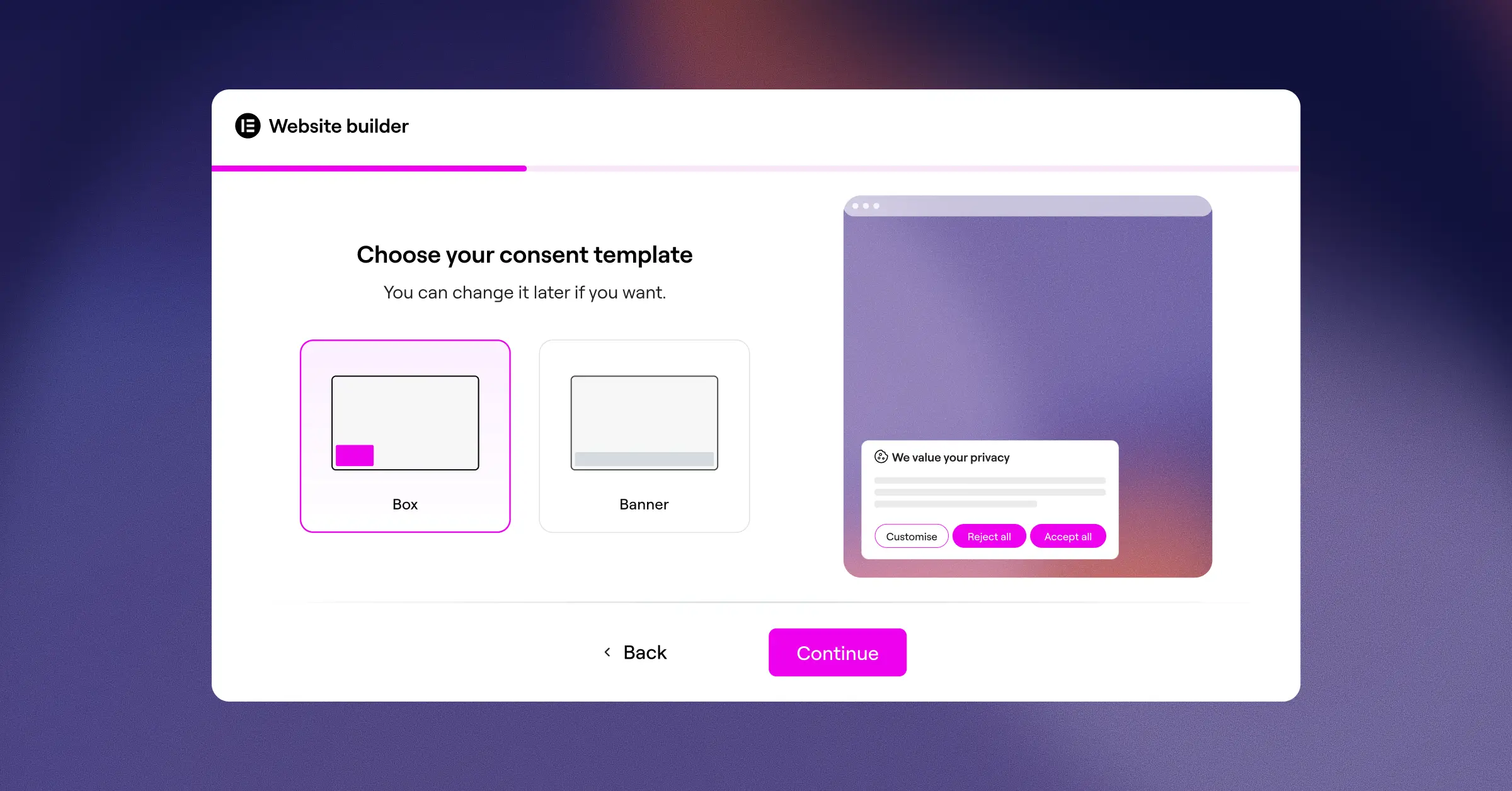
Cookie Consent’s setup is about as friendly as it gets. (Honestly, it’s simpler than it sounds, you’ll have it running in minutes.) There’s no copying code snippets or configuring API connections. The workflow follows a clear sequence:
- Activate the cookie consent capability directly within your WordPress environment.
- Run the automatic cookie scanner to identify all cookies and active scripts on your site.
- Publish your customized consent banner to your visitors with a single click.
OneTrust is built for scale, so its setup is naturally more involved. Here’s what that process looks like:
- Create your account on the external enterprise cloud platform.
- Configure your tenant settings, organizational groups, and legal jurisdictions.
- Define your cookie categories and consent templates in the remote dashboard.
- Generate the required script tag and paste it into the head section of your site manually.
- Publish your production script from the external portal to make it live on your site.
This model works well for a large corporation with a dedicated IT department, though it means more steps if you’re just running a standard WordPress site.
2. Where do you manage your settings and logs?
Daily management is where you’ll actually spend your time. Install a new analytics tool or marketing pixel, and you’ll need to update your cookie categorization right away to stay compliant.
With Cookie Consent, your control hub sits right inside WordPress, the same place you write posts and build pages. Add a new tracking pixel? Open your dashboard, scan the site, categorize it, and hit save. Everything lives in your site’s database, so there’s no extra password or third-party dashboard to worry about.
OneTrust keeps all configuration on its external corporate network. Checking consent logs or updating your banner means logging into the OneTrust dashboard, saving edits, and waiting for their content delivery network to push the update live. That’s powerful for teams overseeing hundreds of non-WordPress sites from one window, though it adds a layer for WordPress-focused users.
“Modern web compliance is no longer just about hiding a banner in the corner of your page. It’s about building real trust with your users while keeping your technical setup light and fast. Site owners need tools that fit directly into their existing daily workflow.”
By Itamar Haim, Web Compliance Specialist
3. How do they handle Google Consent Mode v2?
If you use Google Analytics or Google Ads, Google Consent Mode v2 matters. It tells Google’s tag engines how to behave based on whether a visitor clicks “Accept” or “Decline.” When someone rejects cookies, it sends cookieless signals instead, so you can still measure conversions without violating their privacy.
Both tools support this standard, but they approach it differently:
- Cookie Consent includes built-in, native support for Google Consent Mode v2. You turn it on with a toggle switch, and the tool handles the internal communication with your Google tags automatically.
- OneTrust offers deep, highly configurable support for Consent Mode, but it generally requires Google Tag Manager and custom trigger rules to get everything working correctly.
4. What design and customization options do you get?
Your consent banner is often the first thing visitors notice. A cold, clinical legal warning can undermine your brand’s first impression, so you want the banner to feel like a natural part of your site.
Because Cookie Consent is built by Elementor, design is genuinely its strong suit. You can customize fonts, colors, border radiuses, and button styles with familiar visual controls, pulled straight from your site’s own styling so the banner looks like it belongs. Cloud templates let you save designs and reuse them elsewhere.
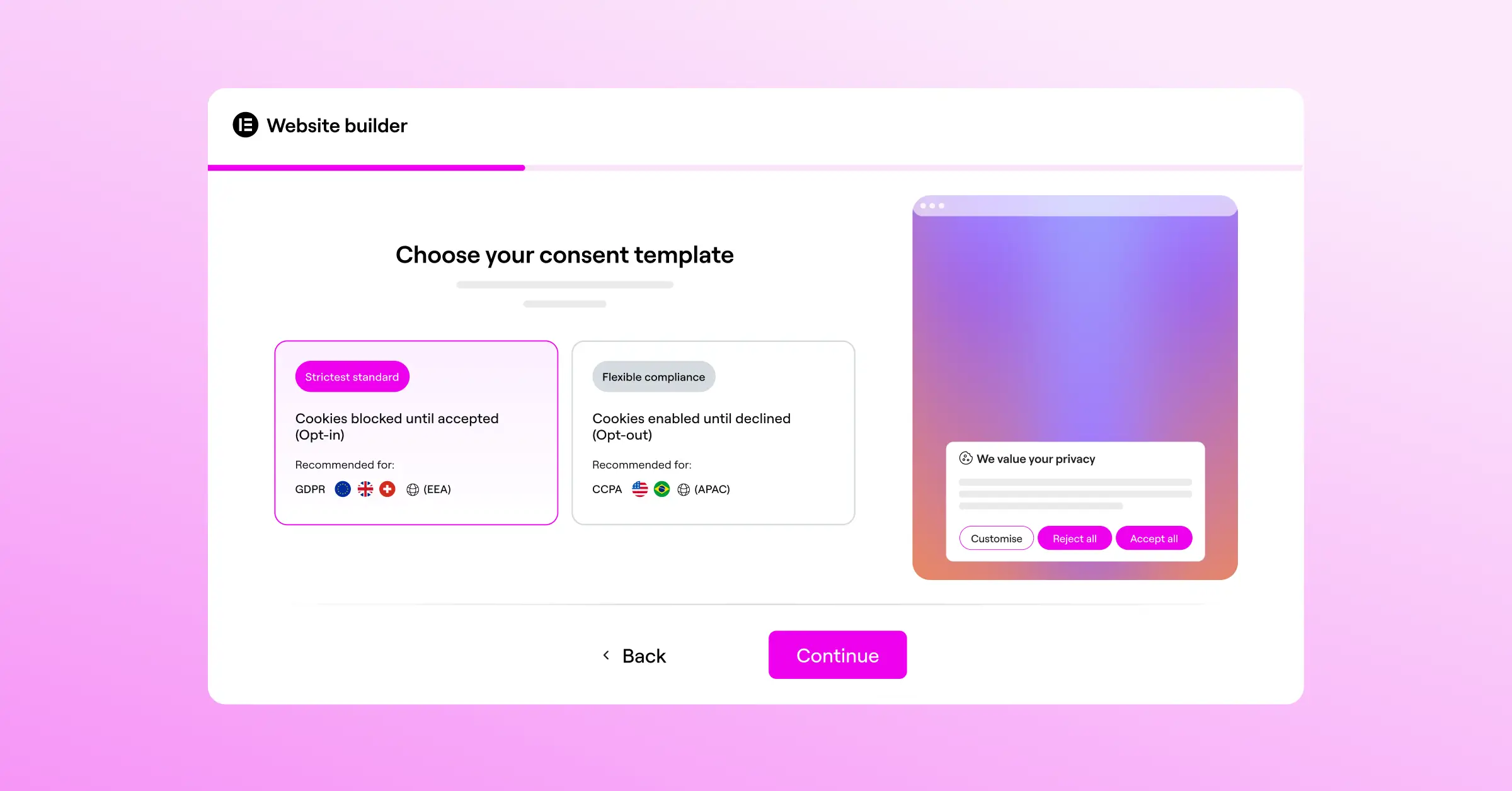
OneTrust offers deep design capabilities, though its editor leans toward corporate brand guidelines. Advanced visual changes often mean writing custom CSS classes and uploading them into the portal, flexible for developers, but more effort for a visual, no-code approach.
5. How do the costs compare?
You want a tool that scales with your growth without straining your budget.
Cookie Consent is genuinely accessible, with a free tier that’s perfect for growing blogs and personal projects. Need geo-targeting, multilingual banners, or priority cloud templates? Those come with the premium Elementor One compliance package, so you’re never paying for a separate compliance subscription.
OneTrust uses an enterprise sales model. They do offer packages for smaller businesses, but the main focus is large corporate contracts, with pricing handled through direct sales conversations, a bigger investment if you only need basic consent banners.
Core Capabilities and Technical Features
Let’s look at the specific capabilities of each tool so you can see exactly what you get.
Cookie Consent Capabilities
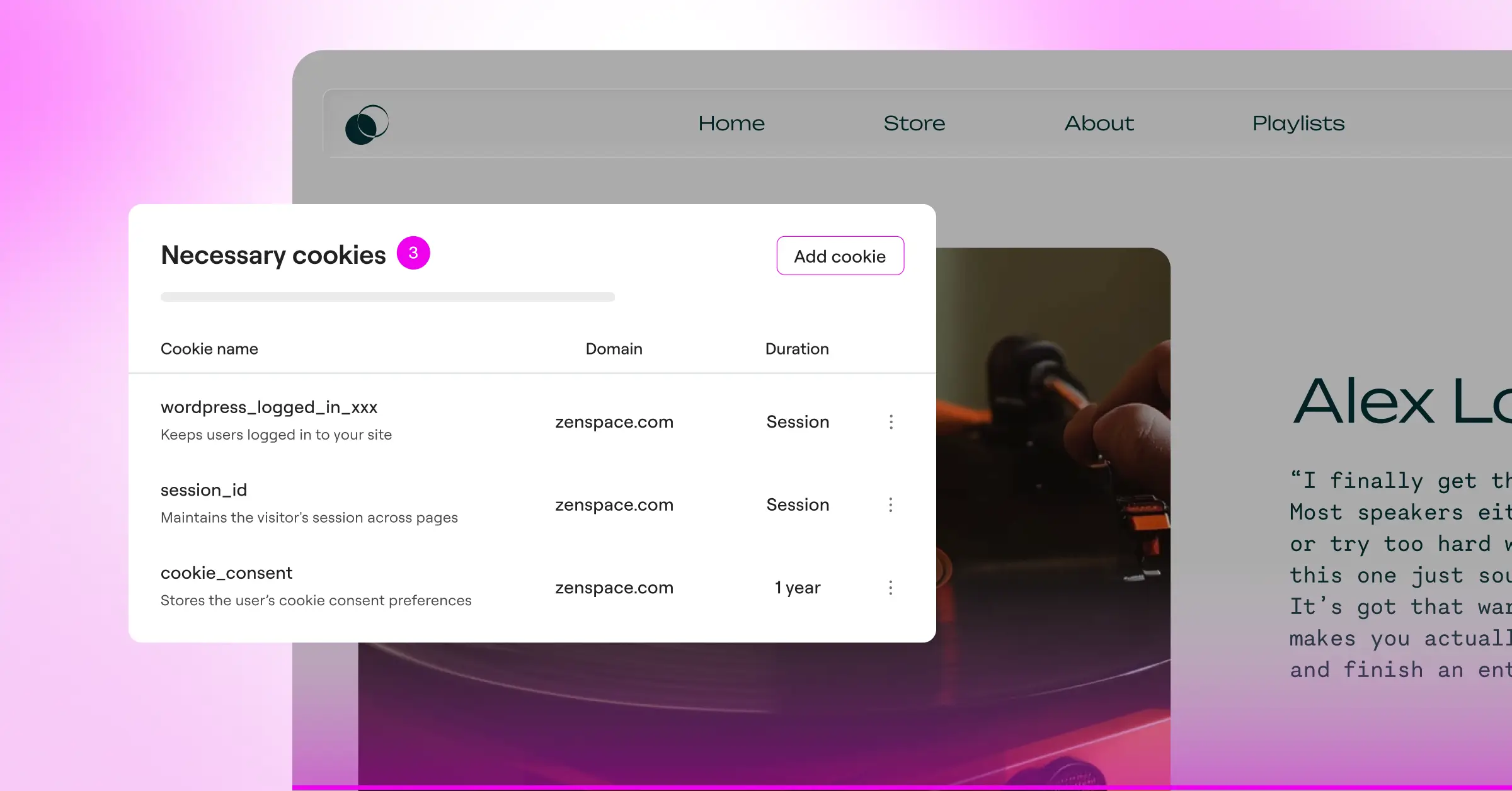
The WordPress-native capability is packed with practical features built to save you time and protect your site:
- Builds compliant banners instantly using a clean, three-step setup wizard.
- Scans your entire site automatically to identify, classify, and block cookies.
- Keeps detailed, secure consent logs directly in your WordPress database for audit readiness.
- Customizes every font, color, and layout to match your existing site design.
- Adjusts your banner automatically to display the correct legal language based on user location.
- Supports Global Privacy Control signals and Google Consent Mode v2 out of the box.
OneTrust Capabilities
The enterprise platform covers governance capabilities built for large-scale operations:
- Manages complex user consent across multiple websites, mobile apps, and smart devices.
- Generates automated data lineage maps to track how data flows through your organization.
- Assesses third-party vendor risks and monitors compliance across your supply chain.
- Maintains a centralized consent registry to handle user data access requests (DSAR).
- Shares regulatory intelligence updates compiled by legal experts.
- Integrates with customer relationship managers to sync user consent choices across your business systems.
Choosing the Right Tool for Your Website
Now that you’ve seen how both tools work, let’s help you decide which fits your situation. It comes down to your site’s scale, your platform, and how you prefer to work.
Here are the key factors worth thinking through:
- Your Platform – If your site runs on WordPress, a native tool keeps administration simple. Running multiple sites across Shopify, custom frameworks, and legacy platforms? An external system deploys everywhere at once more easily.
- Your Scale – For individual sites, local businesses, and agencies, a quick-setup tool keeps costs low. Large corporations with compliance officers and global data flows fit an enterprise suite instead.
- Your Design Workflow – If you want to visually style your banner without writing code, native editor integration makes a real difference.
- Your Compliance Needs – Ask whether you need cookie consent and policy generation, or also vendor risk management, data maps, and deletion request processing.
- Your Budget – There’s no reason to pay for a complex enterprise framework if you only need a compliant cookie banner.
Choose Cookie Consent if:
You run a WordPress site and want full compliance in under five minutes, without managing another external account. It suits agencies handling client sites, e-commerce owners using Google Consent Mode v2, and brand-conscious creators who skip custom CSS. It keeps your workflow inside WordPress, saves money, and bundles in geo-targeting and policy generation. More at Elementor’s Cookie Consent page.
Choose OneTrust if:
You manage compliance for a multinational organization with sites across WordPress, Adobe Experience Manager, and custom web applications, and your legal team needs deep vendor risk assessments, automated data mapping, or a way to process consumer data access requests across multiple jurisdictions. Its full suite of privacy tools is built for enterprise operations.
Three Steps to Verify Your Consent Banner Is Working
Once you’ve set up your compliance tool, confirm it’s actually blocking tracking scripts before users click accept. (A common mistake: site owners put up a nice banner while tracking pixels keep running in the background.)
To confirm your setup is working properly, run through this simple testing process:
- Open a new private browsing window and navigate directly to your website.
- Right-click anywhere on your page, select “Inspect Element,” and open your browser’s Developer Tools.
- Navigate to the “Application” or “Storage” tab, click on “Cookies,” and check that only strictly necessary cookies are loaded before you click any button on your consent banner.
If you see marketing or analytics cookies loading before a visitor consents, check your script categorization settings. Both tools include automatic blocking features to prevent this, so make sure they’re enabled and configured properly.
Frequently Asked Questions
Do I really need a consent banner if my site is small?
Yes, you do. Privacy laws like the GDPR protect users based on where they live, not where your business is located. Even a single visitor from the European Union or California means you need to respect their privacy choices under the law. A simple tool keeps you protected without a big investment.
What is Google Consent Mode v2 and is it mandatory?
Google Consent Mode v2 is a system that communicates your users’ consent choices directly to Google services like Google Analytics and Google Ads. It’s required if you use Google tracking tools and serve visitors in the European Economic Area. Without it, you’ll lose the ability to track conversions and run personalized ad campaigns.
Can I customize the cookie banner design to match my brand?
Yes, both tools let you customize your design, but Cookie Consent is much more approachable for WordPress users. Because it’s built natively, it uses familiar visual controls to match your site’s typography, colors, and button styles. OneTrust also supports customization but often needs custom CSS for a precise visual match.
Does Cookie Consent support multiple languages?
Yes, it includes multilingual banners out of the box. It detects your visitor’s browser language automatically and shows your consent options in their preferred language, keeping your compliance clear and your user experience friendly.
Where are my website’s consent logs stored?
Cookie Consent stores your consent logs securely in your native WordPress database, keeping all your data in one place. OneTrust stores consent logs on its own secure, external enterprise cloud network. Both provide reliable audit trails if a regulatory authority asks for proof of user consent.
How does geo-targeting work for cookie banners?
Geo-targeting uses your visitor’s IP address to determine their location in real time, then displays the banner required by regional law. An EU visitor sees a strict opt-in banner, while a US visitor might see a simpler opt-out notice, keeping you compliant without over-serving strict notices to users who don’t need them.
Is there a free plan of Cookie Consent available?
Yes, Cookie Consent includes a free tier that’s perfect for growing websites, personal blogs, and local projects. Need geo-targeting, multilingual support, or premium templates? They’re available as part of the complete Elementor One package.

