
If you run a WordPress site, you already know privacy compliance can feel like a moving target. Between GDPR, CCPA, and search engines tightening their own rules, a simple footer notice doesn’t cut it anymore. You need a real way to manage user choices without wrecking your design or slowing your pages down. If you’ve landed here searching for an iubenda vs Cookie Consent comparison for 2026, you probably already know the modern, official name for this native WordPress tool is Cookie Consent. Let’s walk through how the two compare so you can pick the right fit.
Key Takeaways
- Cookie Consent gives you a native WordPress experience, no external dashboards required.
- Iubenda offers a broad, multi-platform compliance suite, but you’ll manage it outside WordPress.
- Both tools support key modern standards like Google Consent Mode v2 and Global Privacy Control (GPC).
- If you build with Elementor, Cookie Consent fits right into your existing design workflow.
- The right pick comes down to whether you want an all-in-one legal document generator or a fast, dashboard-integrated cookie manager.
The Changing Landscape of Web Privacy in 2026
The rules have shifted fast. Regulators have handed out real fines to businesses that ignore user choices, and major browsers keep phasing out third-party cookies. That combination makes first-party data and proper consent tracking more important than ever. If you serve visitors in the EU, UK, or California, getting this right isn’t optional.
One of the biggest recent shifts is the strict enforcement of Google Consent Mode v2. If you run Google Analytics or Google Ads, you can’t push this off any longer. It requires your site to pass clear consent signals to Google’s tags before tracking starts. Skip it, and your ad campaigns lose optimization power while your analytics data shows real gaps. Both tools here address this, just in different ways.
Your workflow matters too. Do you want to jump back and forth between your WordPress admin and a third-party cloud service? Or would you rather manage your cookie settings, run your scans, and check your consent logs without ever leaving your dashboard? That’s really the heart of what we’re comparing.
What Is iubenda?
Iubenda is a well-established compliance suite that helps businesses manage legal requirements across websites, mobile apps, and e-commerce platforms. It’s not just a cookie tool. It’s a full platform for generating privacy policies, terms and conditions, and cookie banners from one central cloud dashboard.
Because it’s cloud-based, you configure your banner on their external site, then copy a code snippet into your WordPress site, or use their dedicated integration software instead. It’s a solid pick for businesses juggling complex legal documents across several content management systems at once.

Core Capabilities of iubenda
- Generates legally binding privacy and cookie policy documents tailored to your business model.
- Scans your site automatically to detect tracking scripts and match them against their service database.
- Detects visitor location to show different banner formats based on local laws like GDPR or CCPA.
- Supports Google Consent Mode v2 to keep your marketing tags aligned with Google’s latest standards.
- Stores consent preferences in a cloud-based registry for easy audit retrieval.
- Manages compliance across different website builders, custom apps, and e-commerce platforms from one account.
What Is Cookie Consent?
Cookie Consent is the dedicated cookie consent capability built natively for WordPress by the team at Elementor. Instead of sending you off to an external site to configure your banner, it brings the whole setup right into your WordPress dashboard. It’s fast, approachable, and deeply woven into your existing site structure.
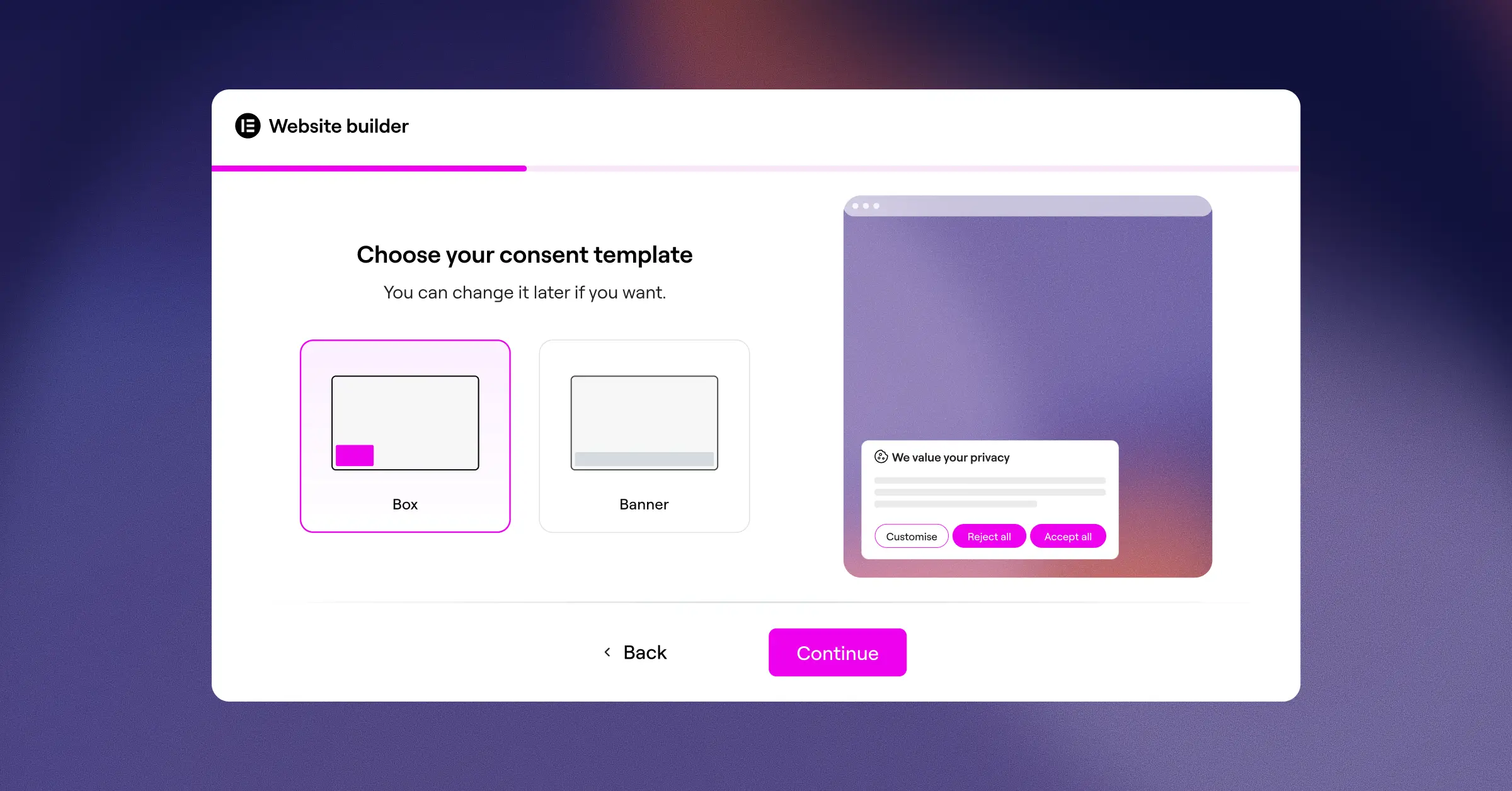
This capability is built for creators, agencies, and business owners who want to secure their sites without wrestling with complex cloud setups or costly monthly subscriptions. Onboarding is a clean three-step process that takes under five minutes, and it’s included in the Elementor One package, making it a cost-effective pick for modern web creators. (You can learn more about Elementor One and see everything that’s bundled in, if you’re curious.)
Core Capabilities of Cookie Consent
- Runs entirely inside the WordPress dashboard, no external logins needed.
- Finishes initial setup in under five minutes with a simple three-step wizard.
- Matches your brand perfectly using the native design editor you already know.
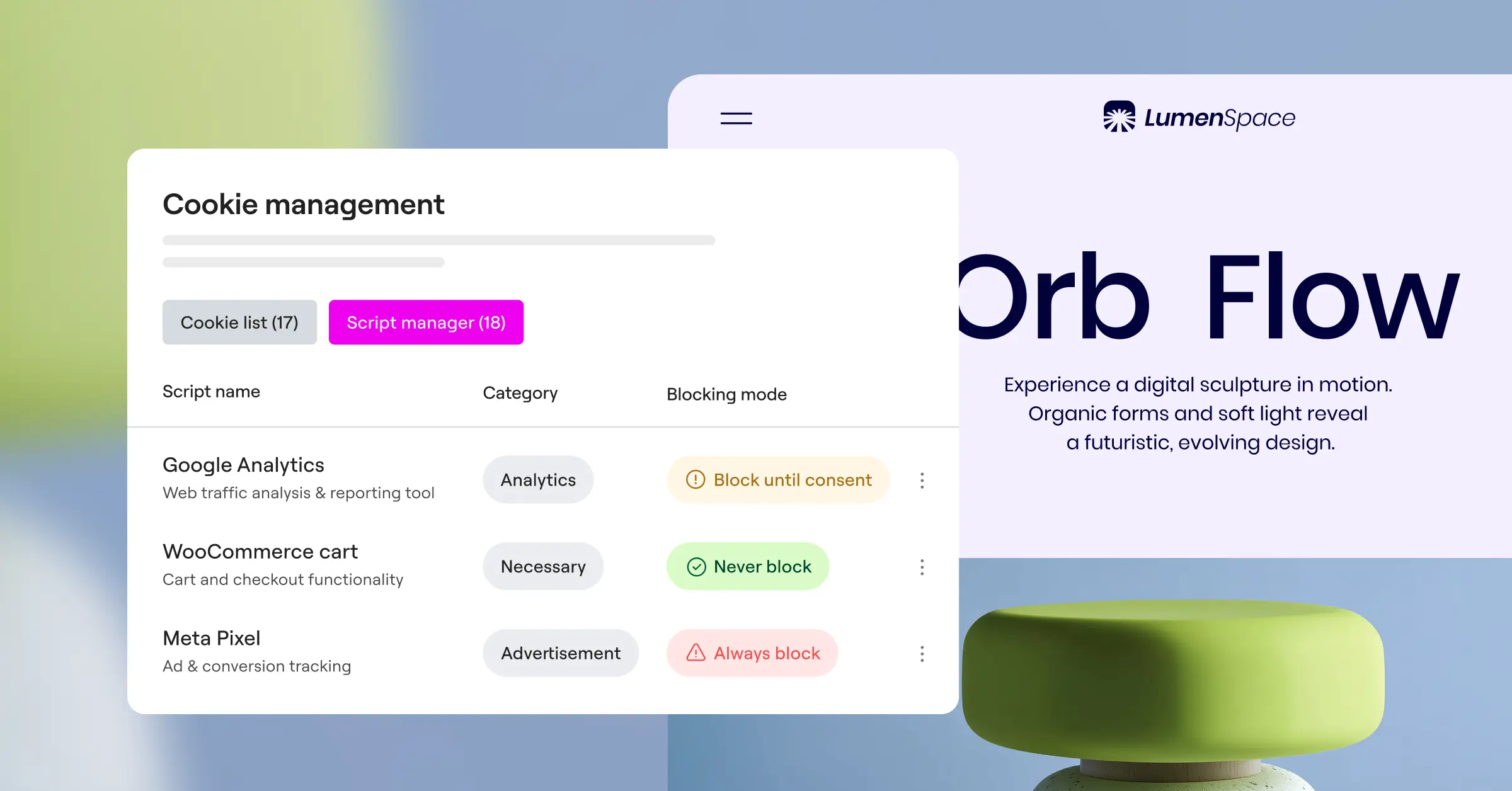
- Tracks and categorizes cookies automatically with a built-in script scanner.
- Saves local consent logs directly in your admin area for audit readiness.
- Protects user privacy by respecting Global Privacy Control (GPC) signals from modern browsers.
“As privacy regulations tighten globally, site owners need tools that prioritize transparency without slowing down development workflows. Having these compliance tools integrated directly into the WordPress dashboard is a massive advantage for creators who need to balance legal requirements with clean website performance.”
– Itamar Haim, Web Compliance Specialist
Feature-by-Feature Comparison
Here’s a quick side-by-side look at how the two stack up on the details that matter most.
| Feature | iubenda | Cookie Consent |
|---|---|---|
| Dashboard Location | External cloud platform | Native WordPress dashboard |
| Setup Time | Moderate (requires account creation & code installation) | Very fast (under 5 minutes) |
| Design Customization | Visual editor on cloud platform | Fully integrated native styling |
| Google Consent Mode v2 | Supported (requires configuration) | Supported natively out of the box |
| Policy Generation | Complete legal document generator | Built-in template generator |
| Consent Logging | Cloud-hosted logs | Dashboard-native consent logs |
Now let’s dig into the details: setup, customization, compliance, and how each one affects your site’s performance.
1. Ease of Setup and Onboarding
Getting your banner running shouldn’t eat up your whole afternoon. With iubenda, you start by creating an account on their external cloud platform, enter your website details, pick the services you use (Google Analytics, Facebook Pixel, Stripe, whatever applies), and generate a code snippet to copy into your WordPress header. They do offer a dedicated integration, but you’re still bouncing between two platforms every time you make a change.
Cookie Consent, by contrast, lives right inside your WordPress admin panel. The onboarding is genuinely simple and friendly:
- Open the capability from your WordPress menu.
- Run the automated scanner to detect cookies on your site.
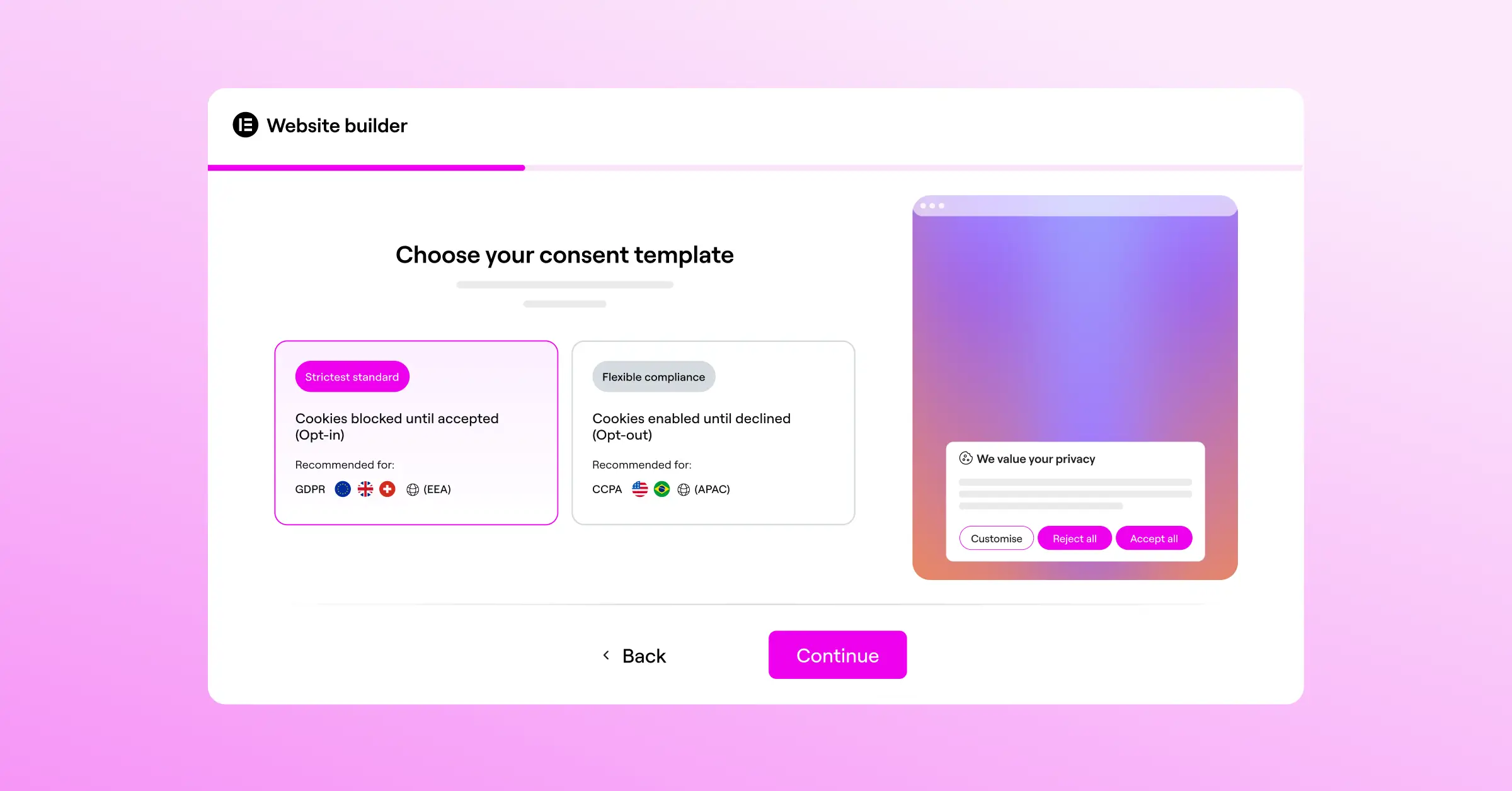
- Choose your template, publish the banner, and you’re set.
That native setup means no API keys to copy, no external accounts to manage, and no risk of losing access if an outside server hiccups. It feels like a natural part of your website, not a bolt-on from somewhere else.
2. Design Control and Brand Alignment
Your cookie banner is often the first thing a visitor sees on your site. If it looks mismatched or out of place, it can chip away at trust before they’ve read a word, and plenty of external consent tools look like generic overlays that clash with your color scheme or typography.
Iubenda lets you customize banner colors, button styles, and positions through its cloud dashboard. It’s a capable editor, but you’re limited to whatever settings they’ve built in. For highly specific custom CSS or a deeper match with your theme, you may need to write your own overrides.
Because Cookie Consent is built natively into WordPress, it works in step with your design system, and you get full control over every element of the banner. Here are a few of the details you can adjust:
- Adjusts typography, font weights, and sizes to match your existing site headers and body text.
- Changes background colors, borders, and button styles to fit your brand palette.
- Repositions the banner as a bottom bar, top bar, or modal popup.
- Configures slide-in or fade-in animations that look polished and professional.
- Edits the exact wording for accept, decline, and preference settings, no restrictive translation files involved.
3. Managing Scripts and Consent Categorization
A good compliance tool does more than just show a banner. It has to actually block scripts from loading until the user gives explicit consent. If your site fires tracking pixels before someone clicks “Accept,” you’re not really in compliance with GDPR. (This trips people up more than almost anything else, so it’s worth double-checking on your own site.)
Iubenda handles script blocking by rewriting your existing page scripts or through its tag manager integrations. It’s capable but fairly technical, and if you’re not comfortable editing HTML or managing Google Tag Manager containers, setup might feel like a challenge at first.
Cookie Consent takes a more straightforward path, managing scripts directly inside your WordPress dashboard. Its automated scanner finds active cookies and sorts them into logical categories, necessary, analytical, and marketing, so you manage all of it from your admin panel and nothing fires until the visitor gives the green light. It’s a visual, intuitive way to stay compliant without a deep background in web development.
4. Supporting Modern Privacy Standards
In 2026, you can’t ignore Google Consent Mode v2 or Global Privacy Control (GPC). GPC is a browser setting that lets users declare privacy preferences at the browser level, and if a visitor has it enabled, your site needs to respect that choice automatically, without forcing a click through your banner.
Both tools handle this well. Iubenda offers solid support for these modern protocols, though you’ll spend time configuring settings in your cloud dashboard to map everything correctly. Cookie Consent includes native, out-of-the-box support for both Google Consent Mode v2 and GPC signals, detecting preferences automatically and adjusting your tracking tags, which keeps your marketing campaigns running while fully respecting visitor choices.
5. Performance and Site Speed
Every script you add to your site has a cost. If your cookie banner pulls external JavaScript files from third-party servers, that adds load time to your pages, which can hurt your user experience and drag down your Core Web Vitals, a signal Google uses for ranking.
Because iubenda loads its styling and configuration from external cloud servers, visitors’ browsers have to make extra network requests to fetch those files. Their servers are generally fast, but any outside dependency can introduce small delays during peak traffic.
The native Cookie Consent tool is built with performance in mind. Because it runs locally on your WordPress server, there’s no extra external lookup needed to display the banner. The code is lightweight and loads quickly, so your compliance work doesn’t cost you SEO or conversions. If you’re building performance-focused sites with Elementor, that alignment matters.
Choosing the Right Tool for Your Site
To help you land on the right pick, here are a few common situations where one tool makes more sense than the other.
When to Choose iubenda
Iubenda is a strong option if your business spans multiple platforms. It’s particularly well suited for:
- Managing legal compliance for multiple sites built on different systems (like Shopify, custom HTML, and WordPress) all from one central login.
- Generating complete, legally vetted terms of service, privacy policies, and refund policies alongside your cookie banner.
- Handling complex, enterprise-level privacy requirements that need centralized cloud storage and dedicated legal team reviews.
When to Choose Cookie Consent
The native Cookie Consent tool is the ideal pick if your business runs primarily on WordPress. It’s especially well suited for:
- Building site layouts with Elementor and wanting a cookie consent solution that fits naturally into your design workflow.
- Running client sites where you want to deliver a clean, white-labeled experience without sending clients to external platforms.
- Saving time and money with an all-inclusive compliance feature that skips monthly pageview-based subscriptions.
- Keeping your site as fast and lightweight as possible.
Frequently Asked Questions
Is Cookie Consent difficult to set up?
Not at all. Cookie Consent walks you through a simple, guided three-step setup you can finish in your WordPress dashboard in under five minutes. You don’t need any coding experience, and the wizard walks you through each step clearly.
Does iubenda slow down my website?
Because iubenda loads its configuration and styles from external cloud servers, it adds a few extra network requests to your page loads. The impact is usually small, but native tools like Cookie Consent generally load faster since they run locally on your own WordPress server.
What is Google Consent Mode v2 and do I need it?
Yes, if you use Google Analytics or Google Ads and serve visitors in the EU or UK, you need to support Google Consent Mode v2. It passes user consent choices directly to Google’s tracking systems, and both iubenda and Cookie Consent support this standard.
Can I customize the design of my cookie banner?
Absolutely. Iubenda lets you make style changes from its cloud platform, but Cookie Consent offers much deeper design integration. You can use your existing WordPress styling to match your exact fonts, colors, and layout preferences without writing custom code.
Does Cookie Consent include a policy generator?
Yes, Cookie Consent includes a built-in policy generator that helps you create a clear, compliant cookie policy for your site. It’s a practical way to handle compliance without buying separate legal document packages.
What happens if a user has Global Privacy Control (GPC) enabled?
GPC is a browser setting that tells websites not to sell or share a user’s personal data. The native Cookie Consent tool automatically detects GPC signals and respects the user’s choices, without requiring them to interact with your banner at all.
Is there a free plan for these tools?
Yes, both options offer ways to get started. Iubenda has a limited free plan for basic setups, while the native Cookie Consent capability is available on a free tier and is also included in the complete Elementor One subscription.
Do I need to store consent logs?
Yes, many major privacy regulations like GDPR require you to keep a record of when users gave their consent. Both iubenda and Cookie Consent offer consent logging features so you have a clear audit trail ready if a privacy regulator ever asks for it.

