
Picking a cookie consent tool can feel like a lot, especially with so many privacy laws to track. The good news? It’s simpler than it looks. The choice usually comes down to an external platform or something built into WordPress, so here we’re comparing Termly, a well-known third-party compliance suite, with Cookie Consent, the native consent management capability built for WordPress by Elementor. Let’s find the right fit for your site.
Key Takeaways
- Cookie Consent lives natively inside WordPress, keeping your settings, cookie scans, and consent logs right in your dashboard.
- Termly runs as an external SaaS platform, so you manage settings and script code outside of WordPress.
- Both tools support key standards, including Google Consent Mode v2 and the Global Privacy Control (GPC) signal.
- For Elementor users, the native cookie consent capability sets up fast and matches your existing design out of the box.
- Your best pick depends on whether you’d rather use a centralized external compliance suite or an integrated, dashboard-native experience.
Understanding Your Website Consent Needs in 2026
The privacy landscape has moved fast. If you run a WordPress site, tracking visitors isn’t as simple as it used to be. The General Data Protection Regulation (GDPR) in Europe and the California Consumer Privacy Act (CCPA) in the US set clear rules for collecting visitor data, and major browsers are phasing out third-party cookies, pushing everyone toward first-party data and transparent consent.
So if your site runs Google Analytics, Facebook pixels, or marketing tags, you need permission before those scripts run. Skip that step and you risk fines, but get it right and you build real trust with visitors who value their privacy.
Here’s what a solid setup does for your site:
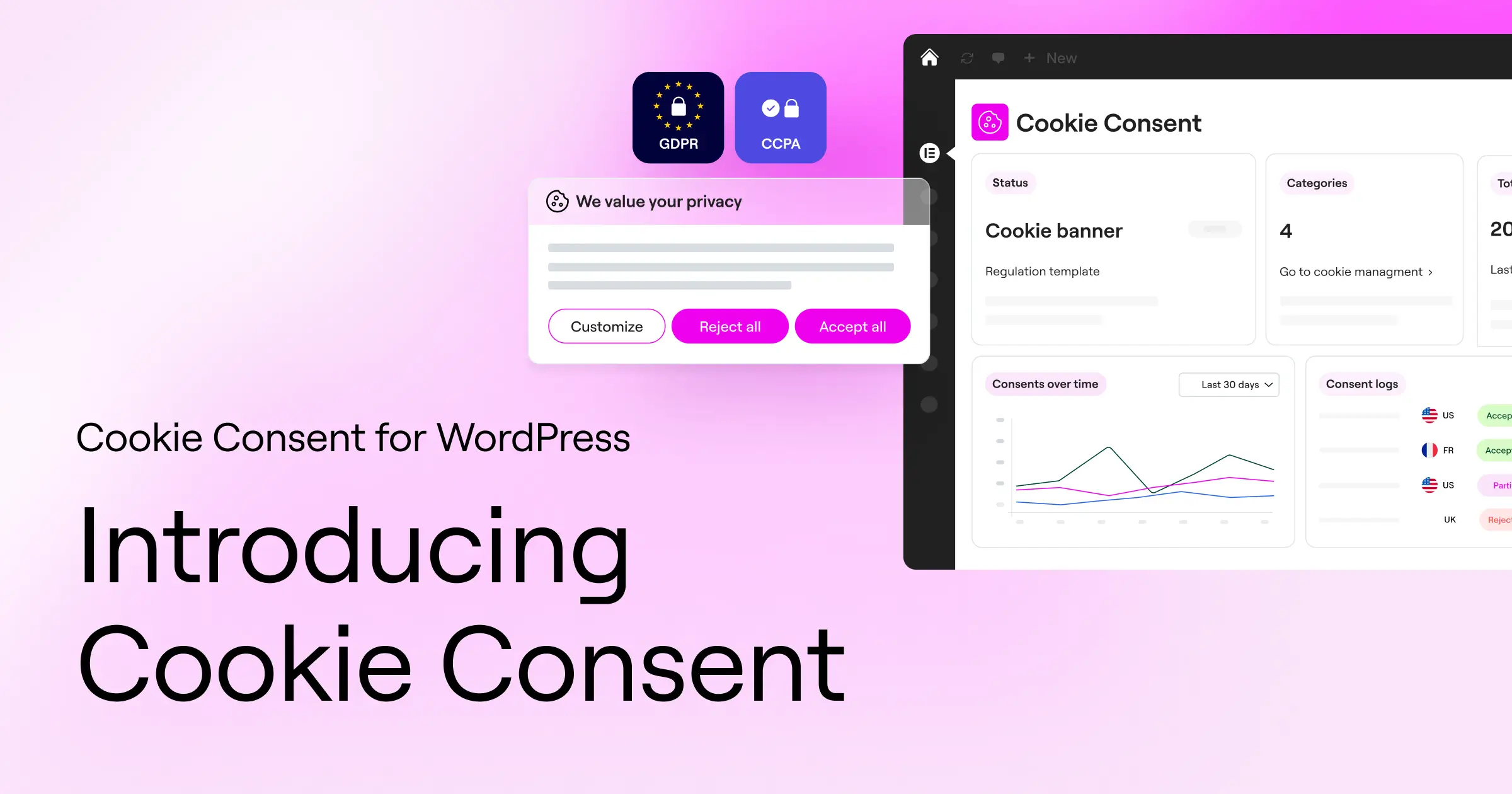
- Shields your business from costly privacy penalties.
- Builds real trust by respecting visitor data choices.
- Maintains accurate analytics through Consent Mode integrations.
- Respects browser preferences like Global Privacy Control signals.
- Automates cookie classification, no manual sorting needed.
- Simplifies things by showing banners only where required.
You don’t need to be a lawyer or developer to get this right. Modern tools make it simple, so you can focus on your business while staying safe and legal.
A Closer Look at Cookie Consent (Elementor’s Native Capability)
When you want site-building to stay simple, keeping everything inside WordPress is usually the smartest move, and that’s where Cookie Consent comes in. It’s Elementor’s native consent management capability, so you never have to juggle a separate SaaS account just to keep your banner running.
You handle your whole compliance strategy without leaving your WordPress dashboard, scanning for trackers and customizing your layout in one place. It works smoothly with Elementor, giving you full creative control so your banner never feels like an afterthought.
Here’s what Cookie Consent brings, step by step:
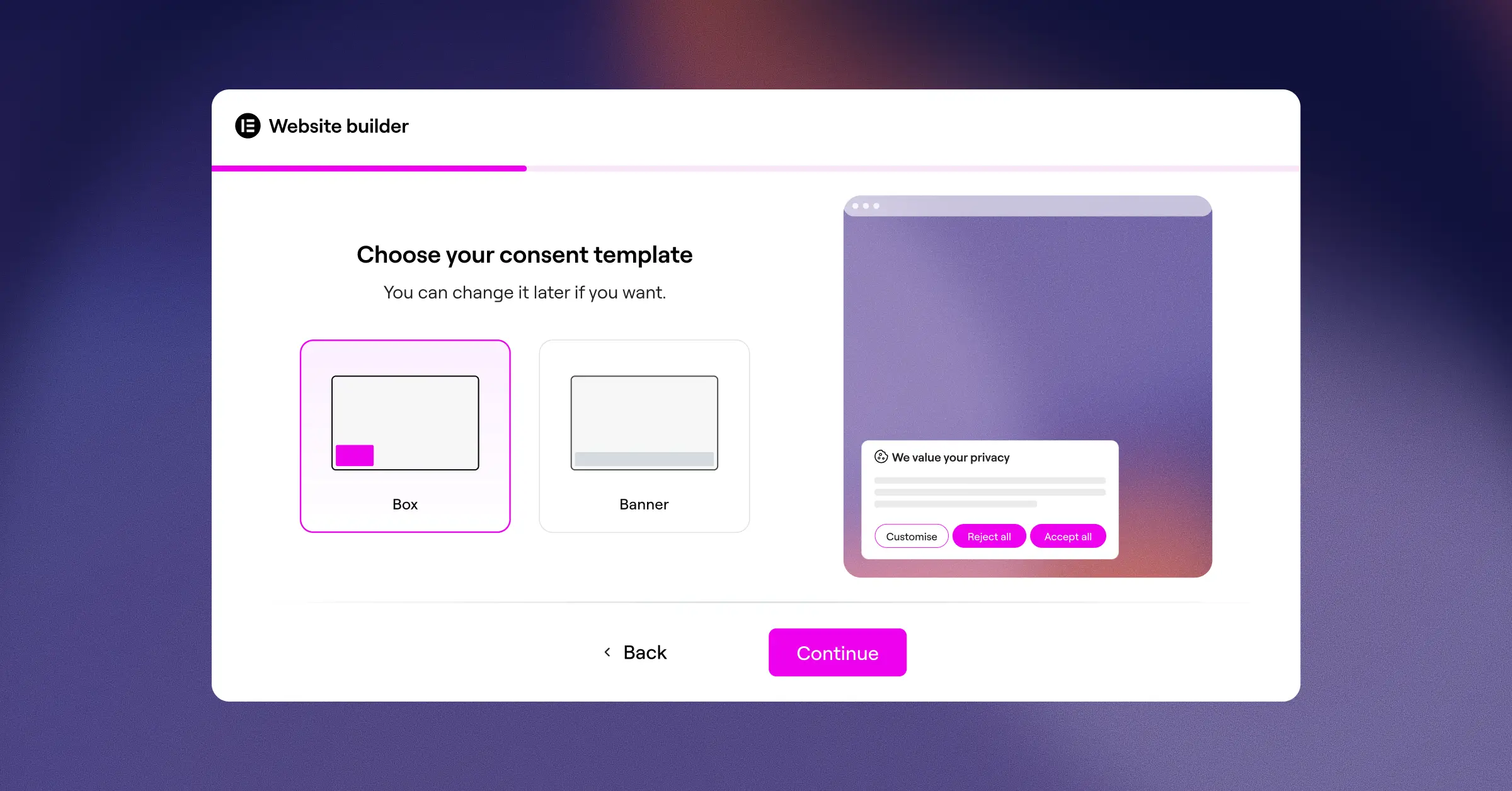
- Access everything from your dashboard, no external portals needed.
- Launch your banner fast with a simple three-step setup, done in under five minutes.
- Design matching layouts that fit your brand typography and colors.
- Deliver localized experiences with built-in multilingual banner options.
- Scan and categorize cookies automatically, keeping your inventory accurate.
- Maintain audit trails with secure, localized consent logs.
This saves server resources too, since you’re not loading heavy scripts from external servers, keeping page load times fast, good for user experience and SEO.
A Closer Look at Termly
Now, a factual look at Termly: a popular external software-as-a-service (SaaS) platform for legal compliance, working as a centralized hub across platforms like WordPress, Shopify, Wix, and custom HTML sites.
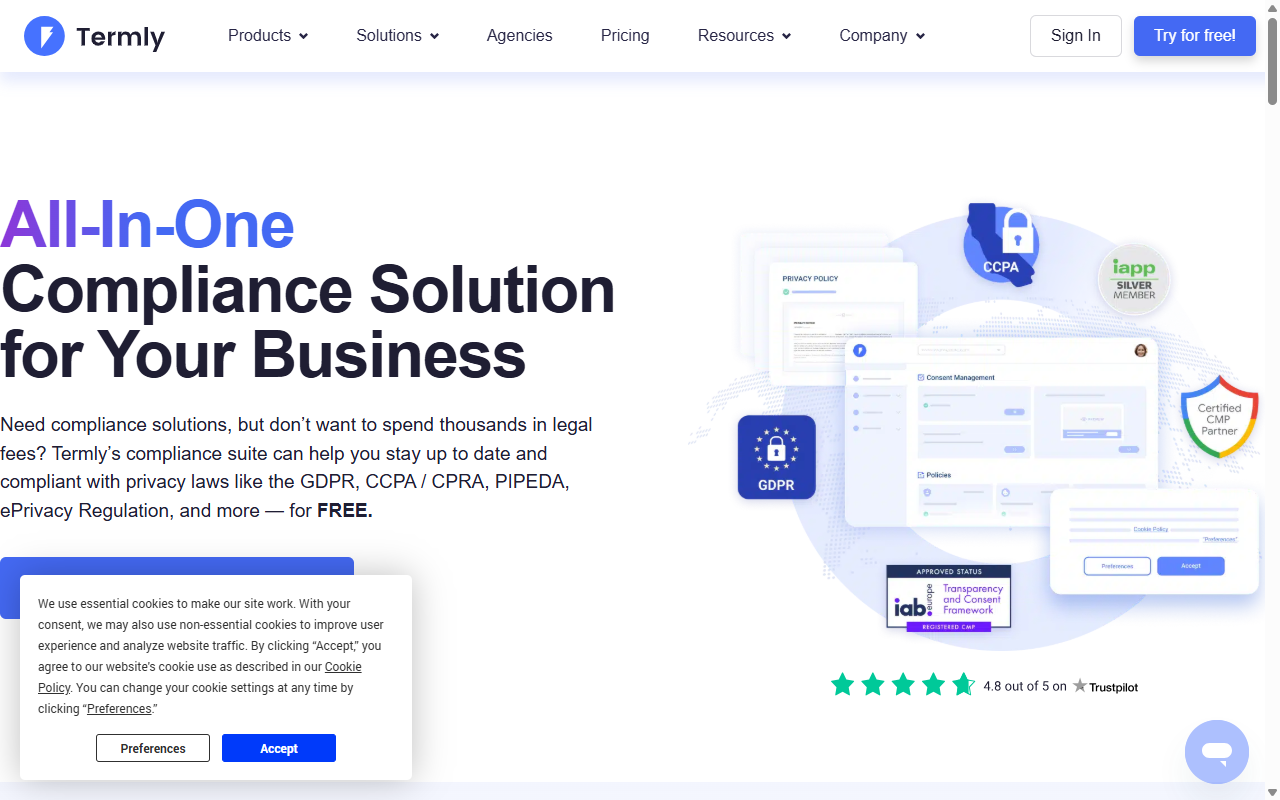
Because Termly lives outside your site, setup starts on their website: create an account, enter your site address, and let their system run a remote scan. Termly then generates a custom banner code snippet you paste into your WordPress header. It also offers tools for other legal pages, like a privacy policy, terms of service, and disclaimers.
Here are the main capabilities Termly offers:
- Hosts compliance policies on external cloud servers.
- Scans websites weekly for active tracking scripts.
- Generates custom privacy policies and terms of service documents.
- Supports multiple consent rules by region.
- Saves visitor consent choices in an external dashboard.
- Injects code snippets into site headers via manual install.
Termly’s a solid pick for businesses that want one legal suite covering multiple sites on different platforms, though it takes more manual setup inside a WordPress workflow.
Comparing Cookie Consent and Termly Side-by-Side in 2026
Here’s a head-to-head look at both solutions. Both get you to compliant cookie consent in very different ways: one’s woven into your WordPress site, the other acts as an external partner.
Here’s how their main features, setup times, and integrations compare:
| Feature | Cookie Consent | Termly |
|---|---|---|
| Dashboard Integration | Fully native within WordPress | External SaaS platform |
| Setup Time | Under 5 minutes | 15 to 30 minutes |
| Google Consent Mode v2 | Fully supported out of the box | Supported on paid plans only |
| Design Customization | Deep integration with site builder | Standard cloud style editor |
| Policy Generation | Built-in tool included | External policy generator |
| Consent Logging | Native database logs | External cloud storage |
If you’d rather keep everything under your own control, the native option shines. If you want a broader cloud dashboard for legal templates across platforms, Termly has its strengths.
Core Capabilities Compared Side-by-Side
How does the setup process look?
Setting up your compliance banner shouldn’t eat your afternoon, and with Cookie Consent, it doesn’t. Since it lives inside your WordPress workspace, there’s no need to configure API keys or paste script into theme files. Turn it on and you’re live in under five minutes.
Here’s what that setup looks like:
- Initiate the scanner to find every active tracker on your site.
- Select a pre-designed template that matches your layout.
- Publish the banner so it’s instantly live for visitors.
With Termly, it takes longer: sign up externally, wait for their crawler to scan your site, configure cookie categories in their portal, then copy the script into your header. Manageable if you’re comfortable with code, but it pulls you away from your dashboard.
Design customization and brand matching
We’ve all seen a cookie banner that looks like a grey box on an otherwise beautiful page. Because Cookie Consent works natively with Elementor, you get full design freedom to make your banner feel like a natural part of your site.
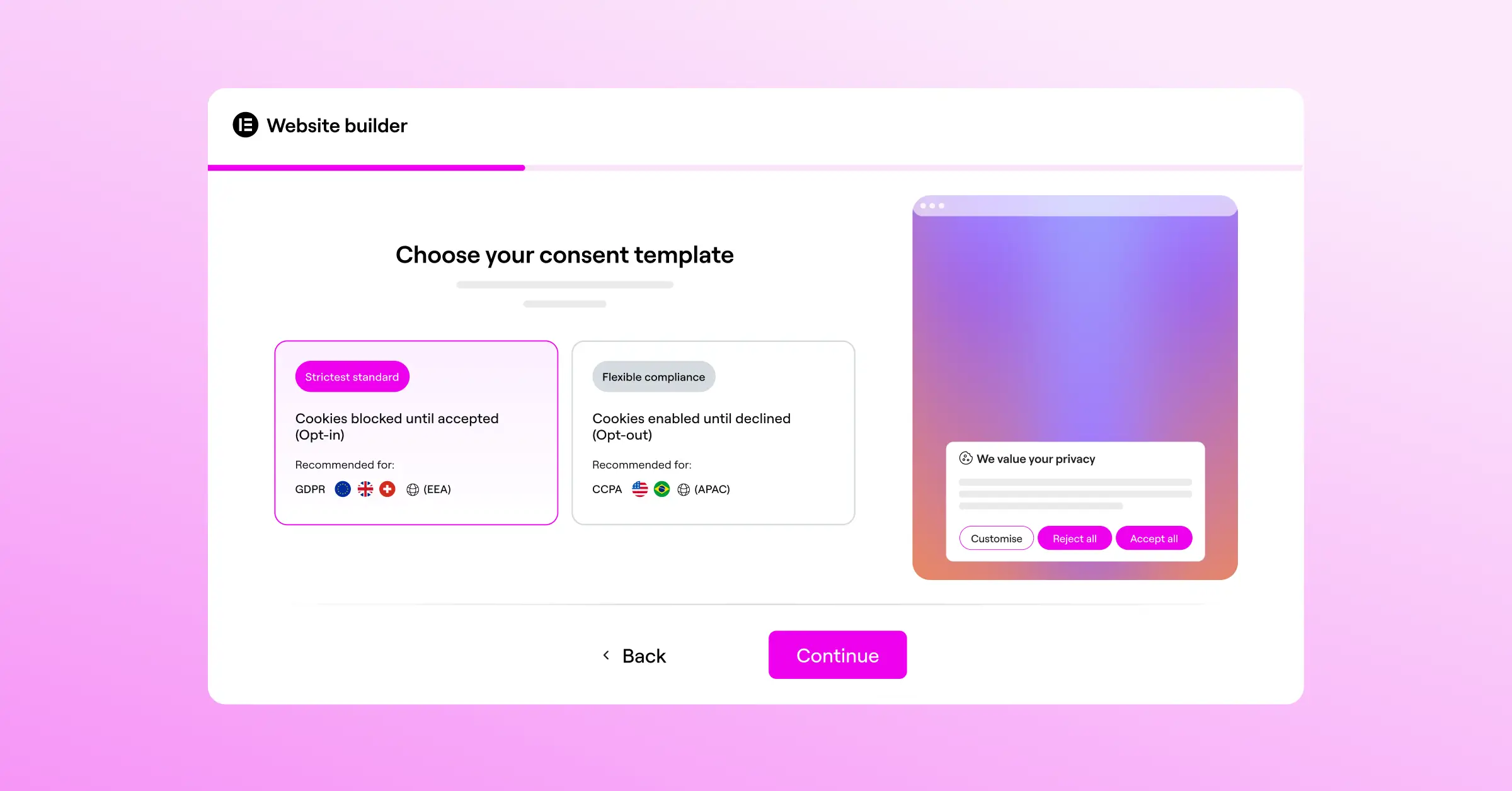
You can control nearly every visual detail:
- Adjusts typography, font sizes, and button padding to taste.
- Modifies background colors and overlay opacity for your brand.
- Positions the banner as a footer, header, modal, or slide-in box.
- Optimizes mobile display separately for a sharp UX.
- Includes custom CSS overrides for specific styling.
- Refines toggle switches for cookie categories like analytics or marketing.
Termly offers a visual customizer too, but with more limited styling: you can change primary colors, upload a logo, and adjust basic fonts. You won’t get the same granular control as working natively in a site builder, and matching your layout precisely may take extra CSS.
Script management and automated scanning
A cookie consent tool is only as good as its scanning. Both run automated scans for tracking cookies, differently. Cookie Consent scans your WordPress site internally, finds scripts from popular tools and marketing platforms, sorts them into essential, analytical, or marketing groups, then blocks them until a visitor consents. Since it all happens inside WordPress, it’s reliable and doesn’t depend on an outside connection.
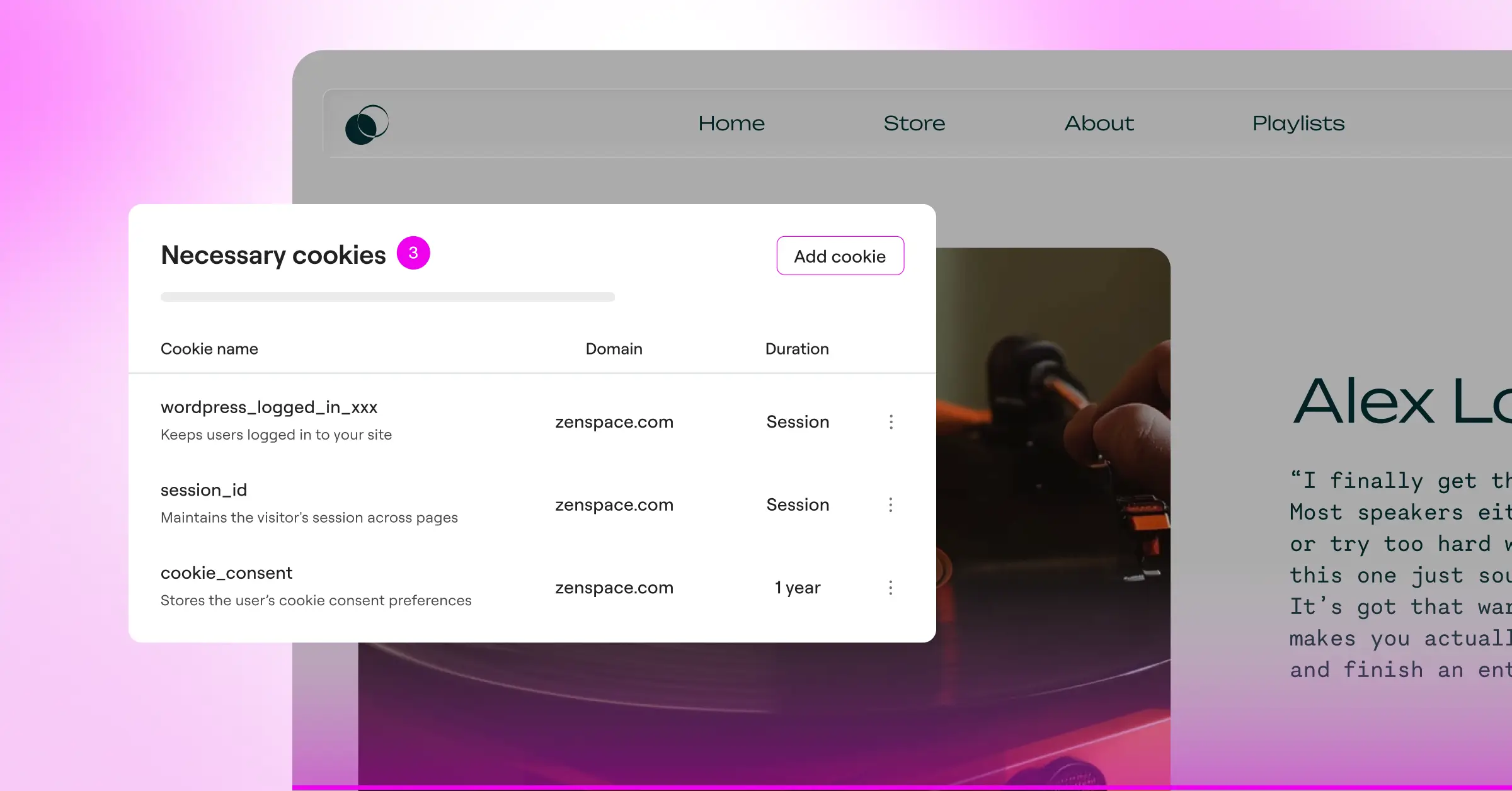
During a scan, the tool looks for specific tracking behaviors:
- Identifies essential cookies the site needs to load.
- Detects analytical cookies tracking user paths and session length.
- Catches marketing cookies used for personalized ads.
- Sorts functional cookies that remember language or user settings.
- Flags unclassified trackers for manual review.
- Blocks scripts until the user consents to tracking.
Termly uses an external cloud scanner that crawls your pages from the outside. It’s accurate, but can miss scripts that load only on certain actions or behind a login. Categorization happens inside the Termly portal too, so you keep two dashboards in sync when updating your marketing tools.
Keeping compliance logs for legal audits
If a regulator ever audits your site, a banner alone won’t be enough. You need to prove visitors clicked “Accept” before you tracked them, which means keeping detailed, time-stamped logs (this one trips people up, so plan for it early).
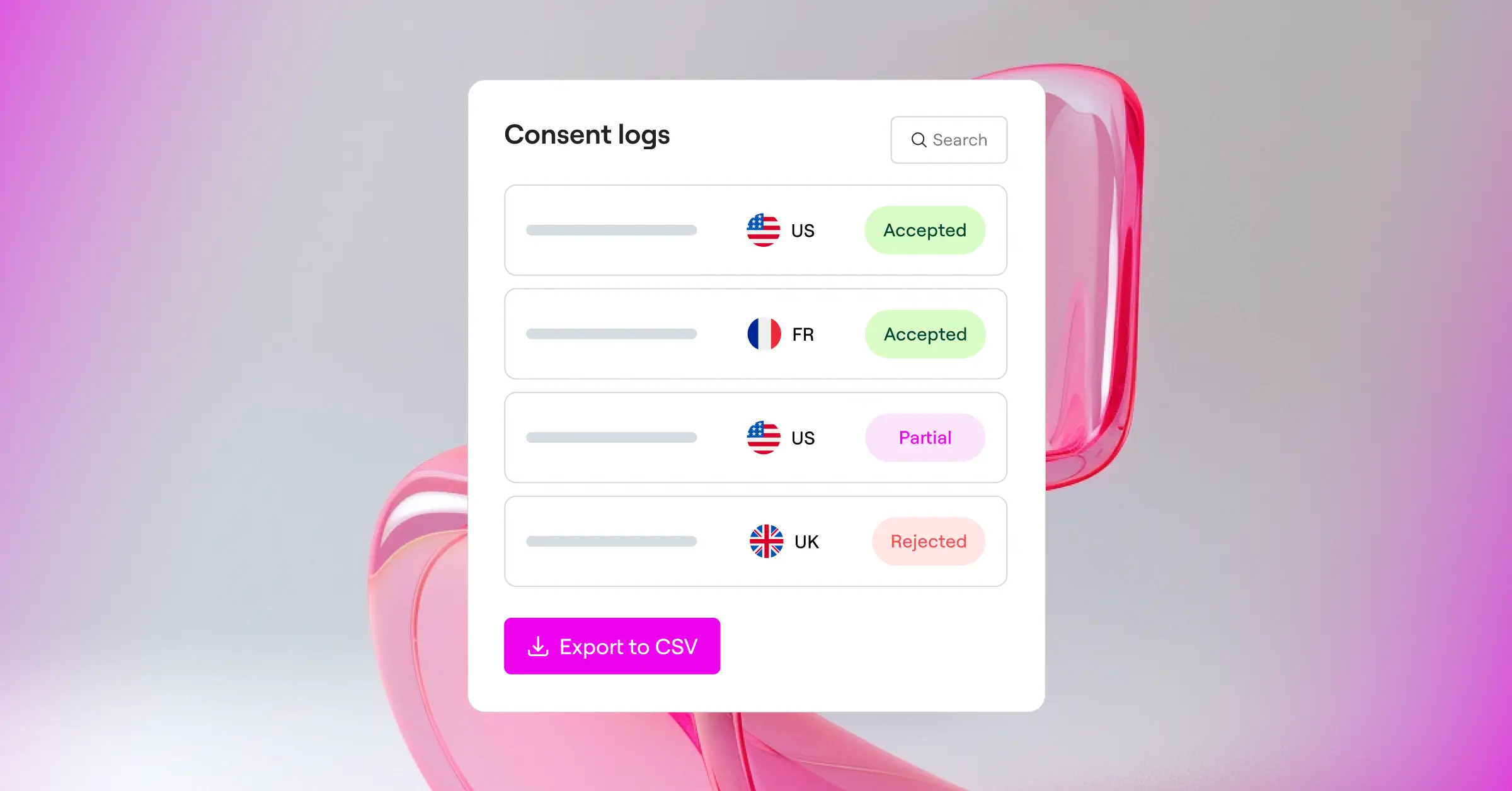
Cookie Consent saves these logs safely inside your WordPress system, so you can export them anytime you need to show compliance. Termly keeps detailed logs too, but they live in its external cloud databases, so you log into that account to pull records if a question comes up.
Here’s what our compliance specialist says about native data storage:
“Keeping consent logs directly inside your WordPress database reduces dependency on external APIs and keeps your compliance records immediately accessible during an audit.”
(Itamar Haim, Web Compliance Specialist)
E-Commerce and Google Consent Mode v2 Support
Running a store on WooCommerce? Compliance matters even more. E-commerce sites lean on Google Ads, Analytics, and Facebook Pixels to track sales and find customers, and in 2026, Google requires any site targeting EU or UK visitors to support Consent Mode v2.
Skip it and Google blocks your ability to measure ad conversions or build remarketing audiences there, hurting your campaigns fast. Both tools support Consent Mode v2, just differently: Cookie Consent has it built into core settings, handling the signal automatically and keeping your store setup clean.
Here’s how that works behind the scenes:
- Detects the visitor’s region to determine if Consent Mode applies.
- Communicates visitor choices directly to Google Tag Manager or your tracking scripts.
- Adjusts tracking behavior automatically based on accept or decline.
With an integrated tool handling this, your tracking stays accurate while you respect customer privacy, and you skip the API setups or script errors that can break a checkout page.
Agency Use Cases and Multi-Site Management
Running a design agency? Managing compliance across multiple clients can turn into a headache fast. With external platforms like Termly, you’re tracking separate client accounts and billing subscriptions, making sure payment details stay current so banners stay live.
A native WordPress tool simplifies that. When you build a site, Cookie Consent is right there in the dashboard, ready to configure as part of your standard checklist, and it stays with the site, no ongoing subscription required.
Here are the biggest advantages native consent management brings to busy agency teams:
- Simplifies client handoff by keeping settings inside WordPress.
- Maintains professional branding with flexible design options.
- Reduces subscription overhead through bulk-tier or package options.
- Deploys standardized templates across dozens of client sites quickly.
- Tracks cookie categories and policy agreements without sharing outside credentials.
- Protects client sites from accidental script breaks during external platform updates.
Keep compliance native and clients skip paying for a separate subscription just to run a banner, making your agency’s service look complete.
Final Verdict: Which Consent Tool is Right for You?
Both Termly and Cookie Consent do a solid job keeping your site legally compliant, just for different site owners. If you want a cloud-hosted suite generating privacy policies and legal documents across multiple platforms, Termly is a well-established choice built for exactly that.
But if you run your sites on WordPress and want something quick, polished, and fully integrated, the native cookie consent capability wins. It works smoothly inside WordPress, giving you full design control, no external subscription or code in theme files.
Here’s a simple decision guide to help you choose:
- Choose Cookie Consent if you love working directly in WordPress, want a five-minute setup, use Elementor, and want to keep all data under your own roof.
- Choose Termly if you manage compliance across multiple different CMS platforms (like Shopify, Wix, and WordPress together) and prefer a centralized external service.
Whichever path you pick, what matters most is taking action. Keeping your site compliant protects your business and builds real trust with your visitors. You’ve got this.
Frequently Asked Questions
What is Google Consent Mode v2 and do I need it?
Google Consent Mode v2 is a tracking protocol Google requires for any site using services like Google Ads or Analytics while targeting visitors in the European Economic Area (EEA) and UK. It makes sure your site only sends tracking data to Google once a visitor has given explicit permission. If you run Google Ads, supporting it matters for accurate conversion data and audience targeting.
Is Cookie Consent included with Elementor?
Yes. The native Cookie Consent capability is built right into the Elementor site-building experience and is also available in Elementor One packages. That makes it cost-effective, since you don’t need a separate premium tool for cookie compliance. It’s fully part of the ecosystem you already use to build and manage your site.
Can I use Termly on a WordPress website?
Yes. You register on Termly’s external site, complete their setup wizard, and copy a JavaScript snippet. Then paste it into your WordPress site’s header, either by editing theme files directly or using a header-injection tool. It works well, but it does mean moving between platforms to manage your ongoing settings.
Does cookie consent affect my website speed?
It depends on how the tool’s built. External platforms like Termly load scripts from remote servers, which can sometimes add small delays. Native tools like Cookie Consent run locally on your own WordPress server, loading alongside your other files, so they stay optimized for fast load times, good for both user experience and SEO.
How does geo-targeting work for consent banners?
Geo-targeting detects where your visitor is by IP address, so your site can show different banners to different users. A visitor from Germany sees a strict GDPR opt-in banner, while someone in Texas might see a simpler CCPA opt-out link. Both tools offer geo-targeting, so your site stays compliant without showing banners visitors don’t need.
Can I write my own cookie policy with these tools?
Yes, both help you create compliant policy documents. Termly has an external policy builder that generates custom privacy and cookie policies from a short questionnaire. Cookie Consent includes a built-in policy generator right inside your WordPress dashboard, so your legal disclosures update automatically whenever your scanner detects new tracking cookies.
Do I need a cookie consent banner if I don’t target EU visitors?
You might still need one. Plenty of regions outside Europe, including California, Virginia, Canada, and Brazil, have their own privacy laws. And if your site pulls in international organic traffic, those visitors are still covered by their local rules. A basic compliance setup is just a sensible move that protects your business from surprises.
What happens if a visitor ignores the consent banner?
If a visitor ignores your banner and keeps browsing, a compliant tool keeps non-essential tracking blocked. Under strict rules like the GDPR, explicit opt-in consent is required before tracking starts, scrolling past a banner doesn’t count. Both Termly and Cookie Consent will block analytical and marketing cookies until someone actually clicks Accept.

