Sticklight is an AI app builder and vibe-coding platform for professional web creators that goes well beyond websites: web apps, dashboards, CMS, booking systems, internal tools, and full digital products, all from a single prompt-first flow. Framer is a polished AI website builder strong on motion design and marketing pages. If you are a professional web creator deciding between these two AI builders, this Sticklight vs Framer comparison will help you choose the platform that fits your work.
Key takeaways
- Framer is a design-led AI website builder with strong animation tools and high-quality templates, well suited to marketing sites and portfolio pages.
- Sticklight is an AI app builder and vibe-coding platform that turns a prompt into production-ready websites, apps, dashboards, CMS, and internal tools, with full creative control after the build.
- Professional web creators who need to go beyond marketing pages and ship working products find Sticklight covers the full surface range that Framer does not reach.
- Sticklight’s Skills system adds packaged expertise (SEO, Accessibility, Performance, Design System, and more) to every build with one click.
- Both tools include hosting and publishing, but Sticklight’s Publish phase adds a security scan and built-in SEO on every build.
- Sticklight is built by the Elementor team and powered by Claude, bringing a decade of professional web creation pedigree to every prompt.
What Framer is and who it serves.
Framer is a design-led AI website builder known for its animation capabilities, high-quality templates, and AI features for generating website sections. It grew from a design prototyping tool into a full publishing platform. Along the way, it earned a strong reputation among designers and marketing teams who prioritize visual polish and motion.
Framer gives designers a canvas where interaction behavior and visual design happen in the same interface. Its CMS handles content-driven marketing sites. AI tools can generate copy and page sections quickly. Publishing and hosting are built in. The result is a platform that takes a design concept to a live site without leaving a design-first environment.
Framer targets designers, marketing teams, and agencies building visually polished marketing websites, portfolio sites, and landing pages where motion and design quality are the priority. Within that scope, it is a serious tool.
 Framer, design-led AI website builder for marketing sites and portfolios.
What Sticklight is: the AI app builder and full-stack creator platform.
Sticklight is the vibe-coding platform for professional web creators, built by the Elementor team and powered by Claude. It turns a prompt into production-ready websites, landing pages, apps, dashboards, CMS, booking systems, internal tools, forms, databases, and full digital experiences, with the combined craft of a senior designer and developer. That is the Sticklight standard.
The product story moves across three phases.
In the Prompt phase, a professional web creator describes what they want in natural language, using the main prompt box, Plan Mode for complex tasks, Templates to remix, or Connectors based on the use case. In the Build phase, Skills add packaged expert know-how to every project. Nine Skills are live today, covering SEO, Accessibility, Performance, Design System, Copywriting, Localization, Micro-interactions, Onboarding, and 3D Web Experience via Three.js. After the AI builds, the creator keeps full manual control of every pixel on the canvas, including direct code editing. In the Publish phase, SEO is built in, a security scan runs on every build, custom domains connect, and app hosting is included.
Sticklight shares Elementor’s mission of empowering professional web creators, and expands that mission for the AI era. The core narrative is direct: go beyond websites. Become a full-stack creator with Sticklight.
Sticklight is platform-agnostic and AI-first. It is always additive to Elementor and to WordPress. WordPress remains a source of truth you can build on and connect to. Different tools serve different jobs, and a professional creator may well use both within the same workflow.
Prompt-first creation vs. design-first creation: how these AI builders differ.
The most fundamental difference between Sticklight and Framer is the starting point.
Framer starts with design. You open a canvas, choose a template or a blank page, and build from visual components. The design metaphor is central to everything Framer does.
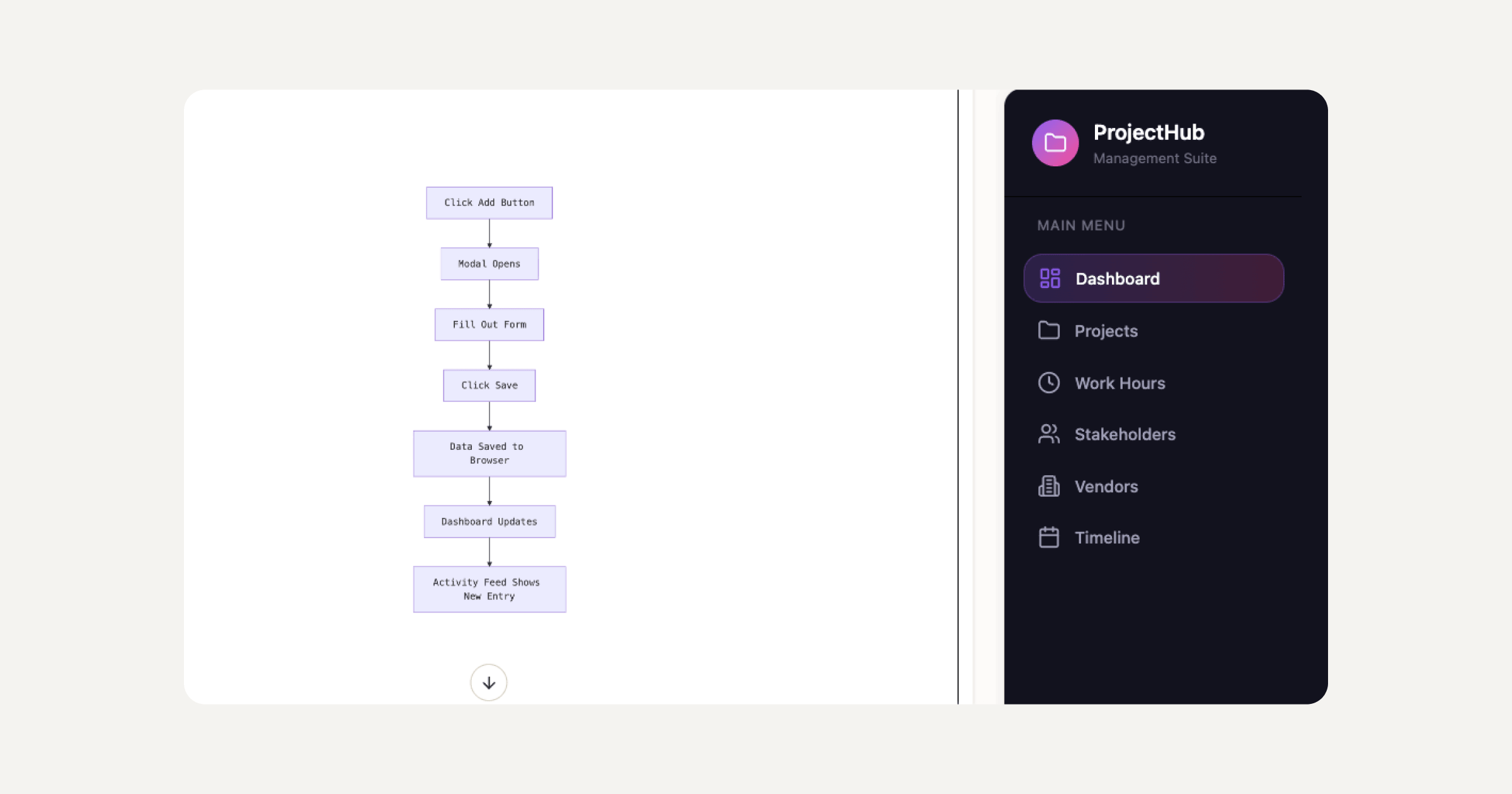
Sticklight starts with a prompt. You describe what you want to build in natural language, the AI generates a production-ready output, and the creator then takes full manual control. The canvas is there for editing every pixel. Direct code editing is available for creators who want to go deeper. The prompt is the entry point; the canvas is where the creator takes the result where they want it to go.
Plan Mode is worth noting here. For complex projects where a single prompt does not capture the full scope, Plan Mode breaks the task into a structured plan before generation starts. This matters for professional creators building multi-page products, apps with several views, or tools with real functionality behind the UI.
For a designer building a single marketing page or a portfolio, Framer’s canvas-first approach is familiar and fast. For a professional creator building a broader range of products for clients, the prompt-first approach in Sticklight removes the bottleneck between an idea and a working product.
What you can build: websites, apps, dashboards, and more.
Sticklight covers websites, web apps, dashboards, CMS, booking systems, internal tools, forms, and full digital experiences from the same prompt-first flow. Framer is well positioned for marketing websites, portfolio sites, and landing pages. Its CMS handles content-driven sites where articles or product entries need structured management. Motion and interaction tools make it a strong choice when animation quality is a requirement. Within that scope, Framer delivers well.
Sticklight covers that scope and goes further. The same prompt-first flow that produces a marketing website also produces a web app, a customer dashboard, a CMS, a booking system, a form with a database behind it, an internal operations tool, a management platform, and full digital experiences. These are not separate modes or add-ons. They are built into the same Prompt/Build/Publish flow, with the same Skills system and the same Sticklight standard applied to every output.
This is the practical meaning of “go beyond websites.” A professional web creator who builds only sites is leaving a large part of what clients actually need on the table. An agency that can build the full range of what clients ask for, from a landing page to a booking system to an internal dashboard, has a broader and more durable service offering. Sticklight is built around that reality.
The surfaces Sticklight covers include: websites, landing pages, web apps, dashboards, CMS, booking systems, internal tools, forms, databases, AI-powered experiences, management platforms, embedded tools, and full digital experiences. For a professional creator, that is the full range.
The Skills system: Sticklight’s packaged expertise vs. Framer’s AI content tools.
Framer’s AI tools focus on content generation: copy, page sections, and layout starting points. Templates provide a strong visual foundation. These are useful starting points for design work, particularly for creators who have a clear design direction and need to fill it with content quickly.
Sticklight’s Skills system operates differently. A Skill is a packaged unit of expert know-how, added to any project with one click during the Build phase. Nine Skills are live today.
The SEO Skill ships meta tags, schema, sitemap structure, and on-page best practices with every build. The Accessibility Skill ships WCAG-compliant markup, focus states, and ARIA attributes. The Performance Skill applies load-time optimization. The Design System Skill produces consistent tokens and component patterns. Copywriting, Localization, Micro-interactions, Onboarding, and 3D Web Experience via Three.js complete the current set.
Skills compound across projects. A creator who has shipped ten products with the SEO and Accessibility Skills applied gets progressively faster and sharper results, because the packaged expertise is consistent across every build. That is a meaningful advantage for agencies running high volumes of client work, or for creators who want their output to meet a professional standard on every project, not only when they remember to check the boxes manually.
Agents are on the Sticklight roadmap and are labeled coming soon.
Publishing and production readiness compared.
Framer’s publishing is clean and well regarded. You connect a custom domain and your site is live. For marketing websites, that is often enough.
Sticklight’s Publish phase is built for production products that carry more responsibility than a marketing page. A security scan runs on every build. SEO is built in. Custom domain connection is included. App hosting covers the apps, dashboards, and tools that Sticklight builds beyond traditional websites.
For professional creators delivering work to clients under their own reputation, the additional production safeguards in Sticklight are not optional features. They are the standard the work has to meet.
The phrase “production-ready, not demo-ready” captures the distinction. Sticklight’s output meets the requirements of a real product: SEO, security, and the craft of a senior designer and developer. The Sticklight standard is what separates this from tools that generate a convincing first draft you still have to rebuild before it can go live.
Pricing models.
Framer offers a free plan for personal projects and paid plans that scale with the number of pages and custom domains. Pricing is structured around site-level capacity.
Sticklight offers a free plan to try the platform and ship real products. Pro is for independent creators, freelancers, and small studios. Team covers multi-seat collaboration with more Skills and higher capacity. Enterprise includes SSO, a security review, and dedicated support. A bring-your-own-keys option is available on select plans for LLM cost control. Pricing scales with seats and feature access, not page count or usage volume. That structure suits professional creators who run multiple projects and need a platform that grows with their workload.
Who each tool is for.
Framer is a strong choice for designers and marketing teams whose primary output is polished marketing websites, portfolio pages, and landing pages where animation and design precision are the priority. If the brief is a beautiful site with motion design and a clean CMS, Framer delivers that well.
Sticklight is built for professional web creators who build for clients and for themselves, and who need to ship more than a page. Agencies, freelancers, and studios delivering client work care about speed, reliability, and shipping to a standard that protects their reputation. Creators building their own products and tools care about going beyond what a site can do and owning the result. Both groups find Sticklight is designed for their level of work.
Sticklight is not designed for the hobby creator or the first-time site builder. Sticklight is built for people who know the difference between a production tool and a toy, and who need their output to reflect that.
Sticklight vs Framer: side-by-side comparison.
| Feature | Framer | Sticklight |
|---|---|---|
| Primary use case | Marketing websites, portfolio sites, landing pages with motion design | Websites, apps, dashboards, CMS, booking systems, internal tools, databases, and full digital products |
| Creation model | Design-first canvas with AI content generation | Prompt-first with AI generation, then full manual canvas and code control |
| Animation and motion | Strong, built-in interaction and animation tools | Micro-interactions Skill; 3D Web Experience via Three.js Skill |
| AI features | AI copy and section generation | Full product generation from prompt, Skills system (9 live), Plan Mode for complex tasks |
| SEO | Basic SEO settings on pages | SEO Skill: meta, schema, sitemap, on-page best practices built into every build |
| Security | Hosting security via Framer’s infrastructure | Security scan on every build, included in the Publish phase |
| CMS | CMS for content-driven marketing sites | CMS as one of many surfaces built from the same prompt-first flow |
| Apps and dashboards | Not a primary use case | Core use case: web apps, dashboards, management platforms, internal tools |
| Publishing | Custom domain, hosting included | Custom domain, app hosting, security scan, SEO built in |
| Code access | Code override on components | Full canvas editing and direct code editing |
| Pricing model | Per site, scales with pages and domains | Per seat and feature tier (Free, Pro, Team, Enterprise) |
| Built by | Framer | The Elementor team. Powered by Claude. |
Why professional web creators choose Sticklight.
Sticklight is the AI app builder that covers the full range of what professional web creators are asked to deliver: from a marketing site to a booking system, a customer dashboard, an internal ops tool, and a web app, all from the same prompt-first platform. Framer is a real tool that does its job well. For designers whose work lives in marketing websites and portfolio pages, Framer is a credible choice. This comparison is not about putting Framer down. It is about identifying where each tool stops and where the other continues.
Framer stops at the boundary of the website. What Framer builds is a page, or a collection of pages, with motion and design quality as the defining characteristics. That is a genuine and valuable thing to build. But professional web creators are increasingly asked for more: booking systems, customer dashboards, internal ops tools, forms connected to databases, CMS for products with real editorial workflows, and full digital experiences that behave like software, not brochures.
Sticklight is built for that full range. The same platform that builds the marketing site also builds the app behind the login screen, the dashboard the client’s operations team uses every day, and the internal tool the agency uses to run its own processes. That breadth is not a feature list item. It is the reason professional creators who build across all of those surfaces find one platform that keeps the Sticklight standard consistent across every output.
The Skills system compounds that advantage. A professional creator who applies the SEO Skill, Accessibility Skill, and Performance Skill to every project ships output that meets a standard their clients can rely on, without running a manual checklist after every build. The expertise is packaged into the build, applied once, and consistent across everything they ship.
Full control after the AI builds is not a footnote. It is a core principle. Sticklight is not a black box that generates something and locks the creator out. The creator has full access to the canvas after generation, full direct code editing, and the ability to take the AI’s output in any direction. The AI does the heavy lifting; the creator keeps the craft.
Built by the Elementor team. Powered by Claude. That credit line is not decoration. It is a decade of professional web creation knowledge built into the platform, combined with a frontier model doing the generation work. For professional creators who need their output to meet a real standard, and their platform to be backed by people who understand professional web creation, that pedigree matters.
“Framer raises the bar for motion design on marketing sites. Where creators need to go beyond the page, though, the comparison shifts. Sticklight’s prompt-first flow, Skills system, and full surface range give professional creators a platform that grows with every kind of work they take on, without asking them to give up control or craft.”
Itamar Haim, AI for WordPress Specialist
You can learn more about building with AI at the Elementor blog, and explore how professional web creation continues to evolve at Elementor. The Elementor team’s work on AI tools for web creators covers the full picture of where professional web creation is heading.
Frequently asked questions.
Is Sticklight a website builder like Framer?
Sticklight is an AI app builder and vibe-coding platform that builds websites and much more. It covers the full range of digital products: websites, landing pages, web apps, dashboards, CMS, booking systems, internal tools, forms, databases, and full digital experiences. Describing Sticklight as only a website builder misses the core of what Sticklight does.
Can Sticklight match Framer’s animation and motion capabilities?
Framer’s animation and interaction tools are purpose-built for that use case and are among Framer’s clearest strengths. Sticklight approaches motion through the Micro-interactions Skill and the 3D Web Experience Skill (powered by Three.js), which apply interaction and motion expertise to any build with one click. For creators whose primary need is complex, bespoke animation design, Framer’s native tools are the purpose-built choice. For creators who want professional motion applied as part of a broader production build, Sticklight’s Skills deliver that without motion becoming the only thing the platform does.
Does Sticklight have a CMS?
Yes. Sticklight builds CMS from the same prompt-first flow that builds websites, apps, and dashboards. Content management is not a separate module or add-on. It is part of the full range of products a professional creator can generate and ship from one platform.
What are Skills in Sticklight, and does Framer have something similar?
Skills are Sticklight’s packaged units of expert know-how, added to any project with one click during the Build phase. Nine Skills are live: Accessibility, SEO, Design System, Performance, Copywriting, Localization, Micro-interactions, Onboarding, and 3D Web Experience via Three.js. Skills embed professional standards directly into the build, so SEO best practices, WCAG accessibility, and performance optimizations are applied consistently across every project. Framer’s AI tools focus on content and section generation. The Skills system as a mechanism for embedding packaged professional expertise is distinct to Sticklight.
Which AI builder is better for agencies?
Sticklight is the stronger fit for agencies whose clients need a range of digital products beyond polished marketing sites. Agencies delivering client work that includes booking systems, customer dashboards, internal tools, or web apps alongside marketing sites find Sticklight covers all of that from one platform, with the Sticklight standard applied on every output and Skills compounding the consistency as project volume grows. If an agency’s work is primarily polished marketing sites for design-forward clients, Framer’s canvas and templates are well suited to that scope.
Is Sticklight connected to Elementor or WordPress?
Sticklight is built by the Elementor team and powered by Claude, making it the natural next step for professional creators already working in the Elementor and WordPress ecosystem. Sticklight is platform-agnostic and AI-first, always additive to Elementor and to WordPress, never positioned as a replacement for either. WordPress is a source of truth you can build on and connect to. Professional web creators who already work with Elementor and WordPress can add Sticklight to their workflow to expand what they build, without removing anything they already trust.
What does “production-ready” mean when comparing Sticklight vs Framer?
In the Sticklight context, “production-ready” means output that meets a higher bar across the full range of products professionals ship: SEO built in, a security scan on every build, performance that does not require manual optimization after the fact, accessibility markup that meets WCAG standards, and a codebase that does not need to be rebuilt before it can go live with real users. Framer produces clean, well-designed sites that are genuinely publishable. The Sticklight standard is the craft of a senior designer and developer applied to every output, across websites and the apps, dashboards, and tools that a website builder does not reach.
Can I edit the code Sticklight generates?
Yes. Sticklight gives creators full manual control of every pixel on the canvas after the AI builds, and direct code editing is available for creators who want to go deeper. The AI does the heavy lifting from the first prompt. The creator keeps full control of the result. Sticklight does not lock you out of the craft.
Does Sticklight have Agents?
Agents are on the Sticklight roadmap and are labeled coming soon. Agents are not available today. The current creation flow uses the main prompt box, Plan Mode for complex tasks, Templates, Connectors, and the Skills system across the Prompt and Build phases.
Let it glow.

